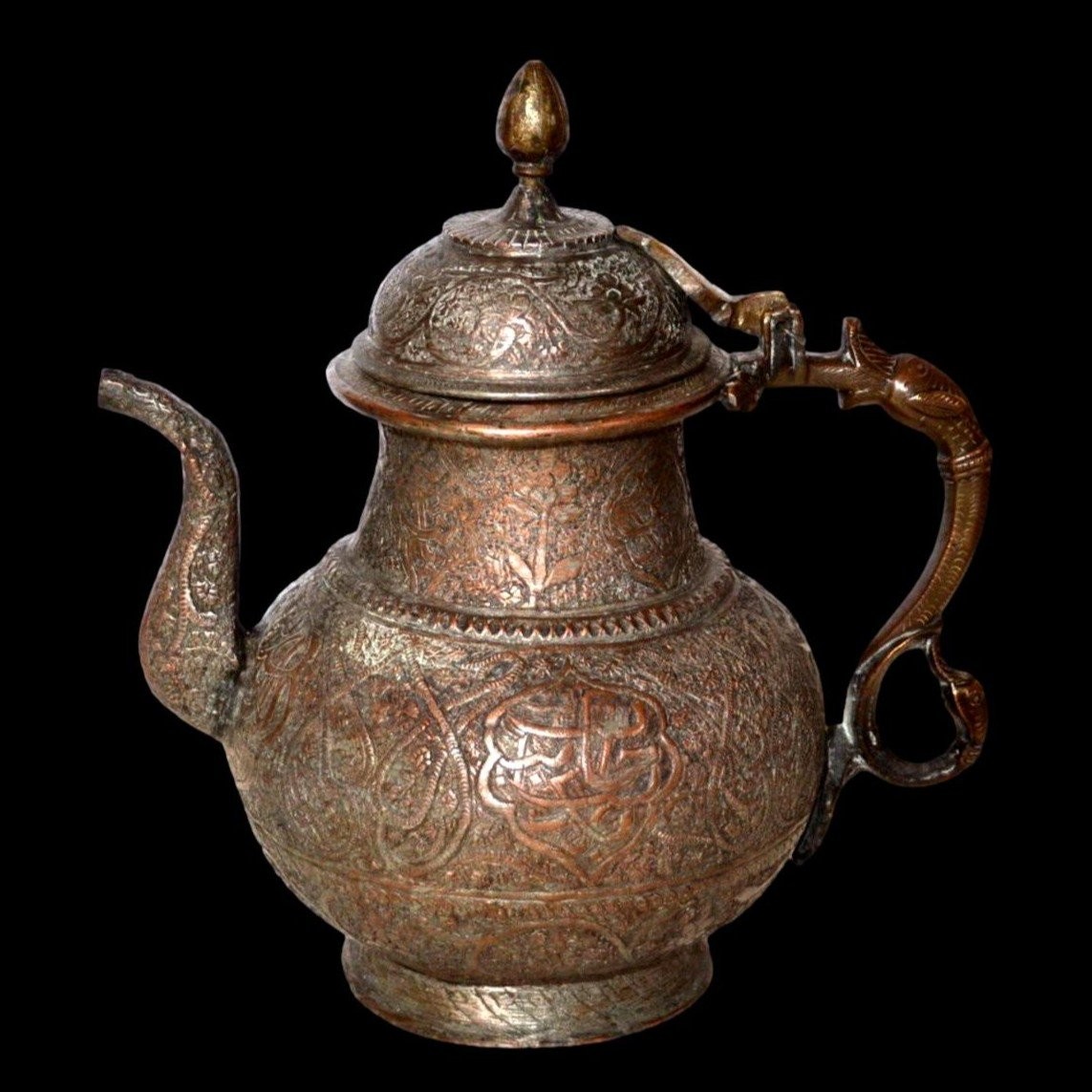


Mughal Art, Rare Engraved Bronze Plumeria, 17th - 18th Century, Gujarat, India
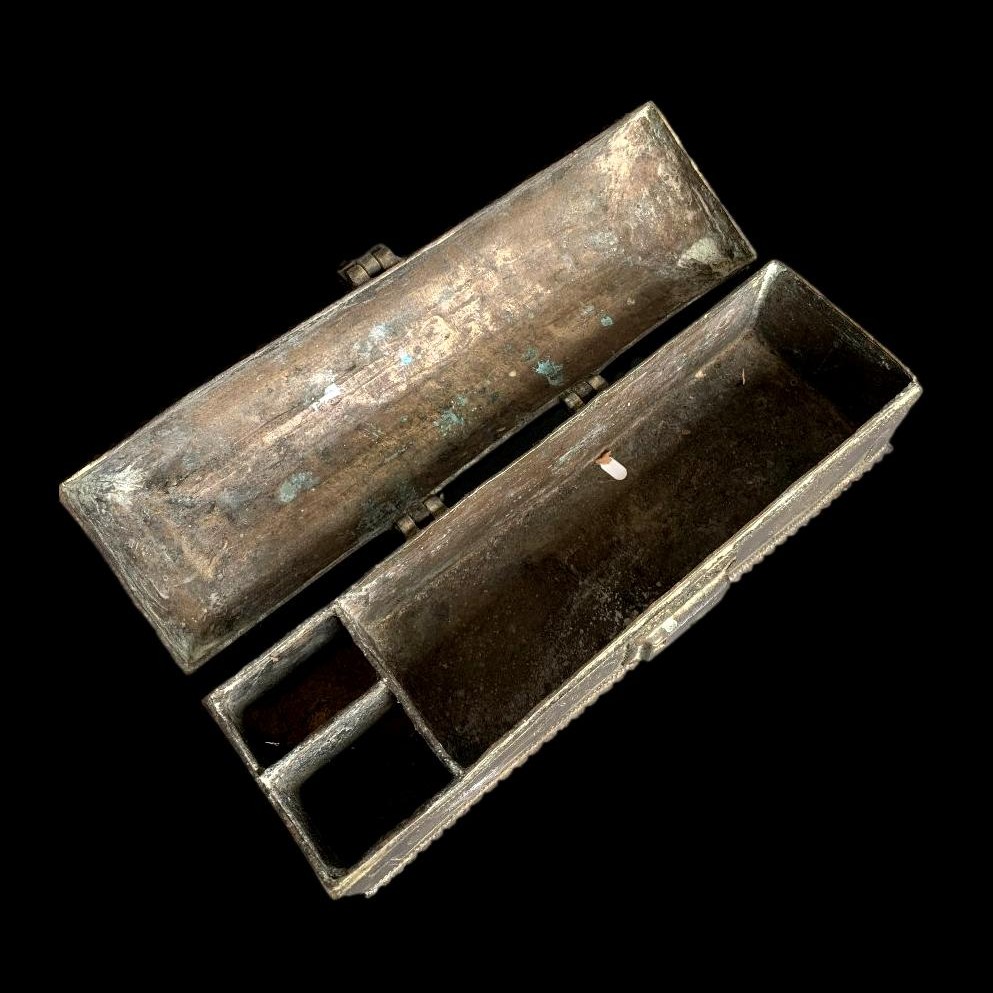
This type of box was designed to hold writing instruments:
calames, nibs, small ink bottles .
Far from testifying to the privileged status of writing and scholarship in Mughal and Islamic societies.
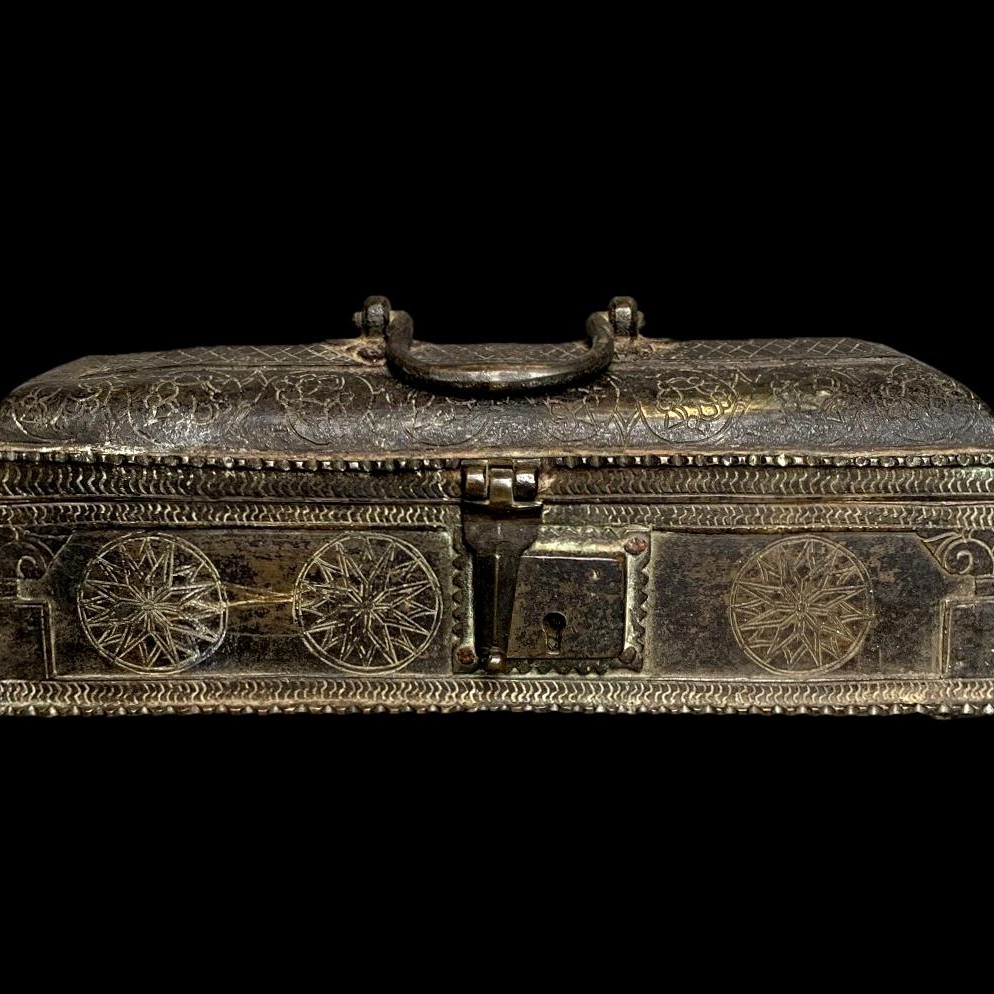
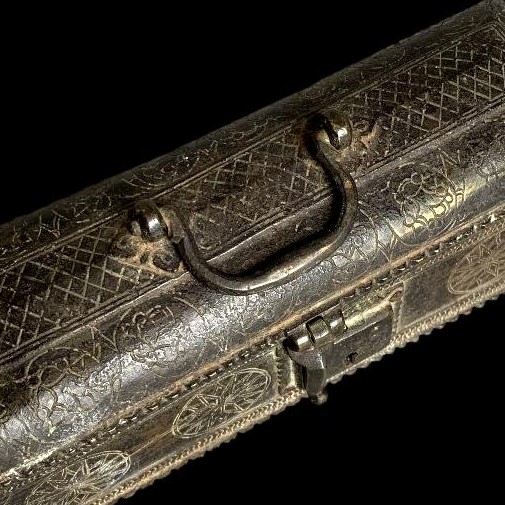
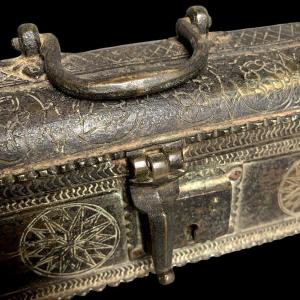
Rare, finely engraved bronze portable writing box, pertaining to 17th-century Mughal art.
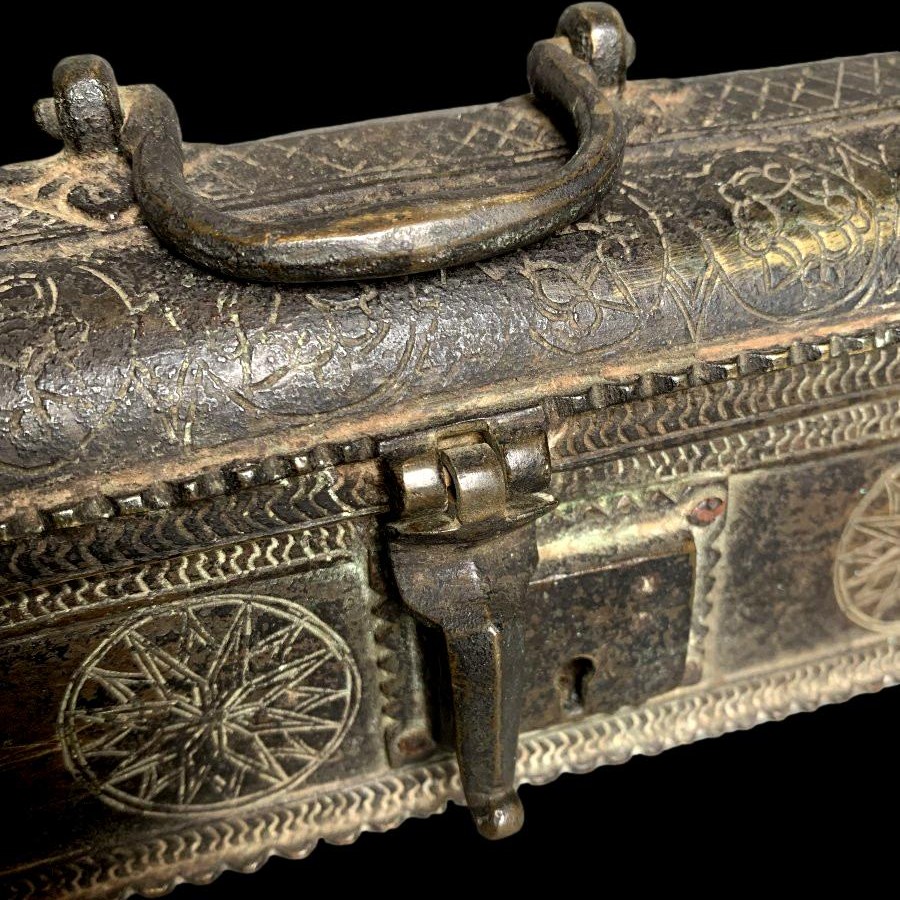
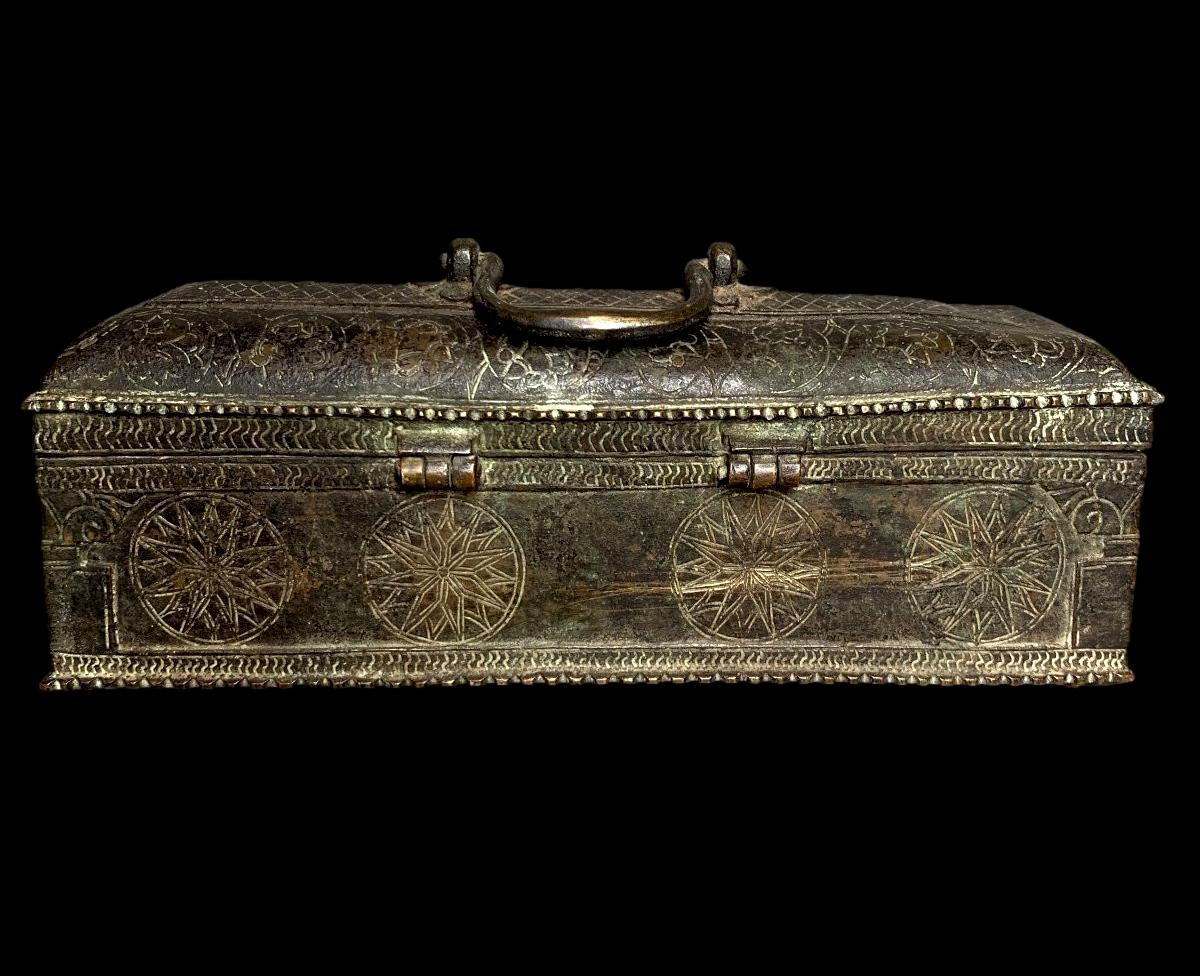
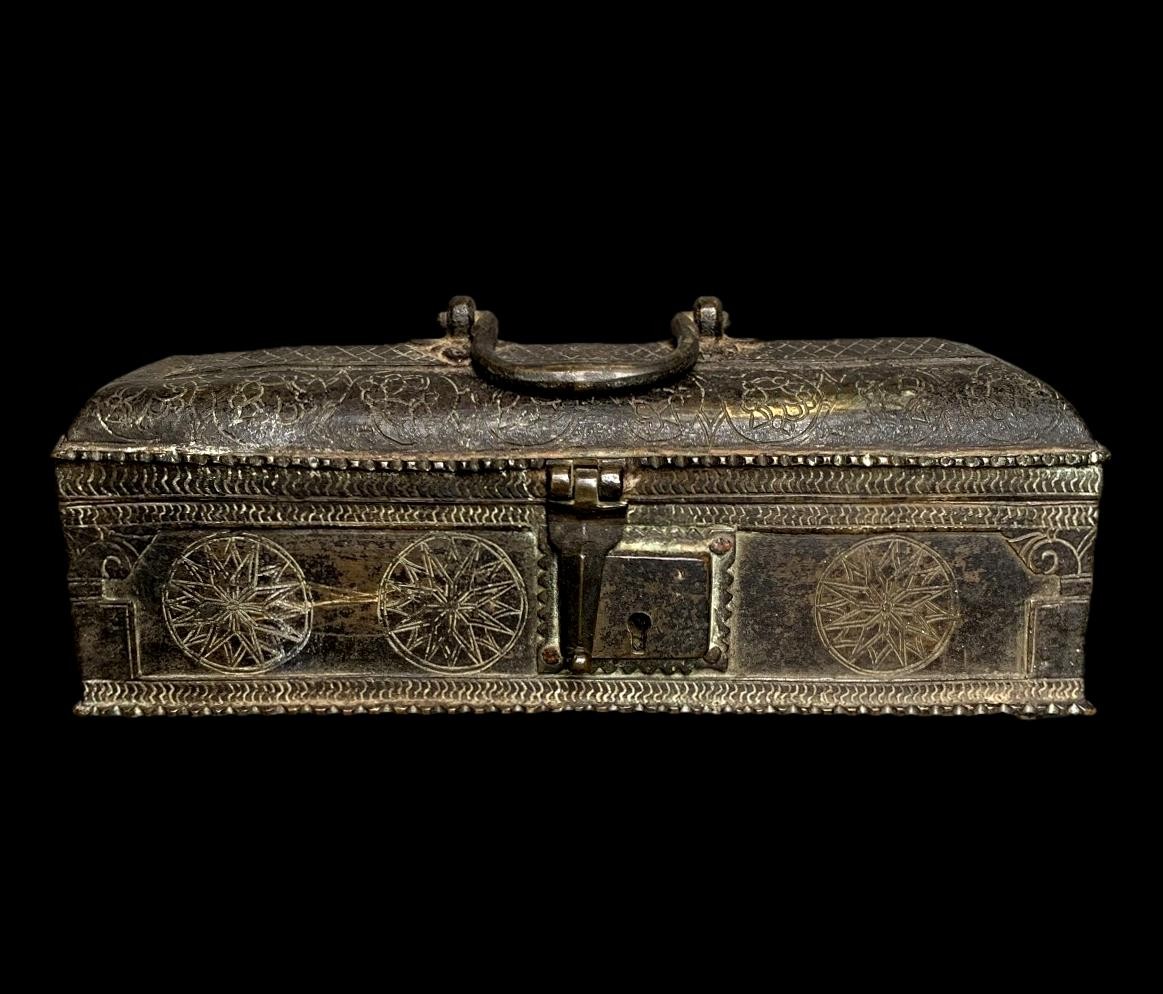
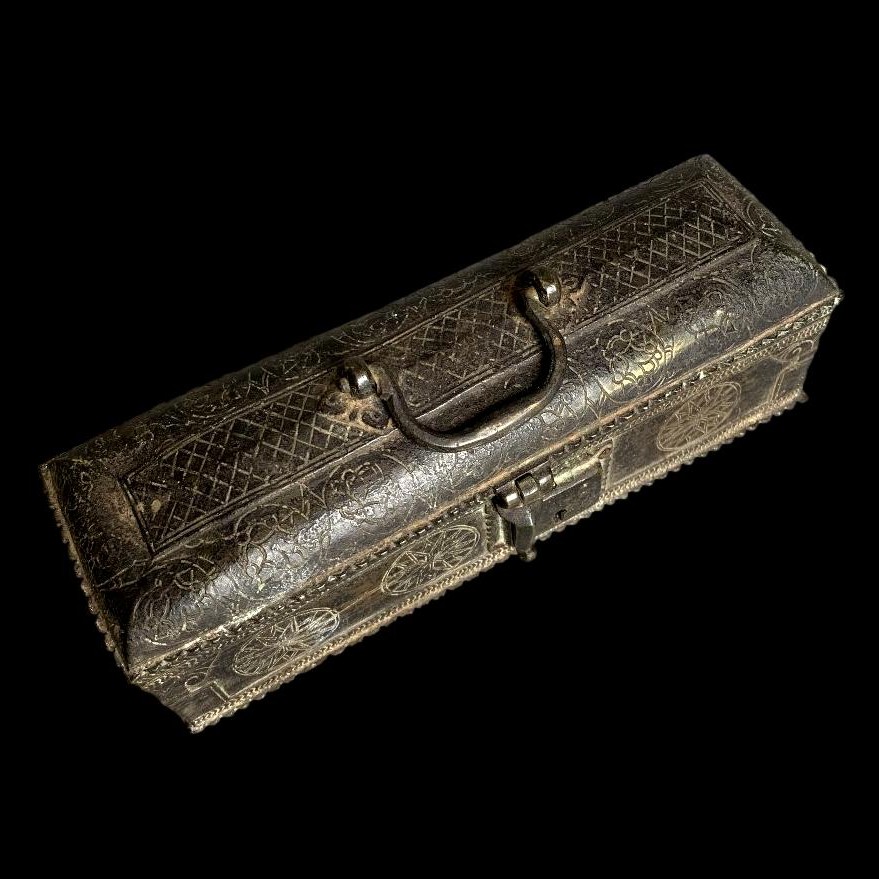
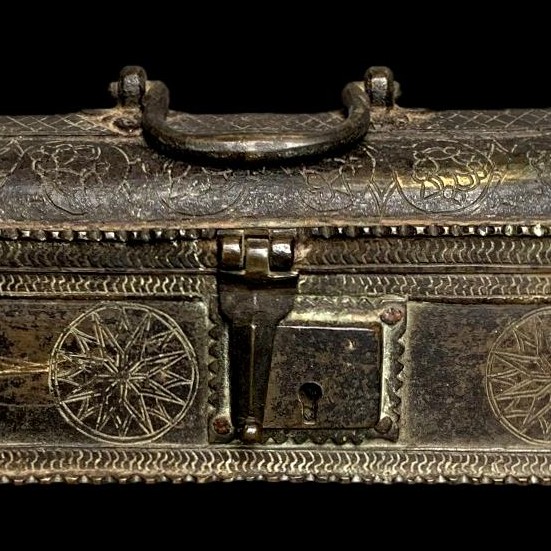
Of elongated rectangular form with slightly domed lid, this piece features a rich, entirely hand-engraved decoration.
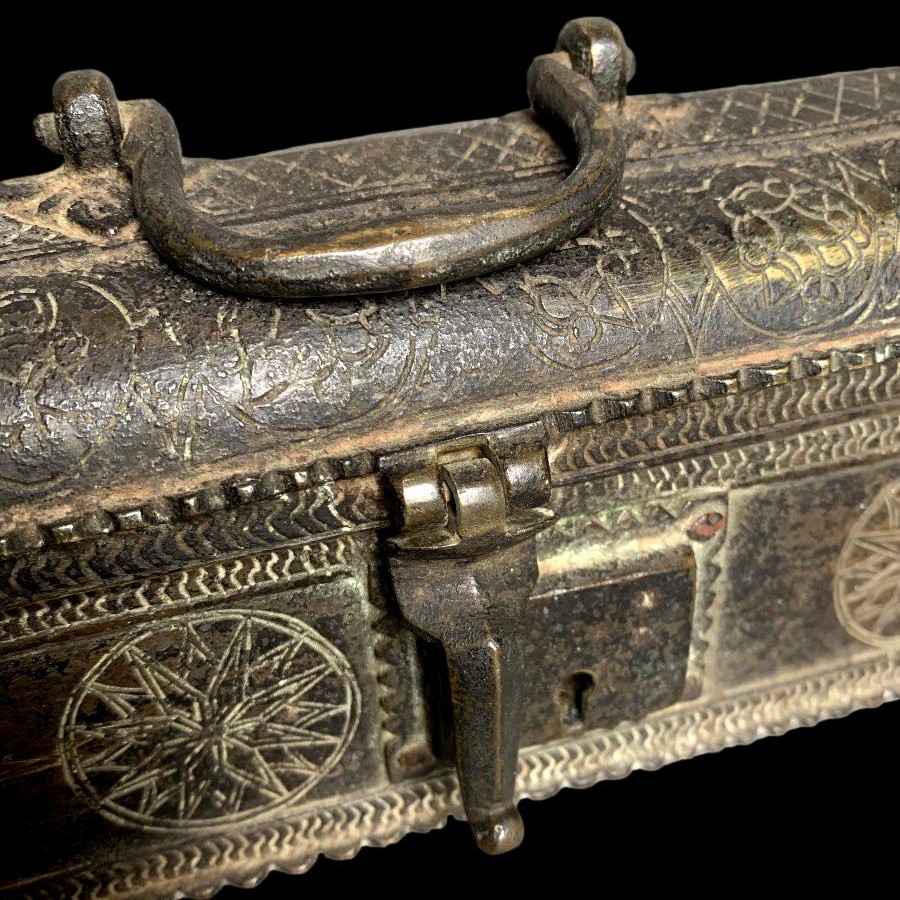
The faces are adorned with multi-branched star rosettes, inscribed in circles, alternating with geometric friezes and registers of interlacing.
A festoon runs along the lid and encircles the base.
The presence of these rosettes, reminiscent of the sun, recalls an identity close to Zoroastrianism.
This decorative vocabulary, based on the rhythmic repetition of complex geometric motifs, is characteristic of Mughal art combined with traditional Islamic art.
The lid is fitted with a bronze hinged handle and the front features a keyhole framed by a scalloped motif.
The borders are highlighted with beaded friezes and engraved bands, accentuating the architectural structuring of the whole.
## The quality of the chasing, the ornamental density and the deep brown antique patina suggest an 18thᵉ century production, possibly from a Near Eastern workshop,
but ### The shape of the lock, the chasing of the corners of the box, the type of handle, the star rosettes, incline us to consider a 17th or early 18th century Mughal work
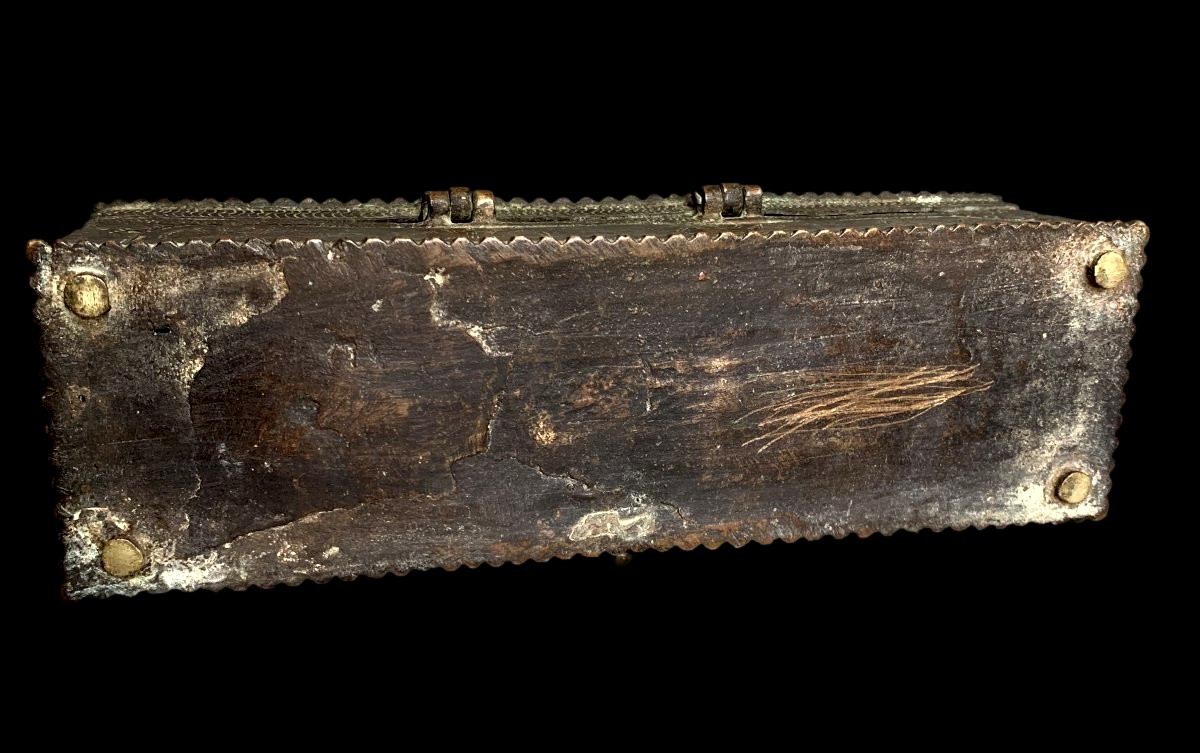
Condition:Beautiful antique patina. Wear and traces of use consistent with age.
Lock present (no key).
Epoque: XVII -XVIIIᵉ siècle.
Material:engraved bronze.
Dimensions:height: 9 cm (3.5") x length: 25 cm (9.5") x width: 7.5 cm (3")
An authentic and decorative piece.
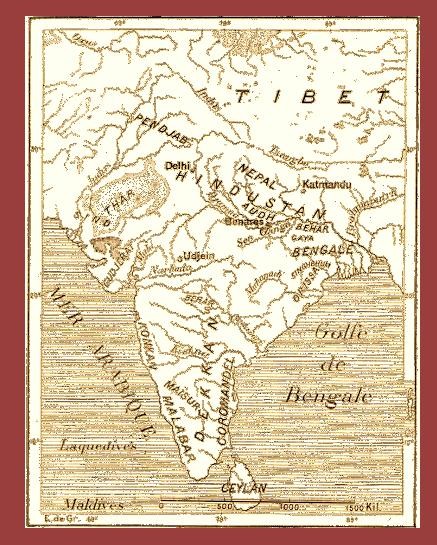
## Zoroastrianism was the official religion of the Sassanid Empire until the 7th century, before the arrival of Islam and its subsequent persecutions, driving Zoroastrians who refused to convert to Gujarat, India, where they formed the Parsi community and erected temples, while pledging not to proselytize.
Elements of the cult have, however, managed to live on in the cultural heritage of Iran, Afghanistan and Central Asia.
The Mughal Empire, which ruled the Indian subcontinent from the early 16th century to the mid-19th century, was known for its rich cultural diversity and religious tolerance.
Although the ruling elites primarily practiced Islam, they adopted a syncretic approach, blending Islamic traditions with local religious practices. This inclusive approach resulted in a relatively harmonious society where multiple religions coexisted and flourished.
The foundations of Mughal culture and religion were profoundly influenced by the empire's commitment to pluralism and inclusion.
Initially, the Mughals were devout Muslims, but they recognized the importance of embracing India's diverse spiritual landscape.
This cultural fusion led to the development of unique architectural styles, literature, art and customs, featuring a blend of Persian, Islamic and Indian elements.
Emperors like Akbar took pioneering steps towards religious integration, including:
- The establishment of the Ibadat Khana (house of worship) where scholars from different religious backgrounds debated philosophical and religious issues.
- Formulating the Din-i Ilahi ("Divine Faith"), an attempt to merge the major religions of the time into one.
- Promote the translation of religious texts from Sanskrit to Persian to foster a better understanding of Hindu scriptures among the ruling class.
FREE SHIPPING FOR FRANCE by colissimo delivery against signature
0€ / EUR 25 € / WORLD 50€
For further information you can reach me at:
06 13 36 09 30 or at winsteinprovence@gmail
www.winsteinprovence.com
Texts and photos WINSTEIN, rights reserved
REF WINSTEIN 1559
Period: 17th century
Style: Orientalism
Condition: Good condition
Length: 25 cm (9,5")
Width: 7,5 cl (3")
Height: 9 cm (3,5")
Reference (ID): 1749397
Availability: In stock