


Rare Pair Of Large Roman Catacomb Reliquaries – Relics Extracted In 1661
Rare pair of large Roman catacomb reliquaries – relics extracted in 1661
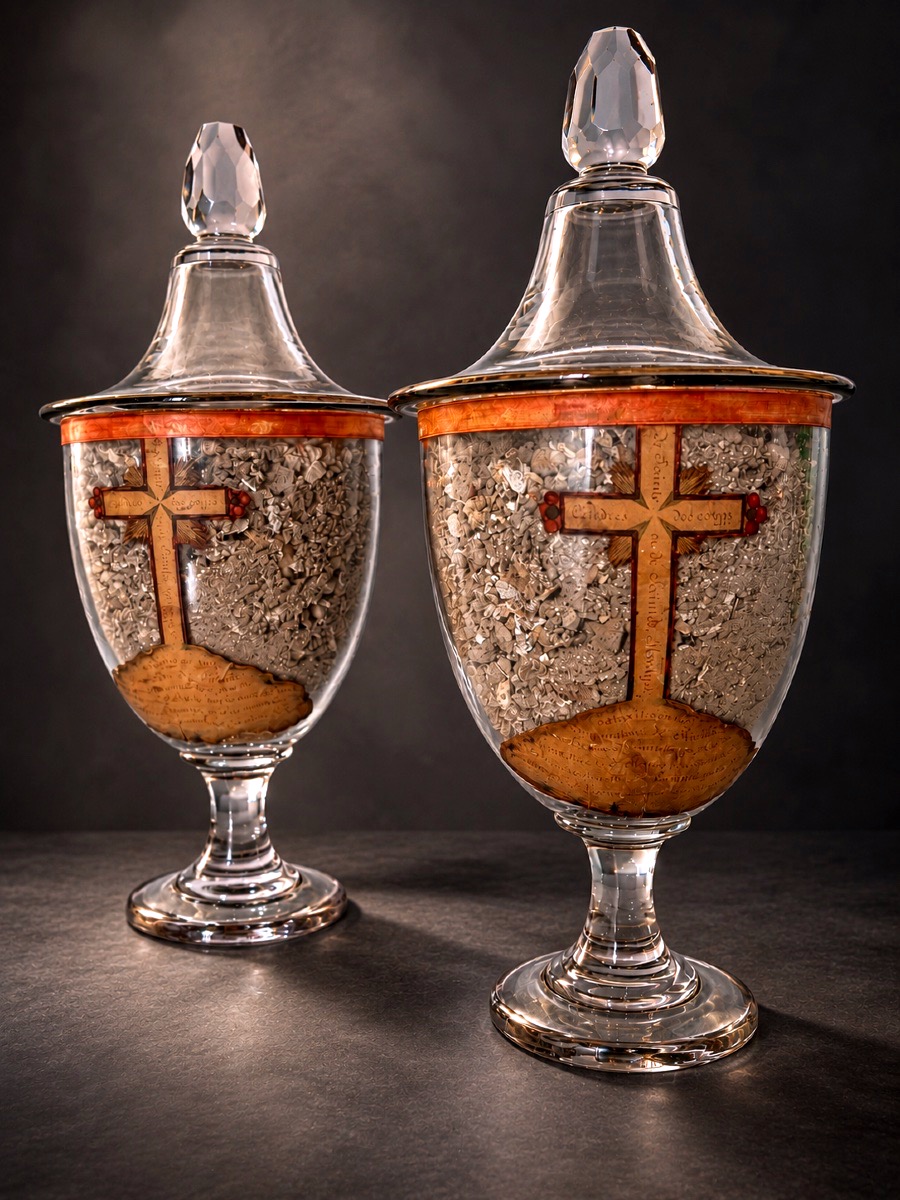
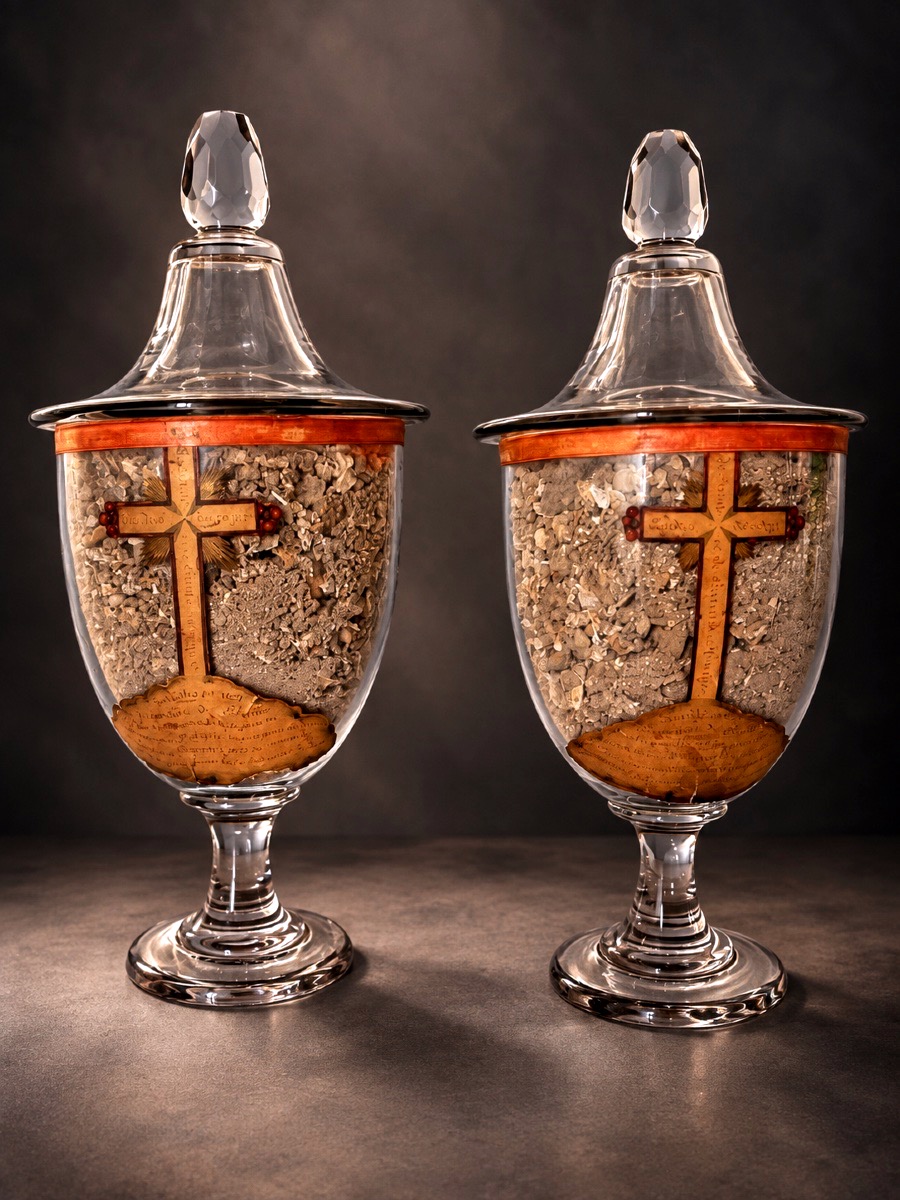
An exceptional and very rare pair of large reliquaries containing a significant collection of ancient relic materials which, according to their handwritten inscriptions, originated in the Early Christian cemeteries of Rome and were "extracted in 1661."
Beyond their spectacular appearance, these two objects constitute remarkable material evidence of the history of the cult of martyrs and the rediscovery of the Roman catacombs in the modern era.
Description
Relics from subterranean Rome
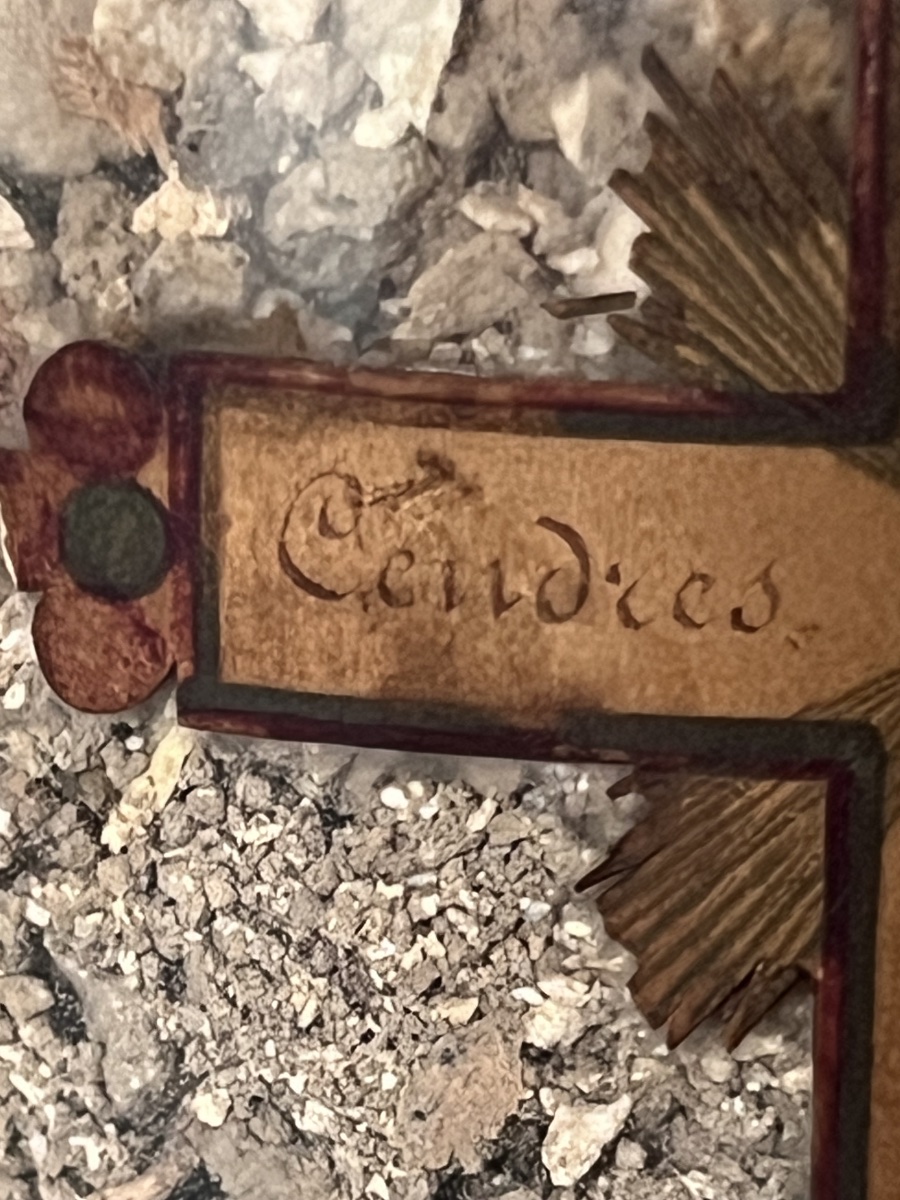
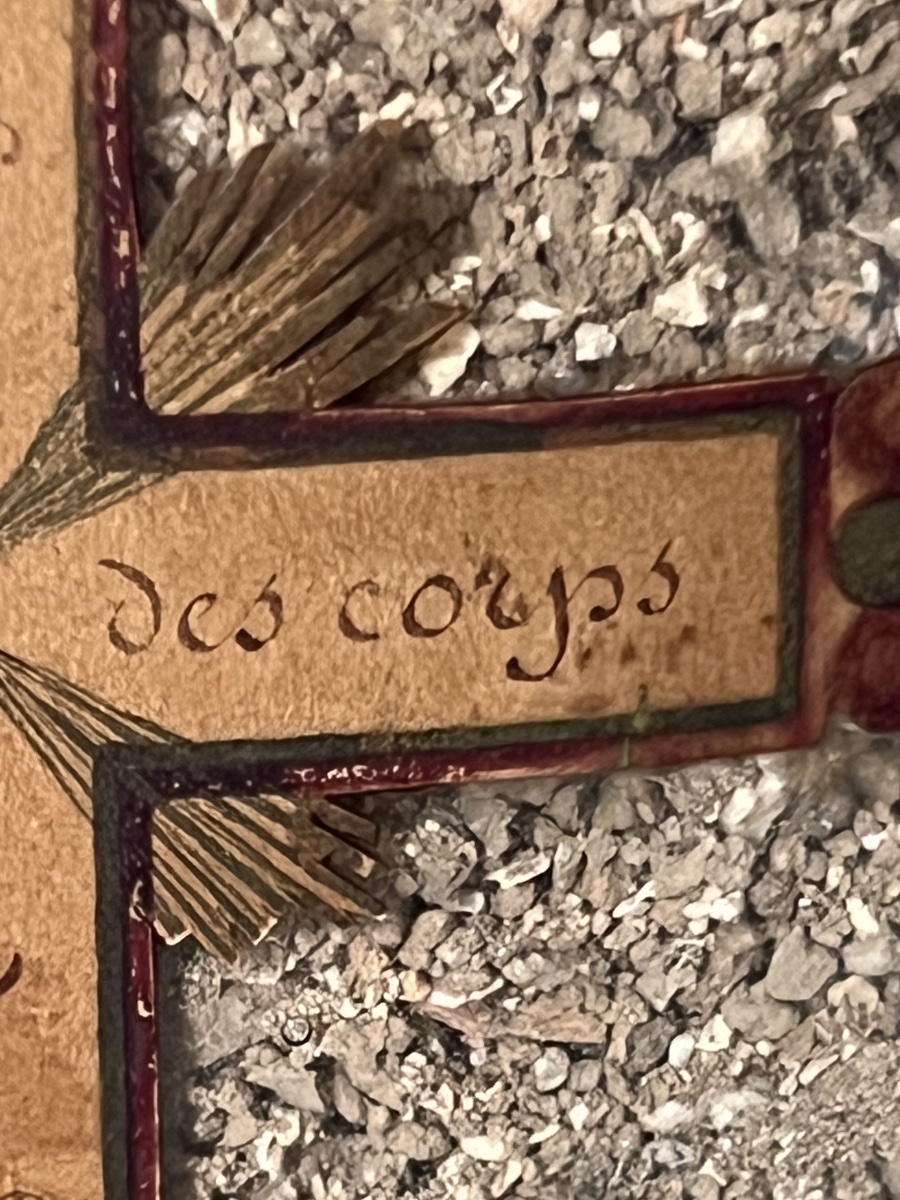
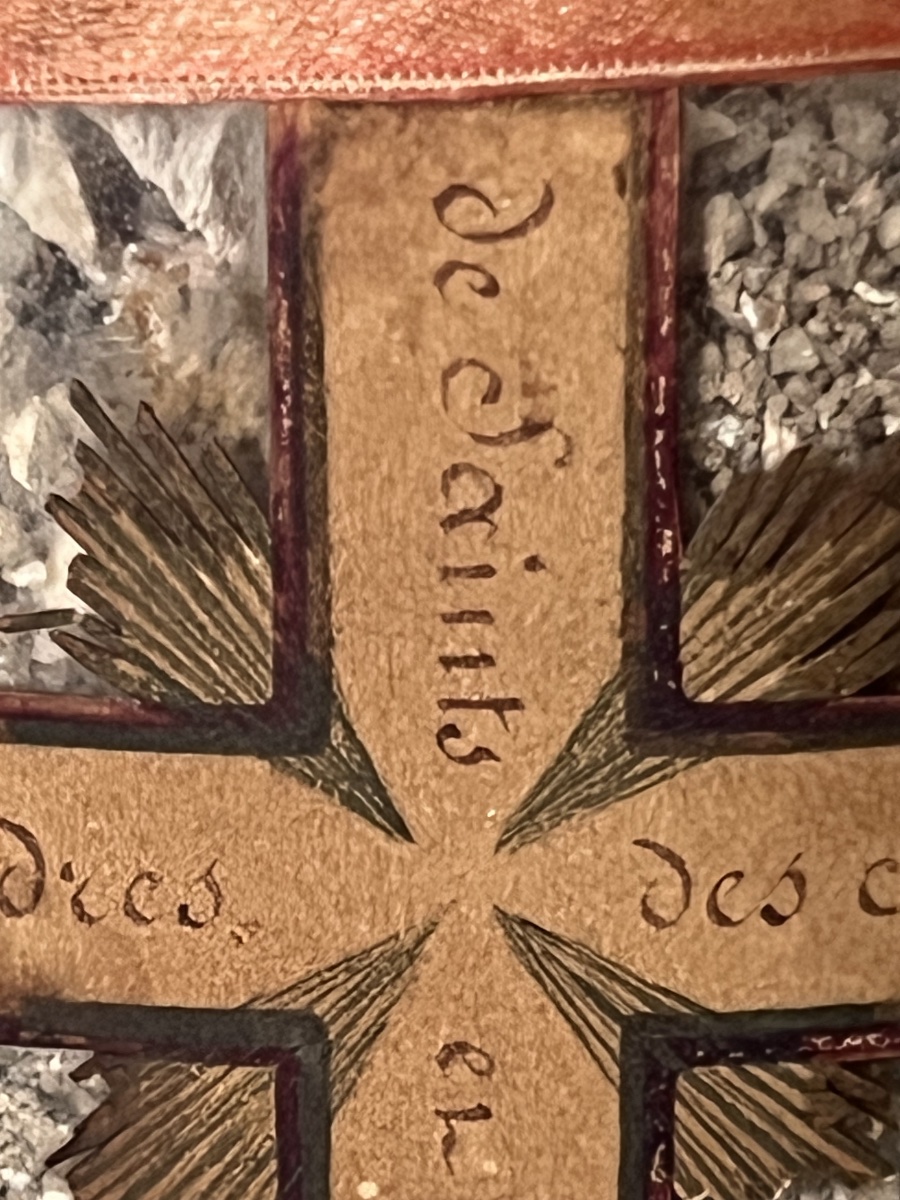
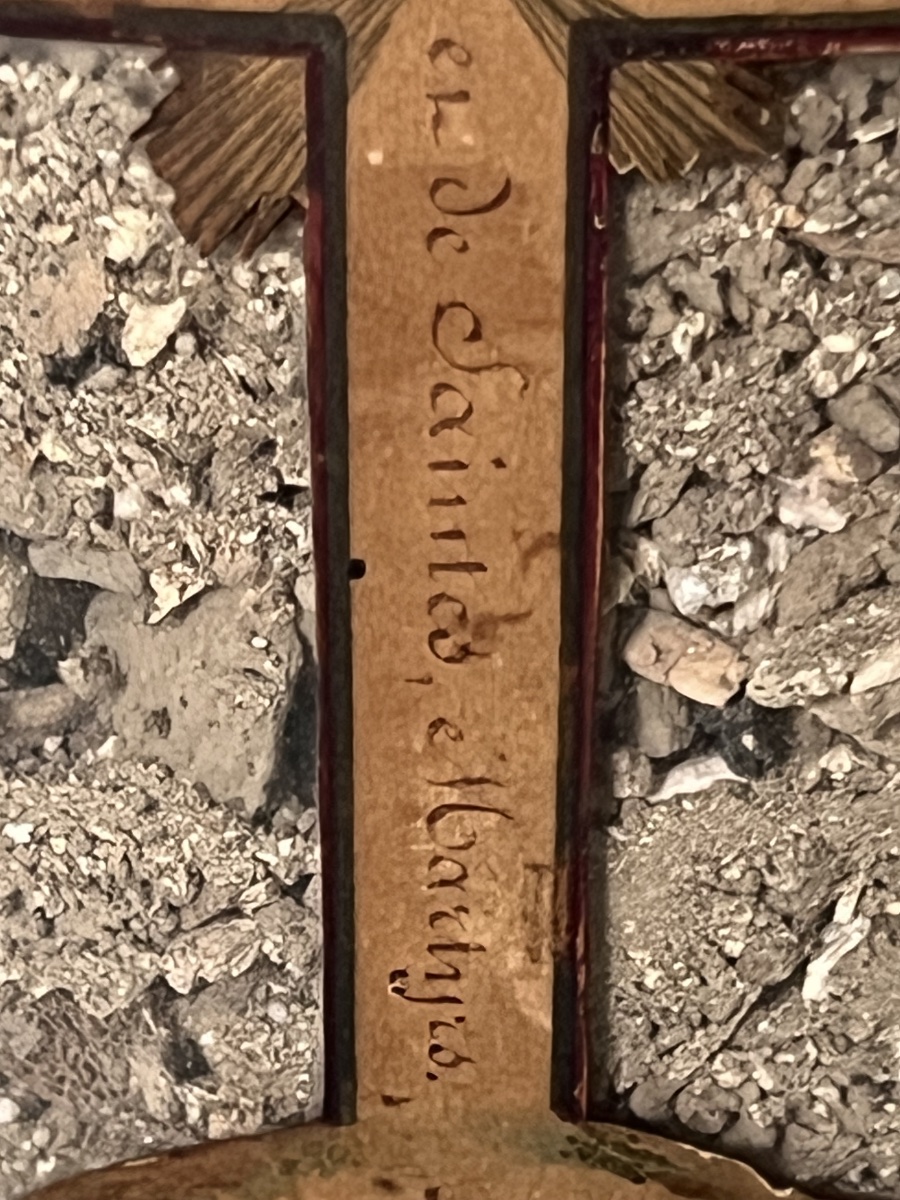
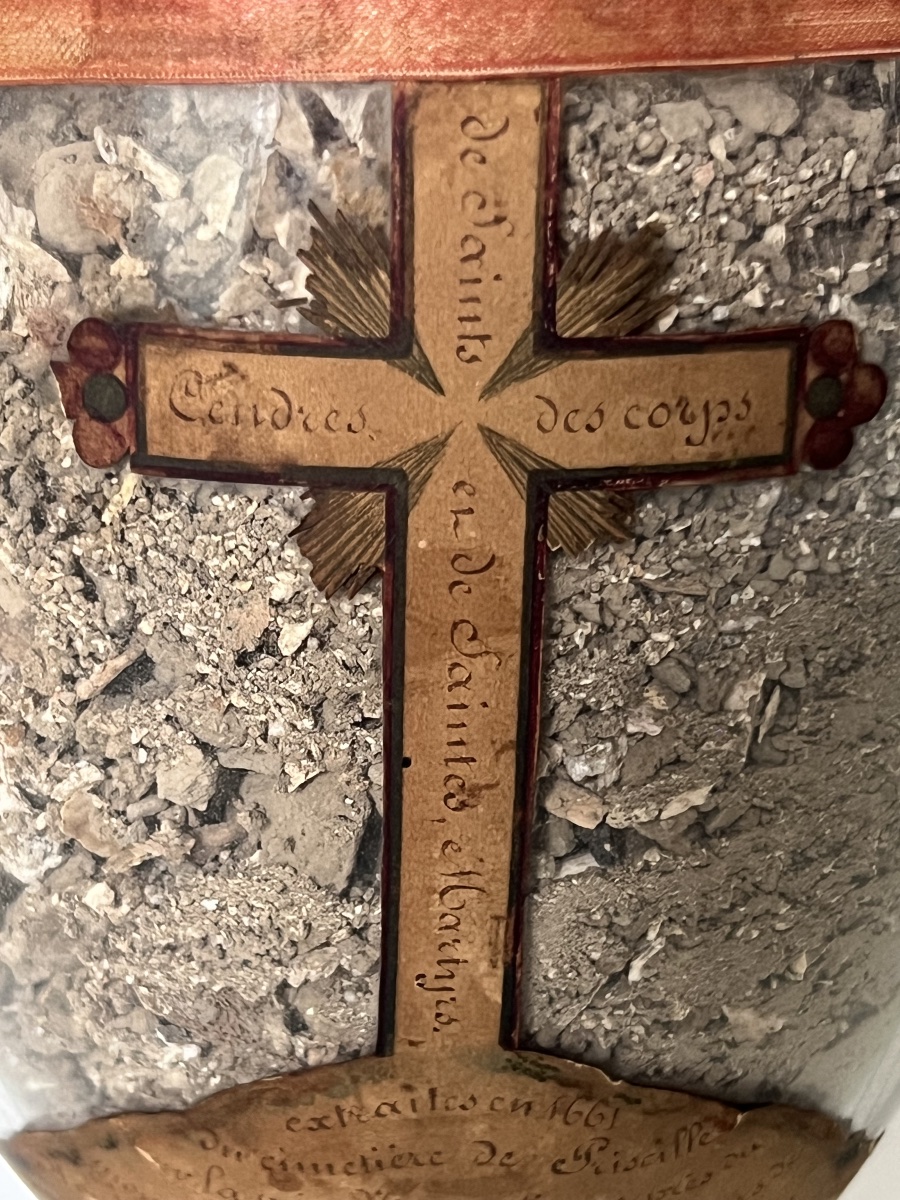
Applied to the outer surface of each vessel is a large, radiant cross made of paper; this serves as a reliquary label, documenting the materials preserved within. Handwritten inscriptions on its various arms specify the nature of the contents, notably reading "Ashes," "of bodies," and "of Holy Martyrs."
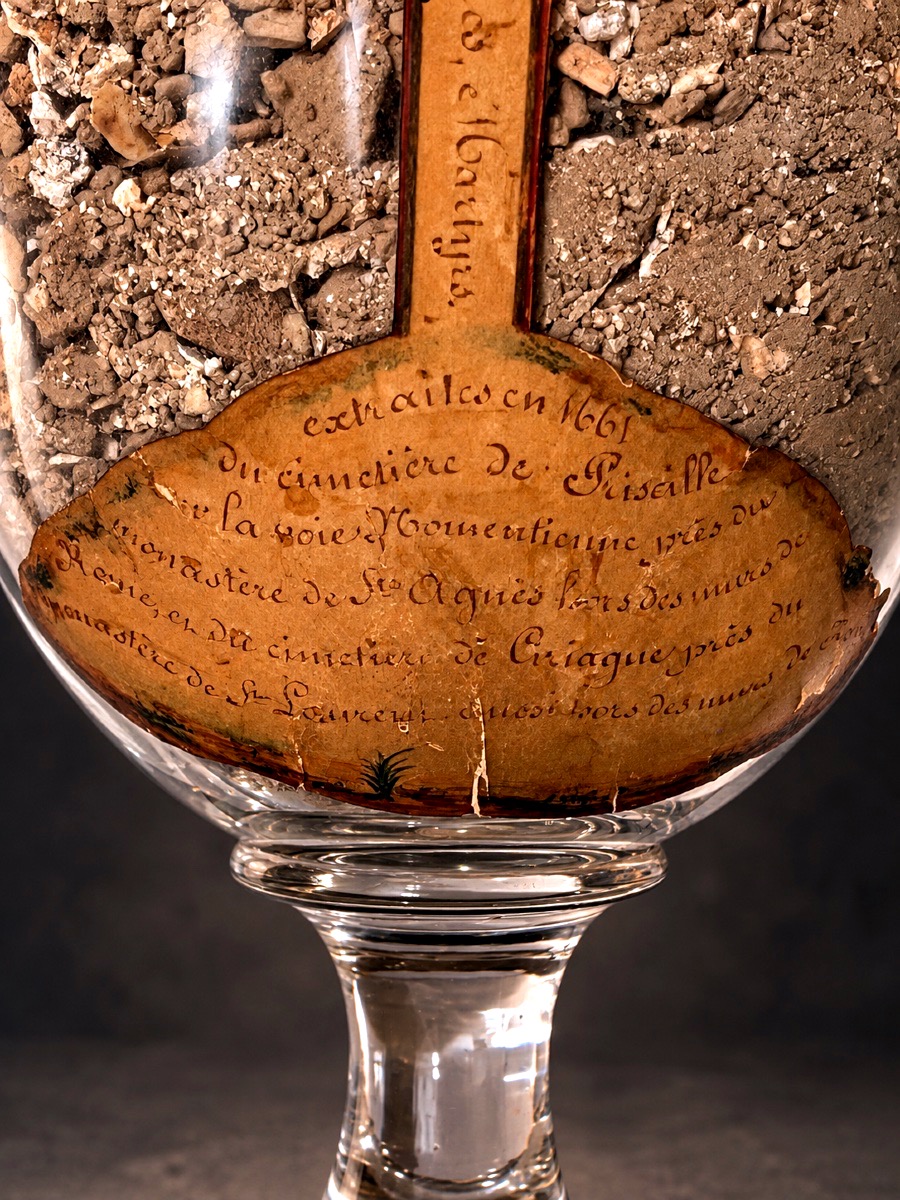
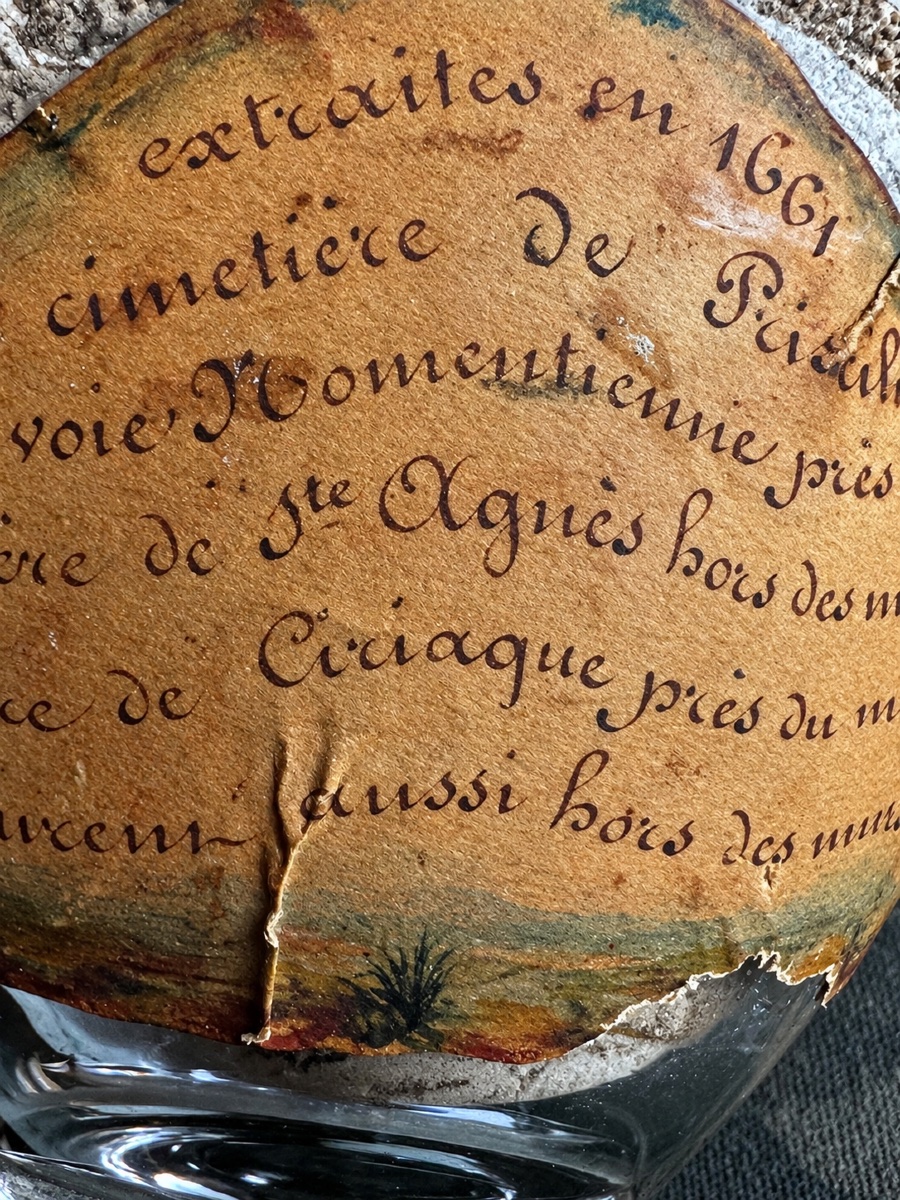
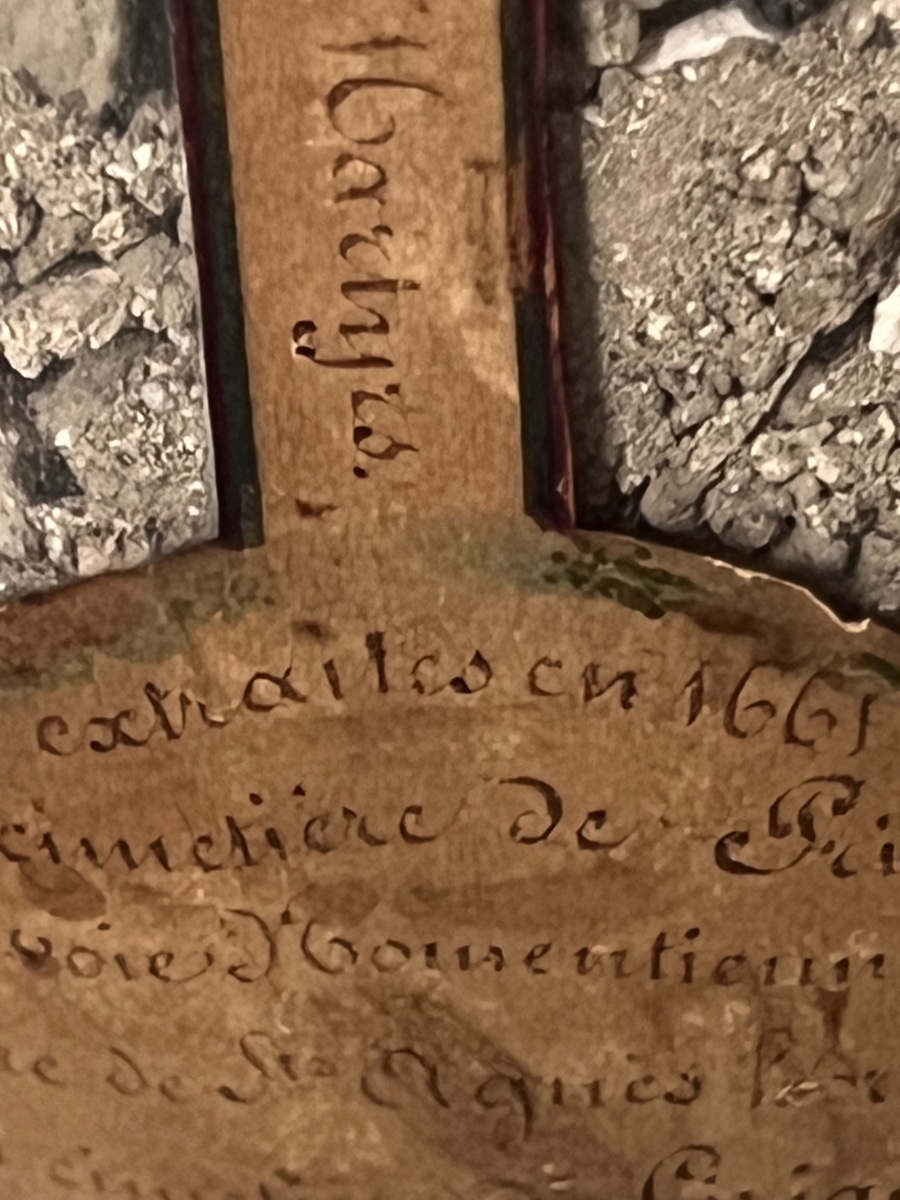
A substantial, antique handwritten label is also affixed to the lower section of each vessel, on the exterior of the glass.
Bearing matching information on both examples, these labels document the provenance of the relic materials and include the crucial notation: "extracted in 1661." They specifically cite the Roman cemeteries of Priscilla and Cyriacus, as well as the basilicas of Saint Agnes Outside the Walls and Saint Lawrence Outside the Walls.
These details lend the set a particularly interesting documentary dimension.
Rome, 1661: the era of "holy bodies"
The date inscribed on the two reliquaries places these materials within a major episode of European religious history. Following the rediscovery of the Roman catacombs in the late 16th century, the underground burial grounds of the early Christians became major sites for the search for and extraction of relics.
Remains believed to belong to early martyrs were removed under ecclesiastical supervision, authenticated, and subsequently distributed to churches, religious communities, and other recipients throughout the Catholic world.
Today, these relics are studied under the designation *corpi santi*, or "holy bodies from the catacombs."
The date 1661 appearing on both labels is particularly noteworthy, as it aligns perfectly with this period of Roman relic extractions.
Period documents specifically attest to the removal of relics from the Cemetery of Priscilla during that same year, under the pontificate of Pope Alexander VII.
The Cemetery of Cyriaca also saw significant relic translations in the 17th century; it is historically linked to the complex of San Lorenzo fuori le Mura (Saint Lawrence Outside the Walls) on the Via Tiburtina.
While these connections do not, of course, allow for the individual identification of the female martyrs from whom the preserved remains originated, they place the pair’s inscriptions within the context of 17th-century Roman practices with remarkable coherence.
A later monumental presentation and coming from a highly important Belgian collection.
The relic materials and their original inscriptions were likely reassembled and solemnly displayed at a later date within the two large vessels seen today.
Based on their manufacturing characteristics, these vessels can be tentatively dated to the period between the late 18th century and the first half of the 19th century.
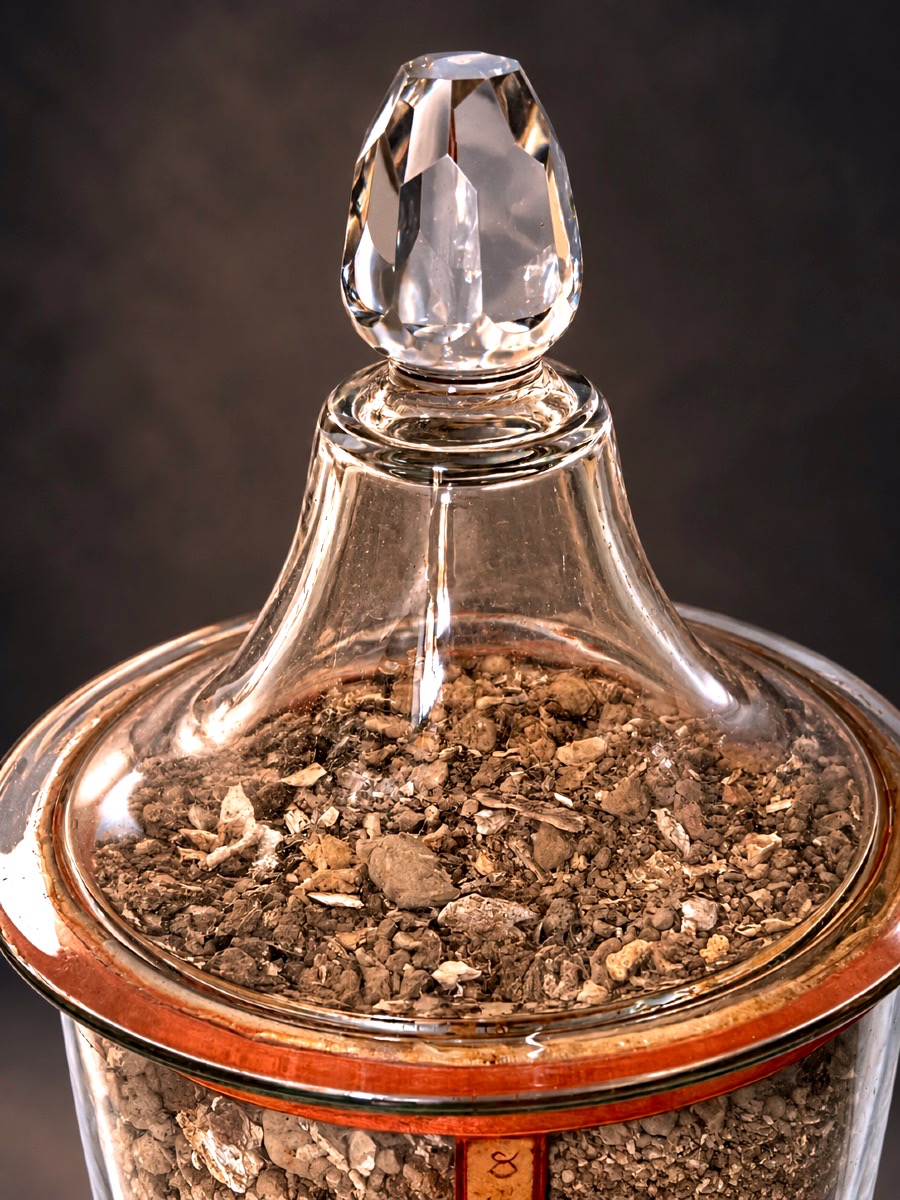
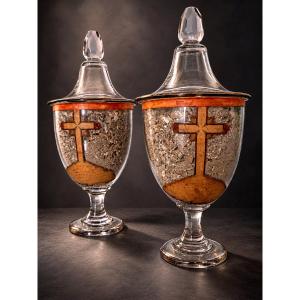
Crafted from thick glass, they rest on a wide circular base and are topped by an imposing bell-shaped lid. Each lid is topped by an elegant faceted knob of glass or cut crystal.
A red silk ribbon marks the junction between the vase and its lid.
This later presentation in no way diminishes the significance of the ancient materials; on the contrary, it testifies to a desire to preserve, monumentalize, and display relics deemed particularly precious, long after their initial extraction.
An exceptionally well-preserved pair
The perfect match between the two vases—including their lids, internal mounts, radiant crosses, and, above all, their corresponding labels citing the 1661 extraction—confirms that the set constitutes a genuine pair.
Keeping the two reliquaries together is essential to understanding them: their symmetry and shared provenance lend them a historical and visual impact that a single, isolated example would largely lose.
They thus serve not only as objects of devotion but also as tangible records of the movement of relics from the Roman catacombs across Catholic Europe—spanning their extraction, preservation, and eventual display.
By virtue of their dimensions, the exceptional quantity of preserved material, their glass-fronted presentation, and—above all—the presence of original inscriptions specifying the extraction date (1661), these two...
An exceptional and very rare pair of large reliquaries containing a significant collection of ancient relic materials which, according to their handwritten inscriptions, originated in the Early Christian cemeteries of Rome and were "extracted in 1661."
Beyond their spectacular appearance, these two objects constitute remarkable material evidence of the history of the cult of martyrs and the rediscovery of the Roman catacombs in the modern era.
Description
Relics from subterranean Rome
Applied to the outer surface of each vessel is a large, radiant cross made of paper; this serves as a reliquary label, documenting the materials preserved within. Handwritten inscriptions on its various arms specify the nature of the contents, notably reading "Ashes," "of bodies," and "of Holy Martyrs."
A substantial, antique handwritten label is also affixed to the lower section of each vessel, on the exterior of the glass.
Bearing matching information on both examples, these labels document the provenance of the relic materials and include the crucial notation: "extracted in 1661." They specifically cite the Roman cemeteries of Priscilla and Cyriacus, as well as the basilicas of Saint Agnes Outside the Walls and Saint Lawrence Outside the Walls.
These details lend the set a particularly interesting documentary dimension.
Rome, 1661: the era of "holy bodies"
The date inscribed on the two reliquaries places these materials within a major episode of European religious history. Following the rediscovery of the Roman catacombs in the late 16th century, the underground burial grounds of the early Christians became major sites for the search for and extraction of relics.
Remains believed to belong to early martyrs were removed under ecclesiastical supervision, authenticated, and subsequently distributed to churches, religious communities, and other recipients throughout the Catholic world.
Today, these relics are studied under the designation *corpi santi*, or "holy bodies from the catacombs."
The date 1661 appearing on both labels is particularly noteworthy, as it aligns perfectly with this period of Roman relic extractions.
Period documents specifically attest to the removal of relics from the Cemetery of Priscilla during that same year, under the pontificate of Pope Alexander VII.
The Cemetery of Cyriaca also saw significant relic translations in the 17th century; it is historically linked to the complex of San Lorenzo fuori le Mura (Saint Lawrence Outside the Walls) on the Via Tiburtina.
While these connections do not, of course, allow for the individual identification of the female martyrs from whom the preserved remains originated, they place the pair’s inscriptions within the context of 17th-century Roman practices with remarkable coherence.
A later monumental presentation and coming from a highly important Belgian collection.
The relic materials and their original inscriptions were likely reassembled and solemnly displayed at a later date within the two large vessels seen today.
Based on their manufacturing characteristics, these vessels can be tentatively dated to the period between the late 18th century and the first half of the 19th century.
Crafted from thick glass, they rest on a wide circular base and are topped by an imposing bell-shaped lid. Each lid is topped by an elegant faceted knob of glass or cut crystal.
A red silk ribbon marks the junction between the vase and its lid.
This later presentation in no way diminishes the significance of the ancient materials; on the contrary, it testifies to a desire to preserve, monumentalize, and display relics deemed particularly precious, long after their initial extraction.
An exceptionally well-preserved pair
The perfect match between the two vases—including their lids, internal mounts, radiant crosses, and, above all, their corresponding labels citing the 1661 extraction—confirms that the set constitutes a genuine pair.
Keeping the two reliquaries together is essential to understanding them: their symmetry and shared provenance lend them a historical and visual impact that a single, isolated example would largely lose.
They thus serve not only as objects of devotion but also as tangible records of the movement of relics from the Roman catacombs across Catholic Europe—spanning their extraction, preservation, and eventual display.
By virtue of their dimensions, the exceptional quantity of preserved material, their glass-fronted presentation, and—above all—the presence of original inscriptions specifying the extraction date (1661), these two...
6 500 €
Period: 17th century
Style: Other Style
Condition: Good condition
Height: 34 cm
Reference (ID): 1829858
Availability: In stock
Print