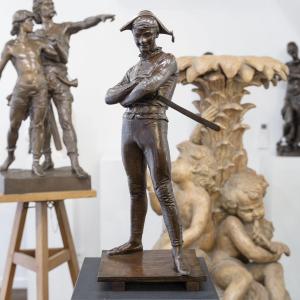


Sculpture - Harlequin , Rene De Saint - Marceaux (1845–1915) / F. Barbedienne Foundry - Bronze
Artist: Charles René De Saint-marceaux (1845-1915)
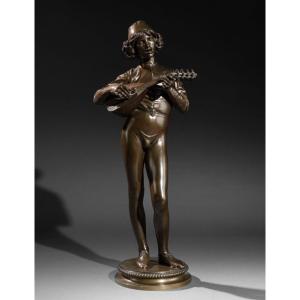
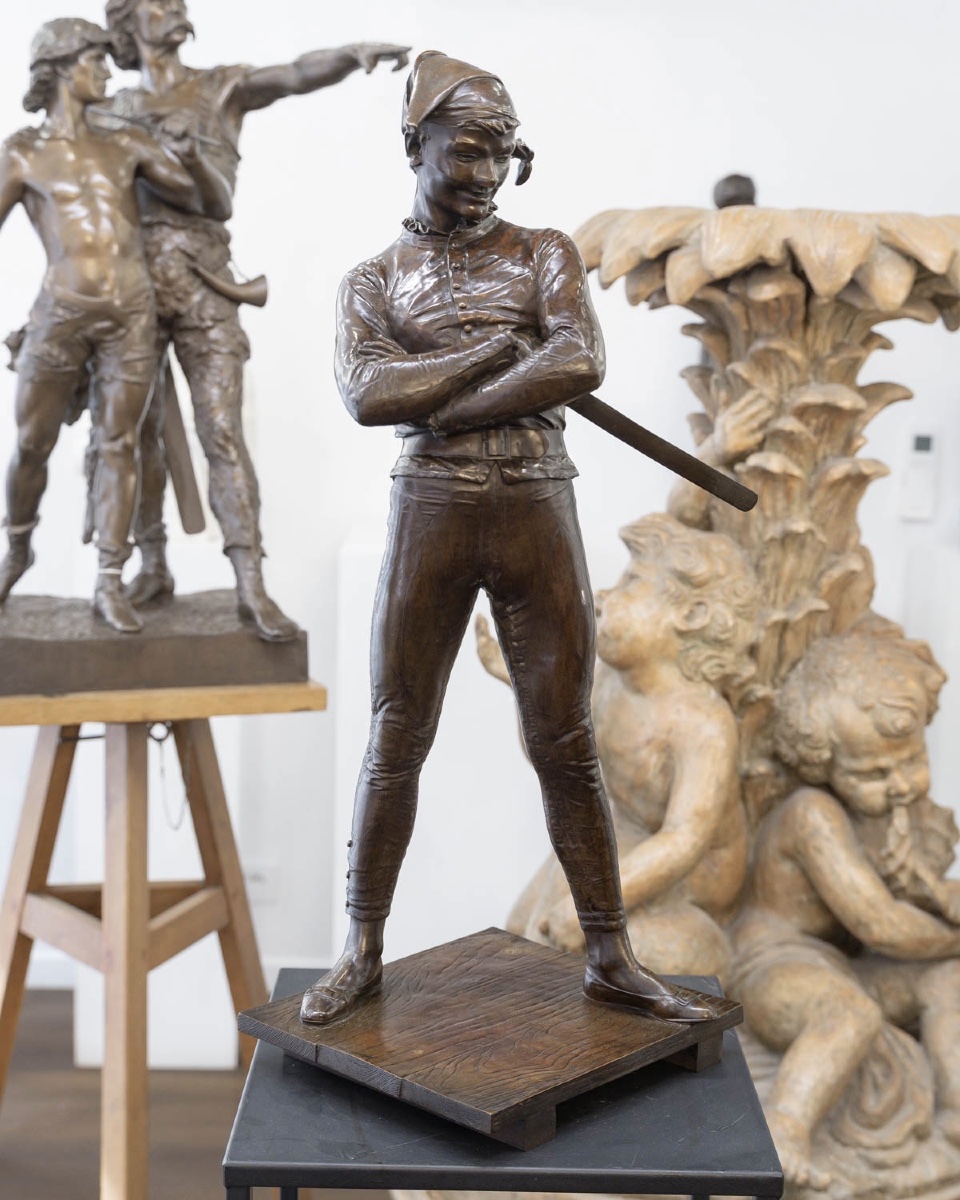
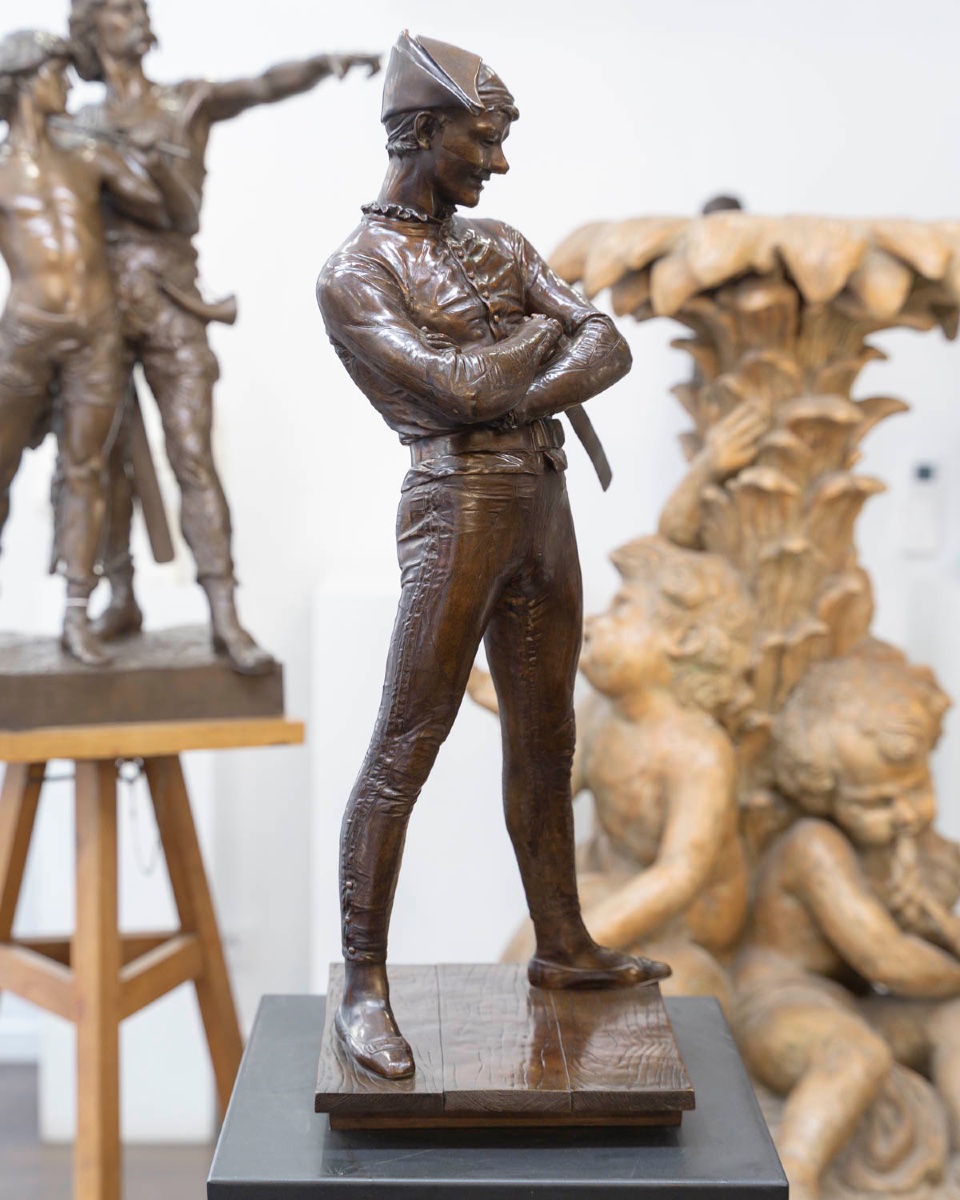
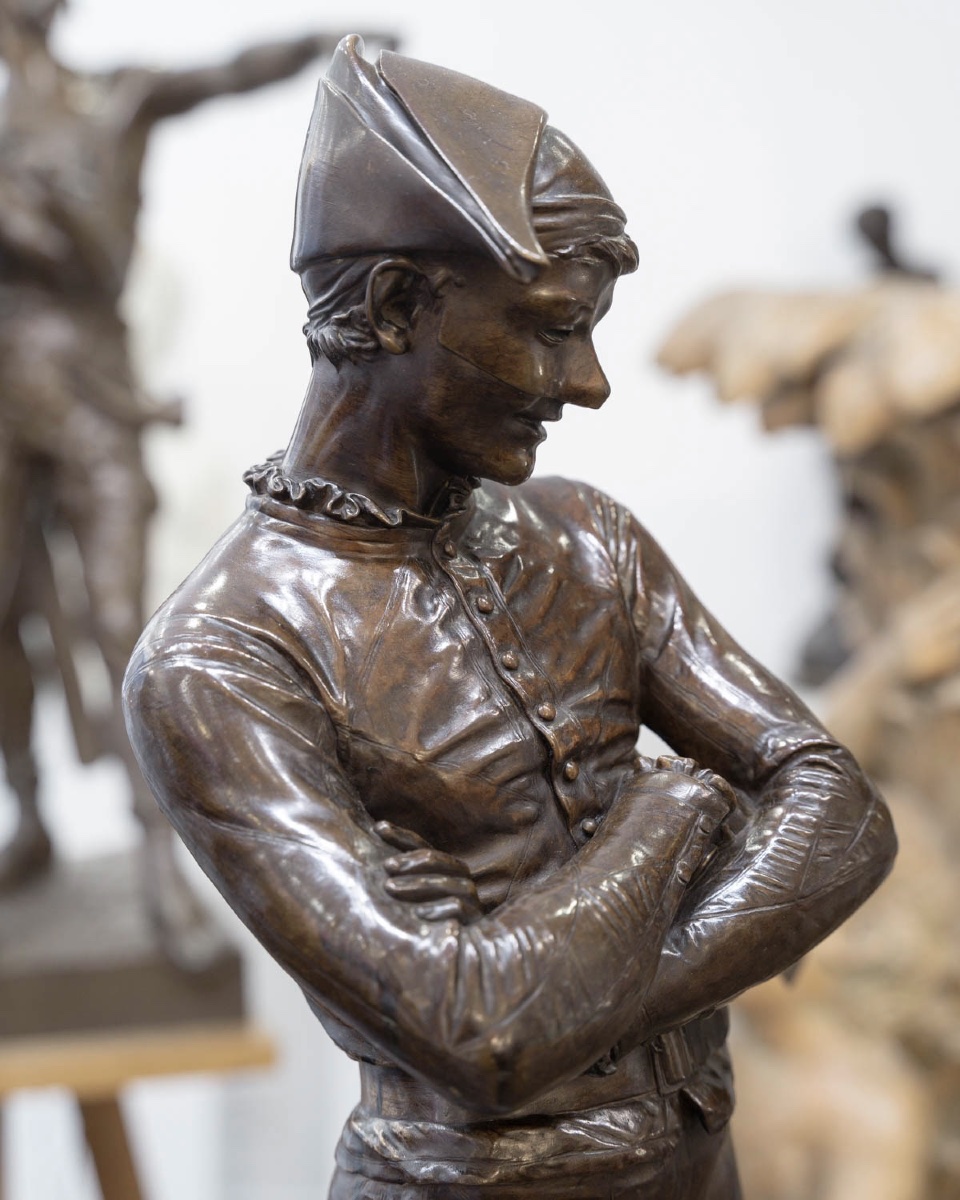
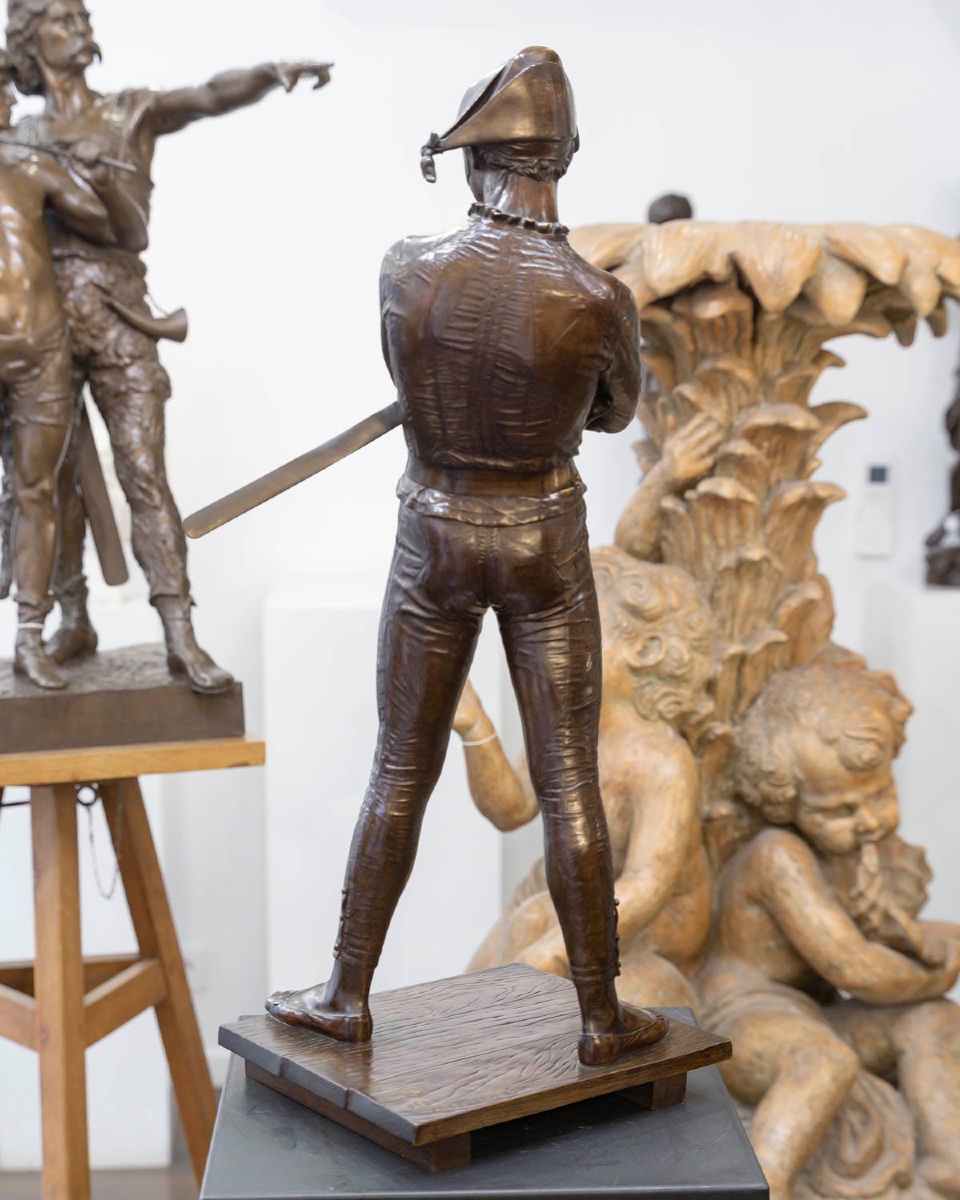
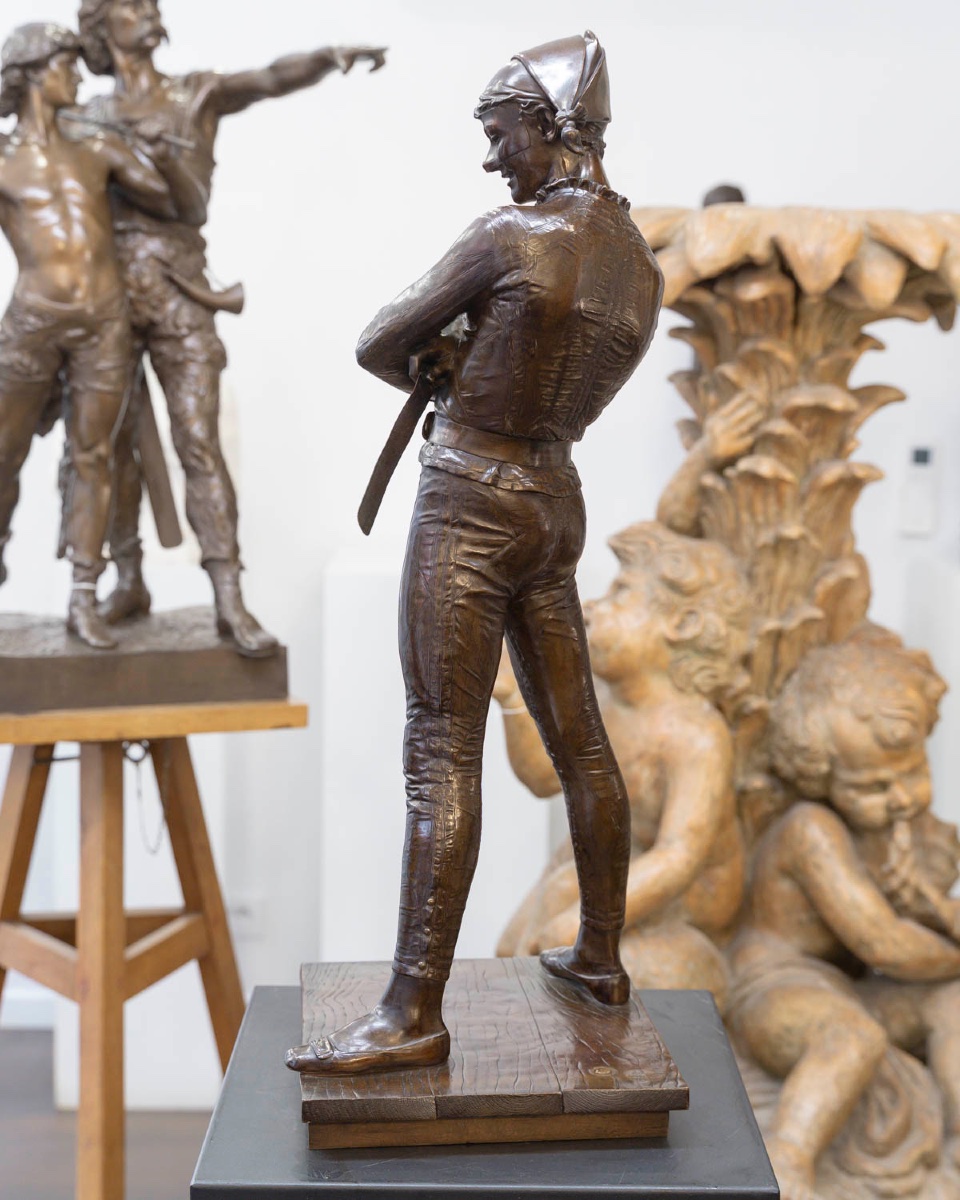
A rare bronze cast with a brown patina , depicting the iconic work by the famous sculptor Rene De Saint-Marceaux , "Harlequin" .
A famous , mischievous character from the Commedia dell’Arte , who first appeared in 16th-century Italy .
This landmark work , conceived in 1879 and presented by the artist at the Paris Salon in 1880 , breaks with neoclassical academicism through its spirited and sardonic realism .
Harlequin possesses a beauty that is at once arrogant , daring , and virile .
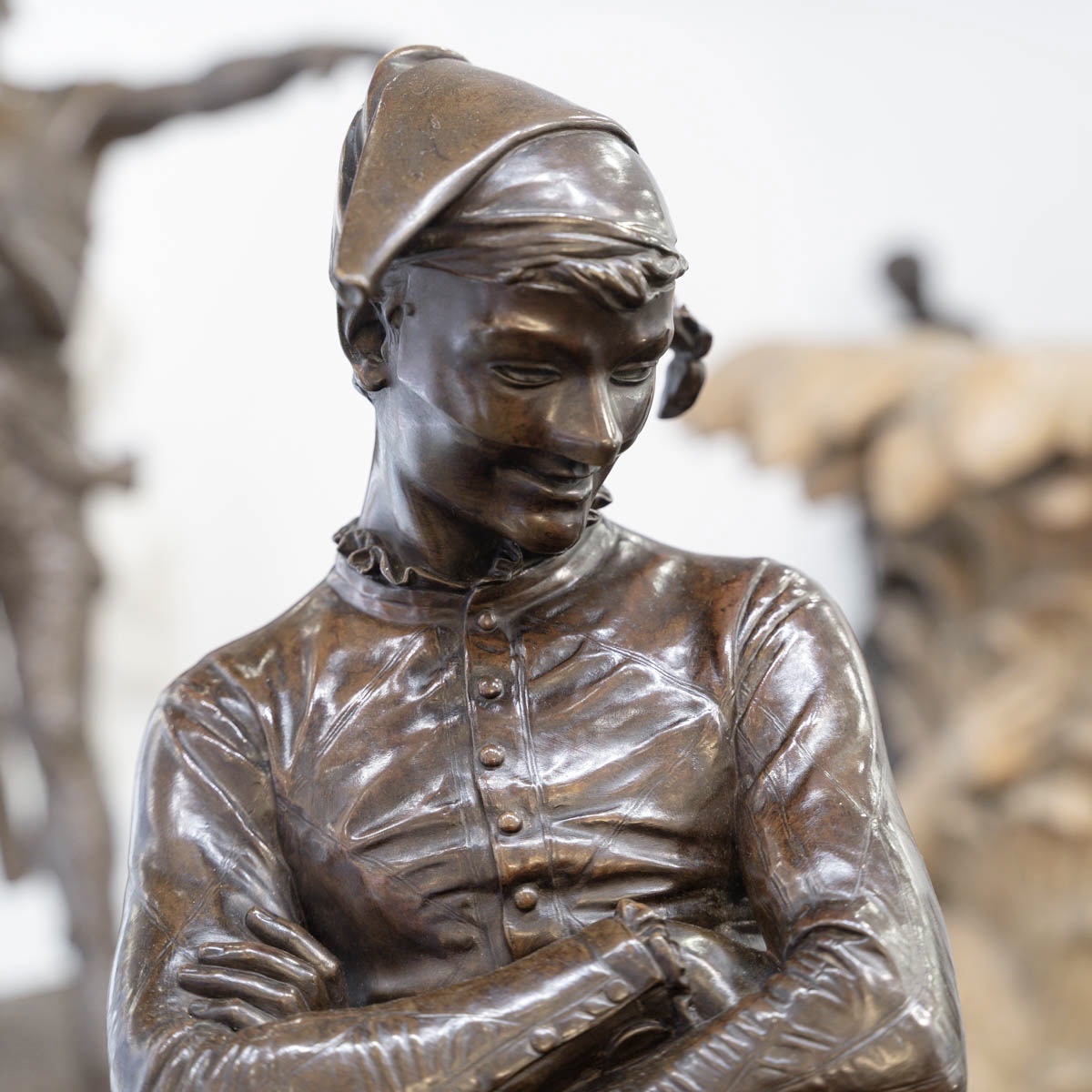
He poses in a haughty and insolent stance , standing with his arms crossed , legs apart , and a mocking smile on his face .
The famous character is depicted in his traditional costume .
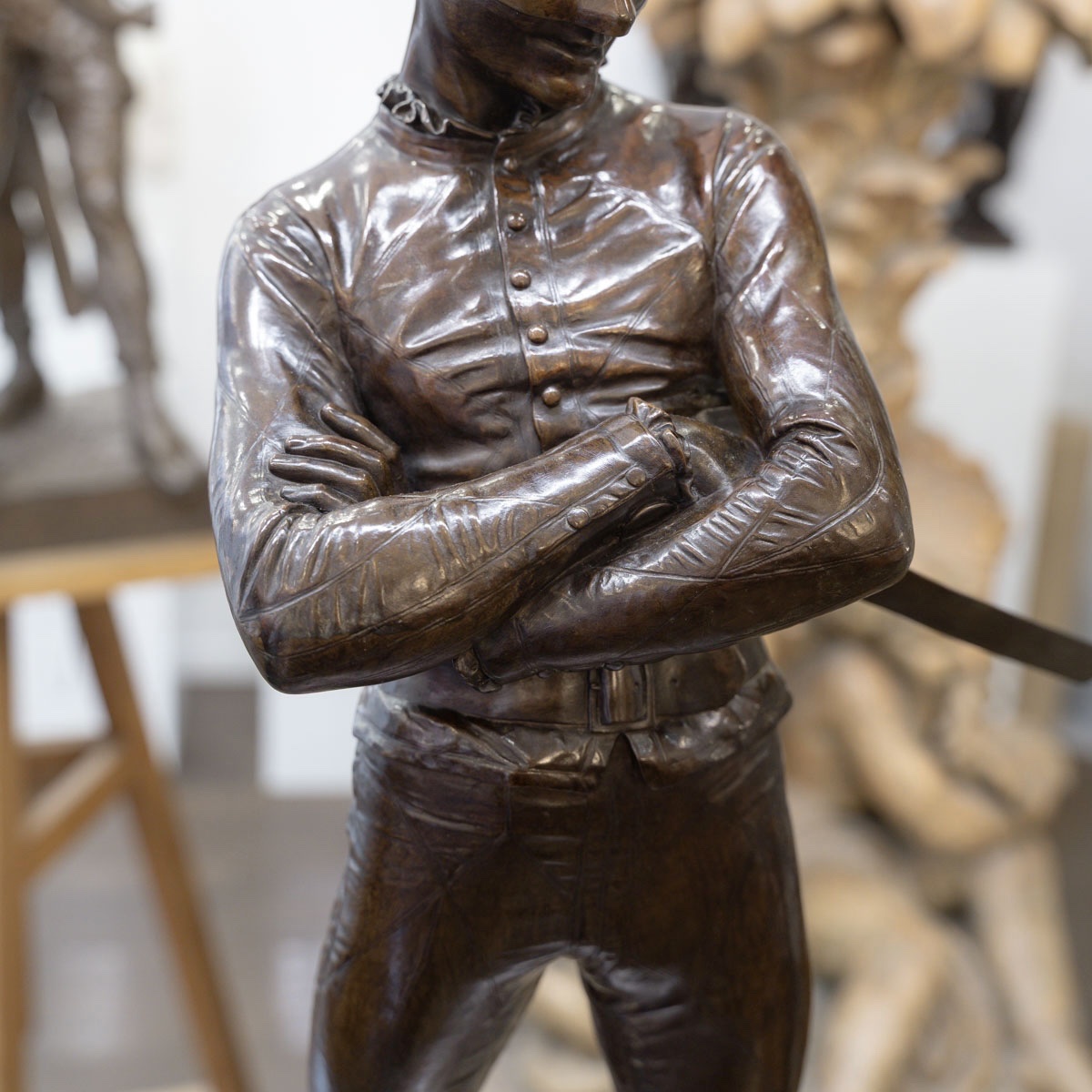
He is dressed in a patchwork outfit made of multicolored fabric diamonds , which are said to represent his many facets .
His clothing , accented with topstitching , highlights the beautiful curves of his body .
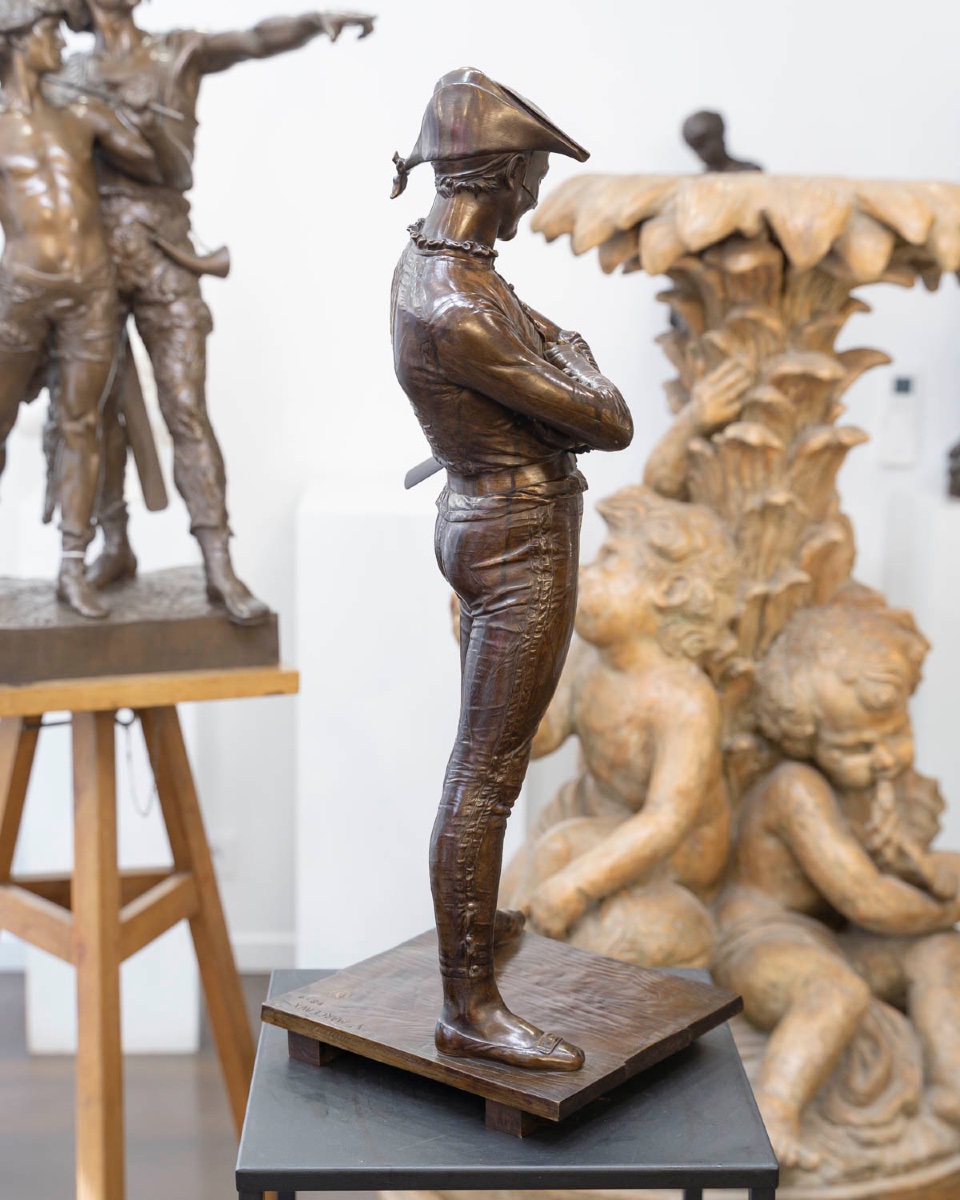
He wears flat , lighter shoes , allowing him to perform a thousand pirouettes and acrobatic feats .
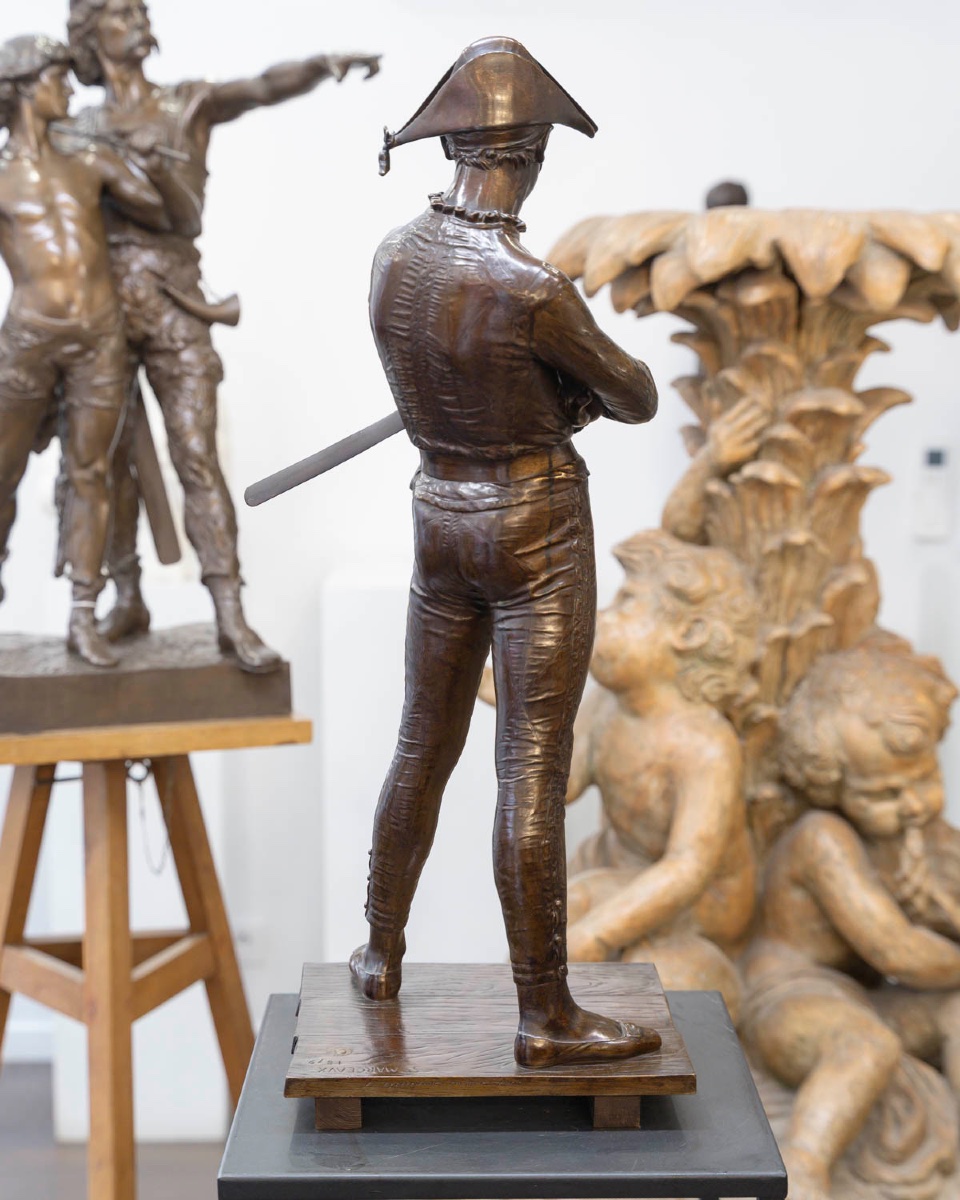
He wears a hat that does not fully cover his head , along with his iconic mask , a belt, and a bat that serves as a club .
The meticulous details of the costume , textures , and shadows reflect exceptional craftsmanship , characteristic of the sculptures of Charles René De Saint-Marceaux .
This work embodies both the sculptor’s artistic genius and the richness of theatrical tradition .
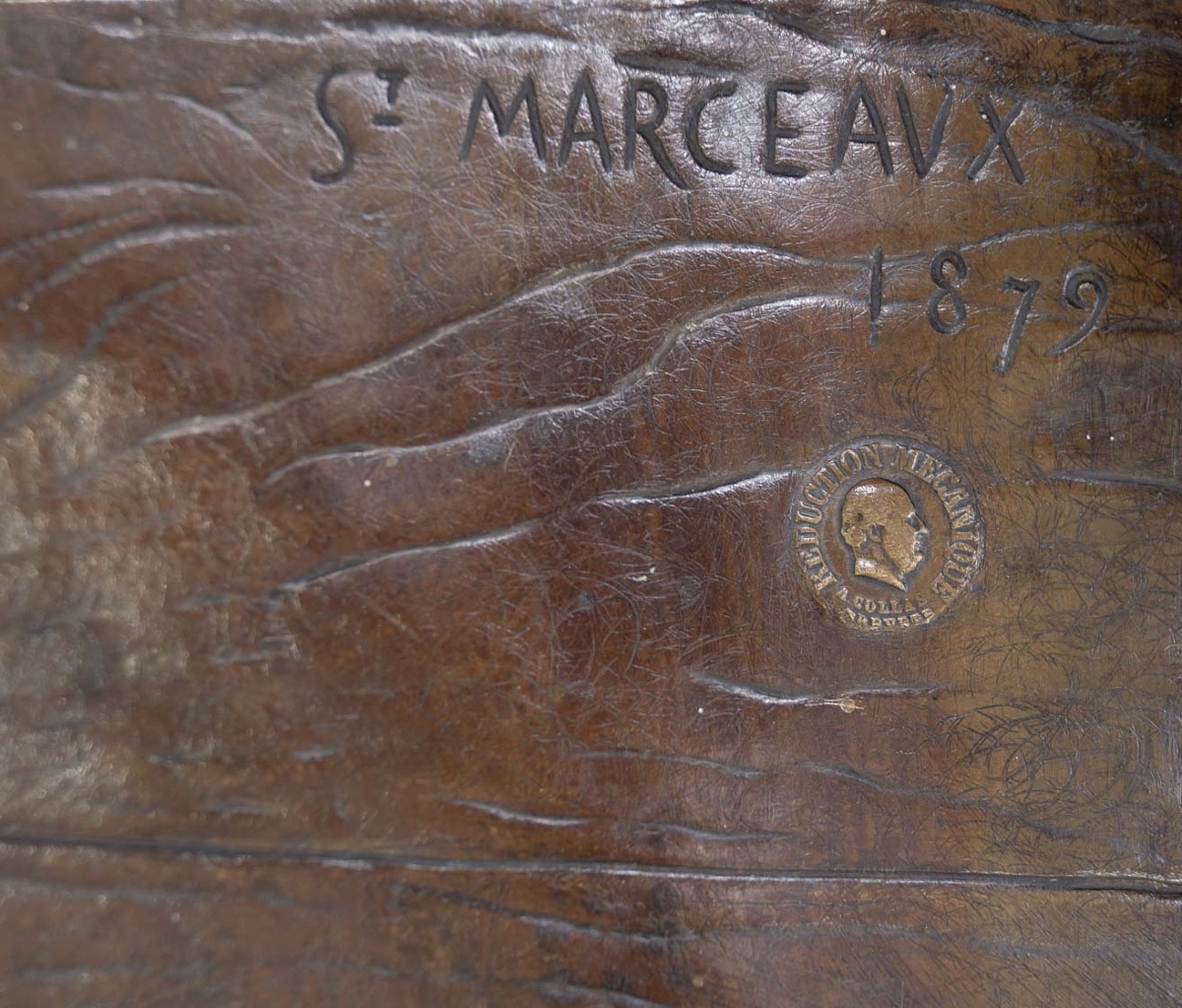
The sculptor's signature "St MARCEAUX" is engraved in relief , followed by the date "1879" (date of creation) on the terrace , which depicts a wooden floor and illustrates a scene evoking the world of theater .
Circular stamp reading "Reduction Mecanique A.Colas" .
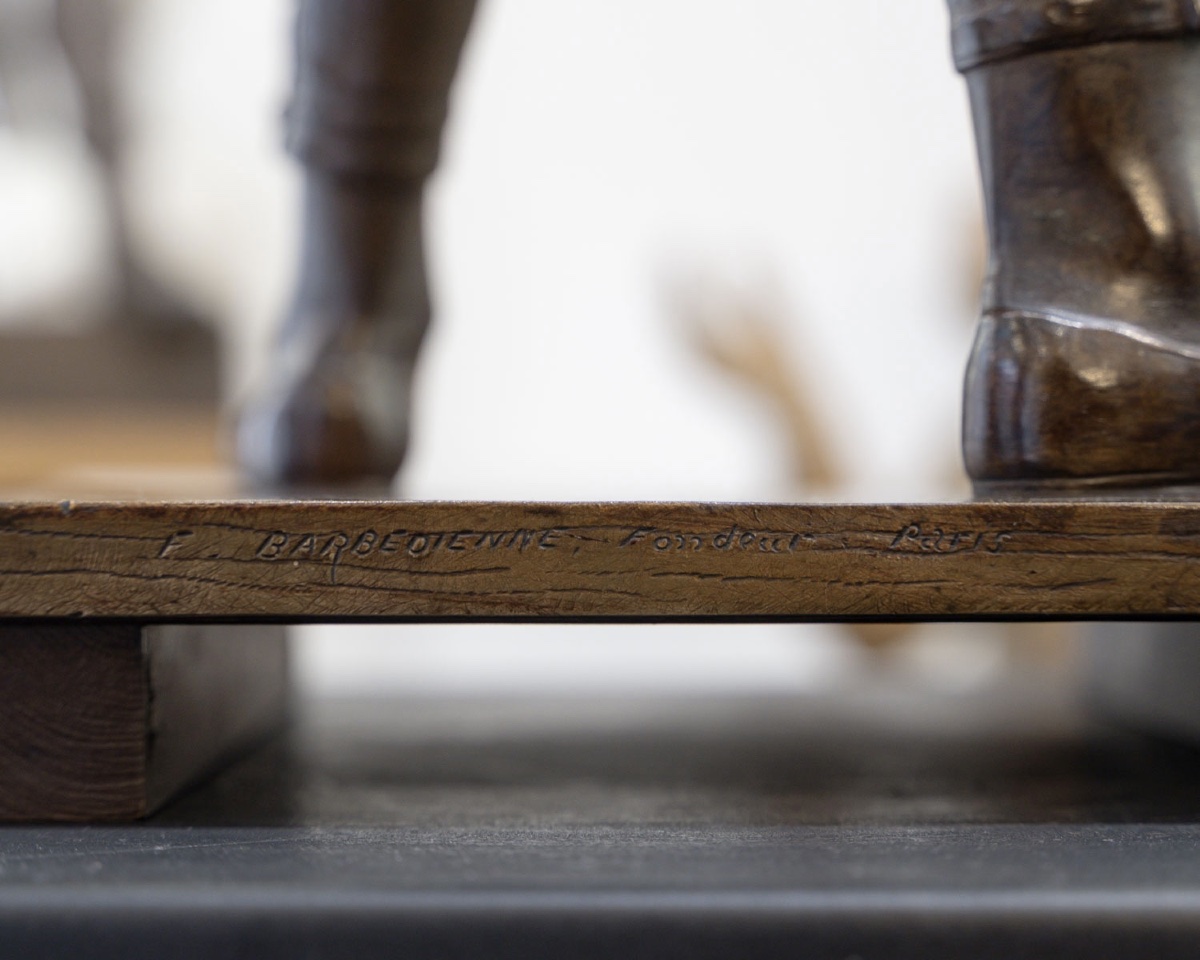
Foundry mark "F.BARBEDIENNE.FONDEUR, Paris" on the base .
Excellent condition and patina .
Dimensions : 68 cm x 29 cm x 29 cm
Charles Rene De Saint-Marceaux (1845-1915)
Charles Rene De Saint-Marceaux, known as "Rene De Saint-Marceaux"(1845–1915) , was a leading French sculptor and medalist of the Third Republic .
Born on September 23, 1845 , in Reims to a prominent family , he was the son of a champagne merchant and the grandson of the mayor of Reims .
He attended the Imperial High School in Reims until he was fourteen . However , he had no interest in his studies .
According to his mother , Emilie Isabelle Morizet (1822–1901), Rene de Saint-Marceaux was a child who was "hard to keep focused" .
Whenever he had the chance , he visited and studied the Notre-Dame Cathedral in Reims .
Years later, Rene confided : "I was born twice in Reims, for the medieval figures in these churches sparked in me a love of sculpture" .
Despite this , his father planned for him to pursue a business education so that he could take over the champagne house .
Rene de Saint-Marceaux was then sent to Germany , for eighteen months to attend a business school , in Frankfurt am Main .
Placed in a boarding school , the teenager quickly learned German but often skipped classes .
He took advantage of this time to visit the city’s old quarter and its museums .
After his stay in Germany , he was placed under the tutelage of Professor Rève in 1862 .
Professor Rève encouraged him to pursue the arts , particularly modeling .
At the age of seventeen , he began studying sculpture and was discovered by Victor Baltard (architect of The Halles in Paris).
Shortly thereafter, following the death of his brother , his parents accepted his artistic calling and offered him the family attic as his first professional studio .
At the age of eighteen , drawn to sculpture , he moved to Paris to study at the School Of Fine-Arts , where he was a student of the sculptor François Jouffroy (1806–1882) .
Rene de Saint-Marceaux made his debut at the Paris Salon in 1868 .
He spent time in Italy in 1869, and again in 1873–1874 , particularly in Florence .
He was interested in the Renaissance and Michelangelo , whose influence can be seen in his marble sculpture "The Genius Guarding the Secret of the Tomb" , one of his most famous works along with "Harlequin" .
He also traveled to Morocco and Spain between 1874 and 1879 .
A talented sculptor , Rene de Saint-Marceaux was representative of the salon artists of the Third Republic , who frequently entered competitions and sought honors .
In 1892 , he married Lucie Marguerite Jourdain (1850–1930) , the widow of the painter Eugène Baugnies (1841–1891) .
He was elected a member of the Academy of Fine Arts in 1905 .
Several of his sculptures are housed in the Reims Museum .
A famous , mischievous character from the Commedia dell’Arte , who first appeared in 16th-century Italy .
This landmark work , conceived in 1879 and presented by the artist at the Paris Salon in 1880 , breaks with neoclassical academicism through its spirited and sardonic realism .
Harlequin possesses a beauty that is at once arrogant , daring , and virile .
He poses in a haughty and insolent stance , standing with his arms crossed , legs apart , and a mocking smile on his face .
The famous character is depicted in his traditional costume .
He is dressed in a patchwork outfit made of multicolored fabric diamonds , which are said to represent his many facets .
His clothing , accented with topstitching , highlights the beautiful curves of his body .
He wears flat , lighter shoes , allowing him to perform a thousand pirouettes and acrobatic feats .
He wears a hat that does not fully cover his head , along with his iconic mask , a belt, and a bat that serves as a club .
The meticulous details of the costume , textures , and shadows reflect exceptional craftsmanship , characteristic of the sculptures of Charles René De Saint-Marceaux .
This work embodies both the sculptor’s artistic genius and the richness of theatrical tradition .
The sculptor's signature "St MARCEAUX" is engraved in relief , followed by the date "1879" (date of creation) on the terrace , which depicts a wooden floor and illustrates a scene evoking the world of theater .
Circular stamp reading "Reduction Mecanique A.Colas" .
Foundry mark "F.BARBEDIENNE.FONDEUR, Paris" on the base .
Excellent condition and patina .
Dimensions : 68 cm x 29 cm x 29 cm
Charles Rene De Saint-Marceaux (1845-1915)
Charles Rene De Saint-Marceaux, known as "Rene De Saint-Marceaux"(1845–1915) , was a leading French sculptor and medalist of the Third Republic .
Born on September 23, 1845 , in Reims to a prominent family , he was the son of a champagne merchant and the grandson of the mayor of Reims .
He attended the Imperial High School in Reims until he was fourteen . However , he had no interest in his studies .
According to his mother , Emilie Isabelle Morizet (1822–1901), Rene de Saint-Marceaux was a child who was "hard to keep focused" .
Whenever he had the chance , he visited and studied the Notre-Dame Cathedral in Reims .
Years later, Rene confided : "I was born twice in Reims, for the medieval figures in these churches sparked in me a love of sculpture" .
Despite this , his father planned for him to pursue a business education so that he could take over the champagne house .
Rene de Saint-Marceaux was then sent to Germany , for eighteen months to attend a business school , in Frankfurt am Main .
Placed in a boarding school , the teenager quickly learned German but often skipped classes .
He took advantage of this time to visit the city’s old quarter and its museums .
After his stay in Germany , he was placed under the tutelage of Professor Rève in 1862 .
Professor Rève encouraged him to pursue the arts , particularly modeling .
At the age of seventeen , he began studying sculpture and was discovered by Victor Baltard (architect of The Halles in Paris).
Shortly thereafter, following the death of his brother , his parents accepted his artistic calling and offered him the family attic as his first professional studio .
At the age of eighteen , drawn to sculpture , he moved to Paris to study at the School Of Fine-Arts , where he was a student of the sculptor François Jouffroy (1806–1882) .
Rene de Saint-Marceaux made his debut at the Paris Salon in 1868 .
He spent time in Italy in 1869, and again in 1873–1874 , particularly in Florence .
He was interested in the Renaissance and Michelangelo , whose influence can be seen in his marble sculpture "The Genius Guarding the Secret of the Tomb" , one of his most famous works along with "Harlequin" .
He also traveled to Morocco and Spain between 1874 and 1879 .
A talented sculptor , Rene de Saint-Marceaux was representative of the salon artists of the Third Republic , who frequently entered competitions and sought honors .
In 1892 , he married Lucie Marguerite Jourdain (1850–1930) , the widow of the painter Eugène Baugnies (1841–1891) .
He was elected a member of the Academy of Fine Arts in 1905 .
Several of his sculptures are housed in the Reims Museum .
4 500 €
Period: 19th century
Style: Renaissance, Louis 13th
Condition: Perfect condition
Material: Bronze
Length: 29 cm
Width: 29 cm
Height: 68 cm
Reference (ID): 1829568
Availability: In stock
Print