


Sculpture - The Florentine Singer , Paul Dubois (1829–1905) / F. Barbedienne Foundry – Bronze
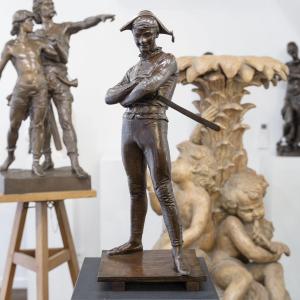
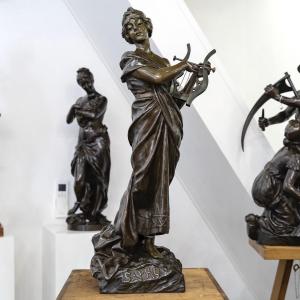
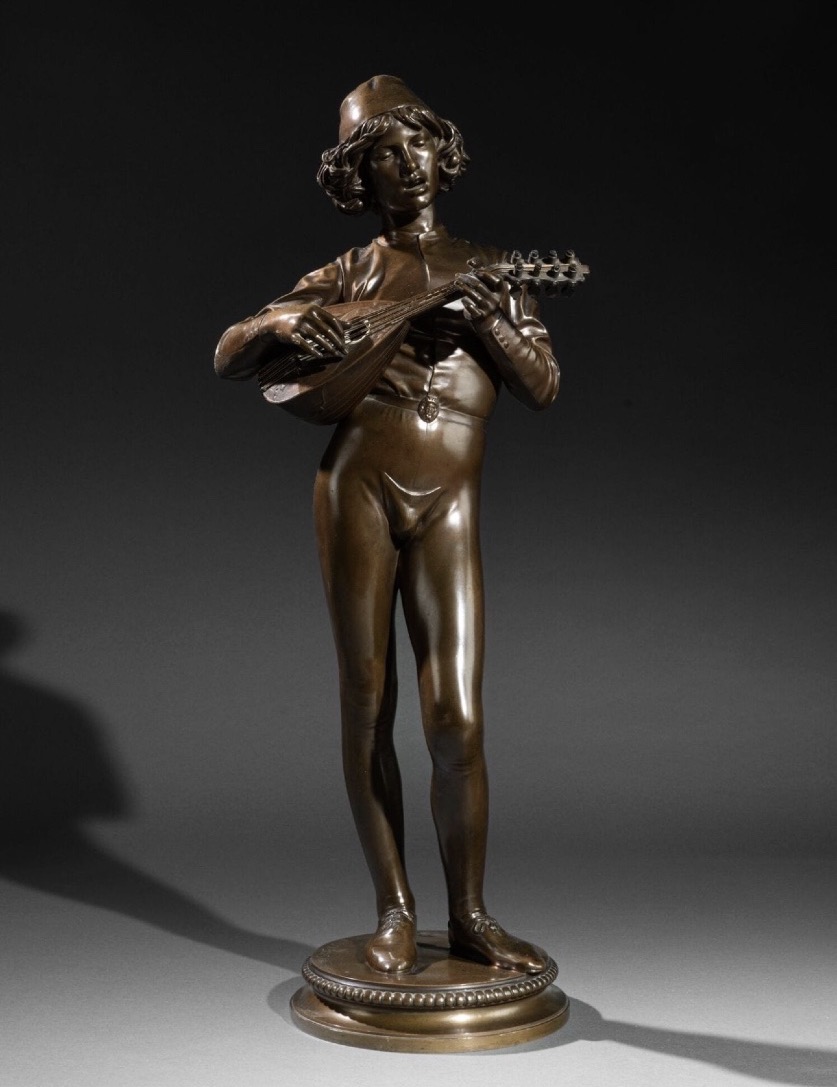
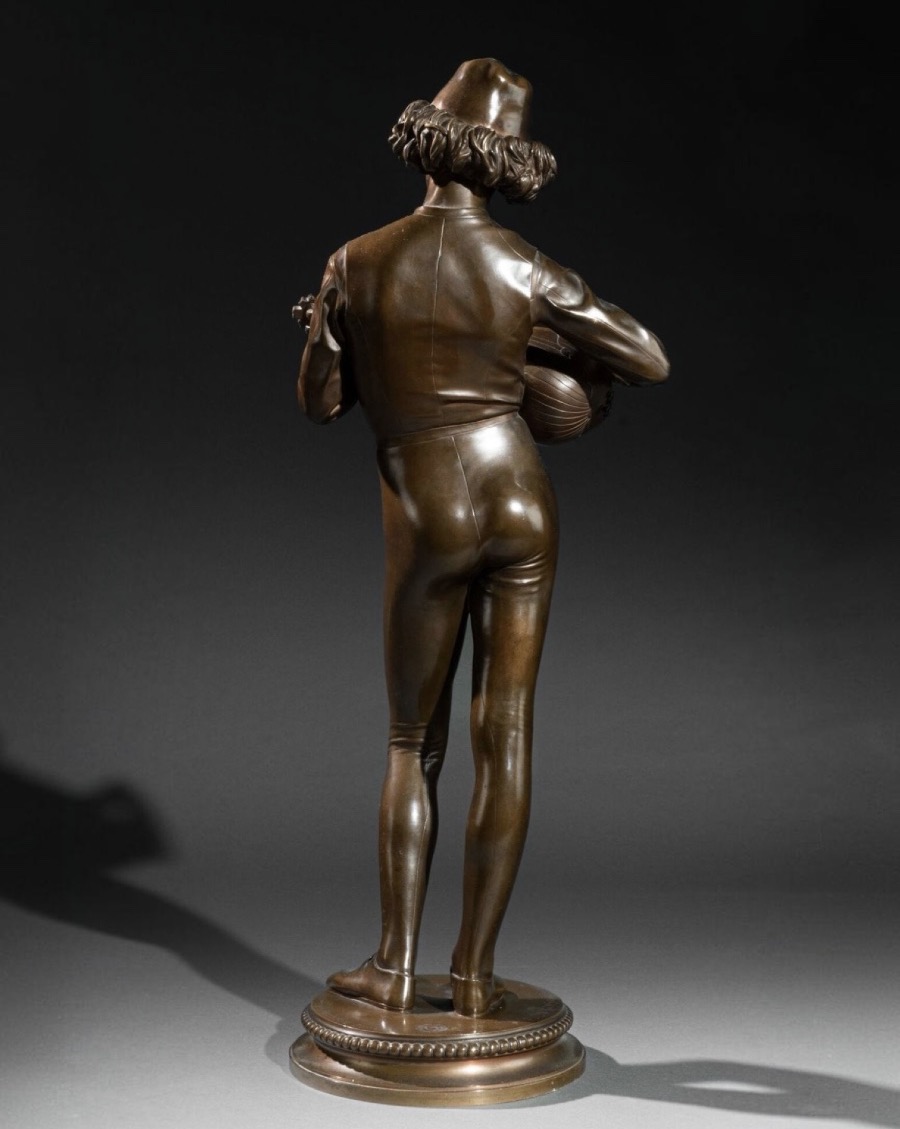
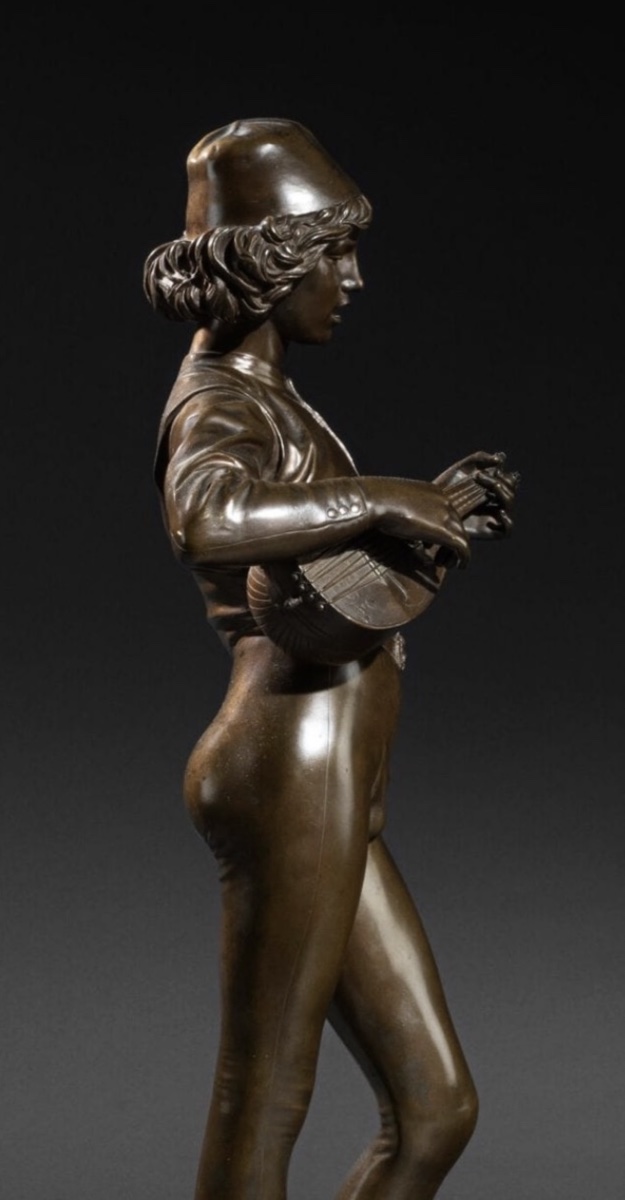
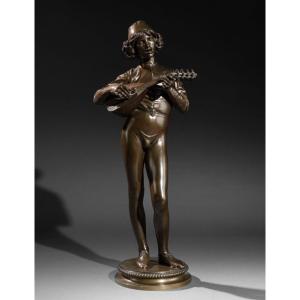
Bronze cast with a brown patina , depicting the "Florentine Singer", an iconic work by the sculptor Paul Dubois (1829–1905).
Influenced by his time in Italy , Paul Dubois enjoyed immediate success early in his career with refined works inspired by the Italian Renaissance .
It was in this vein that he sculpted the "Florentine Singer" , for which he was awarded the "Medal of Honor" at the 1865 Salon .
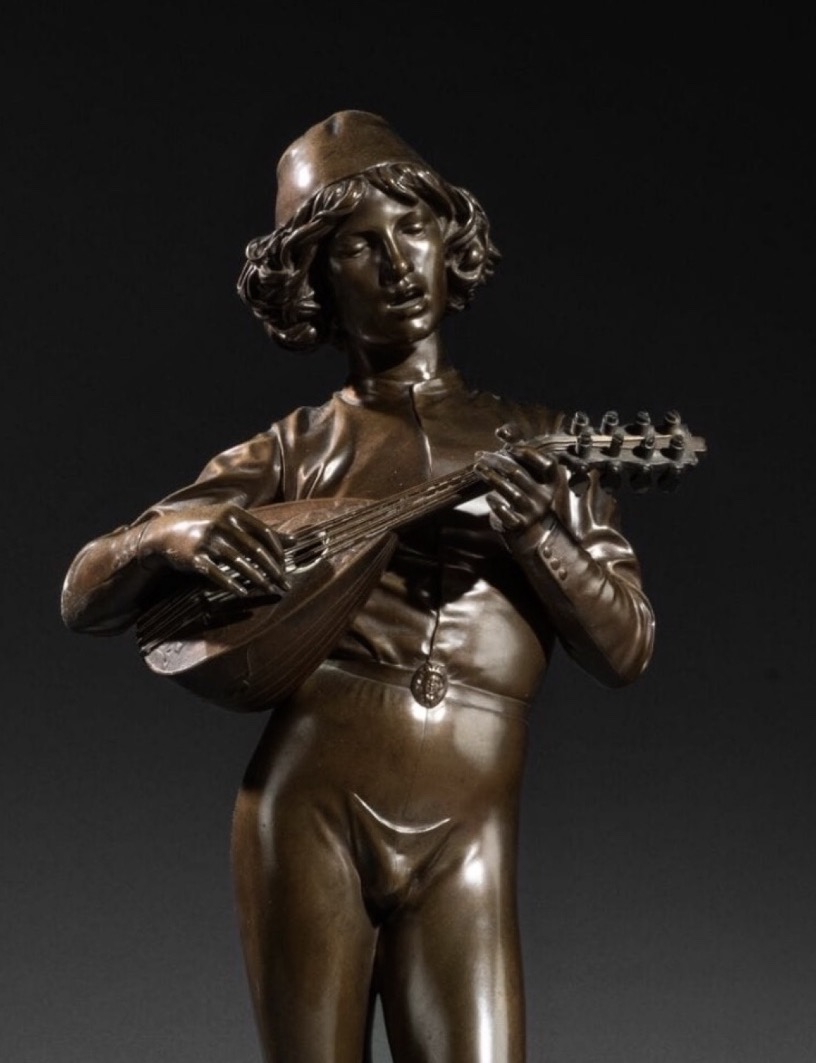
Through his smooth , refined forms , the sculptor creates a visual harmony that contrasts masterfully with the meticulous attention to detail in the clothing and accessories .
The laces on the shoes , the folds at the top of the stockings , the buttons on the sleeves , as well as his instrument are depicted with precision , demonstrating remarkable technical skill .
A subtle sense of archaism blends with exquisite craftsmanship .
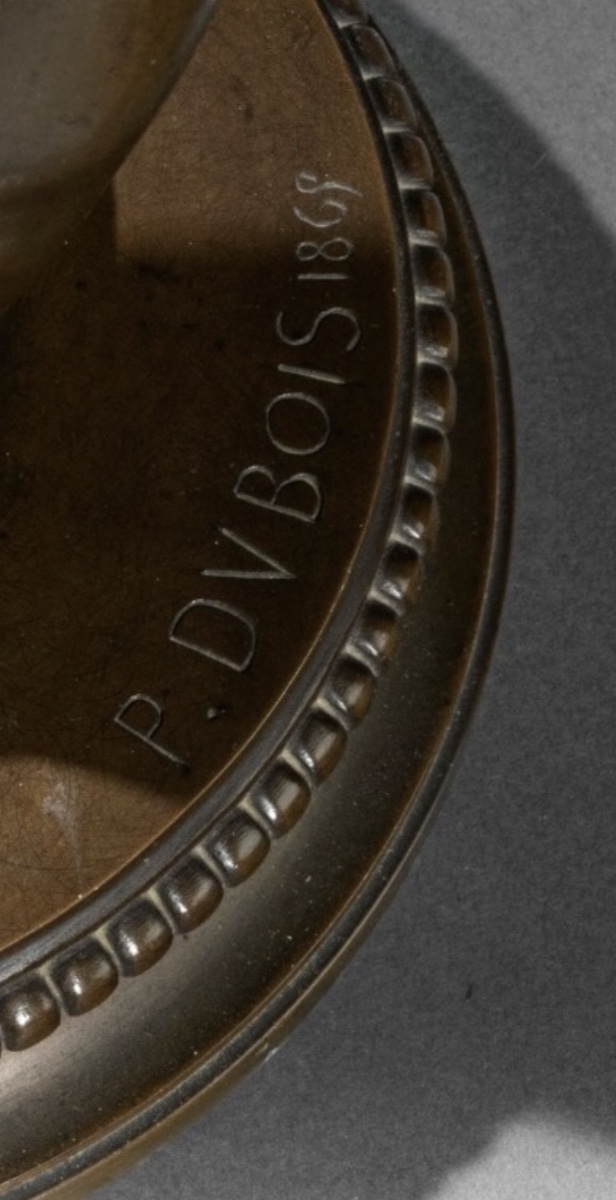
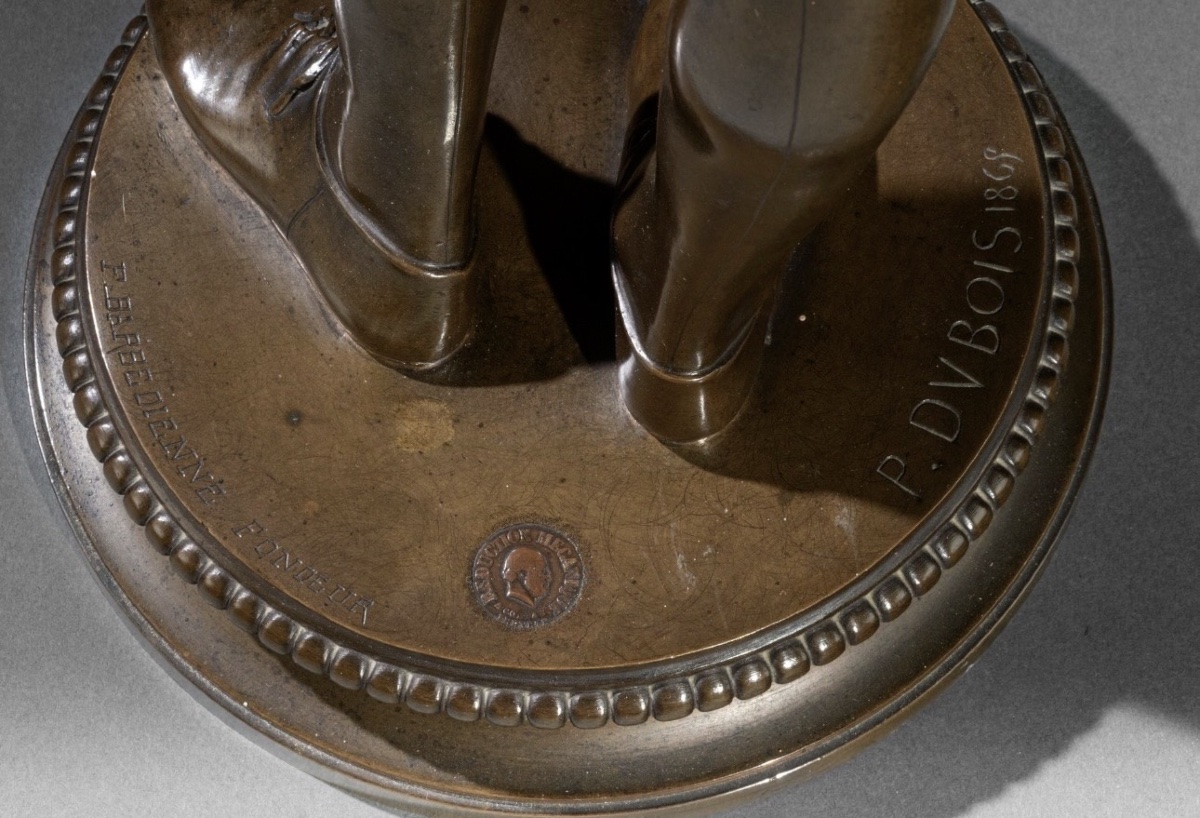
The sculptor’s signature "P.DUBOIS" is engraved on the pedestal .
Bronze dated "1869" following the signature .
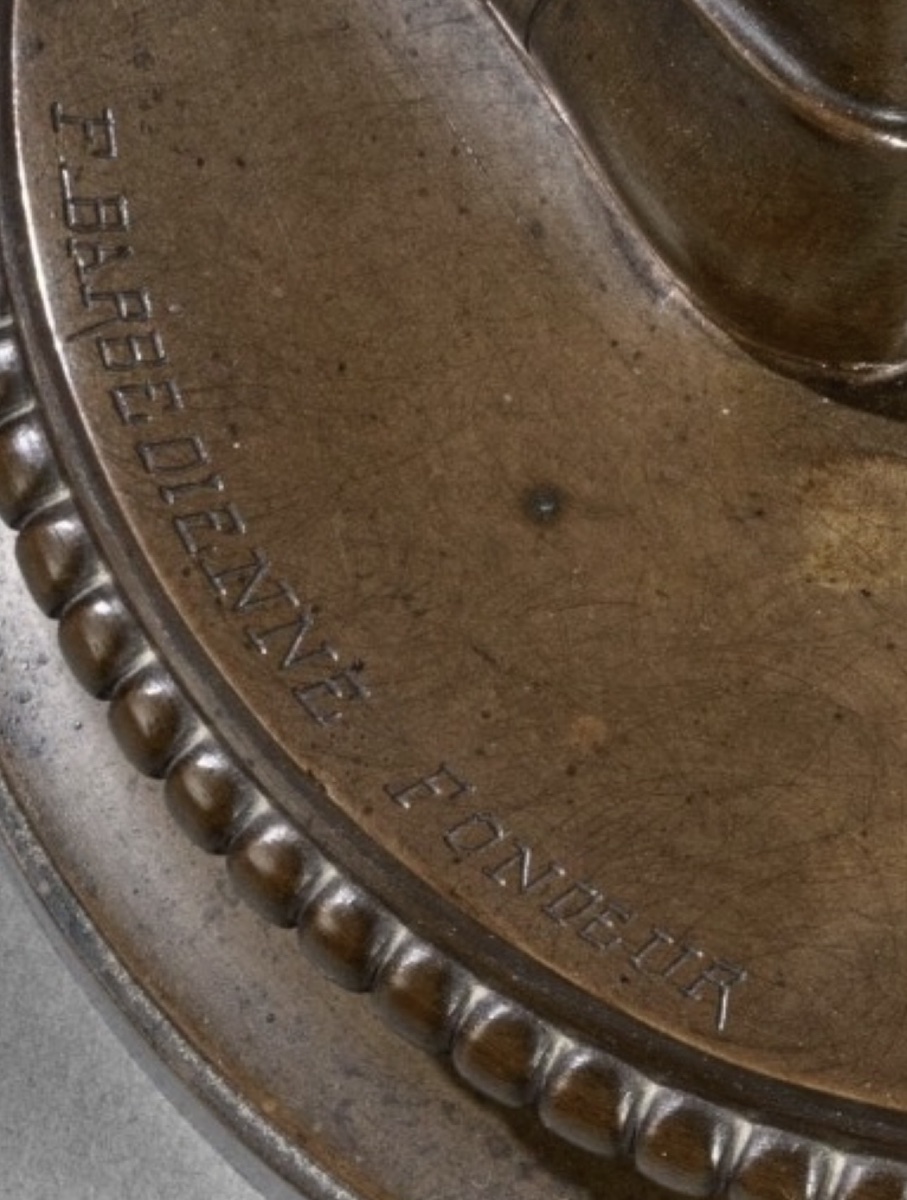
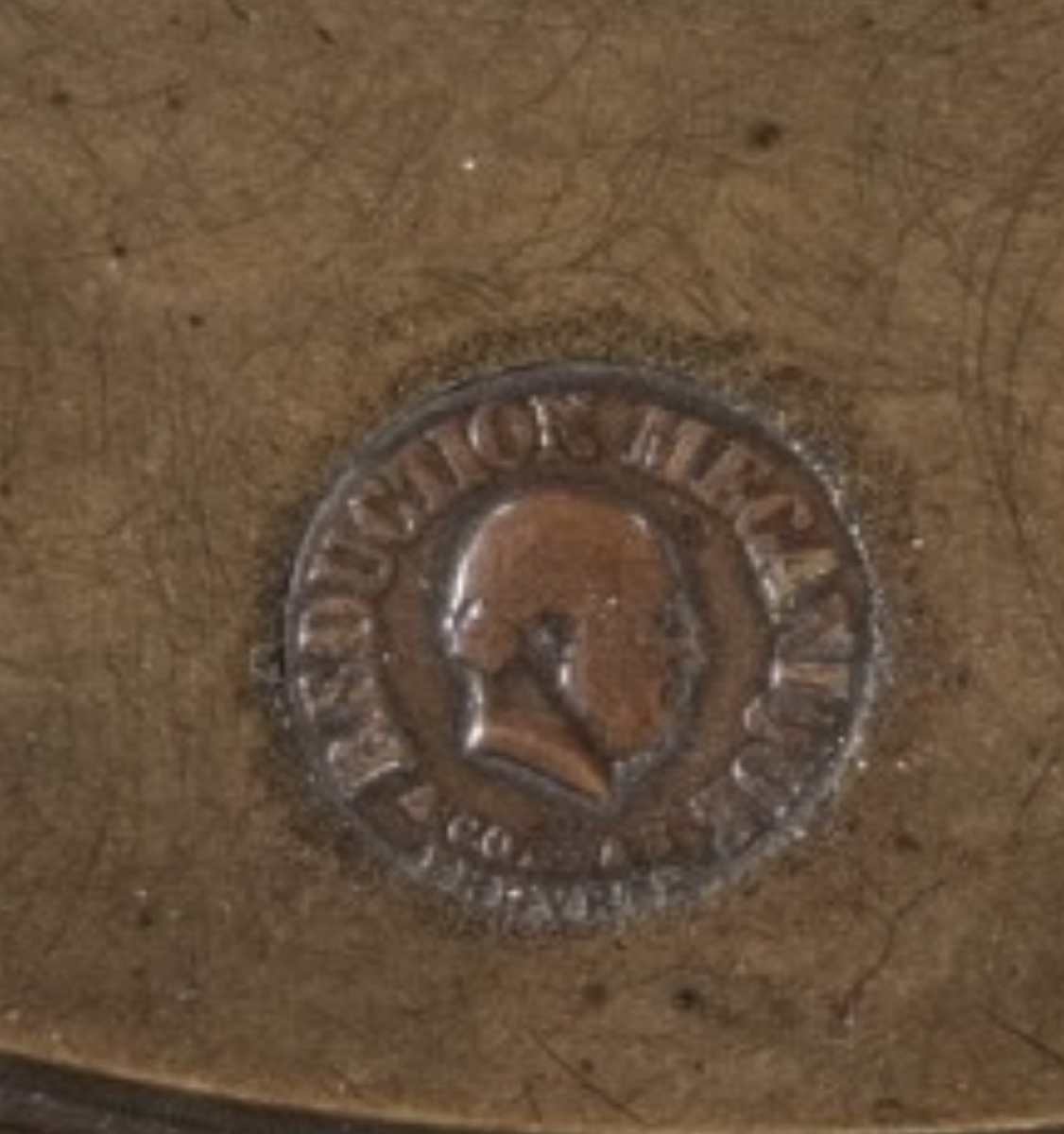
Castor's mark "F. BARBEDIENNE FONDEUR" and circular stamp "Reduction Mécanique A. Colas" .
Antique bronze, dating from the second half of the 19th century .
Excellent condition and patina .
Height : 61 cm
A silver-plated bronze version of "The Florentine Singer" is on display at the Orsay Museum in Paris .
Paul Dubois (1829 - 1905)
Paul Dubois was a famous French sculptor and painter .
Born on July 18 , 1829 in Nogent-sur-Seine , Paul Dubois was the son of François Antoine Dubois (1798–1868) , a royal notary , mayor of Nogent-sur-Seine , and member of the Aube General Council , and the grandnephew of the sculptor Jean-Baptiste Pigalle .
After studying law , he was admitted to the School of Fine Arts in Paris to study in Armand Toussaint’s studio .
He went to Rome and Florence to study for four years, where he was deeply influenced by Italian Renaissance art .
He made his debut at the 1860 Salon .
He won a medal for his first two statues "Saint John the Baptist" and "Narcissus Bathing" in 1863 .
Deeply influenced by Italy and Renaissance Art , he became a leading figure among the so-called "Florentine"sculptors , who emulated their predecessors of the "Quattrocento" .
Upon his return to Paris , deeply influenced by his stay in Italy , Paul Dubois enjoyed immediate success from the very beginning with his refined works , inspired by the Italian Renaissance .
It was in this vein that he sculpted "The Florentine Singer", for which he was awarded the "Medal of Honor" at the 1865 Salon .
In 1865 and 1876 , Paul Dubois was awarded a "Medal of Honor" at the Fine Arts Fair .
He was then elected a member of the Academy of Fine Arts in 1876 .
In 1873 , Paul Dubois was appointed "Curator of the Musée du Luxembourg" .
In 1878 , he succeeded Eugène Guillaume as director of the School of Fine Arts in Paris , where his students included Fabio Stecchi and Camille Claudel , until she met Auguste Rodin in 1884 .
His "Monument to Joan of Arc" , unveiled on the forecourt of Reims Cathedral in 1896 , also contributed to his fame and earned him the Grand Cross of the Legion of Honor , awarded by the President of the Republic , Felix Faure .
Paul Dubois died on May 23 , 1905 , in Paris .
He is buried at "Père-Lachaise" Cemetery (9th division) .
Period: 19th century
Style: Renaissance, Louis 13th
Condition: Perfect condition
Material: Bronze
Height: 61 cm
Reference (ID): 1829462
Availability: In stock