


Sculpture - The Sower , Jules - Jacques Labatut (1851–1935) - Bronze
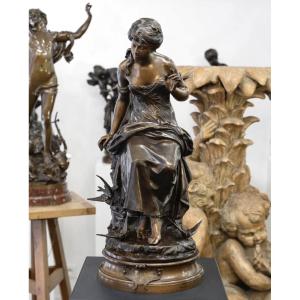
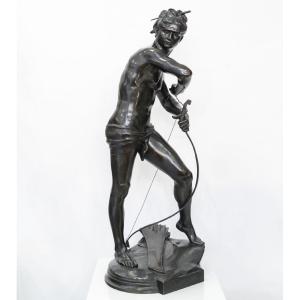
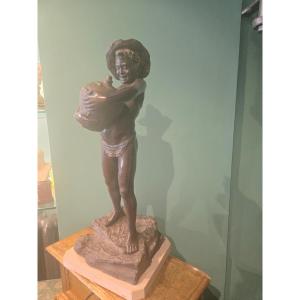
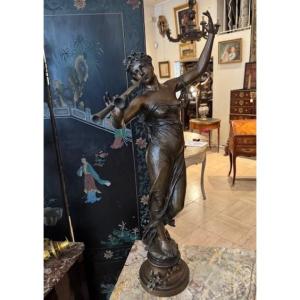
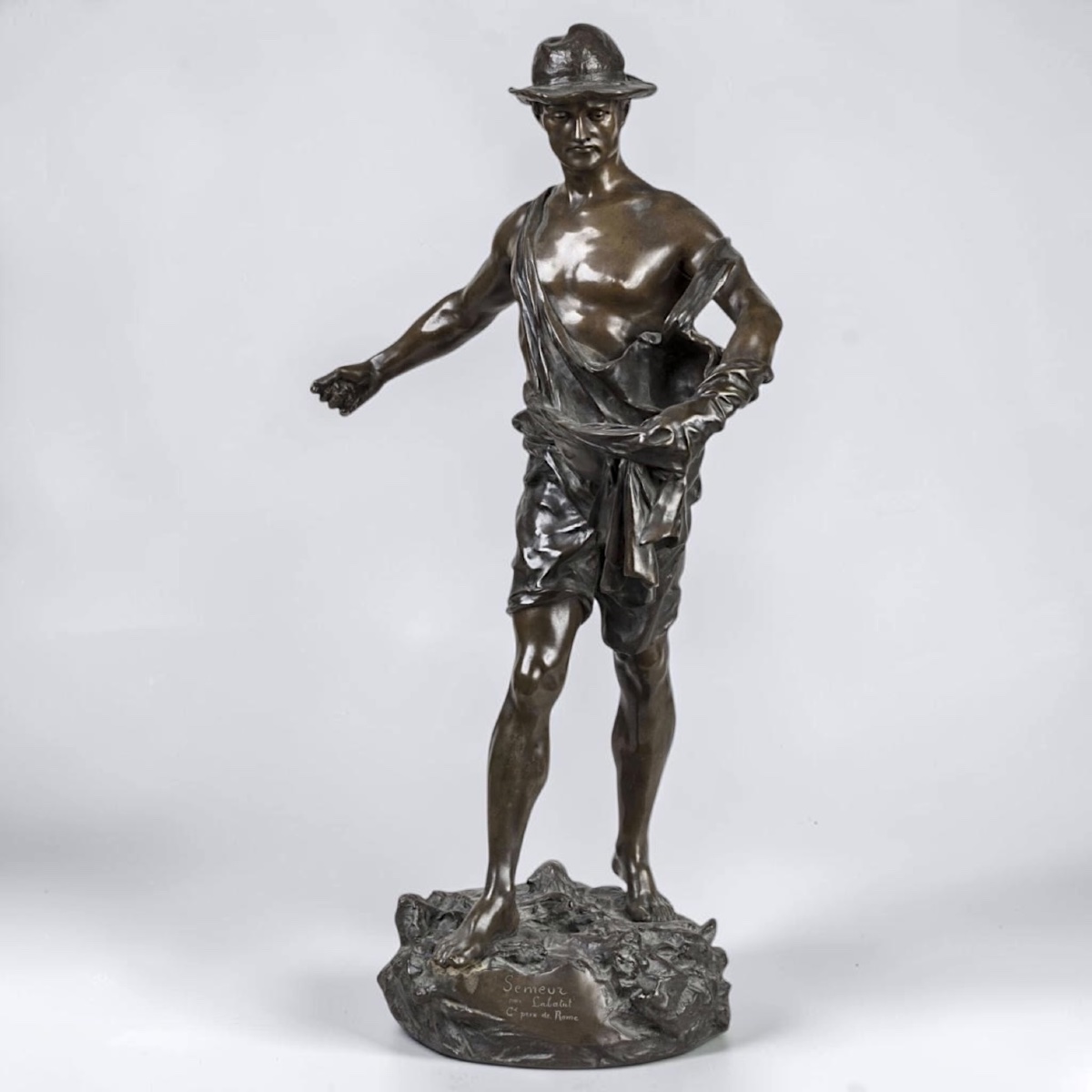
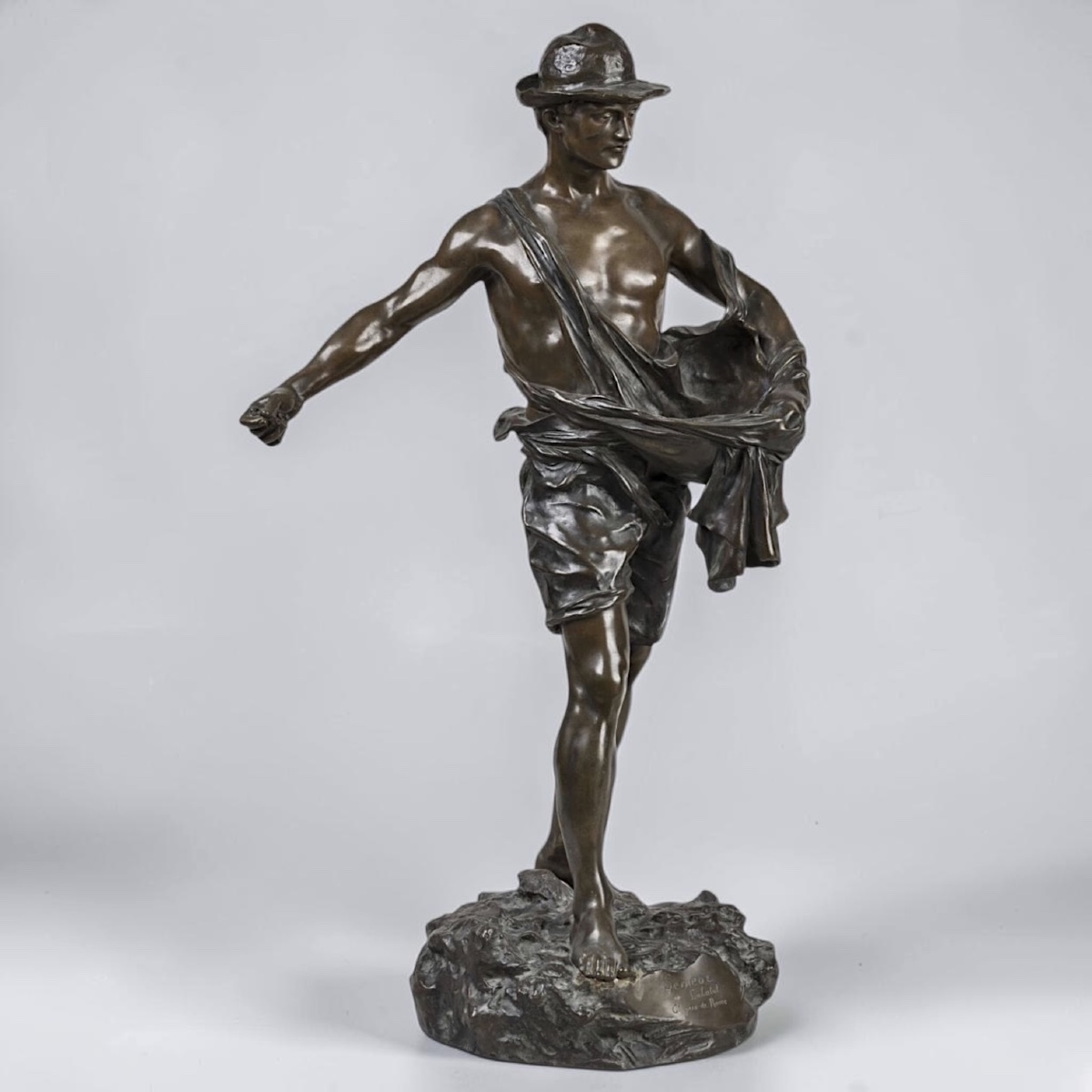
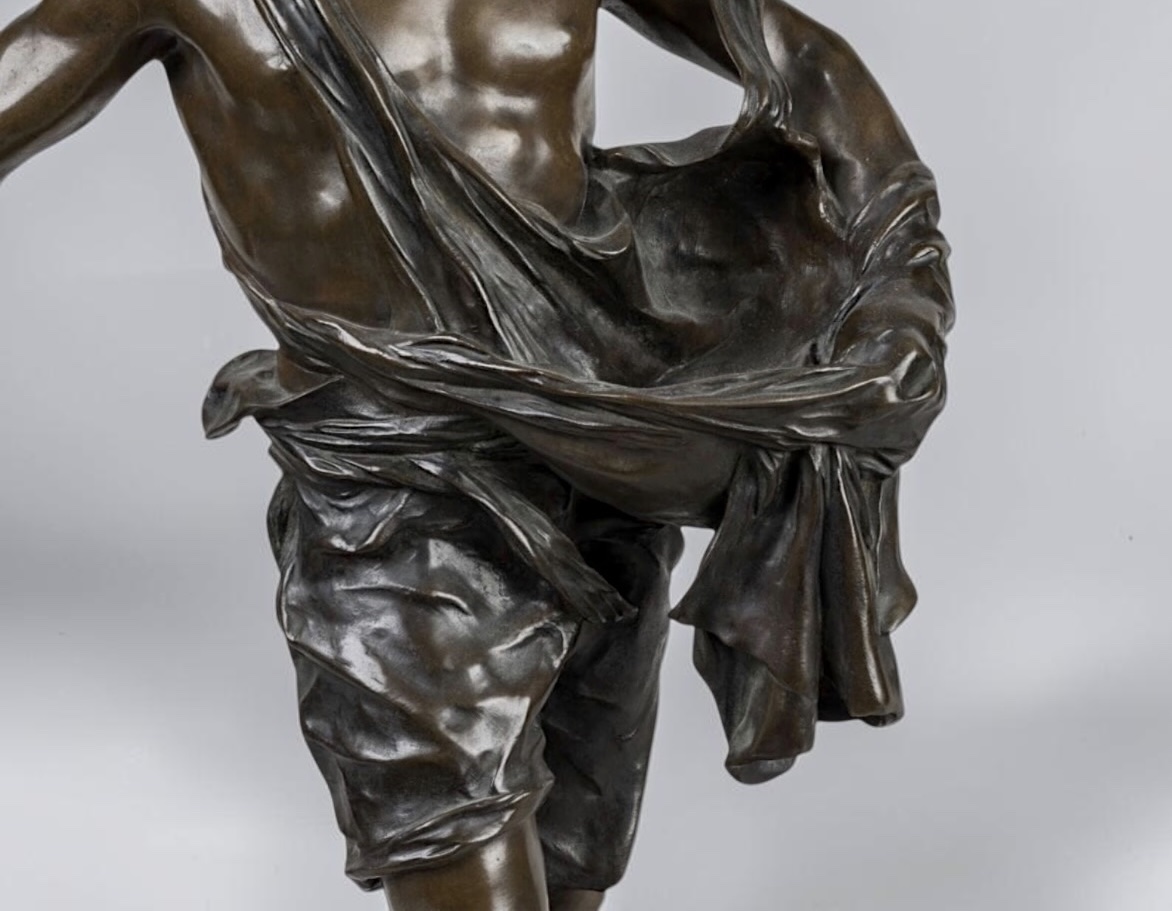
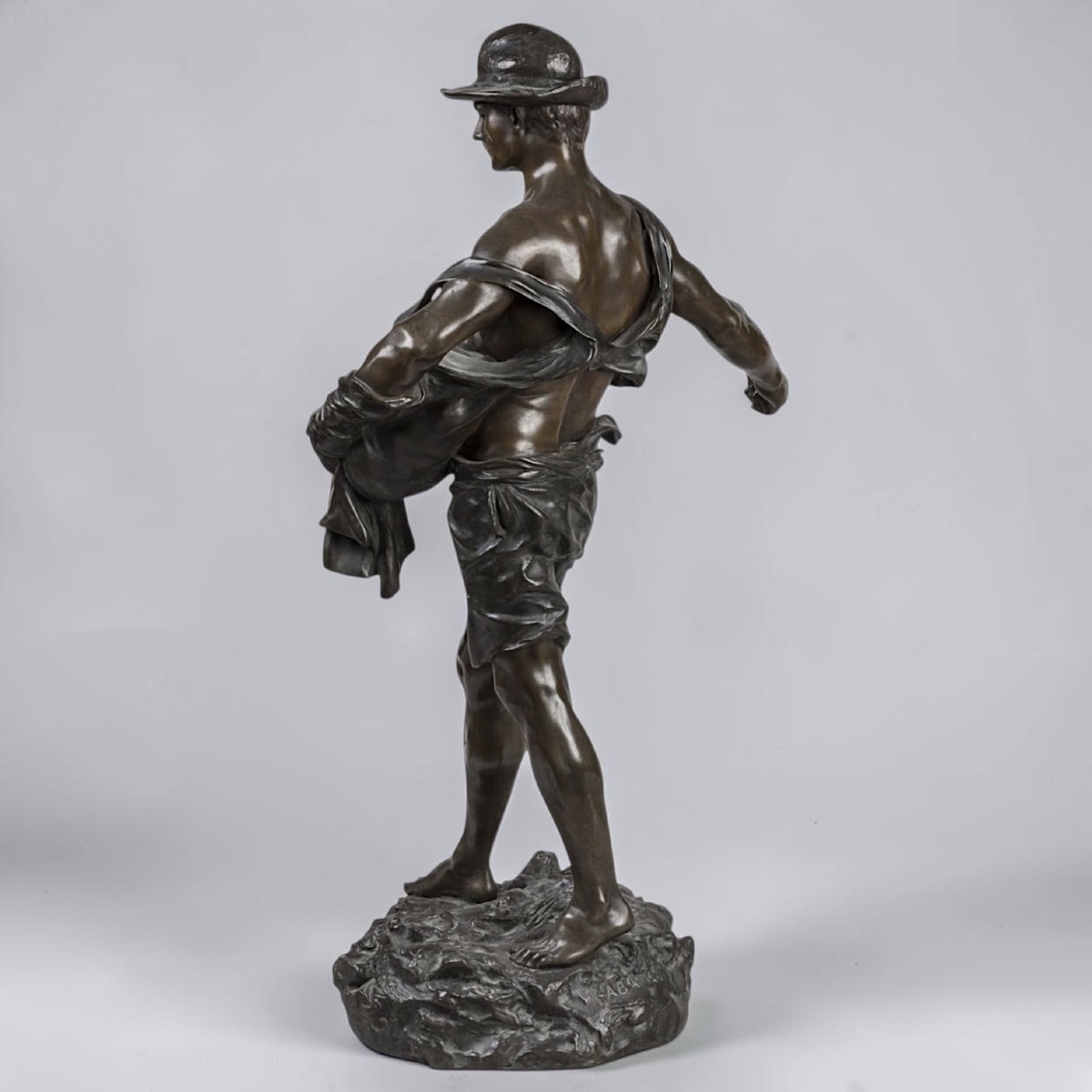
A large bronze cast with a brown patina , depicting an allegory of labor, specifically "The Sower".
An iconic work in the career of Jules-Jacques Labatut , which was awarded the "Grand Prix de Rome" .
The sculptor distinguished himself from other artists of his time through works that combine technical skill and artistic sensibility.
The lively and dynamic figure is depicted sowing seeds, evoking the essence of rural labor.
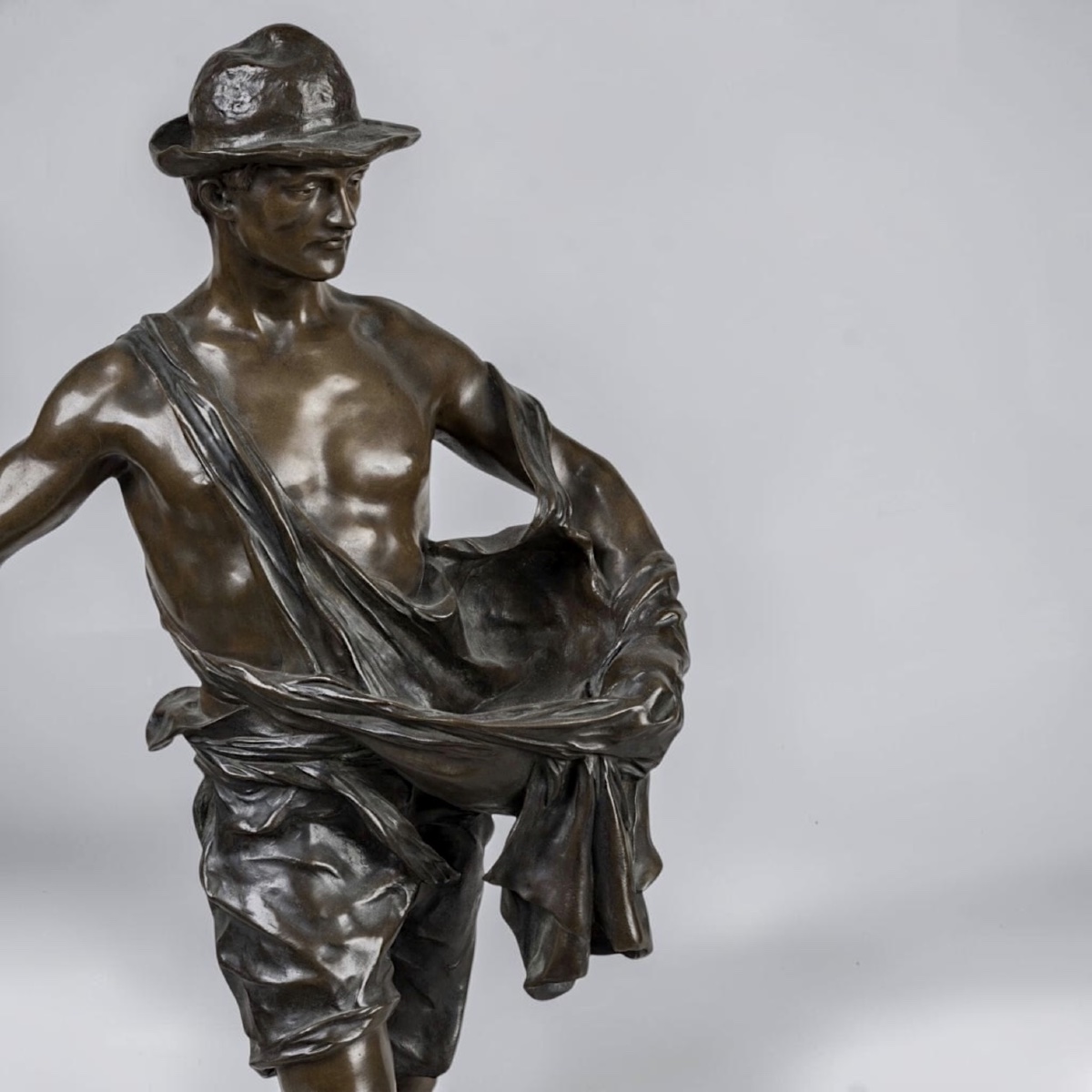
The anatomical details are meticulously rendered; every muscle and facial feature captures the sower’s effort and concentration .
The sculpture’s composition reflects an intimate understanding of the human body and meticulous attention to detail.
The fluid lines and harmonious forms express not only the sower’s physical strength but also the poetry of the gesture.
The work uses the sower as a symbolic figure, representing themes such as hope, the continuity of life, and working the land.
The sower is often seen as a bearer of promise and renewal .
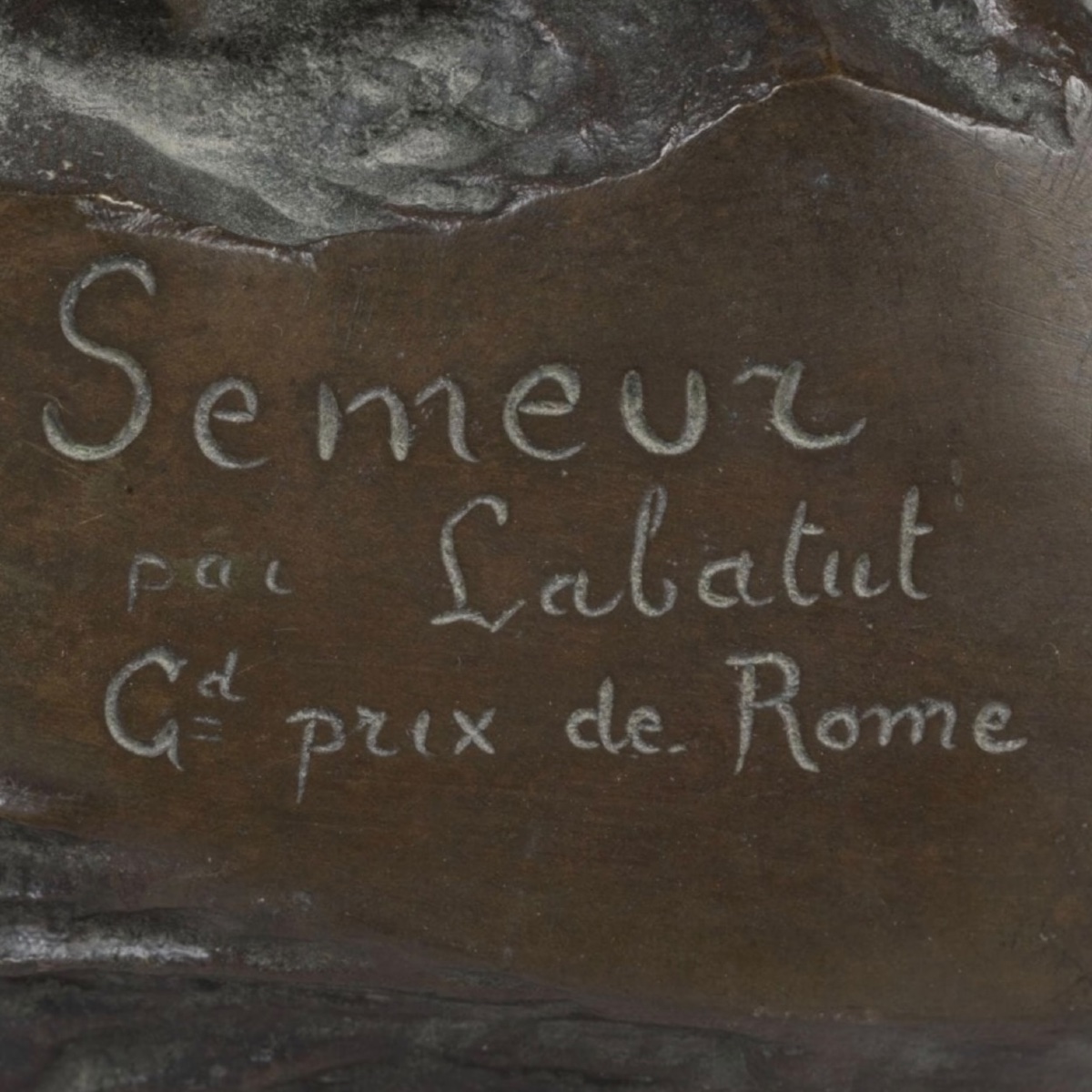
The work is titled "Sower by Labatut" and inscribed with "Grand Prix de Rome" (Price of Rome) in a cartouche on the front of the pedestal .
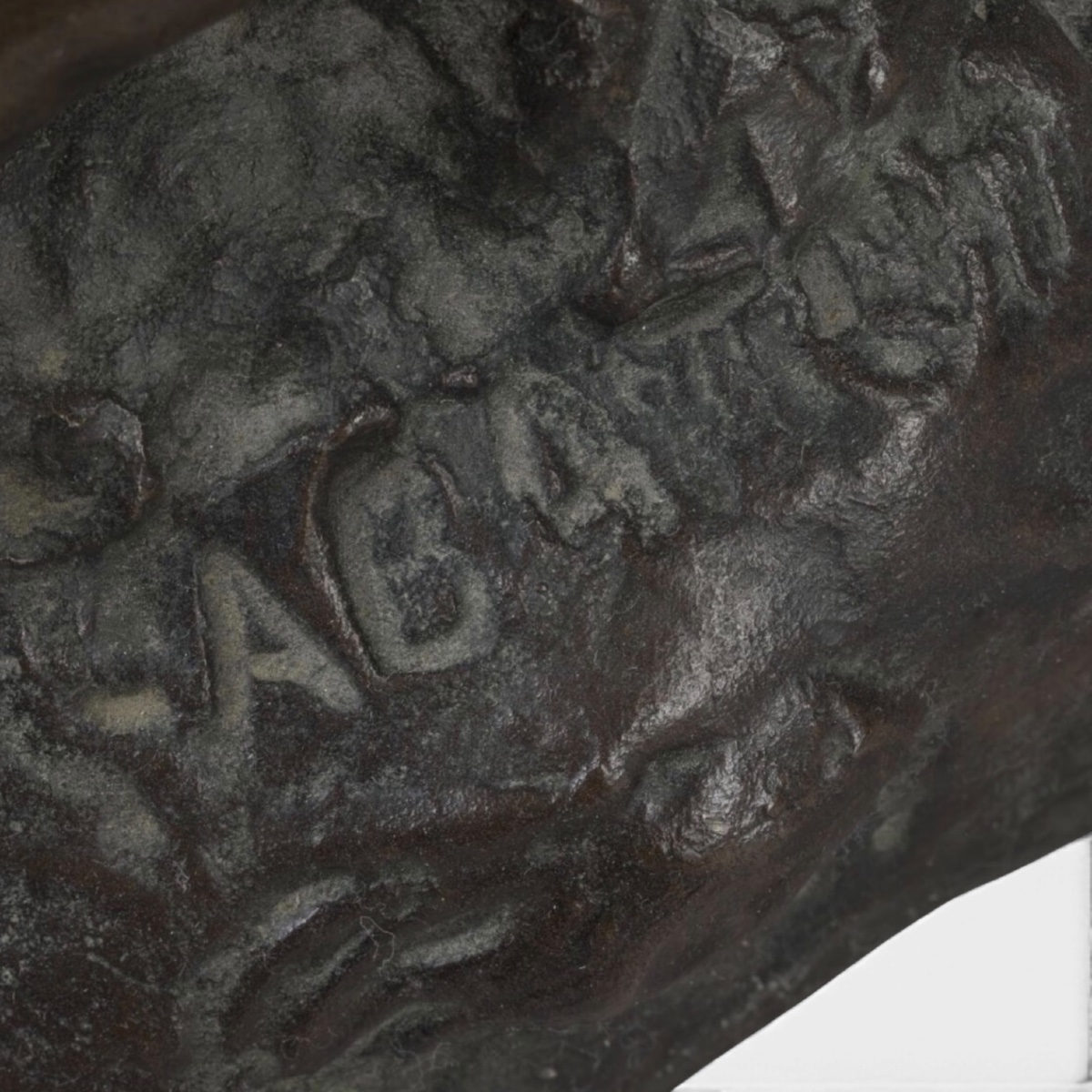
The sculptor’s signature, "LABATUT", is incised on the naturalistic, richly chiseled base .
In very good condition with a fine patina .
Height: 70 cm
Jules-Jacques Théodore Dominique LABATUT (1851–1935)
Jules-Jacques Théodore Dominique Labatut was a French sculptor, born in 1851 in Toulouse.
From a very young age, he developed an interest in art and initially enrolled at the School of Fine-Arts in Toulouse , studying drawing under Latger and Gorse, and sculpture under Henri Maurette and Auger .
A talented artist , he soon after enrolled at the School of Fine-Arts in Paris , studying under François Jouffroy and Antonin Mercié.
The sculptor stood out for his mastery of sculpture .
His first entry in the Salon of Painting and Sculpture was in 1881 with his work "Narcissus Surprised by His Own Beauty".
That same year, the sculptor won the "First Prize of Rome in Sculpture" with the sculpture titled "Tyrtaeus Singing His Messenian Songs Before the Lacedaemonians".
Enjoying meteoric success, he became a resident at the Villa Medicis in Rome , from 1882 to 1885.
Subsequently, Jules-Jacques Labatut exhibited regularly at the Paris Salon , where he received numerous awards, such as in 1884.
In 1889, the sculptor participated in the Paris World’s Fair, where his work caught the attention of the European art scene.
He won a prize there, as he did during his participation in 1890.
As a crowning achievement of his artistic career, the sculptor was awarded the Legion of Honor in 1894.
Jules-Jacques Théodore Dominique Labatut died in 1935 in Biarritz .
Period: 19th century
Style: Napoleon 3rd
Condition: Perfect condition
Material: Bronze
Height: 70 cm
Reference (ID): 1822390
Availability: In stock