

Small Wrought-iron Domestic Folk Art Indian Temple, 18th Or 19th Cty
Artist: Inde Du Sud (tamil Nadu ?)
PRIMITIVE ART / Art BRUT
Late 18th or early 19th cty,
India, South (Tamil Nadu) ?
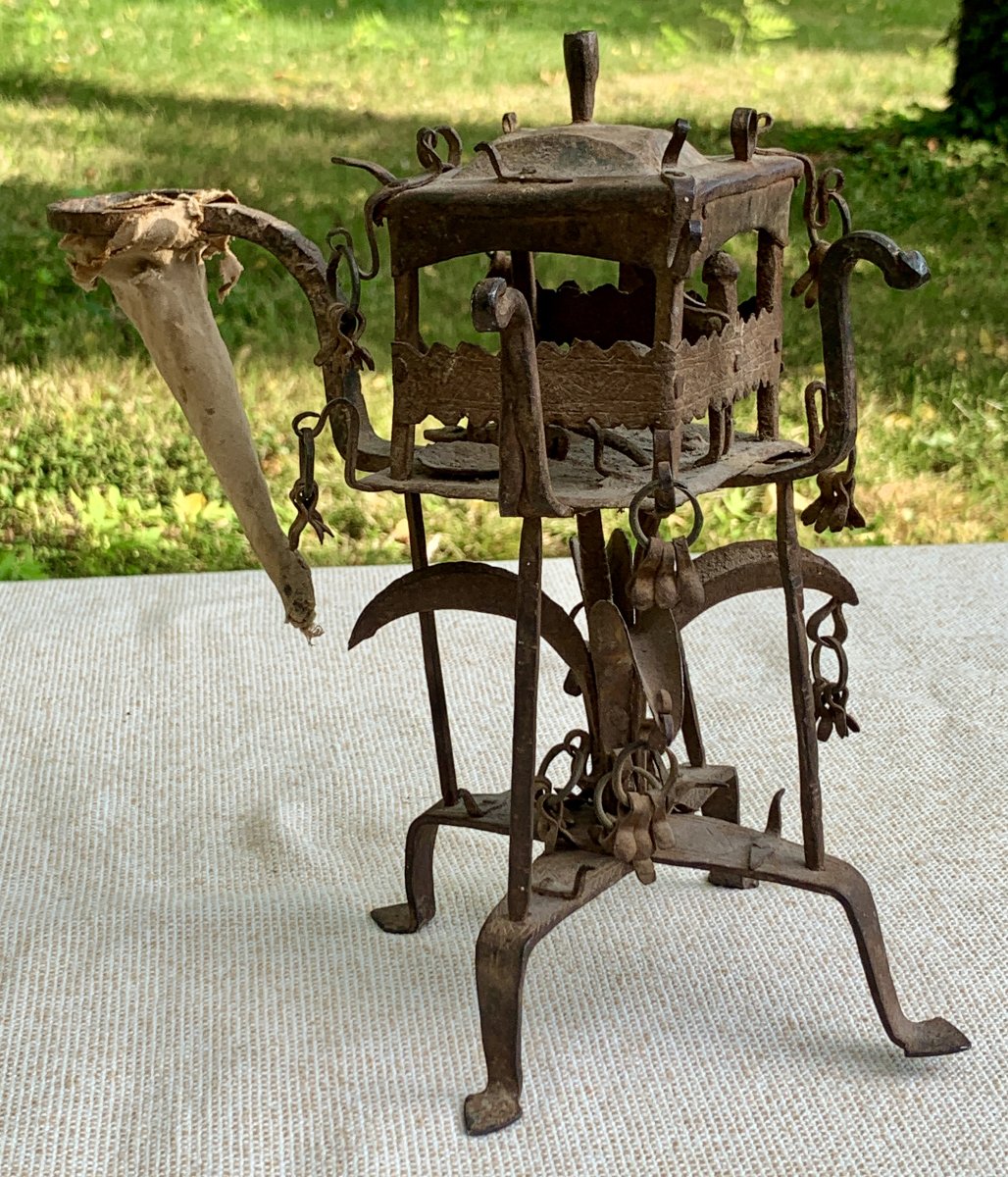
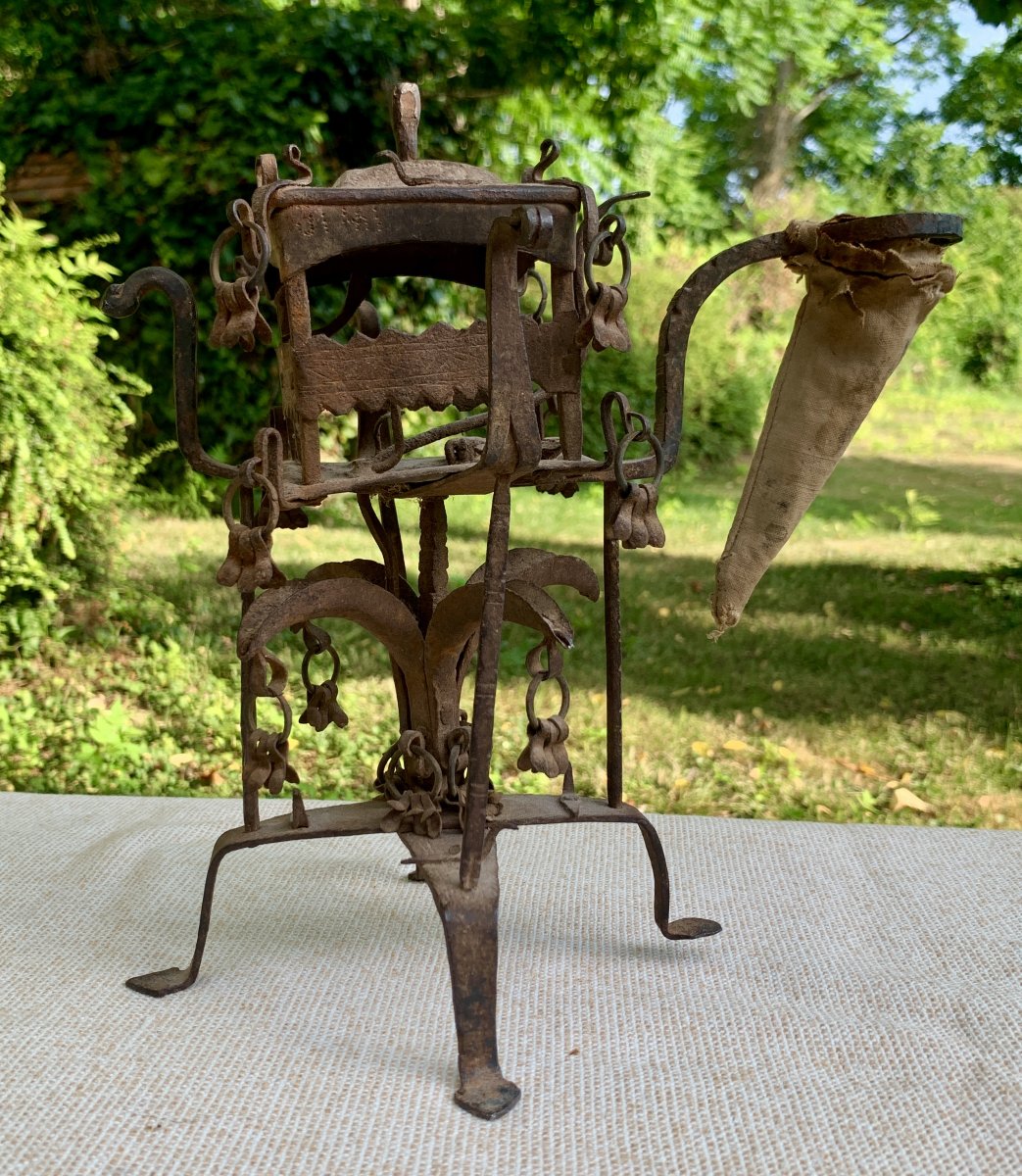
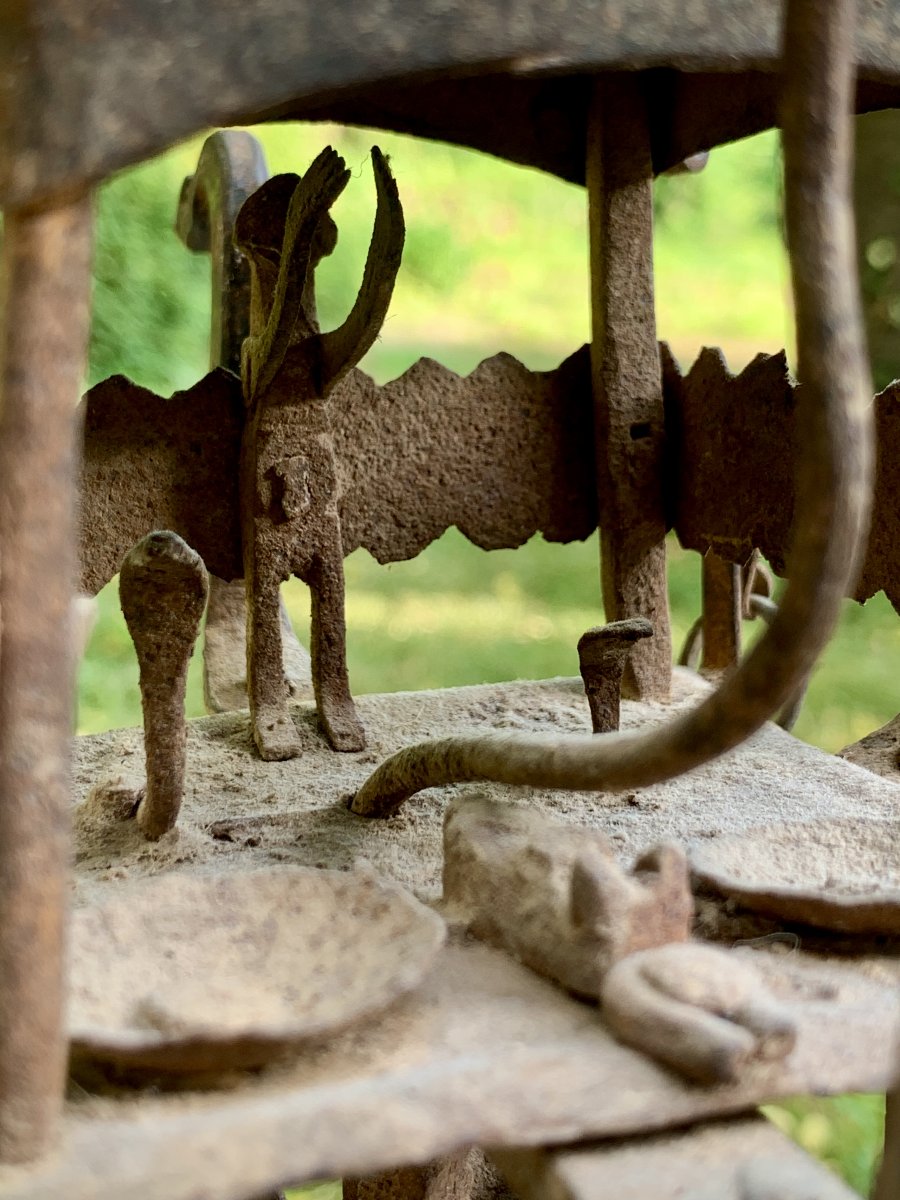
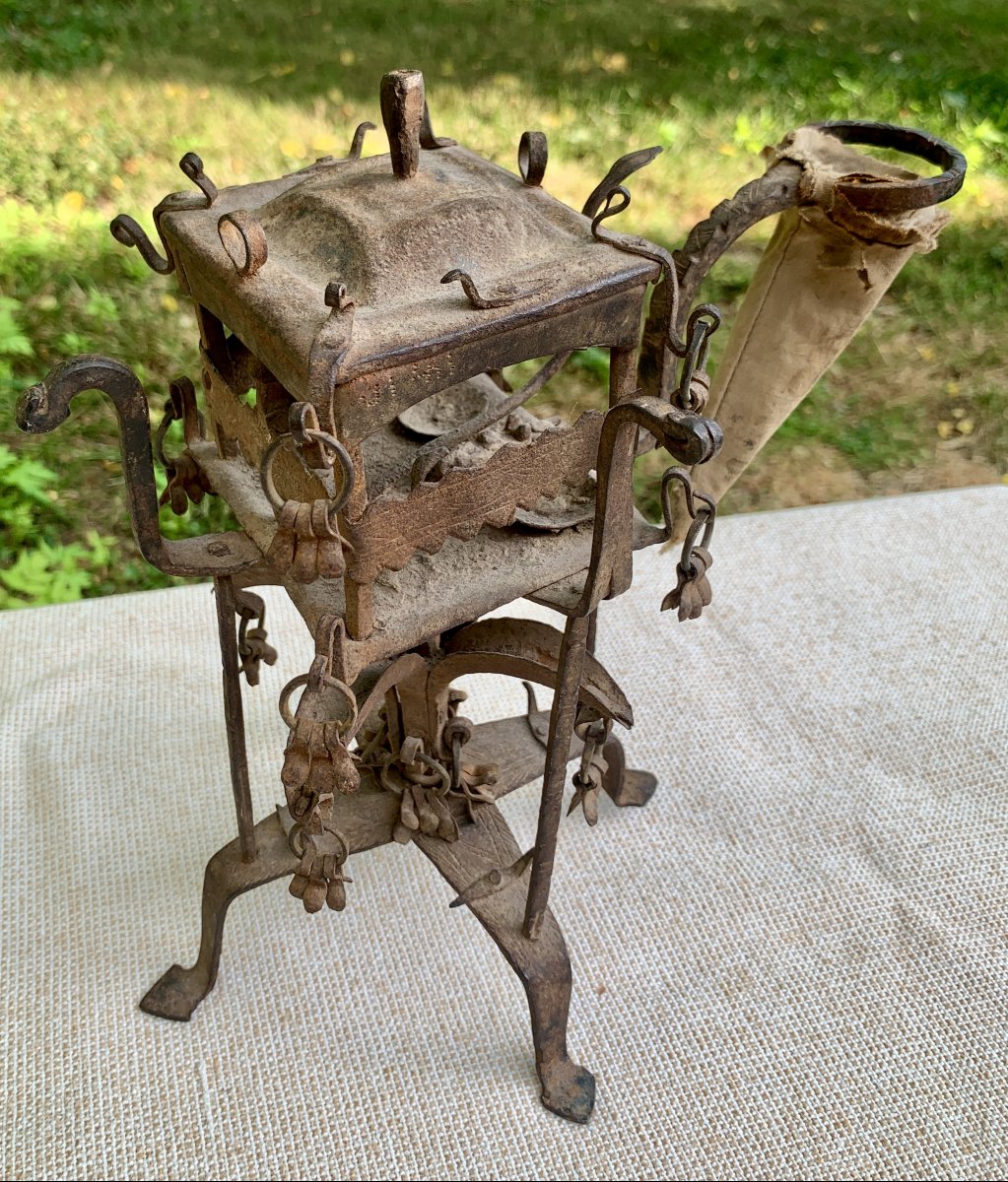
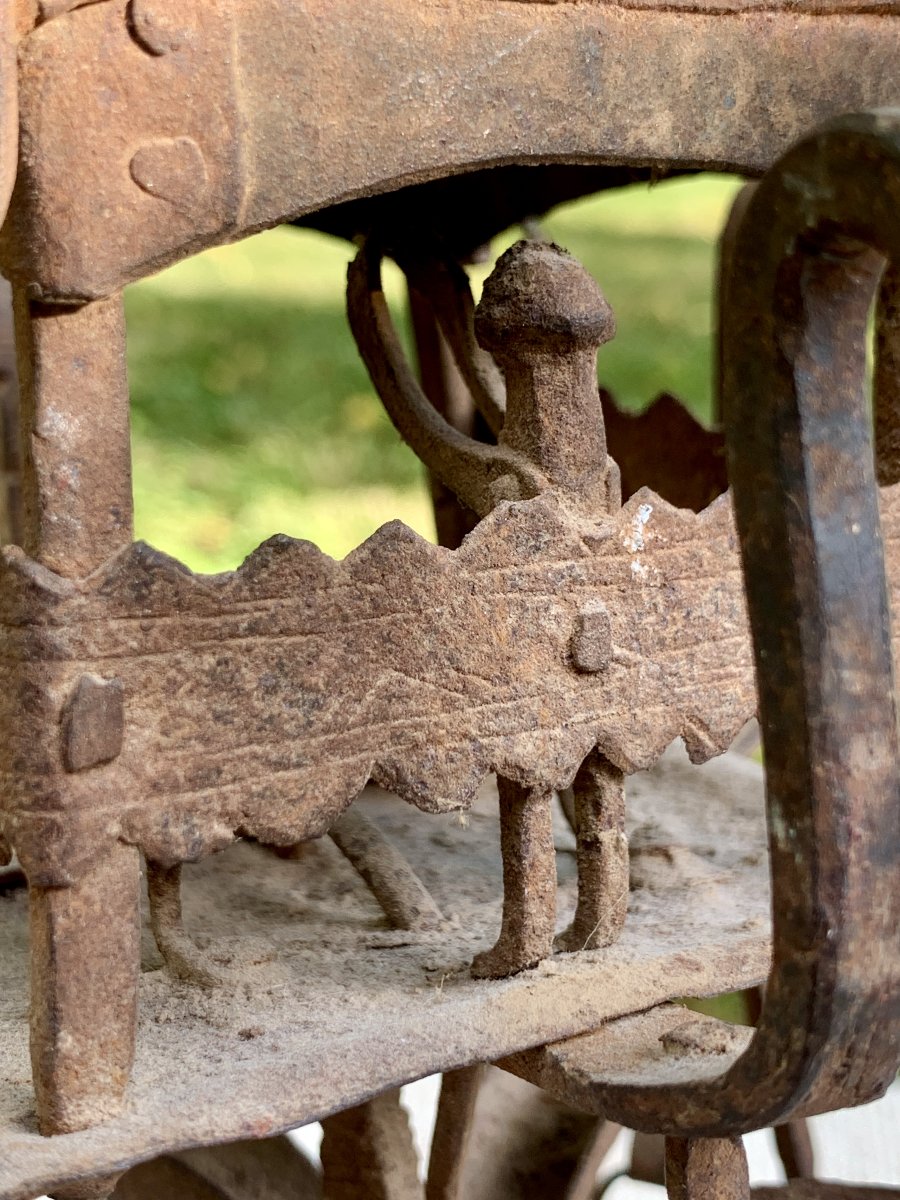
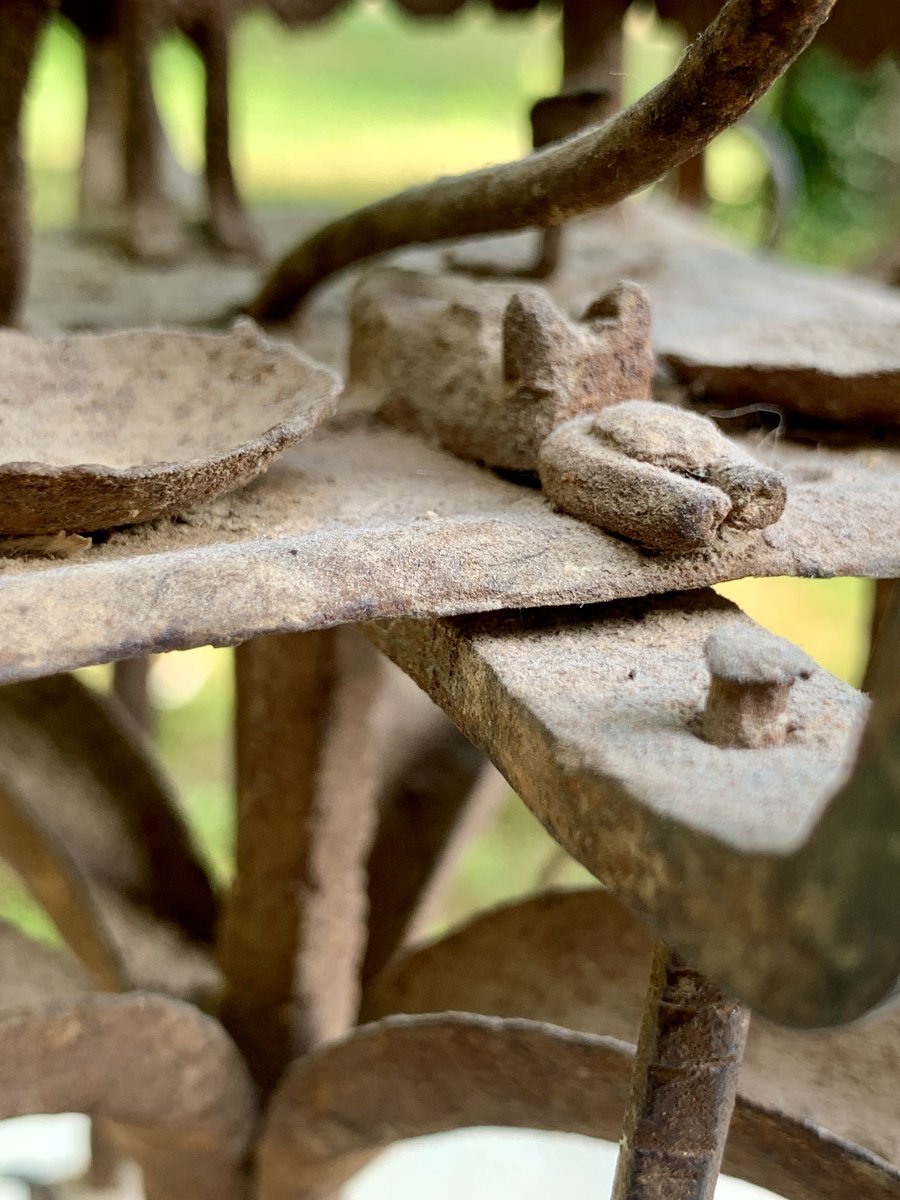
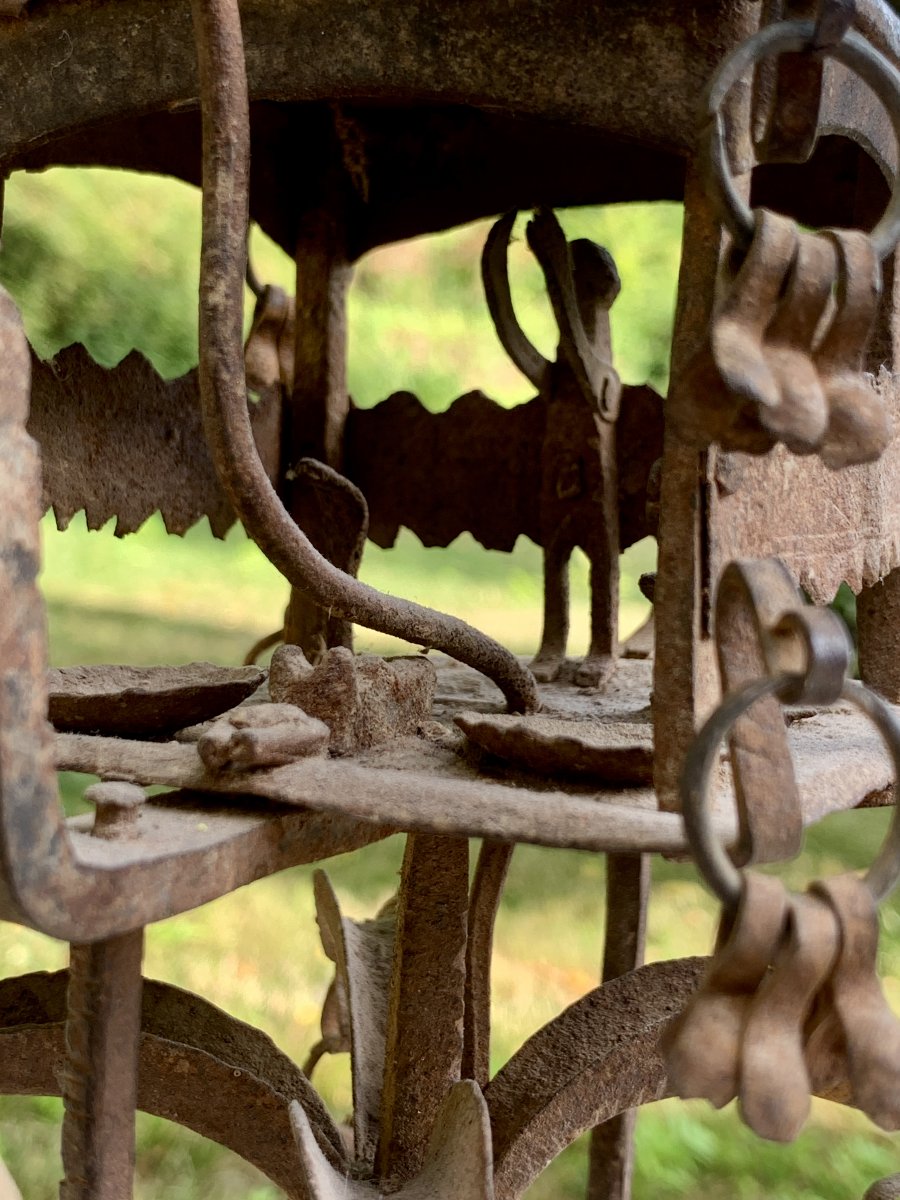
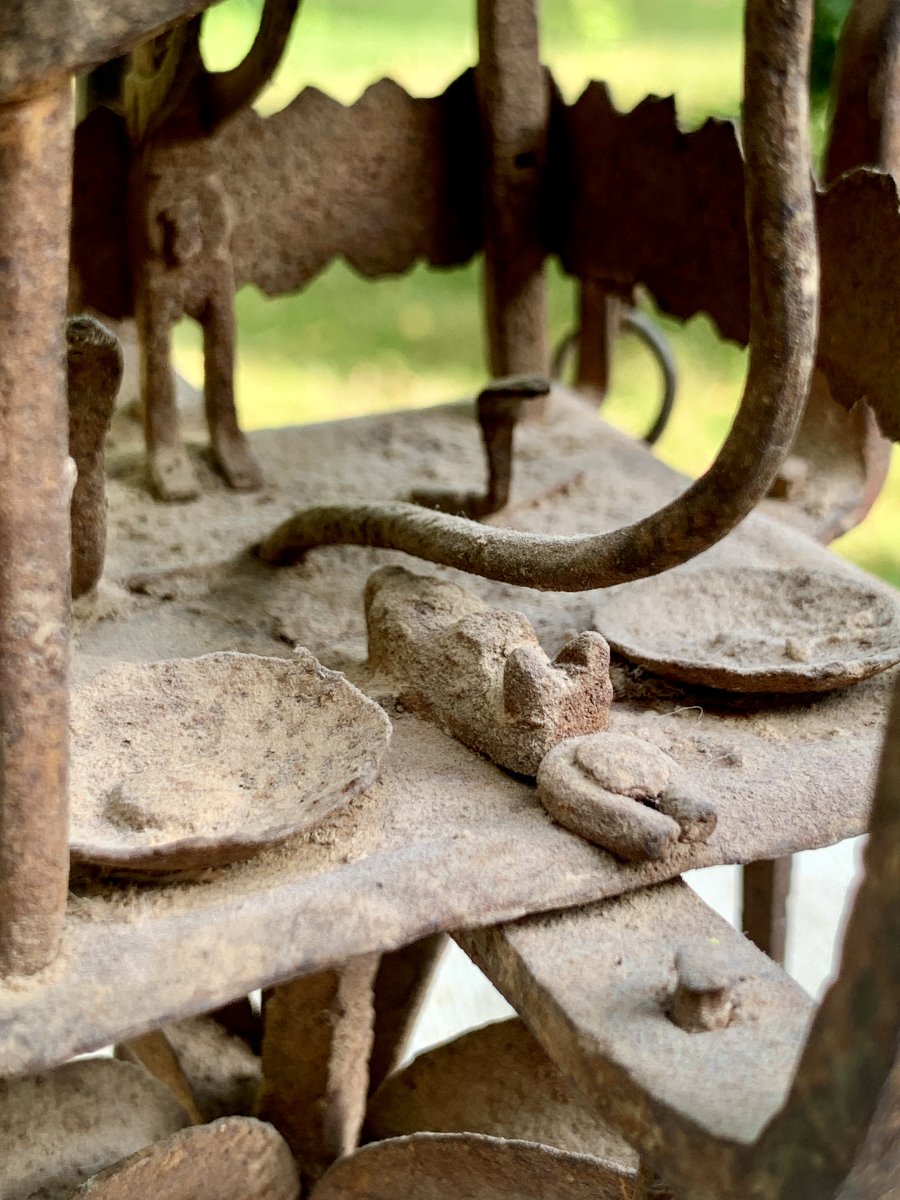
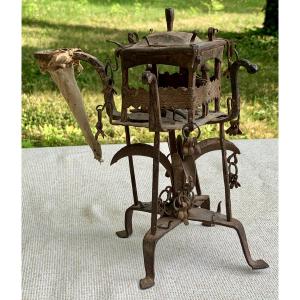
Superb and curious folk art Hindu votive altar, handmade of wrought and hammered iron, depicting a figure within a built structure on stilts, standing in prayer with hands raised, surrounded by rearing nagas and a reclining feline before him that appears to meet him on his spiritual quest.
A small, archaic, portable travel shrine and an object of regional folk worship.
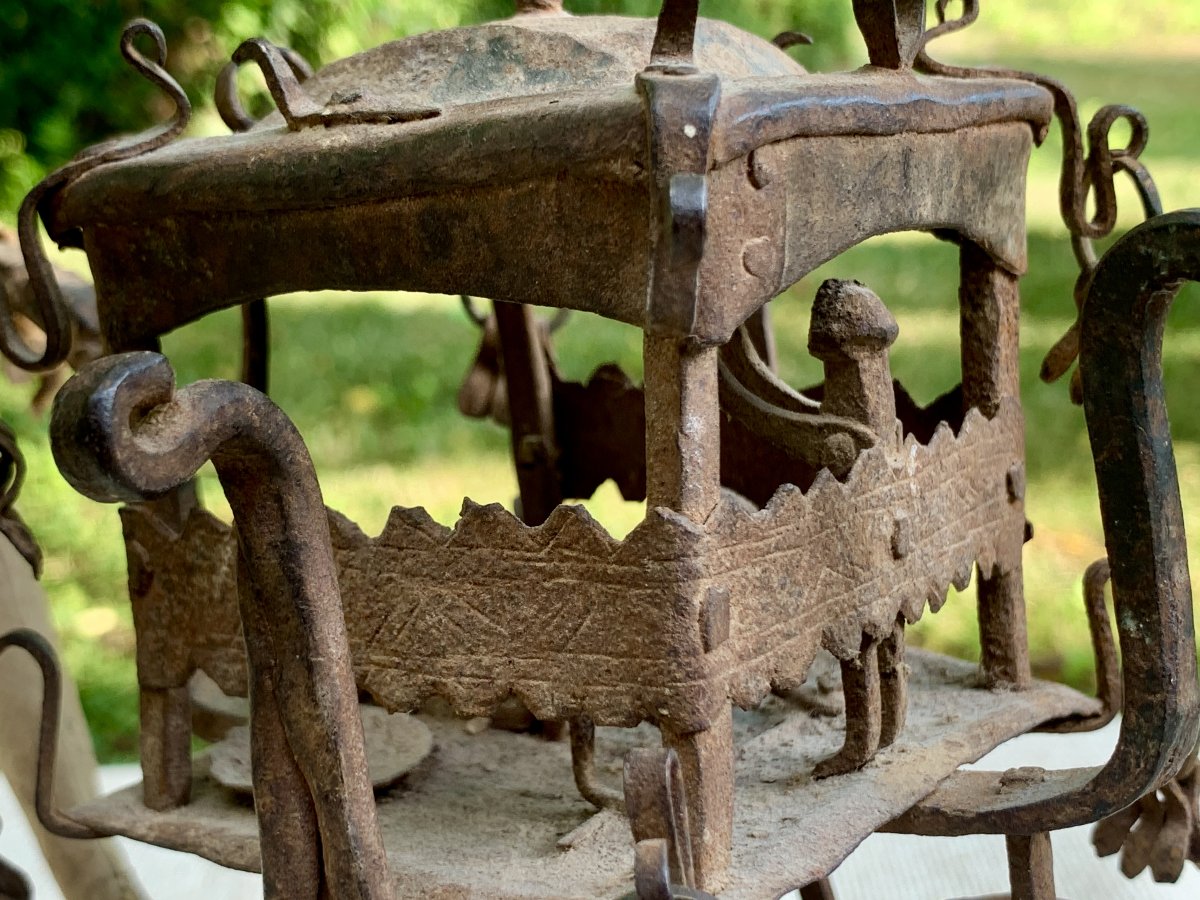
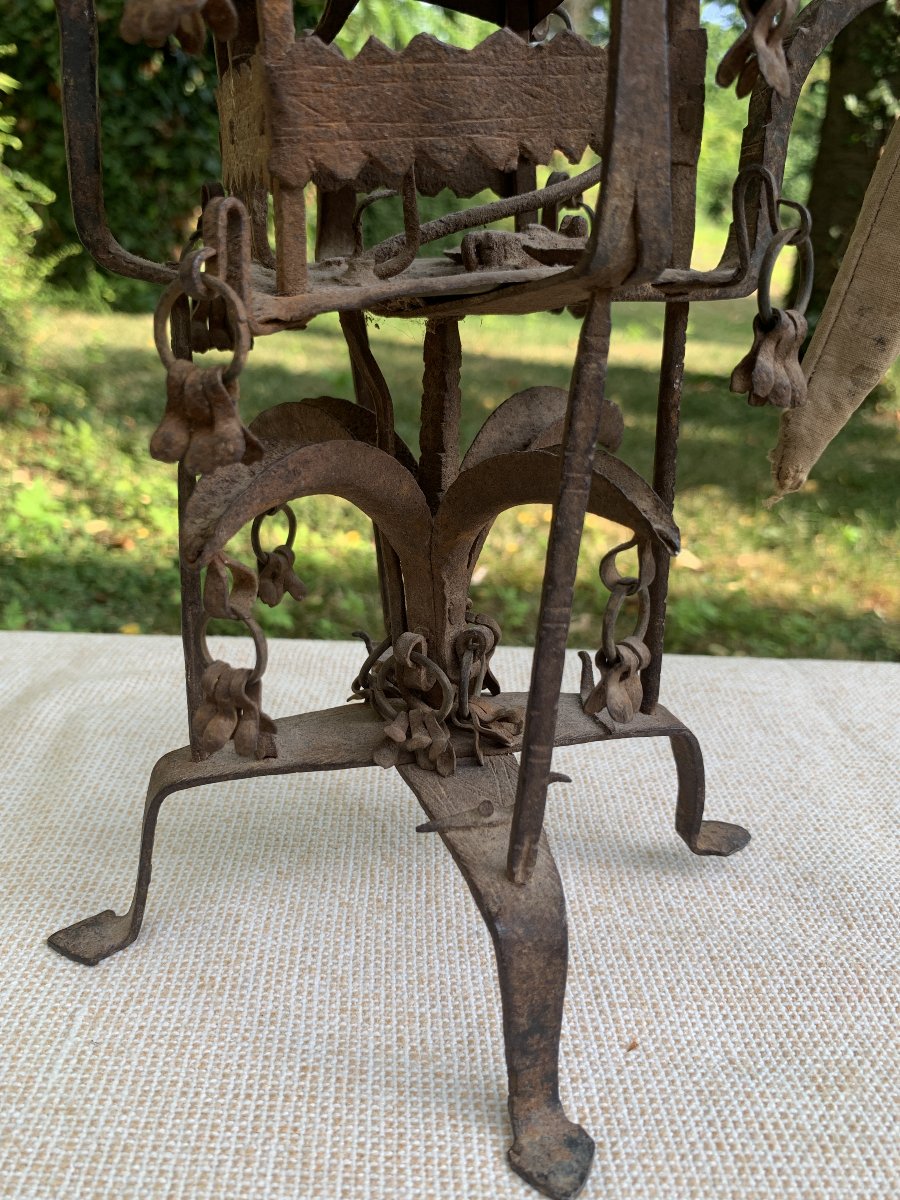
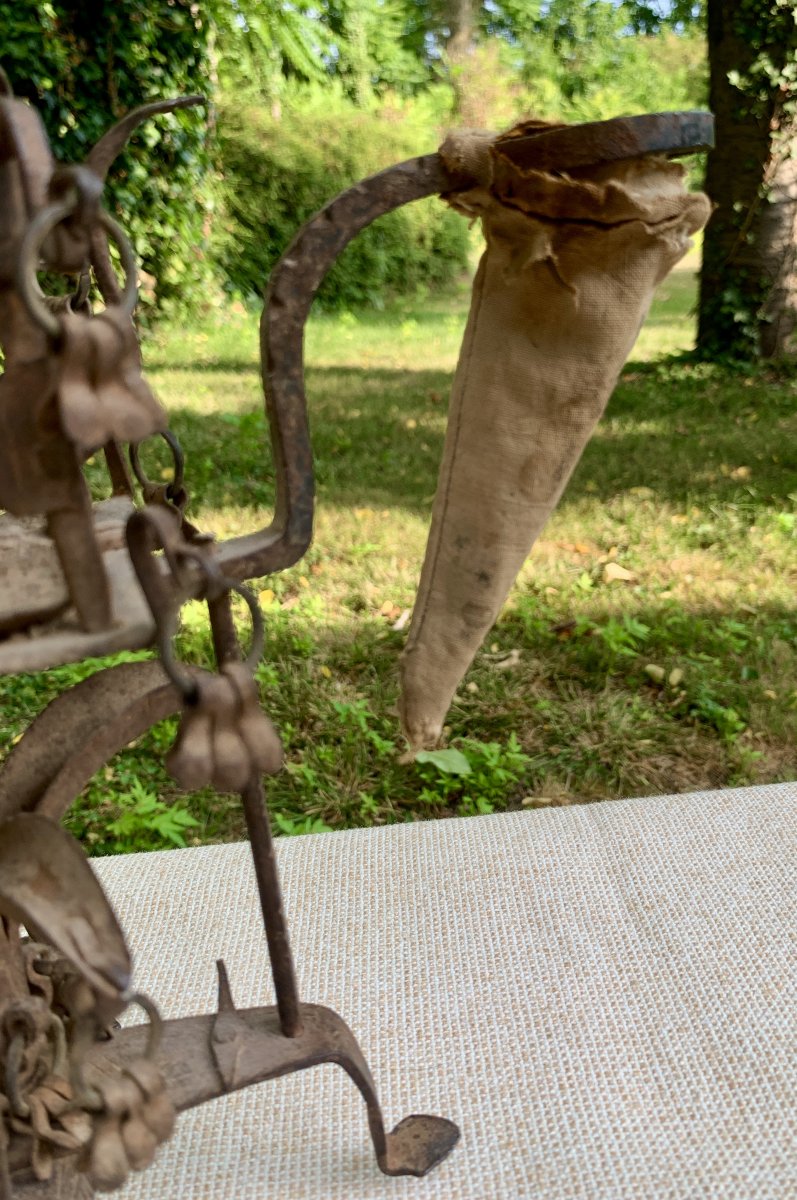
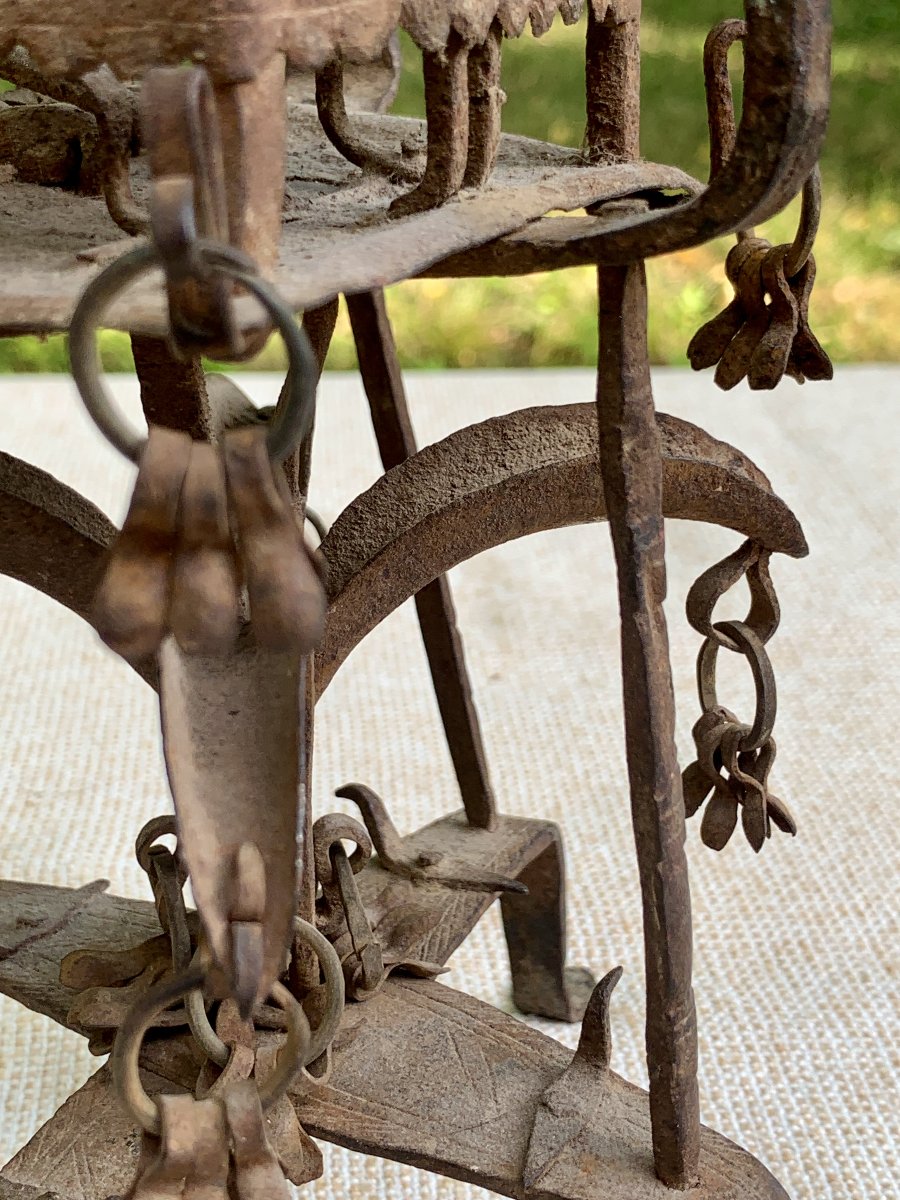
The front features a circle housing a fabric cone—a sort of sleeve likely intended to hold offerings. The corners of the structure are adorned with multiple hanging or suspended decorations, also iron made. The set was forged and assembled by hand using rivets; it consists of hooks, rings, and cut-out, openwork plates
It features a very beautiful rustic, oxidized patina resulting from periodic ritual use repeated over the centuries.
The depictions of the human figure, the nagas, and the feline are specially rudimentary.
A fascinating and unique piece of folk ironwork, this domestic ritual altar has a particularly distinctive presence, inviting both a journey and a flight of imagination.
NB
* In West Africa, there is also a tradition of these FON/EWE (Benin/Togo) iron altars called ASEN, which are likewise composed of iron rods, plates, or suspended elements; however, the construction here is different, featuring a true architectural design of a small sanctuary with multiple levels.
* The figure in prayer, surrounded by Naga serpents and accompanied by a cat lying before him, could be a free and personal interpretation of a famous 7th-century relief, known as “The Penance of Arjuna” or “The Descent of the Ganges,” located in Mahabalipuram (Mamallapuram) in Tamil Nadu: there we also find an ascetic in penance, agas and naginis—serpent beings associated with the Ganges and underground waters—and, most notably, a cat depicted as an ascetic, imitating penance.This interpretation is obviously not certain, but the unusual combination of these various elements is nonetheless intriguing enough to be worth noting.
Dimensions:
26 cm high, 25 cm deep, and 17 cm wide
3 of the 16 small “bells” hanging on 4 levels are missing
Late 18th or early 19th cty,
India, South (Tamil Nadu) ?
Superb and curious folk art Hindu votive altar, handmade of wrought and hammered iron, depicting a figure within a built structure on stilts, standing in prayer with hands raised, surrounded by rearing nagas and a reclining feline before him that appears to meet him on his spiritual quest.
A small, archaic, portable travel shrine and an object of regional folk worship.
The front features a circle housing a fabric cone—a sort of sleeve likely intended to hold offerings. The corners of the structure are adorned with multiple hanging or suspended decorations, also iron made. The set was forged and assembled by hand using rivets; it consists of hooks, rings, and cut-out, openwork plates
It features a very beautiful rustic, oxidized patina resulting from periodic ritual use repeated over the centuries.
The depictions of the human figure, the nagas, and the feline are specially rudimentary.
A fascinating and unique piece of folk ironwork, this domestic ritual altar has a particularly distinctive presence, inviting both a journey and a flight of imagination.
NB
* In West Africa, there is also a tradition of these FON/EWE (Benin/Togo) iron altars called ASEN, which are likewise composed of iron rods, plates, or suspended elements; however, the construction here is different, featuring a true architectural design of a small sanctuary with multiple levels.
* The figure in prayer, surrounded by Naga serpents and accompanied by a cat lying before him, could be a free and personal interpretation of a famous 7th-century relief, known as “The Penance of Arjuna” or “The Descent of the Ganges,” located in Mahabalipuram (Mamallapuram) in Tamil Nadu: there we also find an ascetic in penance, agas and naginis—serpent beings associated with the Ganges and underground waters—and, most notably, a cat depicted as an ascetic, imitating penance.This interpretation is obviously not certain, but the unusual combination of these various elements is nonetheless intriguing enough to be worth noting.
Dimensions:
26 cm high, 25 cm deep, and 17 cm wide
3 of the 16 small “bells” hanging on 4 levels are missing
720 €
Period: 19th century
Style: Tribal Art
Condition: Good condition
Material: Wrought iron
Width: 17 cm
Height: 26 cm
Depth: 25 cm
Reference (ID): 1822570
Availability: In stock
Print