


Japanese Bronze By Nihashi Biko - Standing Crane
Artist: Nihashi Bikō 二橋美衡 (1896–1977)
Japan, Shōwa period. Patinated bronze with contrasting metallic finishes. Height: 28 cm. Signed by the artist and accompanied by its original tomobako.
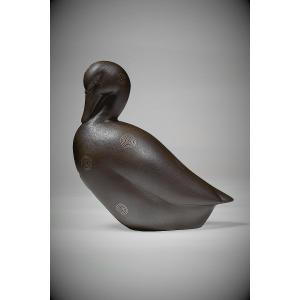
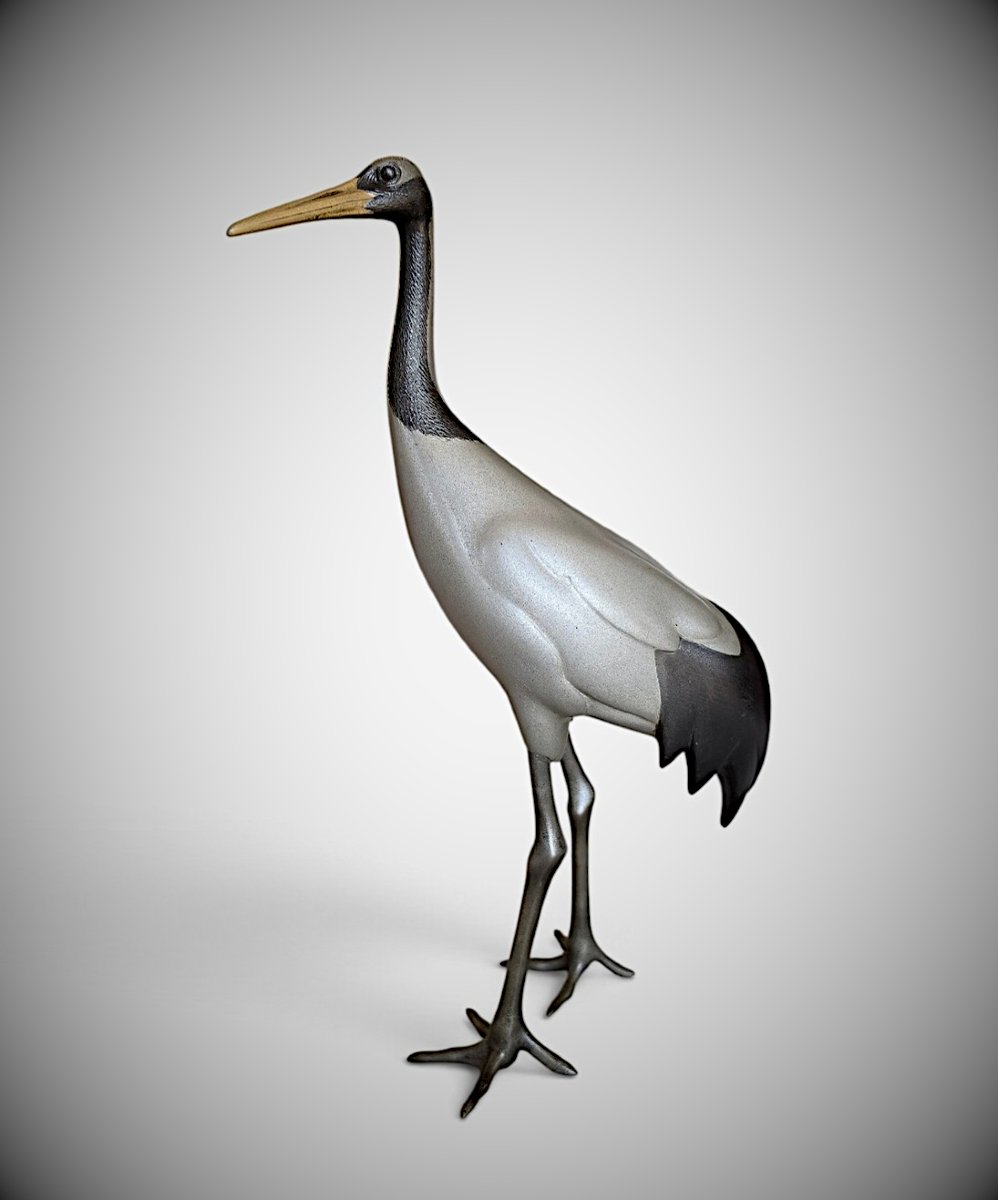
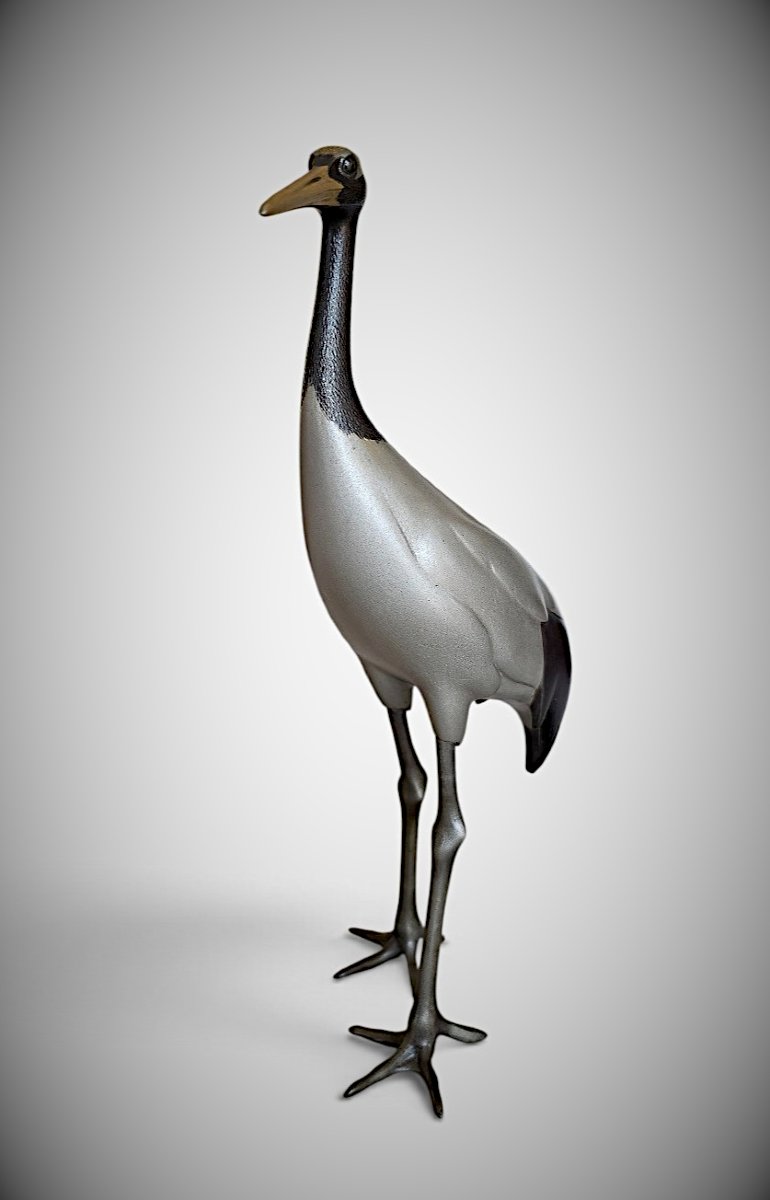
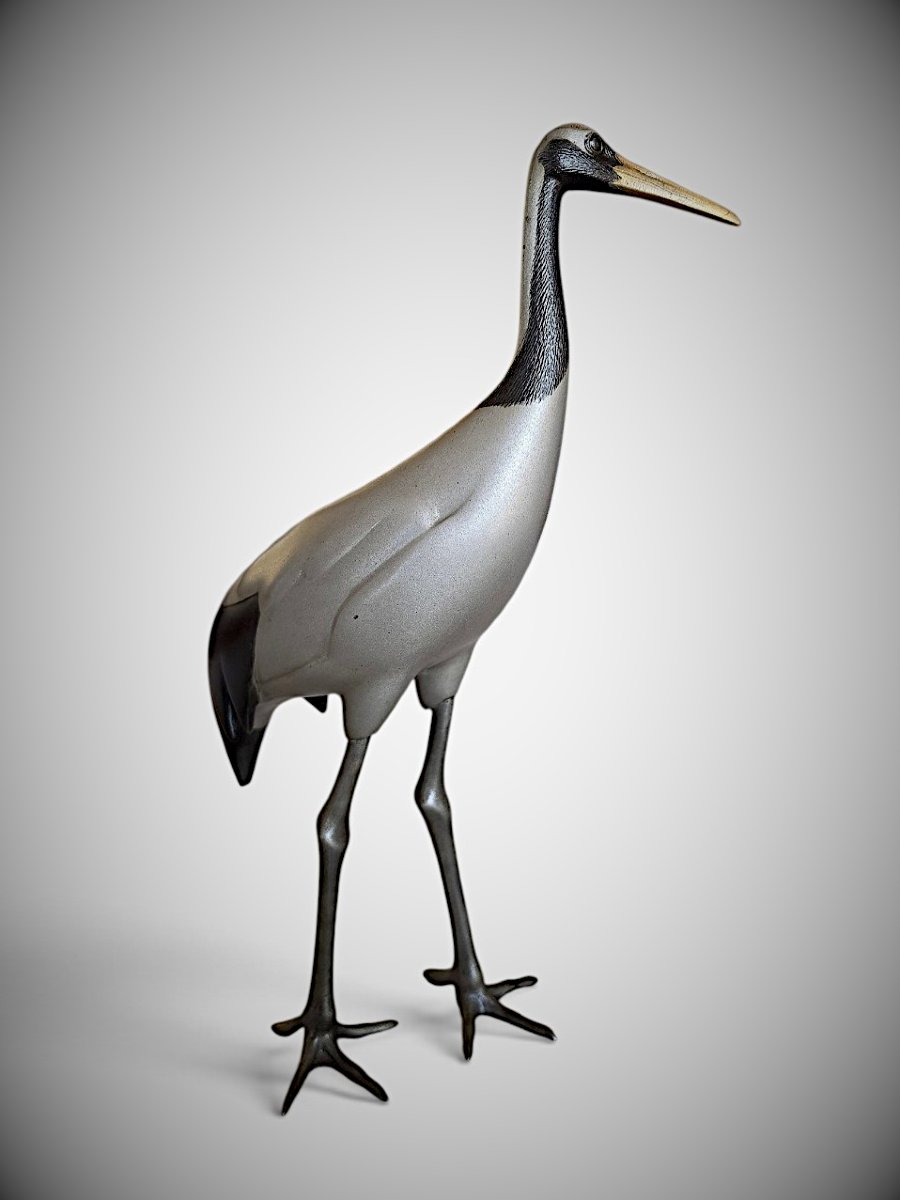
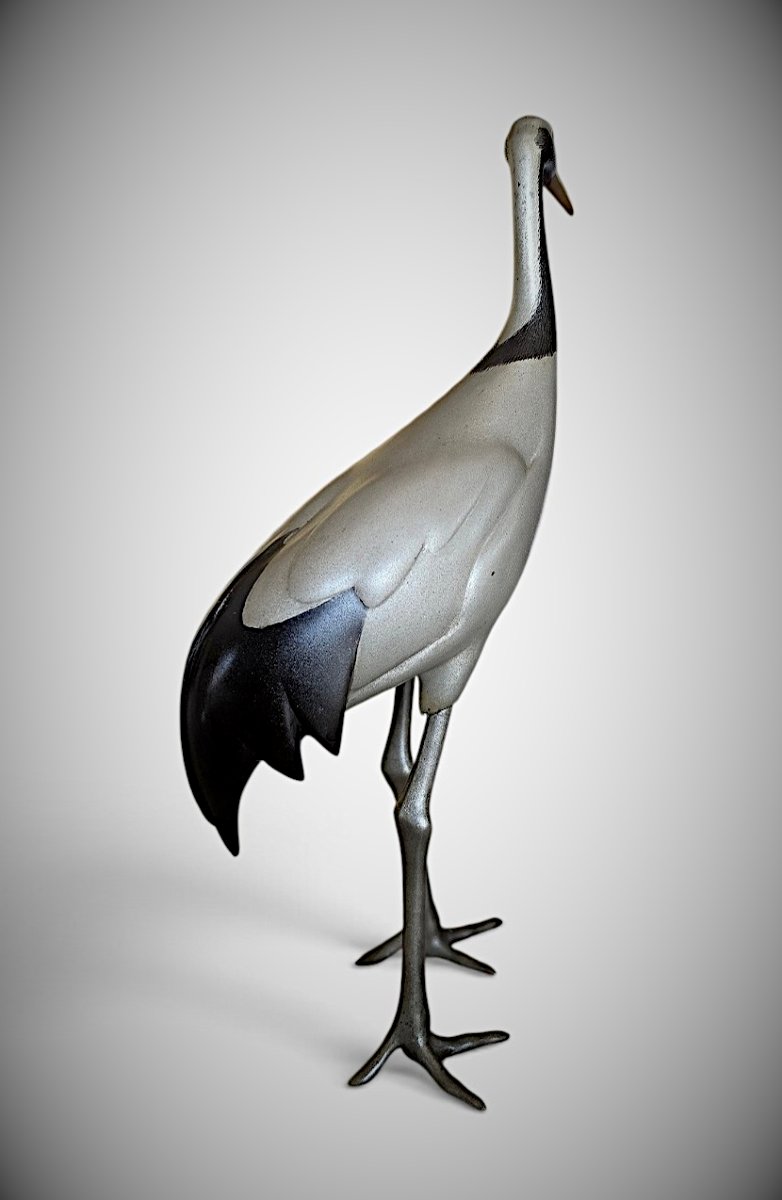
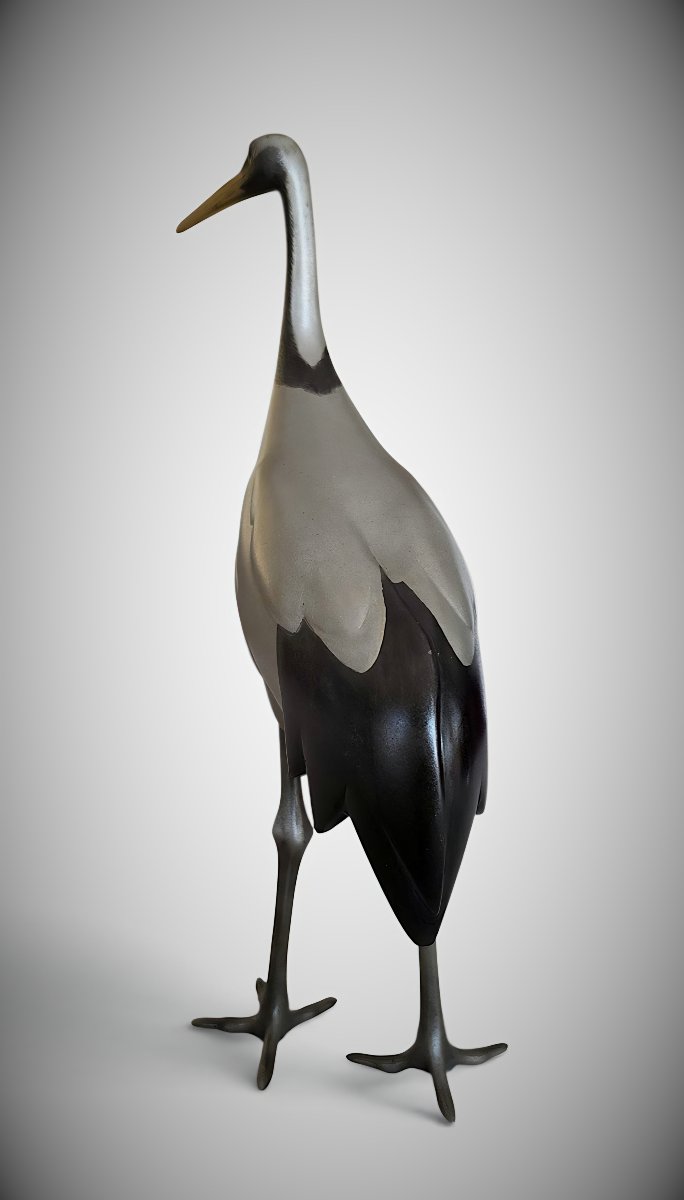
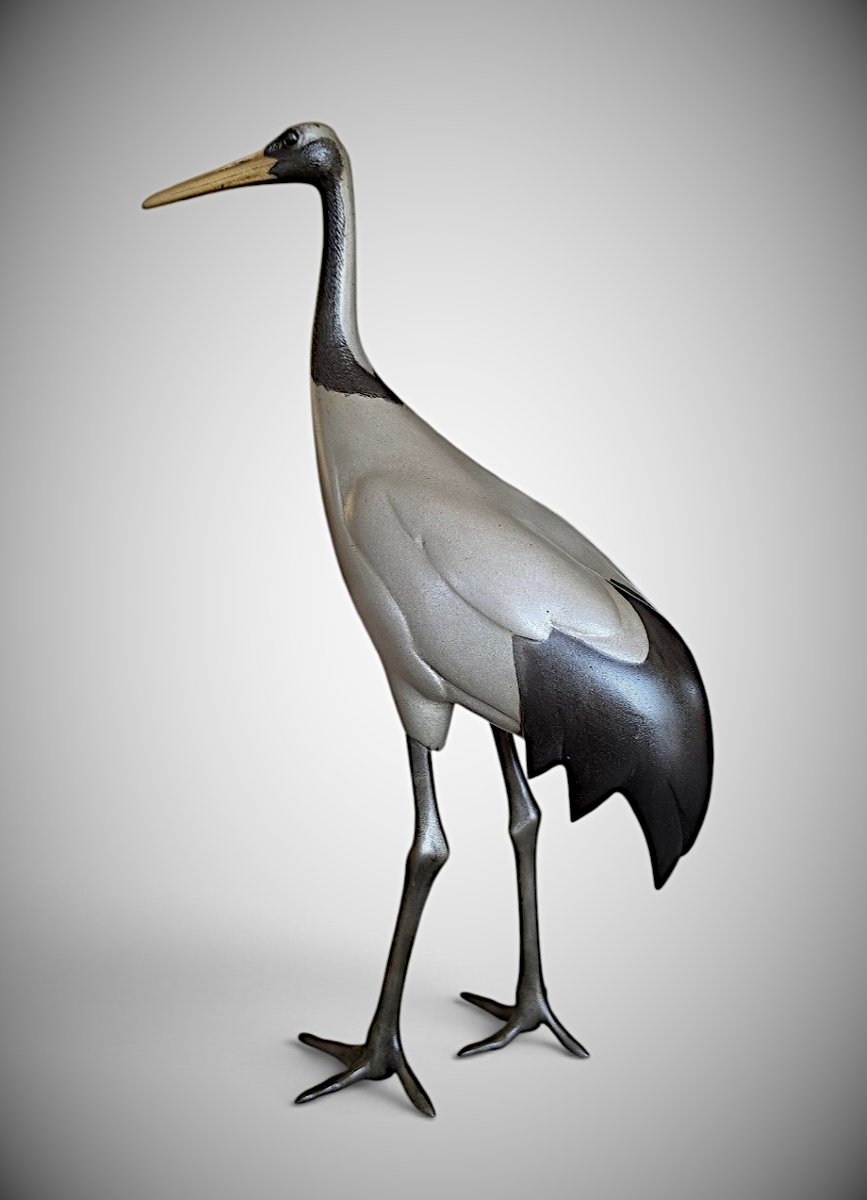
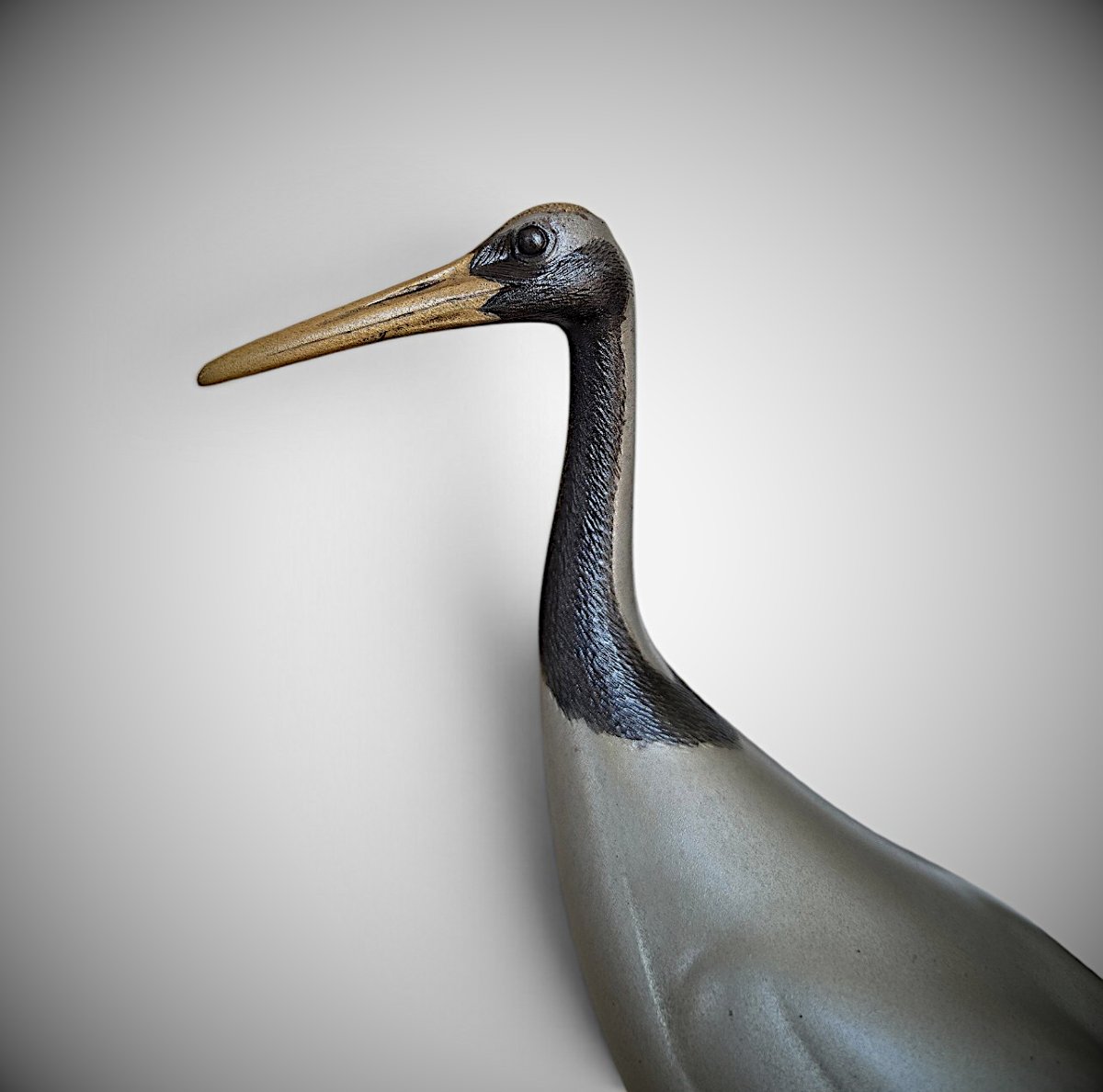
This finely modeled Japanese bronze sculpture depicts a standing crane, its long neck elegantly extended and slender legs supporting a naturalistic composition of perfect balance. The light-colored body contrasts with the darker head, neck, and tail, while the beak introduces a subtle golden-brown hue. These variations in color and texture, though restrained, lend the sculpture a remarkable delicacy, highlighting its graceful silhouette and meticulously observed anatomy.
The crane, a symbol of good fortune in Japanese art, has long been associated with longevity, good luck, and dignity. Its understated elegance was particularly well-suited to the work of Nihashi Bikō, one of the most eminent Japanese metal sculptors of the Shōwa period. Nihashi Bikō 二橋美衡 (1896–1977) was born in Shizuoka Prefecture in 1896 as Nihashi Rihei, also known as Nihashi Yoshihira. He moved to Tokyo and studied under the famous goldsmith Unno Mimori, before enrolling in the metalworking department at the Tokyo School of Fine Arts, from which hegraduated in 1925. His early successes were remarkable: he received the Special Prize at the Teiten Exhibition three consecutive times, beginning in 1929. His work was subsequently exhibited and recognized at the Bunten and Nitten exhibitions, where he also served as a jury member and advisor.
Nihashi’s artistic reputation is based on his ability to combine the rigor of traditional Japanese metalwork with a modern and refined approach to sculptural form. His works are included in majorJapanese collections, notably the National Museum of Modern Art, Kyoto, and the National Museum of Arts and Crafts. Among his most prestigious commissions is a pair of silver cranes presented by theTokyo Prefecture on the occasion of Emperor Taishō’s silver wedding anniversary in 1925, reflecting the special significance of the crane in his work.
This sculpture is a particularly remarkable example of his animal-themed work, characterized by its elegant proportions, subtle patina, and the delicate rendering of the bird’s plumage. Its height of 28 cm, its signature and its original case (tomobako) make it a prized piece for collectors of Japanese bronze sculptures. A refined and richly decorative work by a leading Japanese metal artist, it embodies the timeless beauty and symbolism of the crane.
This finely modeled Japanese bronze sculpture depicts a standing crane, its long neck elegantly extended and slender legs supporting a naturalistic composition of perfect balance. The light-colored body contrasts with the darker head, neck, and tail, while the beak introduces a subtle golden-brown hue. These variations in color and texture, though restrained, lend the sculpture a remarkable delicacy, highlighting its graceful silhouette and meticulously observed anatomy.
The crane, a symbol of good fortune in Japanese art, has long been associated with longevity, good luck, and dignity. Its understated elegance was particularly well-suited to the work of Nihashi Bikō, one of the most eminent Japanese metal sculptors of the Shōwa period. Nihashi Bikō 二橋美衡 (1896–1977) was born in Shizuoka Prefecture in 1896 as Nihashi Rihei, also known as Nihashi Yoshihira. He moved to Tokyo and studied under the famous goldsmith Unno Mimori, before enrolling in the metalworking department at the Tokyo School of Fine Arts, from which hegraduated in 1925. His early successes were remarkable: he received the Special Prize at the Teiten Exhibition three consecutive times, beginning in 1929. His work was subsequently exhibited and recognized at the Bunten and Nitten exhibitions, where he also served as a jury member and advisor.
Nihashi’s artistic reputation is based on his ability to combine the rigor of traditional Japanese metalwork with a modern and refined approach to sculptural form. His works are included in majorJapanese collections, notably the National Museum of Modern Art, Kyoto, and the National Museum of Arts and Crafts. Among his most prestigious commissions is a pair of silver cranes presented by theTokyo Prefecture on the occasion of Emperor Taishō’s silver wedding anniversary in 1925, reflecting the special significance of the crane in his work.
This sculpture is a particularly remarkable example of his animal-themed work, characterized by its elegant proportions, subtle patina, and the delicate rendering of the bird’s plumage. Its height of 28 cm, its signature and its original case (tomobako) make it a prized piece for collectors of Japanese bronze sculptures. A refined and richly decorative work by a leading Japanese metal artist, it embodies the timeless beauty and symbolism of the crane.
1 300 €
Period: 20th century
Style: Art Deco
Condition: Excellent condition
Material: Bronze
Length: 17 cm
Height: 28 cm
Reference (ID): 1817623
Availability: In stock
Print