

Important Architectural Crowning With Shell And Pebble Decoration Italy, 18th Century
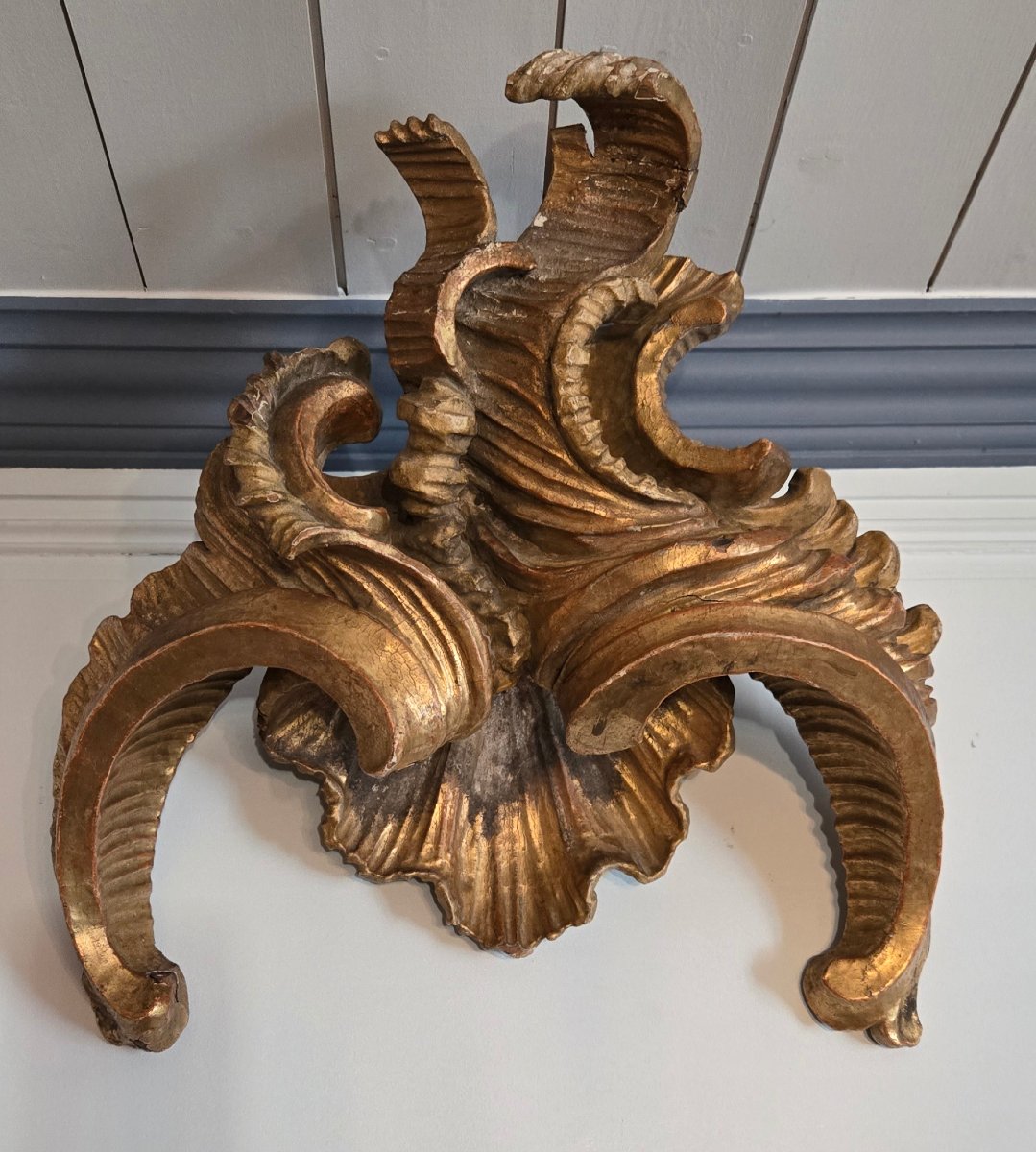
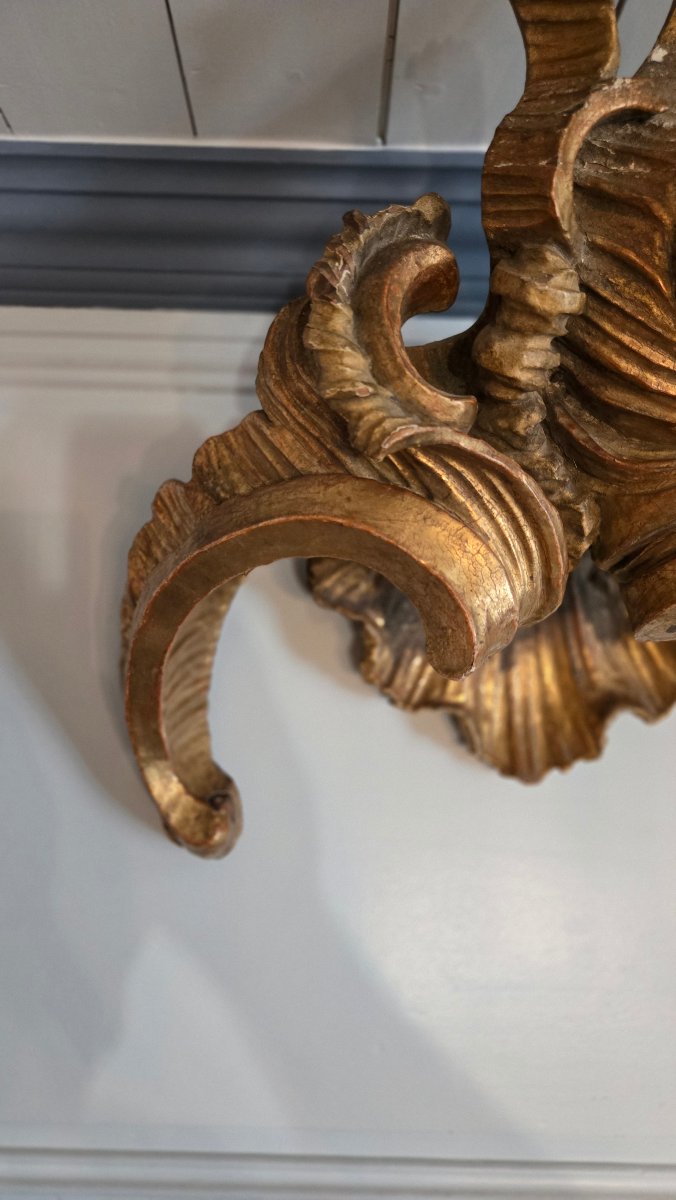
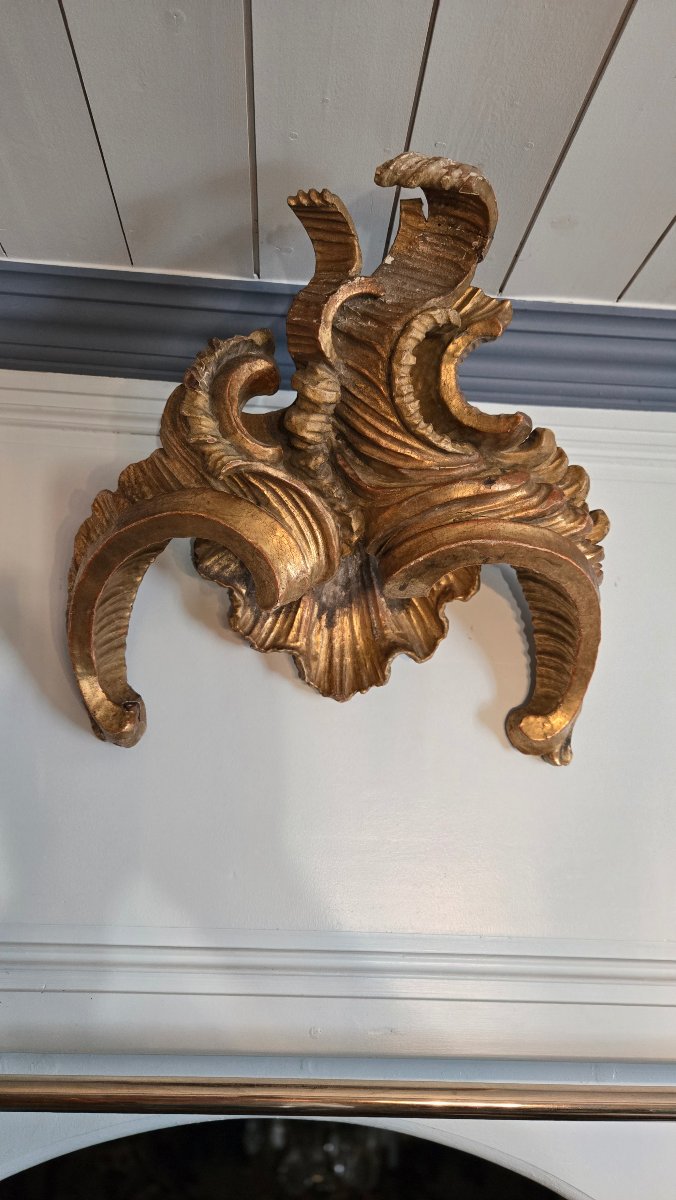
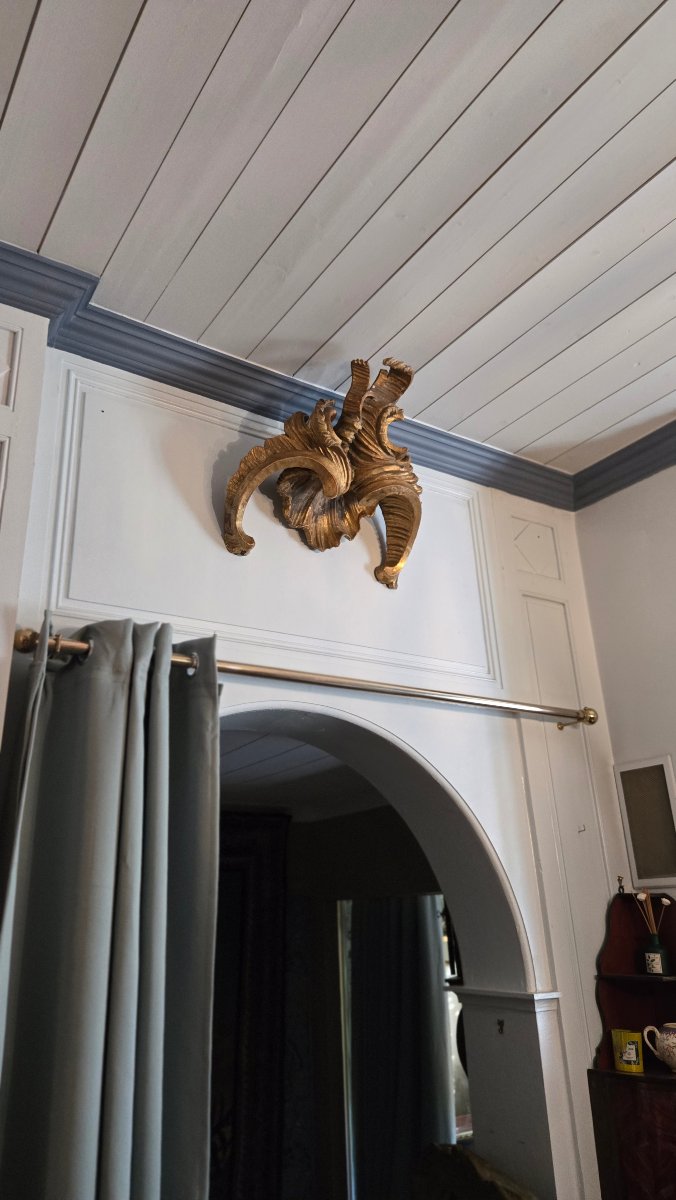
An important architectural element made of carved and gilded wood, likely serving as the crowning element of a niche, a frame, or a monumental decoration.
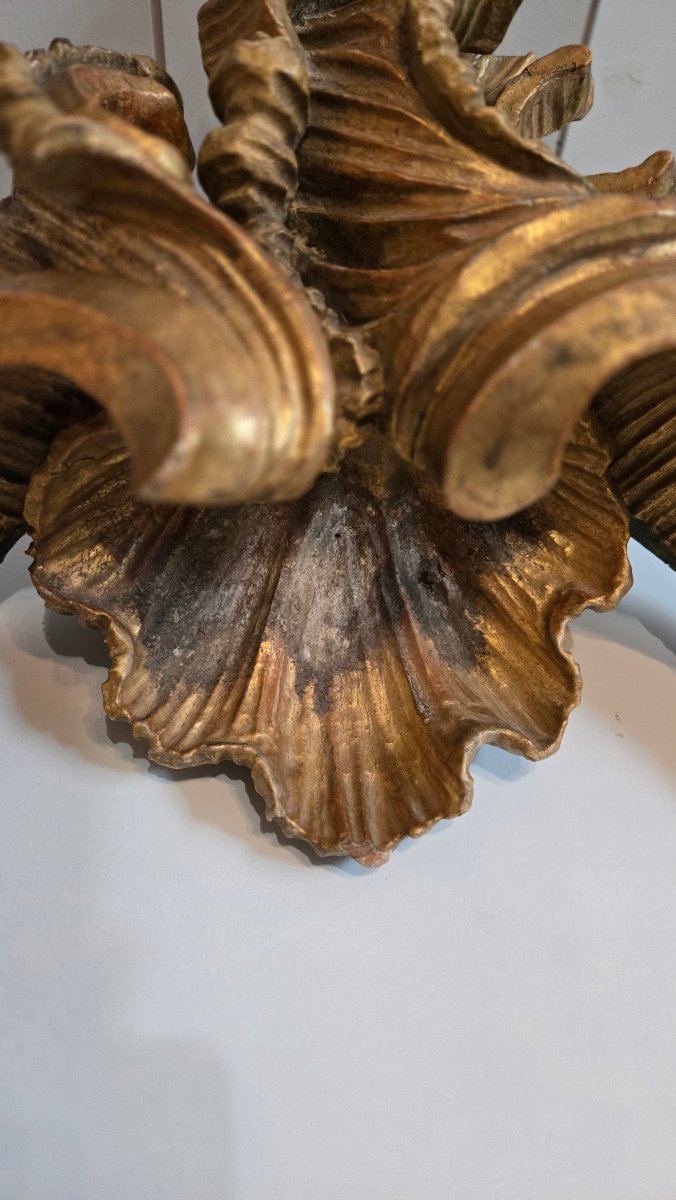
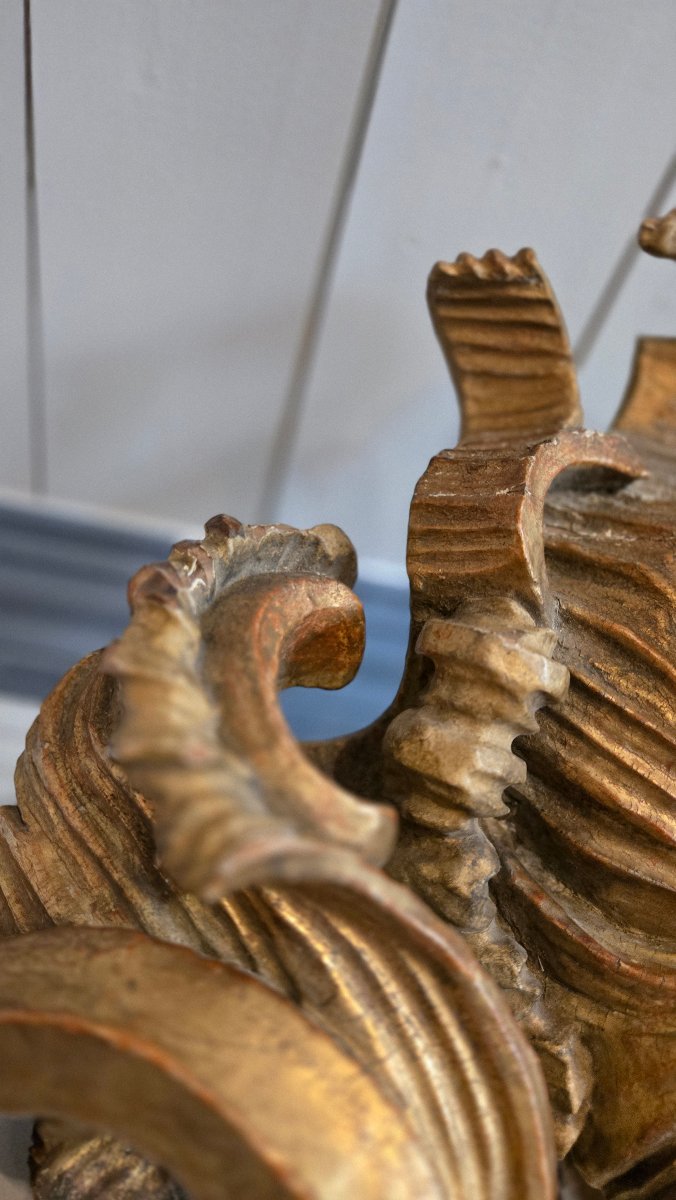
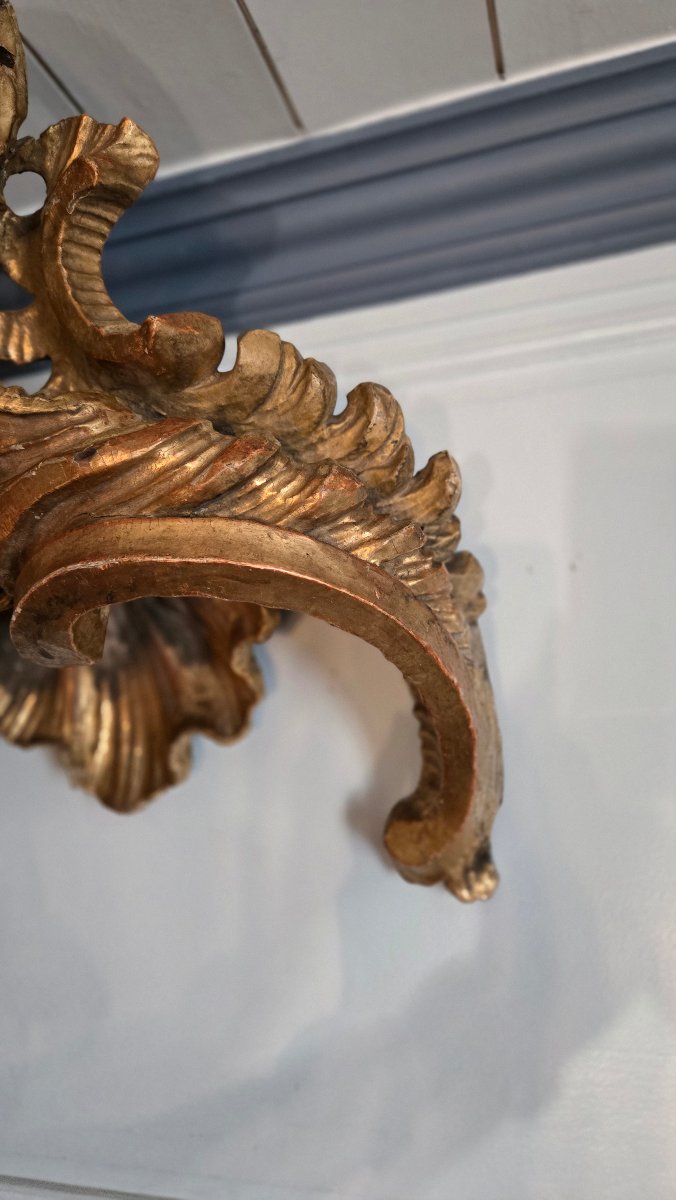
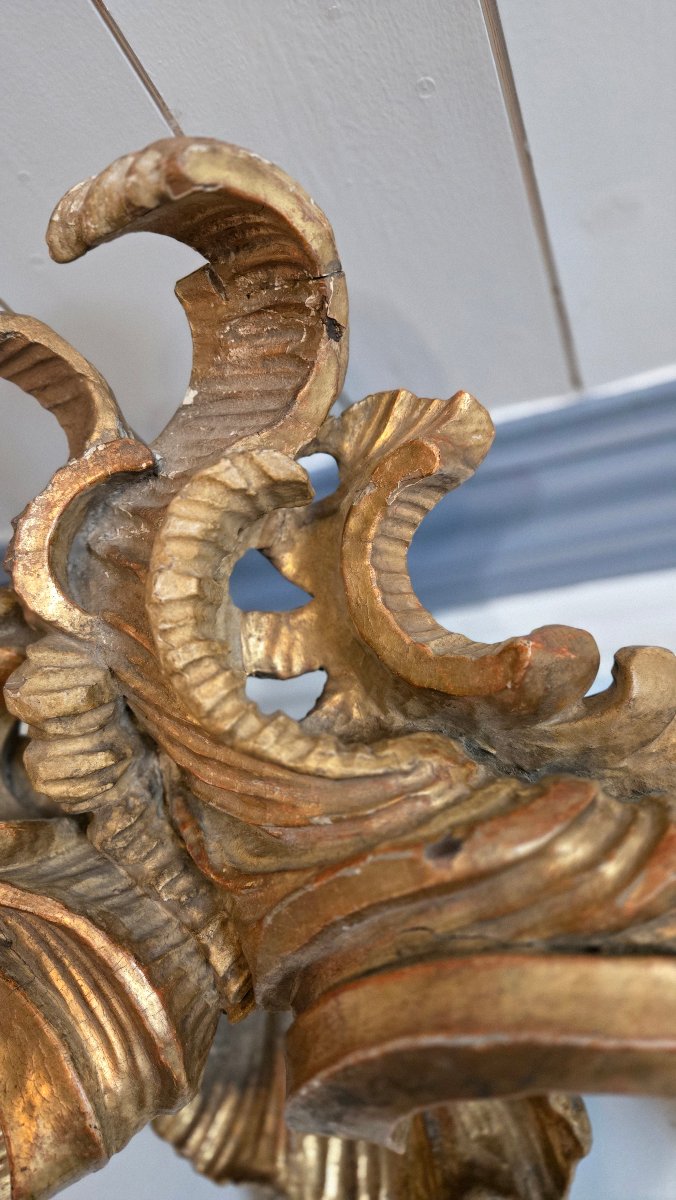
The composition, which is particularly dynamic, is entirely built around a spectacular accumulation of shells and fantastical rock formations. A large ribbed shell unfolds in the lower section, while powerful conches and deeply hollowed valves coil, twist, and interlock with one another.
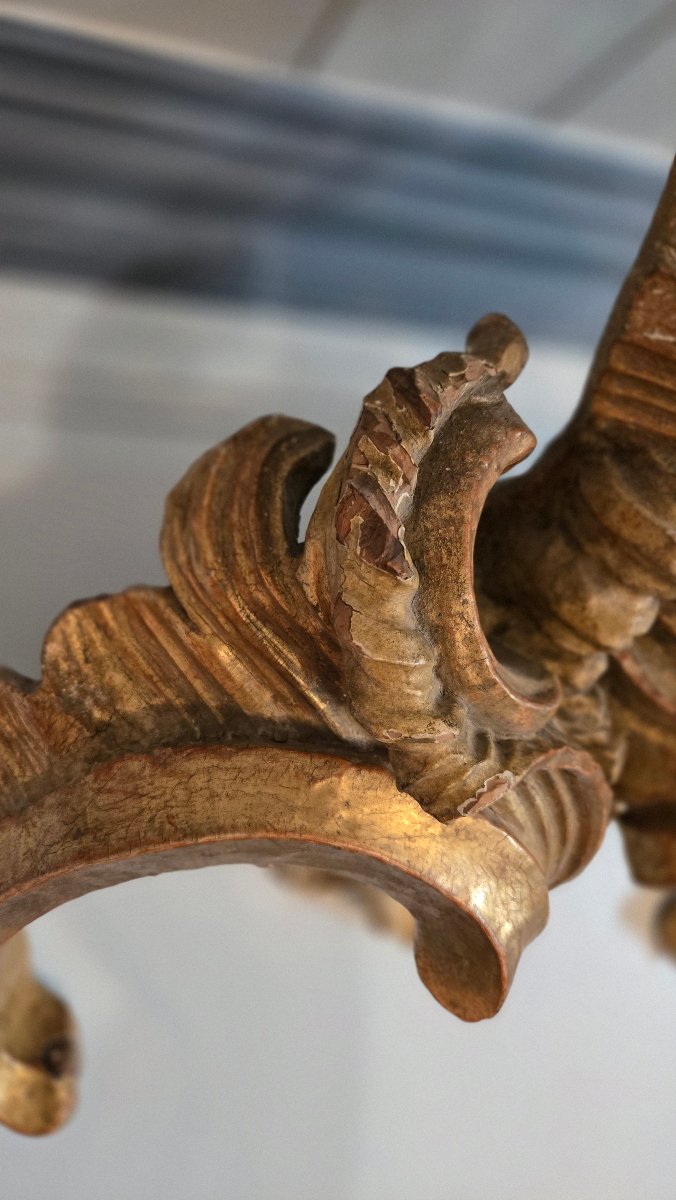
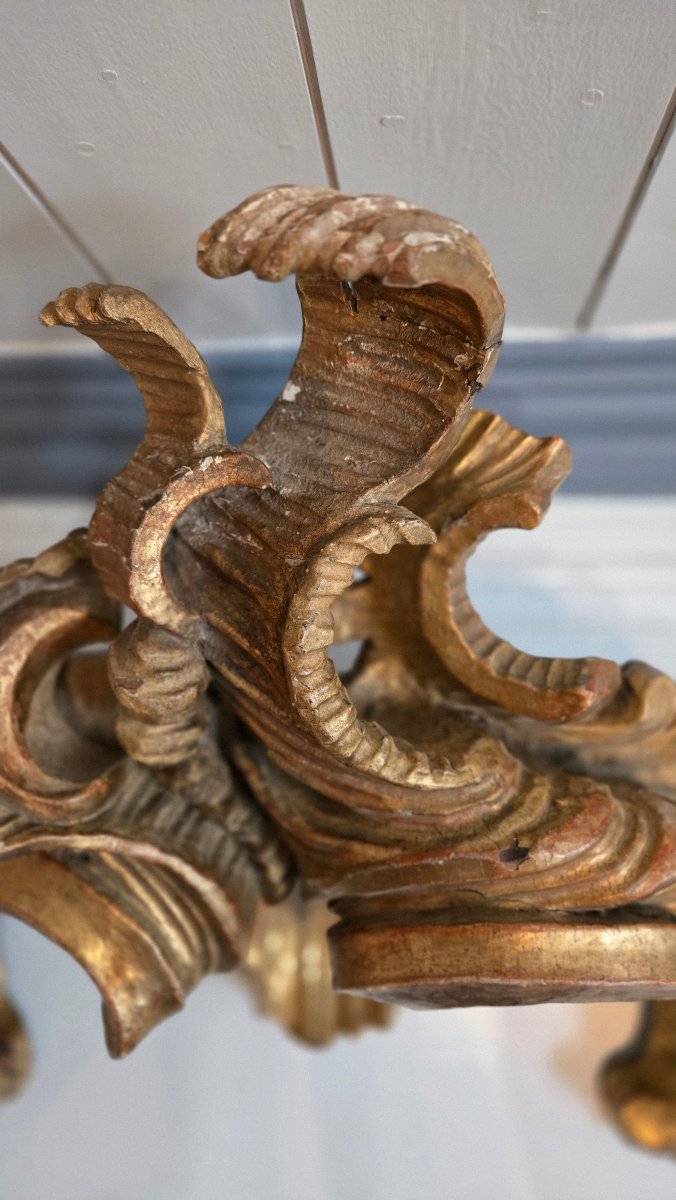
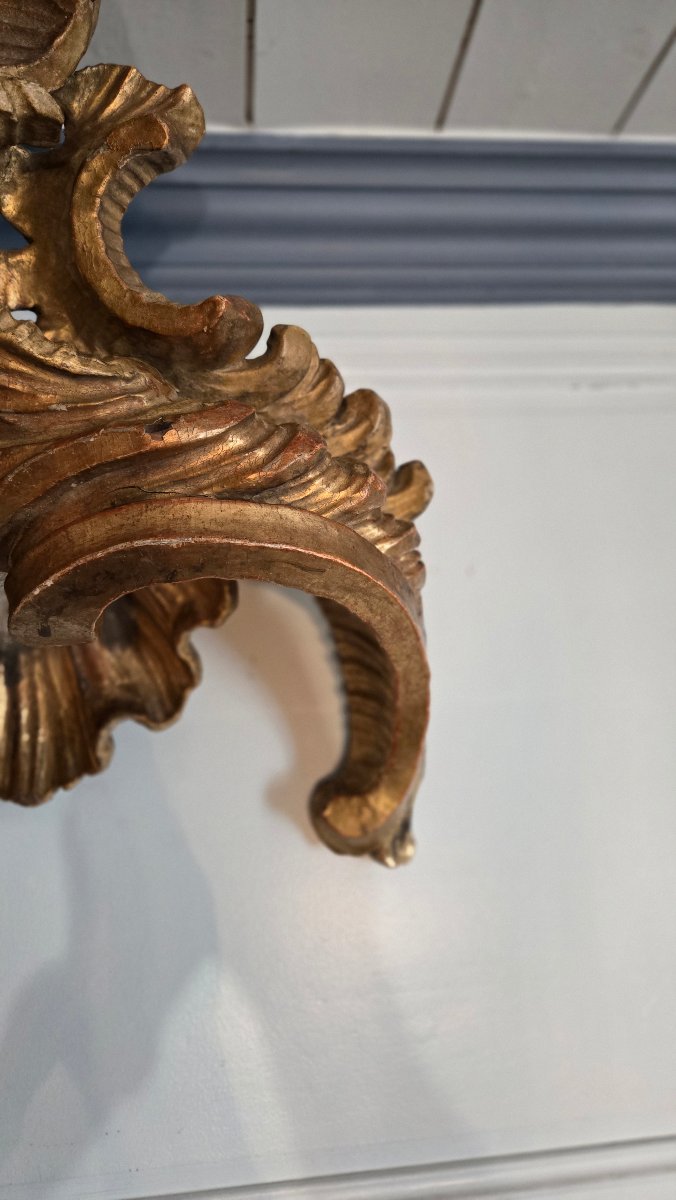
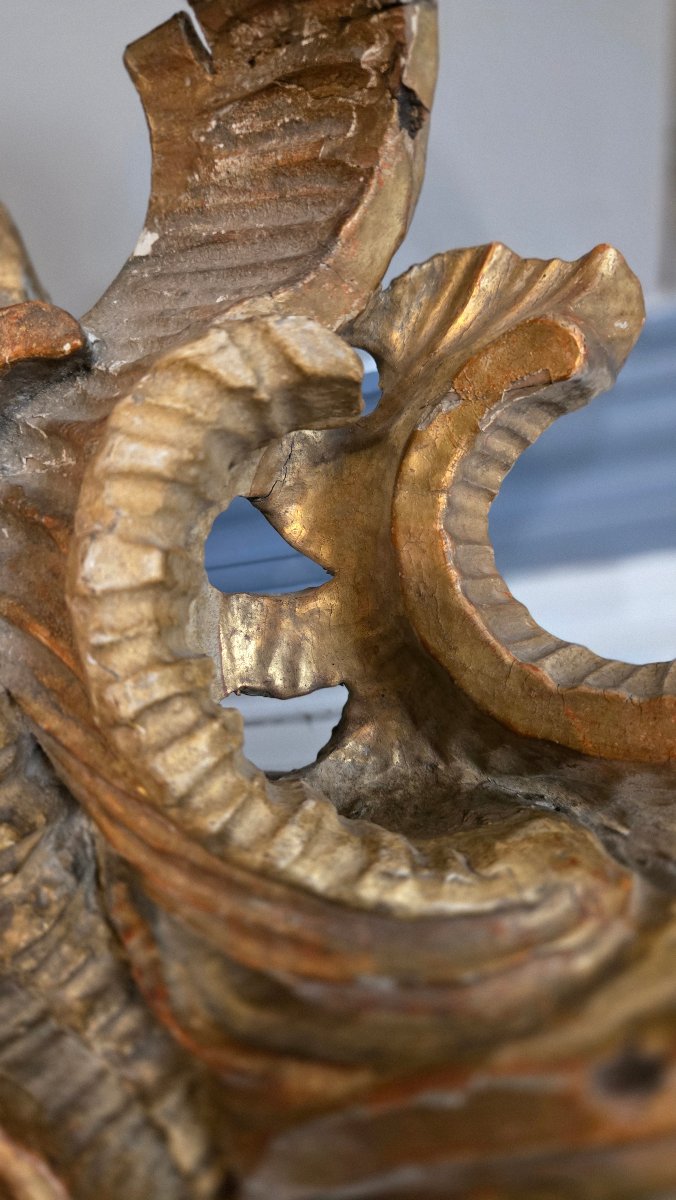
The shells are freely interpreted to the point of becoming true rocaille forms: their surfaces are crisscrossed by deep parallel ribs, their thick lips curl into volutes, and their ends extend into irregular, jagged ridges.
The ornamentation thus appears to break almost entirely free from any classical architectural structure in favor of an autonomous composition of imaginary shells, characteristic of the freest explorations of the rocaille style during the first half of the 18th century.
The sculpture is also notable for its depth, which reaches 22 cm. Certain parts are carved almost in the round, creating striking plays of light and shadow and giving the crown a particularly sharply defined silhouette when viewed from the front or slightly from below.
The piece is carved entirely from softwood. The reverse side, left unfinished and largely hollowed out, bears traces of rough carving and confirms its intended use as a fixed architectural decorative element, likely placed high up.
The exuberant treatment of the shells and rocaille elements links this sculpture to the great Italian decorative styles of the second quarter of the 18th century, a period during which this naturalistic vocabulary—derived from shells and artificial grottoes—evolved toward the free-form compositions of the rocaille style.
The piece retains its original gilding applied over a ground layer, revealing the underlying preparatory layers in places.
Chips, losses, and previous restorations, particularly on the most prominent parts of the decoration. Wear and touch-ups to the gilding.
Dimensions:
H. 53 × W. 54 × D. 22 cm
Period: 18th century
Style: Louis 15th - Transition
Condition: Condition of use
Material: Gilted wood
Reference (ID): 1813480
Availability: In stock