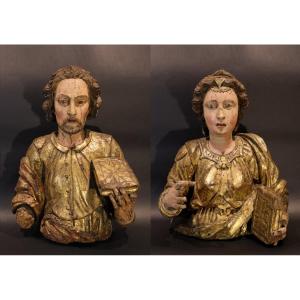


St. John The Evangelist And St. Catherine Of Alexandria, Aniello Stellato (naples 1593–1648)
Artist: Aniello Stellato (mentionné à Naples, 1593 – 1648)
Aniello Stellato
(documented in Naples, 1593–1648)
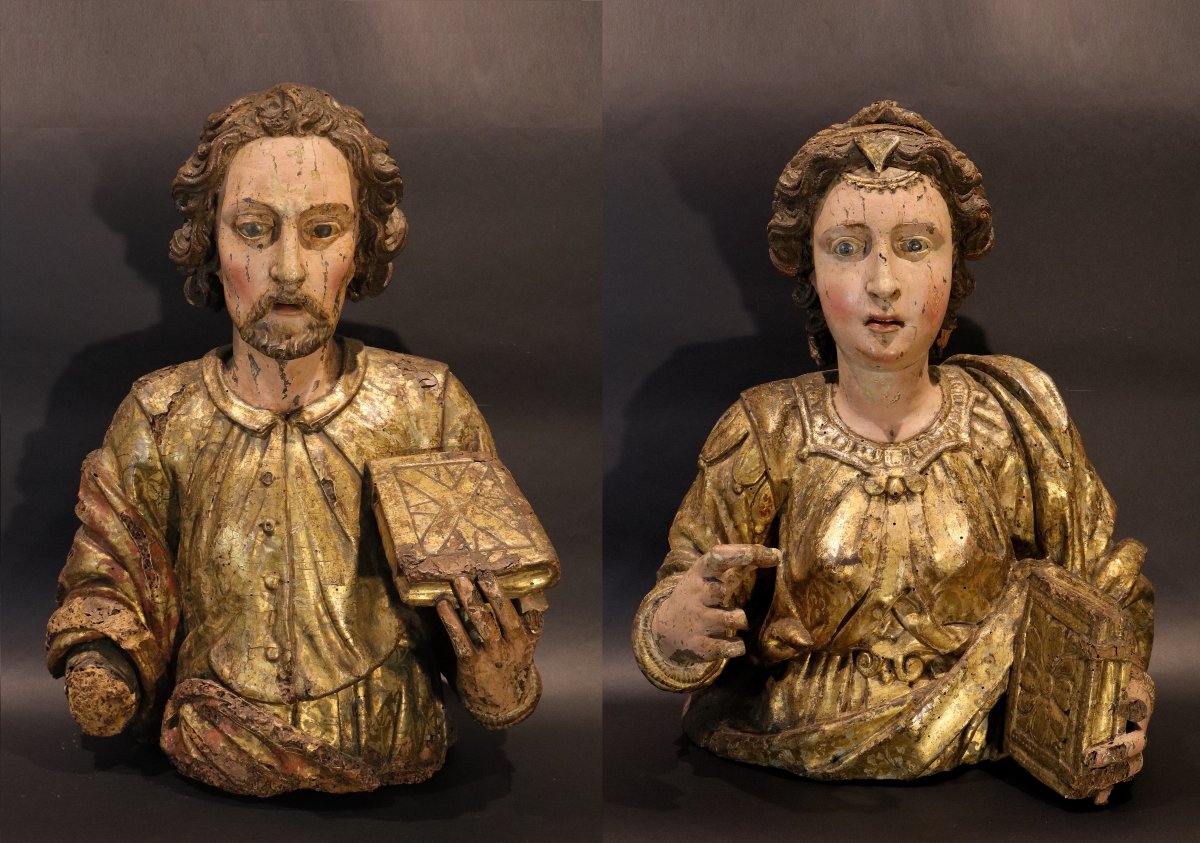
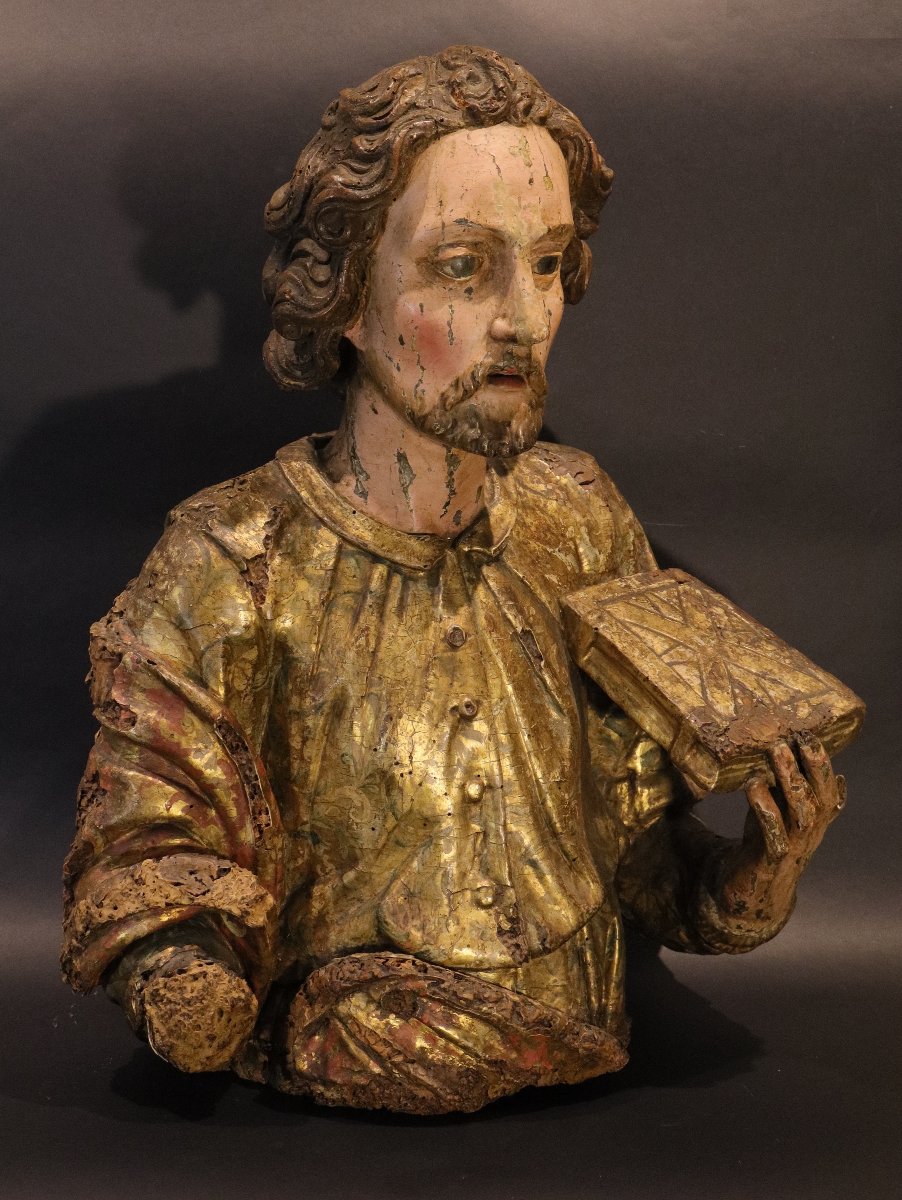
Pair of busts of St. John the Evangelist and St. Catherine of Alexandria
Carved, gilded, and polychrome wood / glass eyes
Maximum dimensions: h. 57 x w. 48 x d. 28 cm.
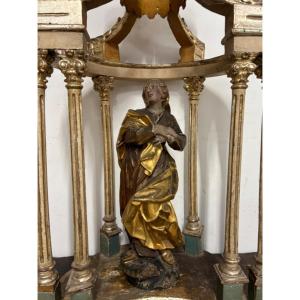
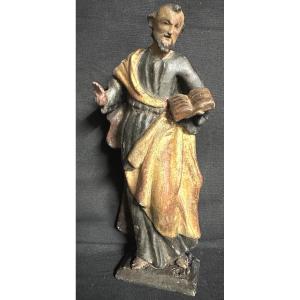
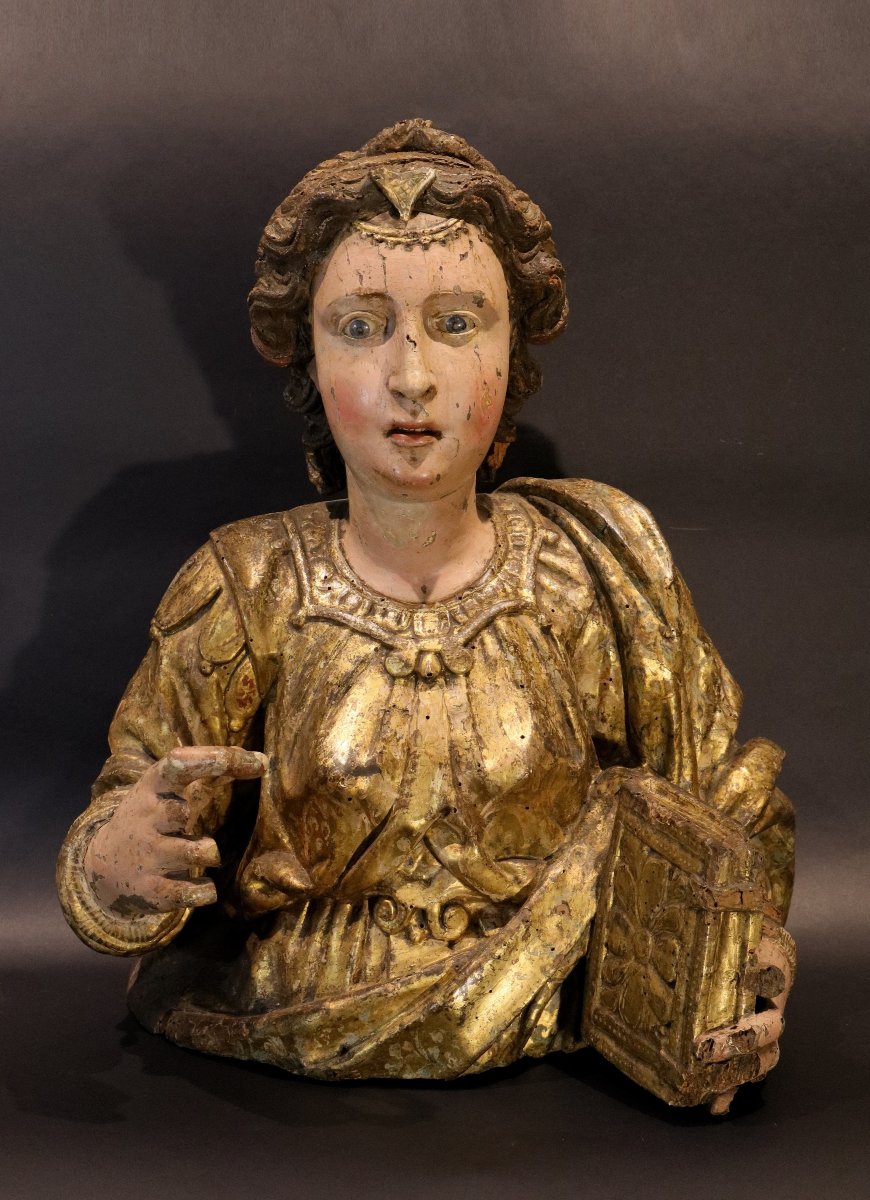
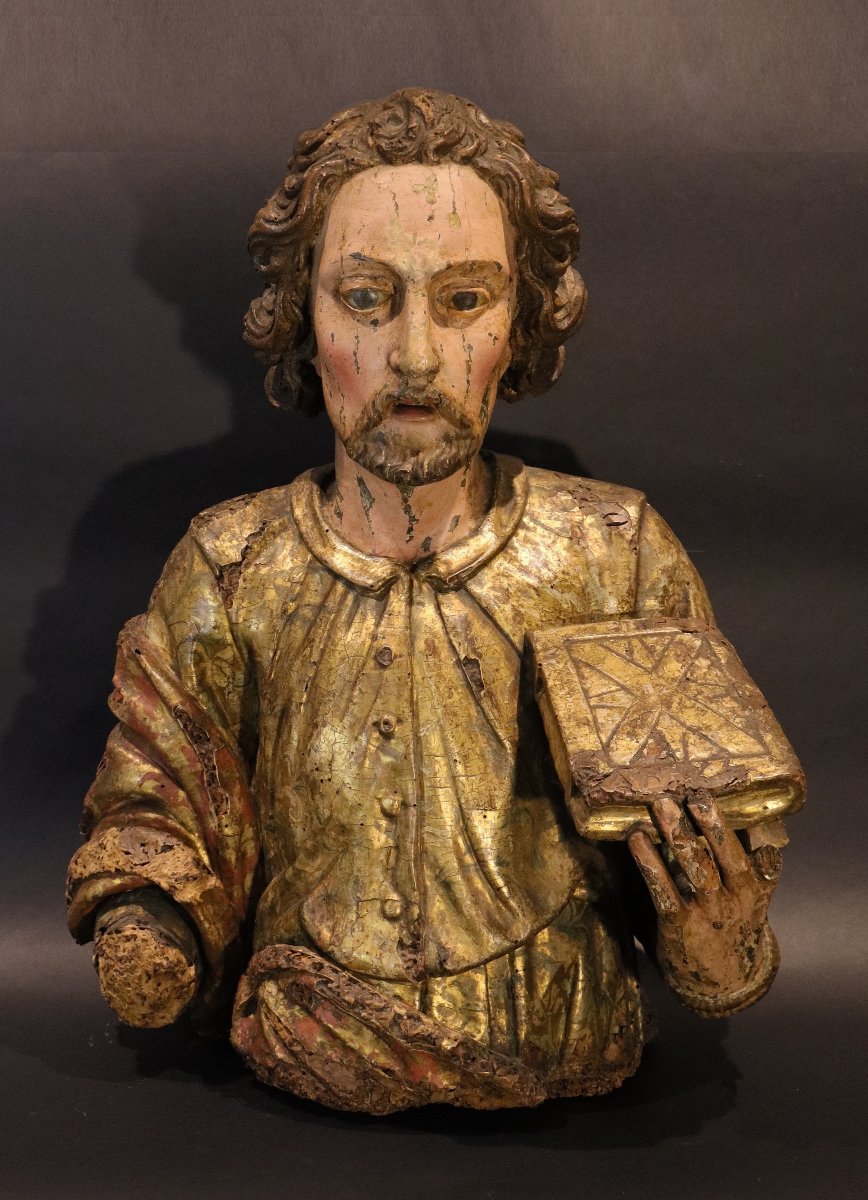
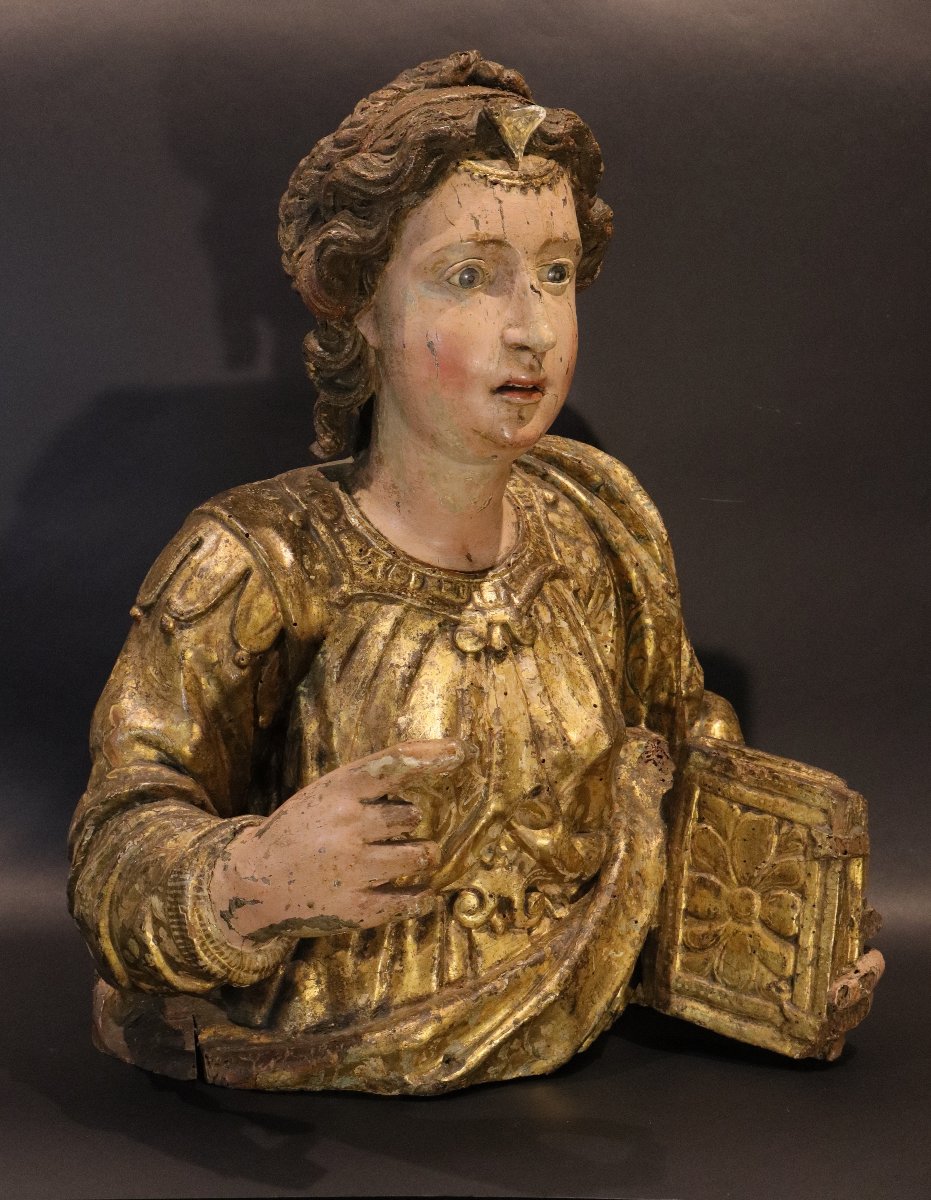
The pair of half-bust sculptures presented here, carved from wood and painted and gilded, are a fine example of early 17th-century Neapolitan sculpture, depicting Saint John the Evangelist and Saint Catherine of Alexandria.
A perfect fusion of art, devotion, and luxury, they demonstrate the artistic level and mastery achieved by Neapolitan woodcarvers and the significance of their role within the cultural context.
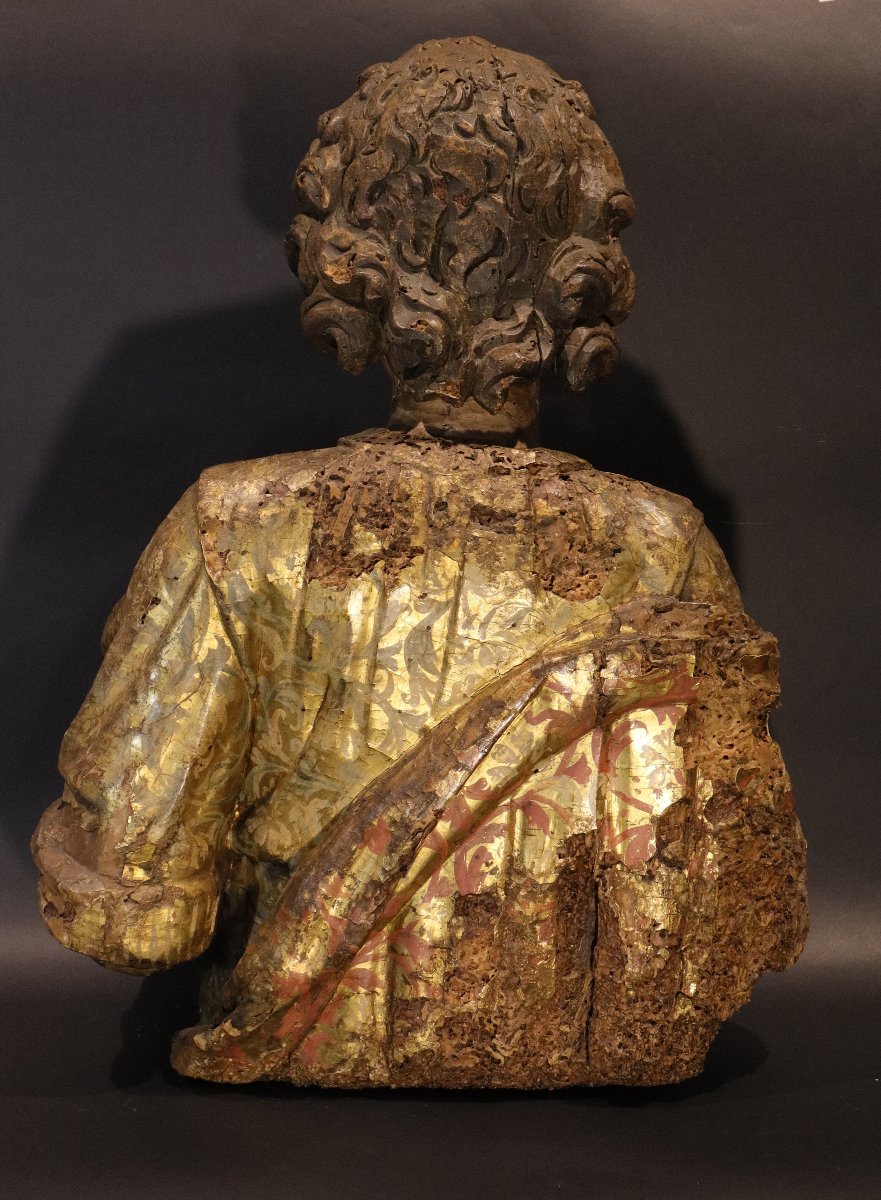
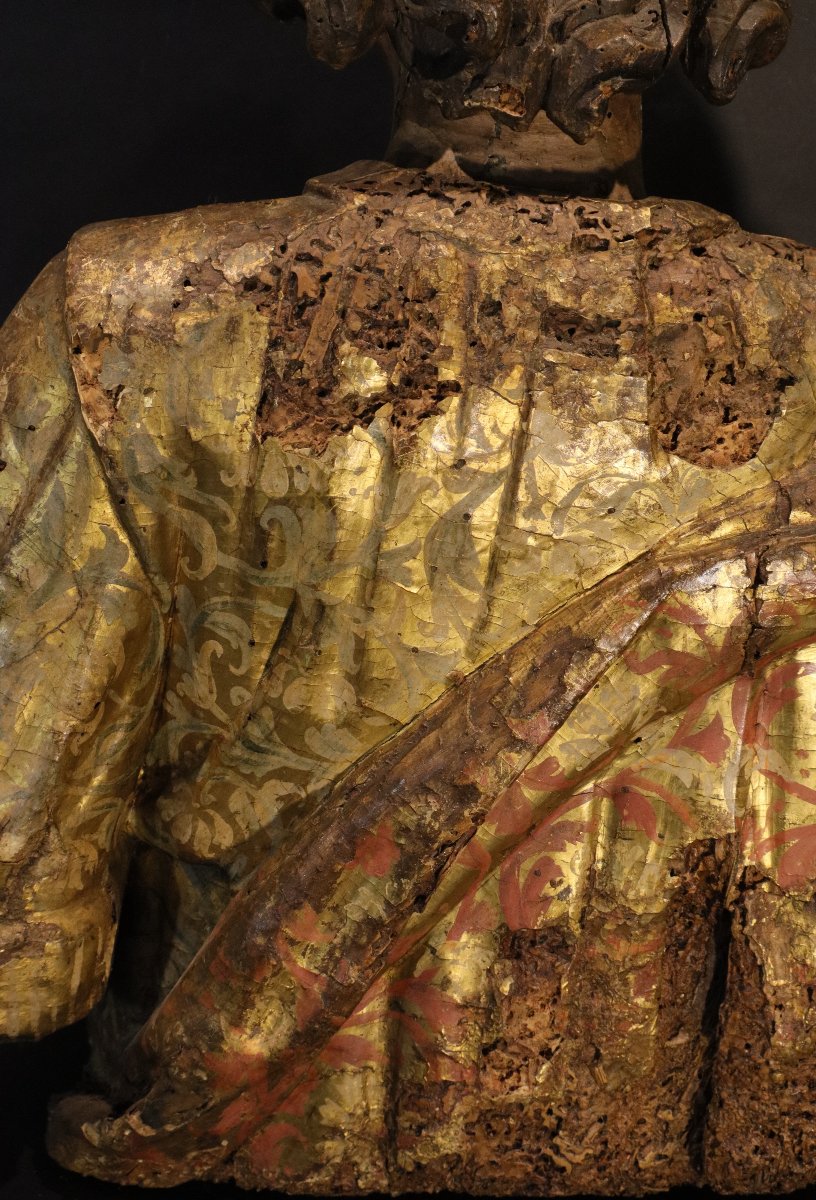
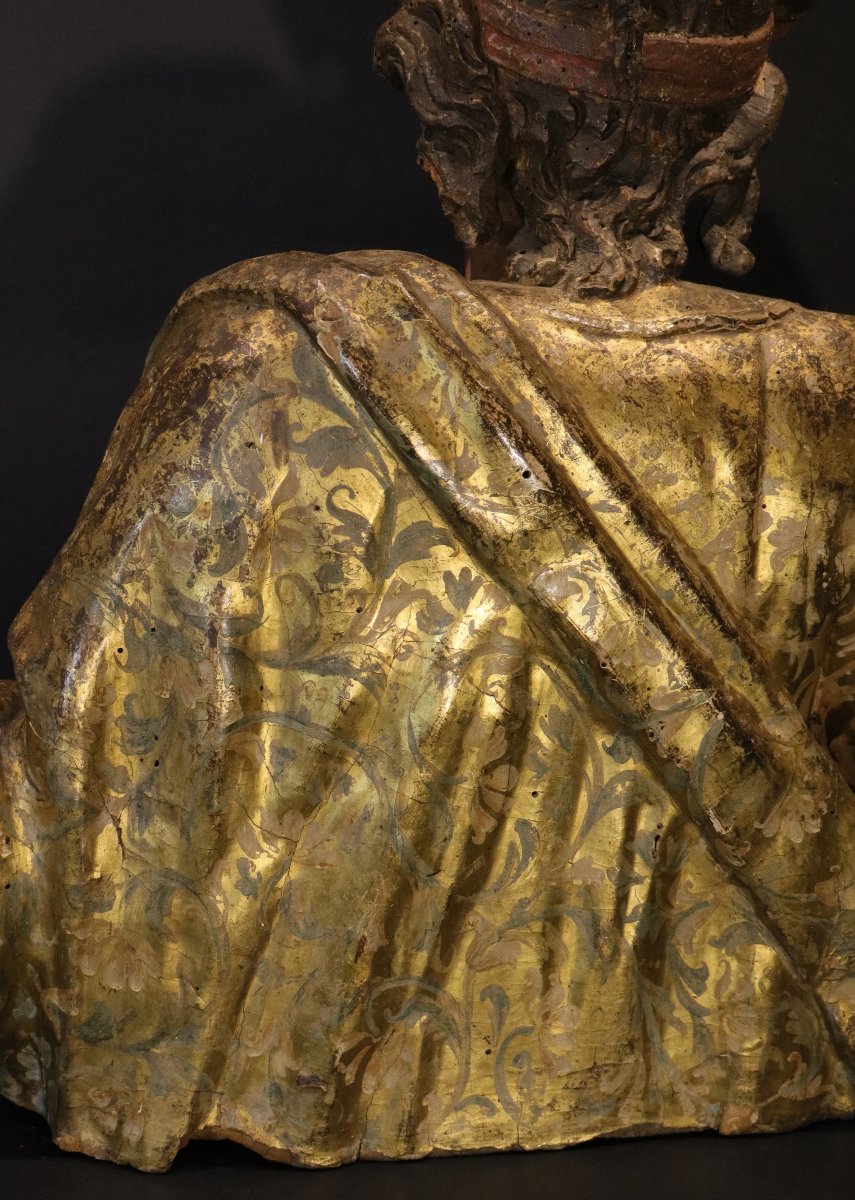
The finish on the back as well—entirely in gold leaf—confirms that the two pieces are part of a single commission of the highest order, not intended to be placed in a niche but rather displayed at the center of a Baroque altar, likely in a private noble chapel.
The juxtaposition of the two saints is far from random, as they represent, respectively, Divine Wisdom (John, the theologian among the Apostles) and Human Wisdom (Catherine, the Egyptian princess who used philosophy to convert pagan scholars), creating a deeply meaningful pairing.
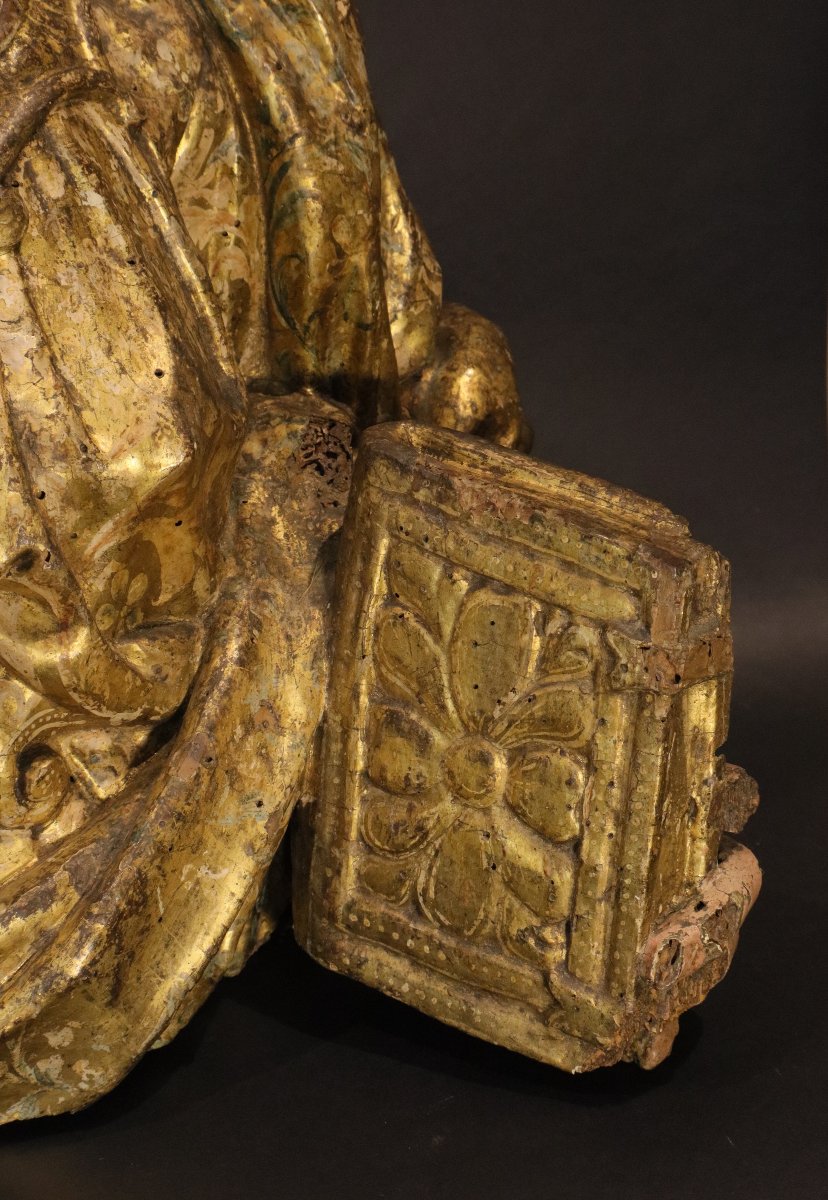
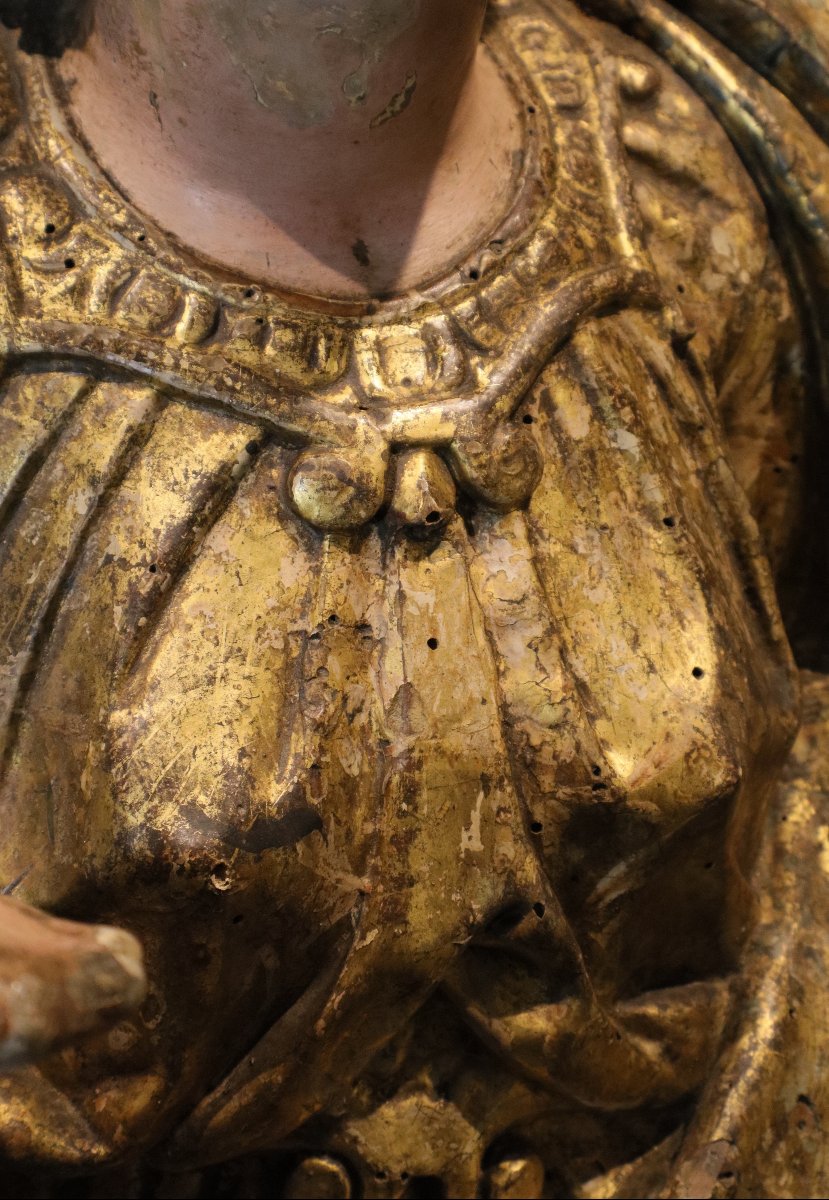
Geometric motifs on the gold leaf confirm that the work dates to the early decades of the 17th century, a period when Naples was a center of excellence for this art form.
Given the quality and the distinctive craftsmanship, we are inclined to attribute this work to the stylistic hand of Aniello Stellato (and his workshop), an important sculptor active in the Kingdom of Naples between the late 16th century and the first half of the 17th century, a master of carving and gilding—so much so that, due to his incredible skill in bringing life and movement to sacred statues, his contemporaries called him the “god of wood.”
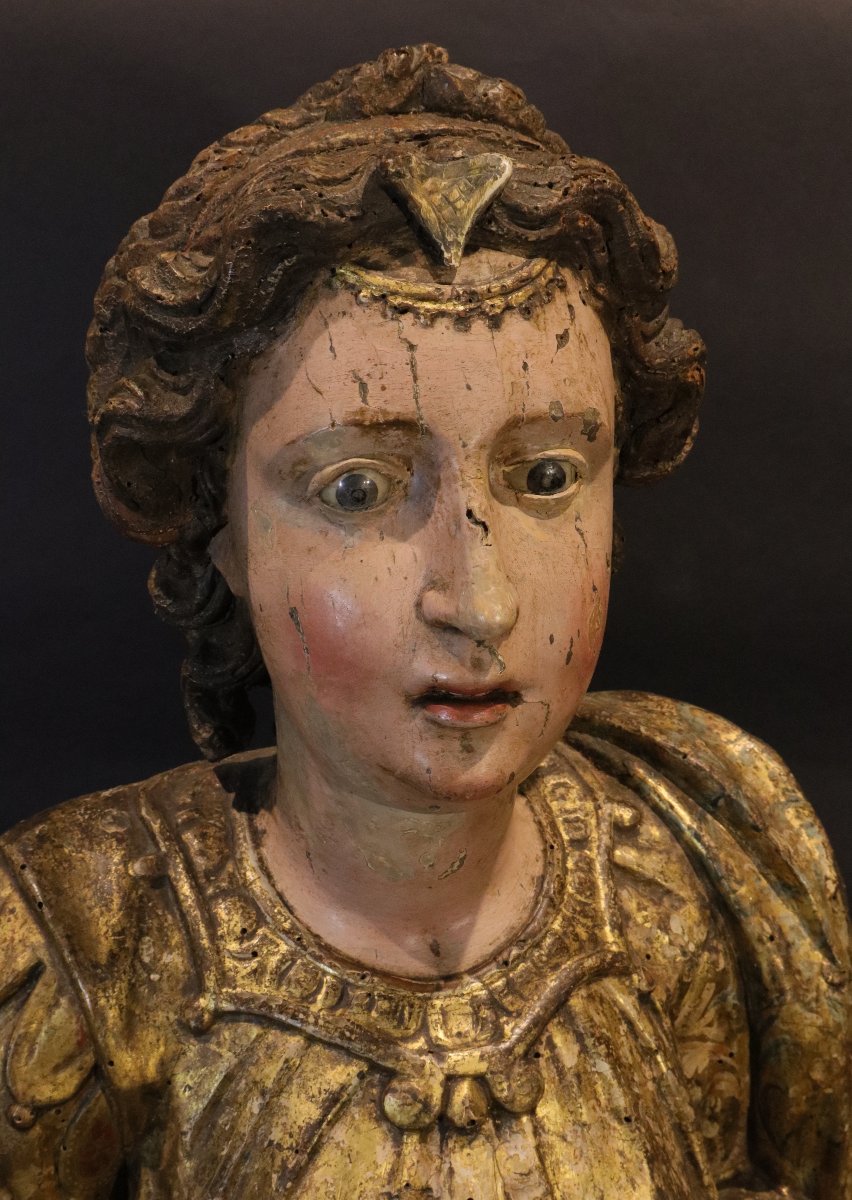
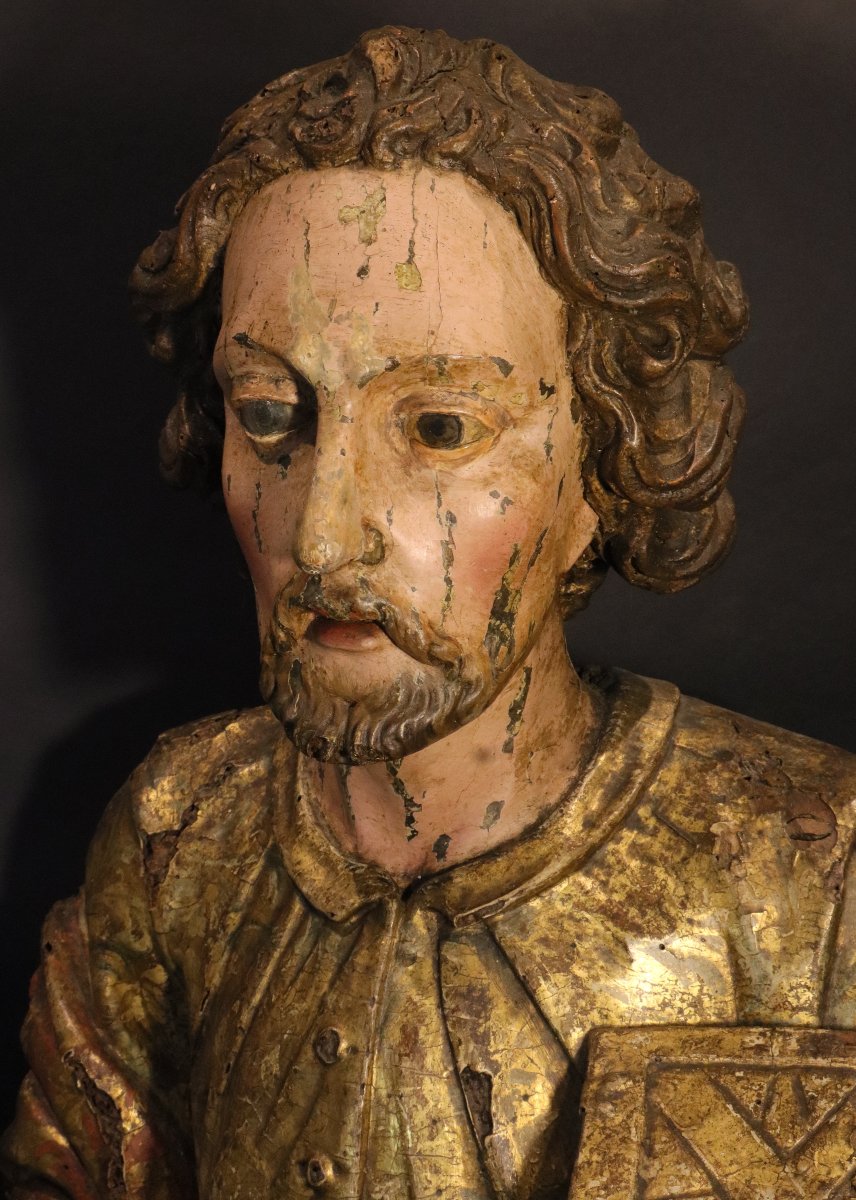
Another detail of our works is the technique typical of 17th-century Neapolitan woodcarvers, which involves inserting glass eyes—an ingenious solution to make the sculptures incredibly realistic, capable of appearing “alive.”
The geometric punching on the robes highlights their distinctive quality: The sculptures were not merely liturgical objects, but true symbols of luxury, created for the altars of wealthy monasteries or private noble chapels.
It should also be noted that the two busts, since they lack the classic reliquary niche on the chest, represent standalone devotional sculptures, supporting the hypothesis that they were created as part of monumental furnishings for private altars or important private collections. Without the need to incorporate a relic, the artist also had greater freedom in rendering the drapery, being able to sculpt the chest and garments without geometric interruptions to make room for the reliquary.
As already mentioned, the fact that the two statues are sculpted and gilded on all sides is a key detail that lends them great prestige: the aristocracy of the Spanish Viceroyalty in Naples, in fact, loved to commission busts of patron saints from the great masters for their private altars and sacred collections.
ADDITIONAL INFORMATION:
The sculptures are in good condition, with losses typical of the period that do not detract from their artistic value.
Sold with a certificate of authenticity and a descriptive iconographic sheet.
We arrange and organize the shipping of purchased works, both within Italy and internationally, using professional, insured carriers.
Please contact us for any information; we will be happy to assist you. You can also view the painting at our gallery in Riva del Garda; we look forward to welcoming you to showcase our collection of works.
Follow us on:
https://www.instagram.com/galleriacastelbarco/?hl=it
https://www.facebook.com/galleriacastelbarco/
(documented in Naples, 1593–1648)
Pair of busts of St. John the Evangelist and St. Catherine of Alexandria
Carved, gilded, and polychrome wood / glass eyes
Maximum dimensions: h. 57 x w. 48 x d. 28 cm.
The pair of half-bust sculptures presented here, carved from wood and painted and gilded, are a fine example of early 17th-century Neapolitan sculpture, depicting Saint John the Evangelist and Saint Catherine of Alexandria.
A perfect fusion of art, devotion, and luxury, they demonstrate the artistic level and mastery achieved by Neapolitan woodcarvers and the significance of their role within the cultural context.
The finish on the back as well—entirely in gold leaf—confirms that the two pieces are part of a single commission of the highest order, not intended to be placed in a niche but rather displayed at the center of a Baroque altar, likely in a private noble chapel.
The juxtaposition of the two saints is far from random, as they represent, respectively, Divine Wisdom (John, the theologian among the Apostles) and Human Wisdom (Catherine, the Egyptian princess who used philosophy to convert pagan scholars), creating a deeply meaningful pairing.
Geometric motifs on the gold leaf confirm that the work dates to the early decades of the 17th century, a period when Naples was a center of excellence for this art form.
Given the quality and the distinctive craftsmanship, we are inclined to attribute this work to the stylistic hand of Aniello Stellato (and his workshop), an important sculptor active in the Kingdom of Naples between the late 16th century and the first half of the 17th century, a master of carving and gilding—so much so that, due to his incredible skill in bringing life and movement to sacred statues, his contemporaries called him the “god of wood.”
Another detail of our works is the technique typical of 17th-century Neapolitan woodcarvers, which involves inserting glass eyes—an ingenious solution to make the sculptures incredibly realistic, capable of appearing “alive.”
The geometric punching on the robes highlights their distinctive quality: The sculptures were not merely liturgical objects, but true symbols of luxury, created for the altars of wealthy monasteries or private noble chapels.
It should also be noted that the two busts, since they lack the classic reliquary niche on the chest, represent standalone devotional sculptures, supporting the hypothesis that they were created as part of monumental furnishings for private altars or important private collections. Without the need to incorporate a relic, the artist also had greater freedom in rendering the drapery, being able to sculpt the chest and garments without geometric interruptions to make room for the reliquary.
As already mentioned, the fact that the two statues are sculpted and gilded on all sides is a key detail that lends them great prestige: the aristocracy of the Spanish Viceroyalty in Naples, in fact, loved to commission busts of patron saints from the great masters for their private altars and sacred collections.
ADDITIONAL INFORMATION:
The sculptures are in good condition, with losses typical of the period that do not detract from their artistic value.
Sold with a certificate of authenticity and a descriptive iconographic sheet.
We arrange and organize the shipping of purchased works, both within Italy and internationally, using professional, insured carriers.
Please contact us for any information; we will be happy to assist you. You can also view the painting at our gallery in Riva del Garda; we look forward to welcoming you to showcase our collection of works.
Follow us on:
https://www.instagram.com/galleriacastelbarco/?hl=it
https://www.facebook.com/galleriacastelbarco/
12 000 €
Period: 17th century
Style: Louis 15th - Transition
Condition: Good condition
Material: Oil painting
Width: 48 cm.
Height: 57 cm.
Depth: 28 cm.
Reference (ID): 1823967
Availability: In stock
Print