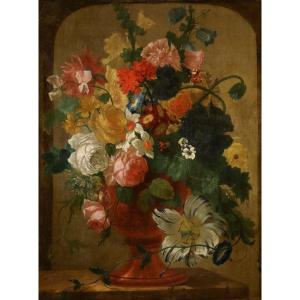


Vase Of Flowers With Butterflies In A Niche, Jan Van Huysum (amsterdam 1682 - 1749)
Artist: Jan Van Huysum (amsterdam, 1682 - 1749) Cercle
Vase of Flowers with Butterflies in a Niche
Jan Van Huysum (Amsterdam 1682–1749), circle
Oil on canvas
64 x 52 cm. — Framed: 85 x 71 cm.
FULL DETAILS OF THIS PAINTING (CLICK HERE)
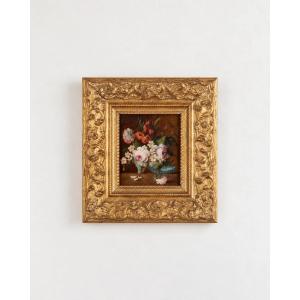
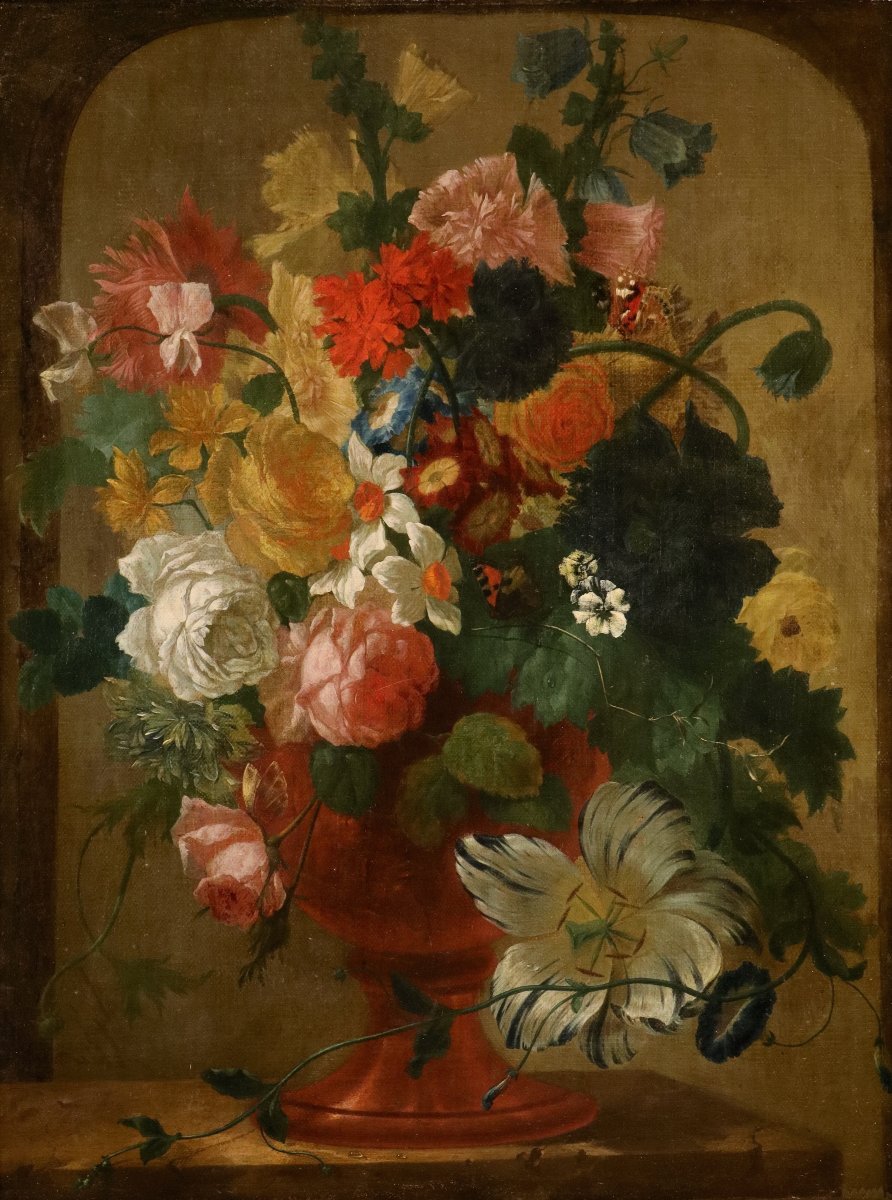
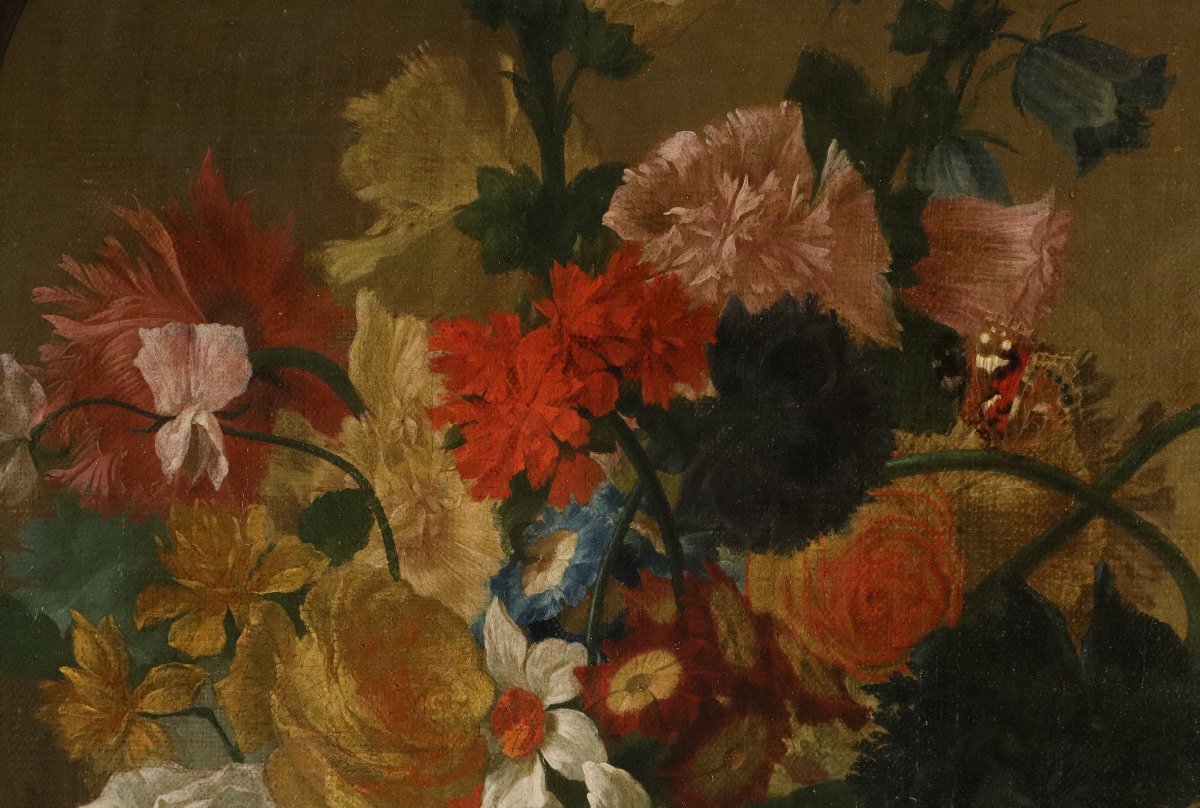
This sumptuous floral still life, arranged by the artist within a stone arched niche, is a fine painting attributed to the circle of the famous Dutch master Jan van Huysum (Amsterdam 1682–1749).
The composition follows the typical conventions of the so-called “Pronkstilleven,” a Dutch term that became widespread in the 18th century and literally means “opulent still life,” of which van Huysum is one of the foremost European exponents.
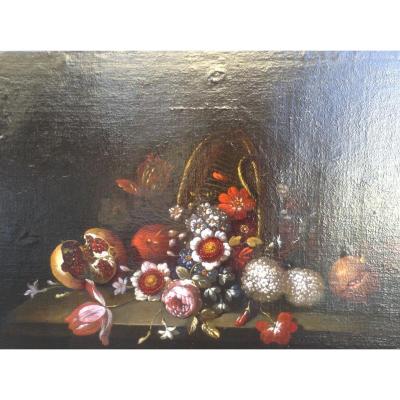
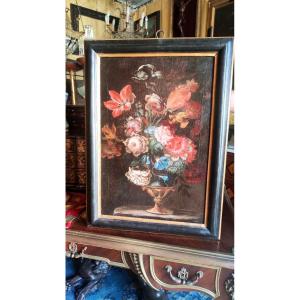
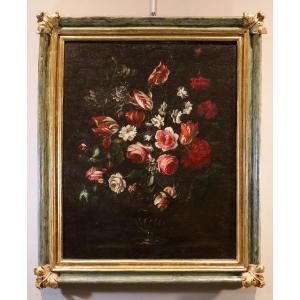
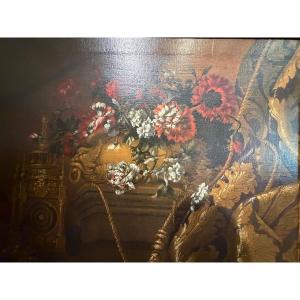
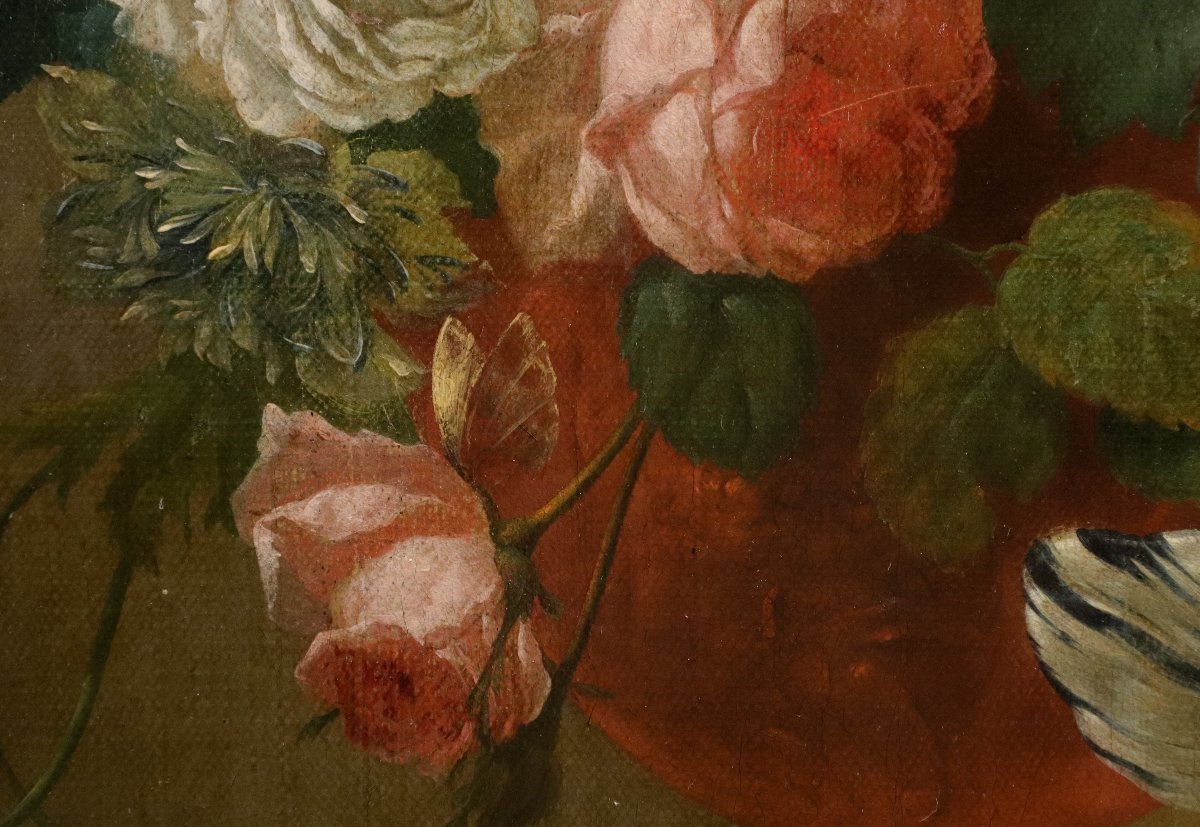
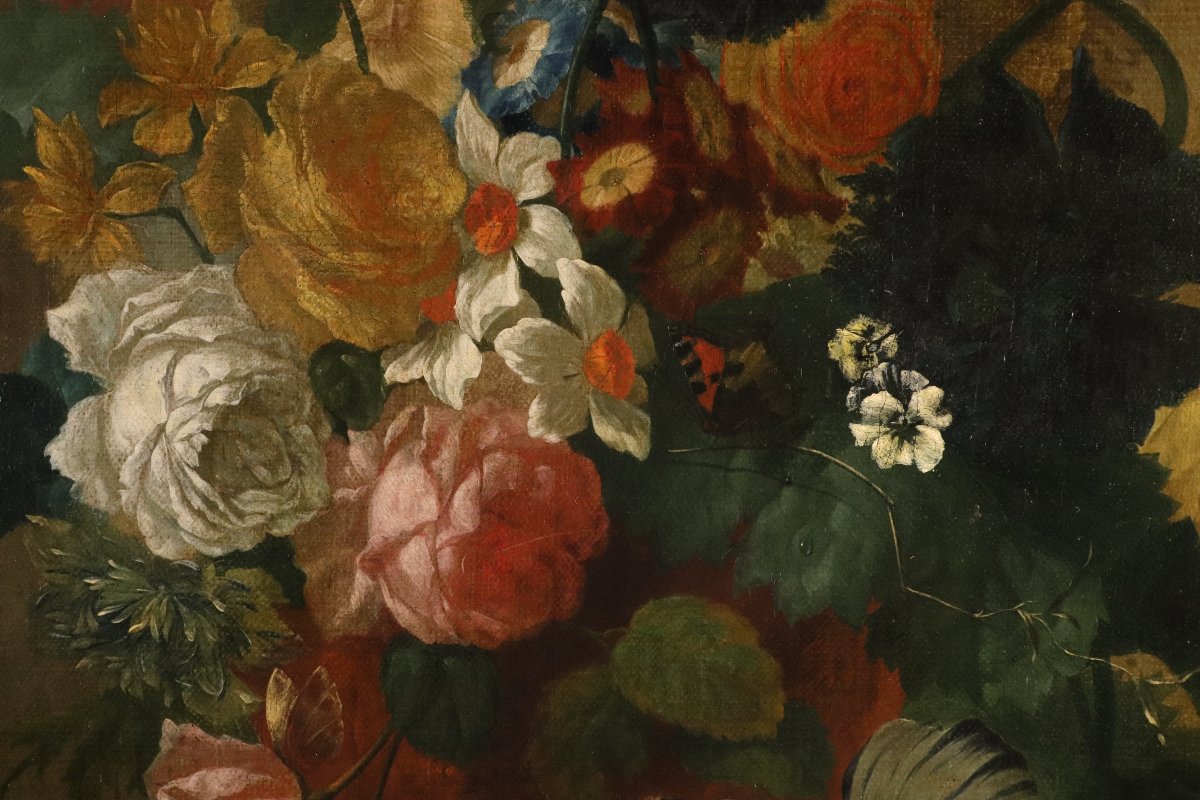
The scene features a classic burnished terracotta vase decorated with relief patterns and placed on a solid stone surface; it contains a complex arrangement of various floral species, arranged in an asymmetrical, vibrant, and dynamic composition that spills over the edges of the vase.
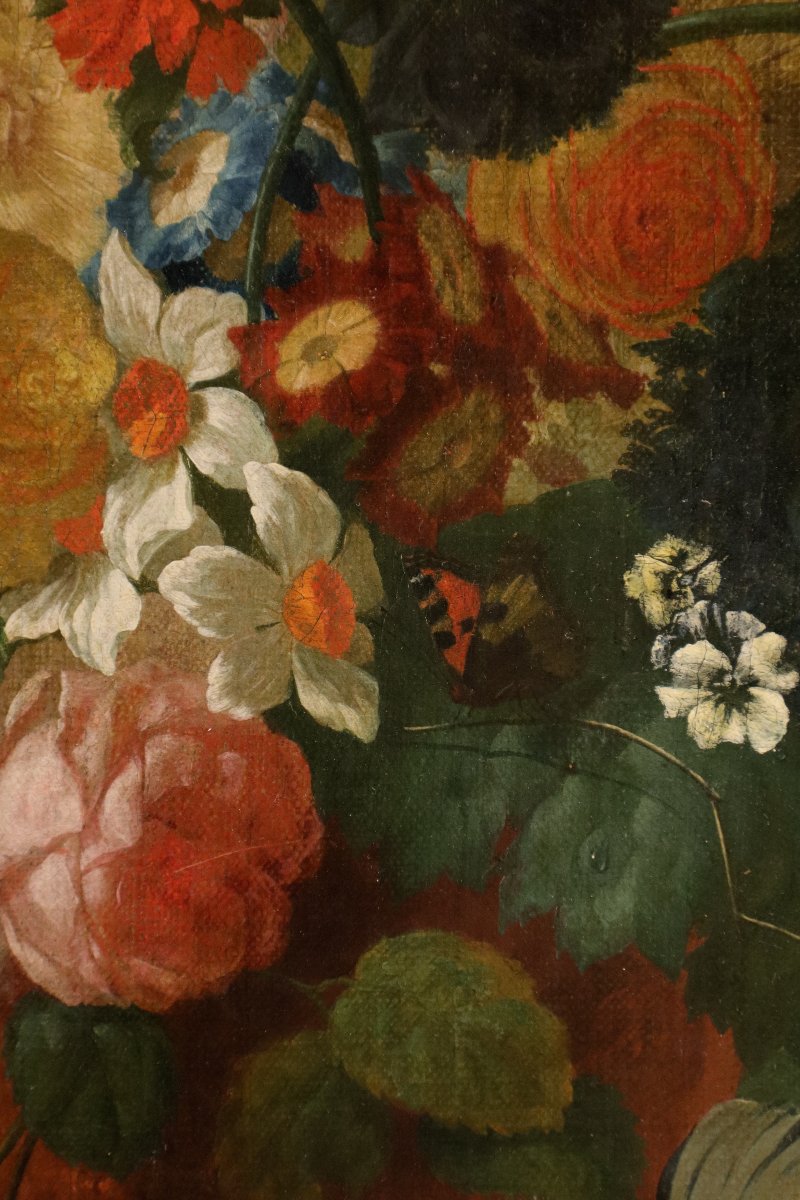
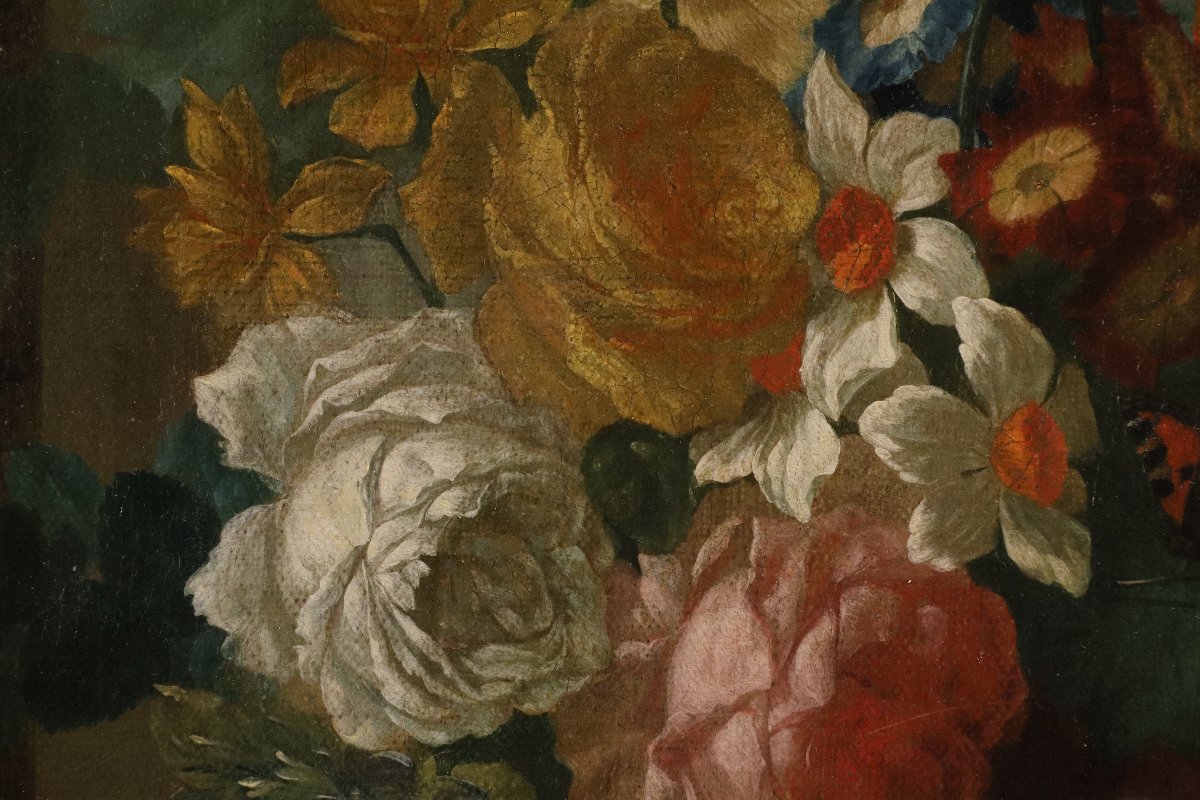
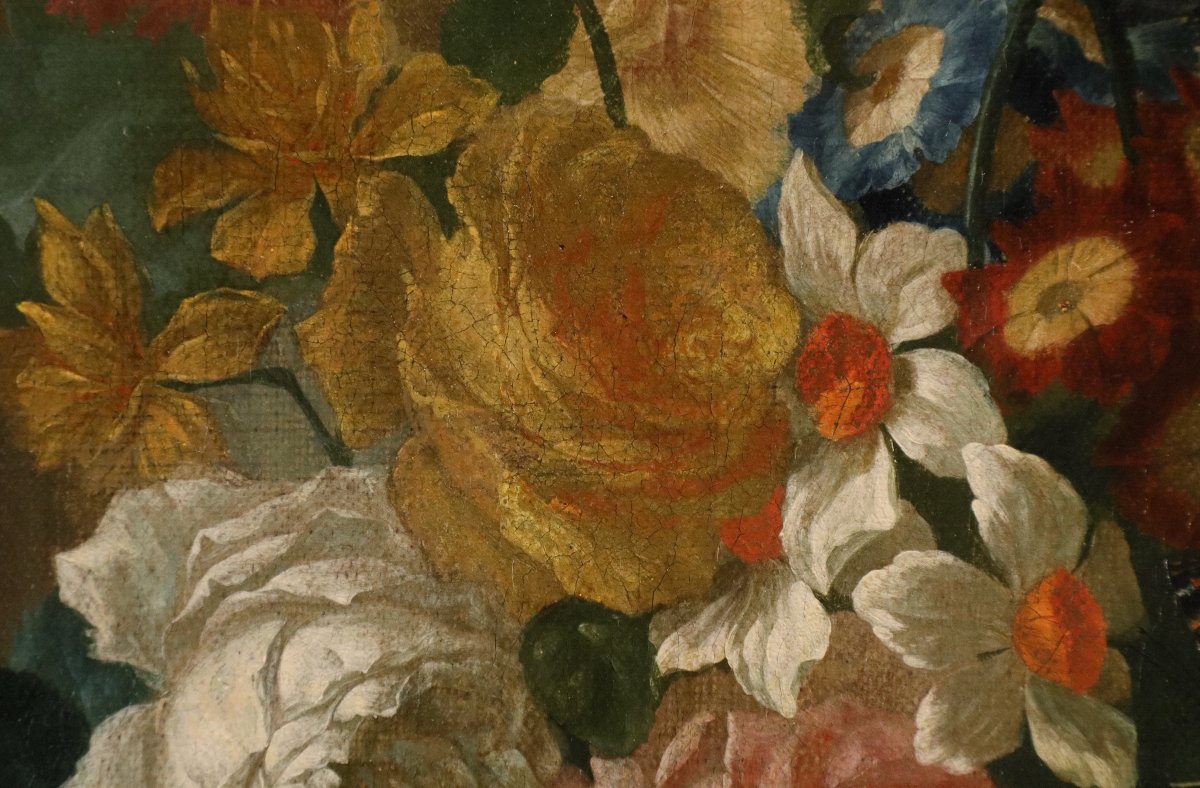
Notable is the juxtaposition of botanical species that bloom in different seasons—a compositional device adopted by the masters of this genre as if to transcend nature’s temporal limits: in the foreground, a large white tulip with dark blue streaks takes center stage, its ruffled petals catching the light, while on the left, soft roses (including the famous Rosa centifolia, also known as the “painters’ rose”) in shades of pure white and candy pink, rendered with soft, lustrous petals. In the upper part, slender stems of carnations with jagged petals in shades of pink and bright red rise up, along with supple branches of blue bellflowers and white daffodils positioned right at the heart of the bouquet.
The artist plays with a strong chiaroscuro effect, with a powerful light coming from the left that fully illuminates the iridescent corollas, leaving the right side and the back of the niche in shadow.
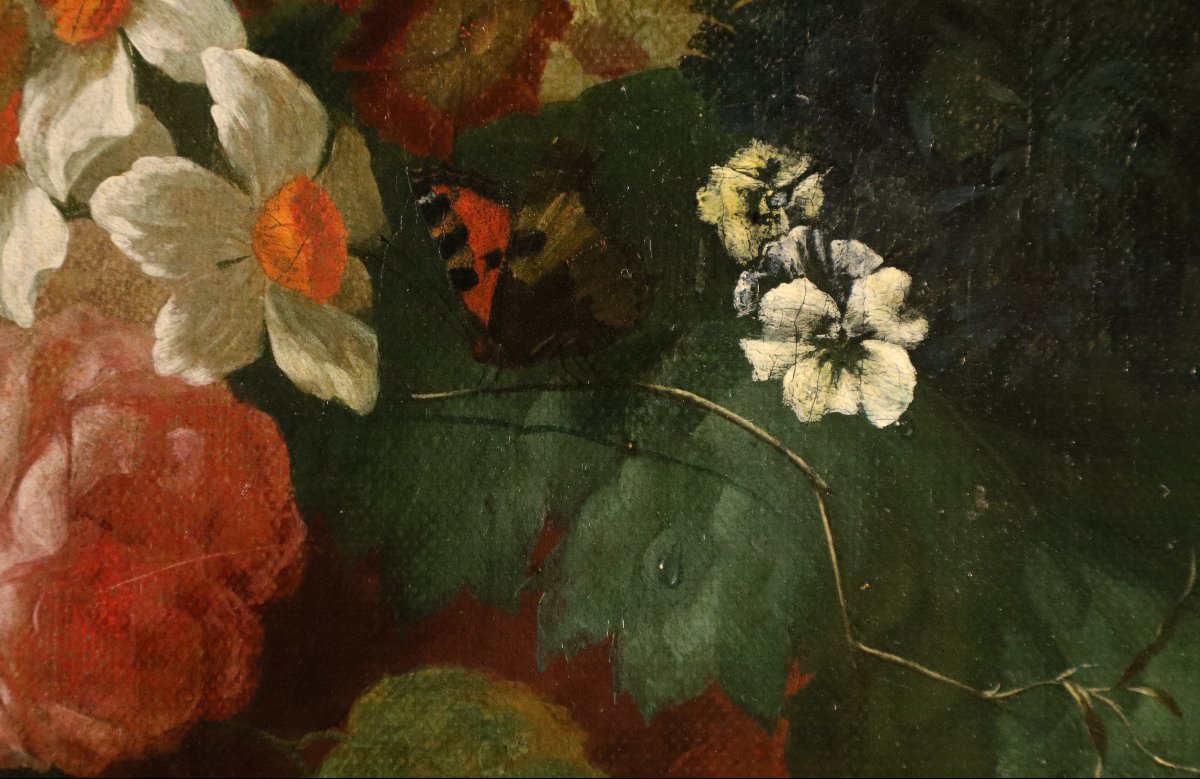
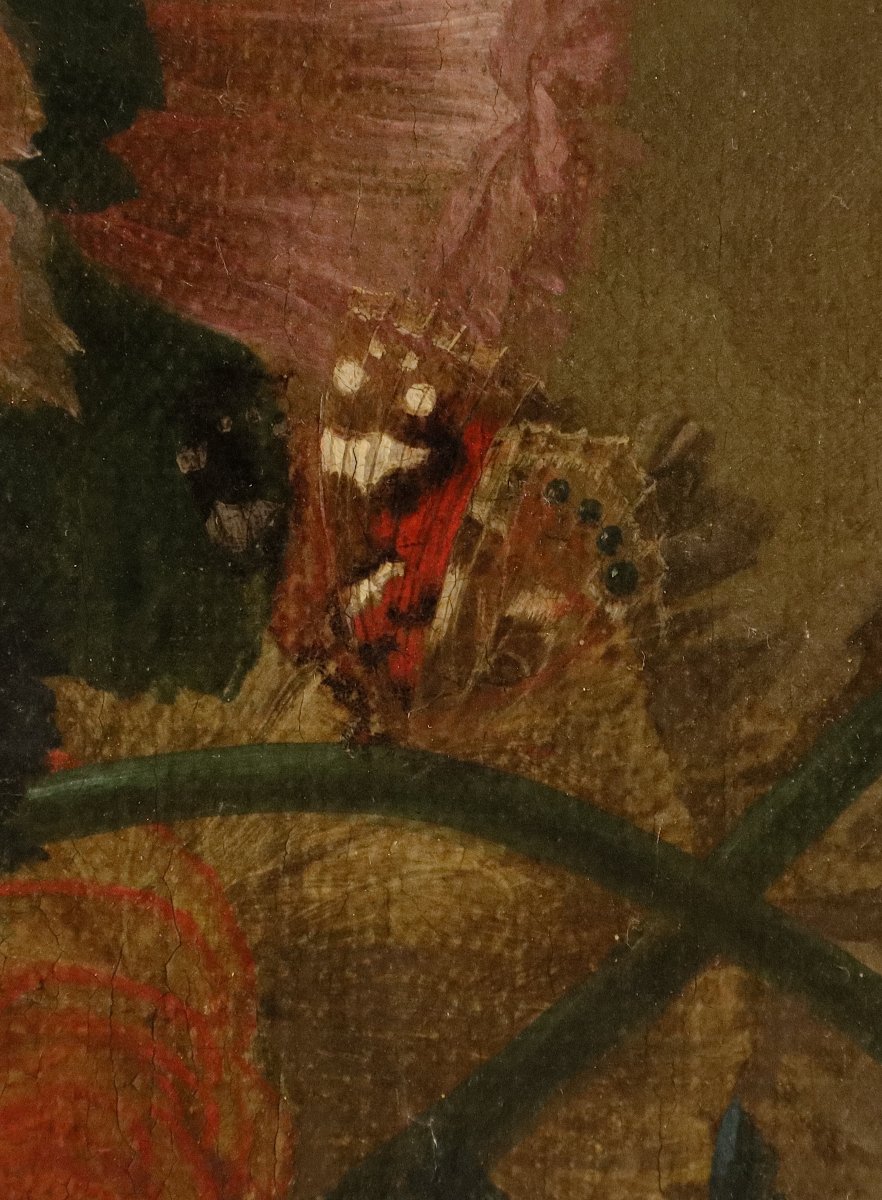
Adding a touch of poetry to this still life is the presence of three butterflies, gracefully perched on the stems, which represent a recurring element of extraordinary symbolic value in Jan van Huysum’s still lifes: these insects, in addition to accentuating the incredible painterly realism, carried with them a profound allegorical meaning linked to the concept of Vanitas.
In fact, beyond their decorative purpose and the celebration of botanical richness, the presence of flowers captured at different stages of their life cycle—from plump buds to fully bloomed petals—conveys the classic moralizing message about the transience of earthly beauty.
The same is true of the dewdrops, on the leaves and on the surface, which also allude to the transience and fragility of the flowers’ beauty, while at the same time serving as a virtuosic and frequent detail in the painter’s still lifes—always demonstrating his skill in capturing light and transparency.
The painting displays the characteristic meticulousness that made the Van Huysum school famous: every petal, leaf vein, and curved stem is studied from life with great precision. The inclusion of unruly, sinuous stems (such as the one at the bottom with the blue, unopened bellflowers on the right) serves to break up the rigidity of the composition, infusing it with a sense of freshness, movement, and spontaneity.
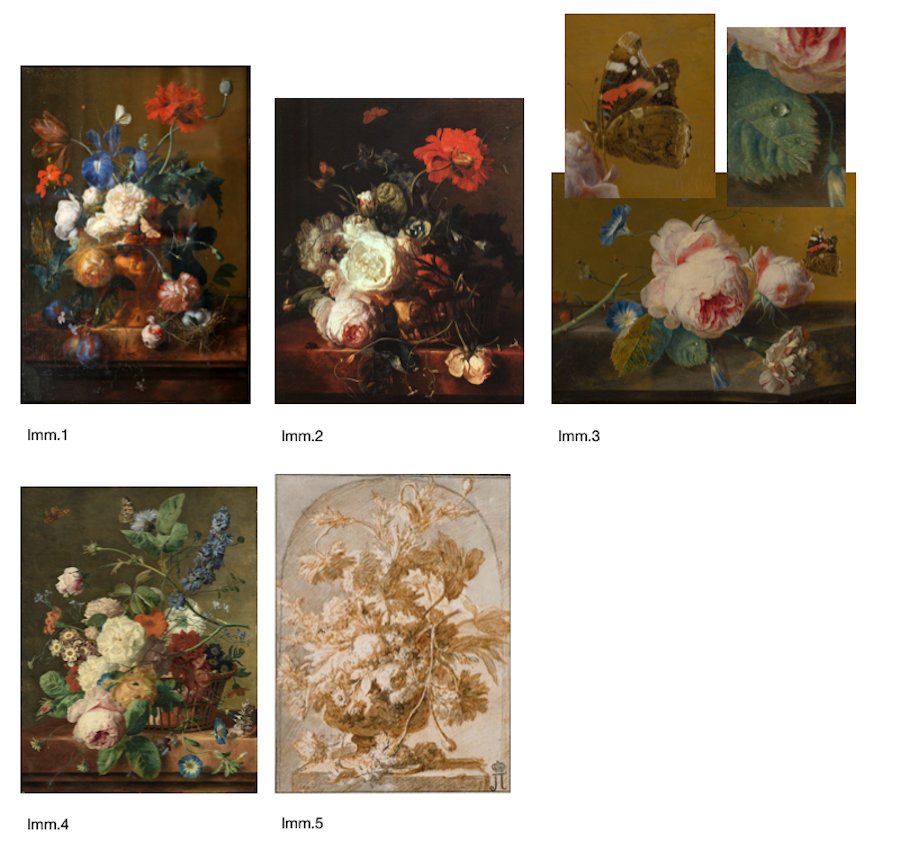
Among his best-known works that incorporate the themes just discussed, we can mention the following paintings:
fig. 1 - Jan van Huysum, Bouquet of Flowers, Uffizi, Florence
fig. 2 - Jan van Huysum, Flowers in a Vase, Alte Pinakothek, Munich
Image 3 - Jan van Huysum, Still Life with Flowers and a Butterfly, Mauritshuis Museum, The Hague
Image 4 - Jan van Huysum, Basket of Flowers with Butterflies, Louvre, Paris
Fig. 5 - Jan van Huysum, Vase with Flowers in a Niche, Draiflessen Museum, Mettingen, Germany
ADDITIONAL INFORMATION:
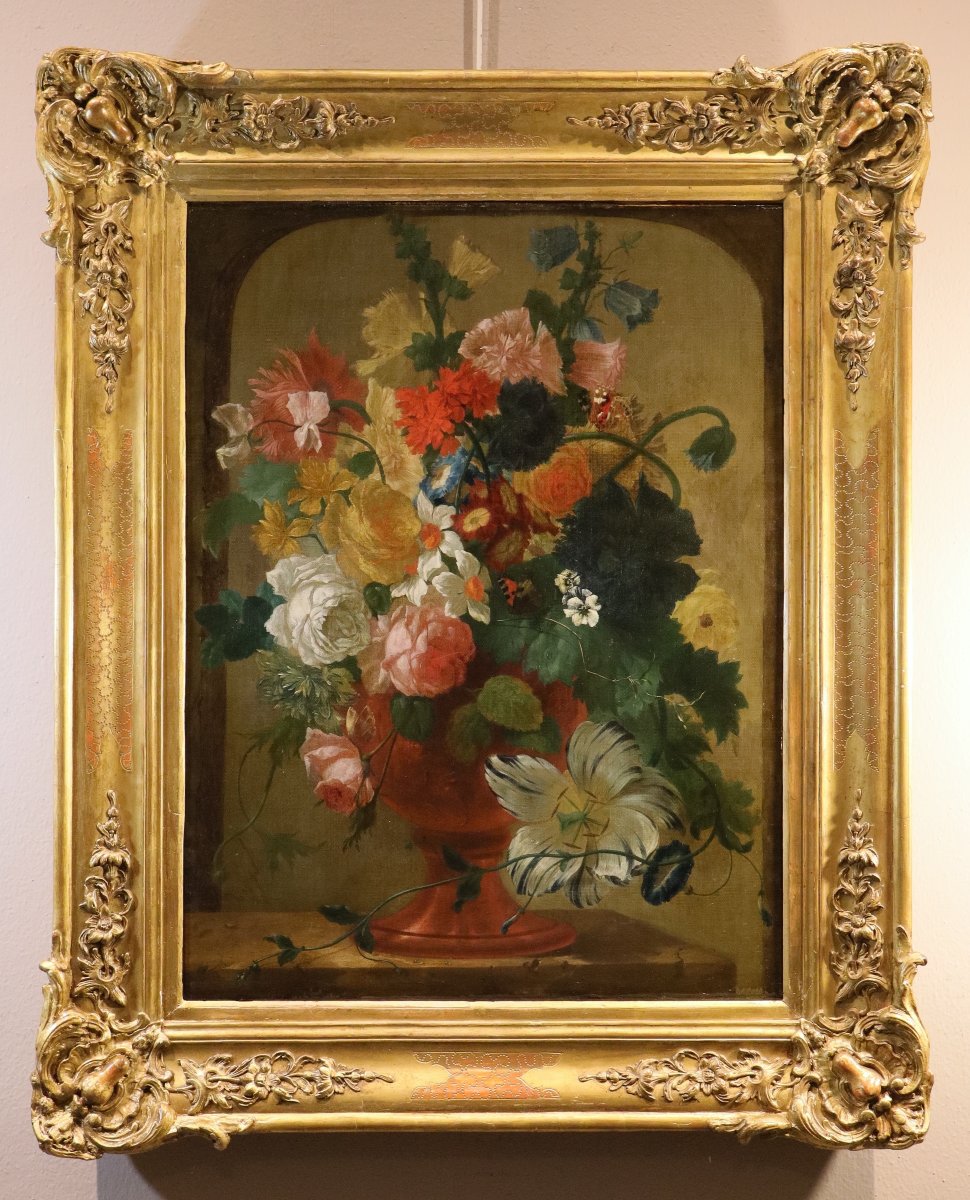
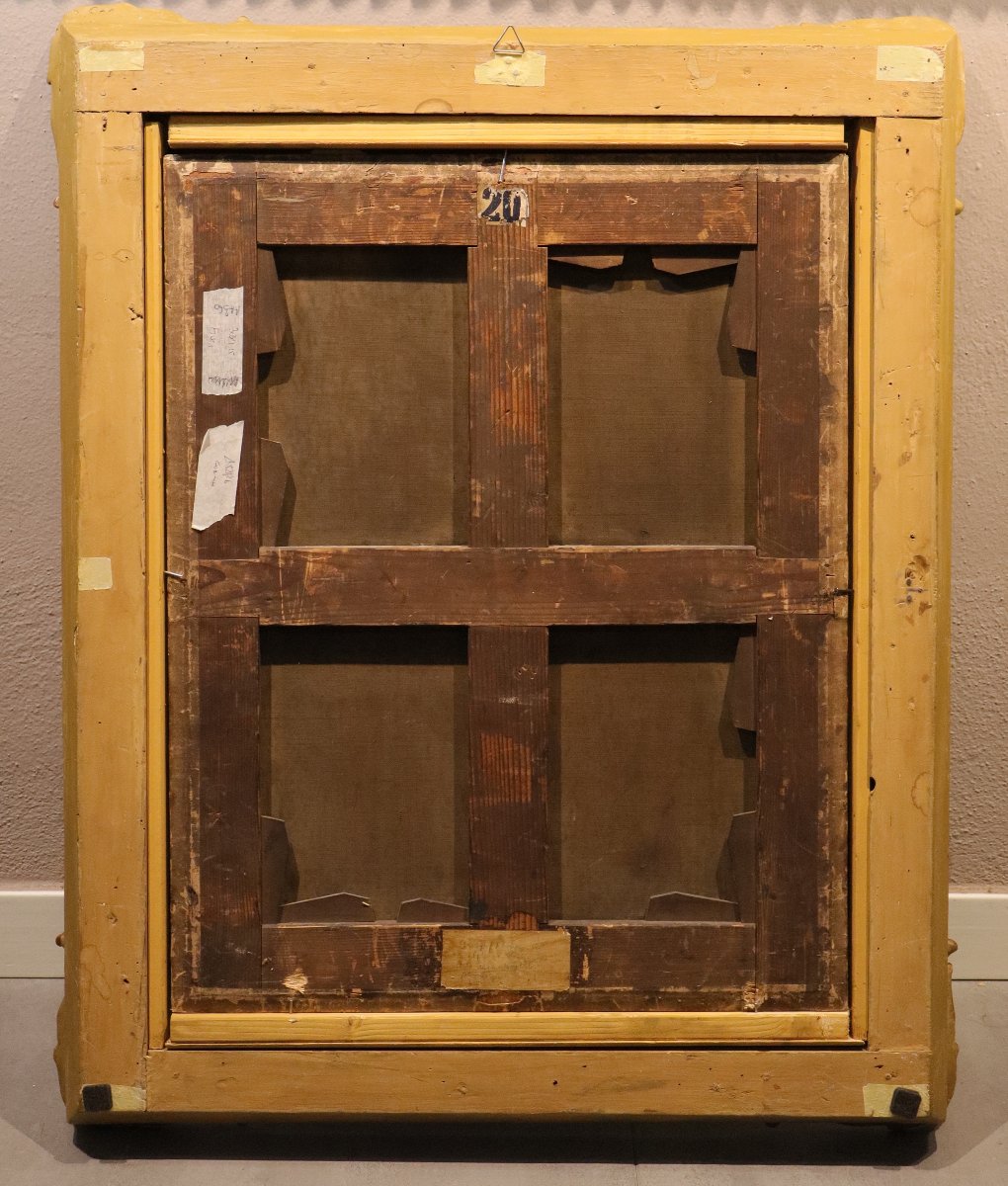
The painting is framed in an attractive gilded frame.
The artwork is sold with a certificate of authenticity and a descriptive iconographic sheet.
We handle and arrange the shipping of purchased artworks, both within Italy and internationally, using professional and insured carriers.
Please contact us for any information; we will be happy to assist you. You can also view the painting at our gallery in Riva del Garda; we look forward to welcoming you to showcase our collection of artworks.
Follow us on:
https://www.instagram.com/galleriacastelbarco/?hl=it
https://www.facebook.com/galleriacastelbarco/
Jan Van Huysum (Amsterdam 1682–1749), circle
Oil on canvas
64 x 52 cm. — Framed: 85 x 71 cm.
FULL DETAILS OF THIS PAINTING (CLICK HERE)
This sumptuous floral still life, arranged by the artist within a stone arched niche, is a fine painting attributed to the circle of the famous Dutch master Jan van Huysum (Amsterdam 1682–1749).
The composition follows the typical conventions of the so-called “Pronkstilleven,” a Dutch term that became widespread in the 18th century and literally means “opulent still life,” of which van Huysum is one of the foremost European exponents.
The scene features a classic burnished terracotta vase decorated with relief patterns and placed on a solid stone surface; it contains a complex arrangement of various floral species, arranged in an asymmetrical, vibrant, and dynamic composition that spills over the edges of the vase.
Notable is the juxtaposition of botanical species that bloom in different seasons—a compositional device adopted by the masters of this genre as if to transcend nature’s temporal limits: in the foreground, a large white tulip with dark blue streaks takes center stage, its ruffled petals catching the light, while on the left, soft roses (including the famous Rosa centifolia, also known as the “painters’ rose”) in shades of pure white and candy pink, rendered with soft, lustrous petals. In the upper part, slender stems of carnations with jagged petals in shades of pink and bright red rise up, along with supple branches of blue bellflowers and white daffodils positioned right at the heart of the bouquet.
The artist plays with a strong chiaroscuro effect, with a powerful light coming from the left that fully illuminates the iridescent corollas, leaving the right side and the back of the niche in shadow.
Adding a touch of poetry to this still life is the presence of three butterflies, gracefully perched on the stems, which represent a recurring element of extraordinary symbolic value in Jan van Huysum’s still lifes: these insects, in addition to accentuating the incredible painterly realism, carried with them a profound allegorical meaning linked to the concept of Vanitas.
In fact, beyond their decorative purpose and the celebration of botanical richness, the presence of flowers captured at different stages of their life cycle—from plump buds to fully bloomed petals—conveys the classic moralizing message about the transience of earthly beauty.
The same is true of the dewdrops, on the leaves and on the surface, which also allude to the transience and fragility of the flowers’ beauty, while at the same time serving as a virtuosic and frequent detail in the painter’s still lifes—always demonstrating his skill in capturing light and transparency.
The painting displays the characteristic meticulousness that made the Van Huysum school famous: every petal, leaf vein, and curved stem is studied from life with great precision. The inclusion of unruly, sinuous stems (such as the one at the bottom with the blue, unopened bellflowers on the right) serves to break up the rigidity of the composition, infusing it with a sense of freshness, movement, and spontaneity.
Among his best-known works that incorporate the themes just discussed, we can mention the following paintings:
fig. 1 - Jan van Huysum, Bouquet of Flowers, Uffizi, Florence
fig. 2 - Jan van Huysum, Flowers in a Vase, Alte Pinakothek, Munich
Image 3 - Jan van Huysum, Still Life with Flowers and a Butterfly, Mauritshuis Museum, The Hague
Image 4 - Jan van Huysum, Basket of Flowers with Butterflies, Louvre, Paris
Fig. 5 - Jan van Huysum, Vase with Flowers in a Niche, Draiflessen Museum, Mettingen, Germany
ADDITIONAL INFORMATION:
The painting is framed in an attractive gilded frame.
The artwork is sold with a certificate of authenticity and a descriptive iconographic sheet.
We handle and arrange the shipping of purchased artworks, both within Italy and internationally, using professional and insured carriers.
Please contact us for any information; we will be happy to assist you. You can also view the painting at our gallery in Riva del Garda; we look forward to welcoming you to showcase our collection of artworks.
Follow us on:
https://www.instagram.com/galleriacastelbarco/?hl=it
https://www.facebook.com/galleriacastelbarco/
7 500 €
Period: 17th century
Style: Louis 15th - Transition
Condition: Good condition
Material: Oil painting
Width: encadré 71 cm.
Height: encadré 85 cm.
Reference (ID): 1815872
Availability: In stock
Print