



Portrait Of Ferdinando II De' Medici, Giusto Sustermans (antwerp, 1597 – Florence, 1681)
Giusto (or Justus) Sustermans (Antwerp, 1597 – Florence, 1681) Workshop of
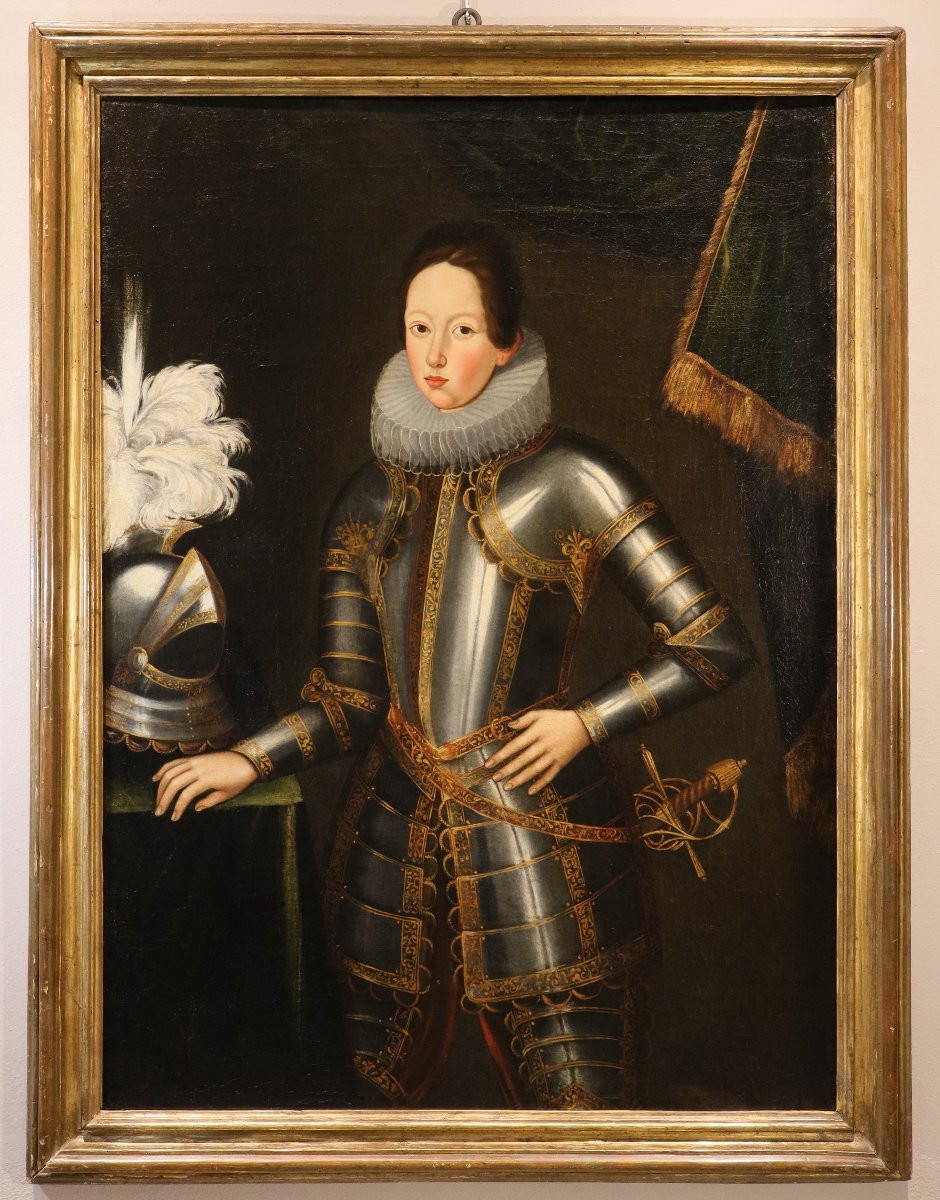
Portrait of Ferdinando II de' Medici (1610–1670), Grand Duke of Tuscany
Oil on canvas
133 x 97 cm
Framed, 149 x 114 cm
FULL DETAILS OF THE WORK (CLICK HERE)
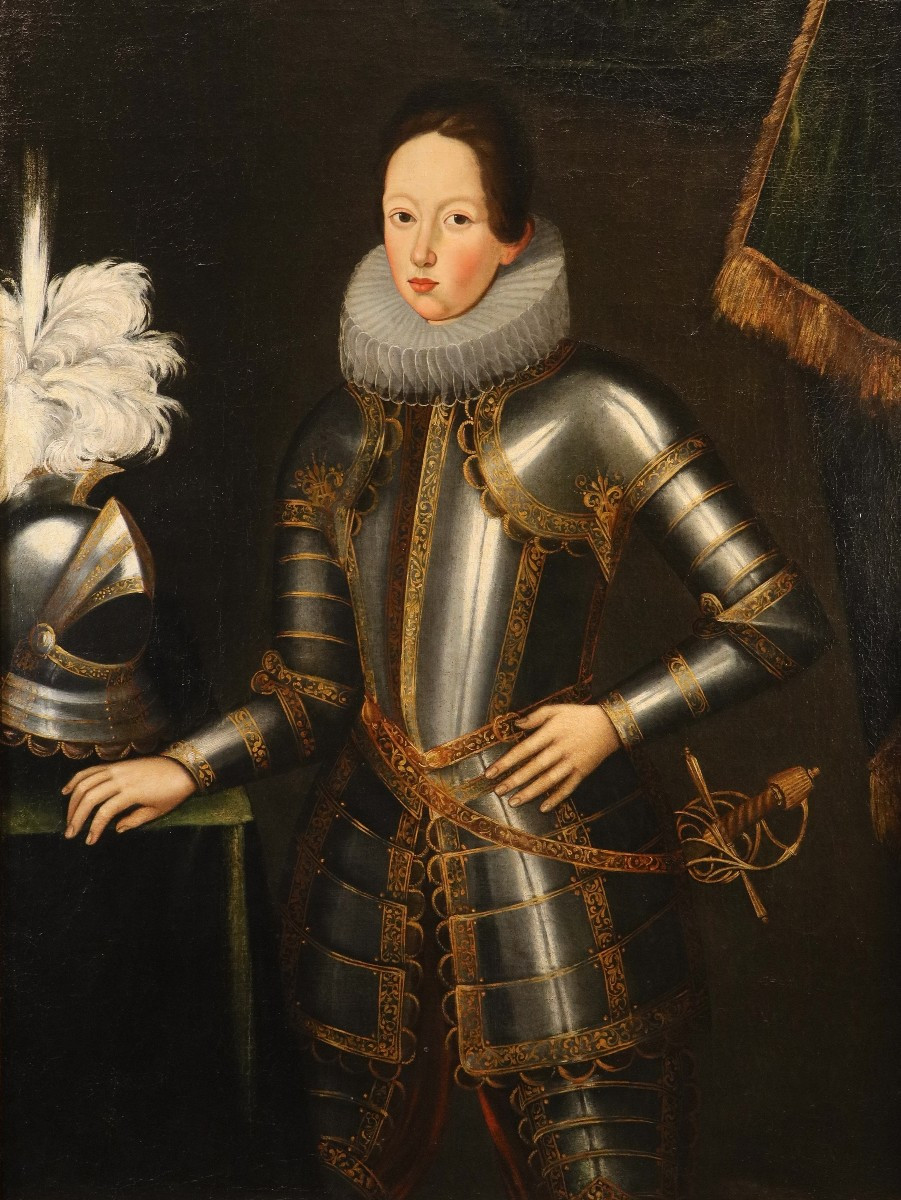
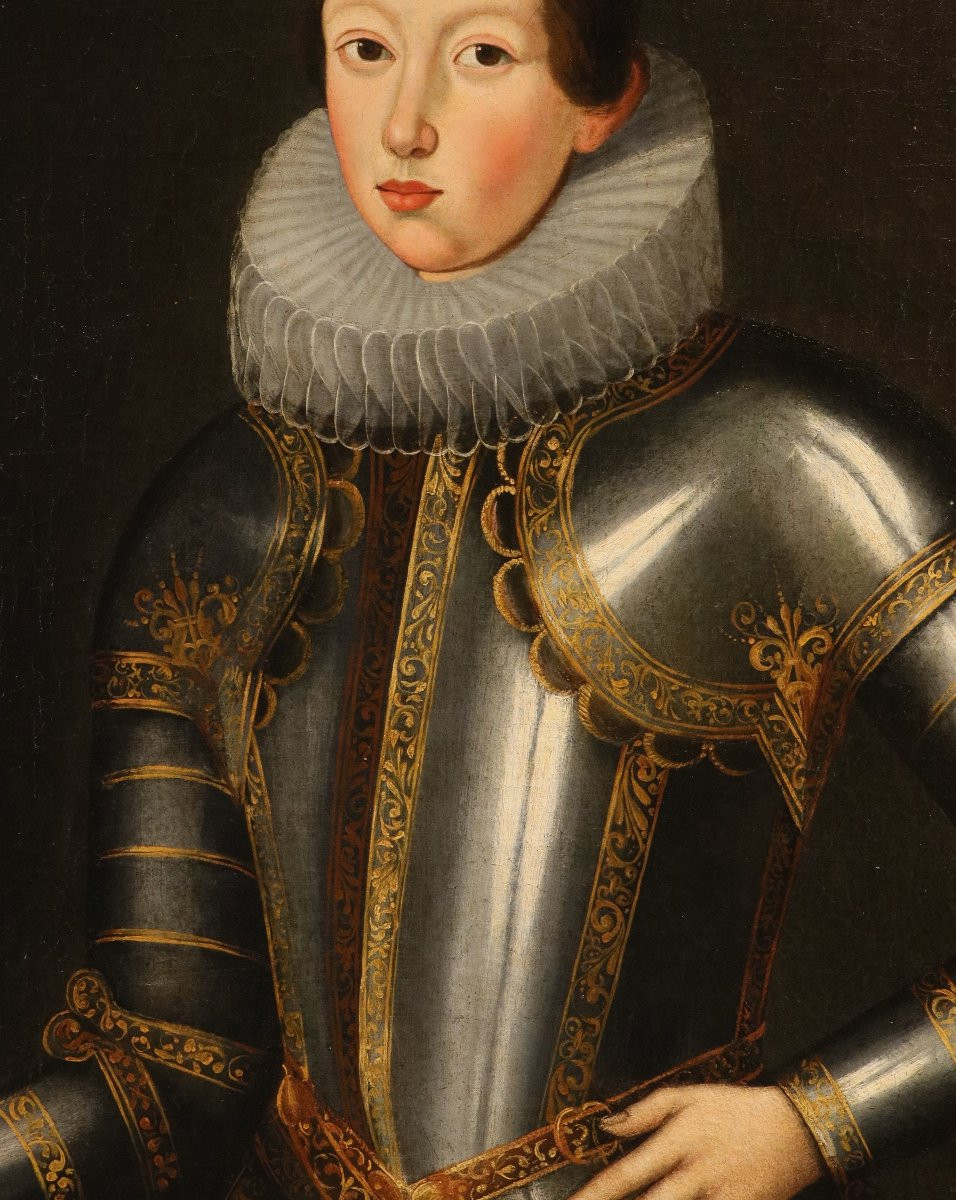
This elegant portrait, an excellent example of early 17th-century Florentine portraiture, depicts Ferdinando II de' Medici (Florence 1610 – 1670), Grand Duke of Tuscany, son of Cosimo II and Maria Maddalena of Austria.
The premature death of his father in 1621 marked the beginning of a long regency that lasted until, at the age of 18, he was able to assume full control of Tuscany, previously shared with his mother and grandmother, Christina of Lorraine (1565–1636).
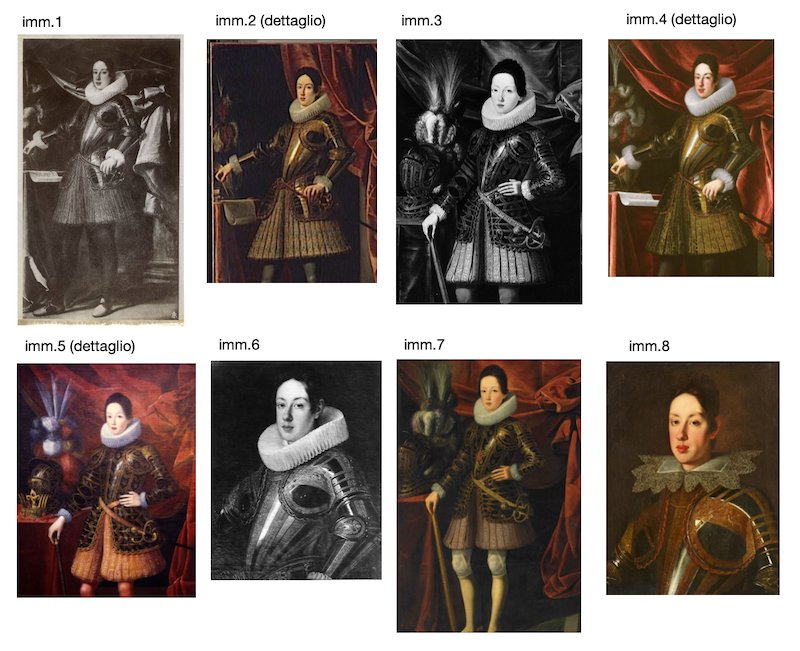
The work presented here is a variation on the official full-length portrait that the court painter Justus Sustermans (Antwerp, 1597 – Florence, 1681) painted around 1625–27, roughly at the time of the subject’s father’s death, and currently on display at the Uffizi in Florence (Palazzo Pitti, Galleria Palatina) (fig. 1, https://catalogo.fondazionezeri.unibo.it/scheda/opera/55837/).
Baptised in Antwerp in 1597, Sustermans initially trained with the Antwerp painter Willem de Vos and later in Paris with Frans Pourbus the Younger. In 1620 he travelled to Florence, at the behest of the Grand Duke of Tuscany, Cosimo II de’ Medici, with a group of French tapestry weavers. The following year, Sustermans was appointed court painter to the Medici family and remained associated with the court as a portraitist for the rest of his life, producing a large number of portraits depicting the ruling family and their entourage in various angles and poses.
He painted numerous portraits of Cosimo II’s sons, working first for Ferdinando II, whom he immortalised during all the key stages of his life, and then for Cosimo III, many of which were sent to other courts for diplomatic purposes.
Sustermans’ style was initially derived from the court portrait style of Pourbus and the Flemish masters, but over the course of his long career the artist enriched his work with influences borrowed from the Florentine milieu (Empoli, Giovanni da San Giovanni, Volterrano, Rubens, who was a friend of the painter, Van Dyck and Velázquez, whose works Sustermans had the opportunity to see in Rome), eventually arriving at the style of his maturity after 1650, completing the effort to imbue his style with ease and vigour. His great success and the studio he had to maintain would attract many followers and imitations.
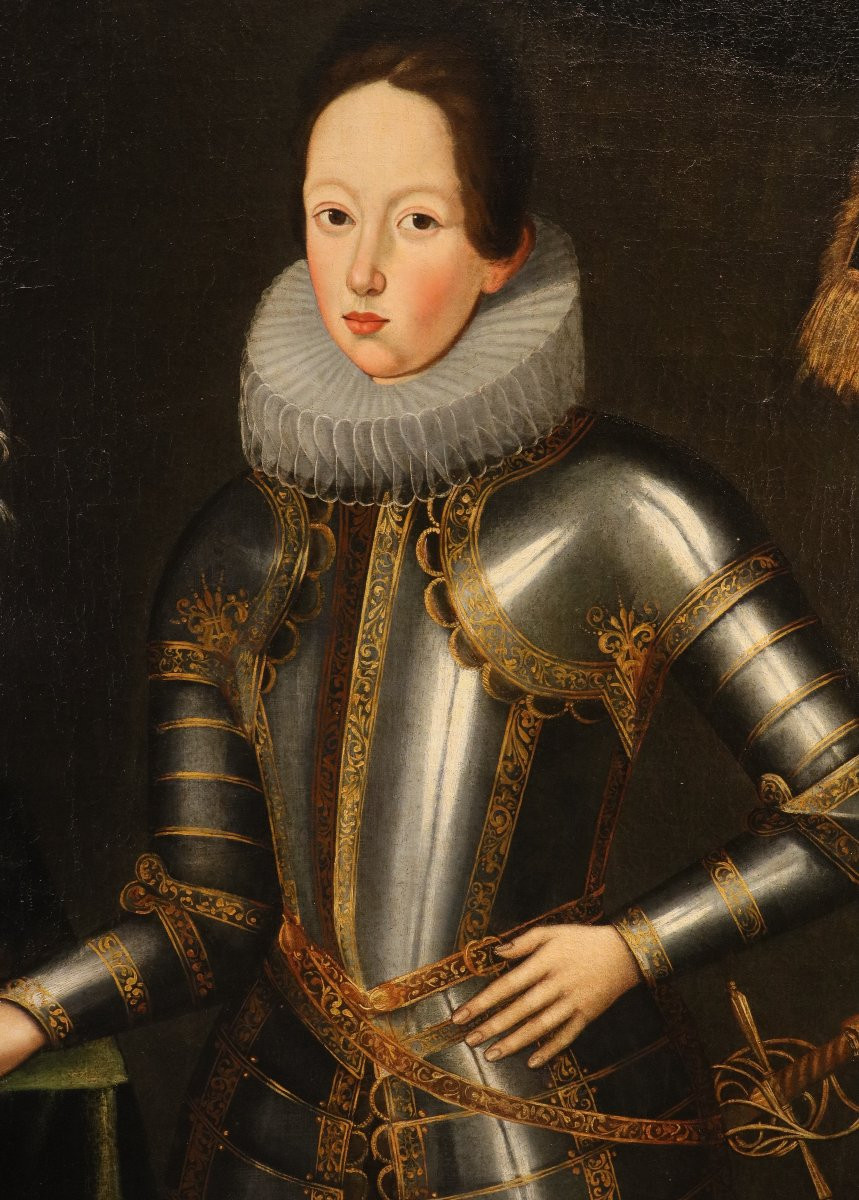
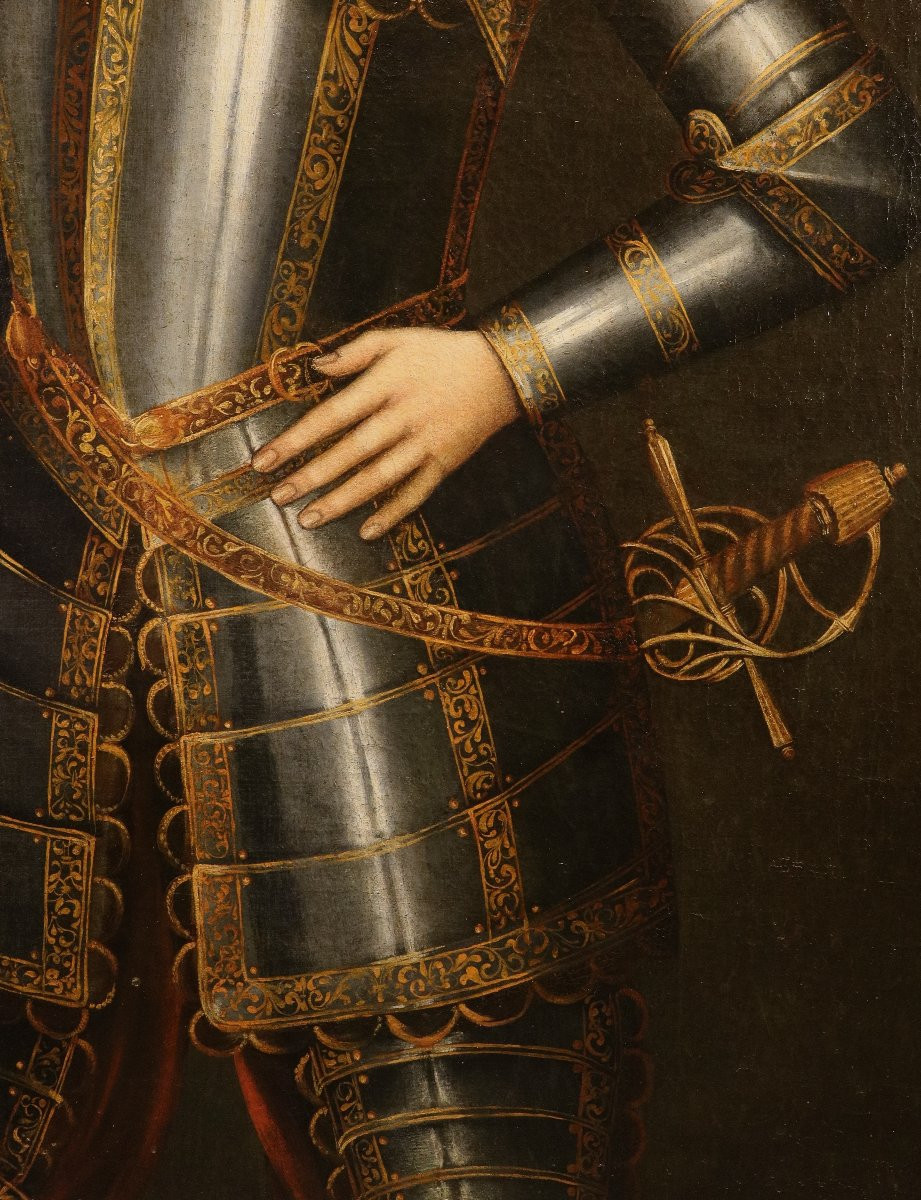
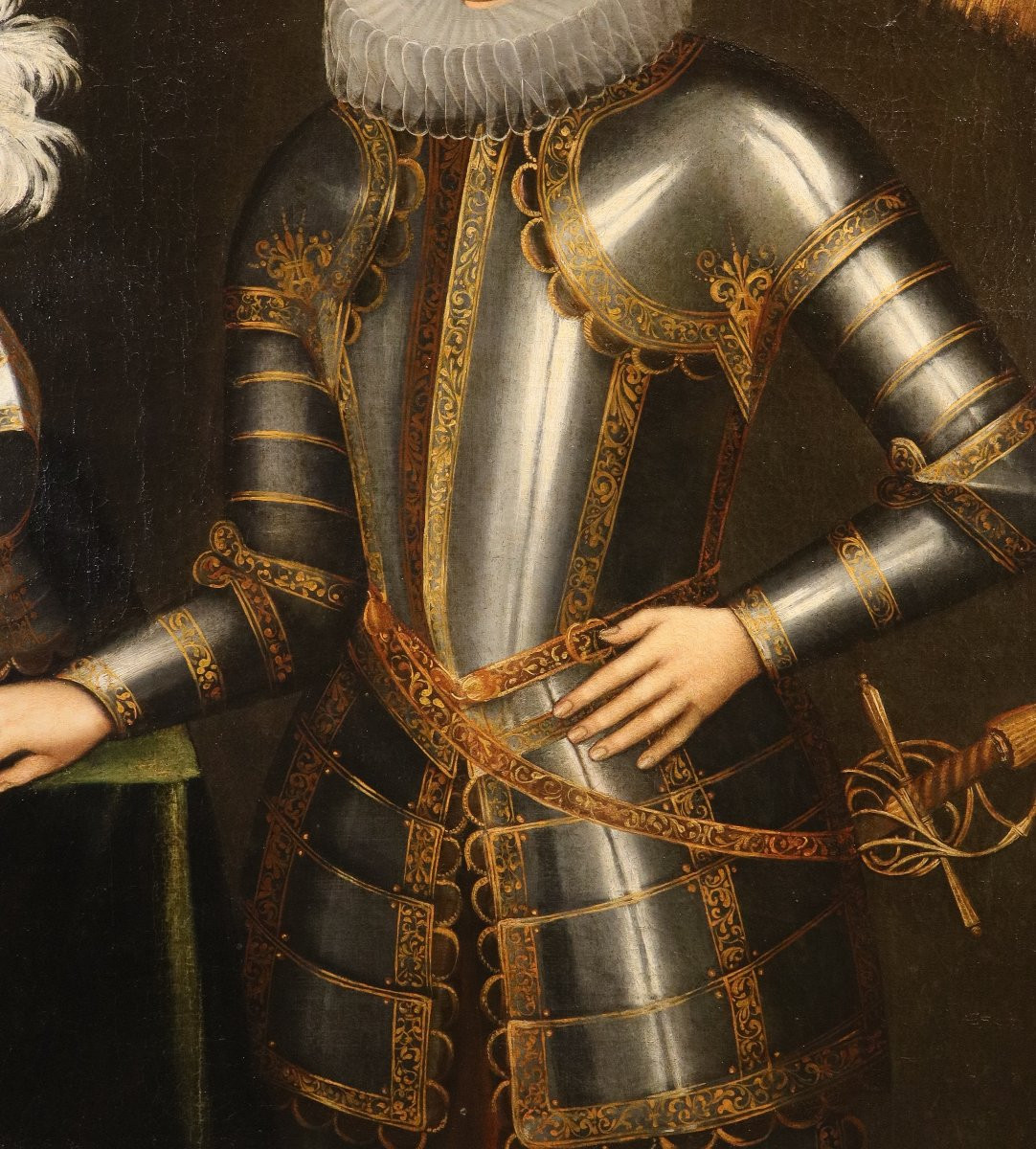
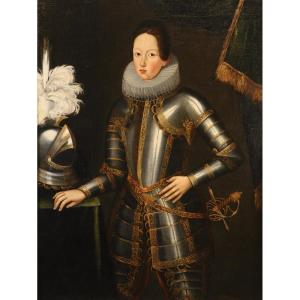
As in the numerous existing versions and copies, Ferdinand is depicted here standing, with his body almost facing the viewer and his face turned slightly three-quarters of the way, his gaze directed towards the observer; he wears magnificent armour with a finely chiselled ruff, from the waist of which hangs a belt to which is fastened the scabbard of a sword, the hilt of which is visible.
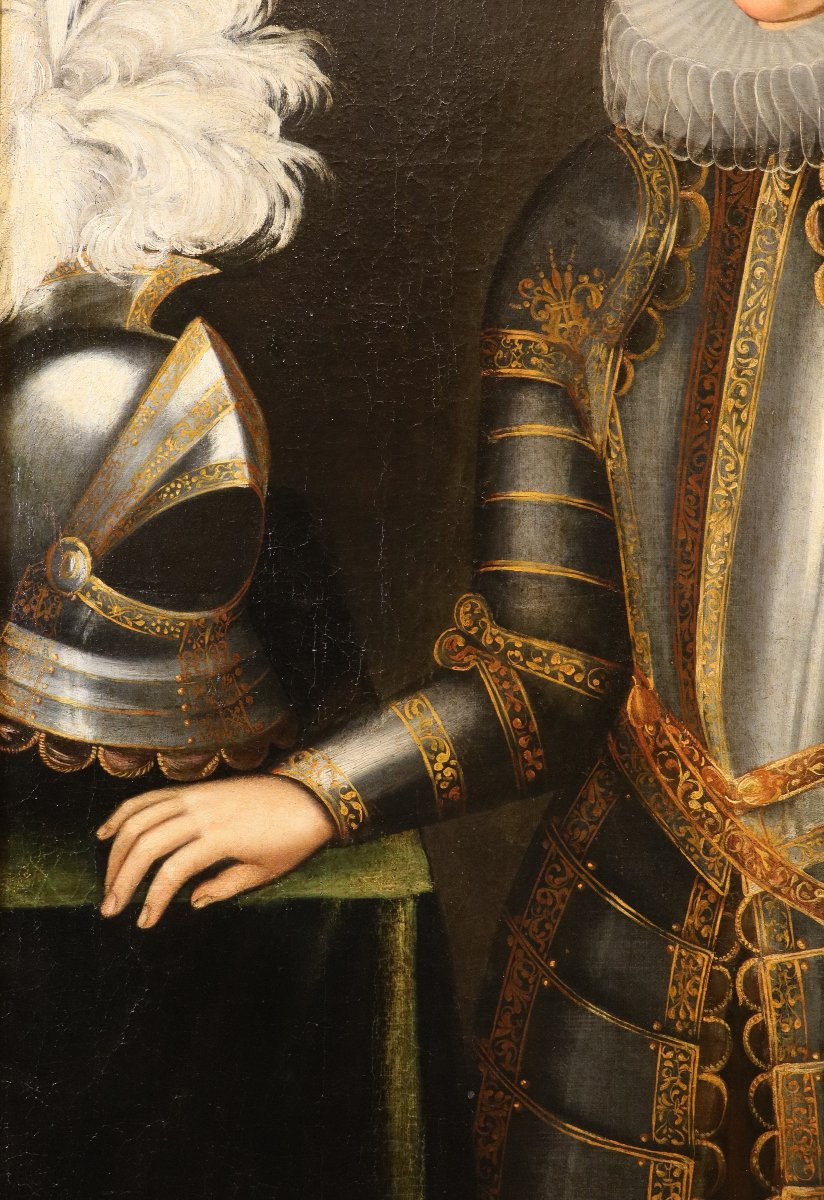
He has a proud posture which, despite his young age, projects an image of great power and authority, with one hand on his hip and the other resting on a table, upon which lies his helmet adorned with rich feathered decoration.
There are several versions of this painting, all with slight variations, often executed with the collaboration of the workshop, many of which are now housed in the most prestigious public and private collections. Among these, we can certainly mention those in the Louvre (fig. 2), the Metropolitan Museum (fig. 3), the National Museum in Cardiff (fig. 4) or the National Museum of the Royal Palace in Pisa (fig. 5), as well as the half-length portrait also housed in the Uffizi (fig. 6).
- (fig. 2) Justus Susterman (school of), Portrait of Ferdinando II de’ Medici, Louvre, Paris: https://collections.louvre.fr/ark:/53355/cl010065928
- (fig. 3) Justus Susterman (after), Portrait of Ferdinando II de’ Medici, Metropolitan Museum of Art, New York (no. 45.128.13): https://www.metmuseum.org/art/collection/search/110002219
- (fig. 4) Justus Suttermans, Portrait of Ferdinando II de' Medici, National Museum, Cardiff: https://artuk.org/discover/artworks/grand-duke-ferdinand-ii-of-tuscany-16101670-160377
- (fig. 5) Justus Suttermans, Portrait of Ferdinando II de’ Medici, National Museum of the Royal Palace, Pisa: https://catalogo.beniculturali.it/detail/HistoricOrArtisticProperty/0900405979
- (fig. 6) Justus Suttermans, Portrait of Ferdinand II de’ Medici, Palazzo Pitti, Florence: https://catalogo.beniculturali.it/detail/HistoricOrArtisticProperty/0900745806
Excluding the crude versions, the most noteworthy works can pass through the most selective auctions with significant valuations; by way of example, we can mention the one sold by Christie’s as a study by Justus Suttermans (Christie’s New York, 26 October 2016, https://www.christies.com/lot/lot-6028831 ) or the one sold by Lempertz (Cologne, 16 November 2019, https://www.lempertz.com/en/catalogues/lot/1141-1/1041-justus-sustermans-and-studio.html ) (fig. 7 and fig. 8).
ADDITIONAL INFORMATION:
The artwork is sold complete with an antique wooden frame and comes with a certificate of authenticity and guarantee.
We arrange and organise the transport of purchased artworks, both within Italy and abroad, using professional and insured carriers. It is also possible to view the painting at our gallery in Riva del Garda; we would be delighted to welcome you to show you our collection of artworks.
Please feel free to contact us for any further information.
Follow us on:
INSTAGRAM https://www.instagram.com/galleriacastelbarco/?hl=it
FACEBOOK https://www.facebook.com/galleriacastelbarco/
Portrait of Ferdinando II de' Medici (1610–1670), Grand Duke of Tuscany
Oil on canvas
133 x 97 cm
Framed, 149 x 114 cm
FULL DETAILS OF THE WORK (CLICK HERE)
This elegant portrait, an excellent example of early 17th-century Florentine portraiture, depicts Ferdinando II de' Medici (Florence 1610 – 1670), Grand Duke of Tuscany, son of Cosimo II and Maria Maddalena of Austria.
The premature death of his father in 1621 marked the beginning of a long regency that lasted until, at the age of 18, he was able to assume full control of Tuscany, previously shared with his mother and grandmother, Christina of Lorraine (1565–1636).
The work presented here is a variation on the official full-length portrait that the court painter Justus Sustermans (Antwerp, 1597 – Florence, 1681) painted around 1625–27, roughly at the time of the subject’s father’s death, and currently on display at the Uffizi in Florence (Palazzo Pitti, Galleria Palatina) (fig. 1, https://catalogo.fondazionezeri.unibo.it/scheda/opera/55837/).
Baptised in Antwerp in 1597, Sustermans initially trained with the Antwerp painter Willem de Vos and later in Paris with Frans Pourbus the Younger. In 1620 he travelled to Florence, at the behest of the Grand Duke of Tuscany, Cosimo II de’ Medici, with a group of French tapestry weavers. The following year, Sustermans was appointed court painter to the Medici family and remained associated with the court as a portraitist for the rest of his life, producing a large number of portraits depicting the ruling family and their entourage in various angles and poses.
He painted numerous portraits of Cosimo II’s sons, working first for Ferdinando II, whom he immortalised during all the key stages of his life, and then for Cosimo III, many of which were sent to other courts for diplomatic purposes.
Sustermans’ style was initially derived from the court portrait style of Pourbus and the Flemish masters, but over the course of his long career the artist enriched his work with influences borrowed from the Florentine milieu (Empoli, Giovanni da San Giovanni, Volterrano, Rubens, who was a friend of the painter, Van Dyck and Velázquez, whose works Sustermans had the opportunity to see in Rome), eventually arriving at the style of his maturity after 1650, completing the effort to imbue his style with ease and vigour. His great success and the studio he had to maintain would attract many followers and imitations.
As in the numerous existing versions and copies, Ferdinand is depicted here standing, with his body almost facing the viewer and his face turned slightly three-quarters of the way, his gaze directed towards the observer; he wears magnificent armour with a finely chiselled ruff, from the waist of which hangs a belt to which is fastened the scabbard of a sword, the hilt of which is visible.
He has a proud posture which, despite his young age, projects an image of great power and authority, with one hand on his hip and the other resting on a table, upon which lies his helmet adorned with rich feathered decoration.
There are several versions of this painting, all with slight variations, often executed with the collaboration of the workshop, many of which are now housed in the most prestigious public and private collections. Among these, we can certainly mention those in the Louvre (fig. 2), the Metropolitan Museum (fig. 3), the National Museum in Cardiff (fig. 4) or the National Museum of the Royal Palace in Pisa (fig. 5), as well as the half-length portrait also housed in the Uffizi (fig. 6).
- (fig. 2) Justus Susterman (school of), Portrait of Ferdinando II de’ Medici, Louvre, Paris: https://collections.louvre.fr/ark:/53355/cl010065928
- (fig. 3) Justus Susterman (after), Portrait of Ferdinando II de’ Medici, Metropolitan Museum of Art, New York (no. 45.128.13): https://www.metmuseum.org/art/collection/search/110002219
- (fig. 4) Justus Suttermans, Portrait of Ferdinando II de' Medici, National Museum, Cardiff: https://artuk.org/discover/artworks/grand-duke-ferdinand-ii-of-tuscany-16101670-160377
- (fig. 5) Justus Suttermans, Portrait of Ferdinando II de’ Medici, National Museum of the Royal Palace, Pisa: https://catalogo.beniculturali.it/detail/HistoricOrArtisticProperty/0900405979
- (fig. 6) Justus Suttermans, Portrait of Ferdinand II de’ Medici, Palazzo Pitti, Florence: https://catalogo.beniculturali.it/detail/HistoricOrArtisticProperty/0900745806
Excluding the crude versions, the most noteworthy works can pass through the most selective auctions with significant valuations; by way of example, we can mention the one sold by Christie’s as a study by Justus Suttermans (Christie’s New York, 26 October 2016, https://www.christies.com/lot/lot-6028831 ) or the one sold by Lempertz (Cologne, 16 November 2019, https://www.lempertz.com/en/catalogues/lot/1141-1/1041-justus-sustermans-and-studio.html ) (fig. 7 and fig. 8).
ADDITIONAL INFORMATION:
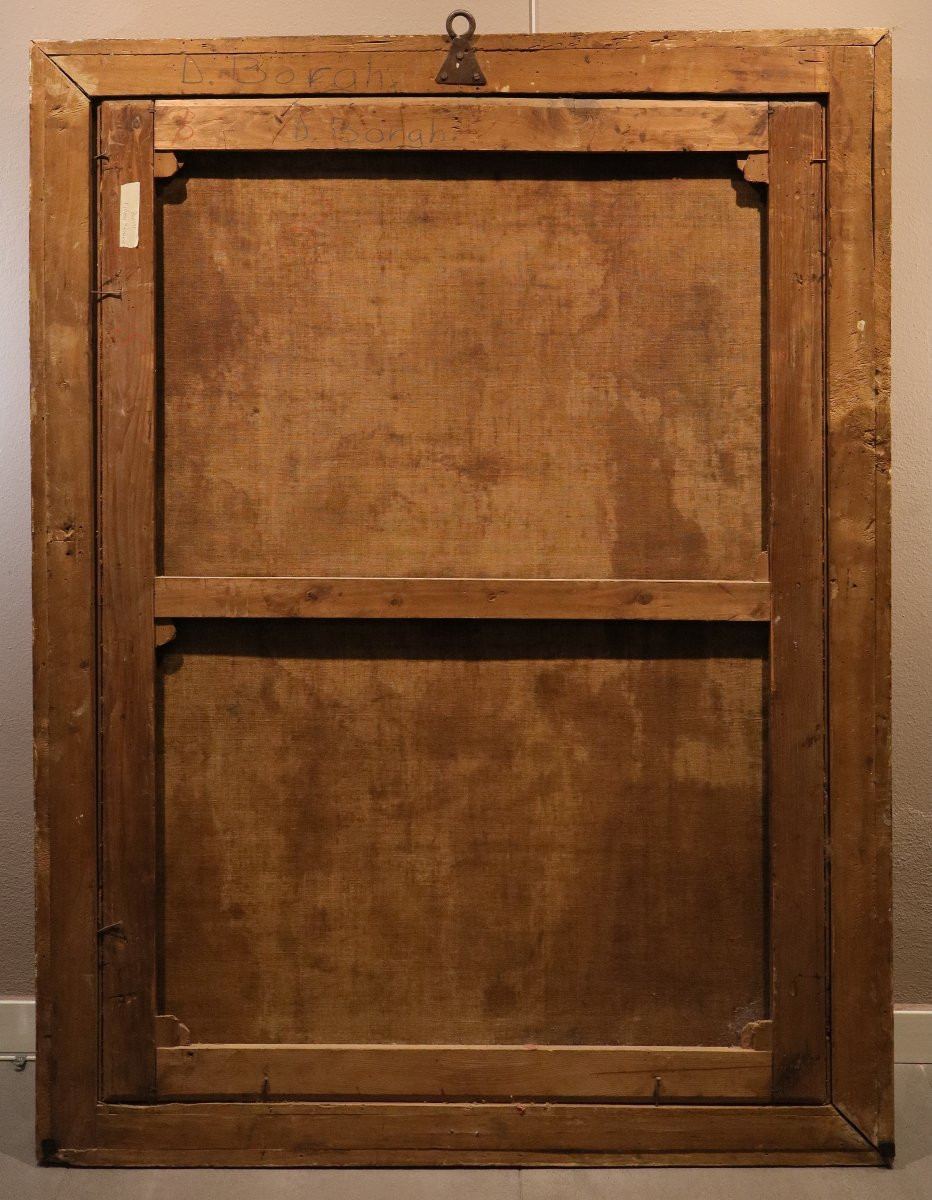
The artwork is sold complete with an antique wooden frame and comes with a certificate of authenticity and guarantee.
We arrange and organise the transport of purchased artworks, both within Italy and abroad, using professional and insured carriers. It is also possible to view the painting at our gallery in Riva del Garda; we would be delighted to welcome you to show you our collection of artworks.
Please feel free to contact us for any further information.
Follow us on:
INSTAGRAM https://www.instagram.com/galleriacastelbarco/?hl=it
FACEBOOK https://www.facebook.com/galleriacastelbarco/
16 000 €
Period: 17th century
Style: Louis 15th - Transition
Condition: Excellent condition
Material: Oil painting
Width: encadré 114 cm.
Height: encadré 149 cm.
Reference (ID): 1724048
Availability: In stock
Print