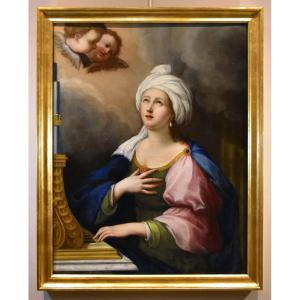


Saint Cecilia And Two Cherubs, Lucas De La Haye (nivelles, 1612–rome, 1682)
Artist: Lucas De La Haye, Dit Luca Fiammingo (nivelles, 1612 - Rome, 1682) - Expertise Du Prof. Emilio Negro
Lucas de la Haye, known as Luca Fiammingo (Nivelles, 1612–Rome, 1682)
Saint Cecilia and Two Cherubs
Oil on canvas
118 x 91 cm. - Framed 129 x 102 cm.
Expert appraisal by Prof. Emilio Negro (Bologna)
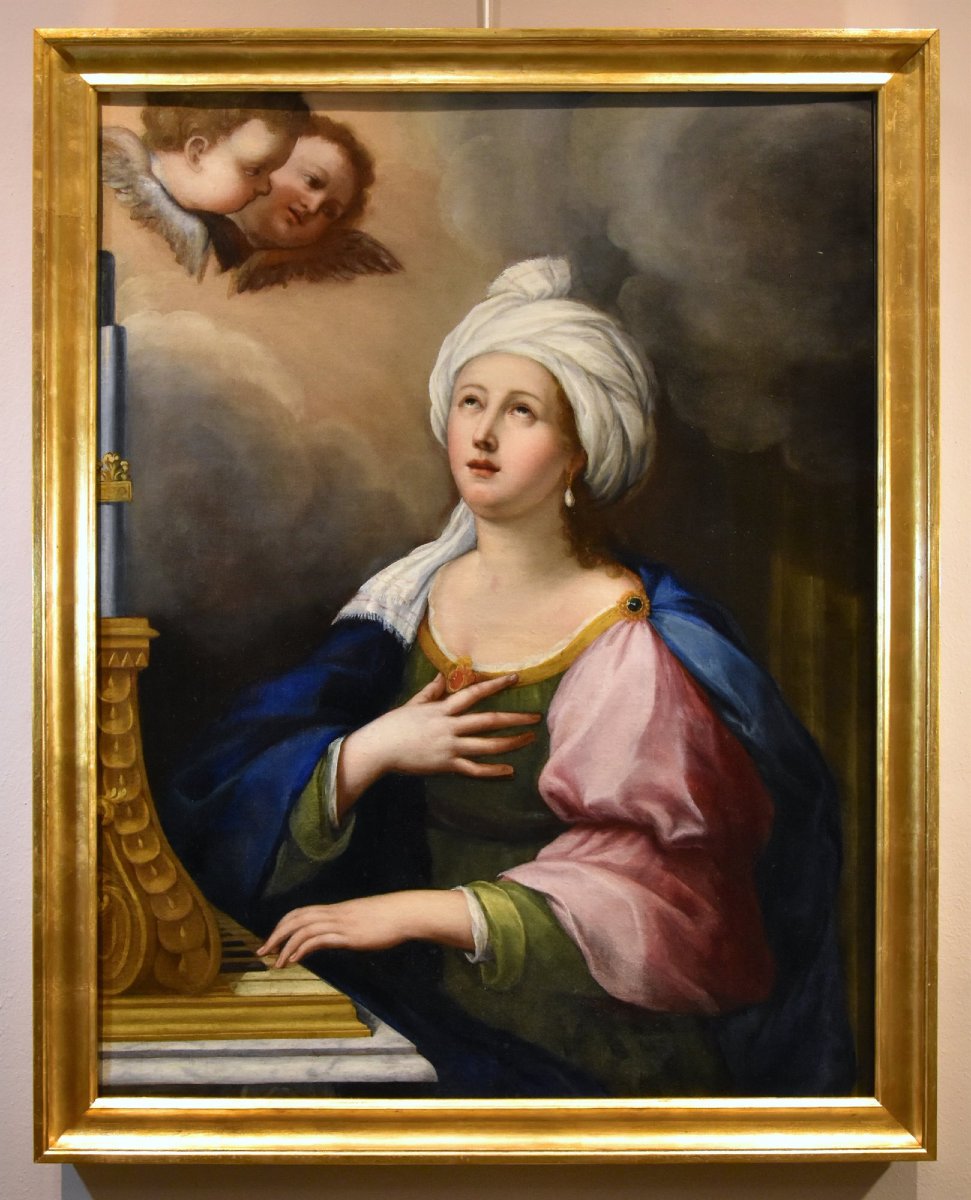
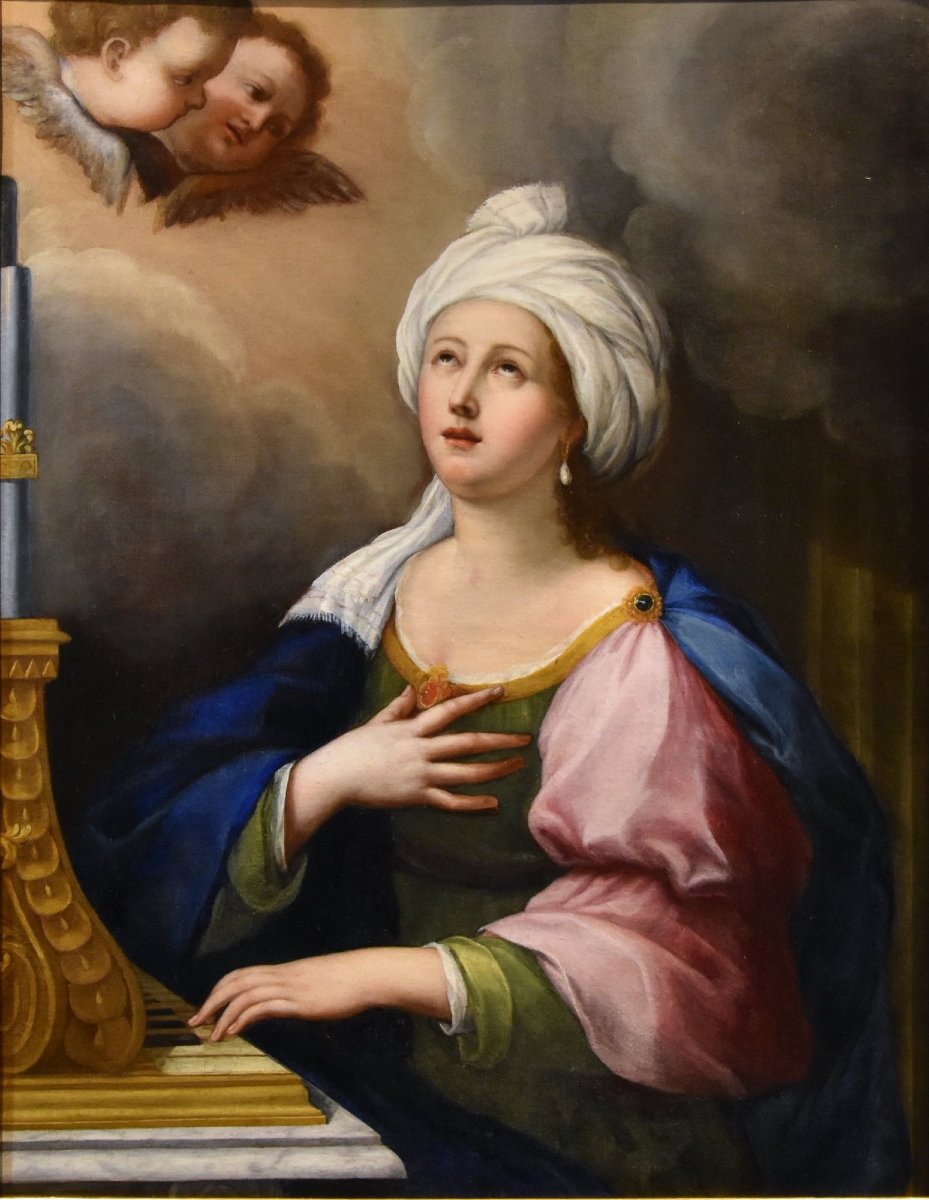
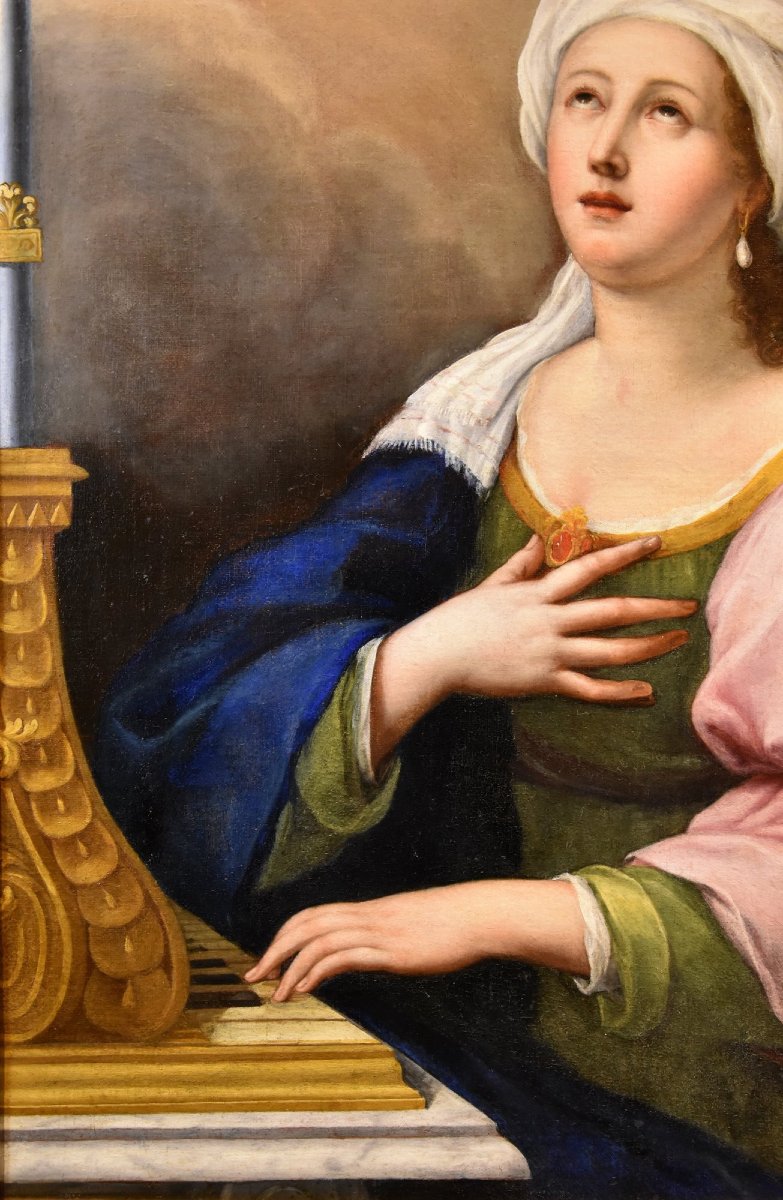
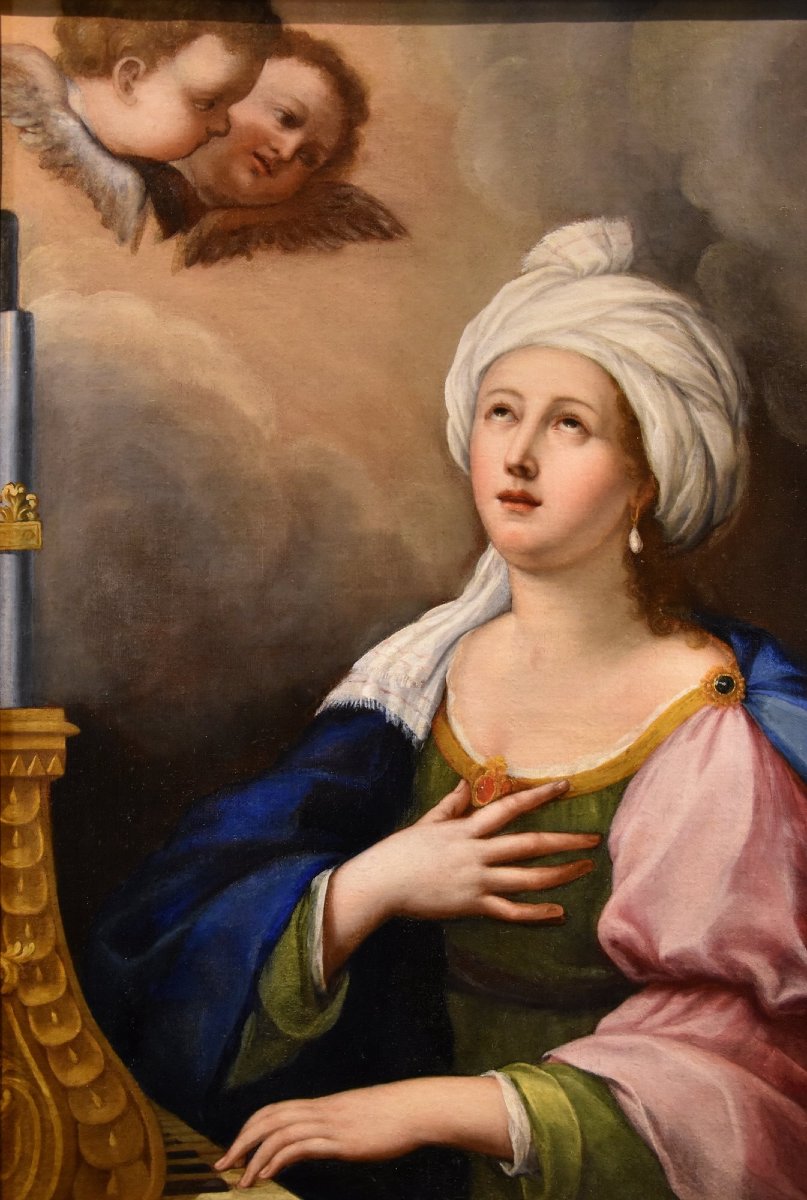
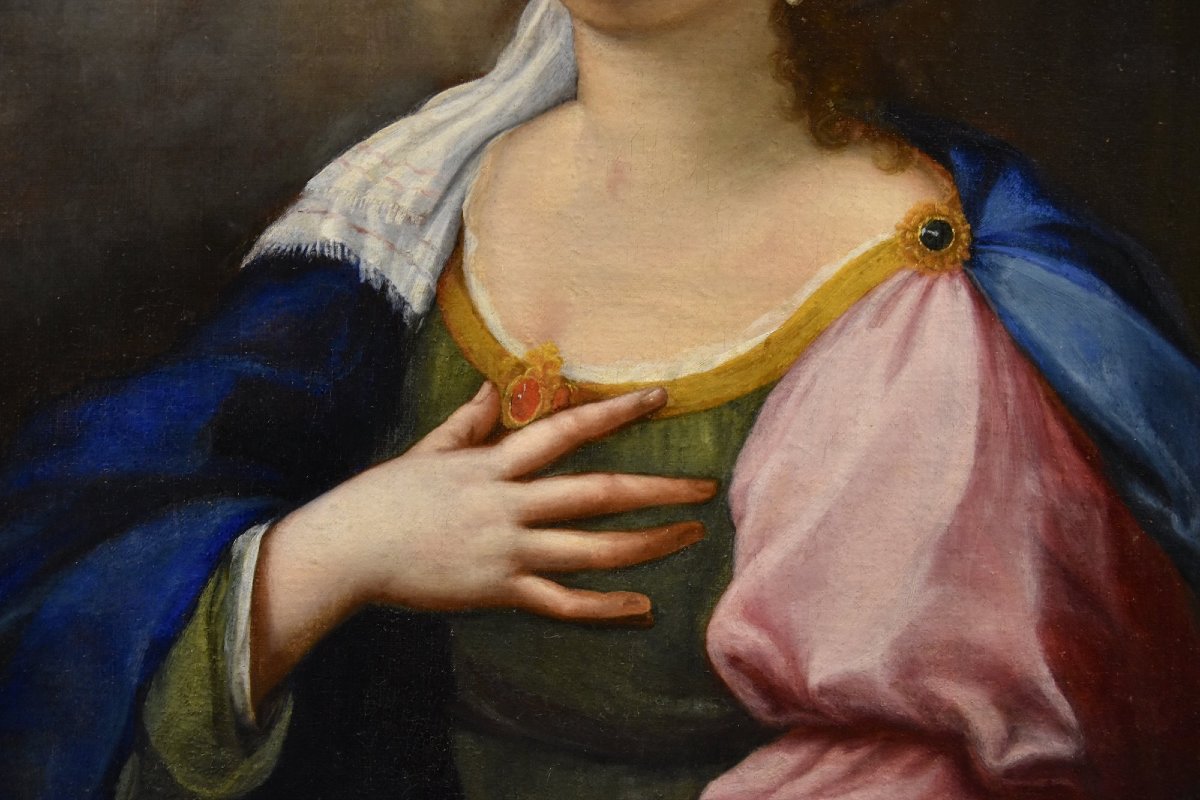
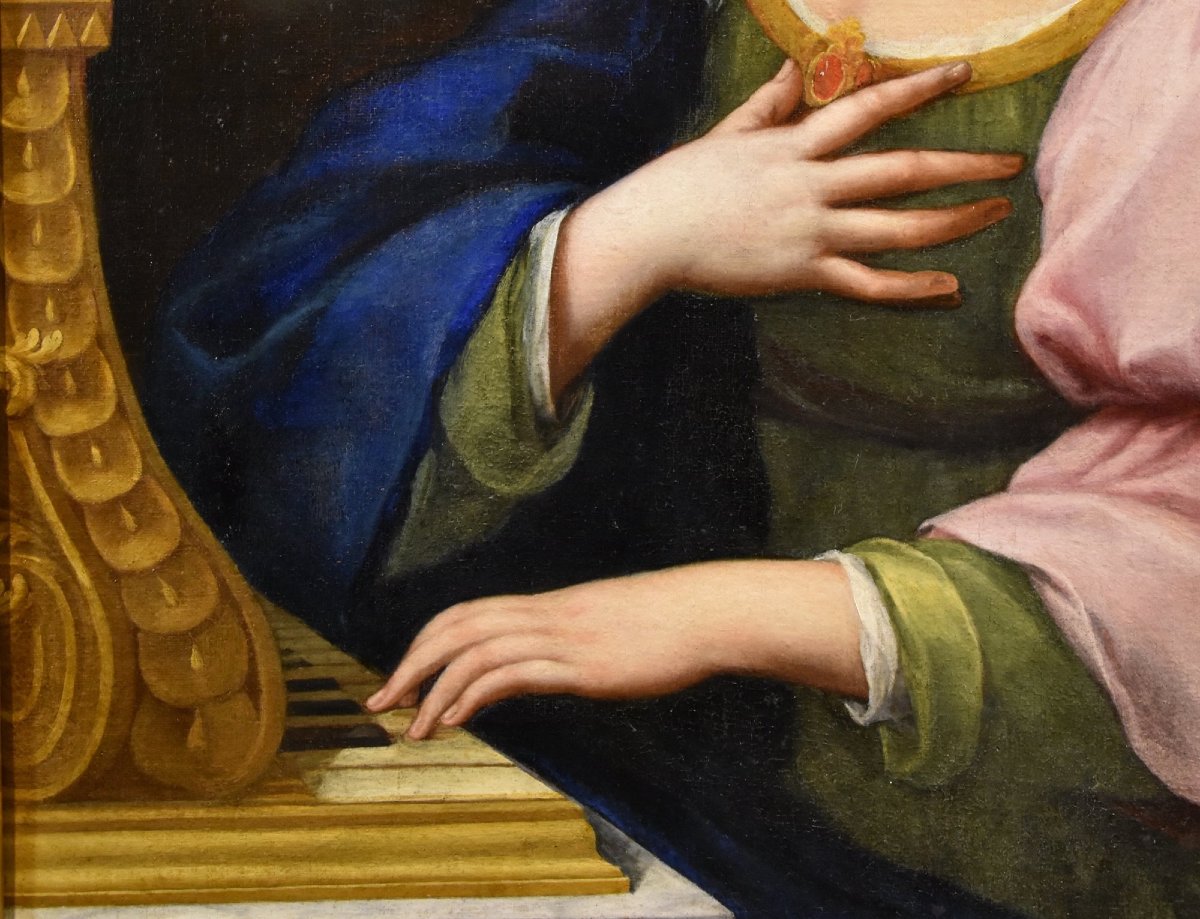
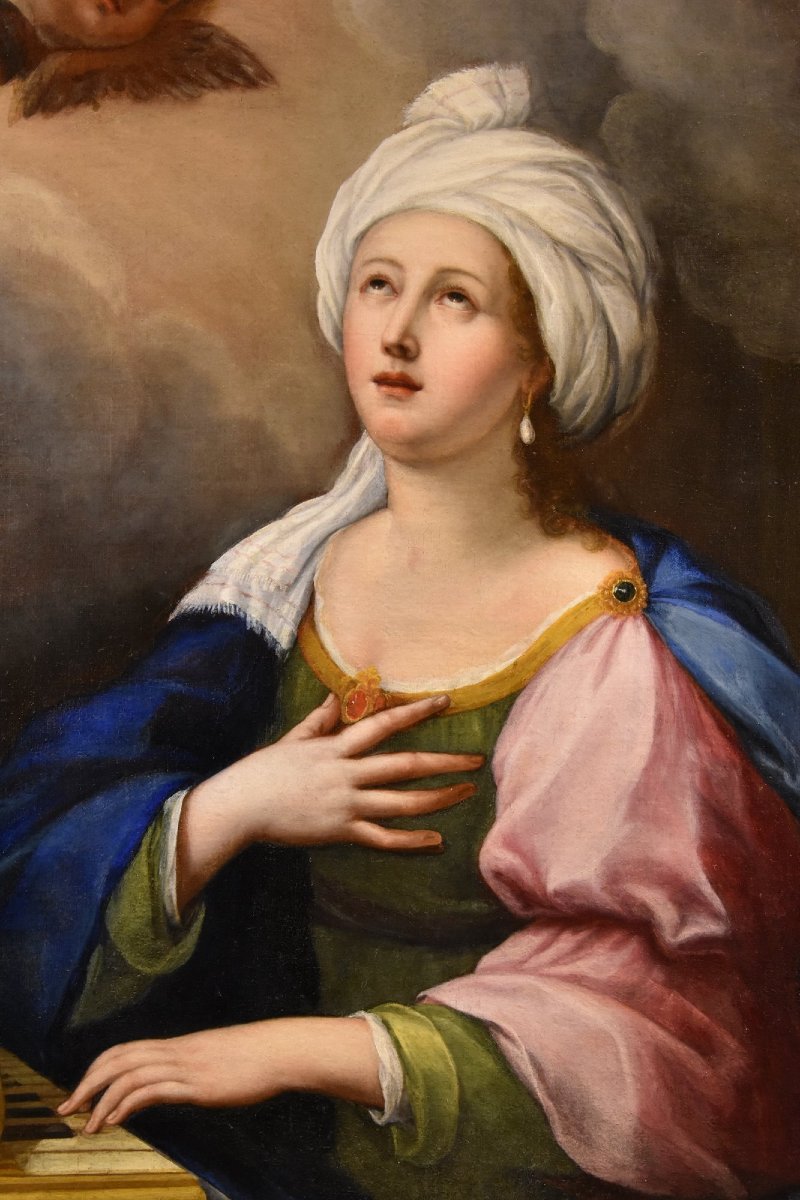
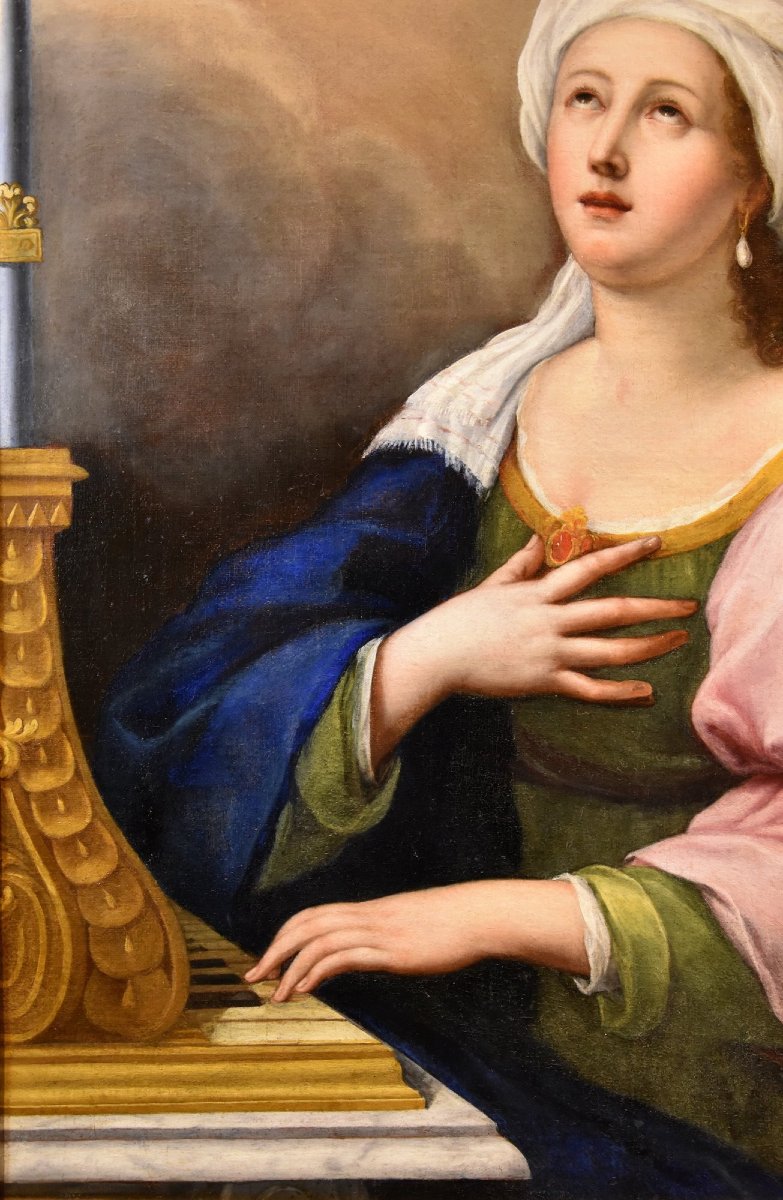
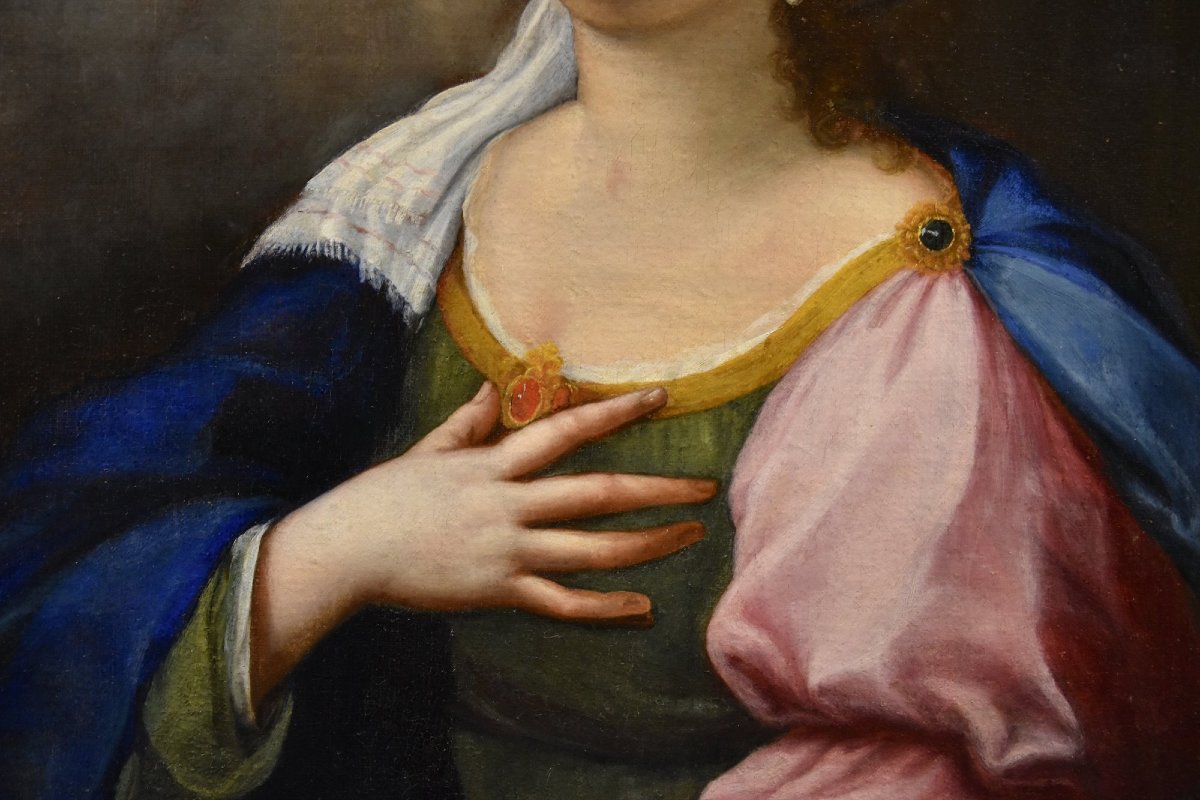
This evocative painting, which we are pleased to present to you, features Saint Cecilia at the center of the composition—the Roman noblewoman who later converted to Christianity and was highly revered during the Baroque period as the patron saint of music, instrumentalists, and singers; She is depicted here as a beautiful young woman dressed in regal attire, playing a musical instrument while watched over by angelic figures.
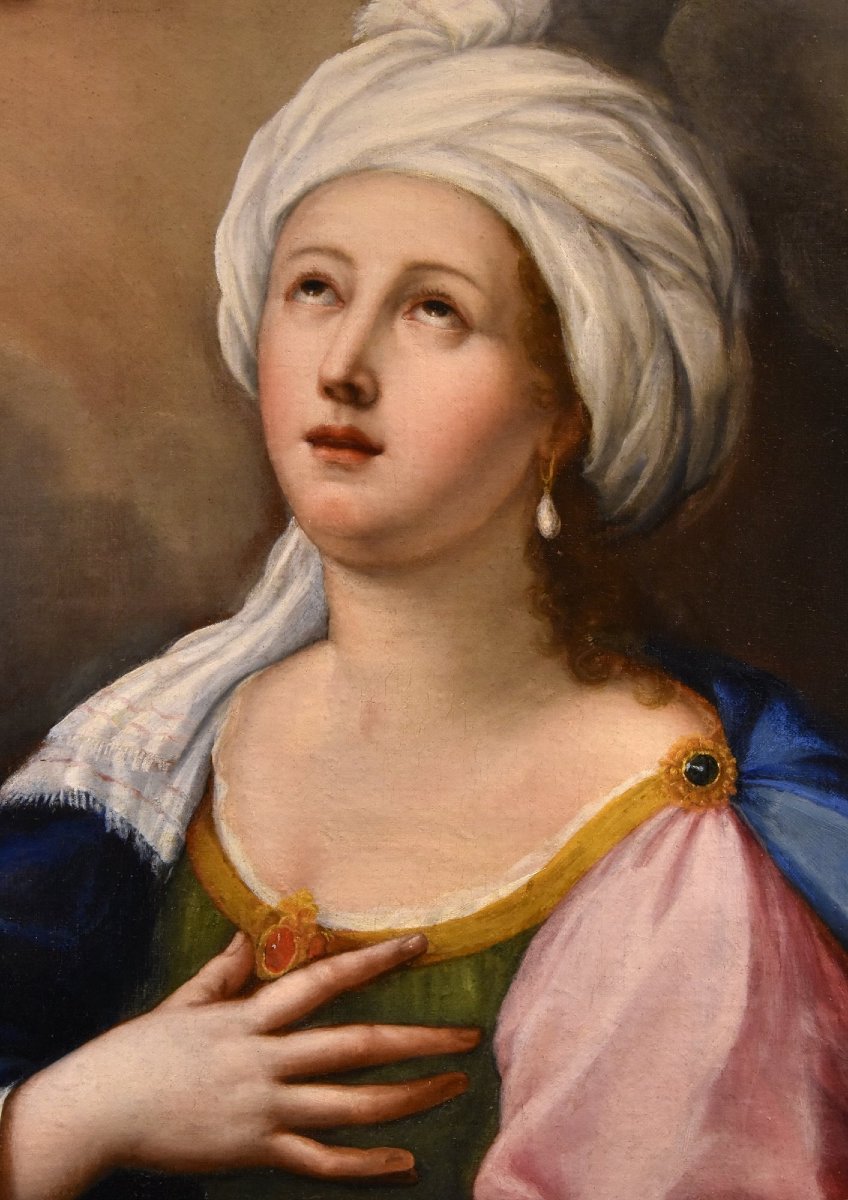
The detail of her gaze turned upward is particularly beautiful and evocative, bathed in a mystical and divine light, for it is precisely through music that the saint ascends toward the divine.
Regarding stylistic characteristics, it should be noted that this painting is the work of a talented master active in the height of the 17th century; specifically, based on the use of warm, balanced hues to soften the chiaroscuro contrasts, it is of Tuscan or Roman origin.
The skilled artist should therefore be sought within the Central Italian Baroque tradition, influenced by the decorative splendor of the great Giovanni Battista Gaulli, known as “il Baciccio,” and likewise by the classical reinterpretation of Raphael carried out in the early decades of the 17th century first by the Bolognese Guido Reni, and then in Rome by the talented Andrea Sacchi. The influence of certain foreign artists, who were also active in Rome during the same period, should not be overlooked; among these, the works of Simon Vouet deserve special mention.
This explains why our painting reflects both the refined Bolognese tradition of Reni, Francesco Albani, and Domenichino, and the more evolved 17th-century Roman pictorial narrative, derived from an understanding of the finest works of Pietro da Cortona: the generally warm hues of this St. Cecilia and the two cherubs, in fact, foreshadow the salon-style refinements that herald the transalpine Baroque—that is, the fashionable artistic trend so beloved by the cultured Roman aristocracy of the seventeenth century.
Upon closer examination of the compositional details, it is easy to recognize in the painting the modus pingendi of the talented Lucas de la Haye, known as Fra Luca Fiammingo (Nivelles, 1612–Rome, 1682), a master of refined talent active in Italy during the 17th century.
As a Carmelite friar, his works were in high demand not only by his order but also by noblemen and wealthy merchants of the time;
To corroborate the attribution proposed here, it suffices to compare our canvas with other works by Lucas de la Haye, such as, for example, the Assumption of the Virgin (1) and, above all, the Vision of St. Teresa of Avila (2), both in Montecompatri (Church of St. Sylvester), and the Christ Crowned with Thorns (3) (Convent of St. Maria della Scala), as well as St. Teresa of Avila Has a Vision of the Angel (4) (Church of St. Maria della Scala, Rome).
In the paintings listed here, as in ours, the typical style of the Flemish master emerges—imaginative and classicist, achieved through warm hues and flashes of light—yet also readily embracing Roman and Emilian influences with effortless naturalness.
(1) https://catalogo.beniculturali.it/detail/HistoricOrArtisticProperty/1200236918
(2) https://catalogo.beniculturali.it/detail/HistoricOrArtisticProperty/12002369203
(3) https://catalogo.cultura.gov.it/detail/HistoricOrArtisticProperty/12005154304
(4) https://catalogo.beniculturali.it/detail/HistoricOrArtisticProperty/1200225041
ADDITIONAL INFORMATION:
The artwork is framed in an elegant gold frame and comes with a certificate of authenticity and warranty.
We arrange and organize the shipping of purchased artworks, both within Italy and internationally, using professional, insured carriers.
You can also view the painting at our gallery in Riva del Garda; we would be delighted to welcome you and show you our collection of artworks.
Please feel free to contact us, with no obligation, for any additional information.
Follow us on:
INSTAGRAM https://www.instagram.com/galleriacastelbarco/?hl=it
FACEBOOK https://www.facebook.com/galleriacastelbarco/
Saint Cecilia and Two Cherubs
Oil on canvas
118 x 91 cm. - Framed 129 x 102 cm.
Expert appraisal by Prof. Emilio Negro (Bologna)
This evocative painting, which we are pleased to present to you, features Saint Cecilia at the center of the composition—the Roman noblewoman who later converted to Christianity and was highly revered during the Baroque period as the patron saint of music, instrumentalists, and singers; She is depicted here as a beautiful young woman dressed in regal attire, playing a musical instrument while watched over by angelic figures.
The detail of her gaze turned upward is particularly beautiful and evocative, bathed in a mystical and divine light, for it is precisely through music that the saint ascends toward the divine.
Regarding stylistic characteristics, it should be noted that this painting is the work of a talented master active in the height of the 17th century; specifically, based on the use of warm, balanced hues to soften the chiaroscuro contrasts, it is of Tuscan or Roman origin.
The skilled artist should therefore be sought within the Central Italian Baroque tradition, influenced by the decorative splendor of the great Giovanni Battista Gaulli, known as “il Baciccio,” and likewise by the classical reinterpretation of Raphael carried out in the early decades of the 17th century first by the Bolognese Guido Reni, and then in Rome by the talented Andrea Sacchi. The influence of certain foreign artists, who were also active in Rome during the same period, should not be overlooked; among these, the works of Simon Vouet deserve special mention.
This explains why our painting reflects both the refined Bolognese tradition of Reni, Francesco Albani, and Domenichino, and the more evolved 17th-century Roman pictorial narrative, derived from an understanding of the finest works of Pietro da Cortona: the generally warm hues of this St. Cecilia and the two cherubs, in fact, foreshadow the salon-style refinements that herald the transalpine Baroque—that is, the fashionable artistic trend so beloved by the cultured Roman aristocracy of the seventeenth century.
Upon closer examination of the compositional details, it is easy to recognize in the painting the modus pingendi of the talented Lucas de la Haye, known as Fra Luca Fiammingo (Nivelles, 1612–Rome, 1682), a master of refined talent active in Italy during the 17th century.
As a Carmelite friar, his works were in high demand not only by his order but also by noblemen and wealthy merchants of the time;
To corroborate the attribution proposed here, it suffices to compare our canvas with other works by Lucas de la Haye, such as, for example, the Assumption of the Virgin (1) and, above all, the Vision of St. Teresa of Avila (2), both in Montecompatri (Church of St. Sylvester), and the Christ Crowned with Thorns (3) (Convent of St. Maria della Scala), as well as St. Teresa of Avila Has a Vision of the Angel (4) (Church of St. Maria della Scala, Rome).
In the paintings listed here, as in ours, the typical style of the Flemish master emerges—imaginative and classicist, achieved through warm hues and flashes of light—yet also readily embracing Roman and Emilian influences with effortless naturalness.
(1) https://catalogo.beniculturali.it/detail/HistoricOrArtisticProperty/1200236918
(2) https://catalogo.beniculturali.it/detail/HistoricOrArtisticProperty/12002369203
(3) https://catalogo.cultura.gov.it/detail/HistoricOrArtisticProperty/12005154304
(4) https://catalogo.beniculturali.it/detail/HistoricOrArtisticProperty/1200225041
ADDITIONAL INFORMATION:
The artwork is framed in an elegant gold frame and comes with a certificate of authenticity and warranty.
We arrange and organize the shipping of purchased artworks, both within Italy and internationally, using professional, insured carriers.
You can also view the painting at our gallery in Riva del Garda; we would be delighted to welcome you and show you our collection of artworks.
Please feel free to contact us, with no obligation, for any additional information.
Follow us on:
INSTAGRAM https://www.instagram.com/galleriacastelbarco/?hl=it
FACEBOOK https://www.facebook.com/galleriacastelbarco/
9 900 €
Period: 17th century
Style: Renaissance, Louis 13th
Condition: Excellent condition
Material: Oil painting
Width: encadré 102 cm.
Height: encadré 129 cm.
Reference (ID): 1789825
Availability: In stock
Print