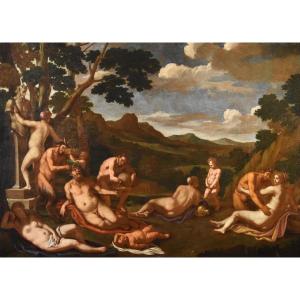


Bacchanalia, Attributed To Giulio Carpioni (venice, 1613 – Vicenza, 1678)
Artist: Giulio Carpioni (venise, 1613 - Vicence, 1678), Attribuable à
Giulio Carpioni (Venice, 1613 – Vicenza, 1678) Attributed to
Bacchanalia
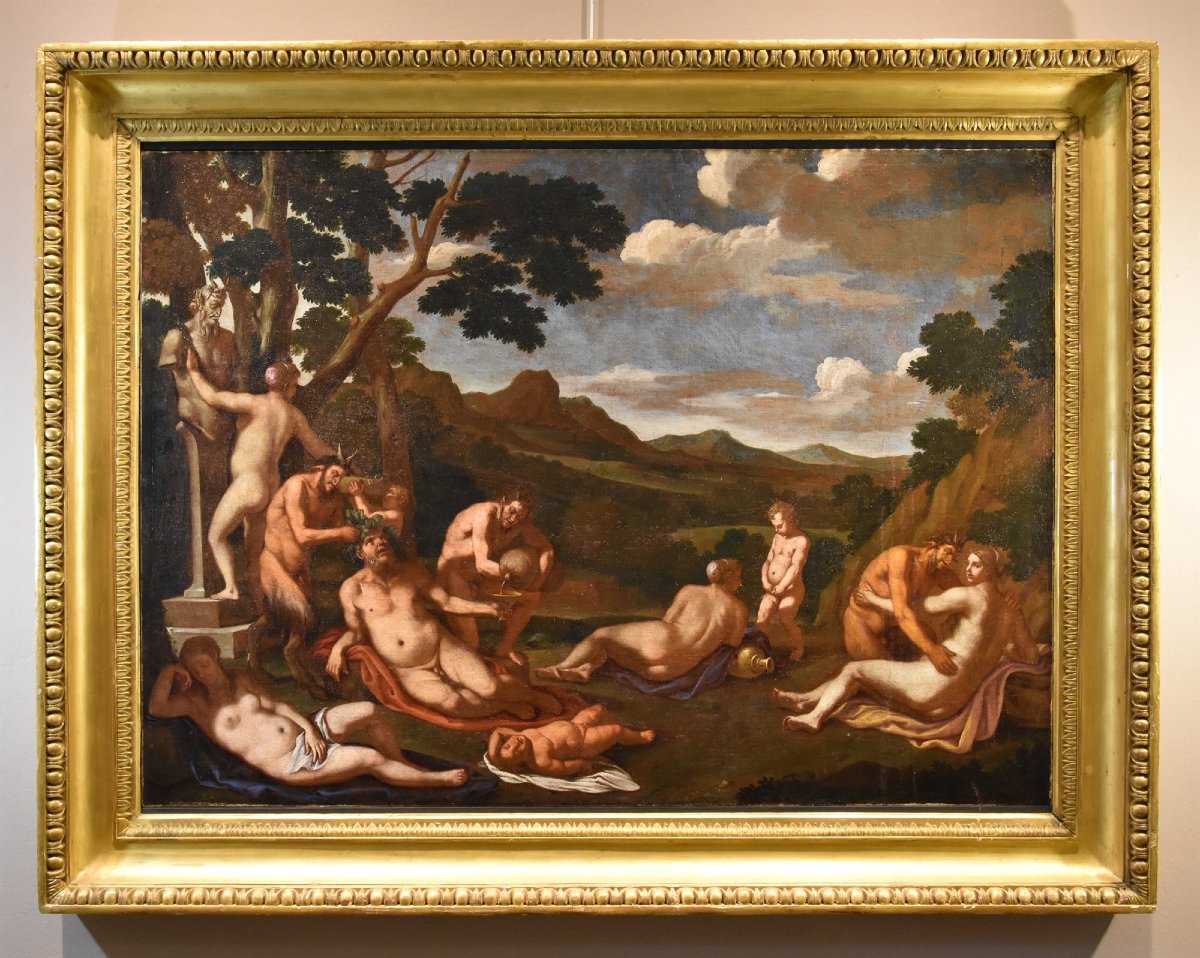
Oil on canvas (98 x 132 cm – Framed 120 x 154 cm)
Full details of the work (click HERE)
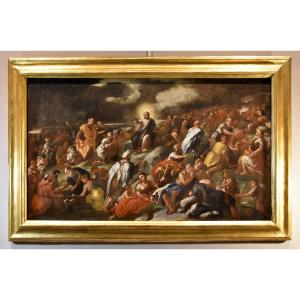
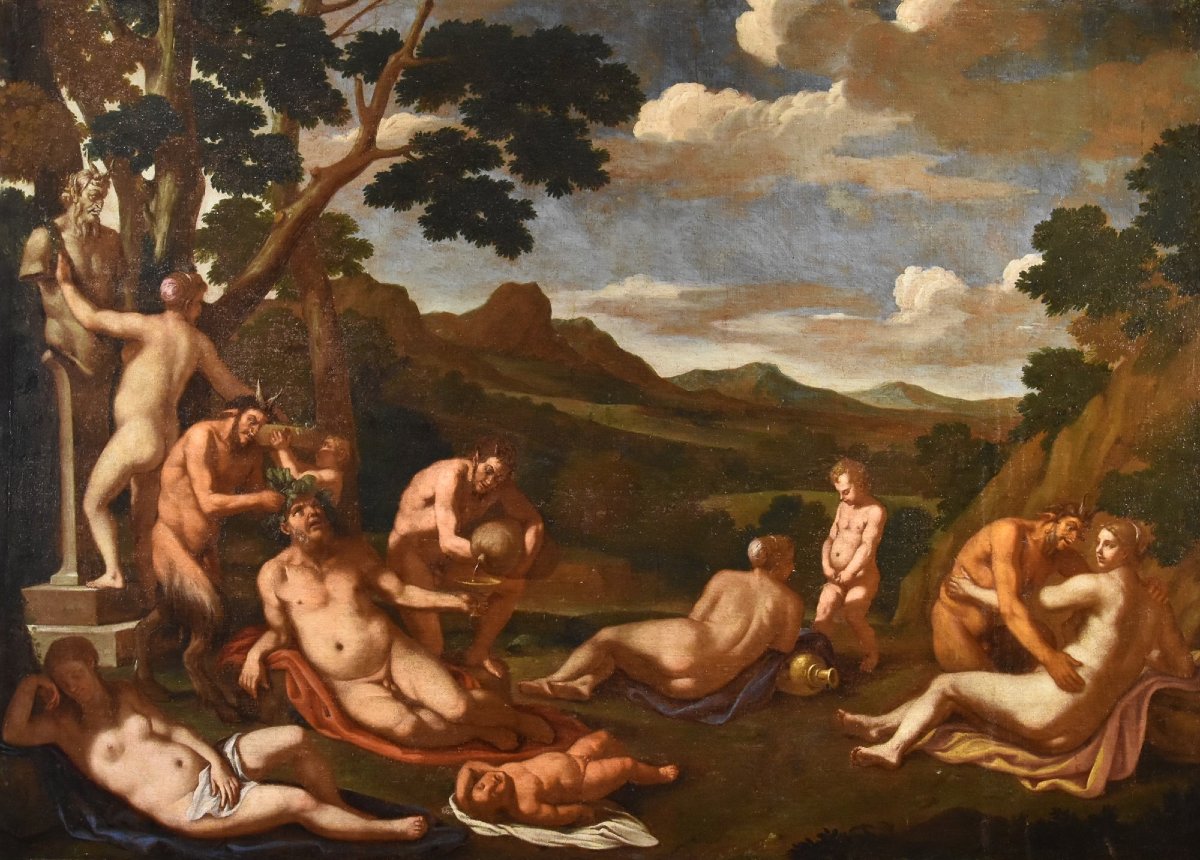
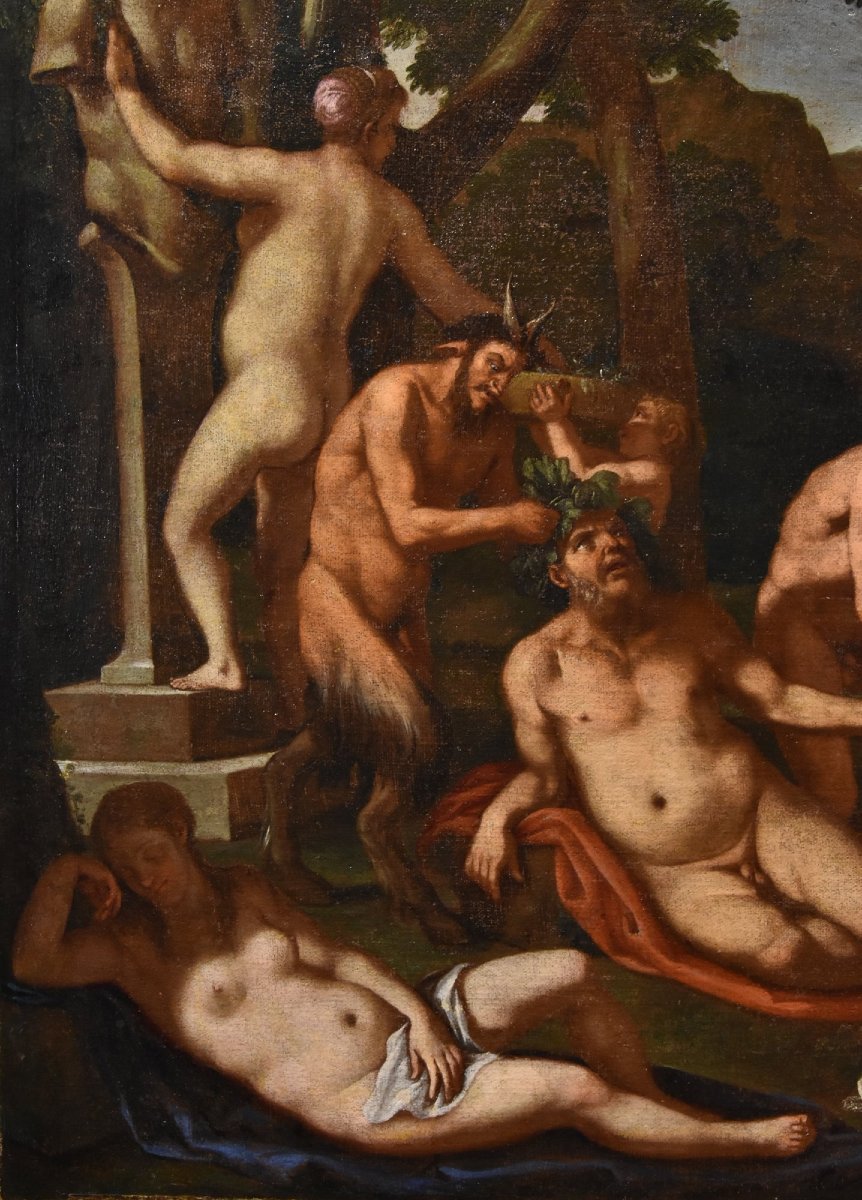
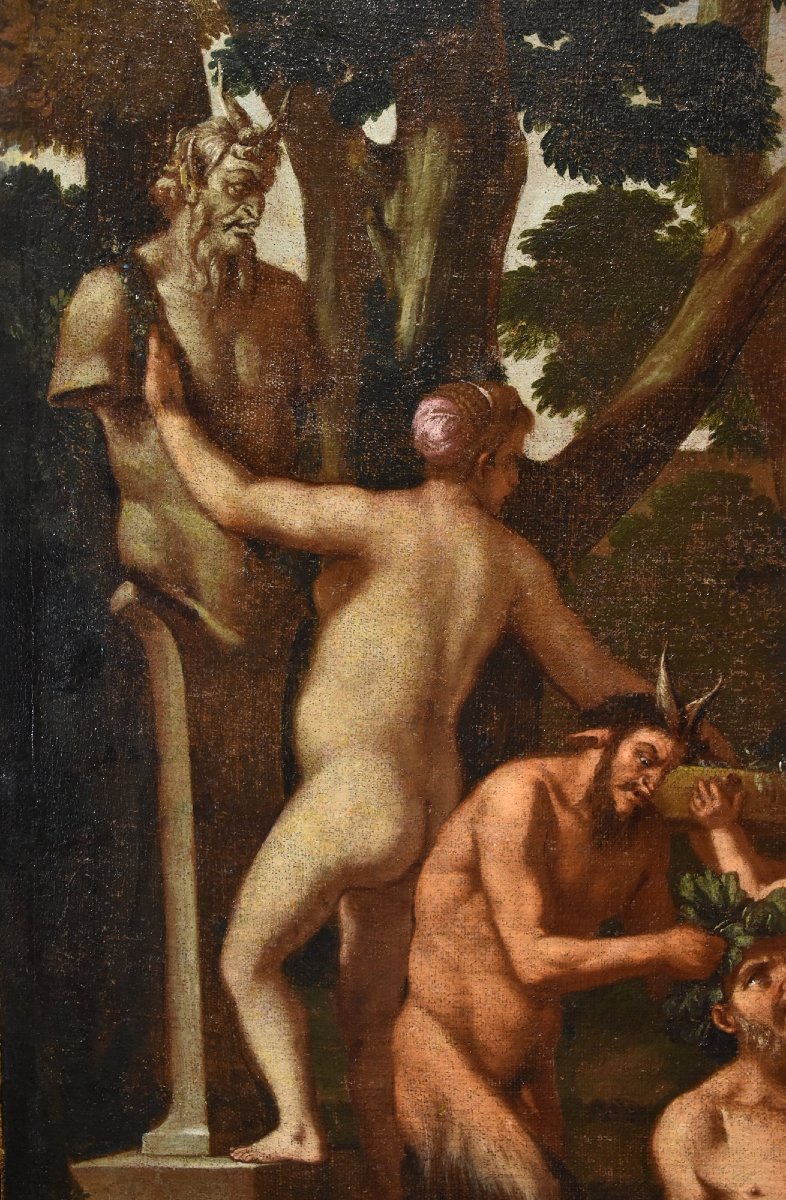
The painting, of high quality and in excellent condition, is a refined work by Giulio Carpioni (Venice, 1613 – Vicenza, 1678), one of the most talented Venetian painters of the 17th century, and depicts a typical “Bacchanalia,” a favorite subject he returned to repeatedly.
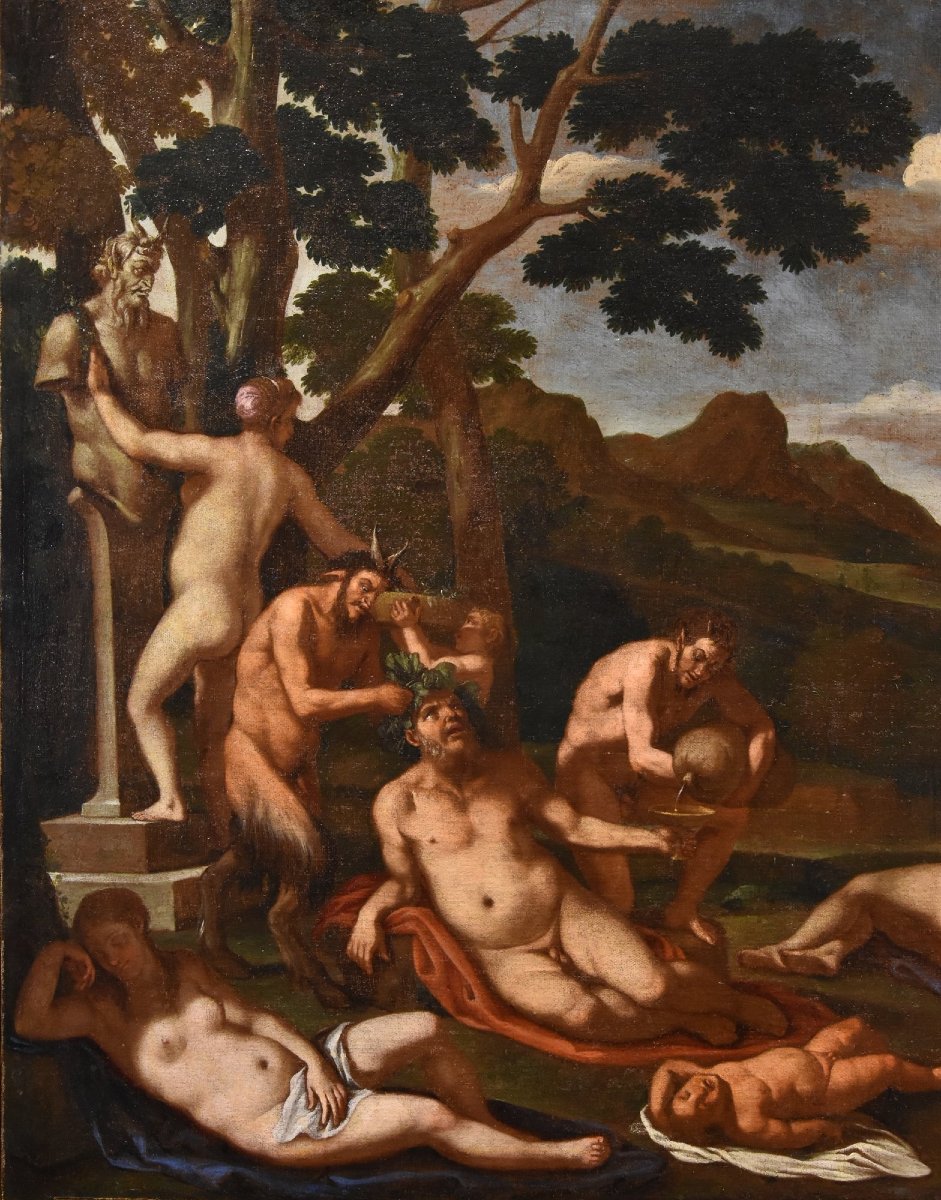
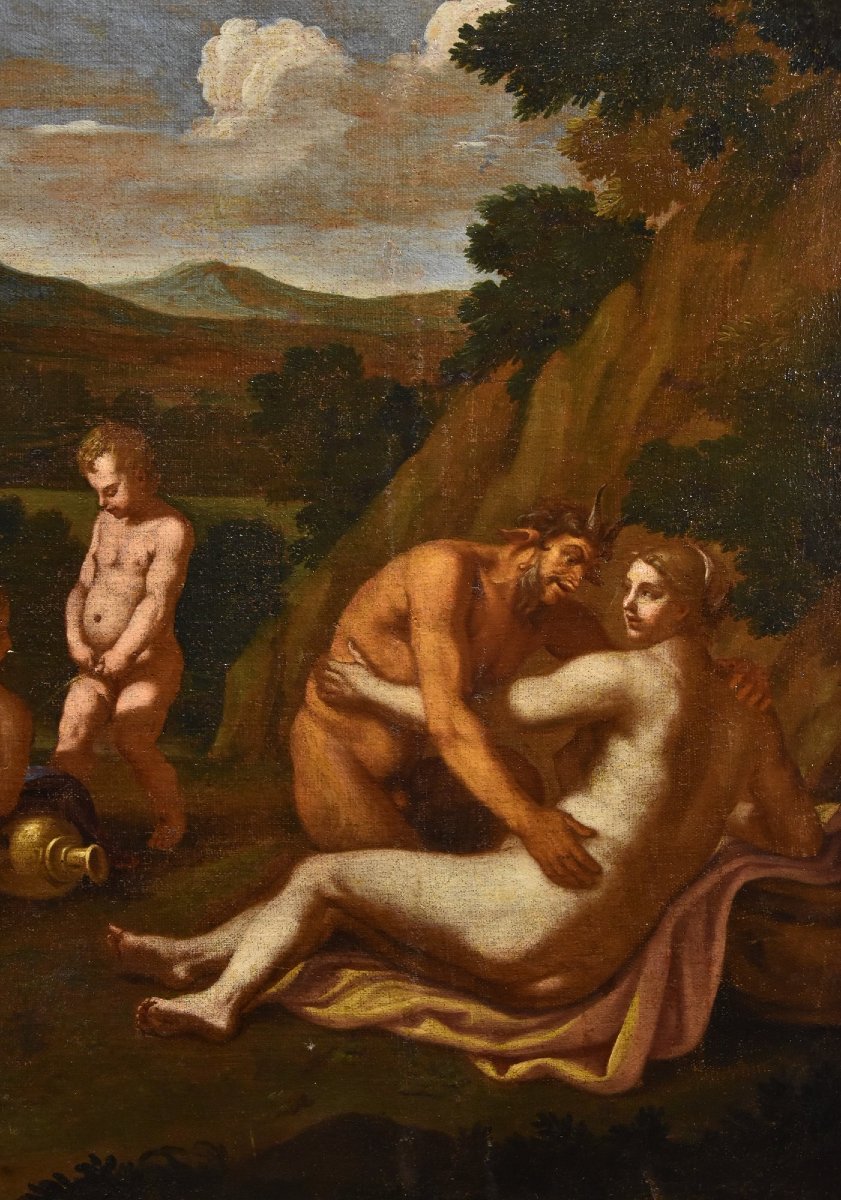
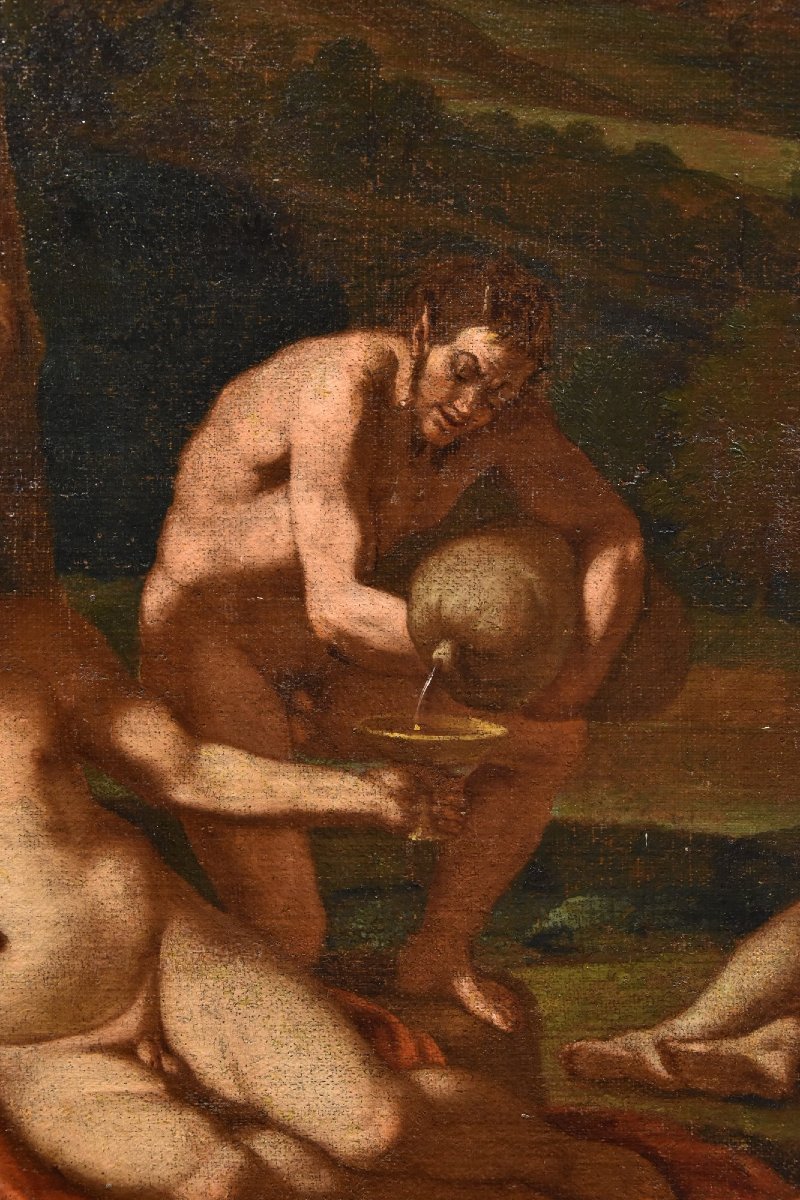
Specifically, it depicts a festival in honor of Bacchus, the Roman god of wine (or Dionysus in Greek mythology), featuring nude or semi-nude mythological figures such as satyrs, nymphs, maenads, and cherubs, who devote themselves to idleness and the consumption of wine in a natural setting, indulging in unbridled pleasures, libations, dance, music, and eroticism.
Trained under Padovanino and in the classical tradition of 16th-century Venice, Carpioni drew great inspiration from Titian’s early works, especially his mythological compositions and, in particular, his famous Bacchanalia; it was specifically during his trip to Rome that he had the opportunity to see and study the "Bacchanal of the Andrians," now in the Prado Museum in Madrid, dated between 1523 and 1526.
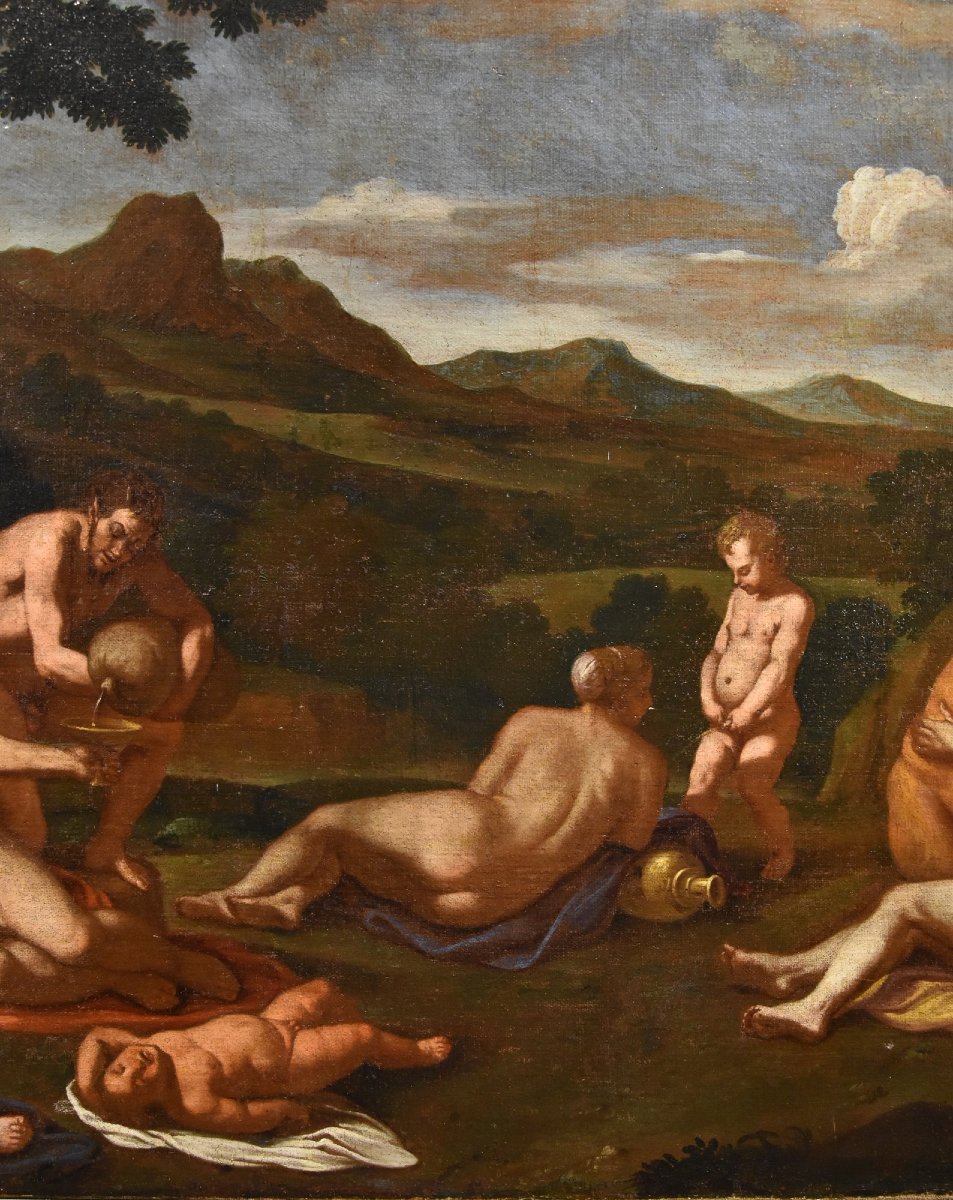
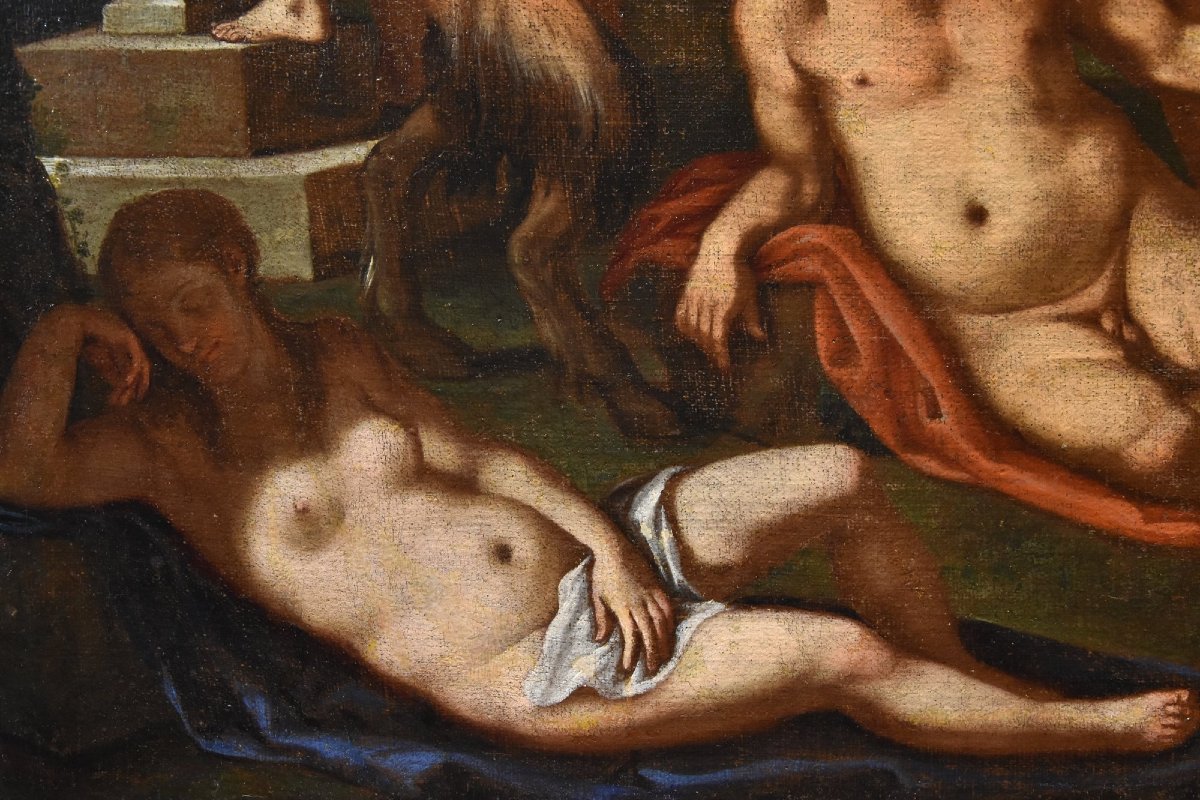
He was captivated by the dynamic movement, the sensuality of the bodies, and the interplay of light and shadow in these works. He then reworked many figures from Titian’s painting, such as the sensual nude of the nymph reclining in the lower left corner.
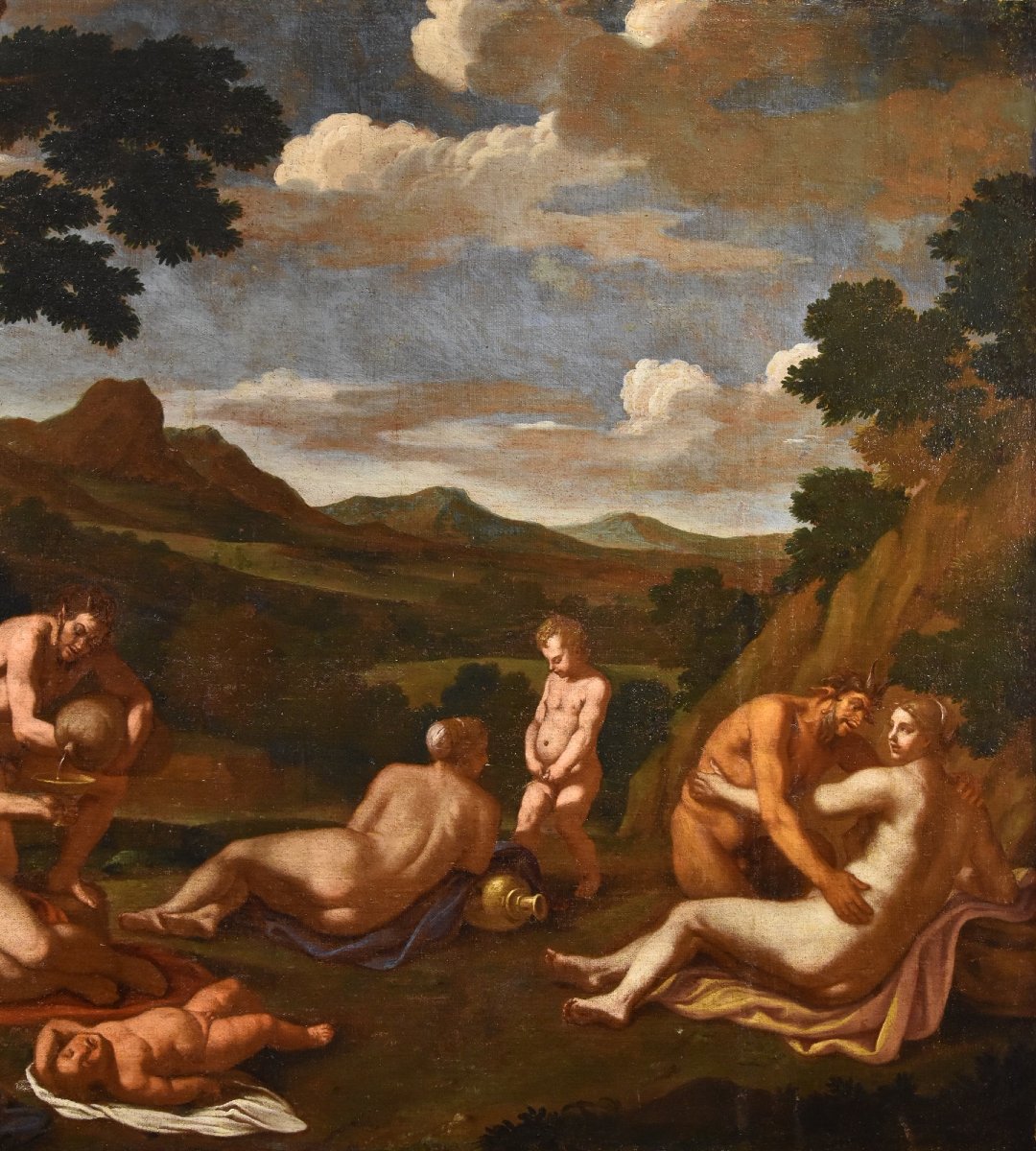
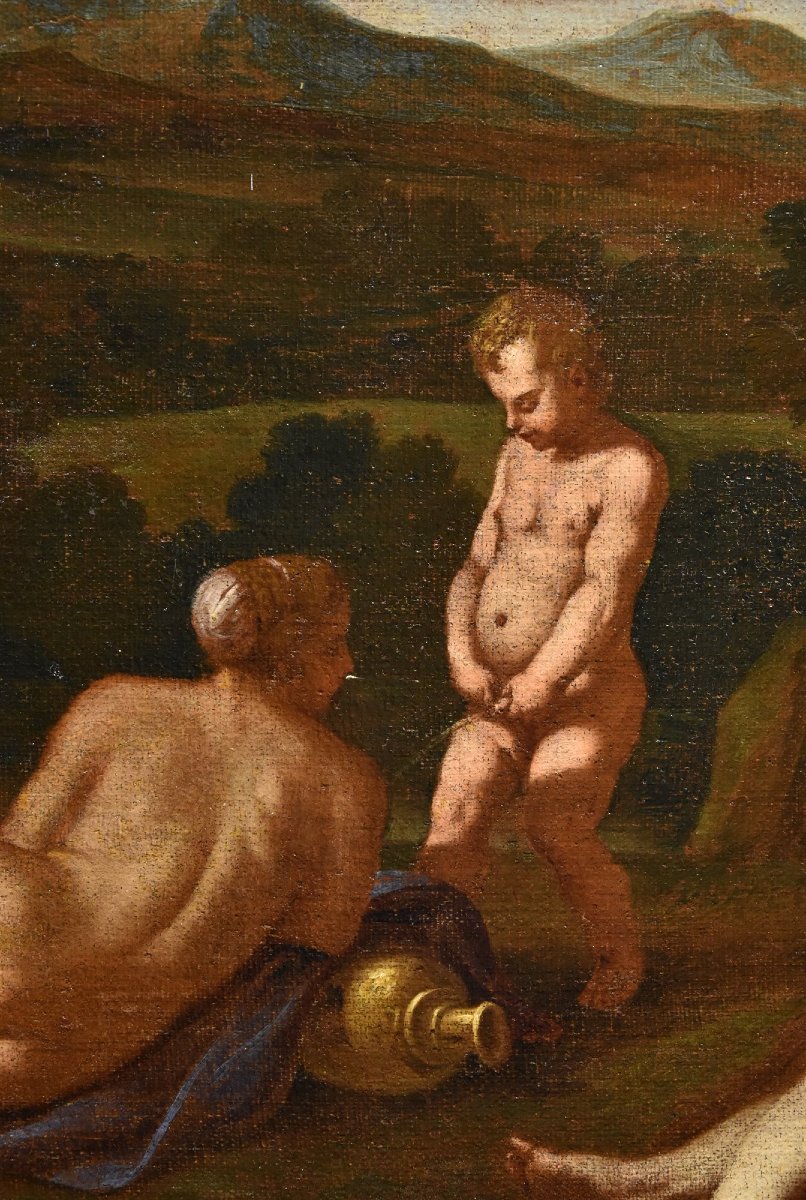
Moving to the right, the charming “puer mingens” (a figure in a work of art depicted as a prepubescent boy in the act of urinating) who is squirting urine at a nymph who turns away, annoyed by this mischievous gesture.
In Rome, the artist was also influenced by the realism of the Bamboccianti, as well as the classicist tendencies of Poussin, who devoted himself with great success to the same theme of the Bacchanalia.
The painting presented here can be compared in particular with the Bacchanal at the Accademia Carrara in Bergamo (https://catalogo.fondazionezeri.unibo.it/scheda/fotografia/108771/), similar in size, in which the figure of the fat, drunken Silenus supported by young attendants is reproduced almost identically in the counterpart (https://www.lombardiabeniculturali.it/opere-arte/schede/C0050-00068/), and also with the Bacchanal in the Pinacoteca del Castello Sforzesco (https://www.lombardiabeniculturali.it/opere-arte/schede/B0020-00078/), as well as the painting in the Civic Museums of Vicenza, bequeathed by Carlo Vicentini Dal Giglio in 1834.
ADDITIONAL INFORMATION:
The work is sold complete with an attractive gilded frame and is accompanied by a certificate of authenticity and a descriptive iconographic sheet.
We handle and arrange the transport of purchased works, both within Italy and internationally, using professional and insured carriers.
You can also view the painting at our gallery in Riva del Garda; we would be delighted to welcome you and show you our collection of works.
Please feel free to contact us for any additional information.
Follow us on:
INSTAGRAM https://www.instagram.com/galleriacastelbarco/?hl=it
FACEBOOK https://www.facebook.com/galleriacastelbarco/
Bacchanalia
Oil on canvas (98 x 132 cm – Framed 120 x 154 cm)
Full details of the work (click HERE)
The painting, of high quality and in excellent condition, is a refined work by Giulio Carpioni (Venice, 1613 – Vicenza, 1678), one of the most talented Venetian painters of the 17th century, and depicts a typical “Bacchanalia,” a favorite subject he returned to repeatedly.
Specifically, it depicts a festival in honor of Bacchus, the Roman god of wine (or Dionysus in Greek mythology), featuring nude or semi-nude mythological figures such as satyrs, nymphs, maenads, and cherubs, who devote themselves to idleness and the consumption of wine in a natural setting, indulging in unbridled pleasures, libations, dance, music, and eroticism.
Trained under Padovanino and in the classical tradition of 16th-century Venice, Carpioni drew great inspiration from Titian’s early works, especially his mythological compositions and, in particular, his famous Bacchanalia; it was specifically during his trip to Rome that he had the opportunity to see and study the "Bacchanal of the Andrians," now in the Prado Museum in Madrid, dated between 1523 and 1526.
He was captivated by the dynamic movement, the sensuality of the bodies, and the interplay of light and shadow in these works. He then reworked many figures from Titian’s painting, such as the sensual nude of the nymph reclining in the lower left corner.
Moving to the right, the charming “puer mingens” (a figure in a work of art depicted as a prepubescent boy in the act of urinating) who is squirting urine at a nymph who turns away, annoyed by this mischievous gesture.
In Rome, the artist was also influenced by the realism of the Bamboccianti, as well as the classicist tendencies of Poussin, who devoted himself with great success to the same theme of the Bacchanalia.
The painting presented here can be compared in particular with the Bacchanal at the Accademia Carrara in Bergamo (https://catalogo.fondazionezeri.unibo.it/scheda/fotografia/108771/), similar in size, in which the figure of the fat, drunken Silenus supported by young attendants is reproduced almost identically in the counterpart (https://www.lombardiabeniculturali.it/opere-arte/schede/C0050-00068/), and also with the Bacchanal in the Pinacoteca del Castello Sforzesco (https://www.lombardiabeniculturali.it/opere-arte/schede/B0020-00078/), as well as the painting in the Civic Museums of Vicenza, bequeathed by Carlo Vicentini Dal Giglio in 1834.
ADDITIONAL INFORMATION:
The work is sold complete with an attractive gilded frame and is accompanied by a certificate of authenticity and a descriptive iconographic sheet.
We handle and arrange the transport of purchased works, both within Italy and internationally, using professional and insured carriers.
You can also view the painting at our gallery in Riva del Garda; we would be delighted to welcome you and show you our collection of works.
Please feel free to contact us for any additional information.
Follow us on:
INSTAGRAM https://www.instagram.com/galleriacastelbarco/?hl=it
FACEBOOK https://www.facebook.com/galleriacastelbarco/
12 800 €
Period: 17th century
Style: Louis 14th, Regency
Condition: Excellent condition
Material: Oil painting
Width: encadré 154 cm.
Height: encadré 120 cm.
Reference (ID): 1771996
Availability: In stock
Print