


The Announcing Angel, Bartolomé Román (montoro, C. 1587 – Madrid, 1647)
Artist: Bartolomé Román (montoro, Vers 1587 – Madrid, 1647)
The Announcing Angel (link)
Workshop of Vincenzo Carducci, known in Spain as Vicente Carducho (Florence, 1576 – Madrid, 1638)
Attributed to Bartolomé Román (Montoro, c. 1587 – Madrid, 1647)
Oil on canvas
110 x 80 cm.
Antique gilded wooden frame, 138 x 108 cm.
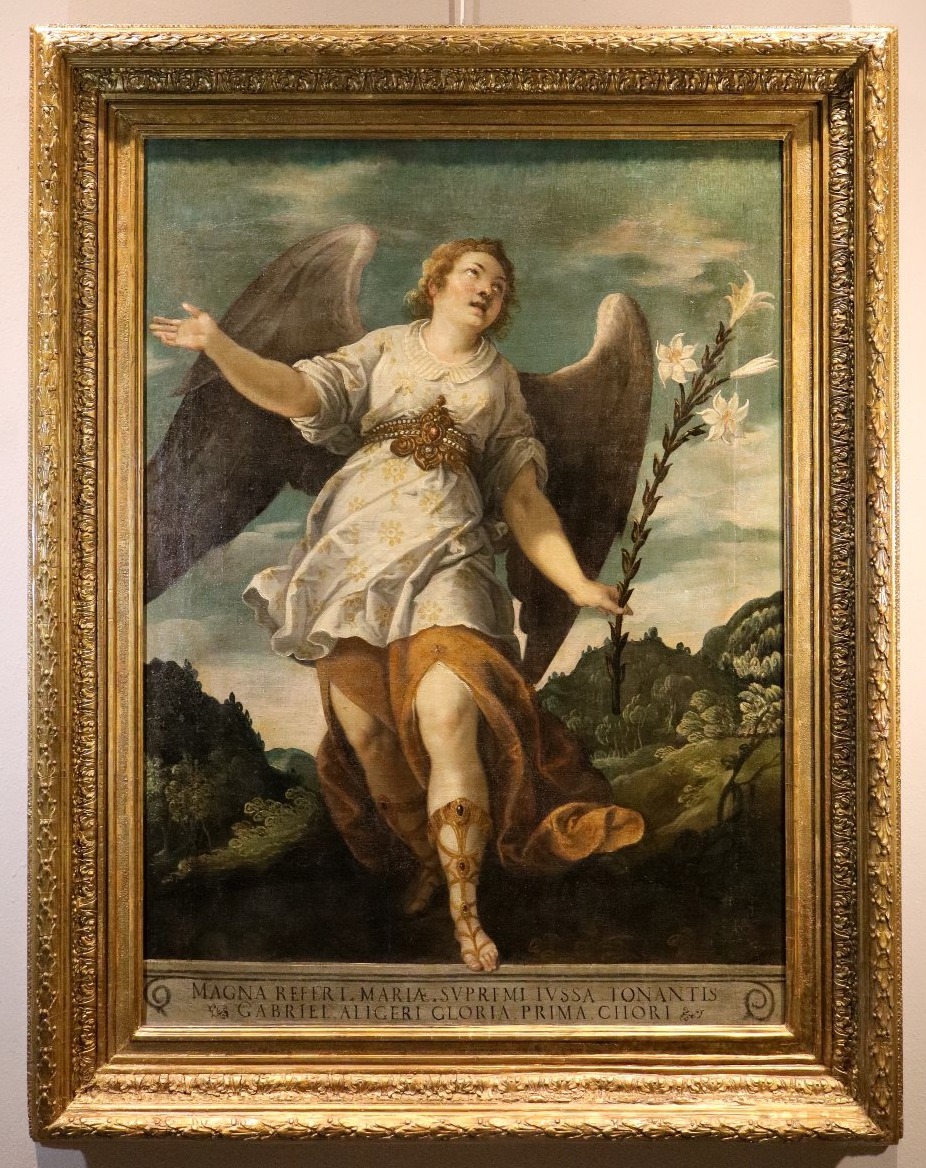
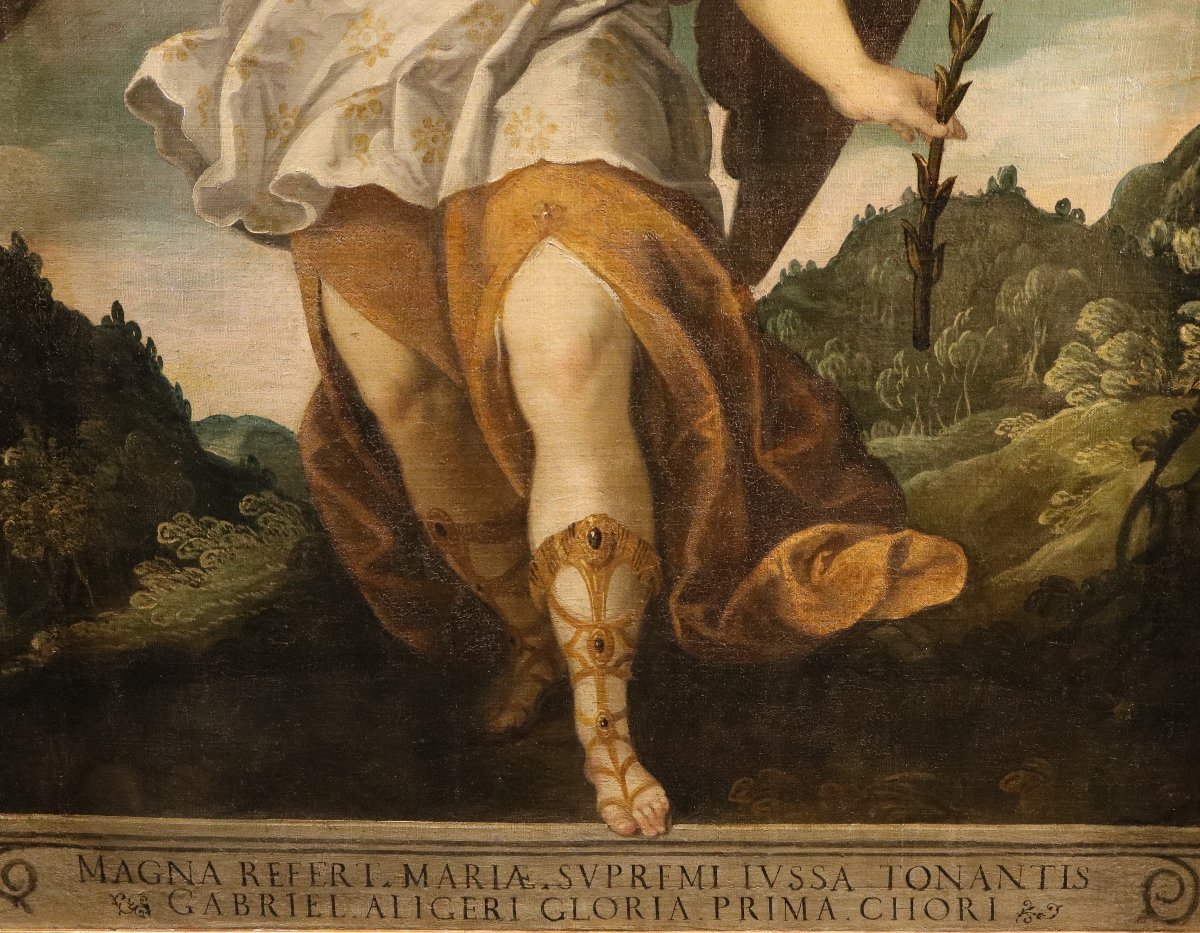
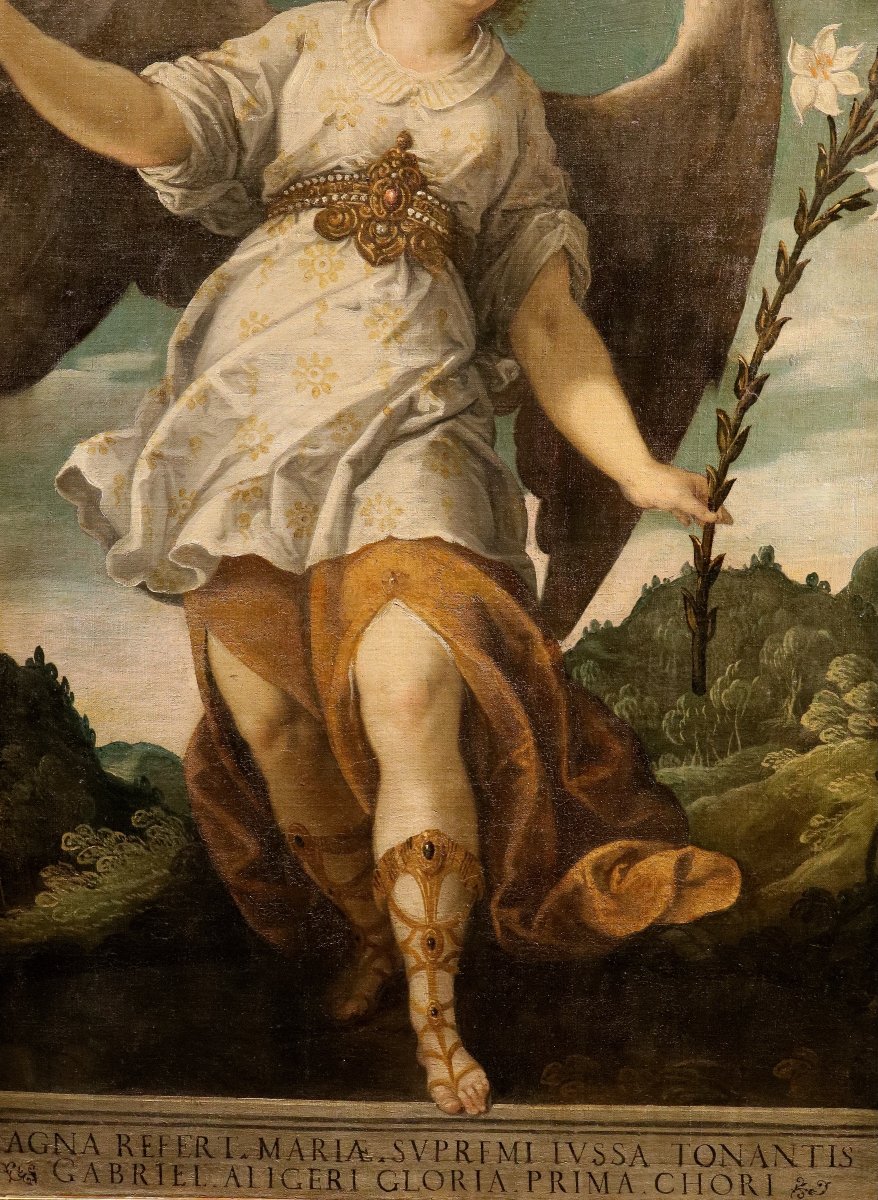
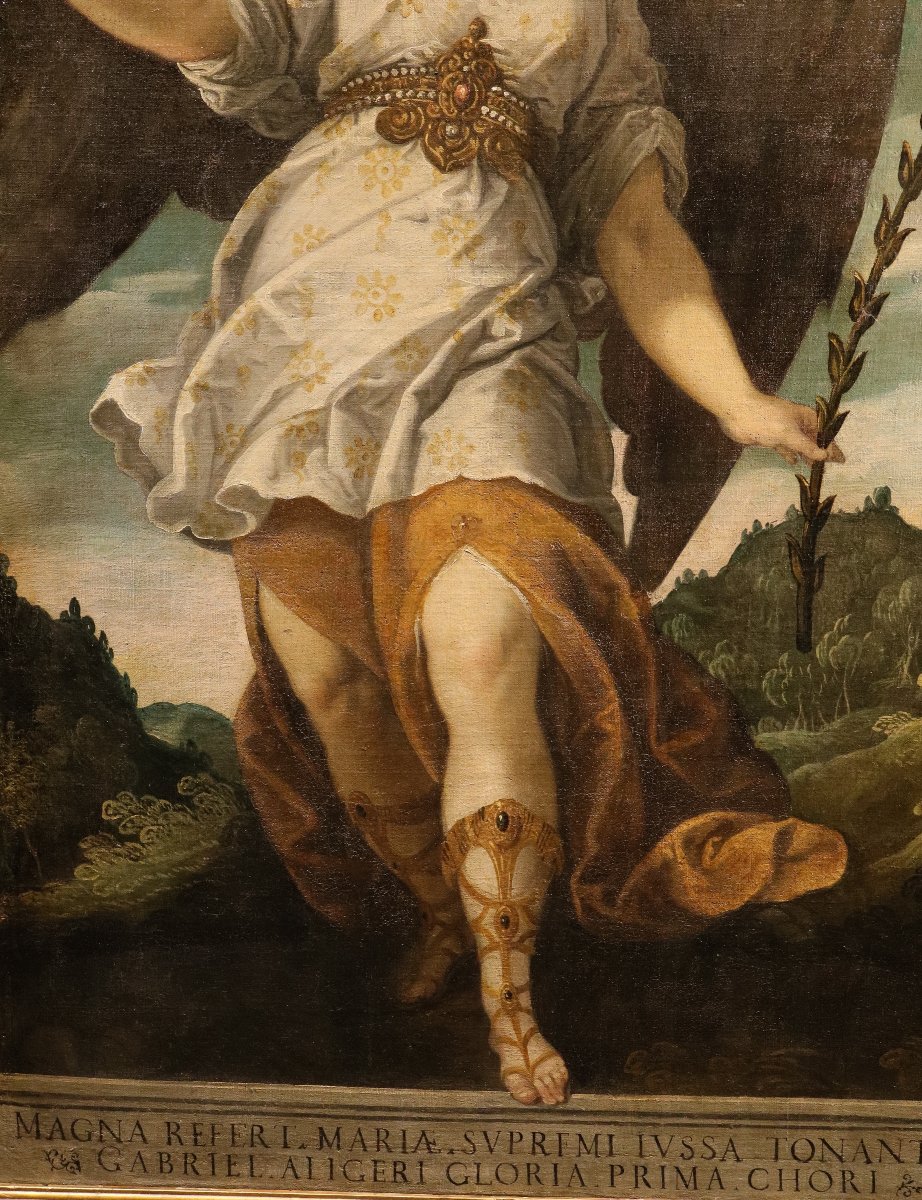
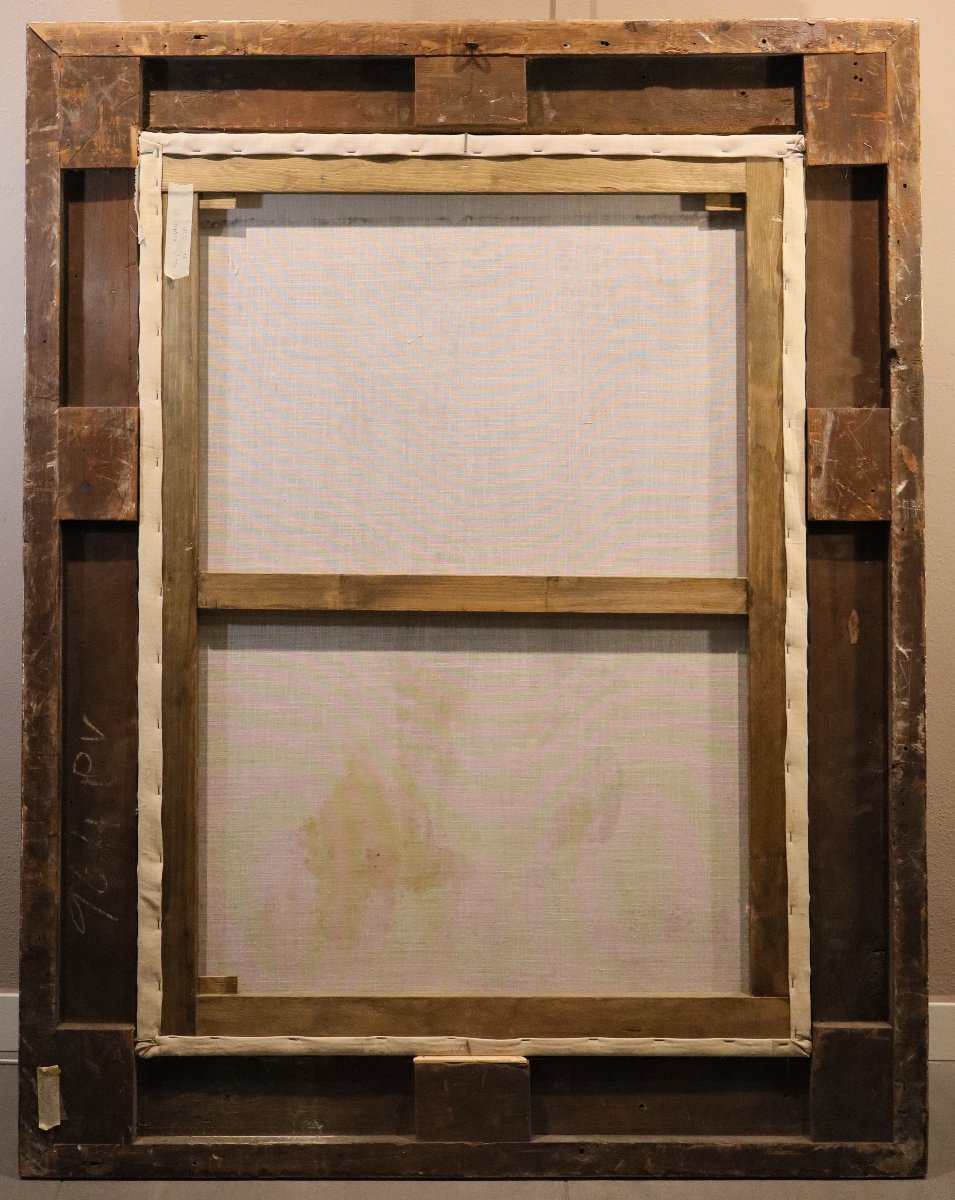
Notes: On the reverse of the canvas is the inscription: ’Magna refert mariae supremi iussa tonanti, Gabiel aligeri gloria prima chori’ (“The angel Gabriel, first glory of the winged choir, conveys to Mary the solemn commands of the thundering God”), which refers to the moment of the Annunciation.
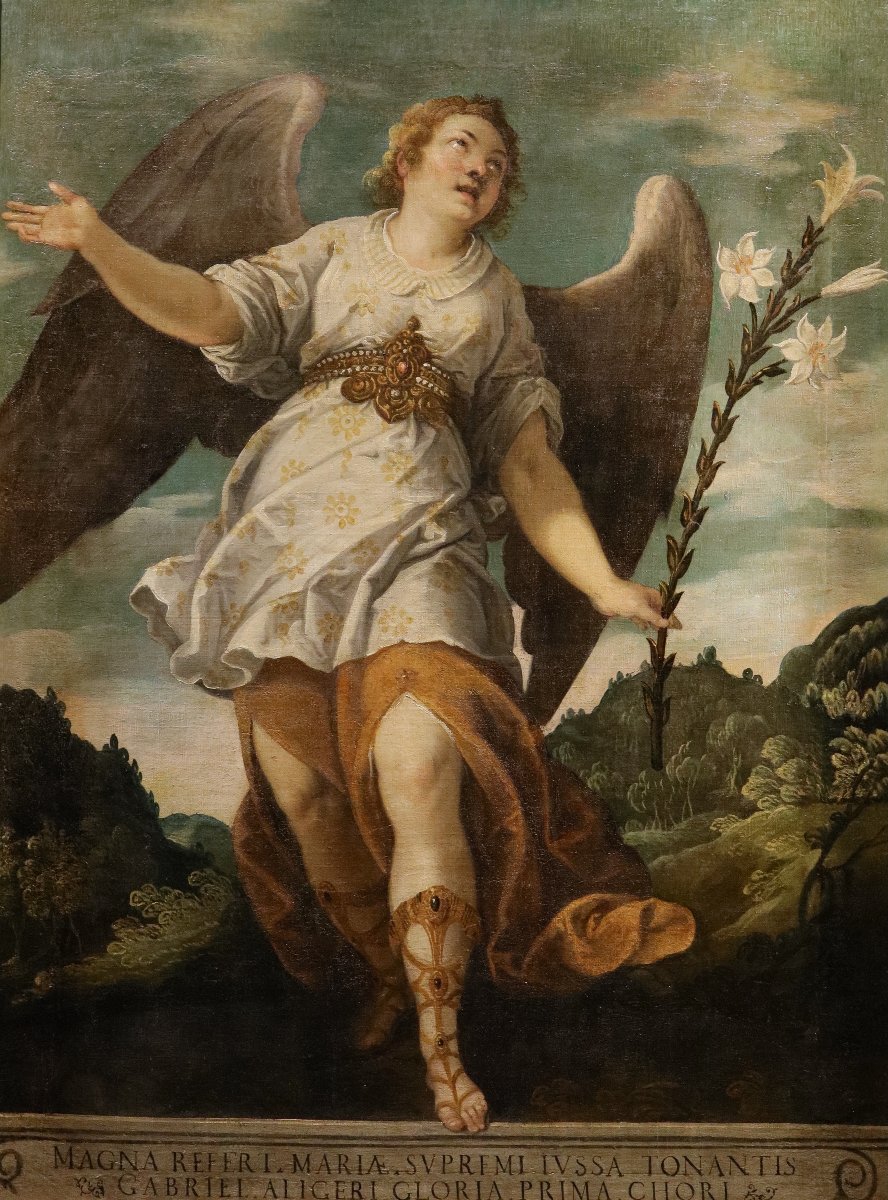
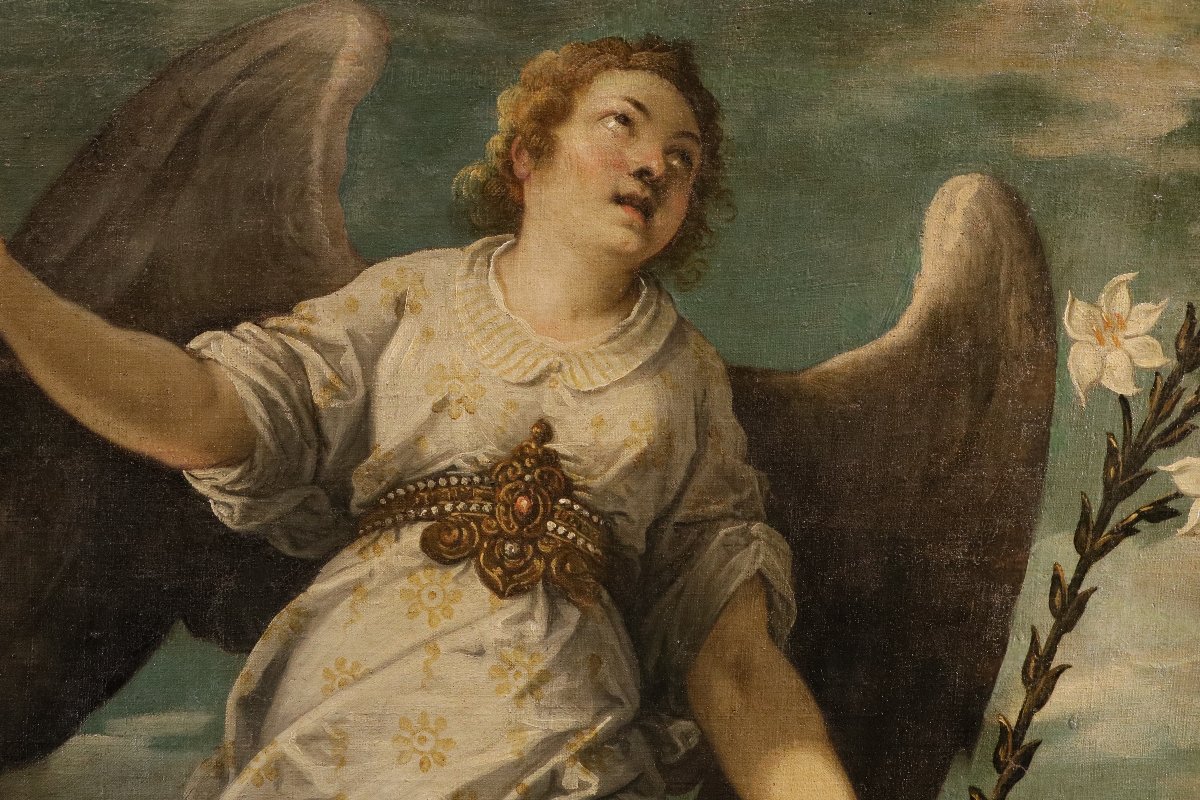
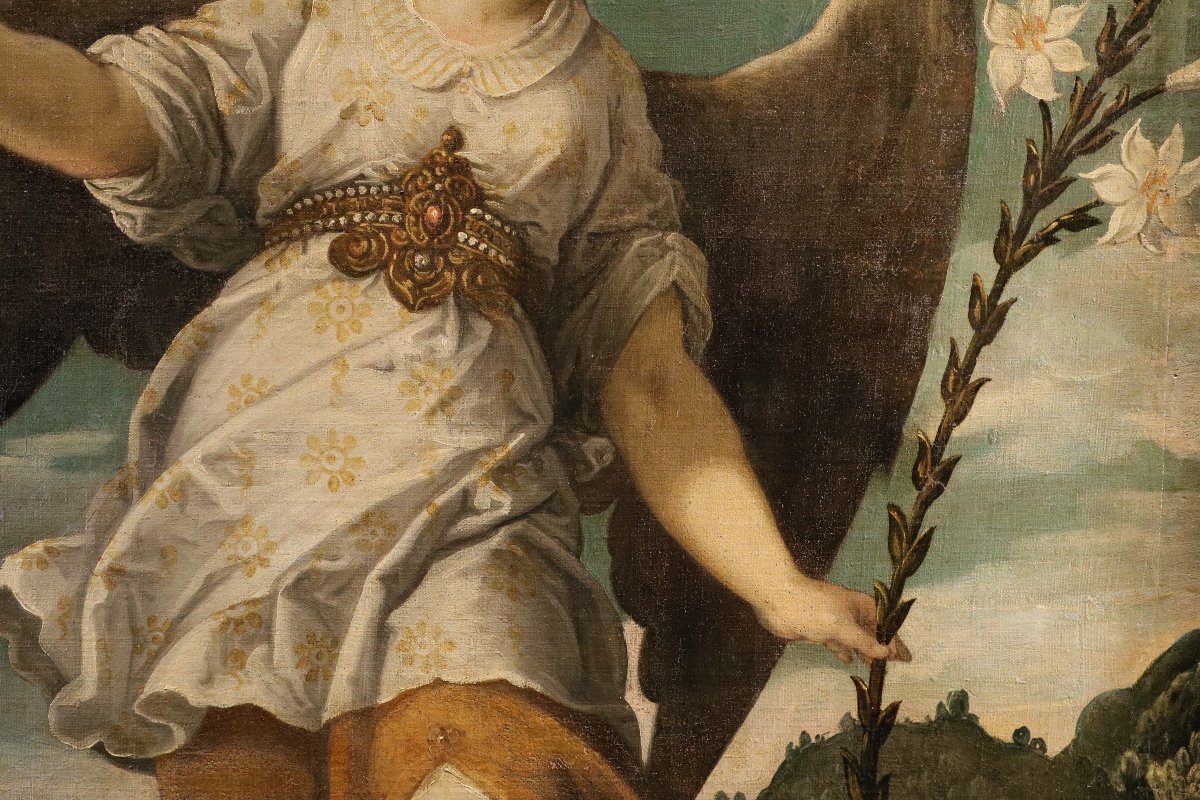
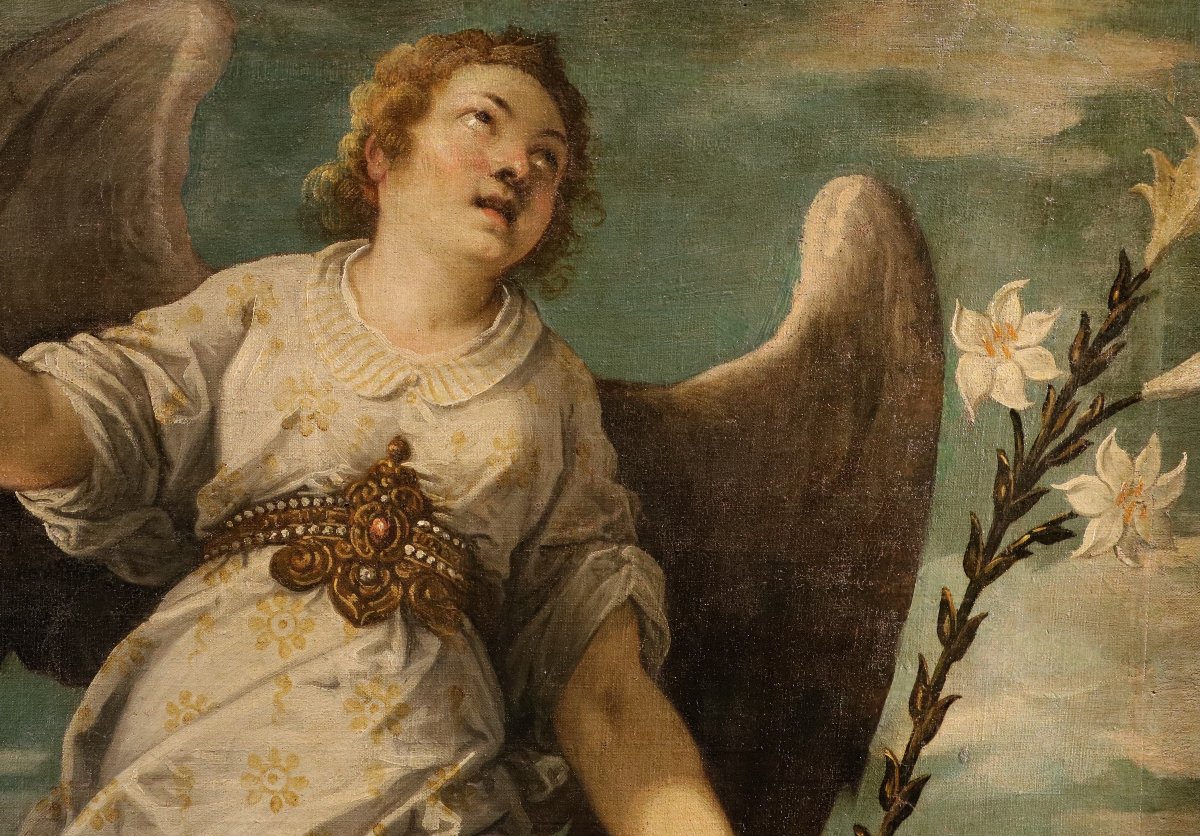
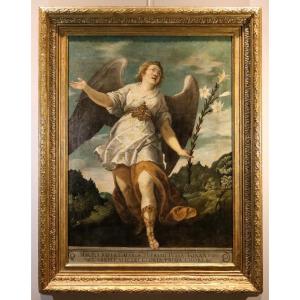
The work on offer, characterized by a refined sacredness, depicts the Archangel Gabriel in full figure as he is about to deliver the supreme announcement to the Virgin, offering her the traditional white lilies, a symbol of purity and chastity: it is a splendid subject, executed with great stylistic quality, likely commissioned for private use and therefore particularly pleasing and easy to display.
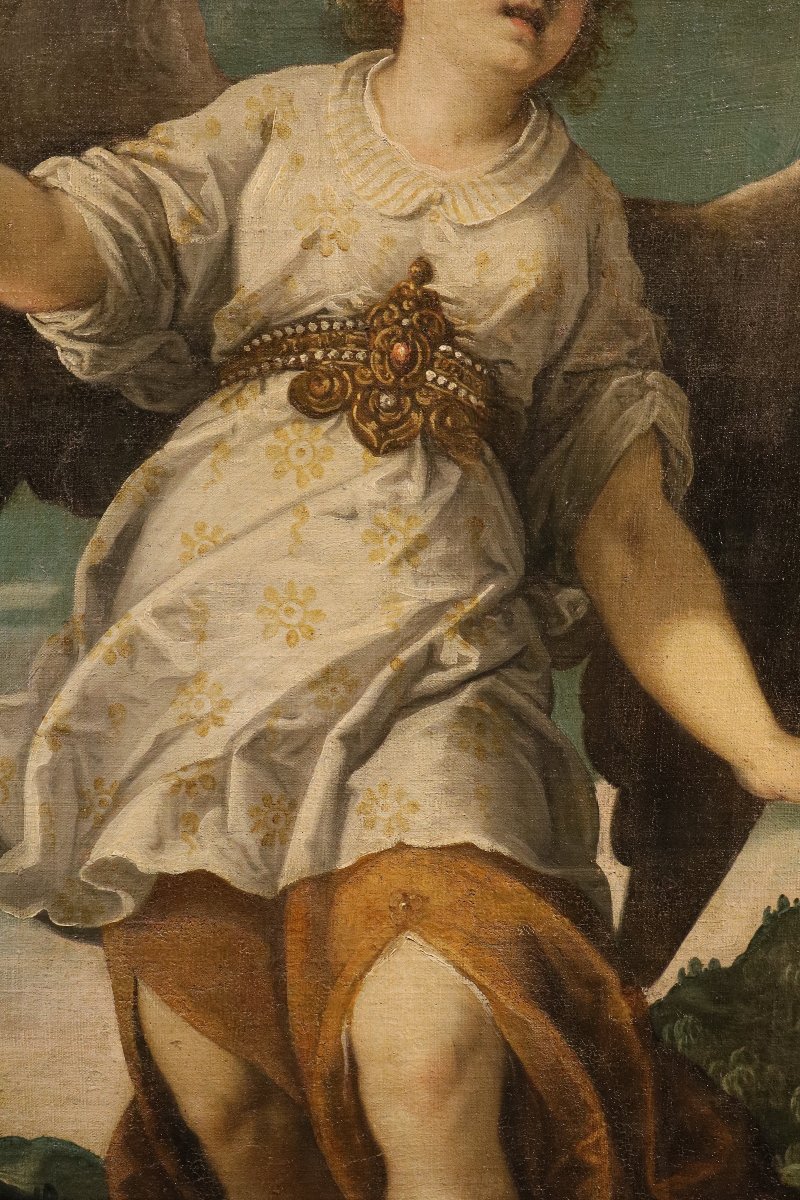
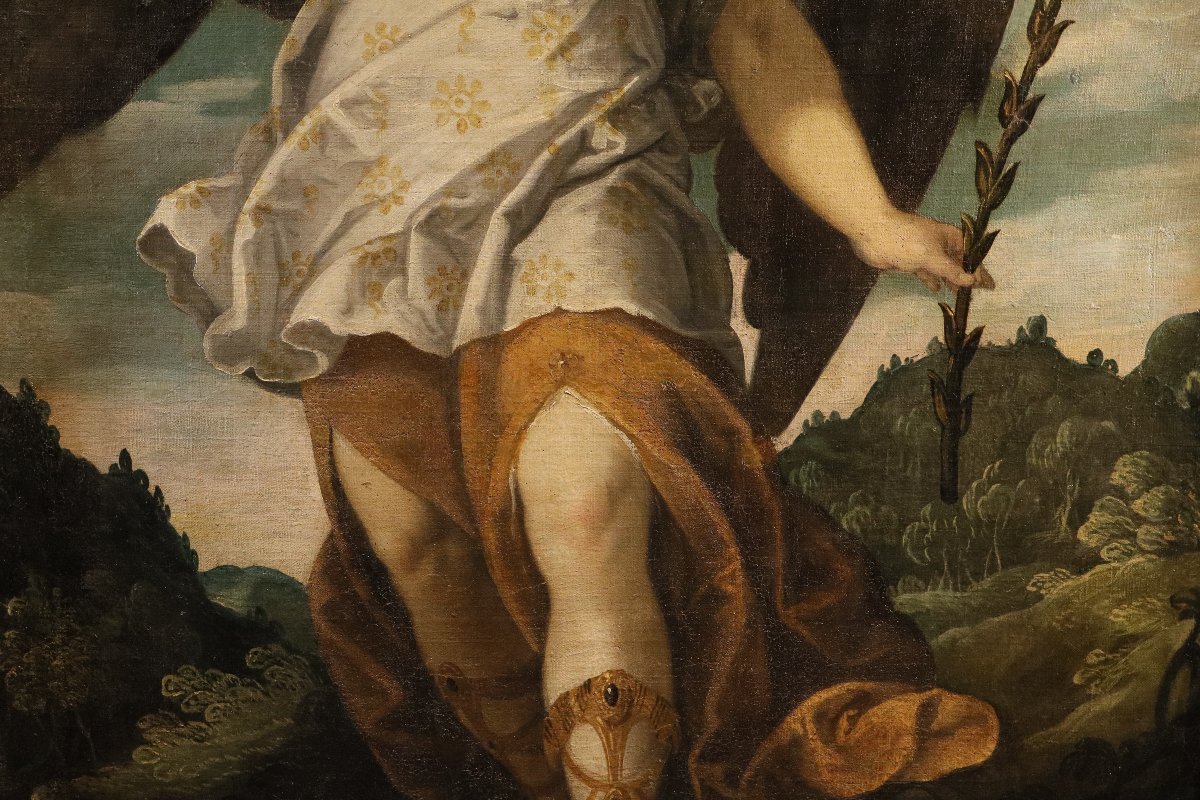
The Angel takes the form of a young man of rare beauty, with delicate features, clad in a light-colored, draped tunic with gilded details on the chest and elaborate leggings encircling his calves, reflecting the late-Renaissance and Andalusian Baroque painting style inspired by Titian’s models
The entire work is marked by an intense classicism, where a balanced composition directs the viewer’s attention to his angelic face.
Based on these characteristics, we can attribute the work to the painter Bartolomé Román (Montoro, c. 1587 – Madrid, 1647), an important Spanish painter of the early Baroque period, famous for his mastery of religious subjects and his monumental cycles of archangels; he worked primarily in Madrid and was deeply influenced by the Counter-Reformation.
He was one of the most brilliant disciples of the Tuscan master Vincenzo Carducci, from whom he absorbed a taste for balanced compositions and imposing figures, but he also honed his skills through close contact with Diego Velázquez, whose naturalistic influence is evident in several of his mature works.
His main contribution to art history lies in the development of pictorial cycles dedicated to the Seven Archangels and the Guardian Angels, from which this painting is clearly derived, both in terms of compositional and stylistic choices.
During the 17th century, devotion to these heavenly figures experienced a strong revival in Spain, and the painter established a successful iconography in which angels were depicted full-length, wearing richly detailed garments and holding specific attributes (flowers, censers, or swords), often set against a naturalistic backdrop.
In his works, we see an artistic language built on a beautiful fusion between the principles of Italian Renaissance art theory and those emerging from its practice in Madrid during the Baroque era.
His creations served as an absolute benchmark, a paradigm of a painterly style that is balanced yet surprising in every aspect (drawing, color, composition, iconography), making him an undisputed leading figure in the Spanish art scene.
ADDITIONAL INFORMATION:
The painting comes with a charming antique frame and is accompanied by a certificate of authenticity and a descriptive iconographic sheet.
We handle and arrange the shipping of purchased works, both within Italy and internationally, using professional and insured carriers.
If you would like to view this or other works in person, we would be delighted to welcome you to our new gallery in Riva del Garda, located at Viale Giuseppe Canella 18. We look forward to seeing you!
Please contact us for any information or to schedule a visit; we’ll be happy to assist you.
Follow us on:
https://www.instagram.com/galleriacastelbarco/?hl=it
https://www.facebook.com/galleriacastelbarco/
Workshop of Vincenzo Carducci, known in Spain as Vicente Carducho (Florence, 1576 – Madrid, 1638)
Attributed to Bartolomé Román (Montoro, c. 1587 – Madrid, 1647)
Oil on canvas
110 x 80 cm.
Antique gilded wooden frame, 138 x 108 cm.
Notes: On the reverse of the canvas is the inscription: ’Magna refert mariae supremi iussa tonanti, Gabiel aligeri gloria prima chori’ (“The angel Gabriel, first glory of the winged choir, conveys to Mary the solemn commands of the thundering God”), which refers to the moment of the Annunciation.
The work on offer, characterized by a refined sacredness, depicts the Archangel Gabriel in full figure as he is about to deliver the supreme announcement to the Virgin, offering her the traditional white lilies, a symbol of purity and chastity: it is a splendid subject, executed with great stylistic quality, likely commissioned for private use and therefore particularly pleasing and easy to display.
The Angel takes the form of a young man of rare beauty, with delicate features, clad in a light-colored, draped tunic with gilded details on the chest and elaborate leggings encircling his calves, reflecting the late-Renaissance and Andalusian Baroque painting style inspired by Titian’s models
The entire work is marked by an intense classicism, where a balanced composition directs the viewer’s attention to his angelic face.
Based on these characteristics, we can attribute the work to the painter Bartolomé Román (Montoro, c. 1587 – Madrid, 1647), an important Spanish painter of the early Baroque period, famous for his mastery of religious subjects and his monumental cycles of archangels; he worked primarily in Madrid and was deeply influenced by the Counter-Reformation.
He was one of the most brilliant disciples of the Tuscan master Vincenzo Carducci, from whom he absorbed a taste for balanced compositions and imposing figures, but he also honed his skills through close contact with Diego Velázquez, whose naturalistic influence is evident in several of his mature works.
His main contribution to art history lies in the development of pictorial cycles dedicated to the Seven Archangels and the Guardian Angels, from which this painting is clearly derived, both in terms of compositional and stylistic choices.
During the 17th century, devotion to these heavenly figures experienced a strong revival in Spain, and the painter established a successful iconography in which angels were depicted full-length, wearing richly detailed garments and holding specific attributes (flowers, censers, or swords), often set against a naturalistic backdrop.
In his works, we see an artistic language built on a beautiful fusion between the principles of Italian Renaissance art theory and those emerging from its practice in Madrid during the Baroque era.
His creations served as an absolute benchmark, a paradigm of a painterly style that is balanced yet surprising in every aspect (drawing, color, composition, iconography), making him an undisputed leading figure in the Spanish art scene.
ADDITIONAL INFORMATION:
The painting comes with a charming antique frame and is accompanied by a certificate of authenticity and a descriptive iconographic sheet.
We handle and arrange the shipping of purchased works, both within Italy and internationally, using professional and insured carriers.
If you would like to view this or other works in person, we would be delighted to welcome you to our new gallery in Riva del Garda, located at Viale Giuseppe Canella 18. We look forward to seeing you!
Please contact us for any information or to schedule a visit; we’ll be happy to assist you.
Follow us on:
https://www.instagram.com/galleriacastelbarco/?hl=it
https://www.facebook.com/galleriacastelbarco/
11 000 €
Period: 17th century
Style: Louis 15th - Transition
Condition: Excellent condition
Material: Oil painting
Width: encadré 108 cm.
Height: encadré 138 cm.
Reference (ID): 1785323
Availability: In stock
Print