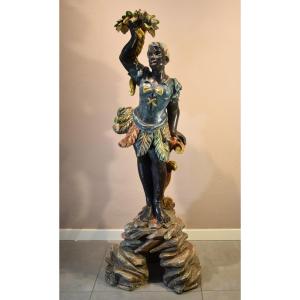


Antique Sculpture By Moretto Of Venice, Venice, Early 18th Century
Artist: Venise, Début Du 18e Siècle
Antique sculpture of a Venetian Moro by Moretto
Venetian sculptor, early 18th century
Carved, lacquered, and gilded wood
Height 155 cm.
Good overall condition, with old repainting
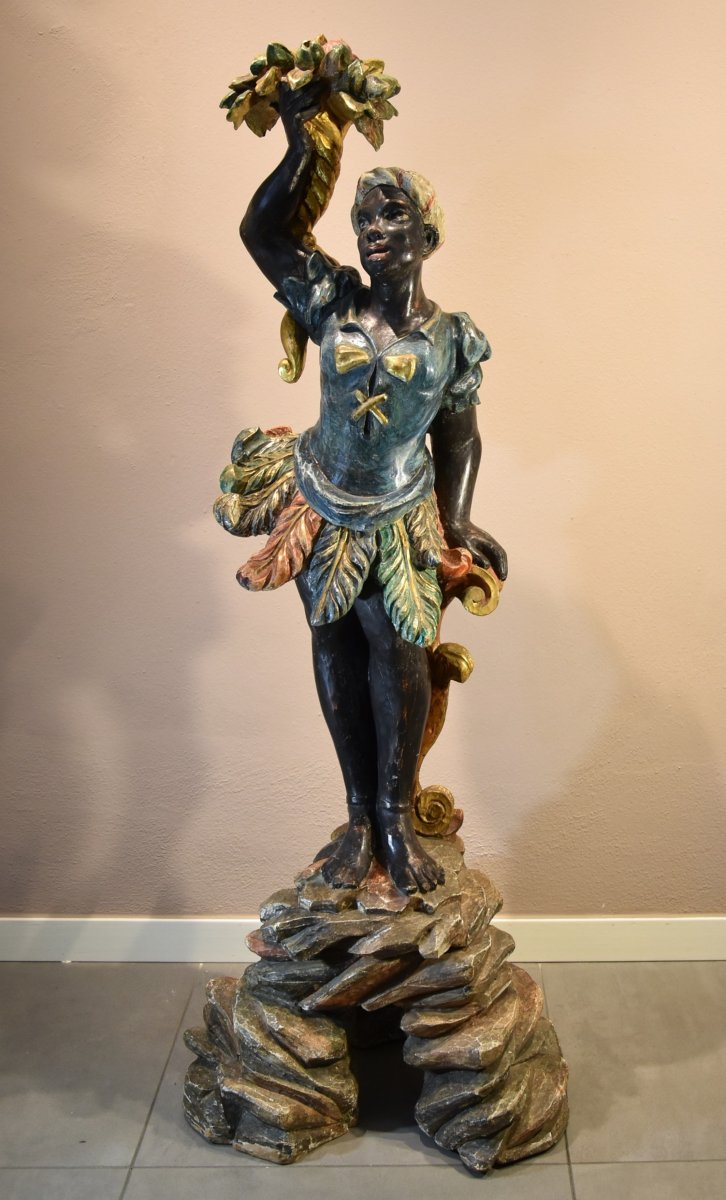
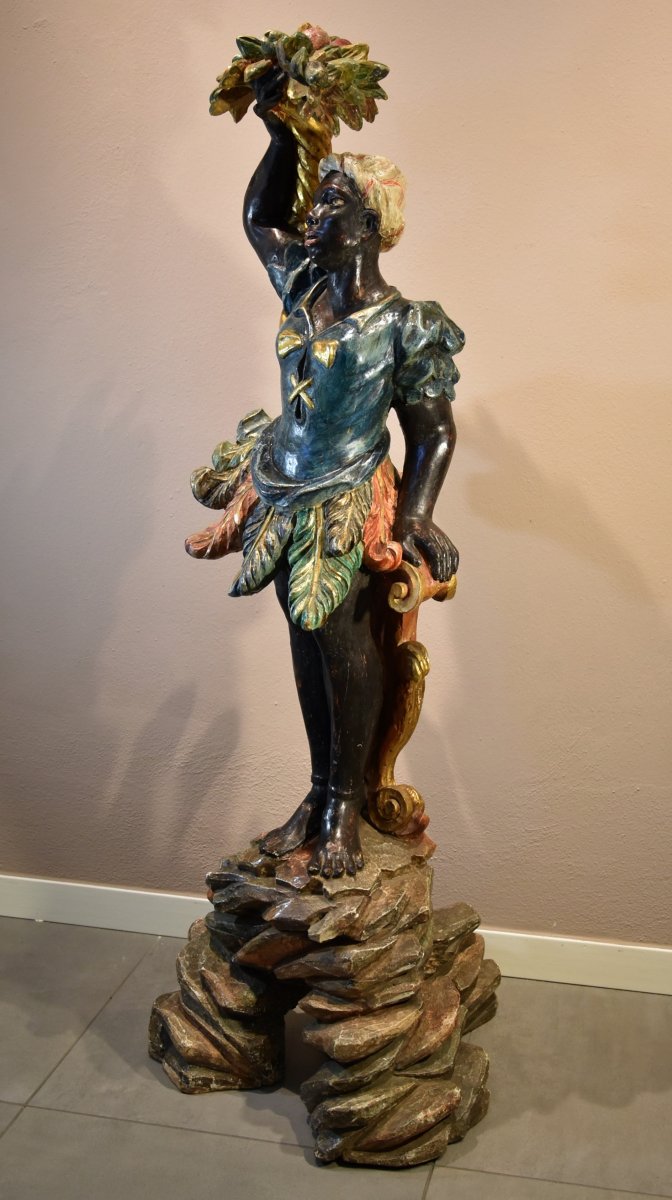
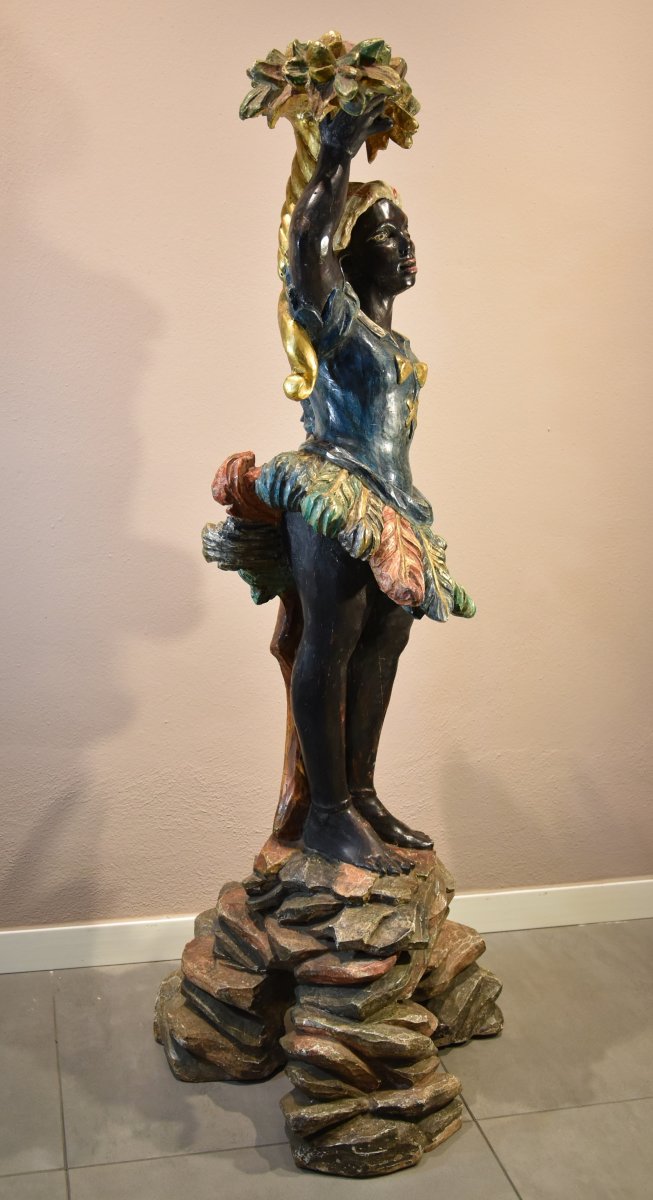
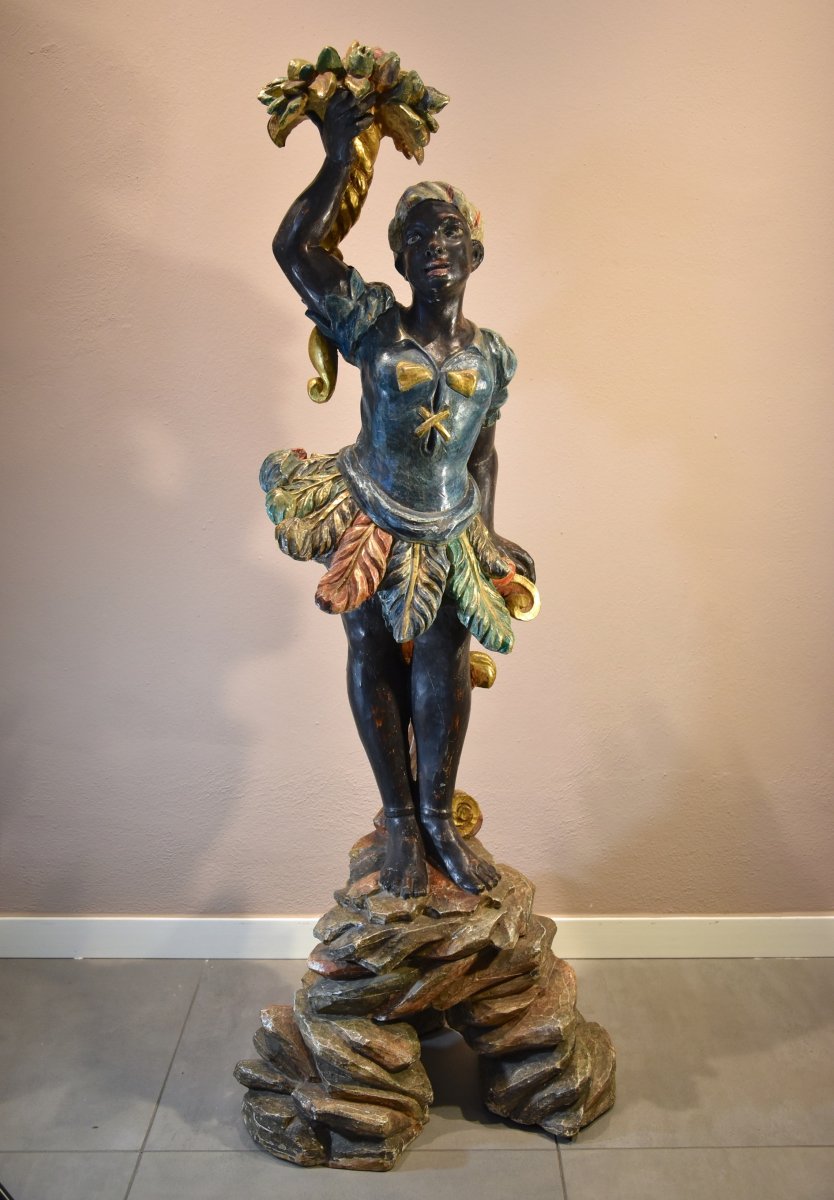
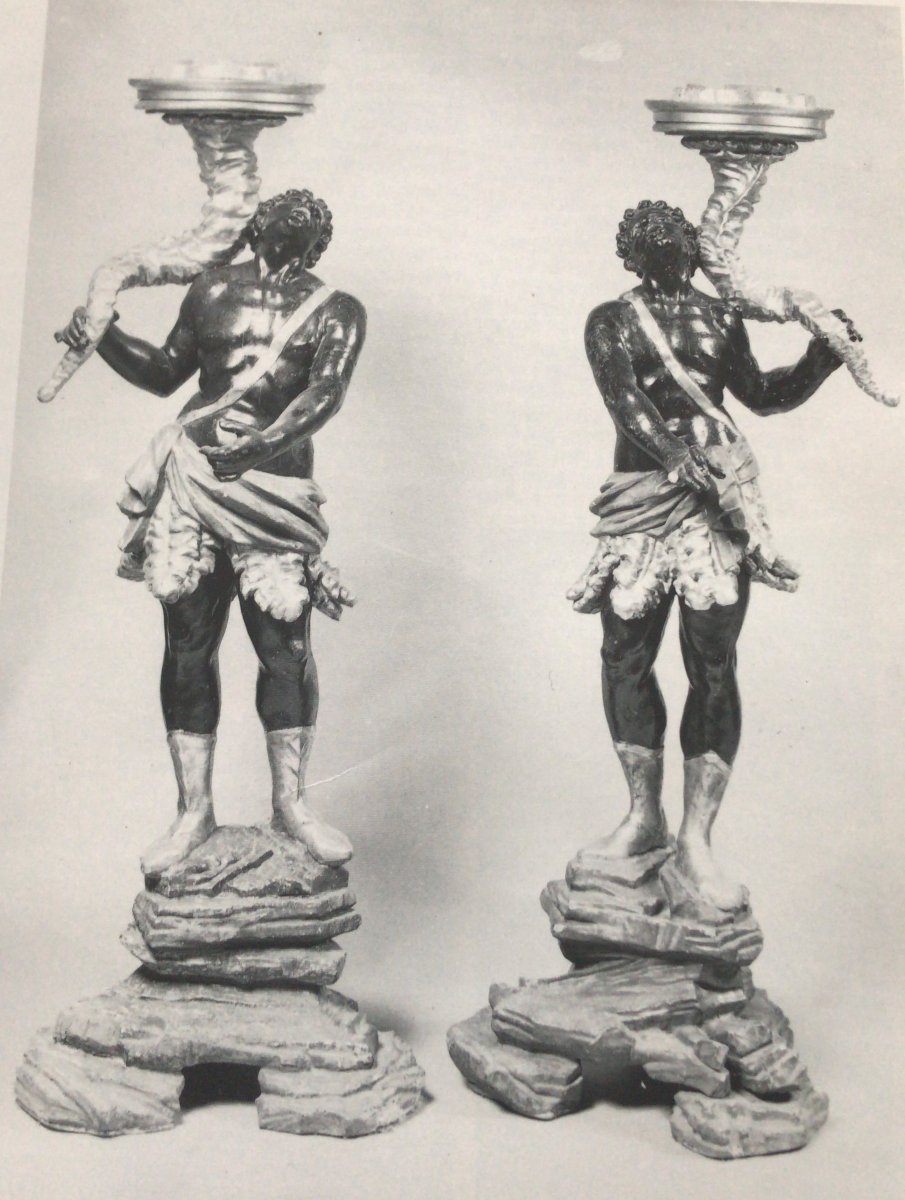
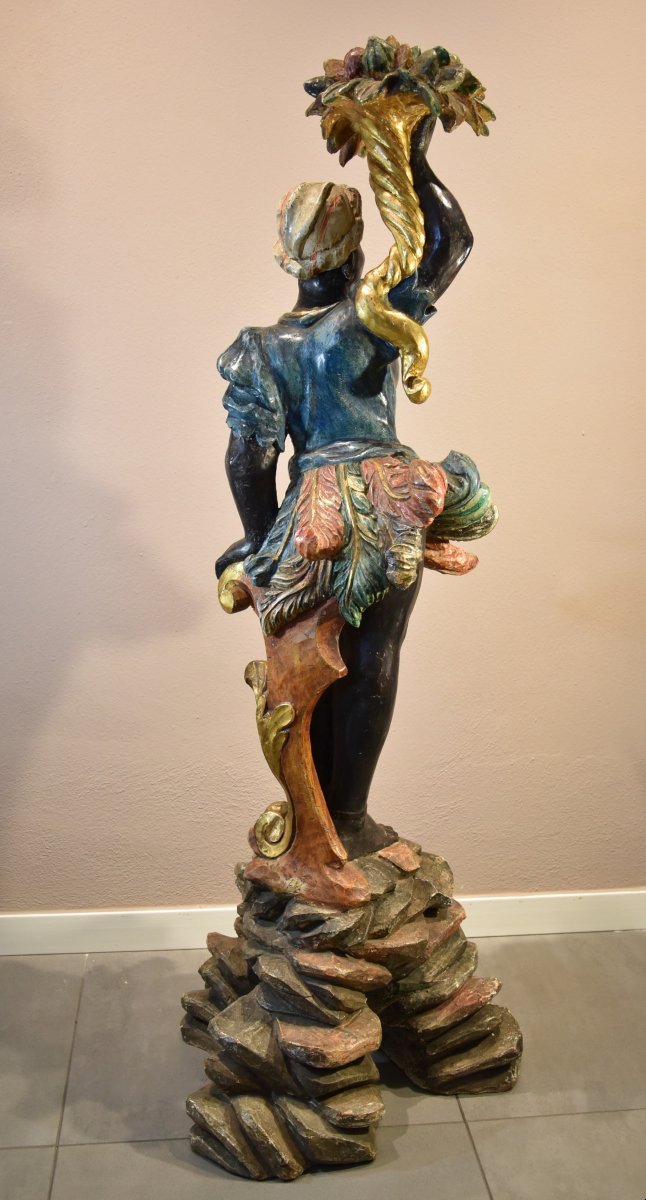
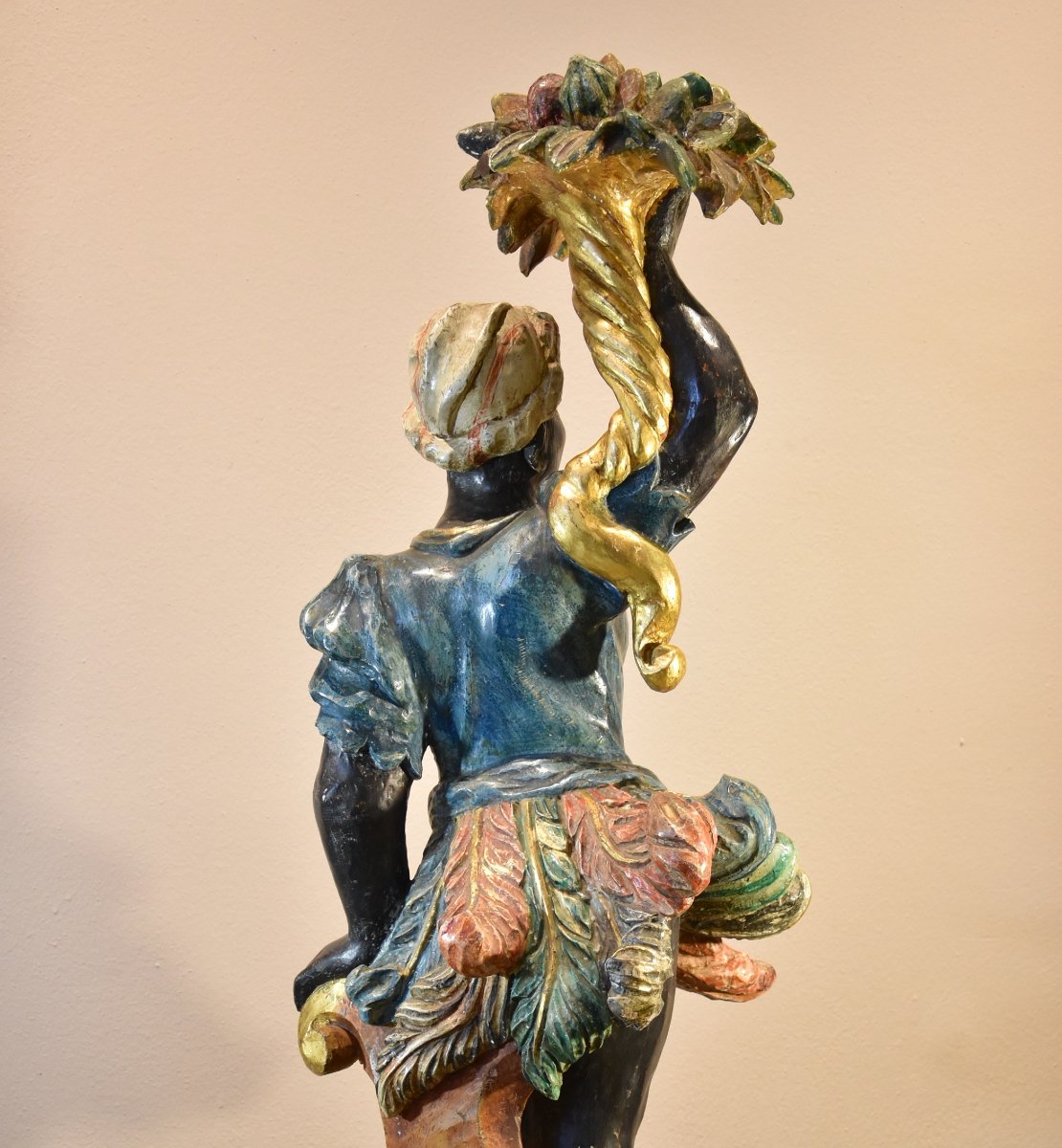
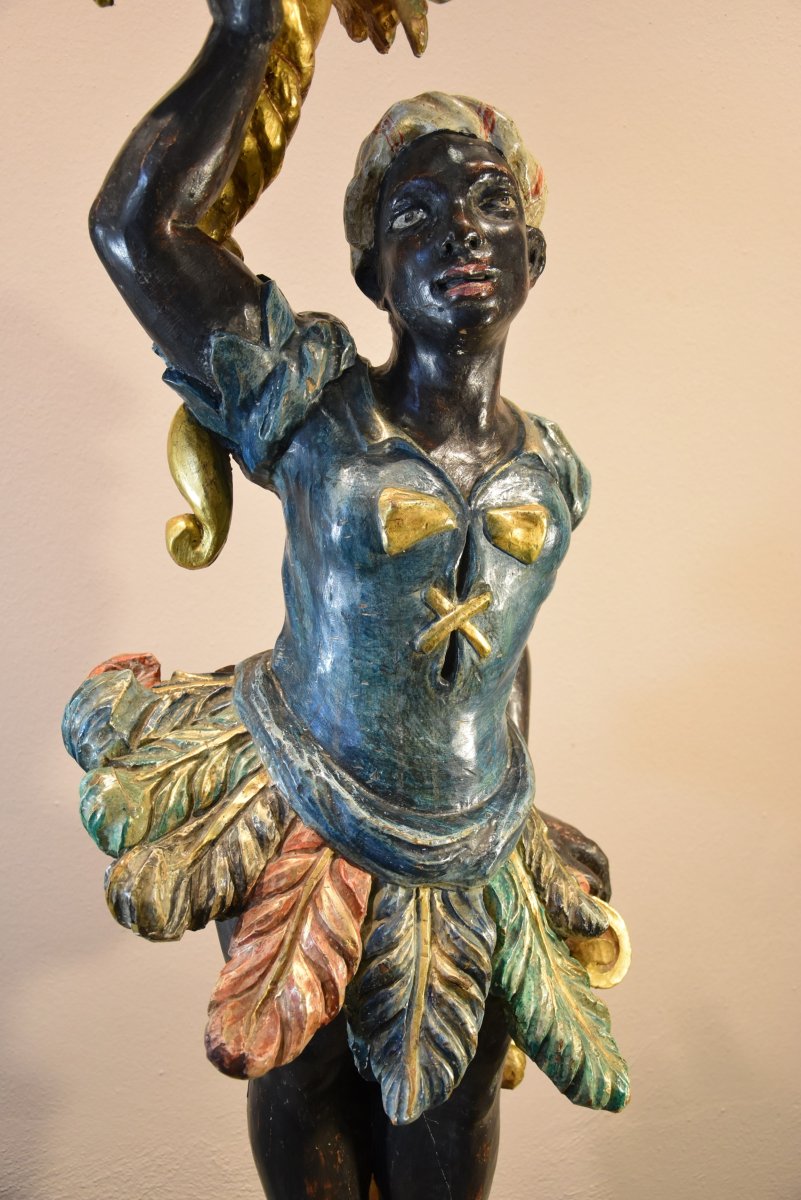
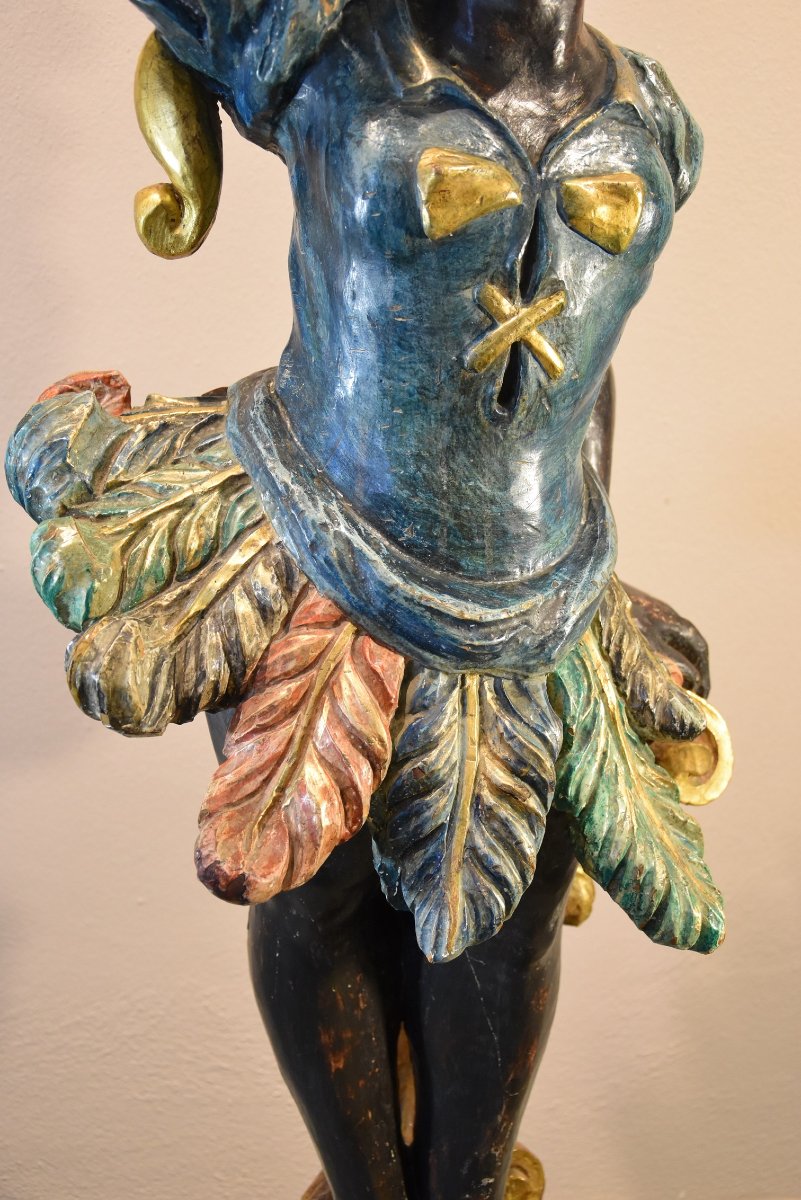
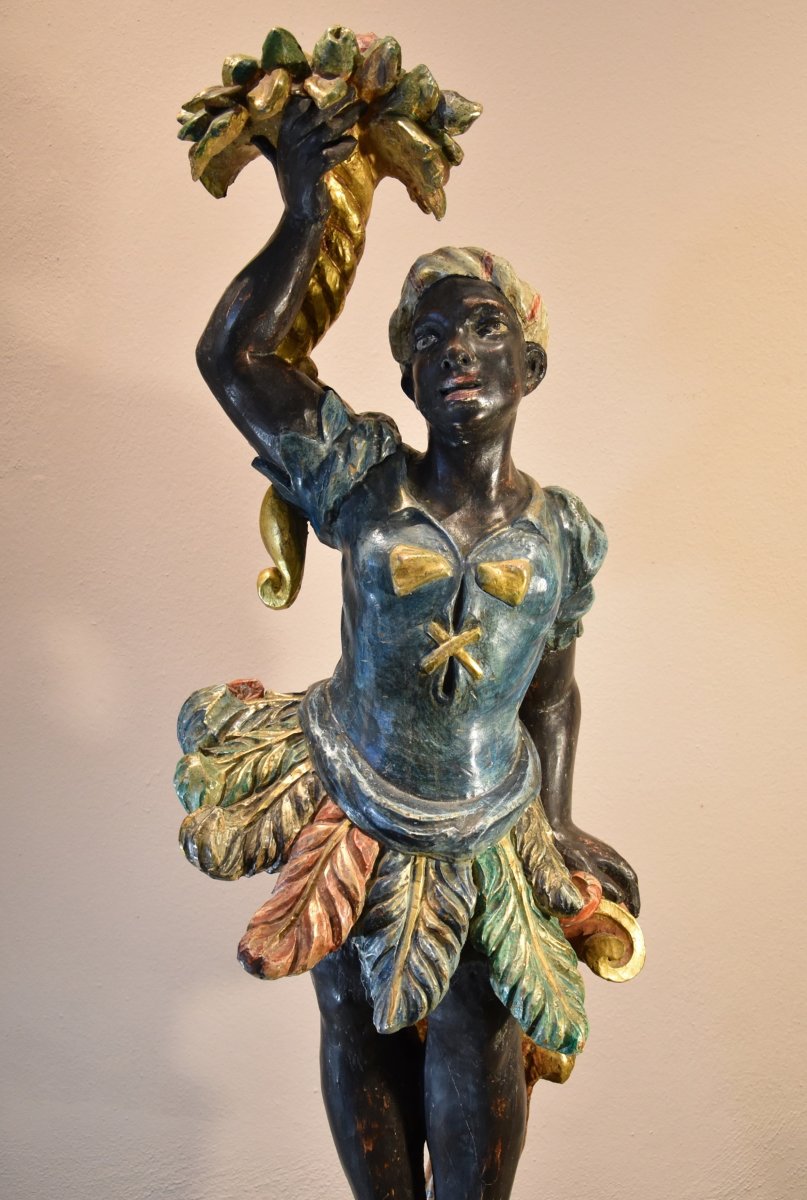
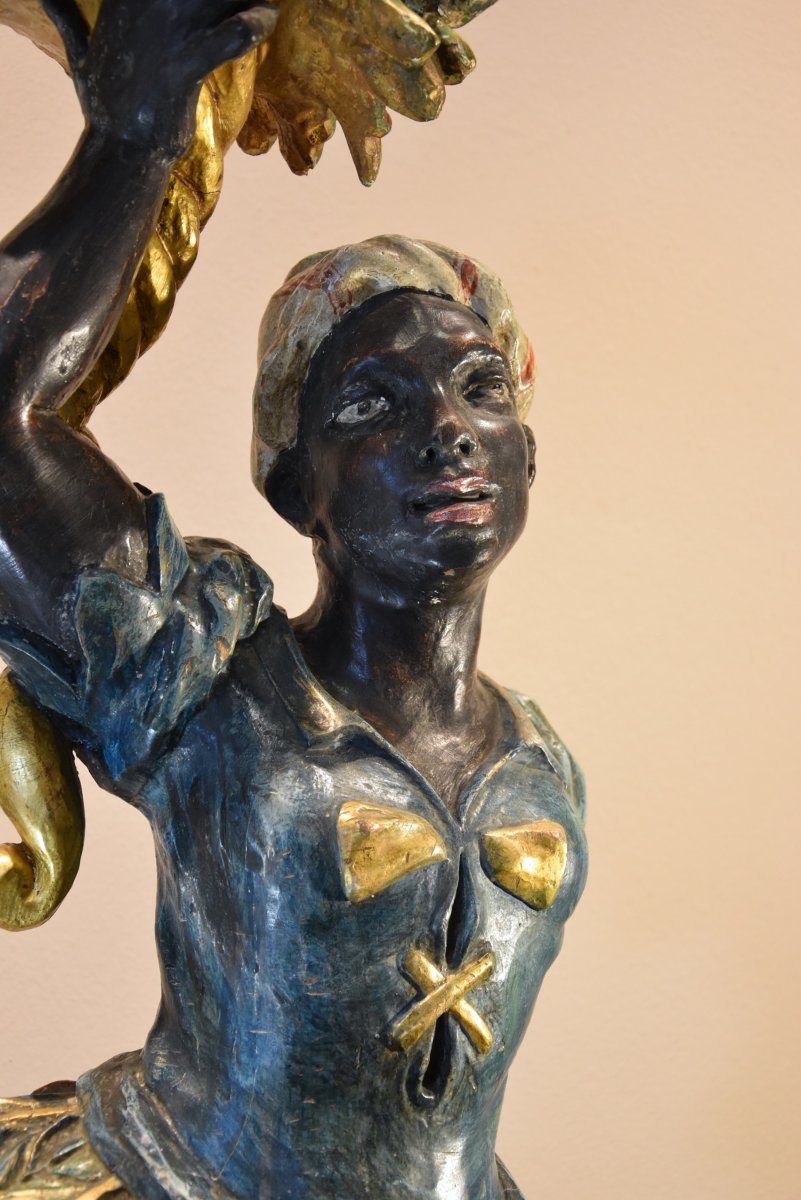
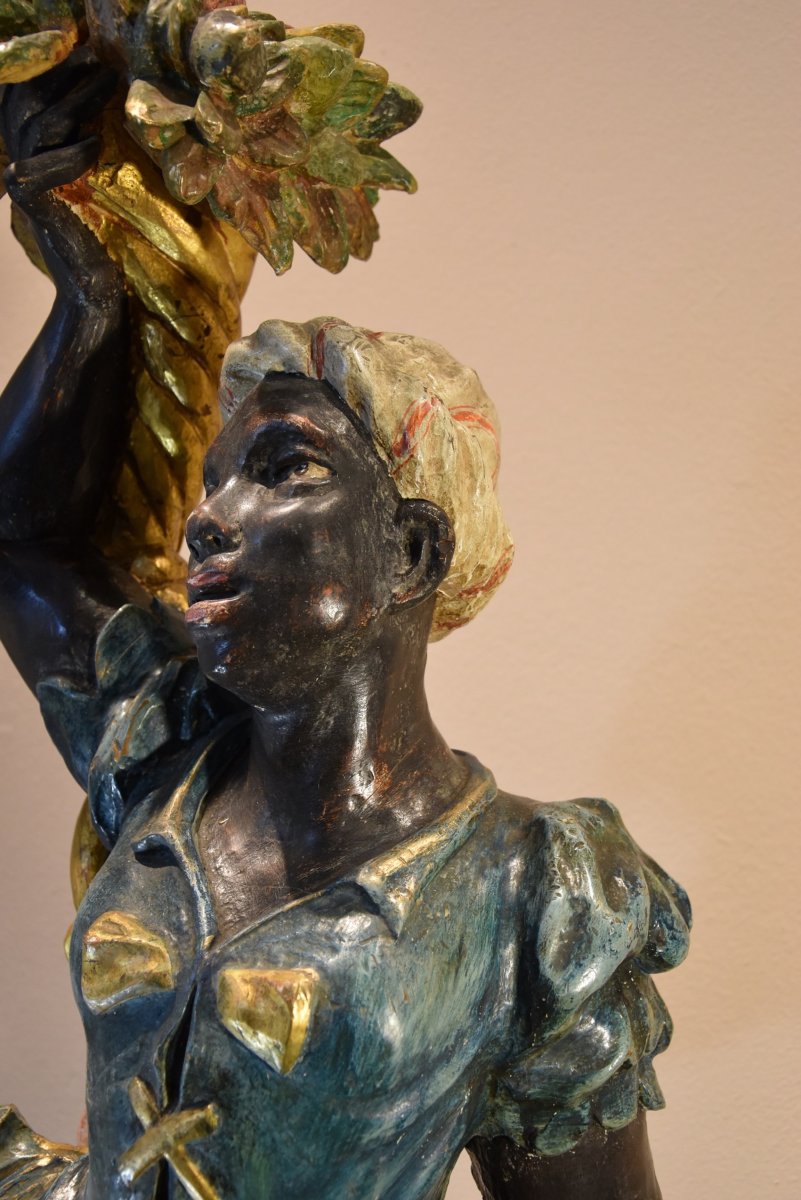
Original wooden sculpture depicting a Venetian Moor, wearing a cobalt-blue livery, a striped white turban, and a feathered kilt tied at the waist, standing on a rock-shaped base. An emblem of the Venetian sculptural tradition, depicted in a standing position while holding a flowered cornucopia in his hands.
The work is an original from the early 1700s, not one of the copies—however pleasing—that were made in a later period. Entirely original and in excellent condition, it features some repainting. It is made entirely of carved wood finished in black lacquer, with gilded details, and finished in polychrome.
Judging by the style of the carving, this sculpture evokes works created in Florence, particularly by Jacopo Maria Foggini, which are documented as early as the second half of the 17th century. Typical of Venetian secular furnishings between the 17th and 18th centuries, such statues in fact spread to other regions as well.
We know that in Florence, several were created in the 1680s by the woodcarver Jacopo Maria Foggini and by Baldassarre Permoser. The style, still reminiscent of Foggini’s work in certain carving details on the base and the bud, dates these examples to the first half of the 18th century.
The history of the “Moro” figures, which has its roots in the Middle Ages in the tradition of jewelry, extended into the 18th century—during the height of the wealthy maritime republic’s power—to all other fields of art, especially sculpture and jewelry.
As an emblem of the Serenissima’s power and a symbol of prosperity, wealth, and might—designed to celebrate the Republic’s supremacy over the Mediterranean Sea—the figure of the Moro thus became the principal decorative element in the ballrooms of the Serenissima’s opulent salons.
We handle and arrange the transport of purchased works, both within Italy and internationally, using professional and insured carriers.
It is also possible to view the painting at our gallery in Riva del Garda by appointment; we would be delighted to welcome you and show you our collection of works.
If the artwork is purchased by non-Italian clients, an export permit will be required, which takes approximately 10–20 days to process; our gallery will handle the entire process until the permit is obtained. All costs associated with this process are included.
Please feel free to contact us, with no obligation, for any further information.
Follow us on:
https://www.instagram.com/galleriacastelbarco/?hl=it
https://www.facebook.com/galleriacastelbarco/
Venetian sculptor, early 18th century
Carved, lacquered, and gilded wood
Height 155 cm.
Good overall condition, with old repainting
Original wooden sculpture depicting a Venetian Moor, wearing a cobalt-blue livery, a striped white turban, and a feathered kilt tied at the waist, standing on a rock-shaped base. An emblem of the Venetian sculptural tradition, depicted in a standing position while holding a flowered cornucopia in his hands.
The work is an original from the early 1700s, not one of the copies—however pleasing—that were made in a later period. Entirely original and in excellent condition, it features some repainting. It is made entirely of carved wood finished in black lacquer, with gilded details, and finished in polychrome.
Judging by the style of the carving, this sculpture evokes works created in Florence, particularly by Jacopo Maria Foggini, which are documented as early as the second half of the 17th century. Typical of Venetian secular furnishings between the 17th and 18th centuries, such statues in fact spread to other regions as well.
We know that in Florence, several were created in the 1680s by the woodcarver Jacopo Maria Foggini and by Baldassarre Permoser. The style, still reminiscent of Foggini’s work in certain carving details on the base and the bud, dates these examples to the first half of the 18th century.
The history of the “Moro” figures, which has its roots in the Middle Ages in the tradition of jewelry, extended into the 18th century—during the height of the wealthy maritime republic’s power—to all other fields of art, especially sculpture and jewelry.
As an emblem of the Serenissima’s power and a symbol of prosperity, wealth, and might—designed to celebrate the Republic’s supremacy over the Mediterranean Sea—the figure of the Moro thus became the principal decorative element in the ballrooms of the Serenissima’s opulent salons.
We handle and arrange the transport of purchased works, both within Italy and internationally, using professional and insured carriers.
It is also possible to view the painting at our gallery in Riva del Garda by appointment; we would be delighted to welcome you and show you our collection of works.
If the artwork is purchased by non-Italian clients, an export permit will be required, which takes approximately 10–20 days to process; our gallery will handle the entire process until the permit is obtained. All costs associated with this process are included.
Please feel free to contact us, with no obligation, for any further information.
Follow us on:
https://www.instagram.com/galleriacastelbarco/?hl=it
https://www.facebook.com/galleriacastelbarco/
7 800 €
Period: 18th century
Style: Louis 16th, Directory
Condition: Excellent condition
Material: Gilted wood
Height: cm 155
Reference (ID): 1809320
Availability: In stock
Print