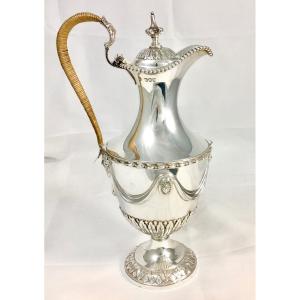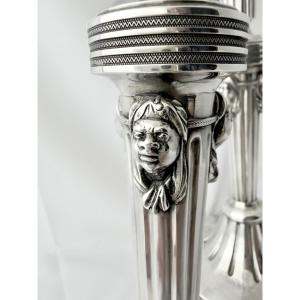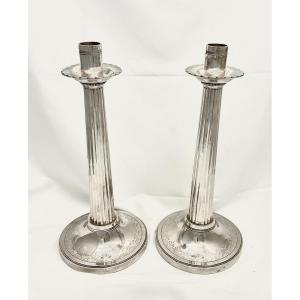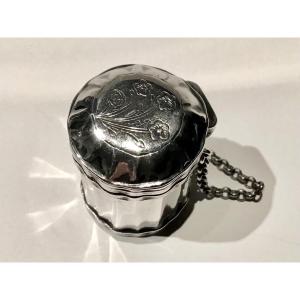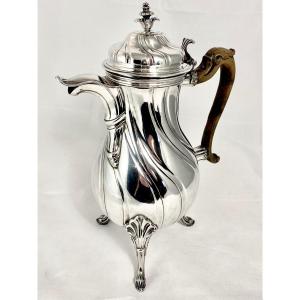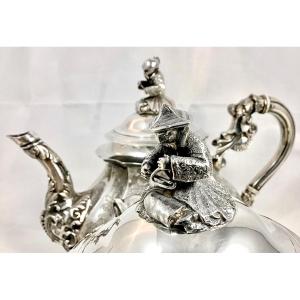


Brussels, 1830–40, Josse Allard, Solid Silver, Restoration Empire-style Teapot
Solid Silver Teapot by Josse Allard
Brussels, circa 1830–1840
Important solid silver teapot made in Brussels by Philippe Joseph Allard, known as Josse Allard (1805–1877), one of the most interesting figures in Brussels silversmithing during the first half of the 19th century.
Weight: 730 g
Height: 18 cm
Length: 23 cm
Width: 15 cm
Solid silver, second standard: 834/1000
A Teapot from the Restoration Period
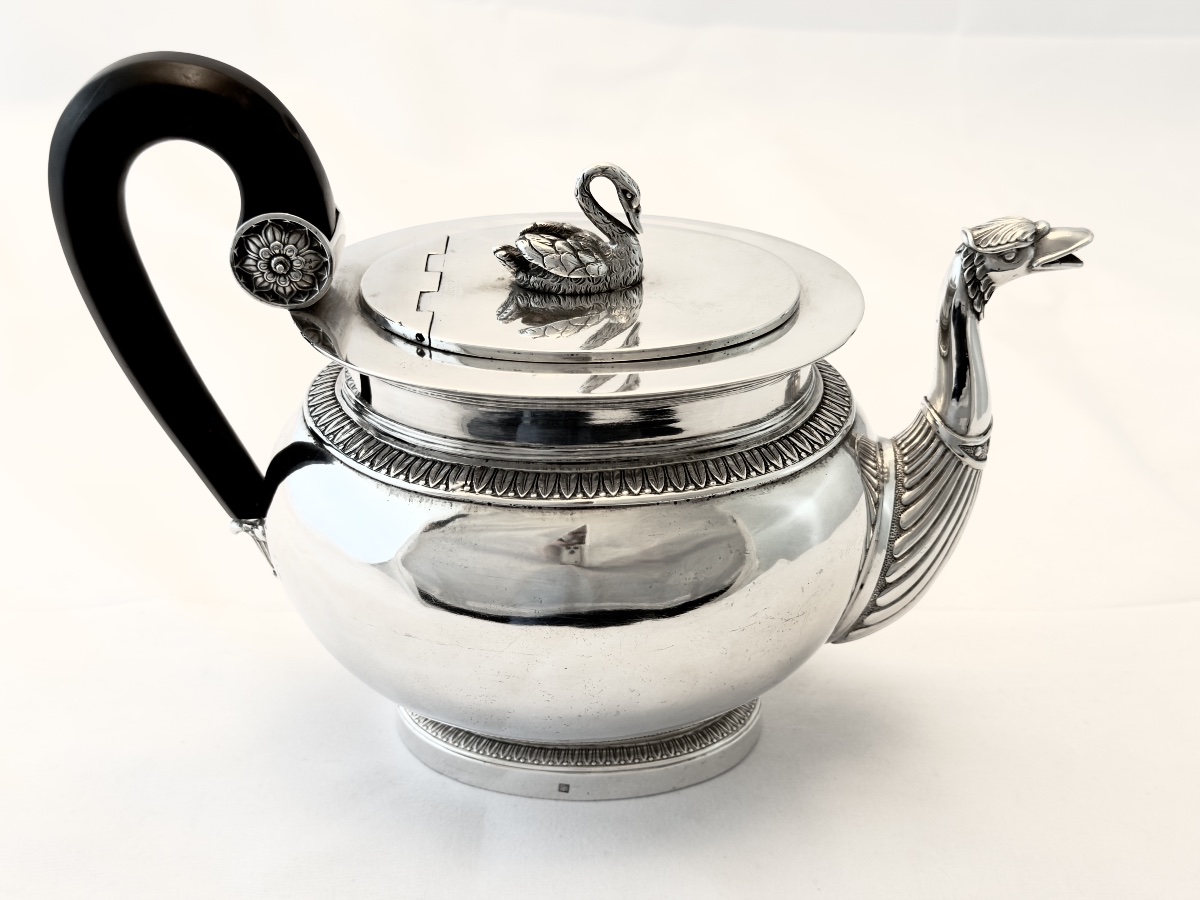
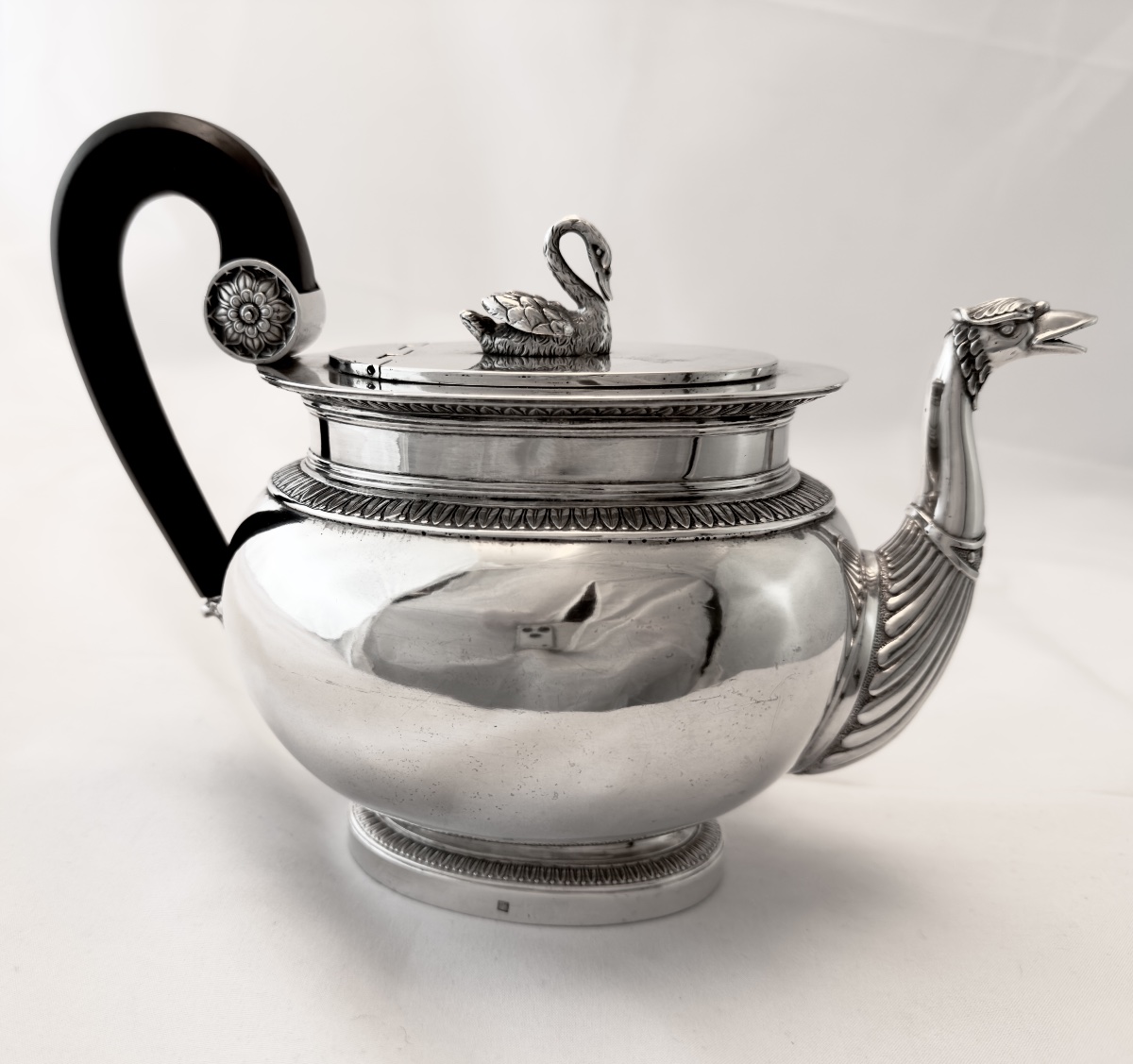
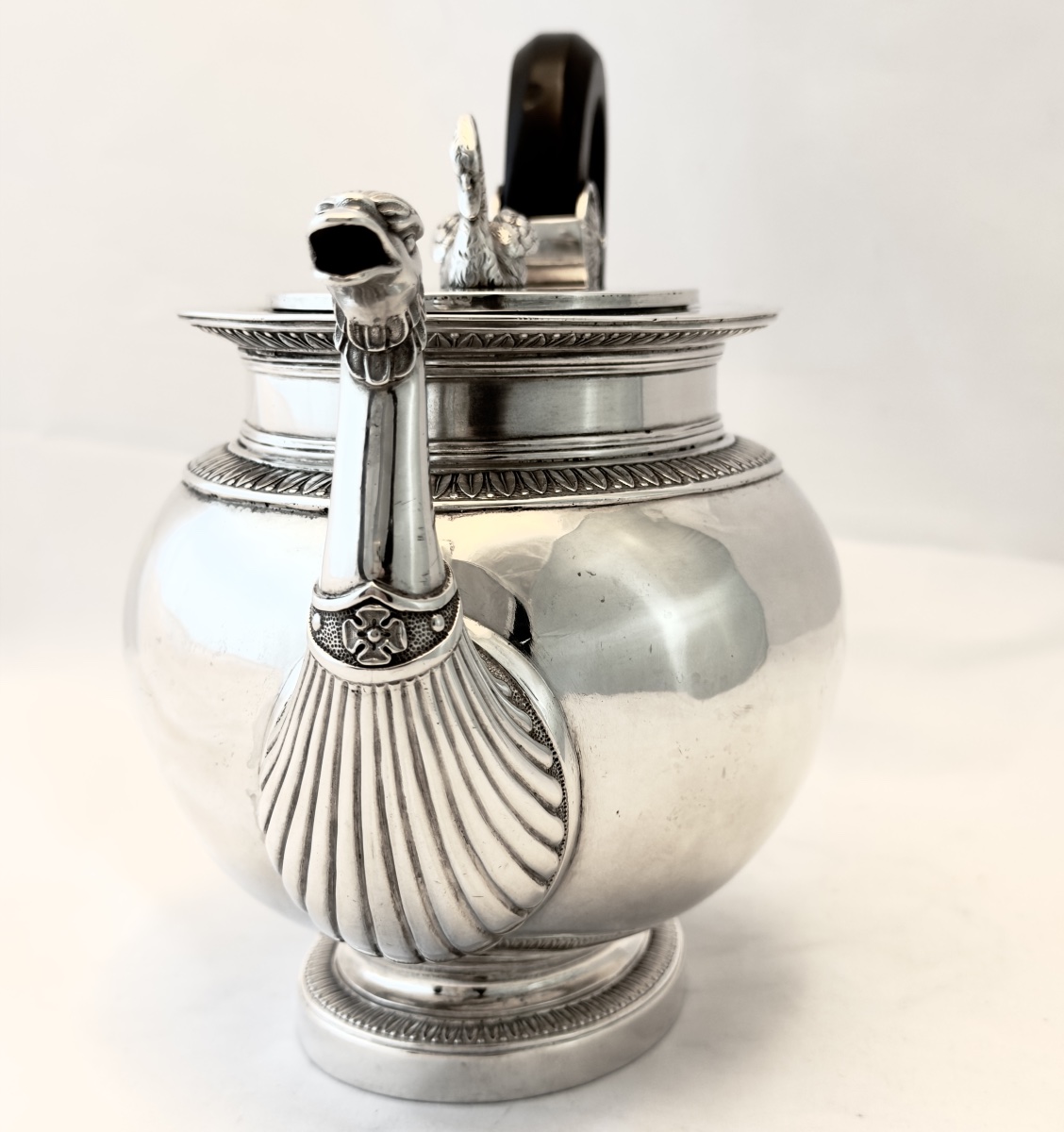
In both its form and decoration, this teapot is particularly representative of the taste of the Restoration period, still deeply influenced by Neoclassicism and the Empire style.
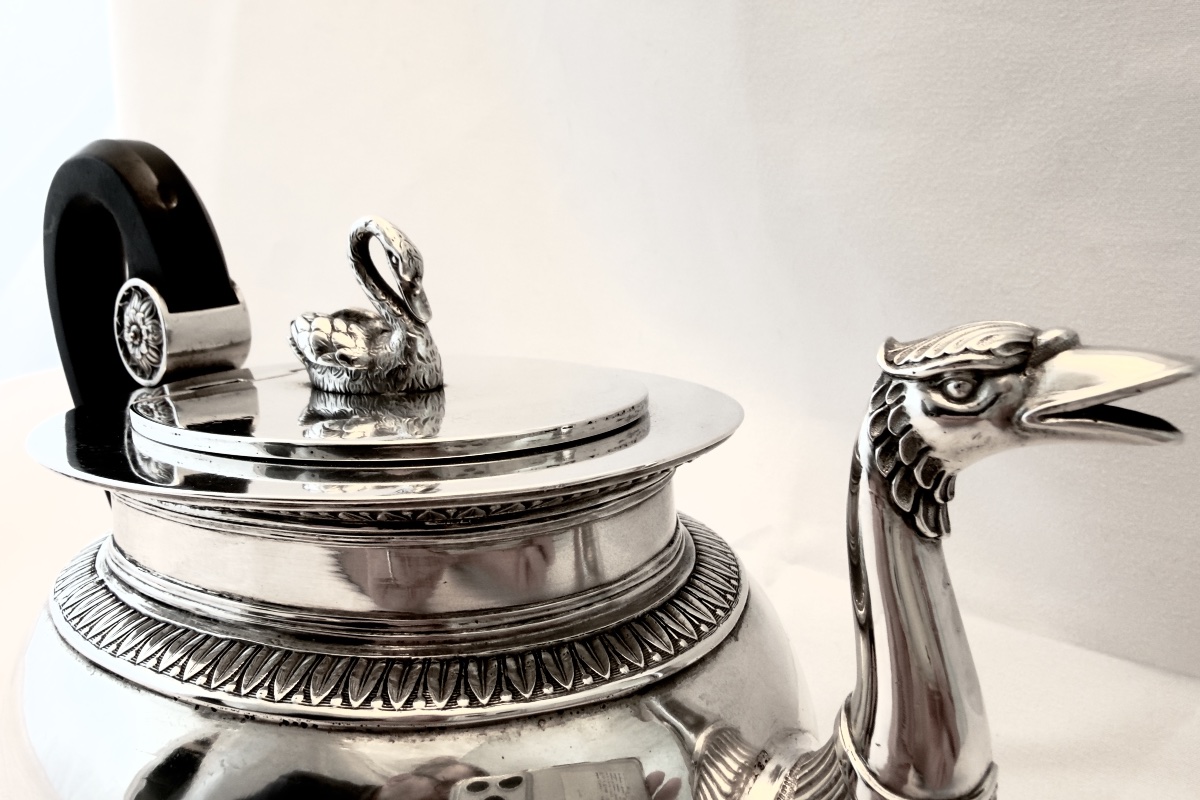
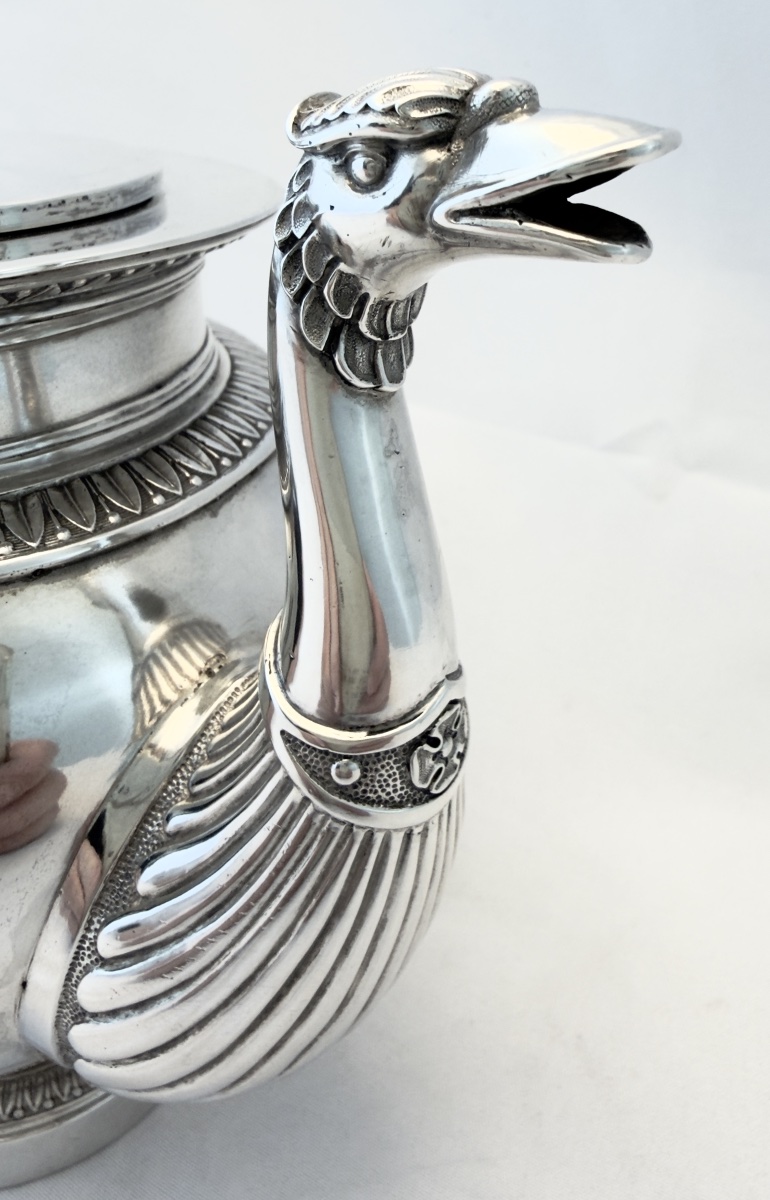
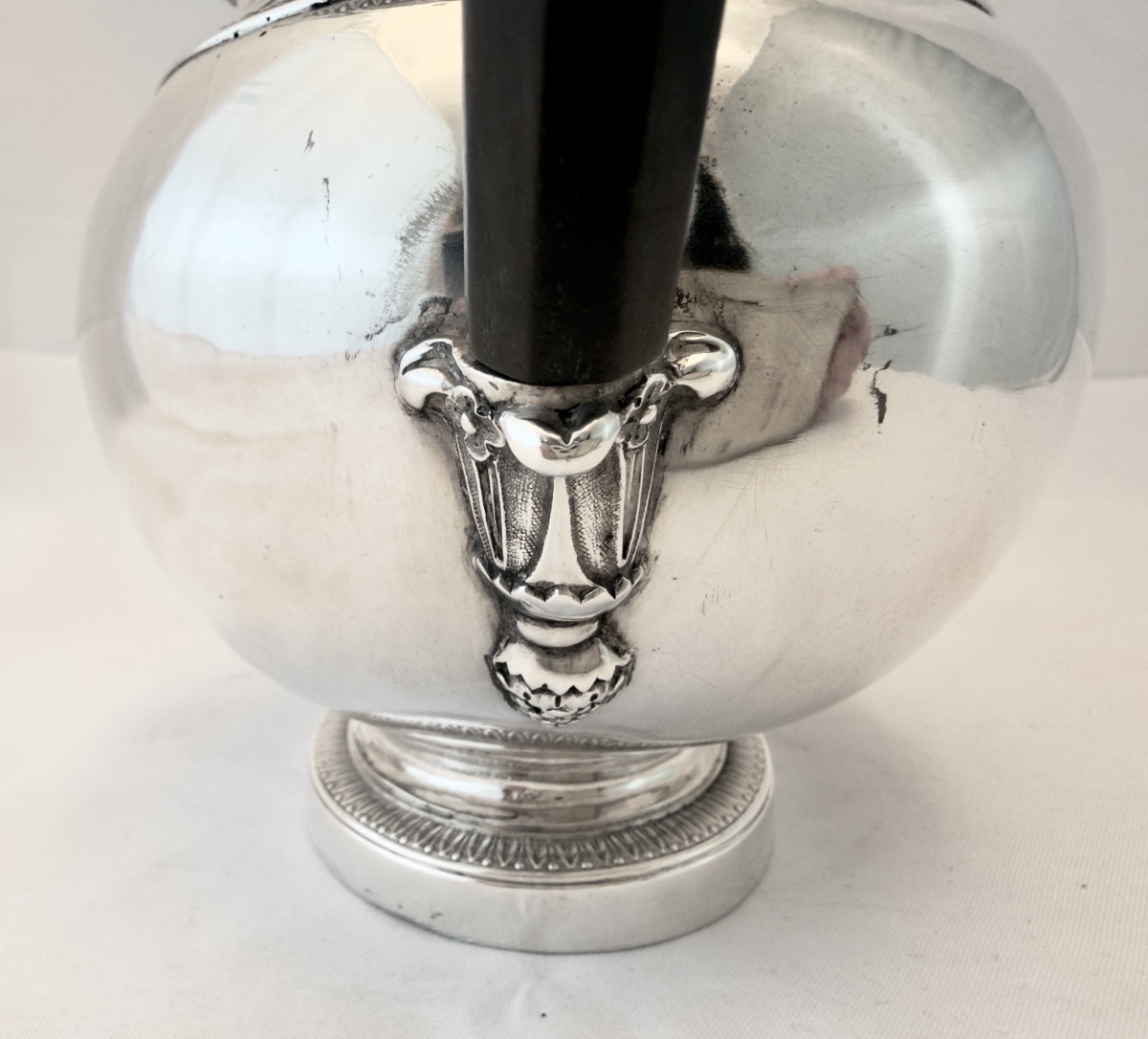
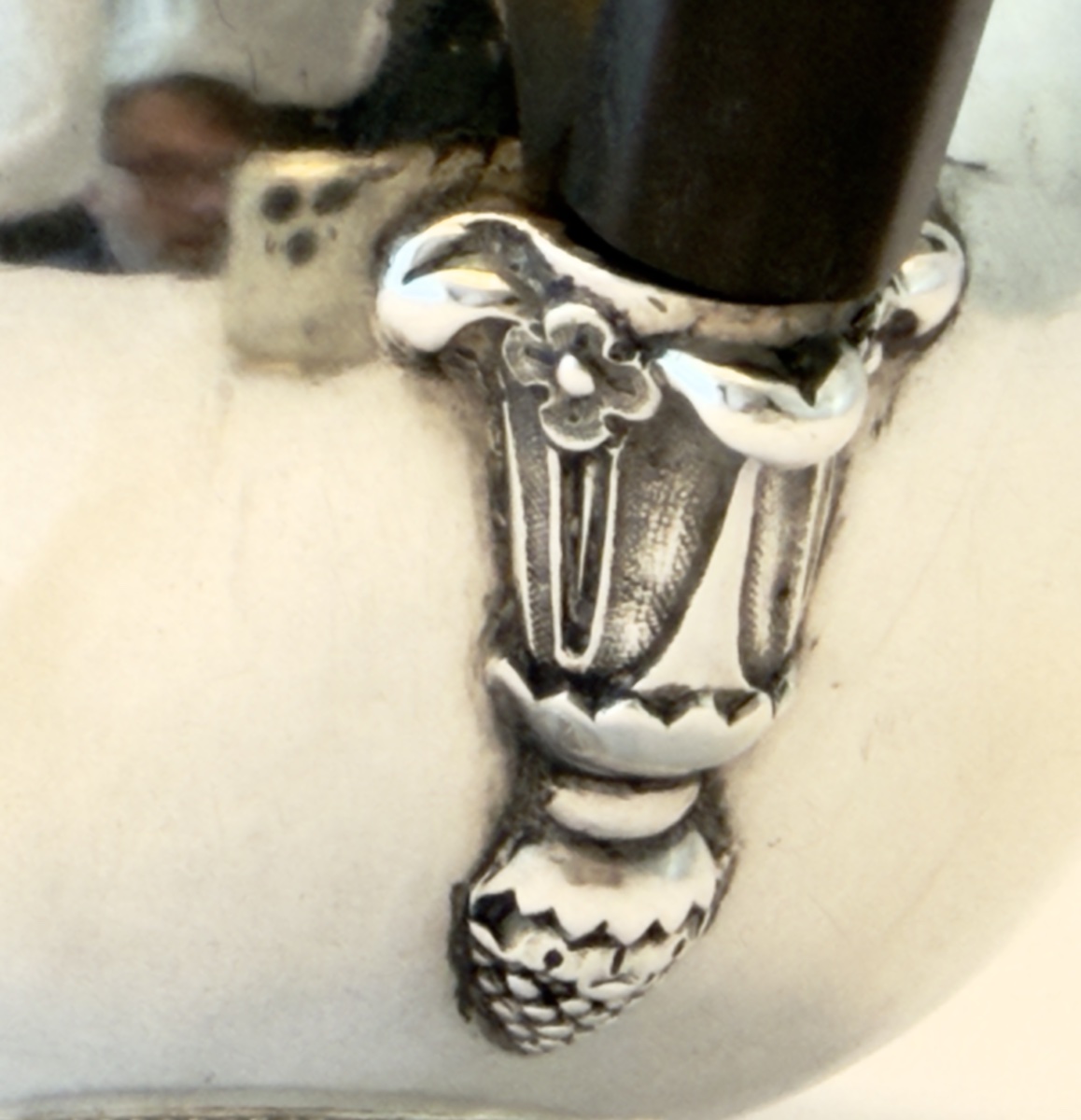
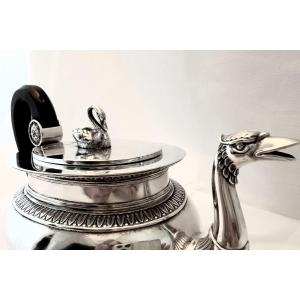
The generously proportioned yet deliberately restrained body contrasts with the decorative elements concentrated on its functional parts. The long spout terminates in a remarkable eagle’s head, an emblematic motif of the Empire repertoire. The handle mounts, its overall form, and the water-leaf borders decorating various parts of the teapot likewise continue the Neoclassical vocabulary developed in the late 18th century and widely adopted during the Empire period.
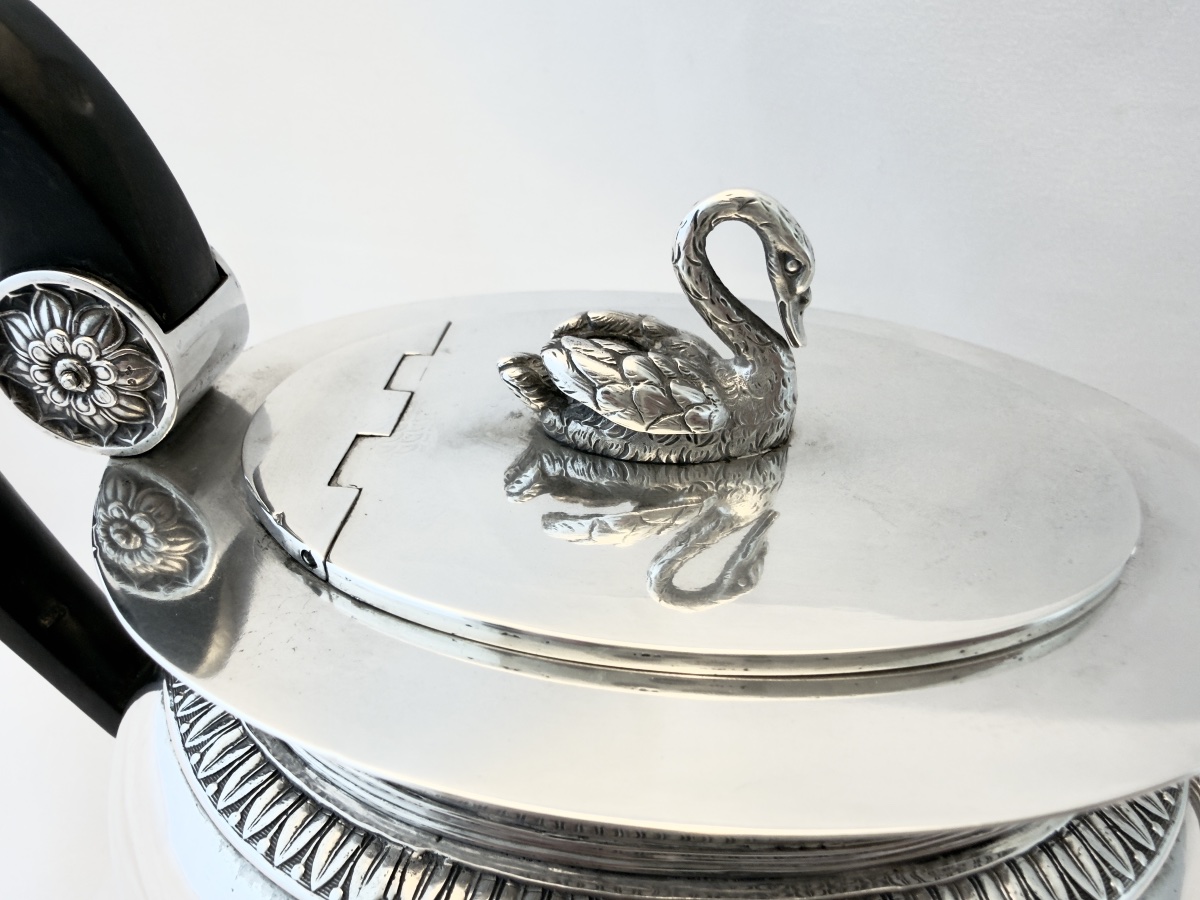
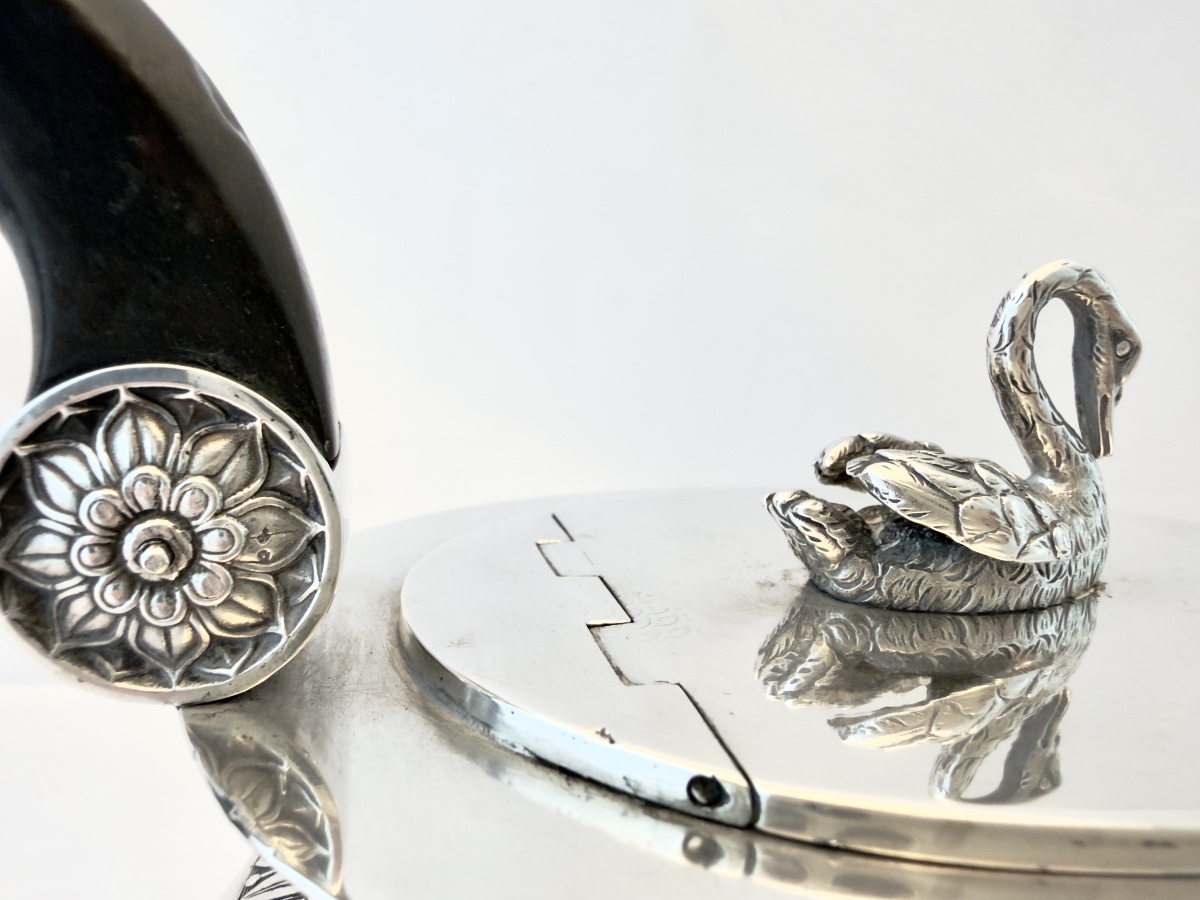
The lid is surmounted by an elegant swan with outstretched wings, appearing almost to float upon the surface of the silver. The swan, a recurring motif in the decorative arts of the first third of the 19th century, introduces a lighter and more poetic note into the otherwise rigorous composition.
One particular technical detail deserves special attention: the hinge of the lid is virtually invisible, incorporated into the thickness and profile of the lid rather than externally applied. This discreet construction, technically more demanding than a conventional applied hinge, testifies to the high standard of workmanship achieved in Allard’s workshop.
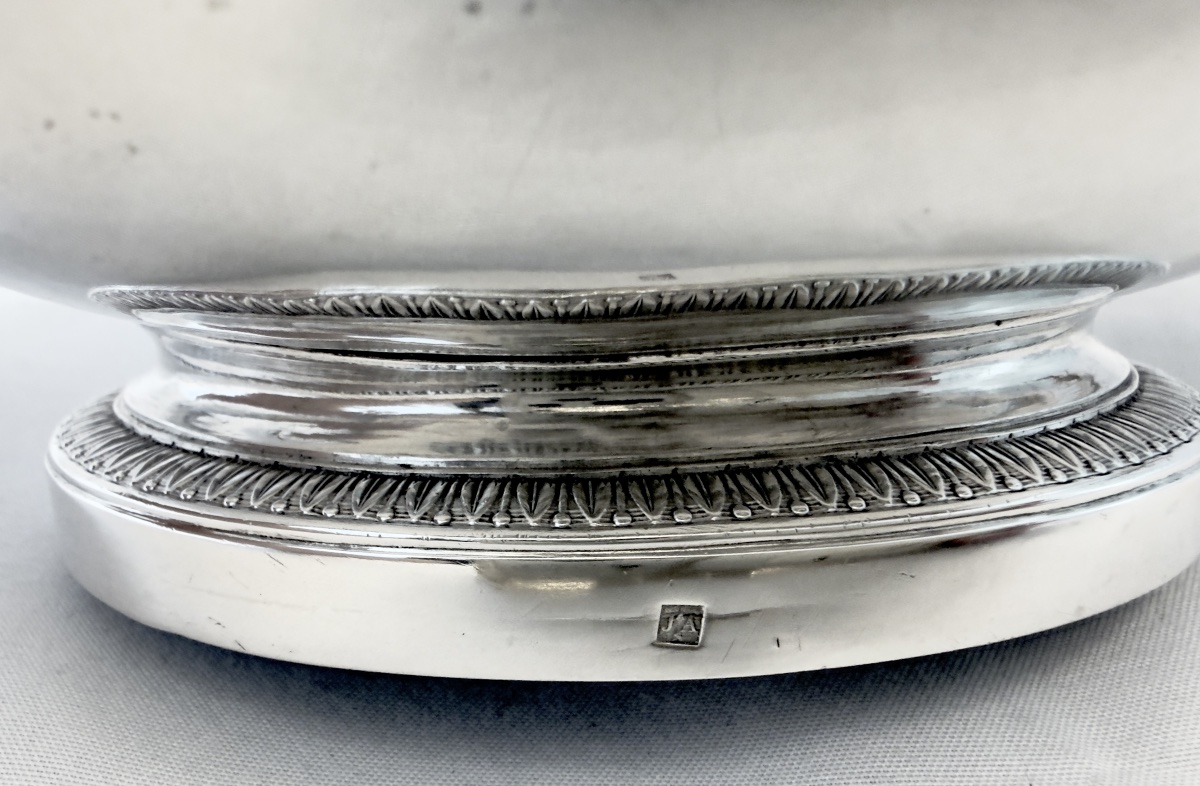
The teapot is very clearly struck with Josse Allard’s maker’s mark, the initials J and A separated by an arrow, together with the official Belgian assay marks for second-standard silver, 834/1000.
Josse Allard: From Silversmithing to the Royal Mint
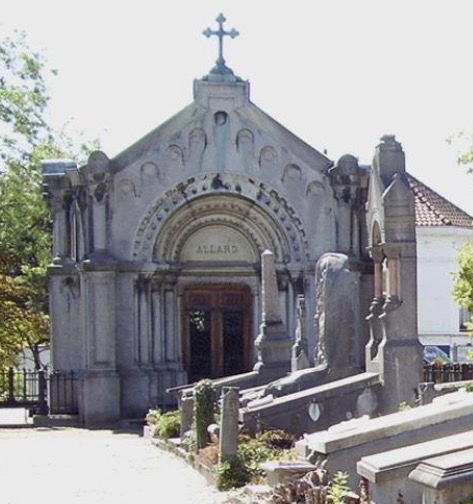
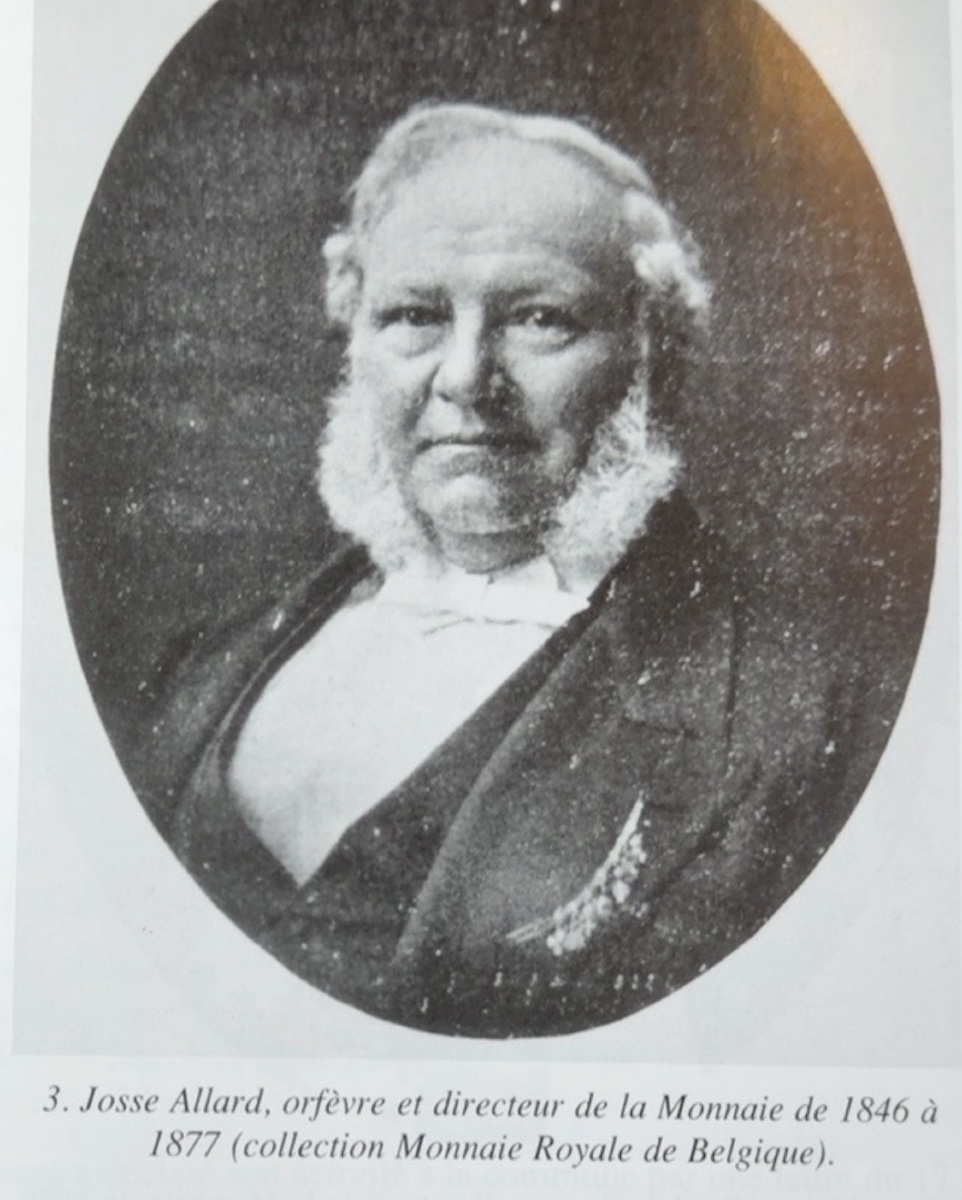
Philippe Joseph Allard, generally known as Josse Allard, was born in Brussels on 5 February 1805. He officially declared his profession as a silversmith on 20 July 1827 and was entered in the provincial register on 1 August of that year. His workshop was then established at 28 rue des Fripiers, Brussels.
His maker’s mark, consisting of the letters J and A separated by an arrow, was first registered in 1827; a new punch bearing the same devices was registered in 1832.
The growth of his business was remarkable. Although his retail activity remained of moderate importance, his manufacturing business rapidly developed on an entirely different scale. By the 1840s, the patent-tax registers ranked him among the most important manufacturing silversmiths and jewellers in Brussels.
Allard also belonged to the first generation of silversmiths to work for the newly established Belgian monarchy. Werner Adriaenssens mentions him, alongside Joseph Germain Dutalis, among the Brussels silversmiths who supplied the Belgian Royal Household under King Leopold I. Pieces of silver by Allard are still preserved in the Belgian Royal Collection.
His career took a spectacular turn in 1846, when he was appointed Director of the Belgian Royal Mint. He would retain this position until his death in 1877. At the same time, Allard developed banking activities. The former silversmith thus became…
Period: 19th century
Style: Louis Philippe, Charles 10th
Condition: Perfect condition
Material: Sterling silver
Length: 23 cm
Width: 15 cm
Height: 18 cm
Reference (ID): 1812406
Availability: In stock