

Kortrijk, 1814–1818, Pair Of Candlesticks With Mamluk Heads, Solid Silver, Silversmith Desmit
Pair of Candlesticks “with Mamluk Heads”
Jacques Desmit, Kortrijk, circa 1814–1818
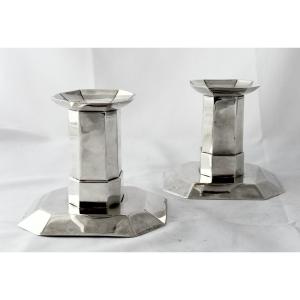
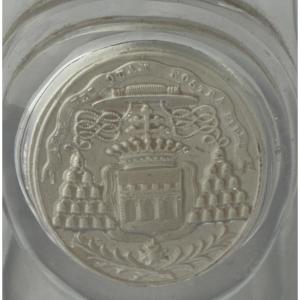
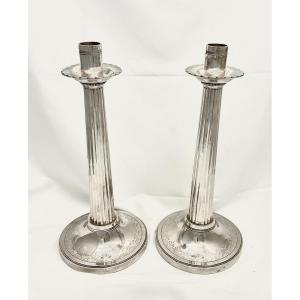
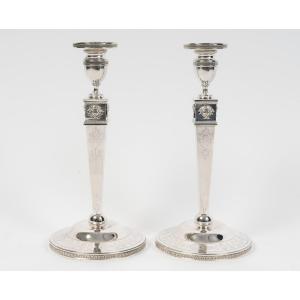
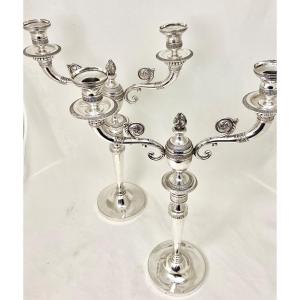
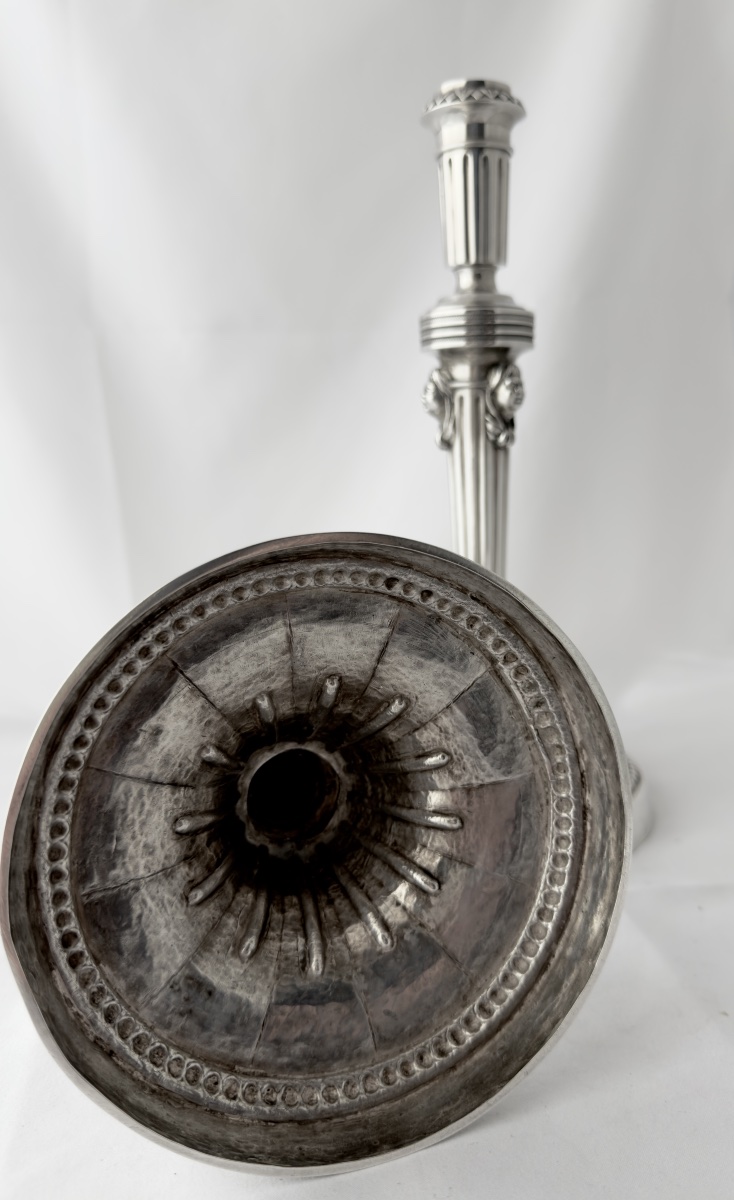
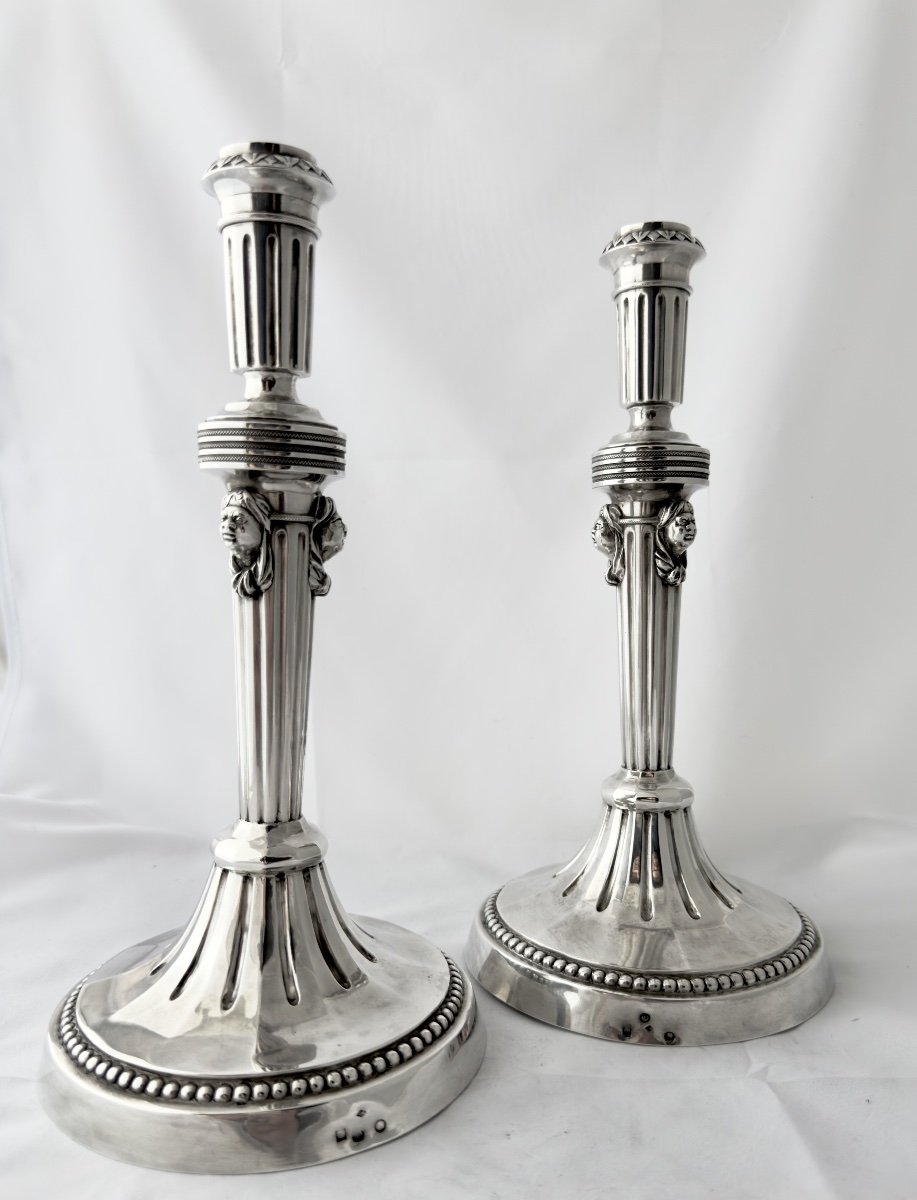
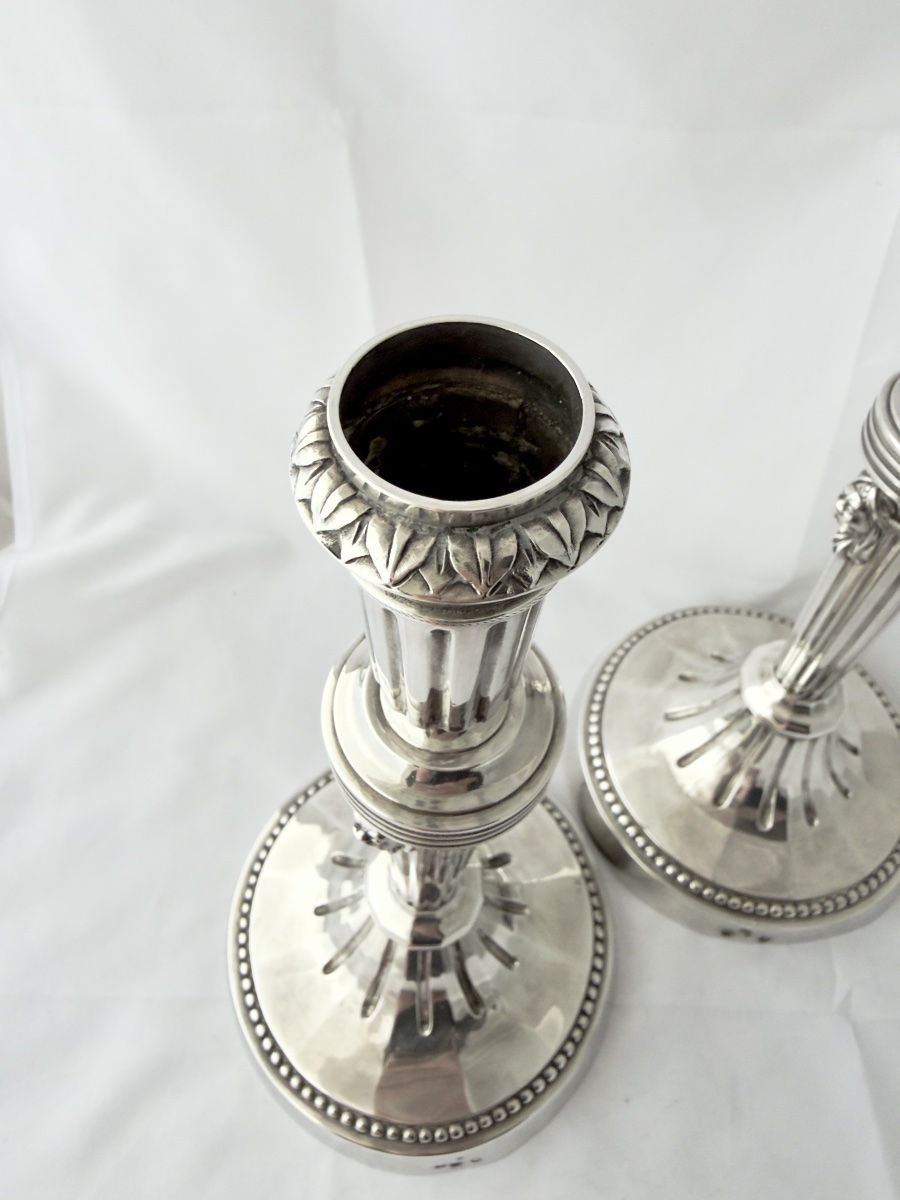
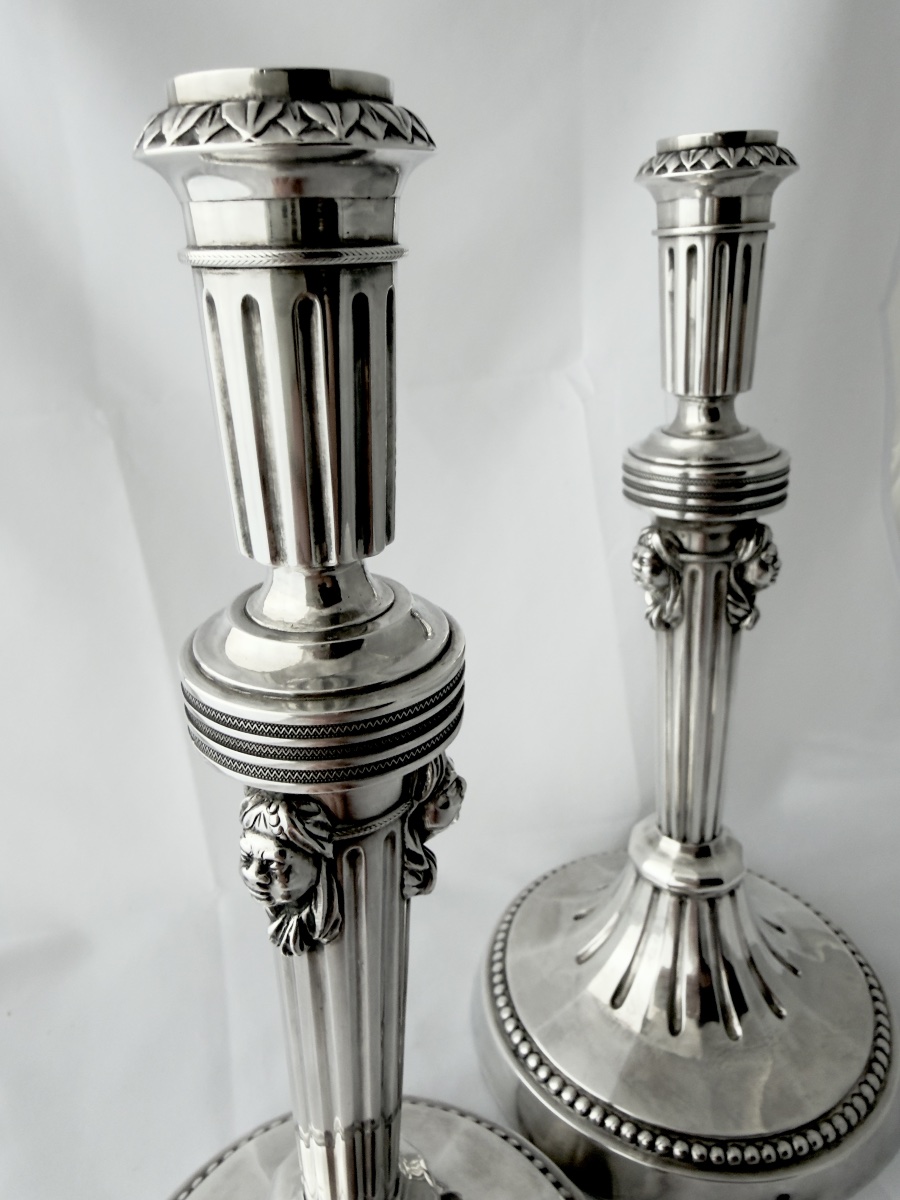
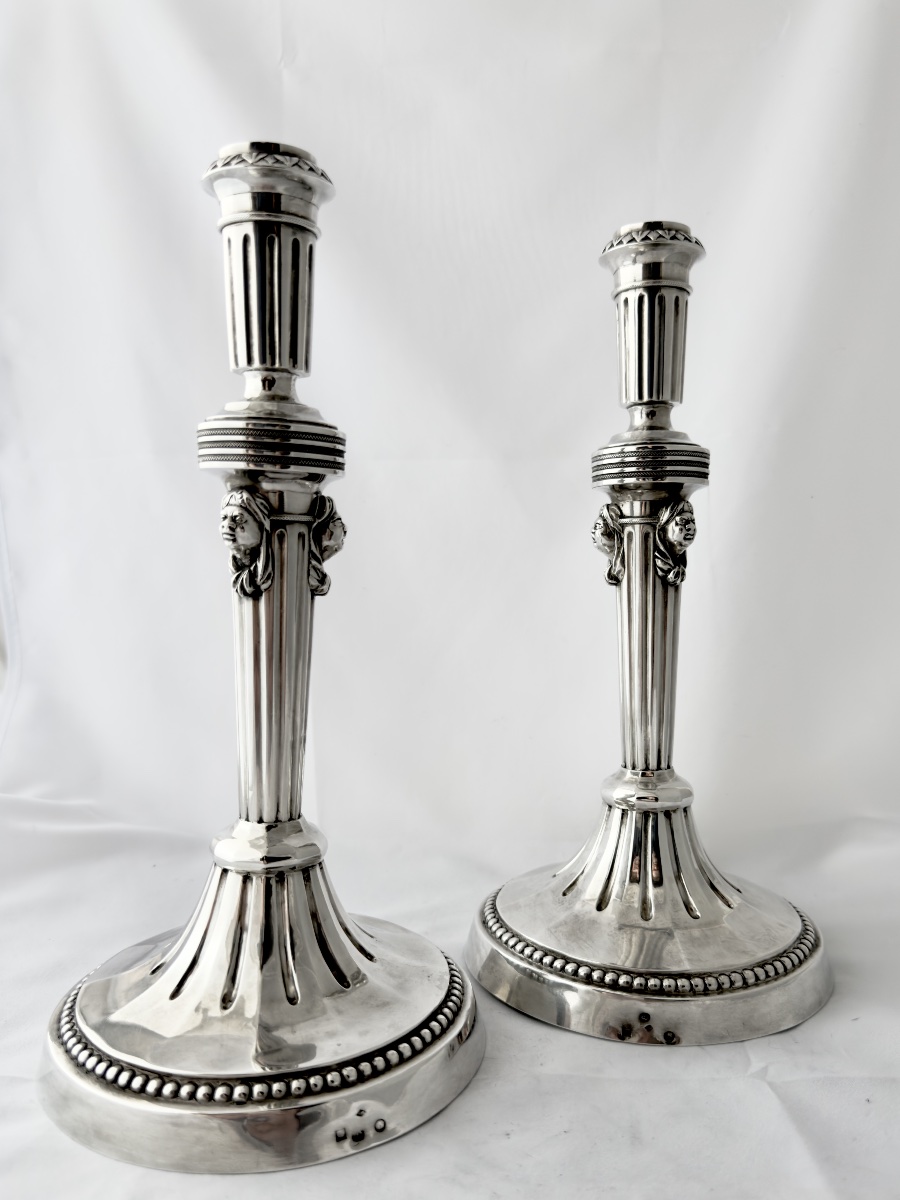
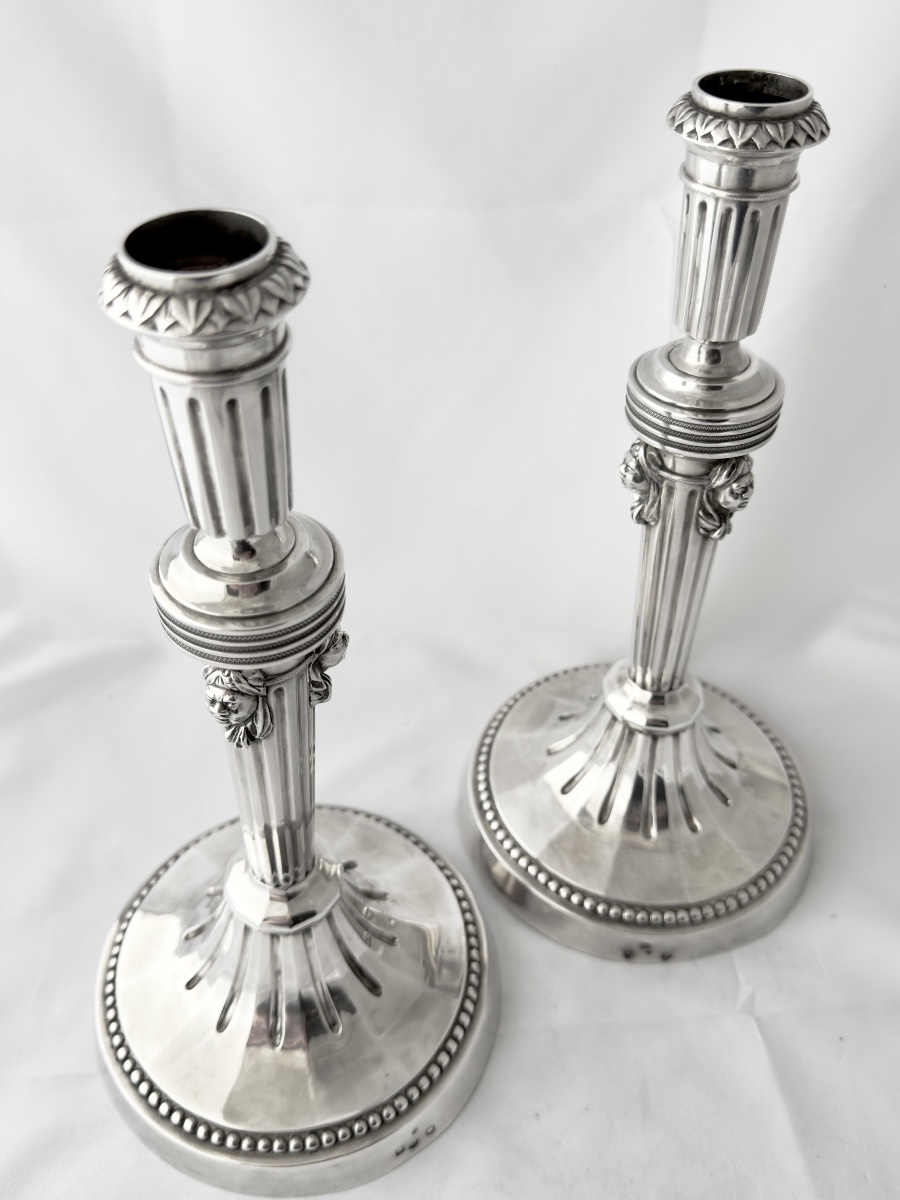
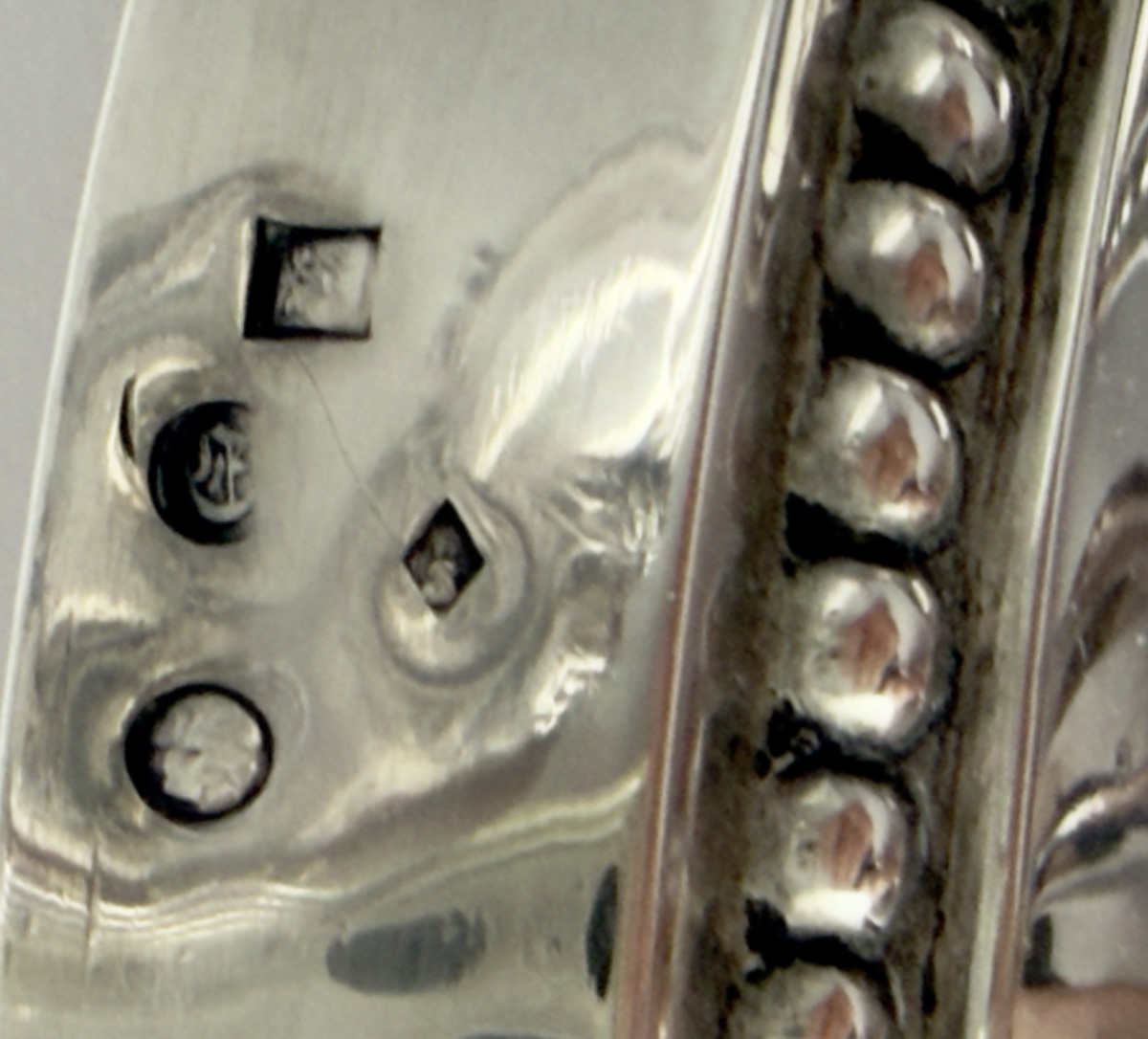
A remarkable pair of Empire-period solid silver candlesticks, bearing the guarantee marks of the Kortrijk assay office in use between 1814 and 1831. The maker’s mark is attributable to Jacques Desmit, a Kortrijk silversmith already active under the Ancien Régime. His death in 1818 makes it possible to narrow the dating of these pieces to the first years of this hallmarking period, between 1814 and 1818.
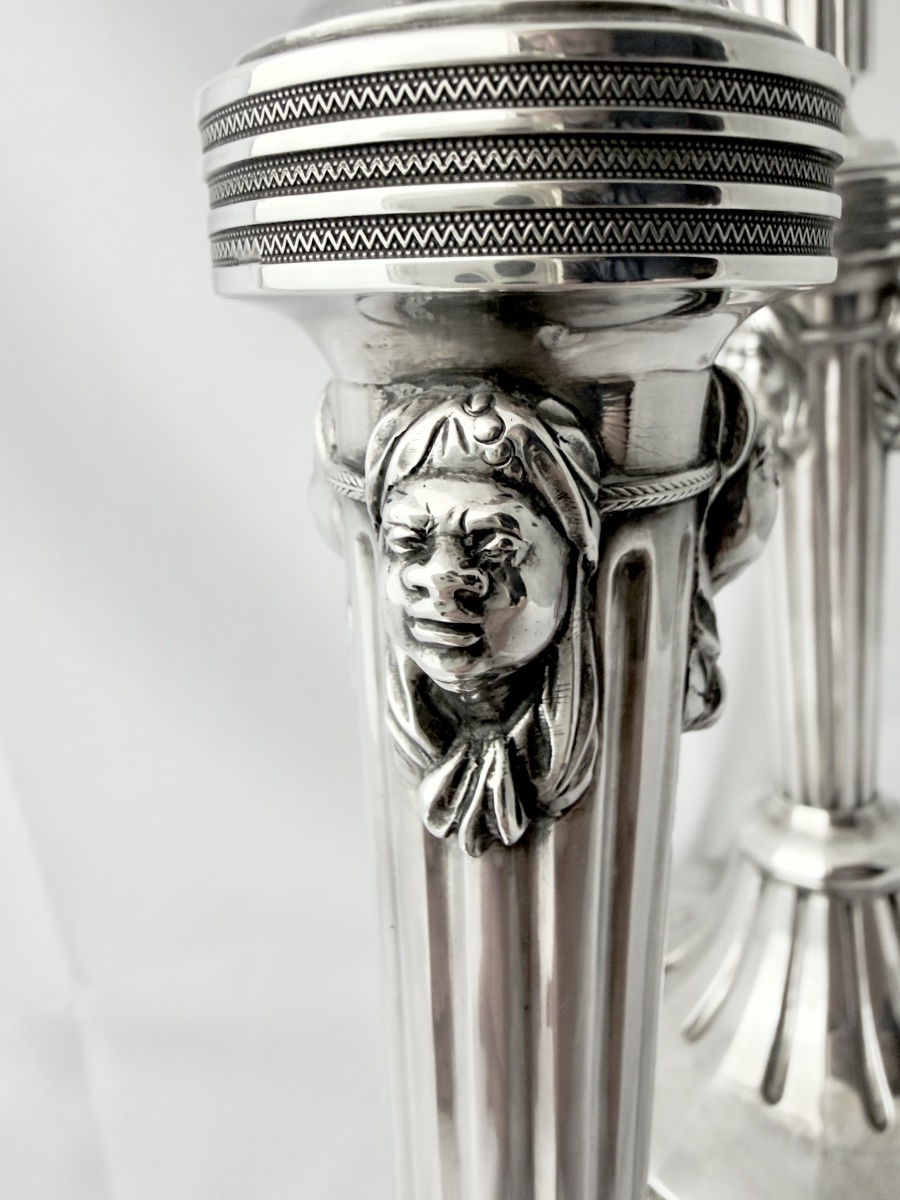
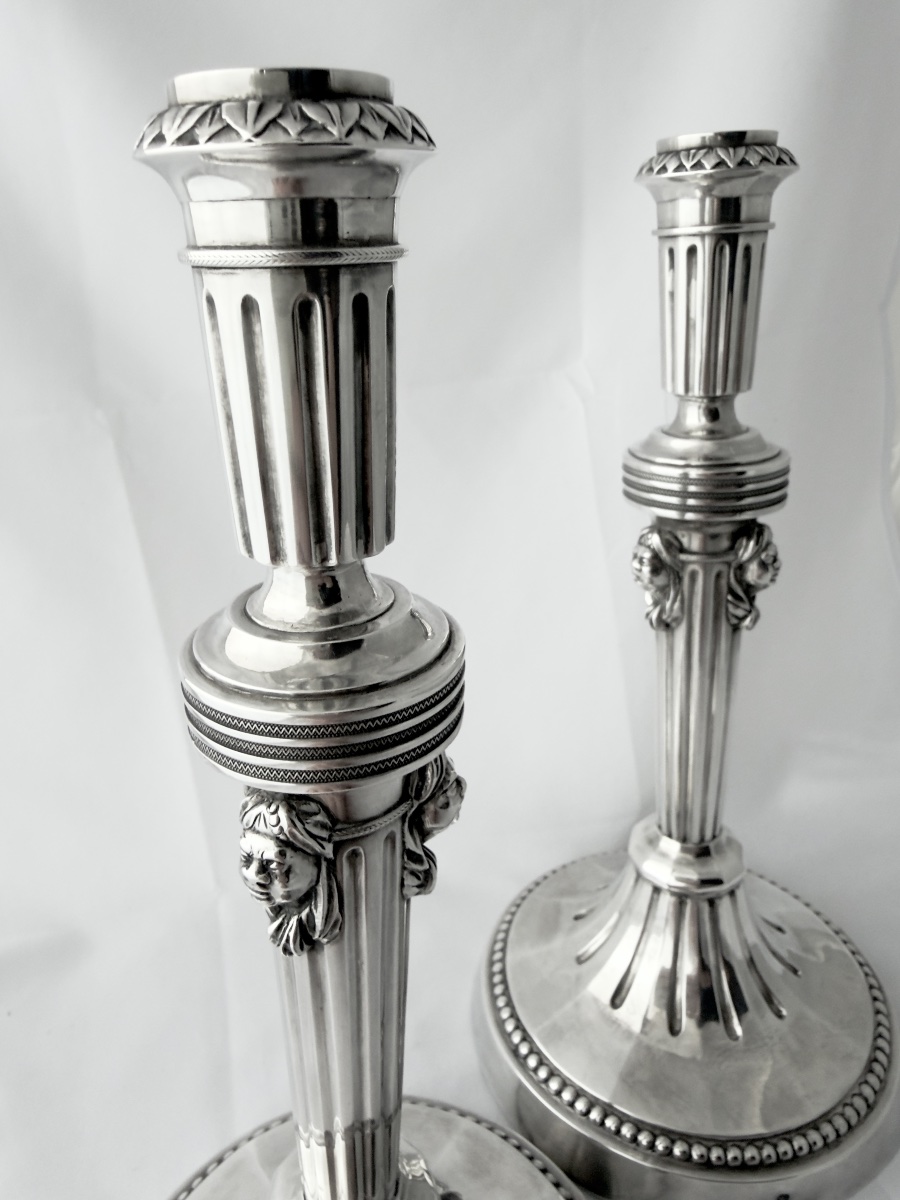
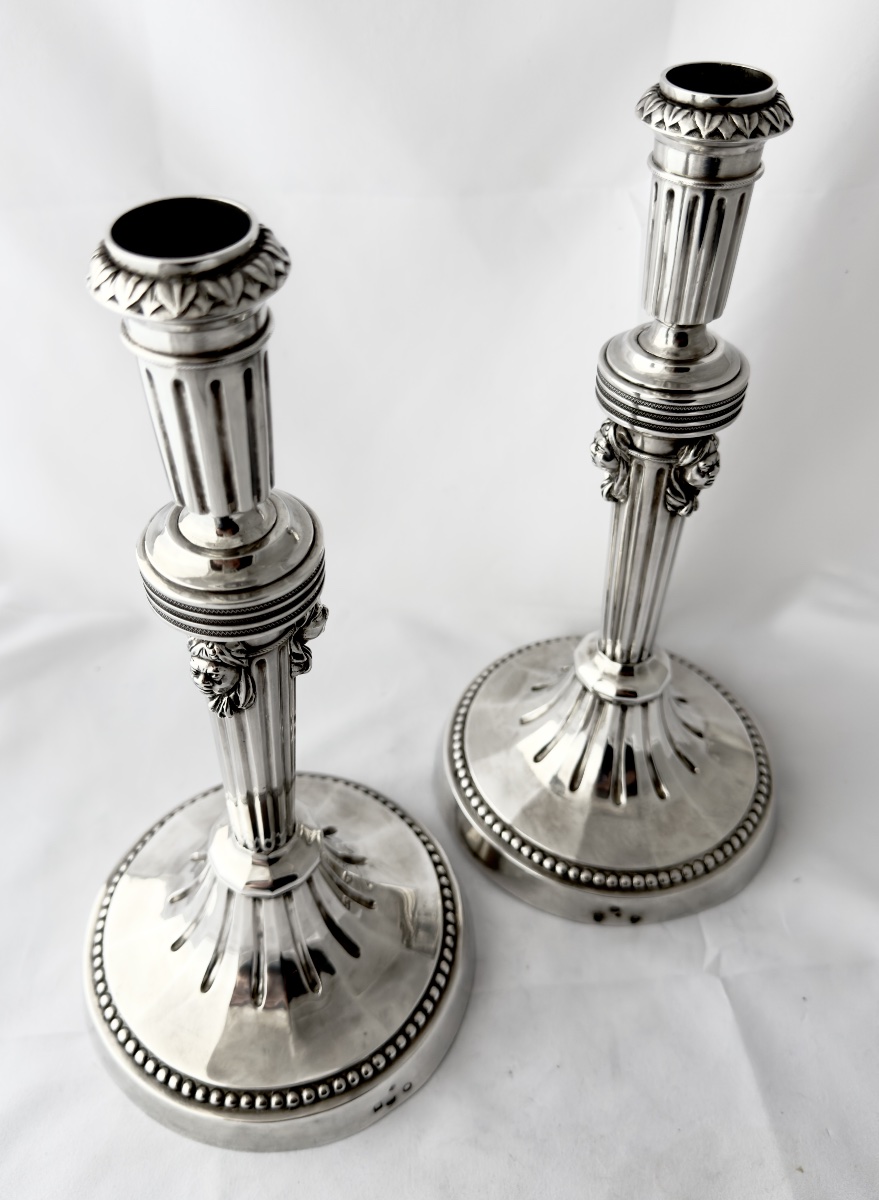
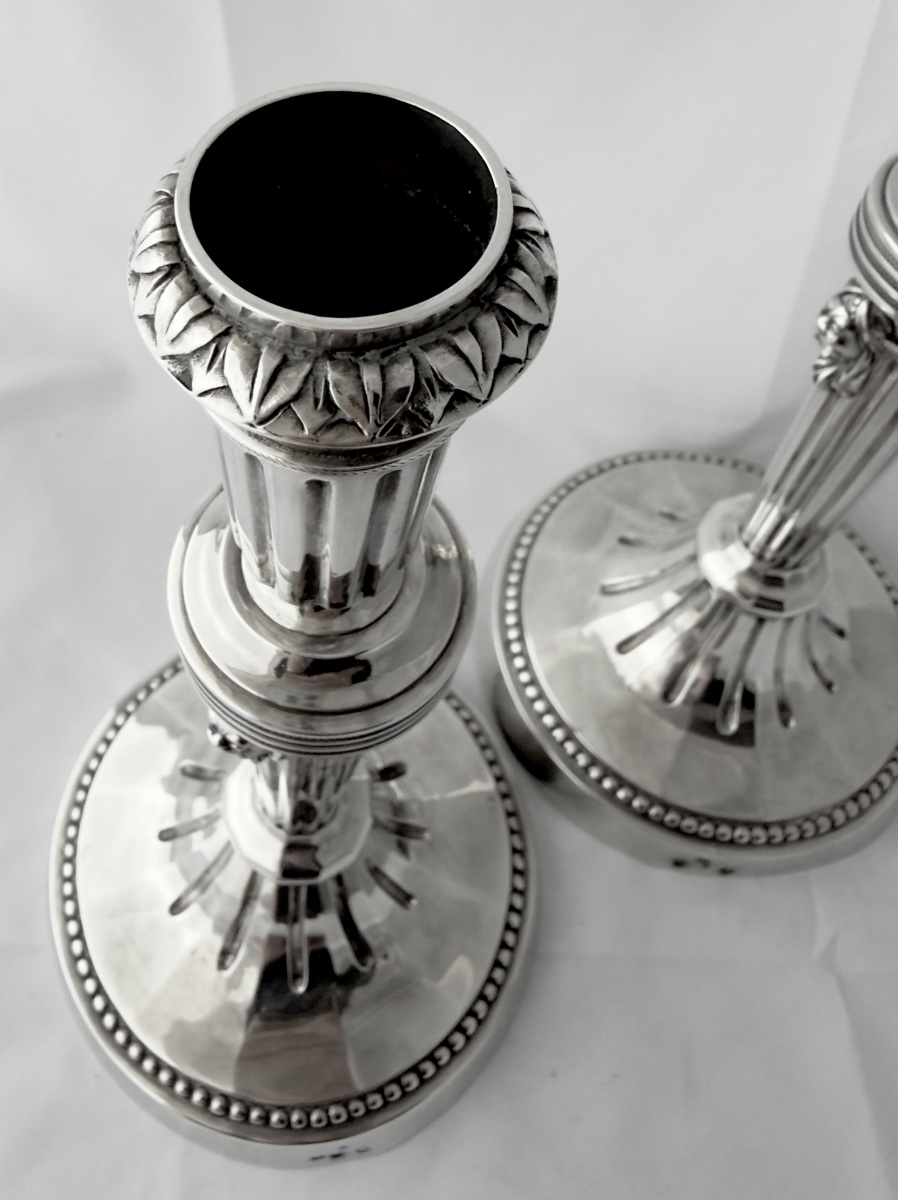
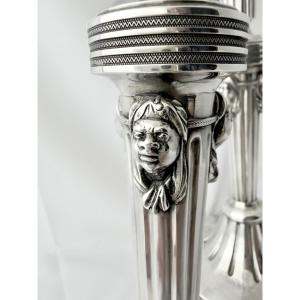
Resting on a moulded circular base, each candlestick has a fluted stem articulated by a sculptural knop, beneath which appear three heads of Eastern warriors. Traditionally described as a design “with Mamluk heads,” this decoration belongs fully to the ornamental vocabulary of the Empire style. It combines the architectural rigour inherited from Antiquity—fluting, symmetry, and monumental order—with the Egyptian and Oriental imagery that spread throughout Europe following Bonaparte’s expedition to Egypt between 1798 and 1801.
The Mamluks were originally slave-soldiers who gradually formed a powerful military aristocracy in several states of the Islamic world. In Egypt, although the country was officially part of the Ottoman Empire, the Mamluk beys still exercised considerable political and military authority at the end of the eighteenth century. Renowned for their horsemanship and skill in sabre combat, their cavalry confronted the French army, notably at the Battle of the Pyramids on 21 July 1798.
Following the French evacuation of Egypt, soldiers and refugees originating from Egypt, Syria, Georgia, and Armenia were gradually brought together in France. A company of Mamluks was formed in 1802 and attached to the regiment of Chasseurs à Cheval of the Consular Guard, which became the Imperial Guard in 1804.
These elite horsemen did not merely fulfil a ceremonial role. They took an active part in the Napoleonic campaigns and fought notably at Austerlitz, Eylau, Madrid, Wagram, Borodino, and during the campaign of France. Employed as light cavalry, they could undertake reconnaissance, escort, and liaison duties, while also participating in charges and the pursuit of the enemy. Their presence in imperial processions also carried strong symbolic significance: their brightly coloured uniforms, Eastern weapons, and richly decorated horse trappings evoked the Egyptian campaign and contributed to the display of the regime’s power, prestige, and universal ambition.
It is also important to distinguish this military unit from the figure of Roustam Raza, Napoleon’s celebrated personal Mamluk. Of Georgian origin and having entered Bonaparte’s service in Cairo in 1799, Roustam served primarily as his bodyguard and personal attendant. He accompanied the Emperor on his travels, guarded his private apartments, and took part in official ceremonies wearing a particularly spectacular Oriental costume. His image, widely circulated through painting and engraving, played a major role in popularising the figure of the Mamluk in the decorative arts of the First Empire.
Through their carefully ordered decoration, these candlesticks also bear witness to the persistence of the Empire taste in the former Belgian departments after the fall of Napoleon. The Mamluk heads are not merely picturesque ornaments: they refer to an imagery that is at once political, military, and exotic, combining memories of the Egyptian campaign, fascination with the Orient, and the prestigious evocation of the Imperial Guard.
The elegance of the composition, the quality of the chasing, and the precision of their dating make this pair a valuable example of Kortrijk silverwork from the early nineteenth century. The pair weighs 750 grams
Period: 19th century
Style: Consulat, Empire
Condition: Excellent condition
Material: Sterling silver
Diameter: le pied 14 cm
Height: 28 cm
Reference (ID): 1782388
Availability: In stock