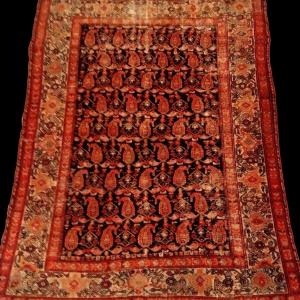


Afshar Rug, 145 X 200 Cm, Hand-knotted Wool From Iran, Qajar Dynasty, 19th Century
Artist: Afsharis
Artist : Afsharis
I am offering a magnificent artifact from the 19th-century Afshari nomadic culture, in very fine condition, suitable for a collection.
This piece was made during the Qajar dynasty.
This rug measures 145 cm wide by 200 cm long.
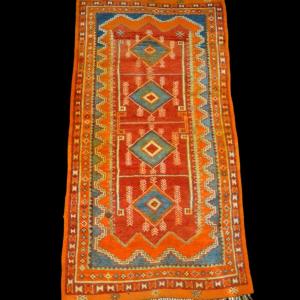
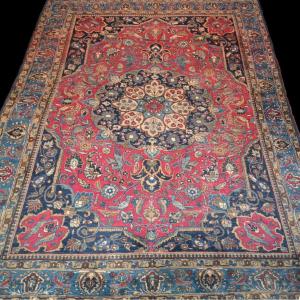
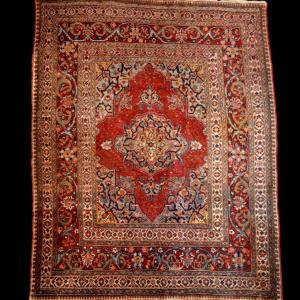
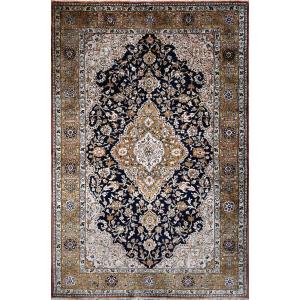
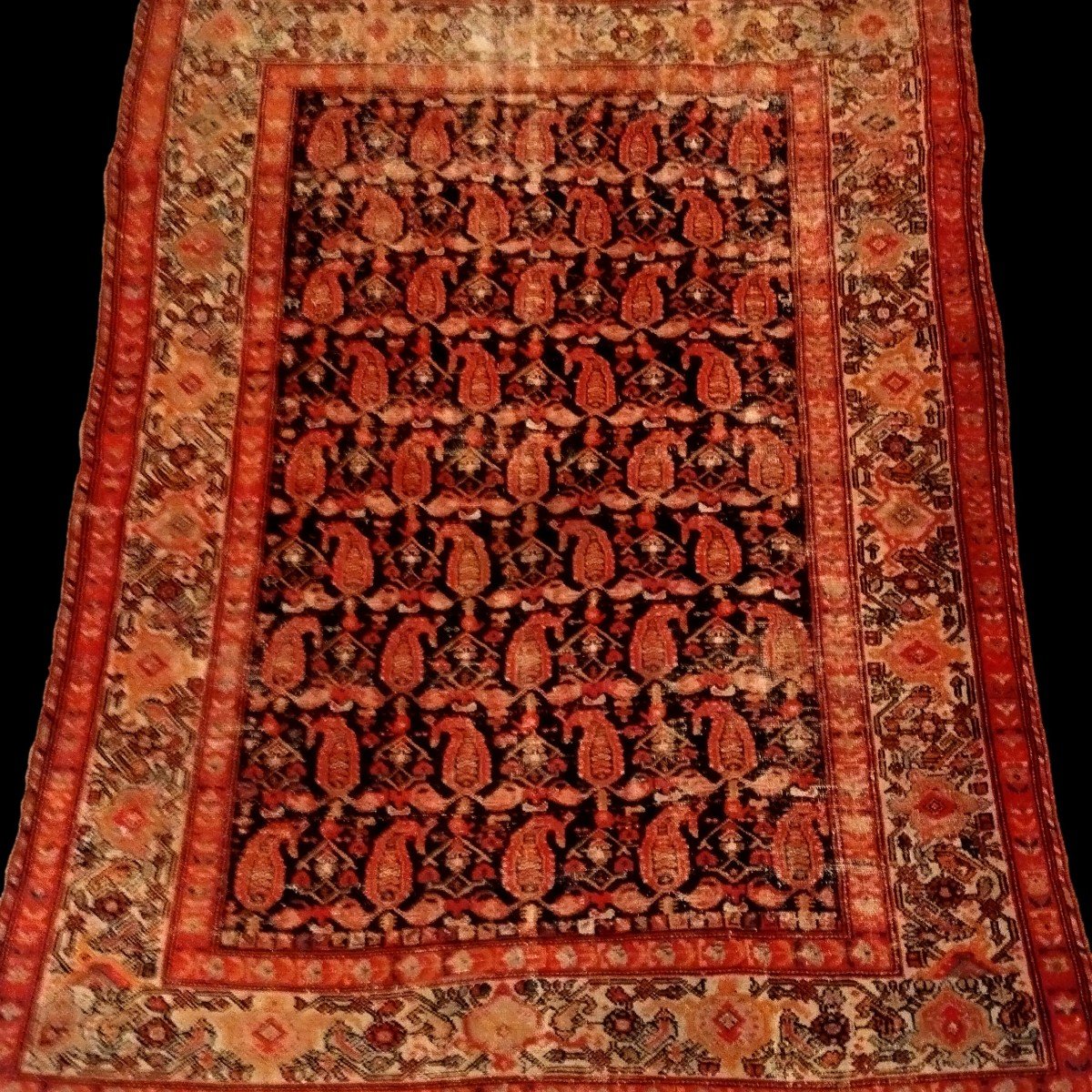
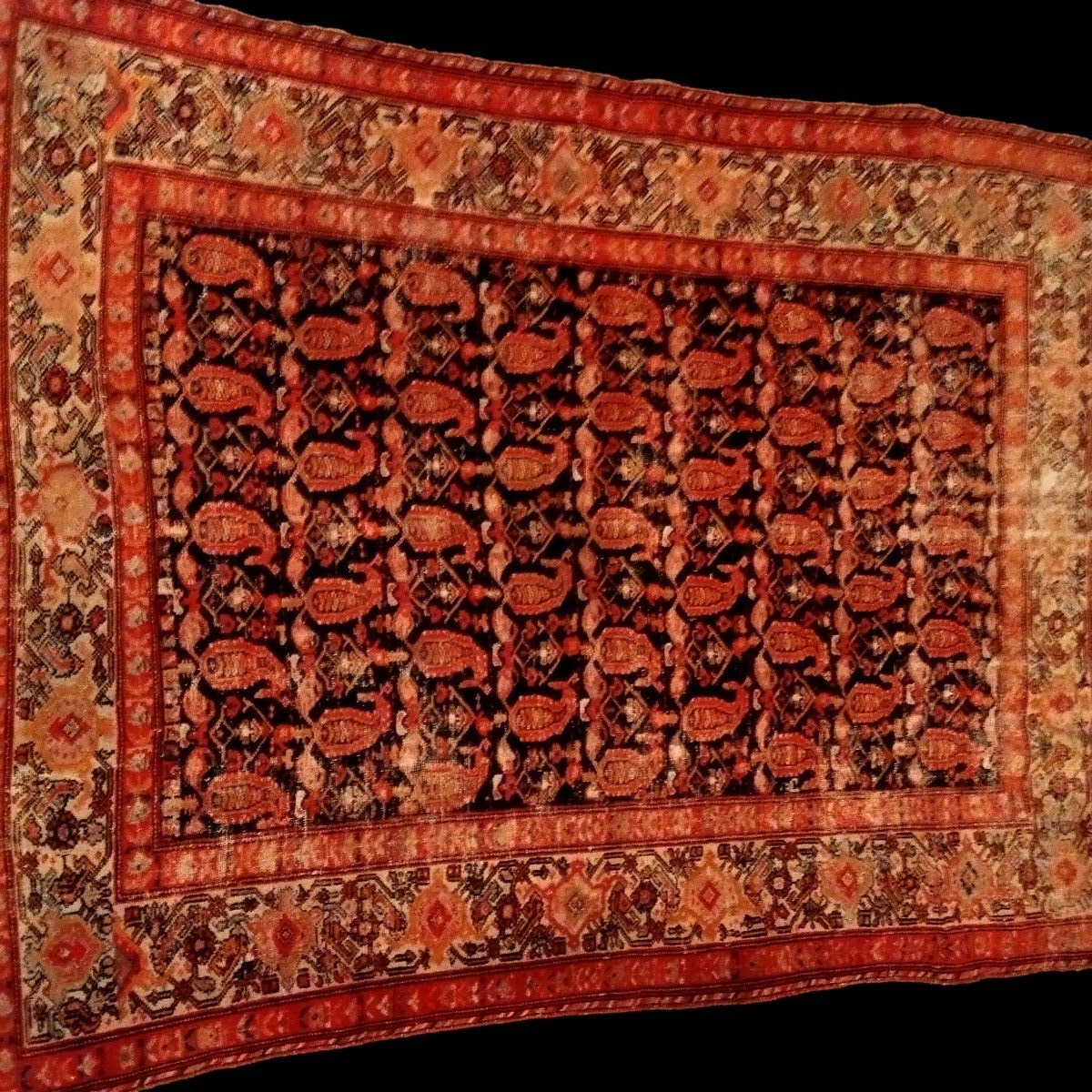
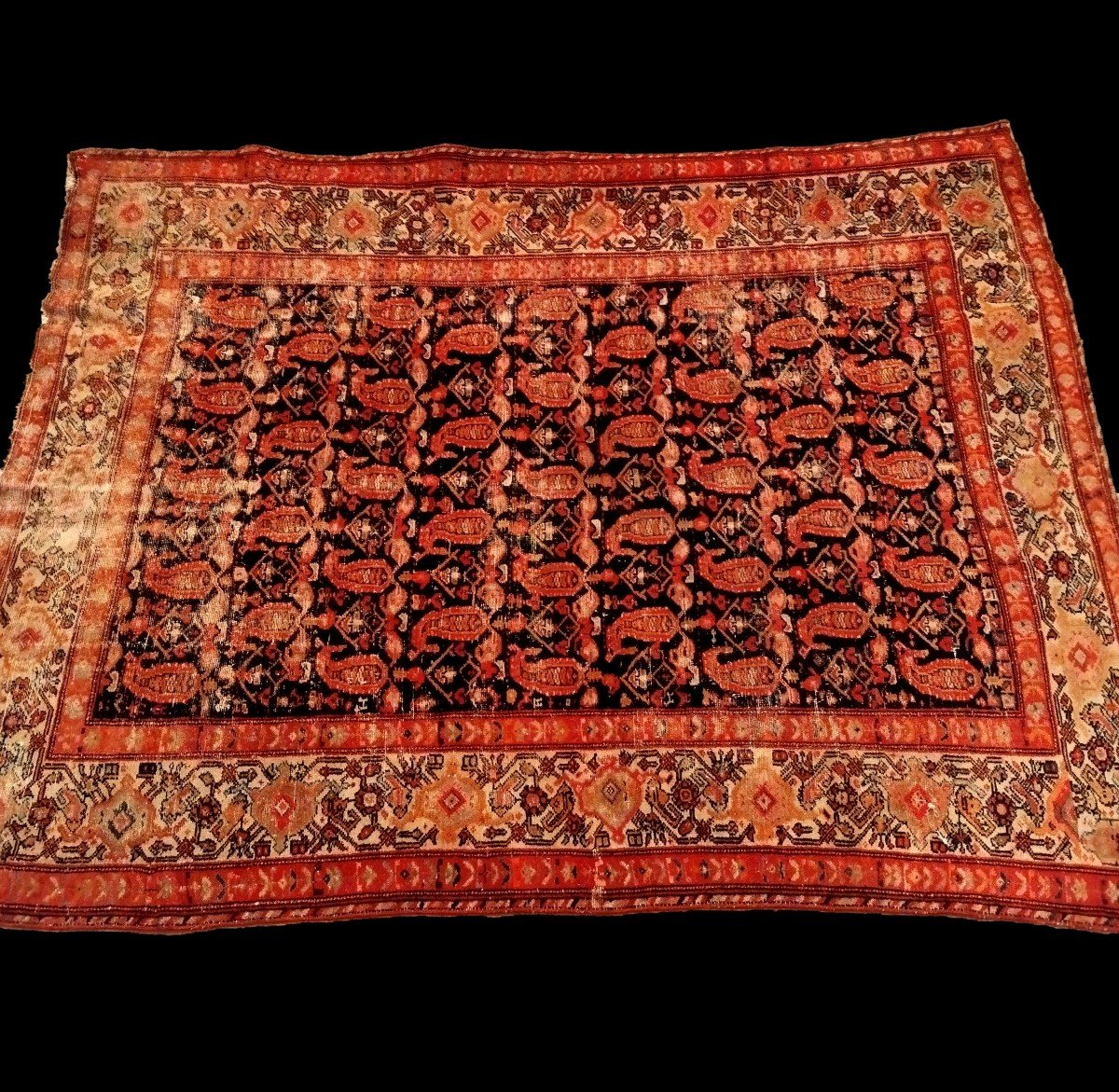
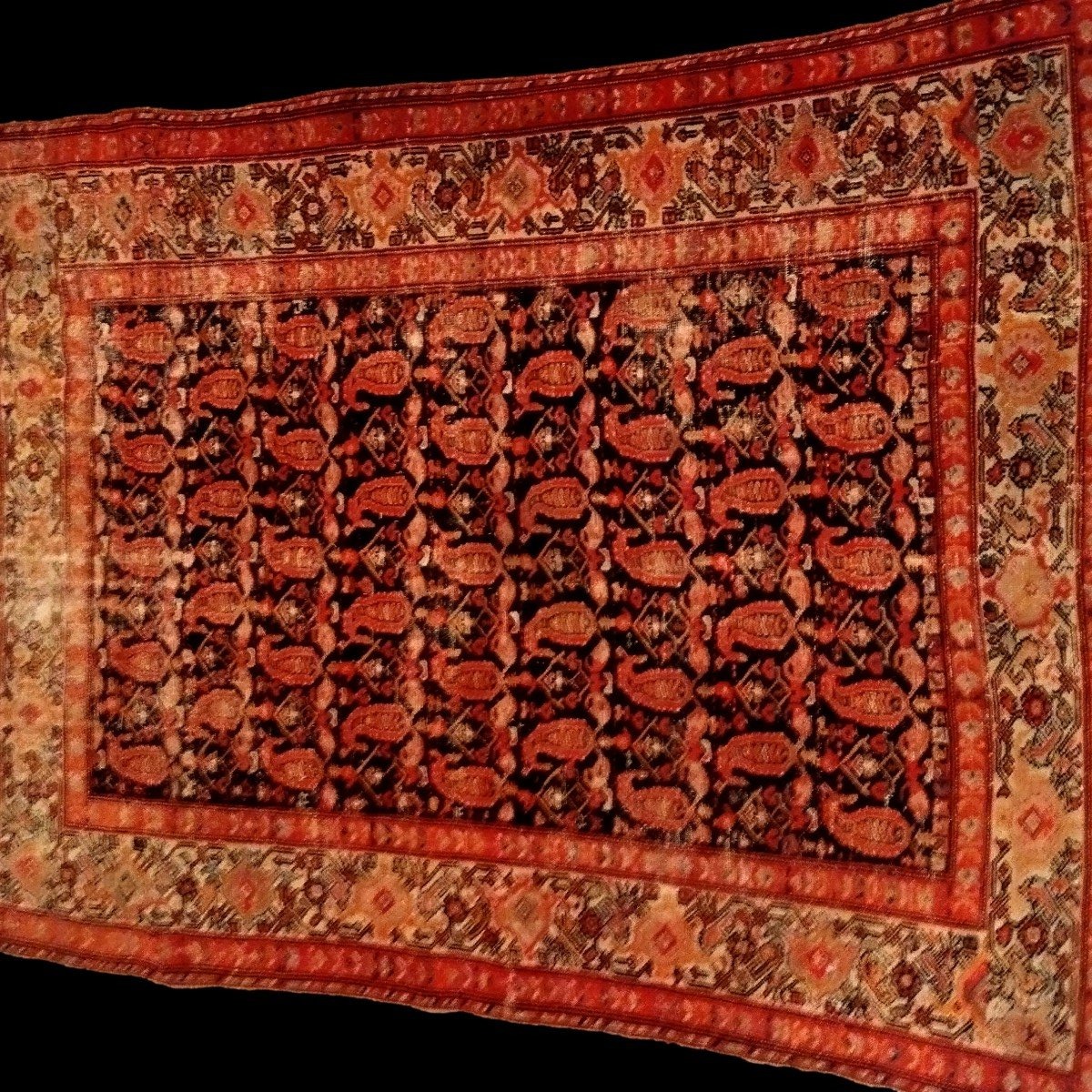
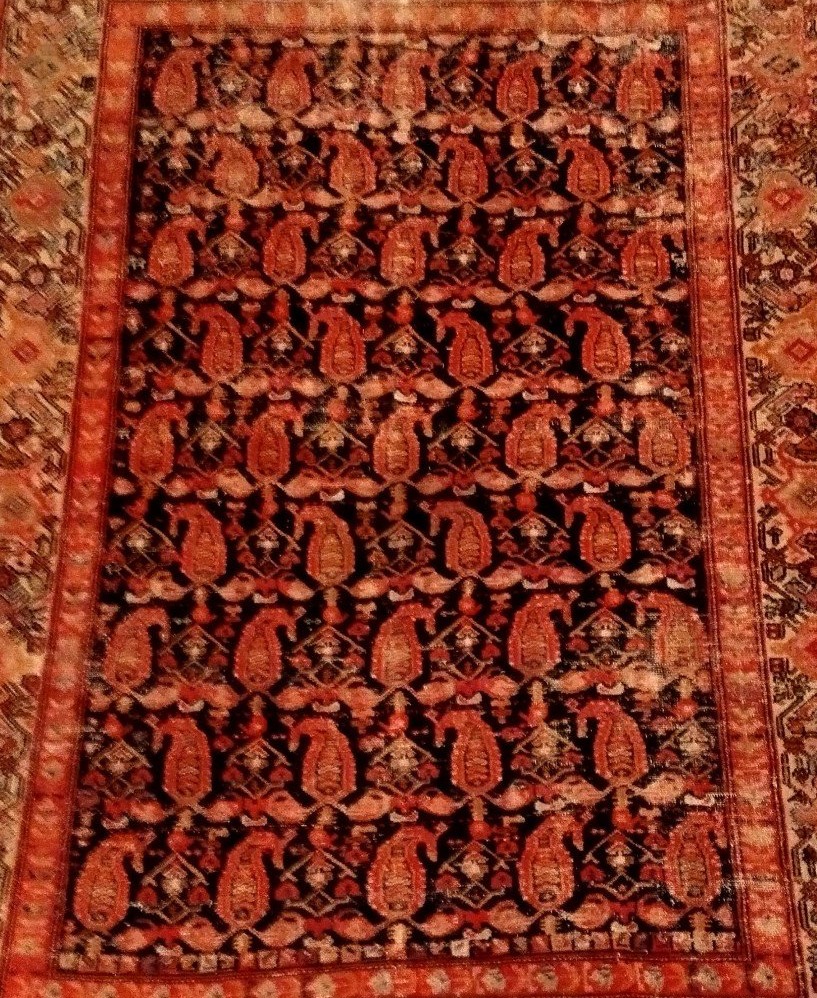
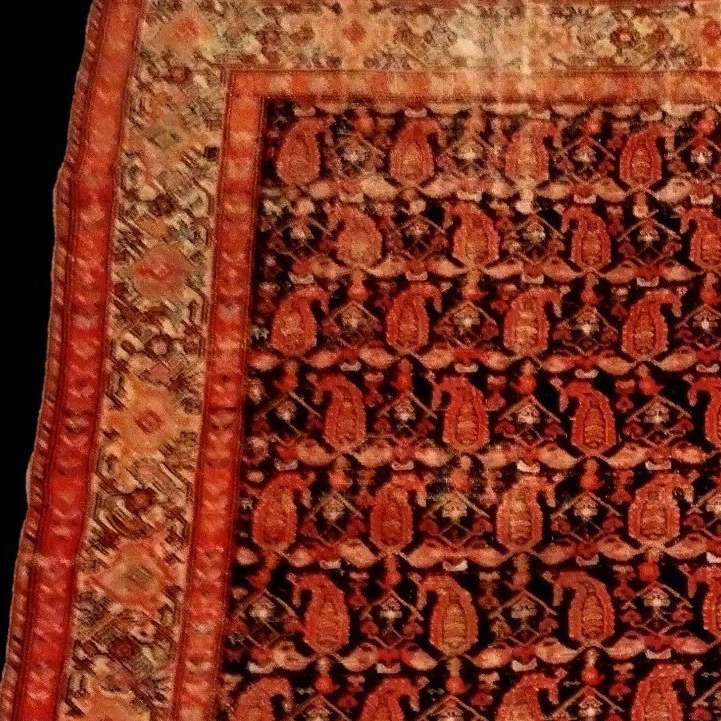
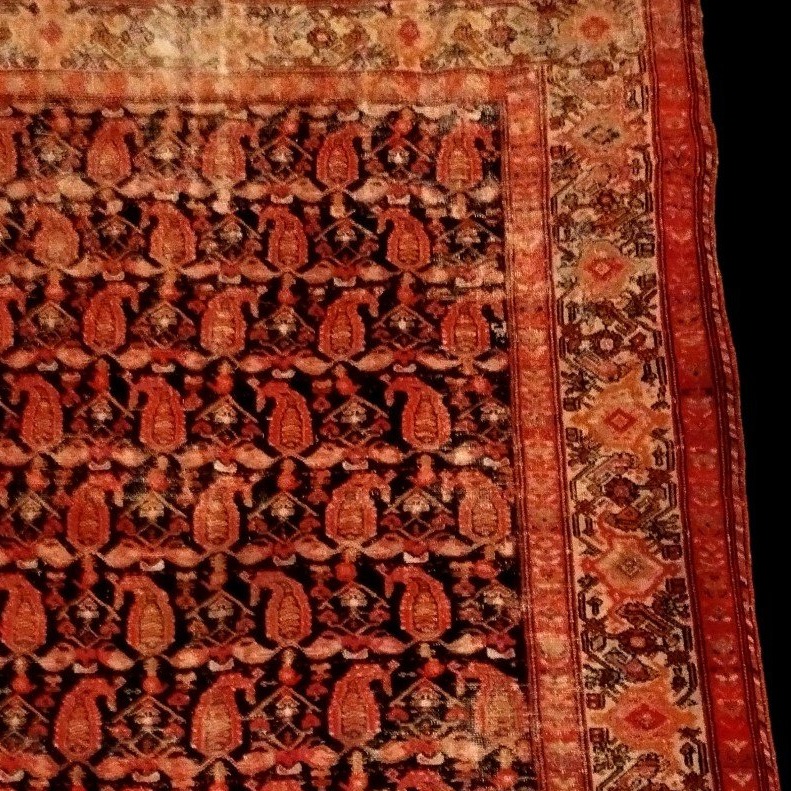
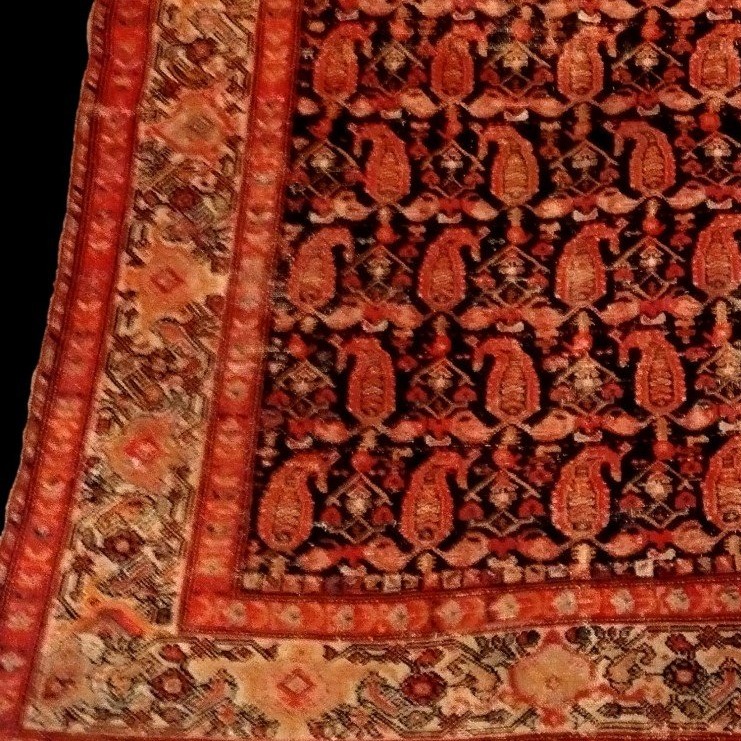
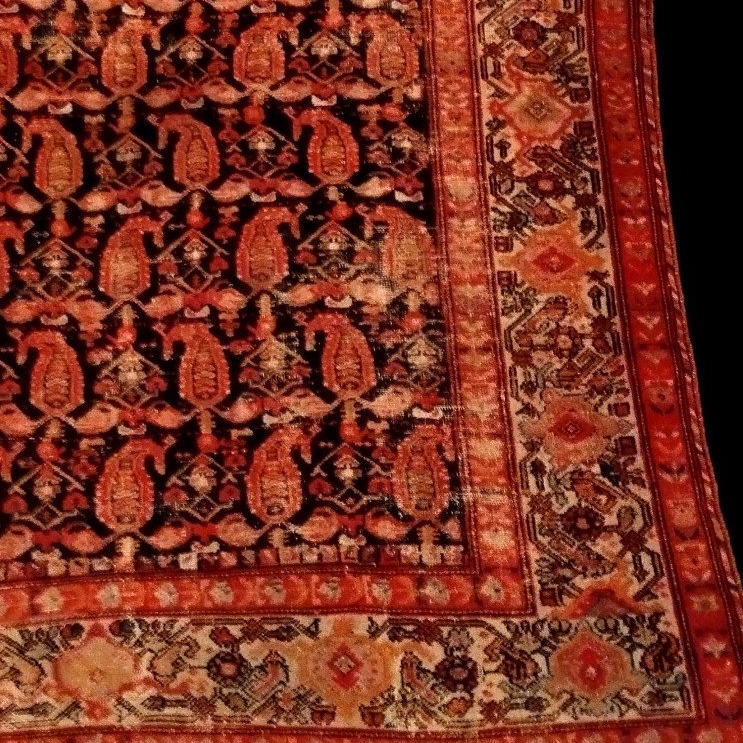
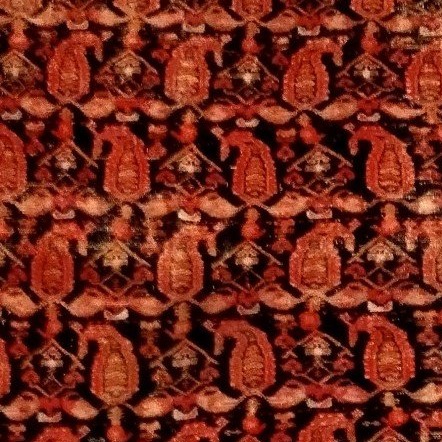
This Afshar rug features a midnight blue background decorated with botehs filled with stylized flowers.
360,000 knots per square meter—Turkish knot
60 knots per 10 cm in length and 60 knots per 10 cm in width.
Wool weft—
wool pile approximately 1 cm thick
Afshar (Avshar) rug, also known as Sirdjan, originating from Persia (Iran),
hand-knotted from high-quality wool.
It measures 145 cm wide by 200 cm long,
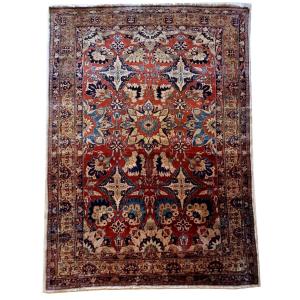
featuring a horizontal pattern of botehs arranged in 5 rows of 5 botehs and 4 rows of 4.
### The “boteh” is a Zoroastrian symbol of immortality,
and the most credible theory regarding its shape is that it represents the Maynu Spentas cypress,
which is believed to be associated with the light of the god Ormuzd and with the figure of Zoroaster.
Upon his death, it is carried to the summit of a mountain, where it transforms.
Another legend holds that it is a cypress from paradise planted by Zoroaster and Kashmar (Turchiz), which grew to become the tallest in the world.
A symbol dating back to the dawn of time.
Shades of cream, yellow, camel, chestnut, apricot, orange, orange-red, and a beautiful midnight blue set against a blue field.
The colors are derived from plants and minerals.
The ornamentation of this exquisitely refined piece consists of a multitude of botehs—41 in total;
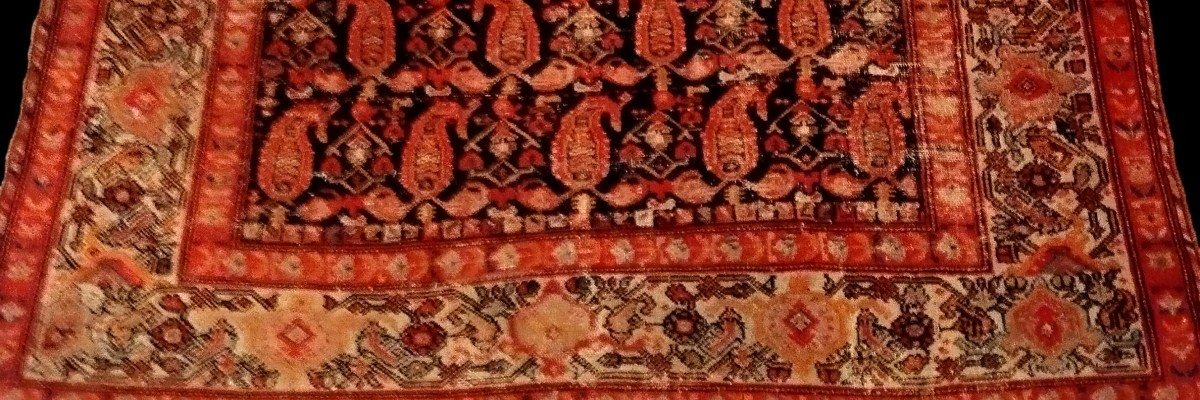
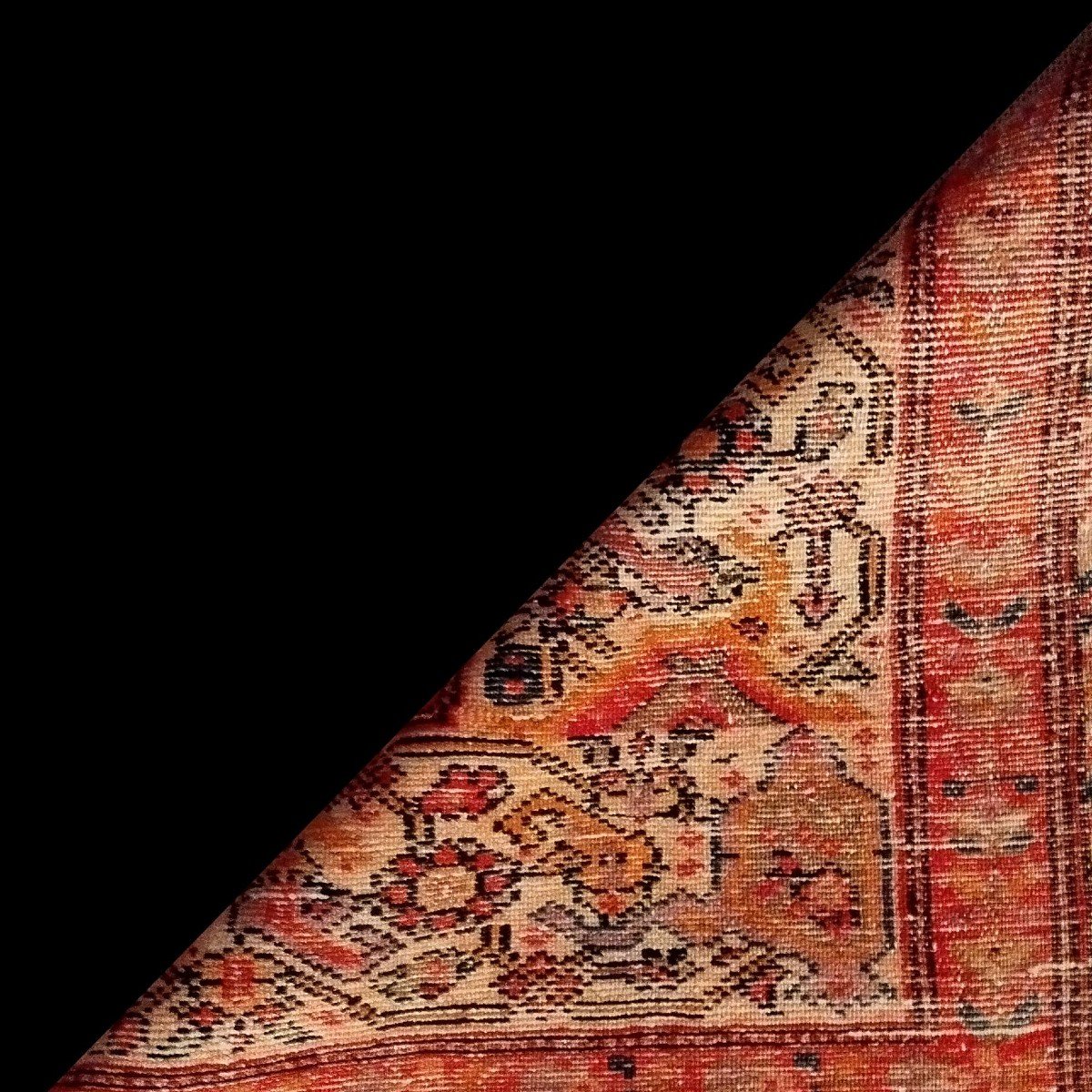
The field is framed by a delicate border of large, stylized yellow flowers and sinuous lines symbolizing eternity and continuity.
The rug is a beautiful example of this period, in good condition considering its age and shows no signs of restoration.
The colors are vibrant and give it a truly beautiful character.
A fine example of 19th-century nomadic craftsmanship, in its original condition, which will appeal to connoisseurs.
In southeastern Iran, around the city of Kerman, live the semi-nomadic Afshar tribe, the Afsharis.
For a long time, these nomads lived in northwestern Iran.
Part of the population migrated to the southeast, where carpet weaving had been an important economic sector since the mid-19th century.
These carpets feature shades of pink, red, ochre, various blues, purple, and earth tones, and the majority of them feature geometric patterns.
The most common pattern consists of a large central field with one or more square medallions.
Some designs depict an animal hide stretched out before tanning.
A typical feature of Afshar rugs is that they are often relatively wide compared to their length.
Afshar rugs are also marketed under the name Sirdjan rugs.
# The Qajar Dynasty (Qājār, Qadjar, Qajar; Persian: قاجار)
was a Turkmen dynasty that ruled Iran from 1786 to 1925.
This rug has been professionally cleaned using eco-friendly methods.
It shows signs of wear, which lend this type of ethnic rug its authentic character.
A beautiful piece due to its construction, the quality of the wool, and the design.
Dimensions: Width: 145 cm (57") x 200 cm (79")
FREE SHIPPING TO FRANCE 0€ / EUROPE 25€ / WORLD 50€
## We include an invoice serving as a certificate of authenticity with every shipment.
For more information, you can reach me at 06 13 36 09 30 or by email at winsteinprovence@gmail.com.
www.winsteinprovence.com
COME VISIT US!!
text, photos, WINSTEIN, all rights reserved
Ref WINSTEIN 1553
I am offering a magnificent artifact from the 19th-century Afshari nomadic culture, in very fine condition, suitable for a collection.
This piece was made during the Qajar dynasty.
This rug measures 145 cm wide by 200 cm long.
This Afshar rug features a midnight blue background decorated with botehs filled with stylized flowers.
360,000 knots per square meter—Turkish knot
60 knots per 10 cm in length and 60 knots per 10 cm in width.
Wool weft—
wool pile approximately 1 cm thick
Afshar (Avshar) rug, also known as Sirdjan, originating from Persia (Iran),
hand-knotted from high-quality wool.
It measures 145 cm wide by 200 cm long,
featuring a horizontal pattern of botehs arranged in 5 rows of 5 botehs and 4 rows of 4.
### The “boteh” is a Zoroastrian symbol of immortality,
and the most credible theory regarding its shape is that it represents the Maynu Spentas cypress,
which is believed to be associated with the light of the god Ormuzd and with the figure of Zoroaster.
Upon his death, it is carried to the summit of a mountain, where it transforms.
Another legend holds that it is a cypress from paradise planted by Zoroaster and Kashmar (Turchiz), which grew to become the tallest in the world.
A symbol dating back to the dawn of time.
Shades of cream, yellow, camel, chestnut, apricot, orange, orange-red, and a beautiful midnight blue set against a blue field.
The colors are derived from plants and minerals.
The ornamentation of this exquisitely refined piece consists of a multitude of botehs—41 in total;
The field is framed by a delicate border of large, stylized yellow flowers and sinuous lines symbolizing eternity and continuity.
The rug is a beautiful example of this period, in good condition considering its age and shows no signs of restoration.
The colors are vibrant and give it a truly beautiful character.
A fine example of 19th-century nomadic craftsmanship, in its original condition, which will appeal to connoisseurs.
In southeastern Iran, around the city of Kerman, live the semi-nomadic Afshar tribe, the Afsharis.
For a long time, these nomads lived in northwestern Iran.
Part of the population migrated to the southeast, where carpet weaving had been an important economic sector since the mid-19th century.
These carpets feature shades of pink, red, ochre, various blues, purple, and earth tones, and the majority of them feature geometric patterns.
The most common pattern consists of a large central field with one or more square medallions.
Some designs depict an animal hide stretched out before tanning.
A typical feature of Afshar rugs is that they are often relatively wide compared to their length.
Afshar rugs are also marketed under the name Sirdjan rugs.
# The Qajar Dynasty (Qājār, Qadjar, Qajar; Persian: قاجار)
was a Turkmen dynasty that ruled Iran from 1786 to 1925.
This rug has been professionally cleaned using eco-friendly methods.
It shows signs of wear, which lend this type of ethnic rug its authentic character.
A beautiful piece due to its construction, the quality of the wool, and the design.
Dimensions: Width: 145 cm (57") x 200 cm (79")
FREE SHIPPING TO FRANCE 0€ / EUROPE 25€ / WORLD 50€
## We include an invoice serving as a certificate of authenticity with every shipment.
For more information, you can reach me at 06 13 36 09 30 or by email at winsteinprovence@gmail.com.
www.winsteinprovence.com
COME VISIT US!!
text, photos, WINSTEIN, all rights reserved
Ref WINSTEIN 1553
1 460 €
Period: 19th century
Style: Orientalism
Condition: Condition of use
Material: Wool
Length: 200 cm - 79"
Width: 145 cm - 57"
Reference (ID): 1811957
Availability: In stock
Print