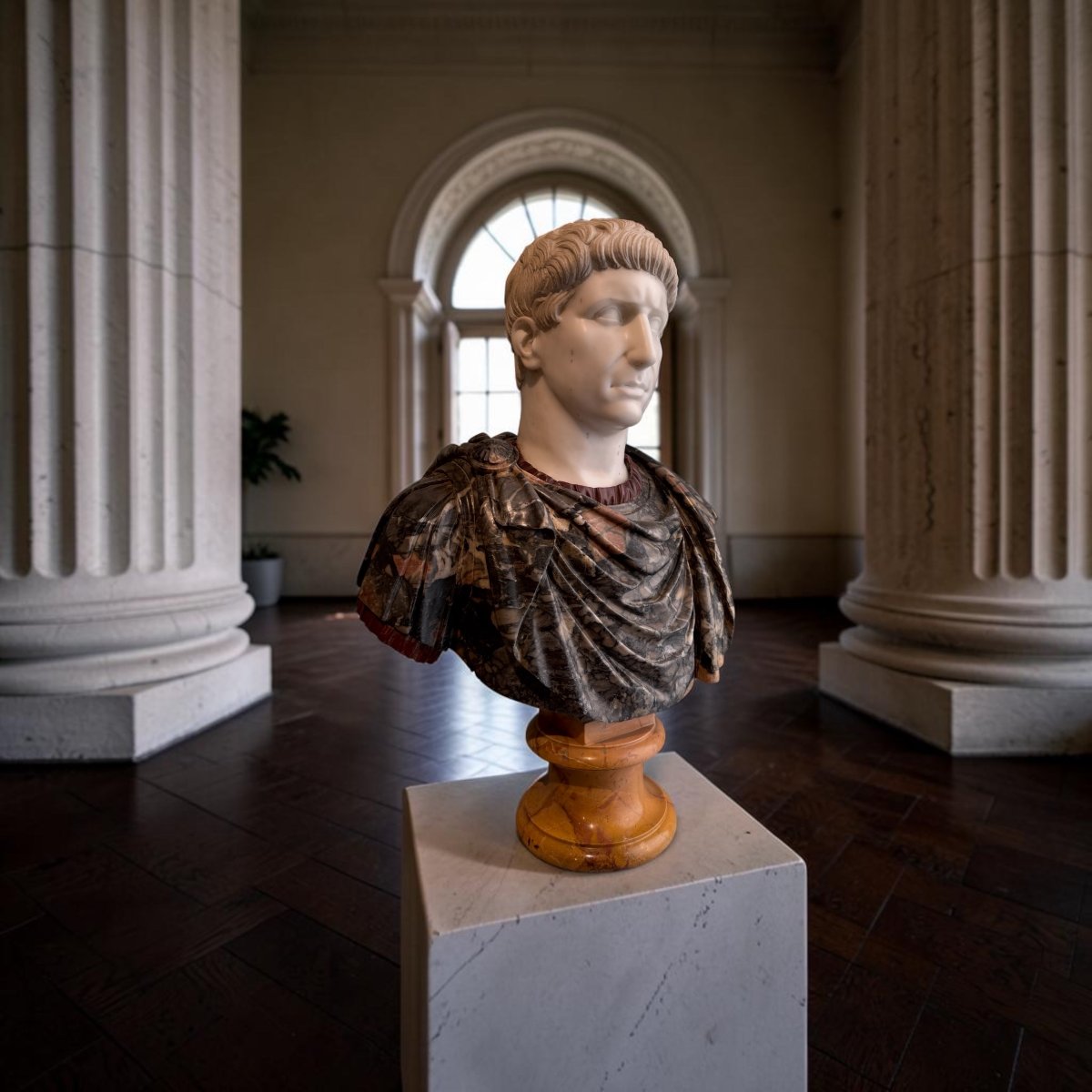
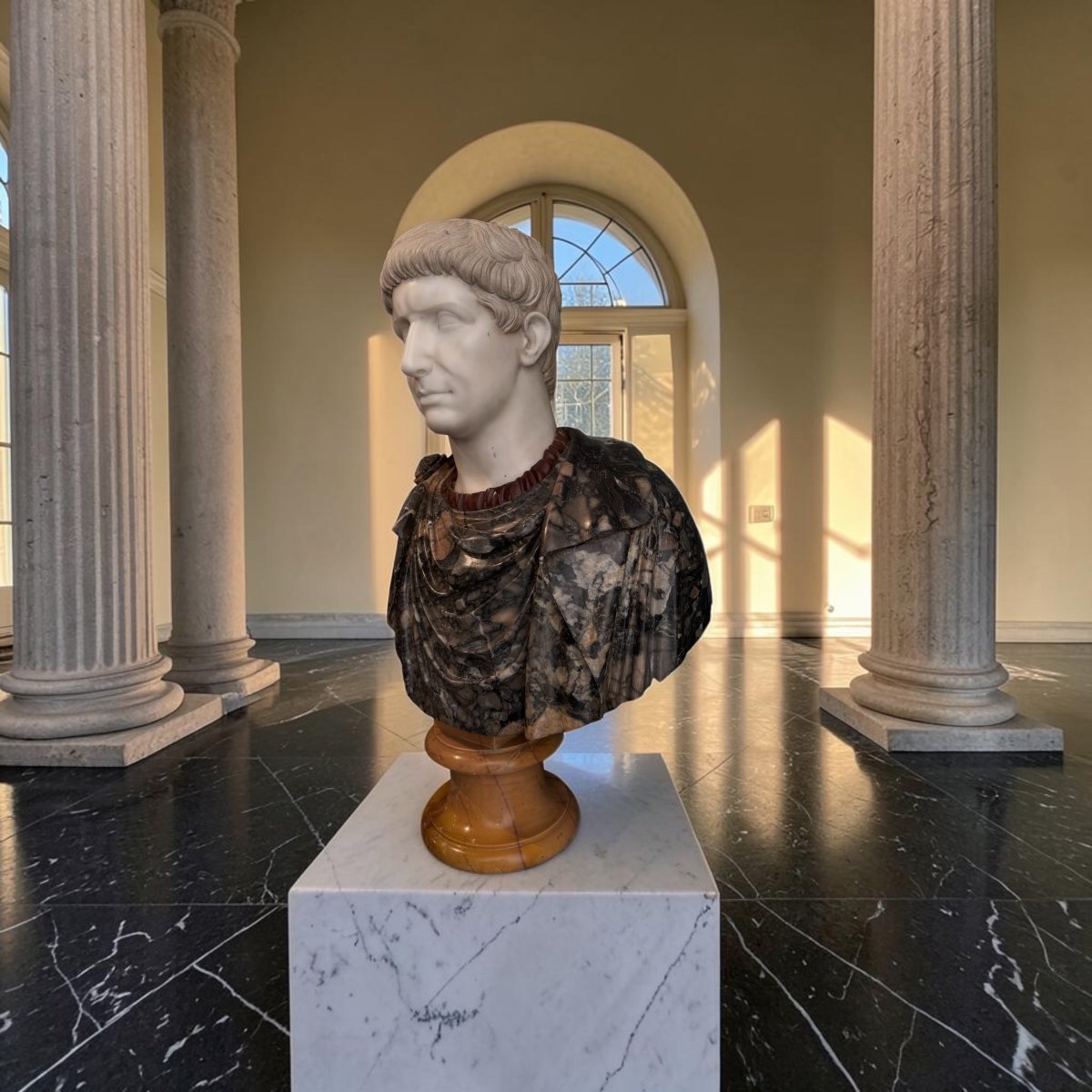
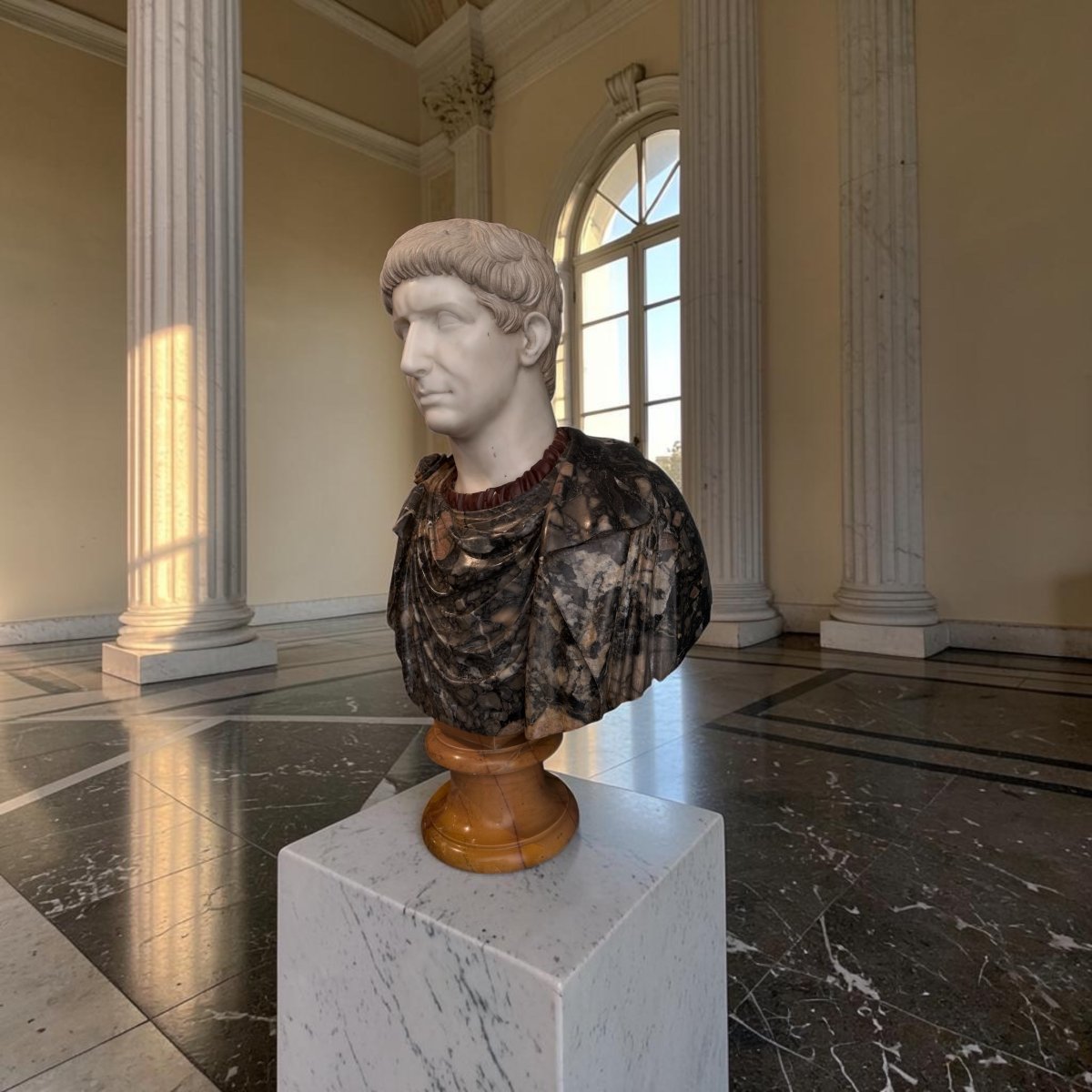
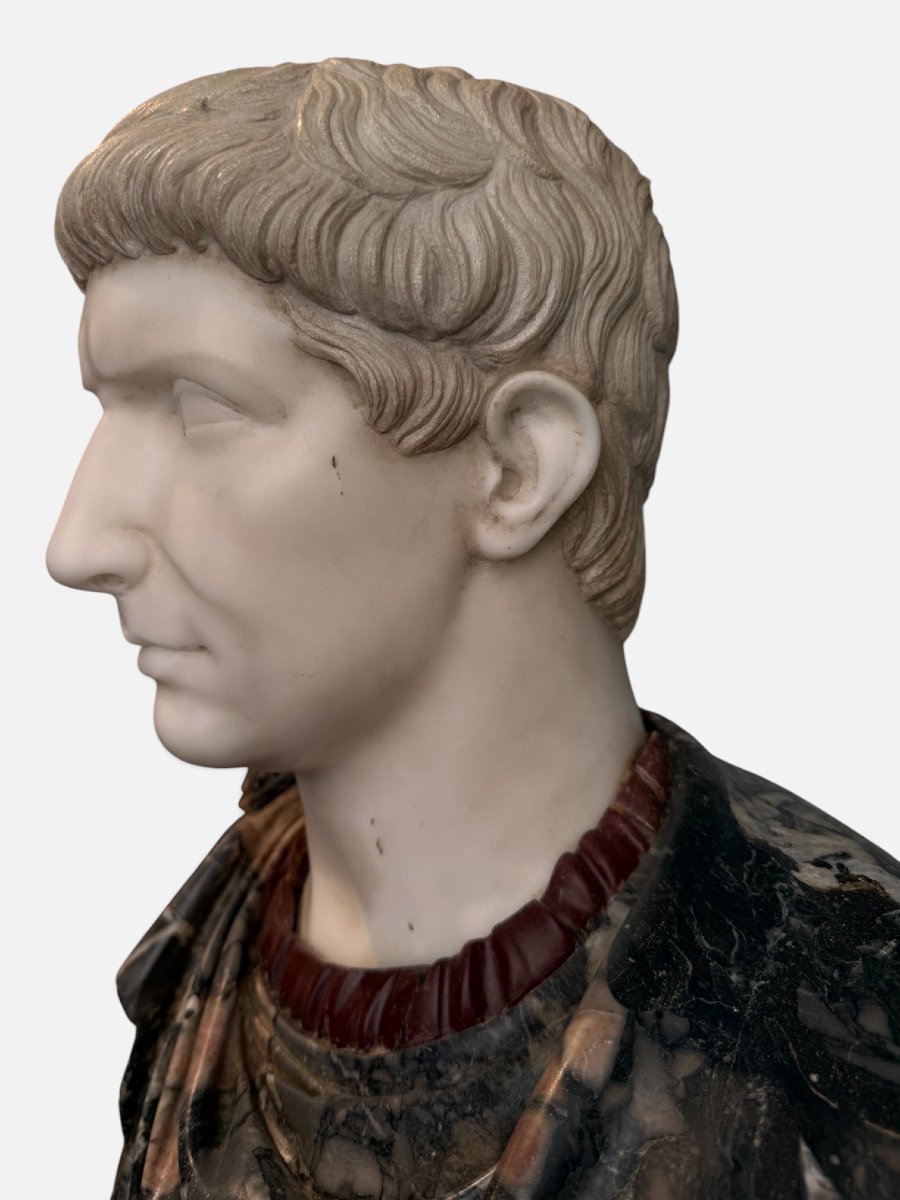
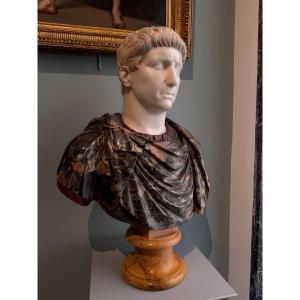


Bust Of A Roman Emperor, Likely Caligula; Rome, Mid-19th Century
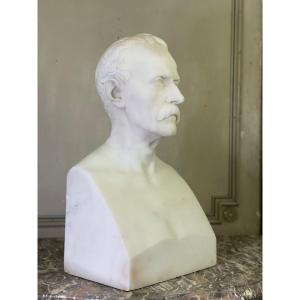
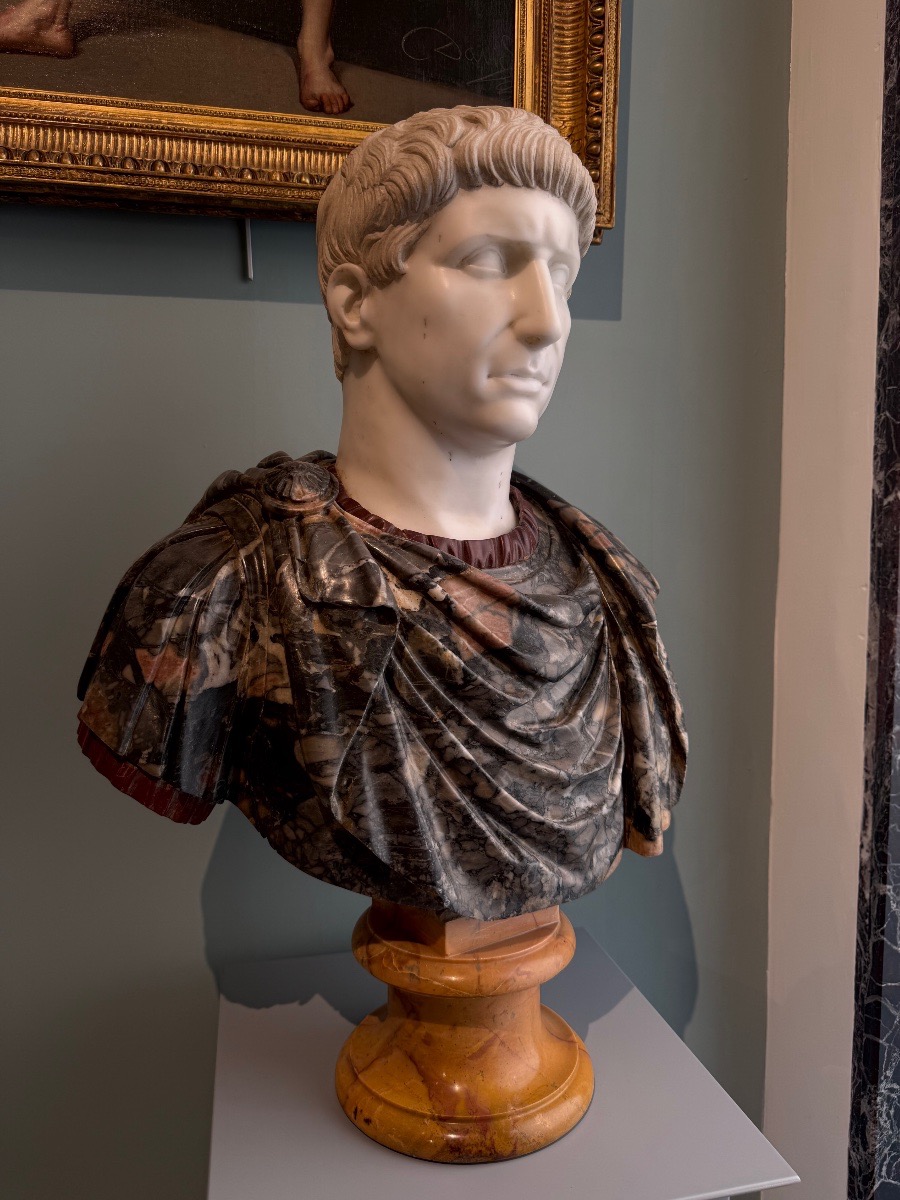
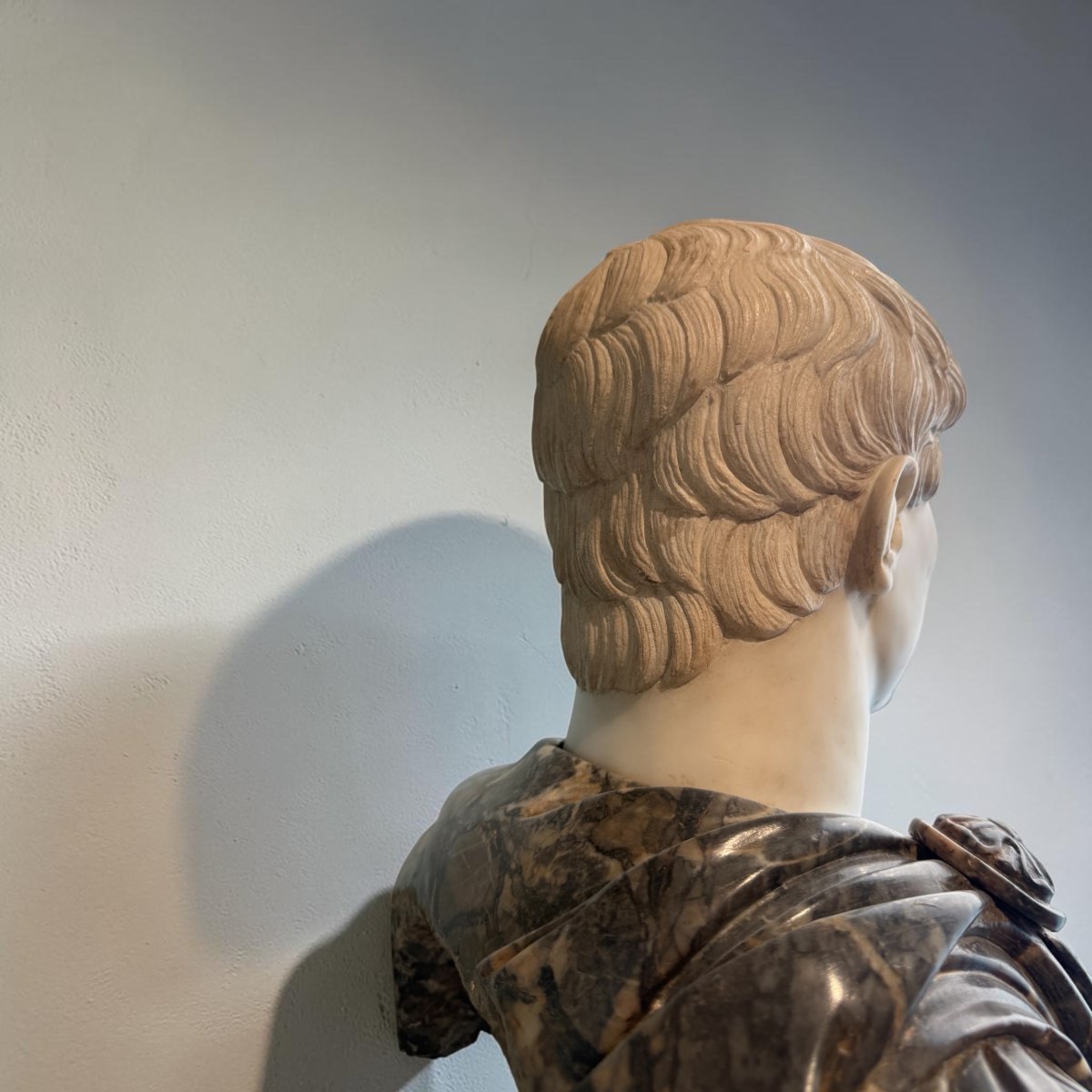
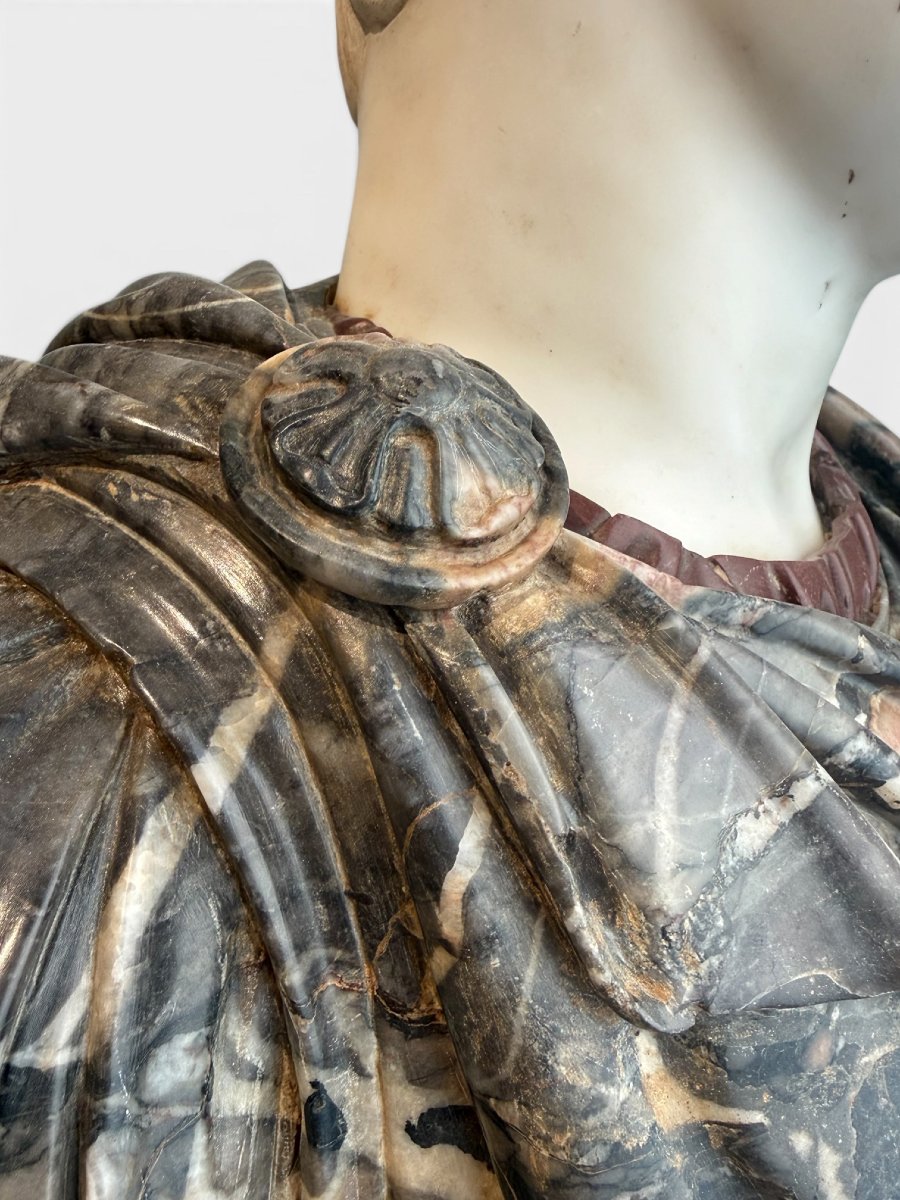
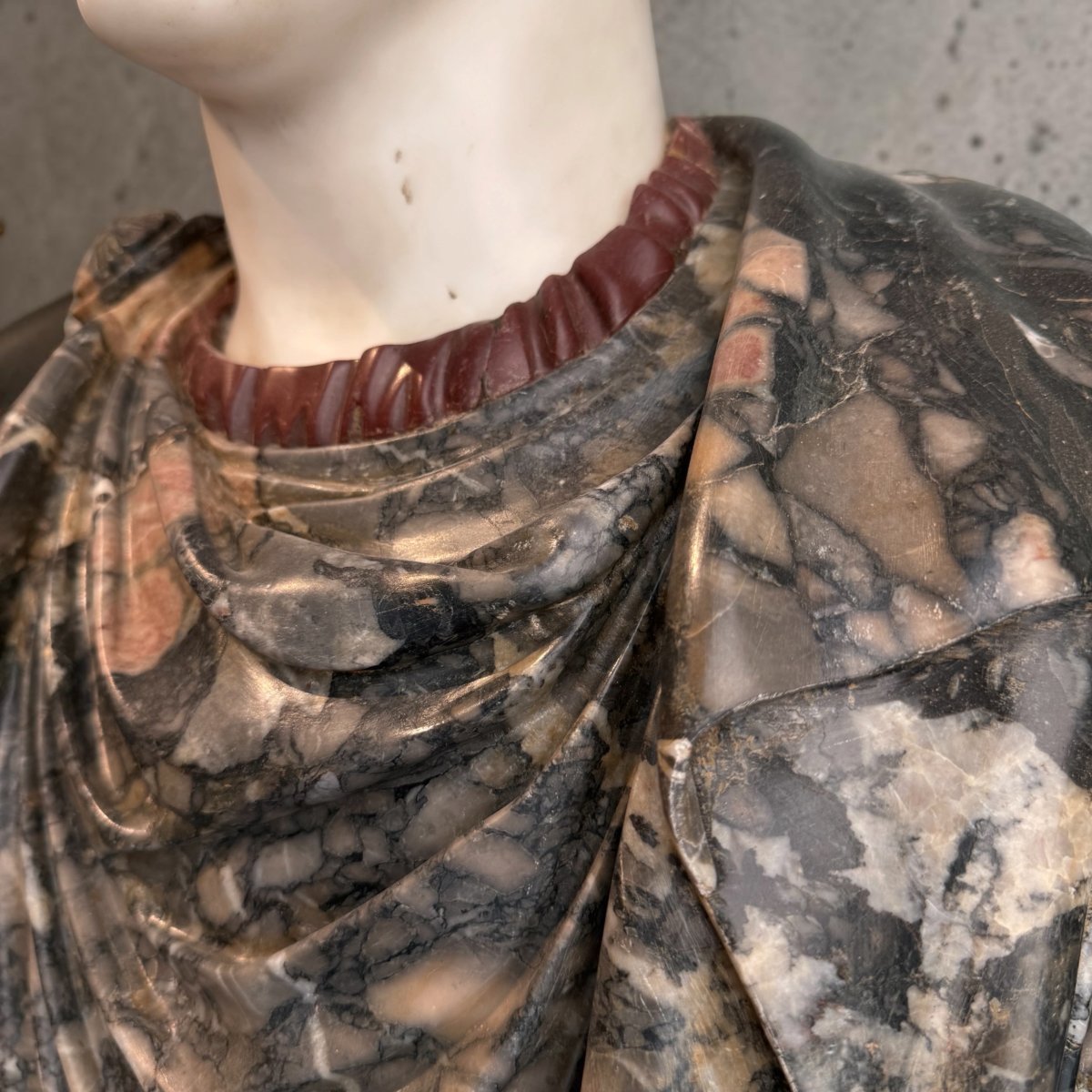
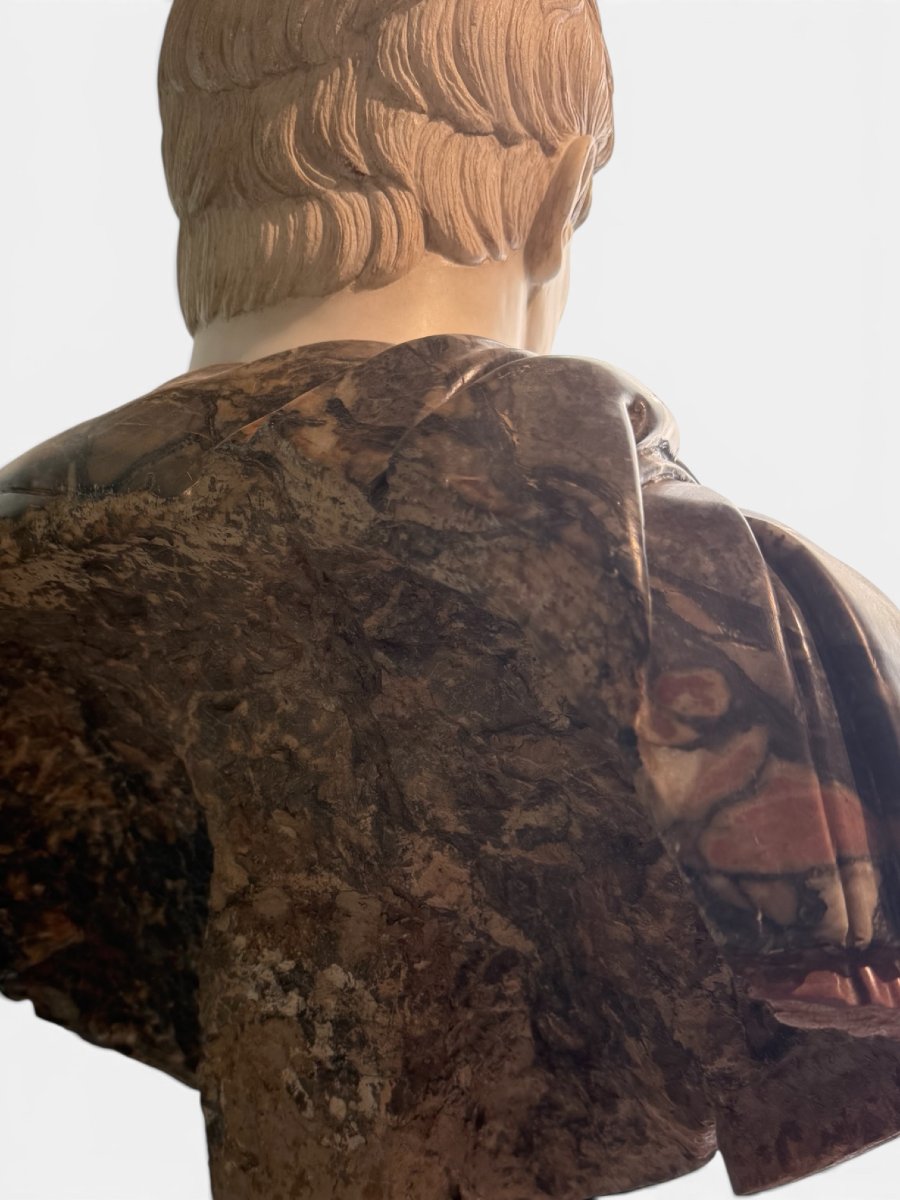
An important and monumental bust in polychrome marble depicting a young Roman emperor, likely Gaius Caesar Germanicus, known as Caligula (12–41 CE), created in Rome around the mid-19th century based on the models of imperial portraiture from the Julio-Claudian era. The figure has a youthful, idealized face with regular and severe features. Particularly distinctive is the finely sculpted hair, arranged in dense, overlapping, wavy locks that fall neatly over the forehead and temples, in keeping with the iconographic tradition of the Julio-Claudian dynasty. The head and neck are carved from white marble, creating a refined contrast with the rich polychromy of the robe. An elegant border of antique red marble runs along the base of the neck. Of particular value is the large cloak made of African marble, characterized by its spectacular brecciated texture and the intense interplay of dark, gray, brown, ivory, and pinkish tones. The drapery is carved into deep, intricate folds, creating a striking sculptural effect and lending a sense of monumentality to the composition. On the shoulder is a large circular fibula, also carved from African marble. The bust rests on an elegant pedestal made of antique yellow marble, whose warm golden color complements the refined chromatic interplay of the different marbles. The combination of white, antique red, African, and antique yellow marble evokes the style of Roman statuary in polychrome marble and reflects the 19th-century revival of interest in antiquity. The work is fully in keeping with the prestigious output of 19th-century Roman workshops, whose sculptures inspired by classical antiquity were particularly appreciated by international patrons and travelers on the Grand Tour.
Period: 19th century
Style: Napoleon 3rd
Condition: Some scratches and chips
Width: 50
Height: 68
Reference (ID): 1811233
Availability: In stock