



Large Khandjar With A Wootz Steel Blade
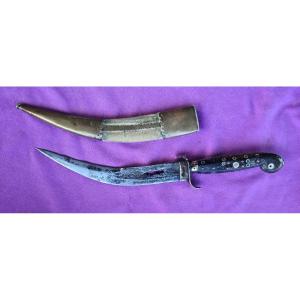
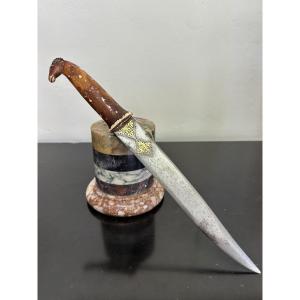
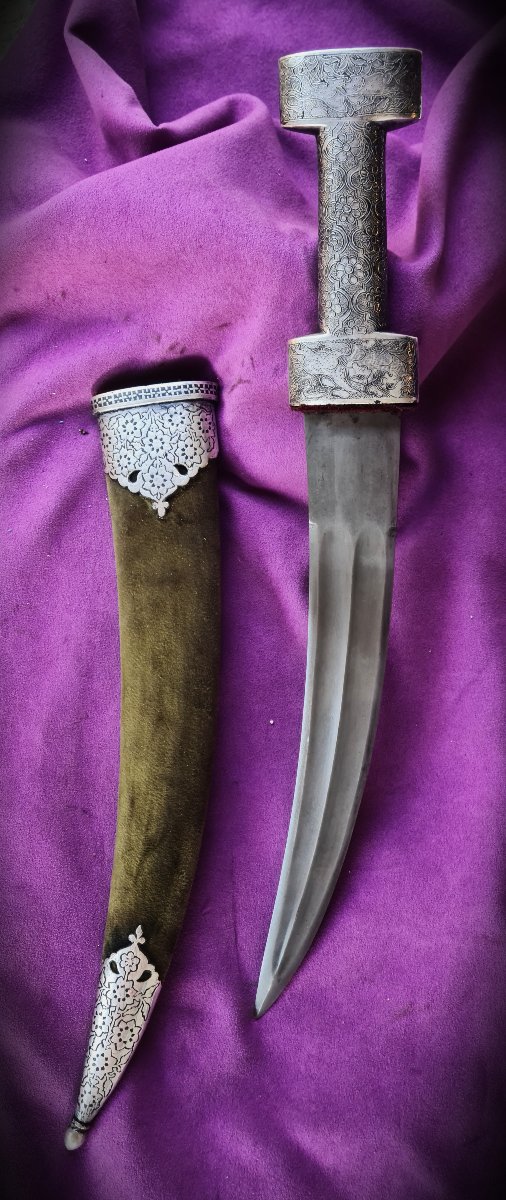
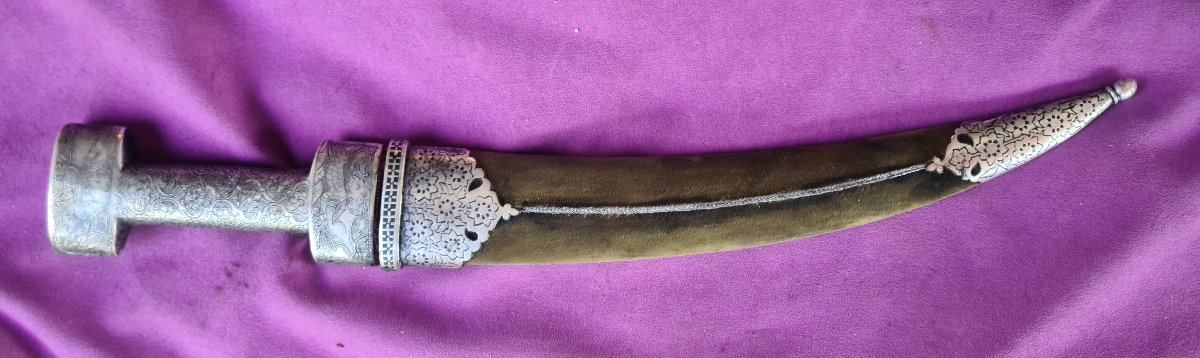
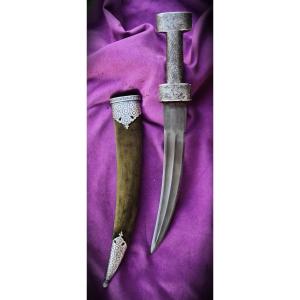
This dagger is a Khandjar, an Indo-Persian weapon whose shape is typical of Persia, but which also exists in Mughal India under the name Jambiya. The main appeal of this weapon is its wootz steel blade.
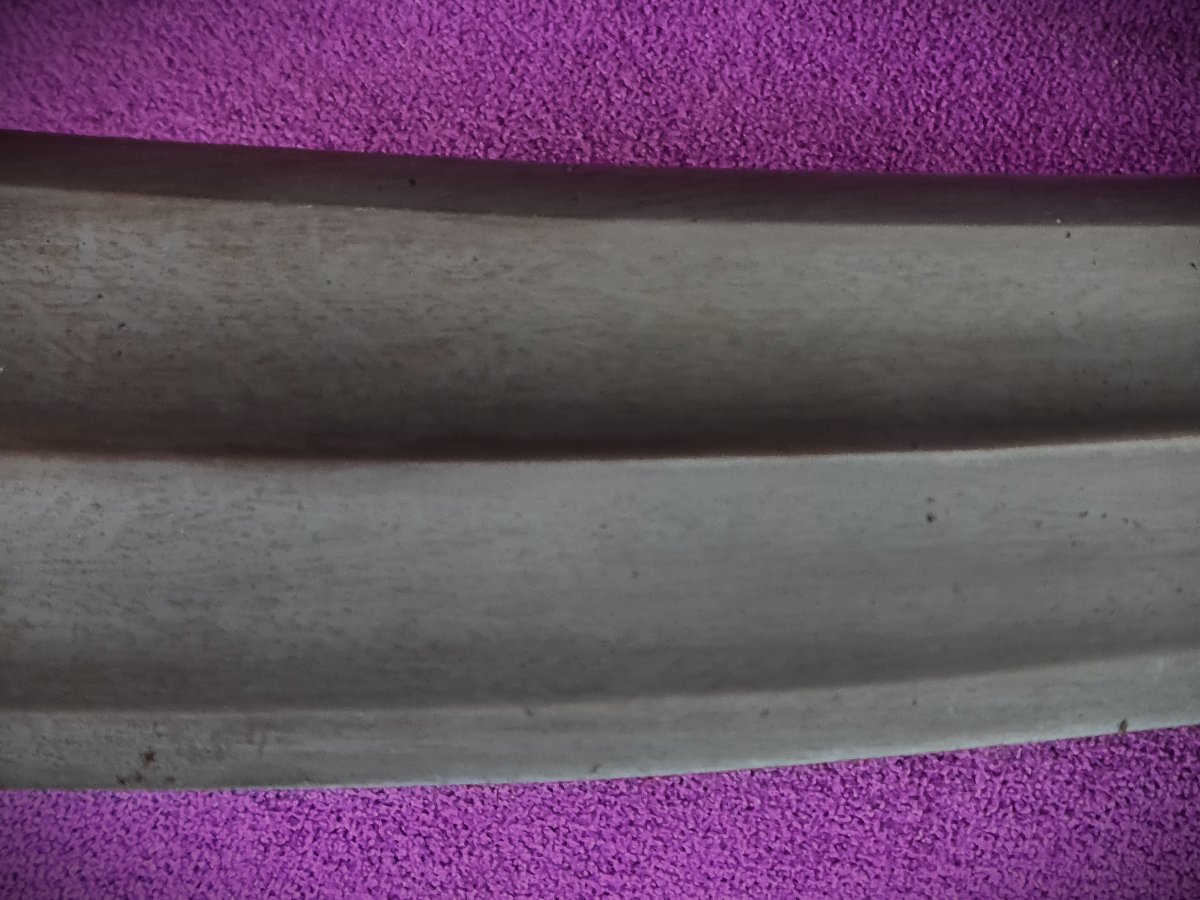
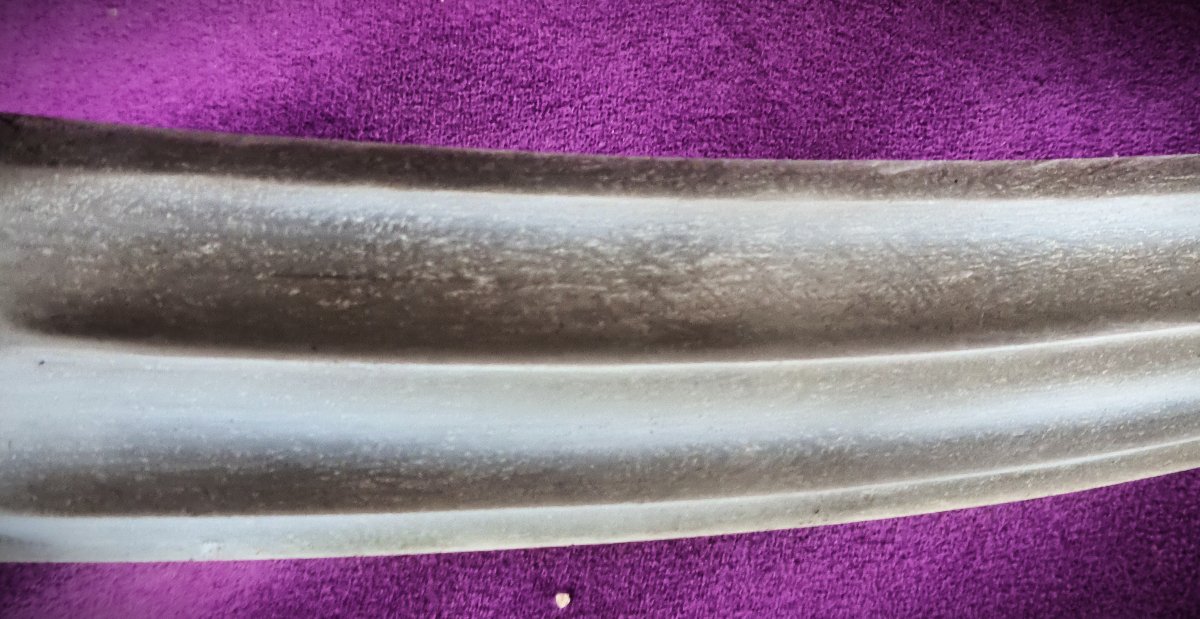
Wootz, or “crystallized Damascus steel,” or "watered steel" was produced through a very lengthy process involving three weeks of heating the steel, which resulted in natural crystallization—not to be confused with Damascus steel resulting from forging and welding. The production of wootz ceased at the end of the 17th century, but raw blocks survived and were worked on at a later date. I would therefore date this object from the second half of the 19thcentury, based on the assembly of a blade that is likely older and the hilt. The scabbard is a custom-made piece from the 20th century
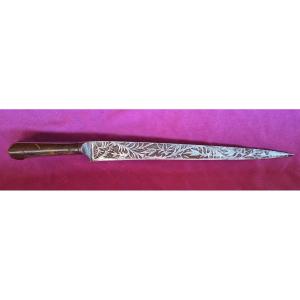
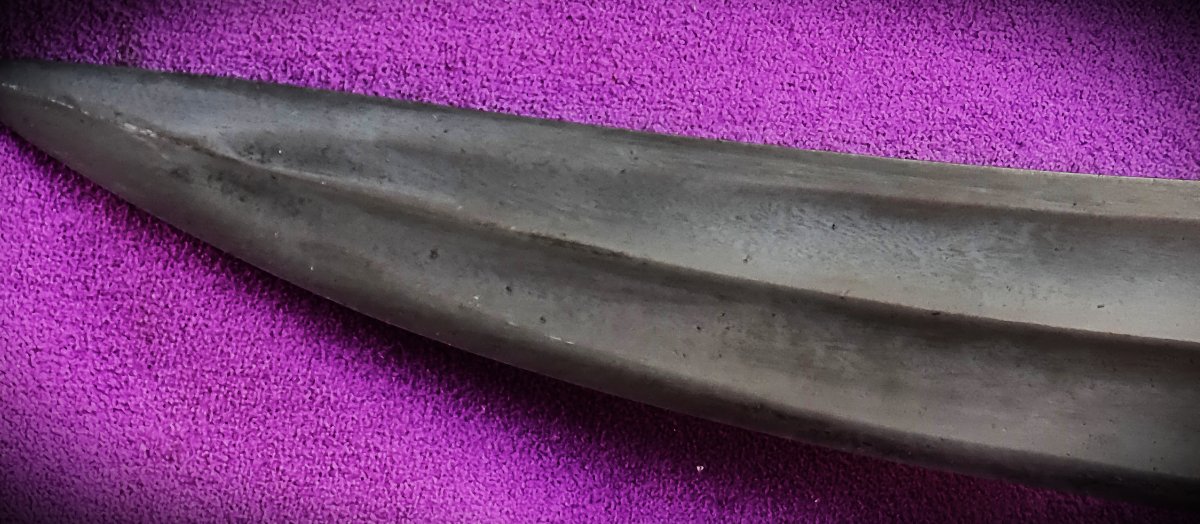
BLADE: This is a fine example of blacksmithing. After a 4.8 cm ricasso, the blade takes on a “seagull’s wing” cross-section, with two wide fullers on each side. The wootz is in perfect condition in the fullers, and slightly less well-defined at the ricasso due to friction.Blade length =26.3 cm, width at the ricasso = 3.8 cm, thickness at the ricasso = 5 mm
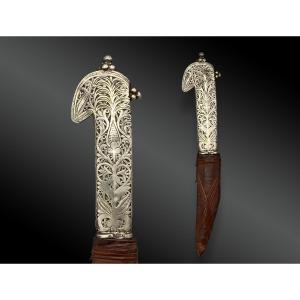
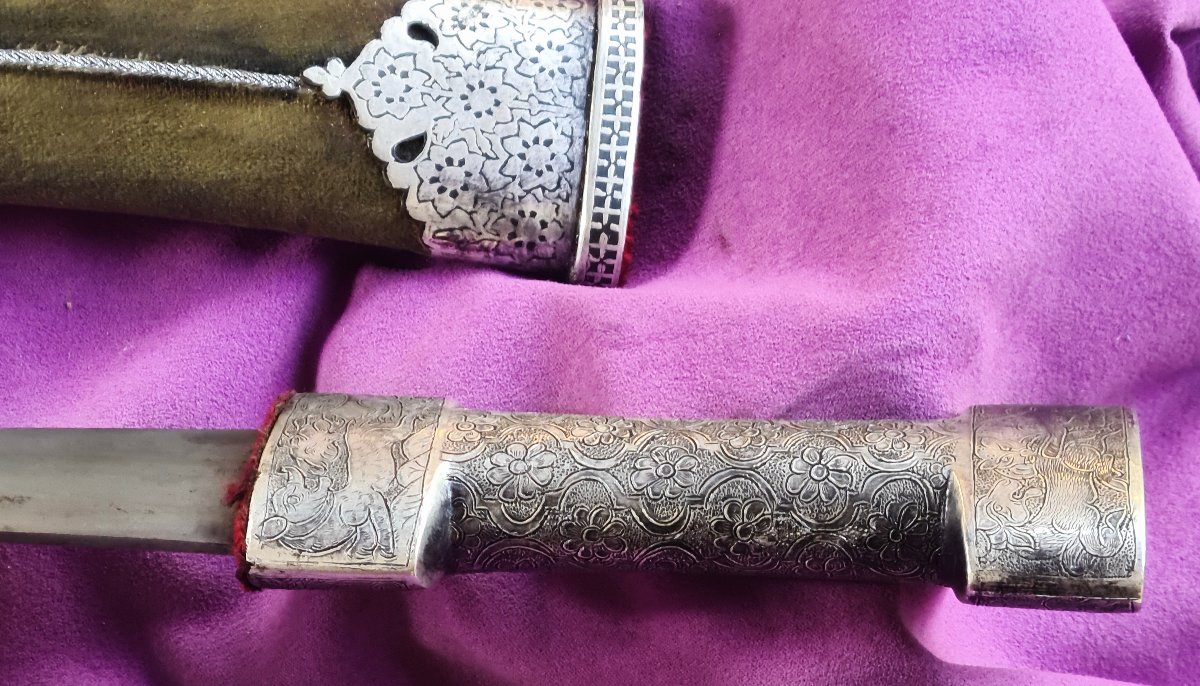
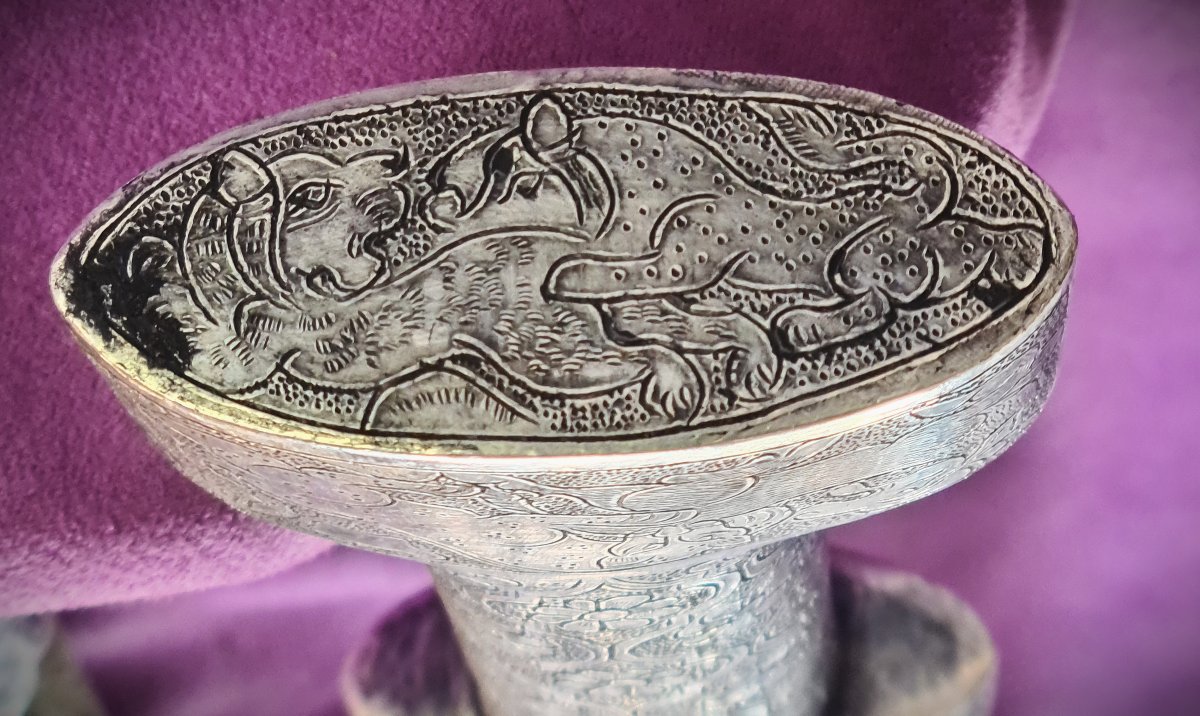
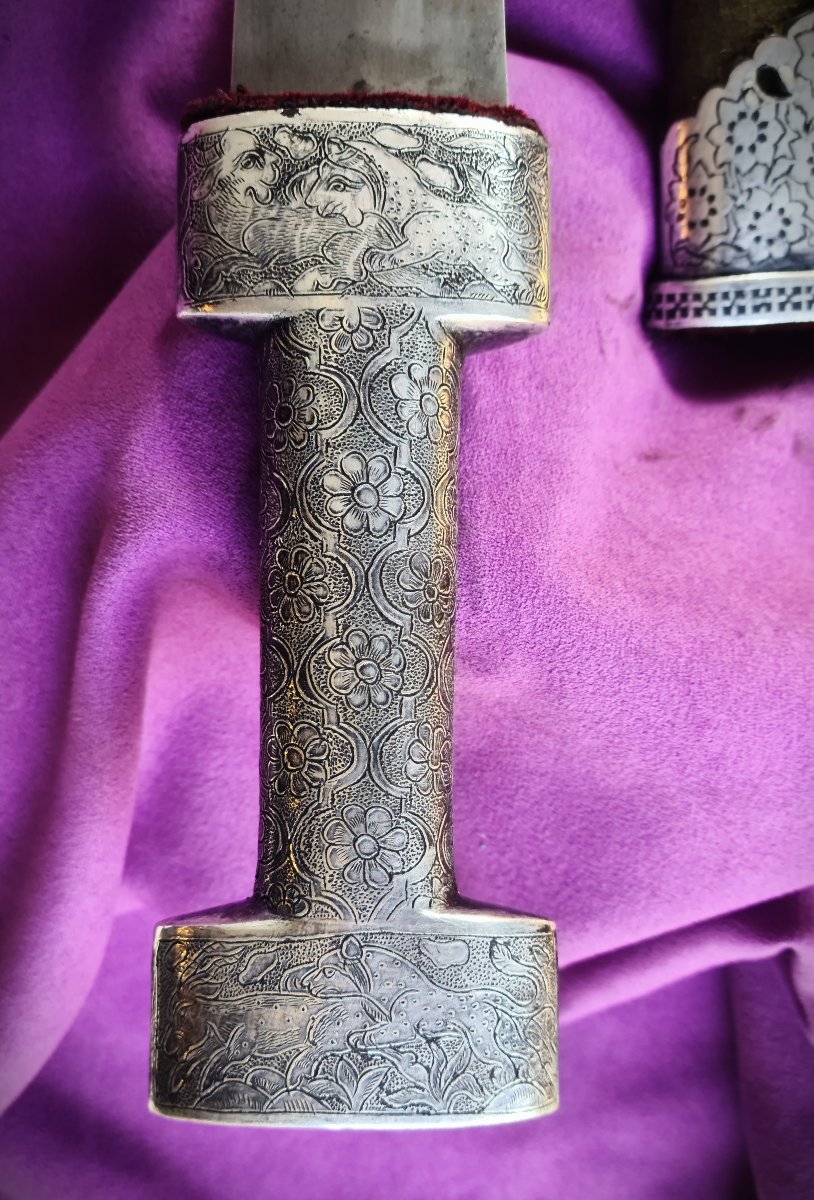
HILT : It is covered in silver leaf and features rich chiseled decoration.The central section depicts a scattering of flowers, and the two ends show various depictions of the famous Persian motif of a predator attacking a peaceful animal, which, according to a very ancient tradition, symbolizes the superiority of the nomad over the sedentary, and according to a more recent tradition, the superiority of warrior peoples over other nations.
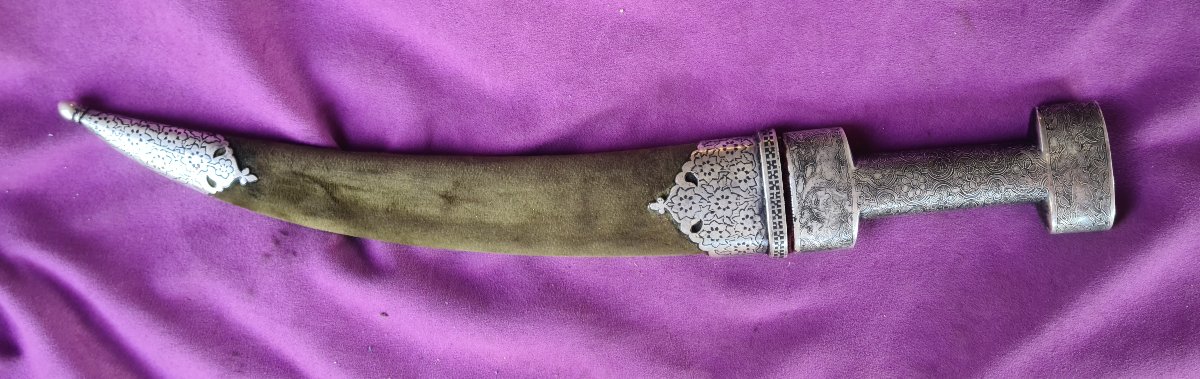
SCABBARD : Itis made of wood, covered in green velvet with a sheath opening and chape mades of chiseled metal covered in silver leaf.
This beautiful dagger is in excellent condition and will fit perfectly into a collection of high-quality Oriental weapons
Ref E-2644 Shipping costs via UPS with insurance: France €40 Europe €50
Wootz, or “crystallized Damascus steel,” or "watered steel" was produced through a very lengthy process involving three weeks of heating the steel, which resulted in natural crystallization—not to be confused with Damascus steel resulting from forging and welding. The production of wootz ceased at the end of the 17th century, but raw blocks survived and were worked on at a later date. I would therefore date this object from the second half of the 19thcentury, based on the assembly of a blade that is likely older and the hilt. The scabbard is a custom-made piece from the 20th century
BLADE: This is a fine example of blacksmithing. After a 4.8 cm ricasso, the blade takes on a “seagull’s wing” cross-section, with two wide fullers on each side. The wootz is in perfect condition in the fullers, and slightly less well-defined at the ricasso due to friction.Blade length =26.3 cm, width at the ricasso = 3.8 cm, thickness at the ricasso = 5 mm
HILT : It is covered in silver leaf and features rich chiseled decoration.The central section depicts a scattering of flowers, and the two ends show various depictions of the famous Persian motif of a predator attacking a peaceful animal, which, according to a very ancient tradition, symbolizes the superiority of the nomad over the sedentary, and according to a more recent tradition, the superiority of warrior peoples over other nations.
SCABBARD : Itis made of wood, covered in green velvet with a sheath opening and chape mades of chiseled metal covered in silver leaf.
This beautiful dagger is in excellent condition and will fit perfectly into a collection of high-quality Oriental weapons
Ref E-2644 Shipping costs via UPS with insurance: France €40 Europe €50
1 200 €
Period: 19th century
Style: Orientalism
Condition: Excellent condition
Length: 45.5 cm
Reference (ID): 1808987
Availability: In stock
Print