





Clock "religious" Style Louis XIV Marquetery Technique Boulle
ORDERING AND ADDITIONAL INFORMATION FROM OUR WEBSITE
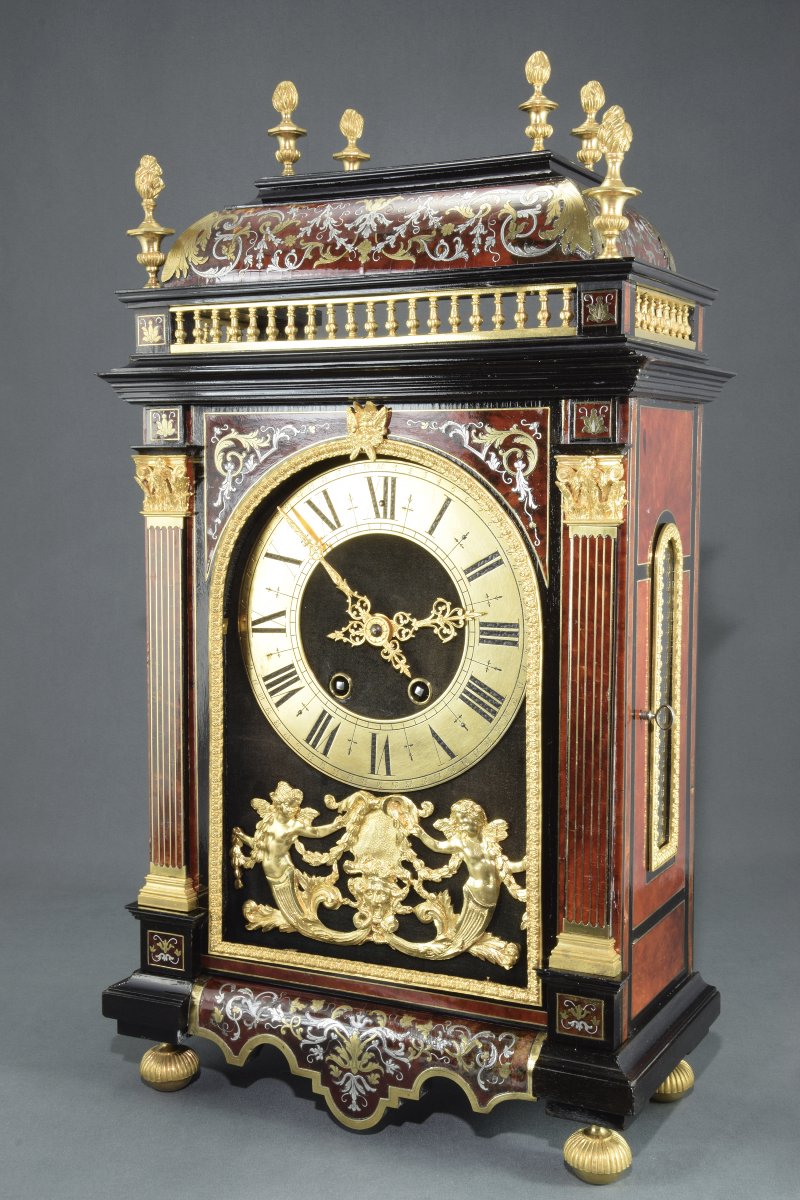
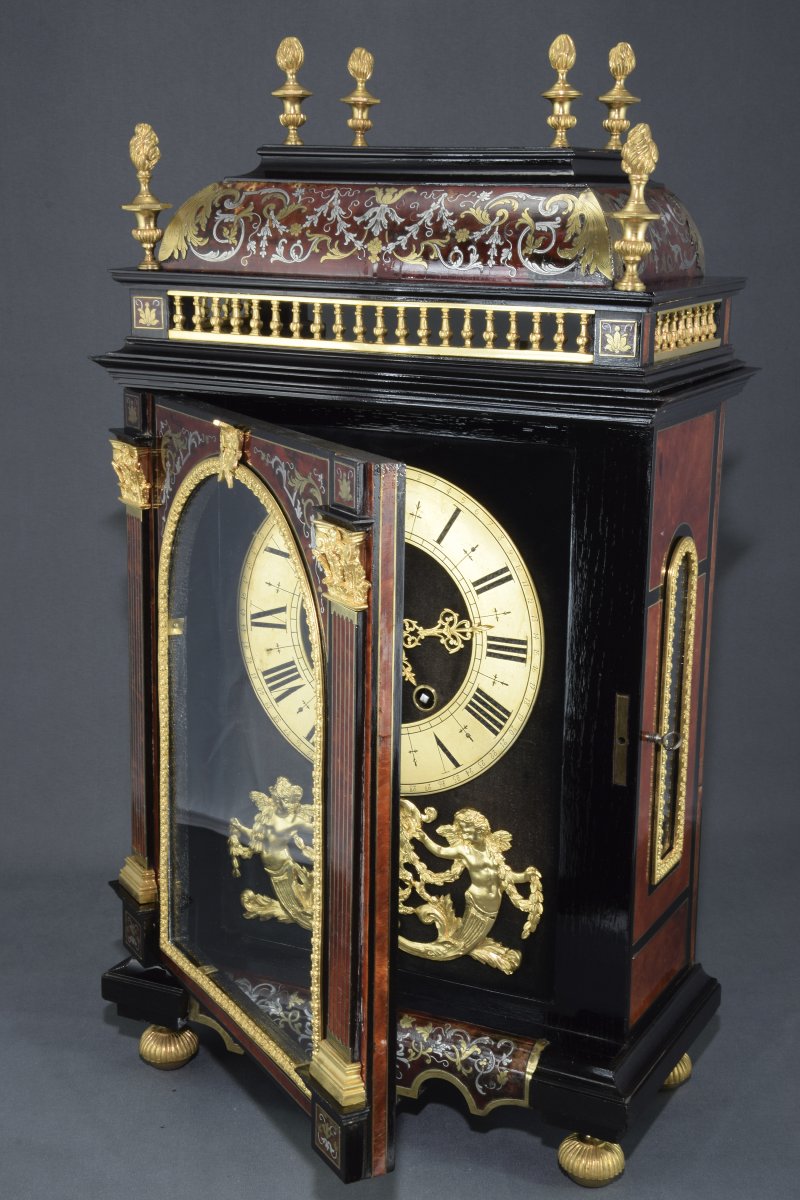
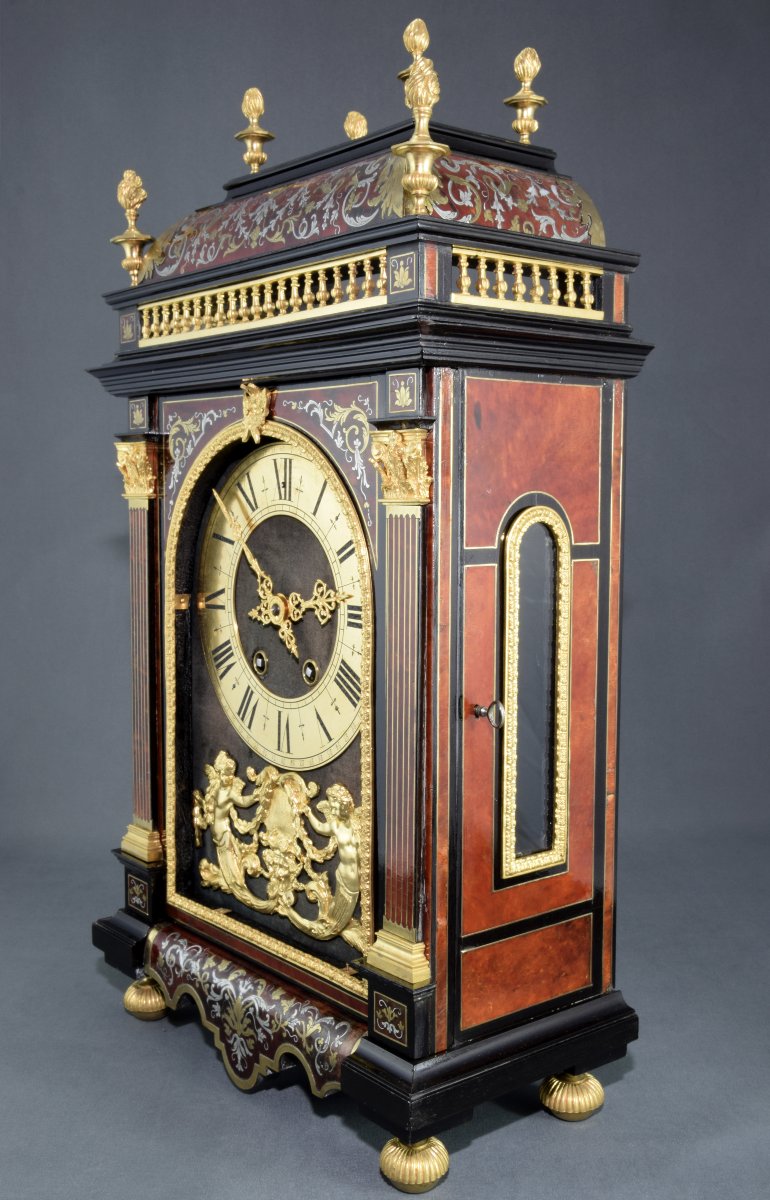
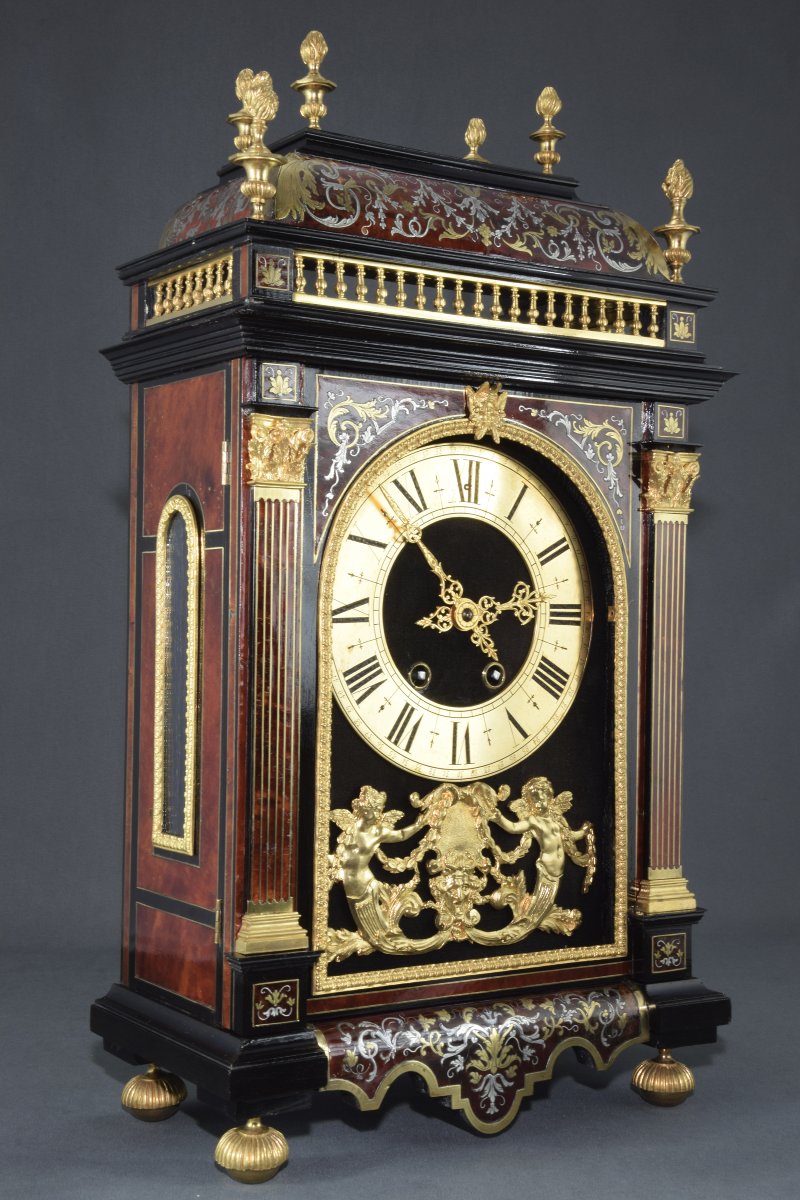
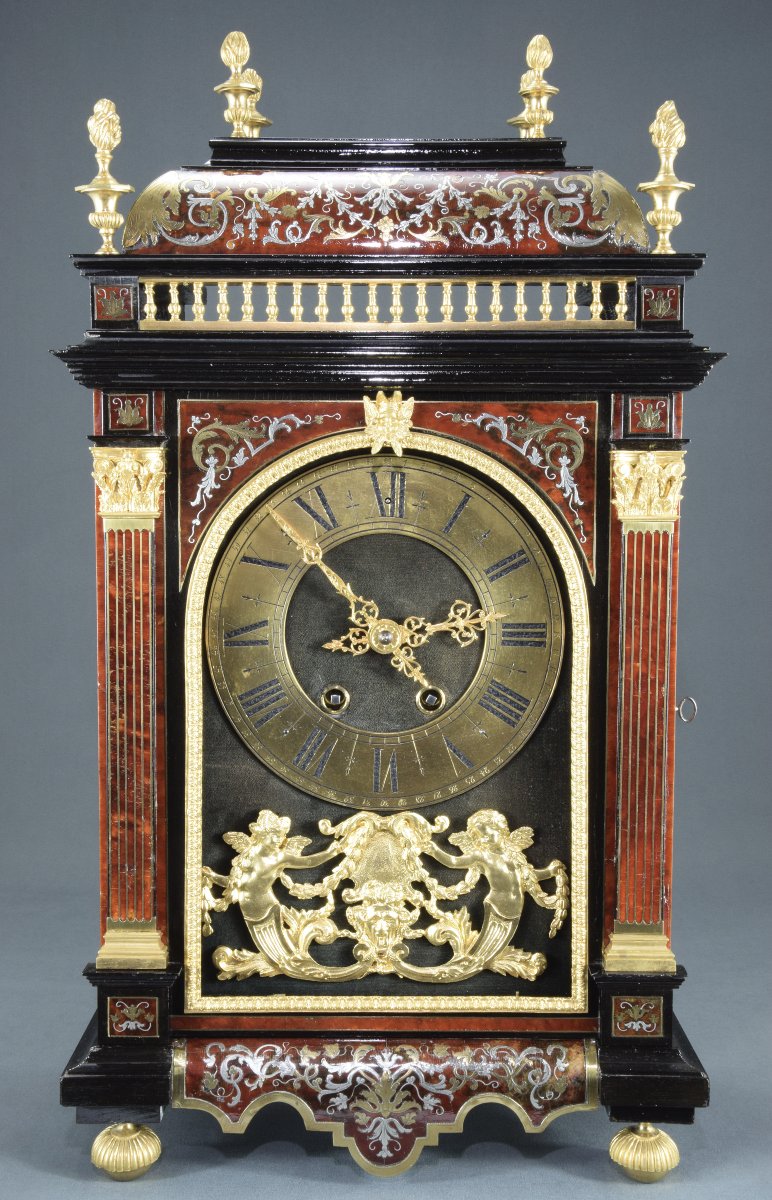
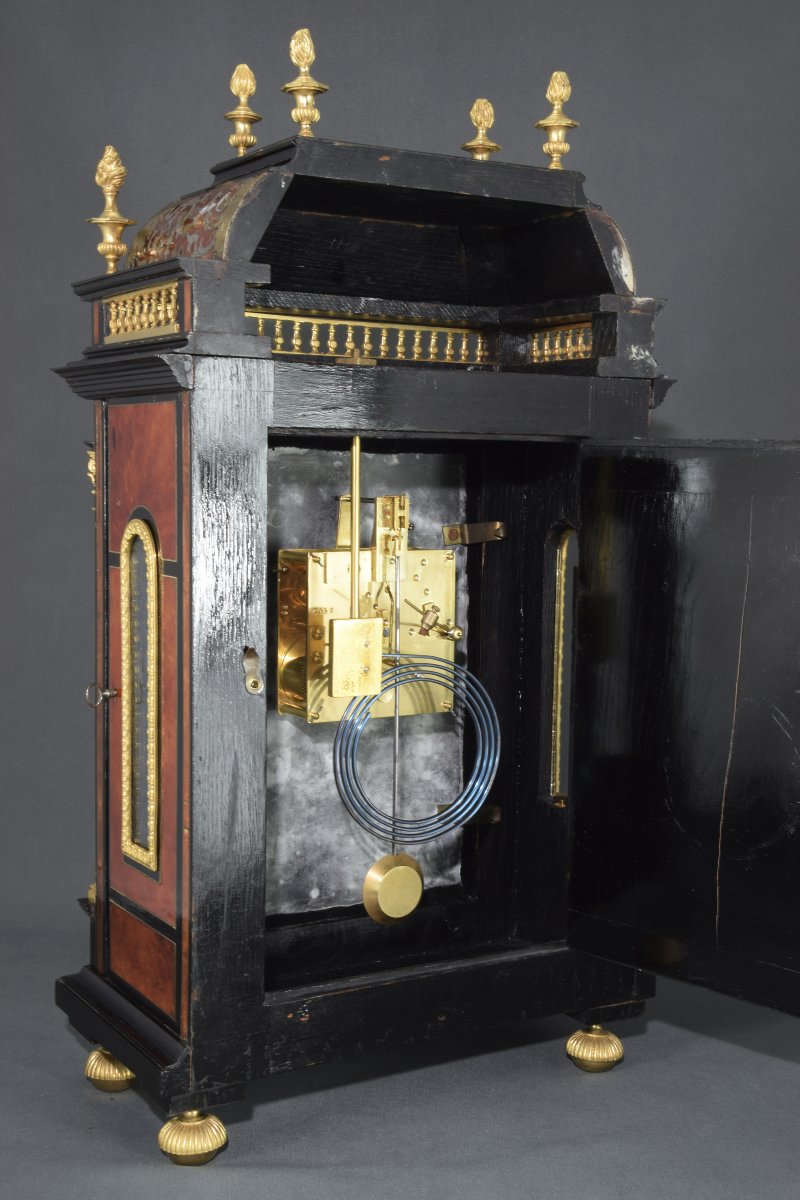
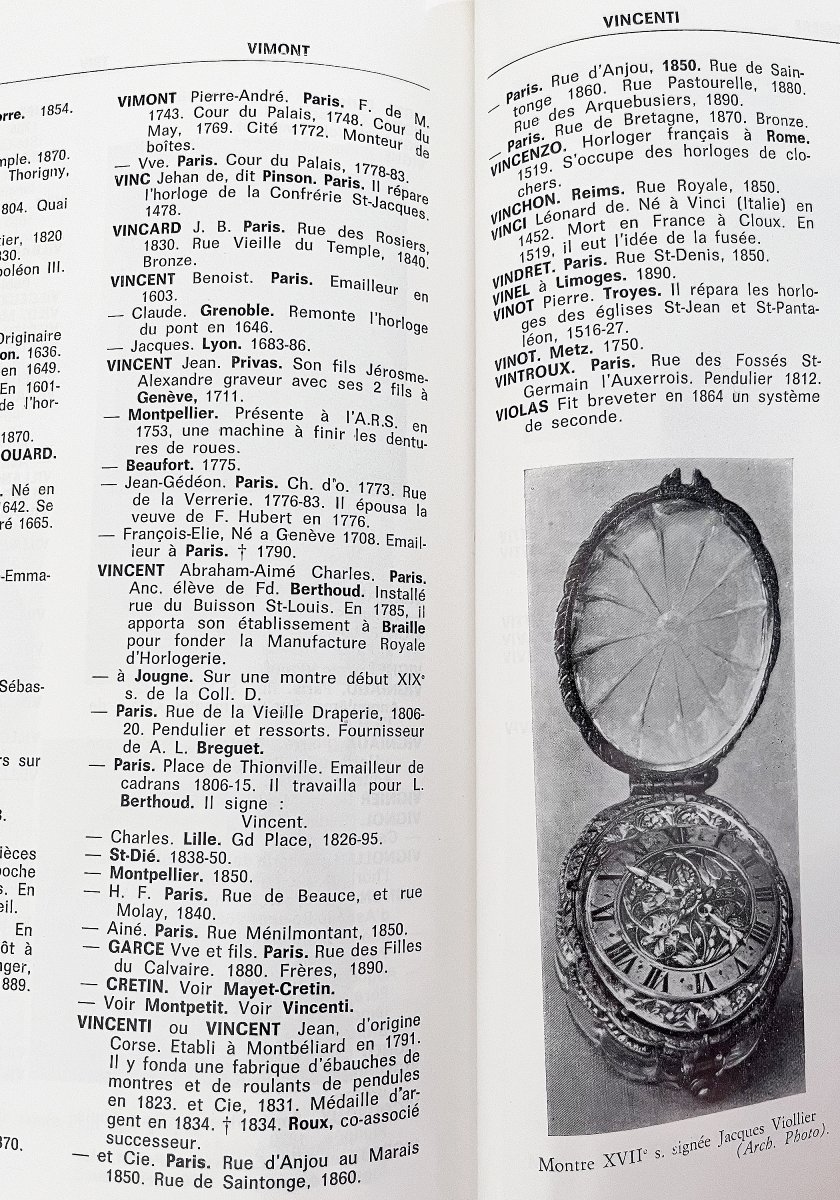
A so-called "religious" clock, reflecting theaesthetics of the Louis XIV style, made during the Second Empire around1860, in the Napoleon III era. This type of clock owes its name to itsdesign, reminiscent of the façade of a religious building, withits vertical elevation, columns, and pediment. The mechanism is stampedby the clockmaker Vincenti, a renowned 19th-century Parisianmanufacturer, listed in Tardy's Dictionary of French Clockmakers.
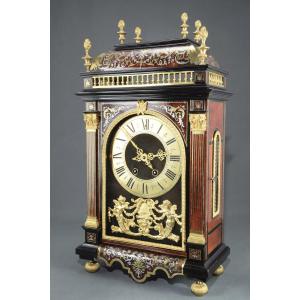
The façade, a large glazed door with a working lock and key,features an ordered architectural structure centered around a largecircular dial with Roman numerals, set within a molded frame. Theentire piece is lined with black velvet, enhancing the legibility ofthe dial and the delicate openwork hands. The dial is framed by twocolumns topped with gilt-bronze Corinthian capitals, supporting arichly decorated entablature.
The upper section is adorned with an openwork balustrade in giltbronze, surmounted by finials. The veneer is executed using the Boullemarquetry technique, combining gilt brass and pewter inlaid on atortoiseshell background, forming scrolls, arabesques, andBaroque-inspired plant motifs. The sides are covered with largetortoiseshell leaves, framed by gilt brass fillets, accentuating thecontrast between the depth of the red and brown tones of thetortoiseshell and the metallic sheen of the inlays. A small glazedopening allows a glimpse of the internal movement. This opening ishighlighted by a chased gilt bronze frame, whose design evokes thepattern of a stained-glass window, symbolically recalling the religiousarchitecture that gave its name to this type of clock.
In the lower part of the façade, a large, finely chasedgilt-bronze ornament depicts two winged figures (putti) holding agarland and framing a central cartouche, surmounting a Baroquemascaron—a composition typical of the Louis XIV decorativerepertoire.
The entire woodwork has been finished with a French polish, atraditional technique that protects the surface, enhances the contrastsin texture, and adds depth and luminosity to the marquetry.
The original mechanism is intact and unaltered. It strikes the hoursand half-hours on a gong with a clear and authentic sound.
1 850 €
Period: 19th century
Style: Louis 14th, Regency
Condition: Fully restored in our whorkshop
Material: Marquetry
Width: 30 cm
Height: 54 cm
Depth: 16 cm
Reference (ID): 1808534
Availability: In stock
Print