




19th Impressive Napoleon III Japonism Clock Bronze And Imari Porcelain
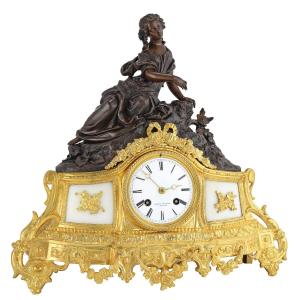
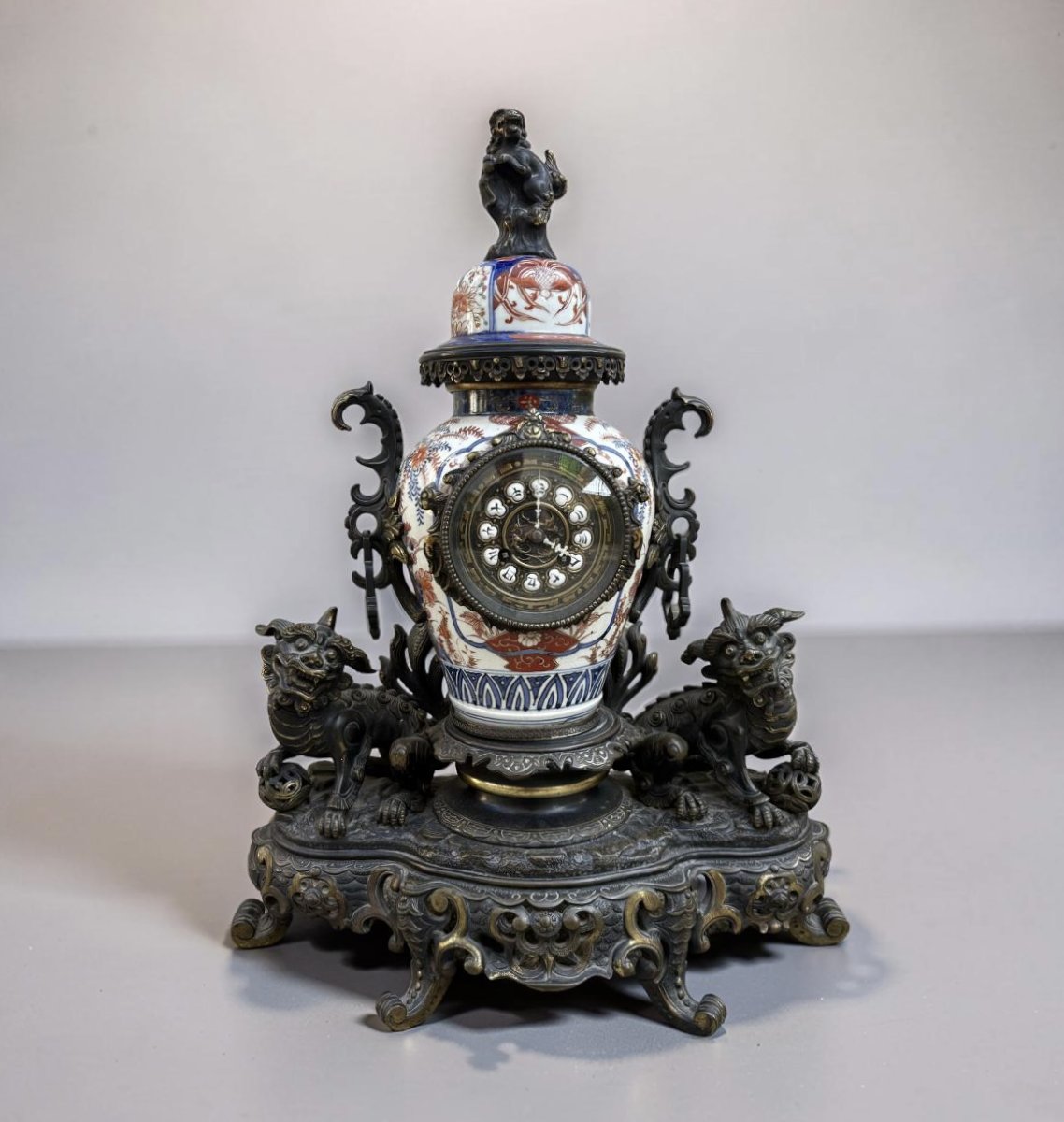
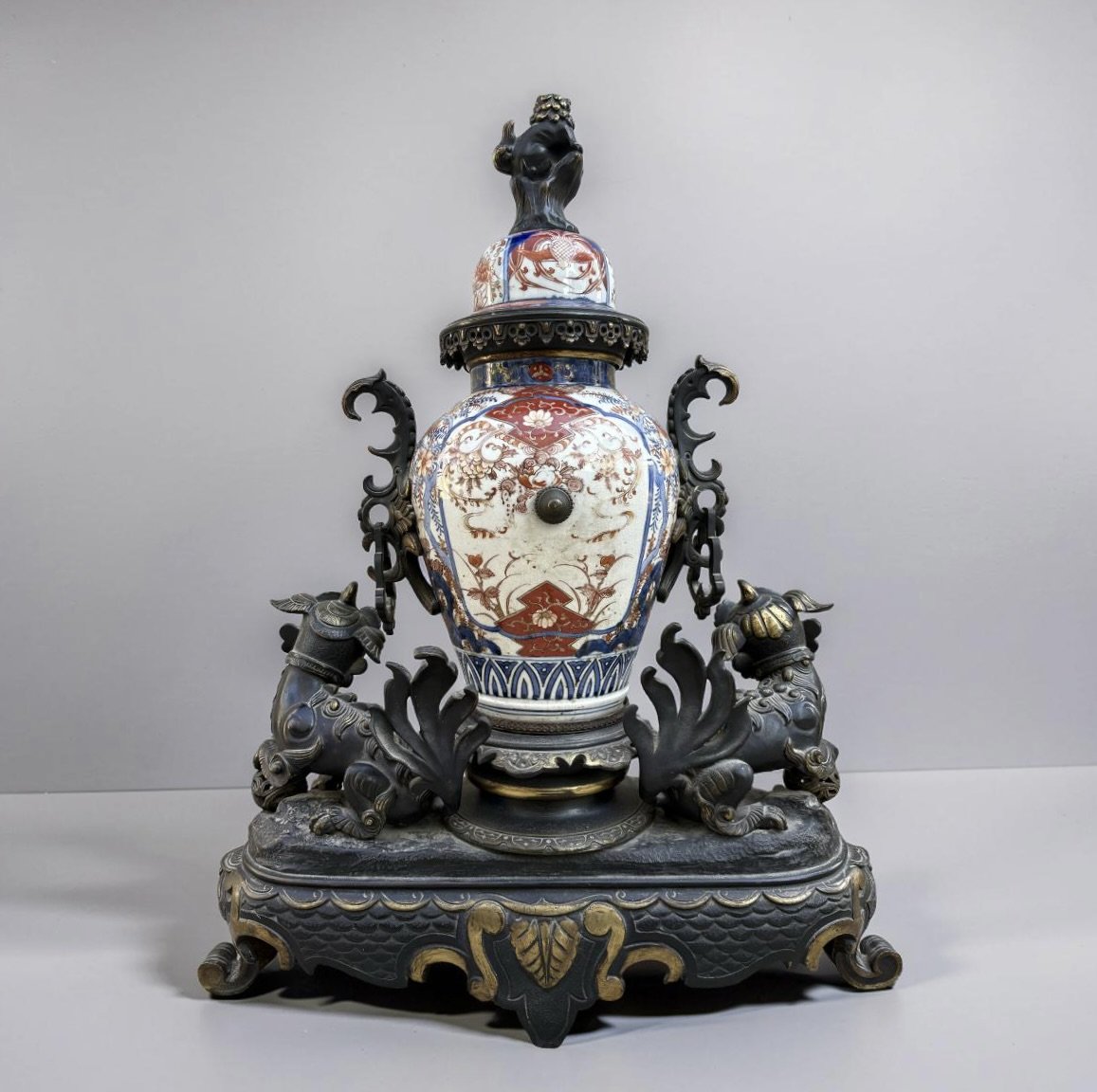
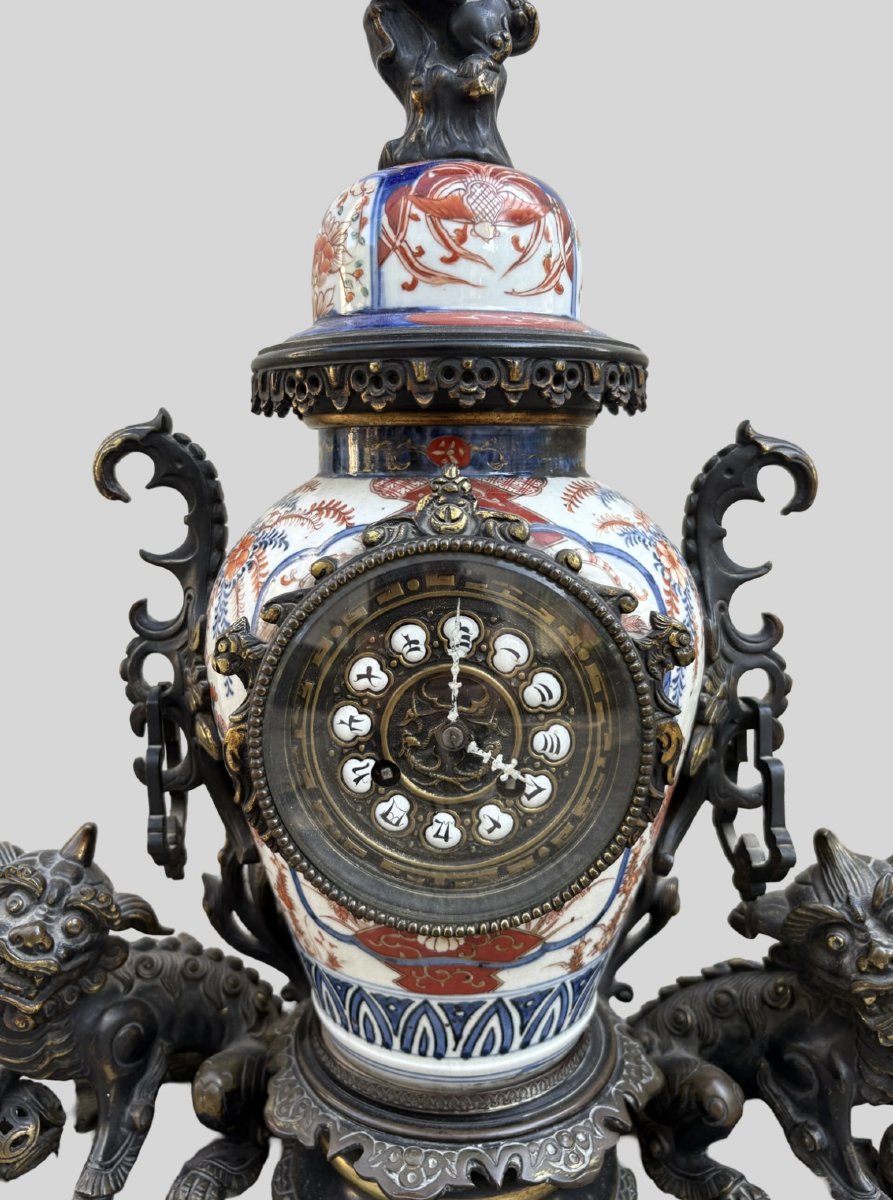
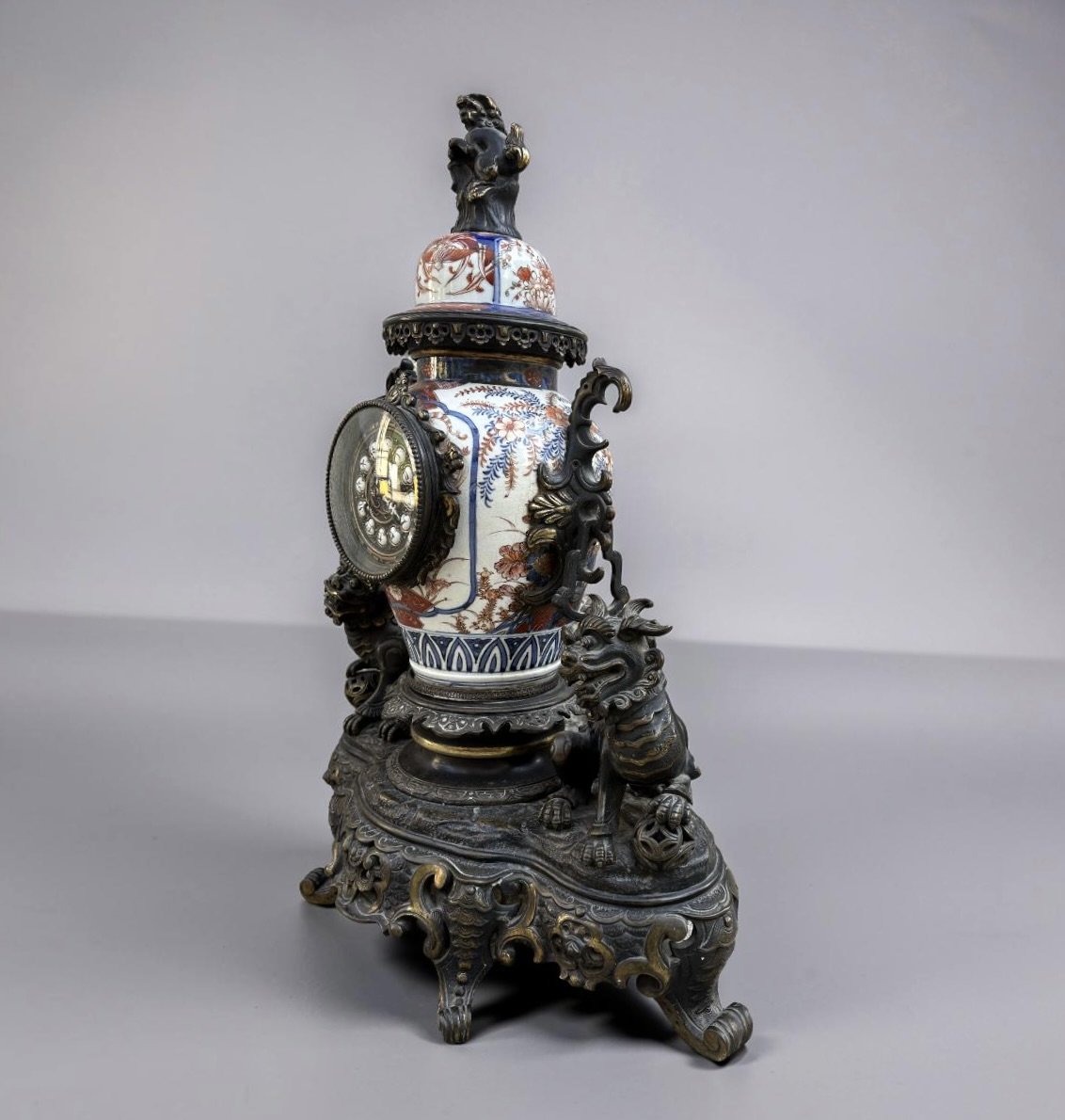
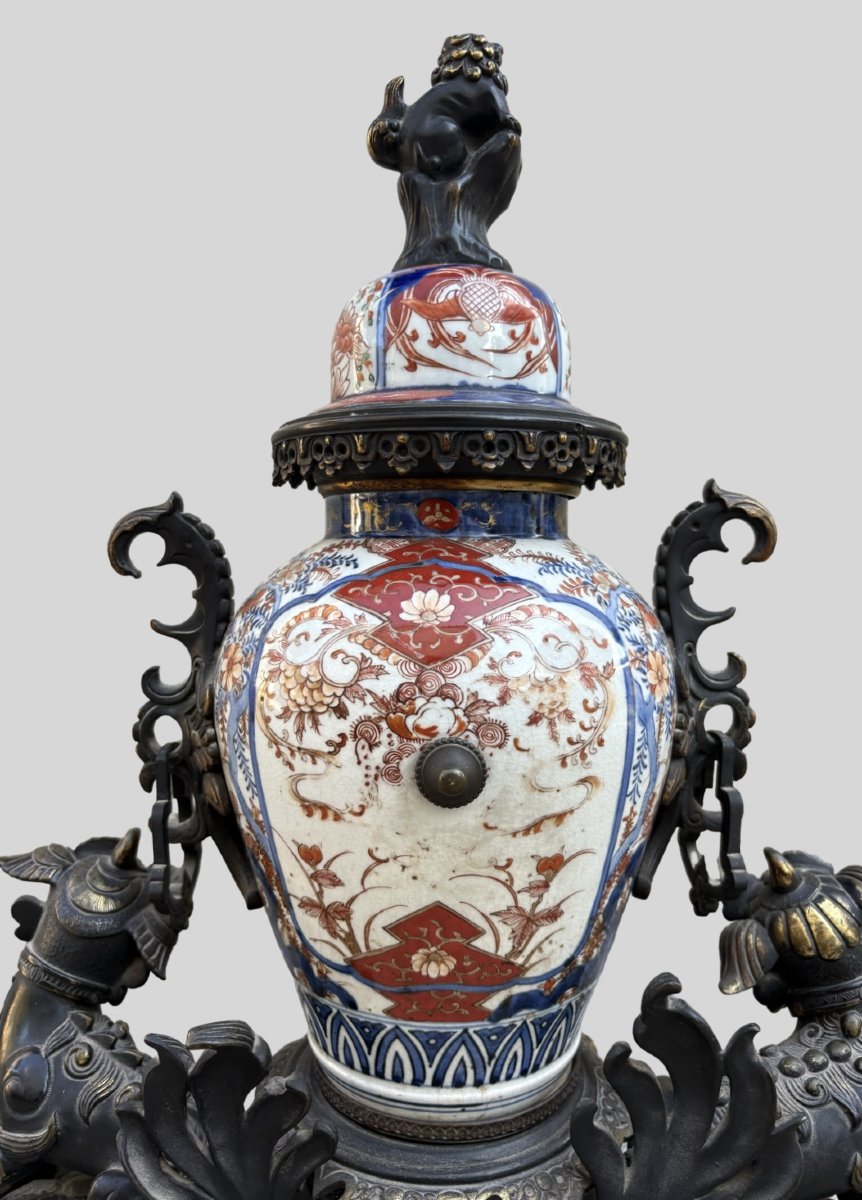
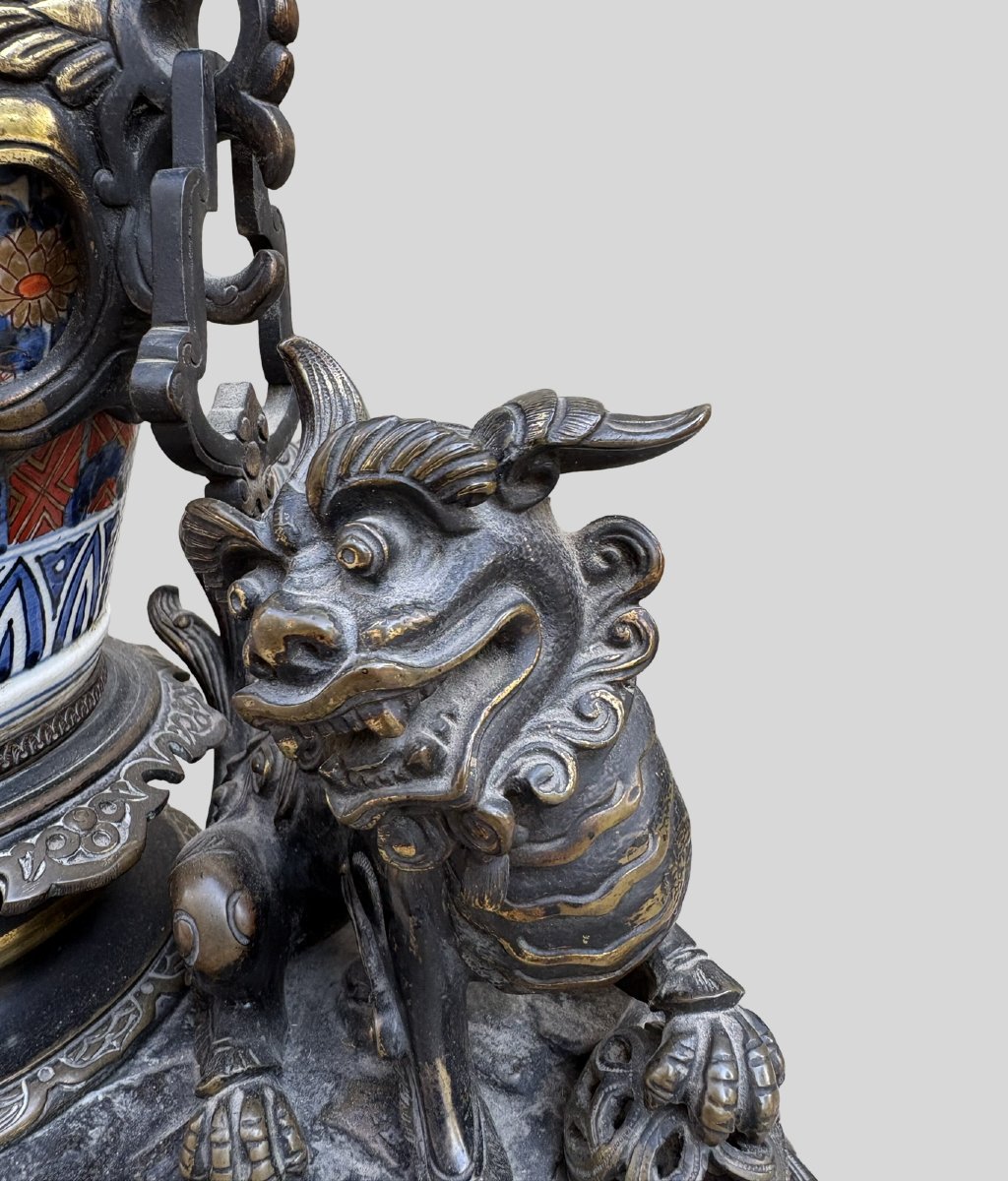
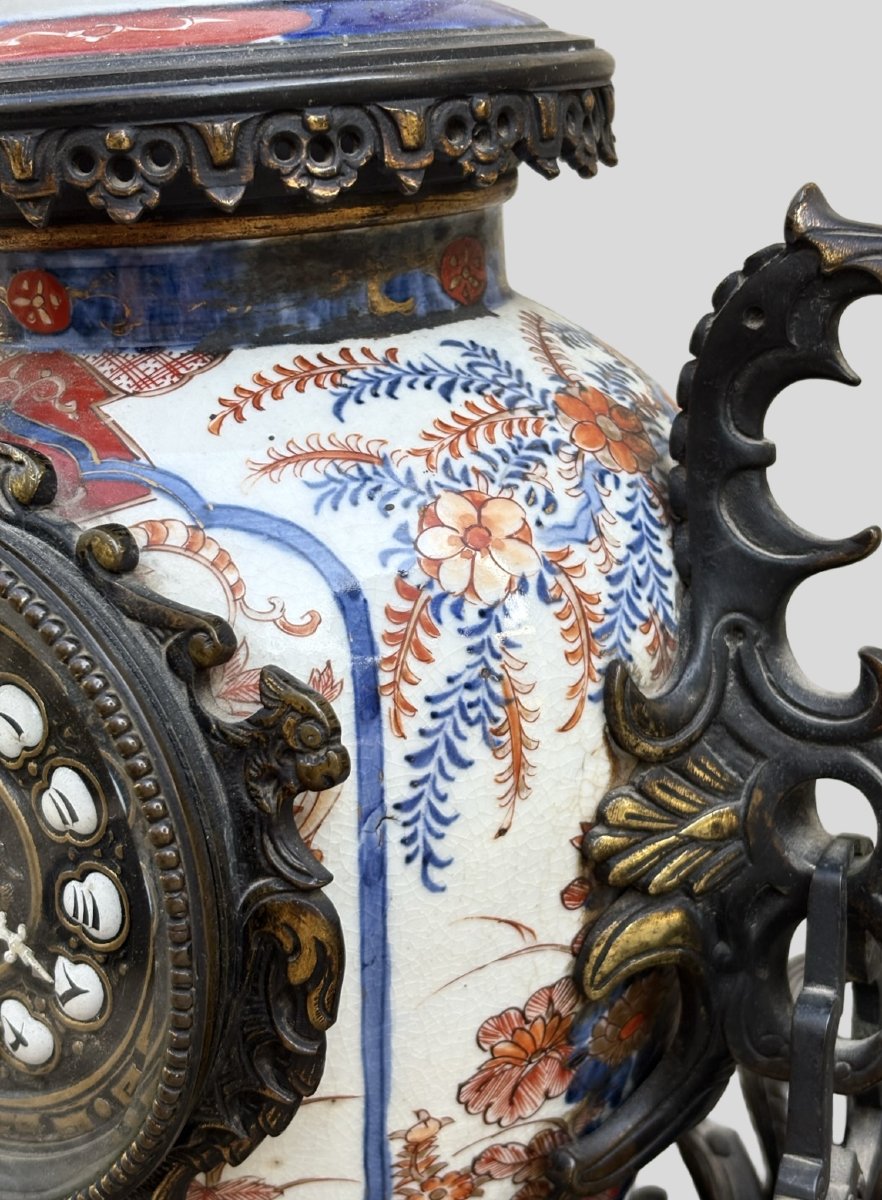
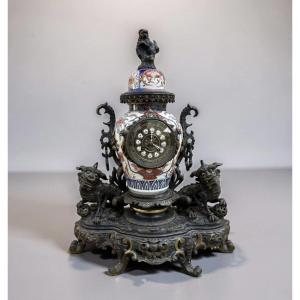
An imposing Napoleon III clock, consisting of an ovoid vase covered in Imari porcelain with a richly chiseled, patinated, and gilded bronze frame, decorated with mythical animals, including a Foo dog at the base—a symbol of wealth. This clock is characteristic of a style popular in the late 19th century, stemming from the pronounced fascination with the Far East at the time, and intended for the most sumptuous interiors. The Meiji era is a historical period in Japan spanning from 1868 to 1912.
Japonism in France refers to the enthusiasm for and influence of Japanese art and culture on French artists between 1860 and the early 20th century. Born out of the opening of Japan’s borders and the use of ukiyo-e prints as wrapping paper, it profoundly transformed Impressionist painting, the decorative arts, and architecture. After 1858 and the end of the policy of isolation (sakoku), objects and prints by Hokusai and Hiroshige arrived in Europe. The Paris World’s Fairs of 1867, 1878, and 1889 introduced Japanese art to the general public. The critic Philippe Burty coined the term “Japonism” in 1872. Collectors such as the Goncourt brothers and Émile Guimet helped spread this aesthetic.
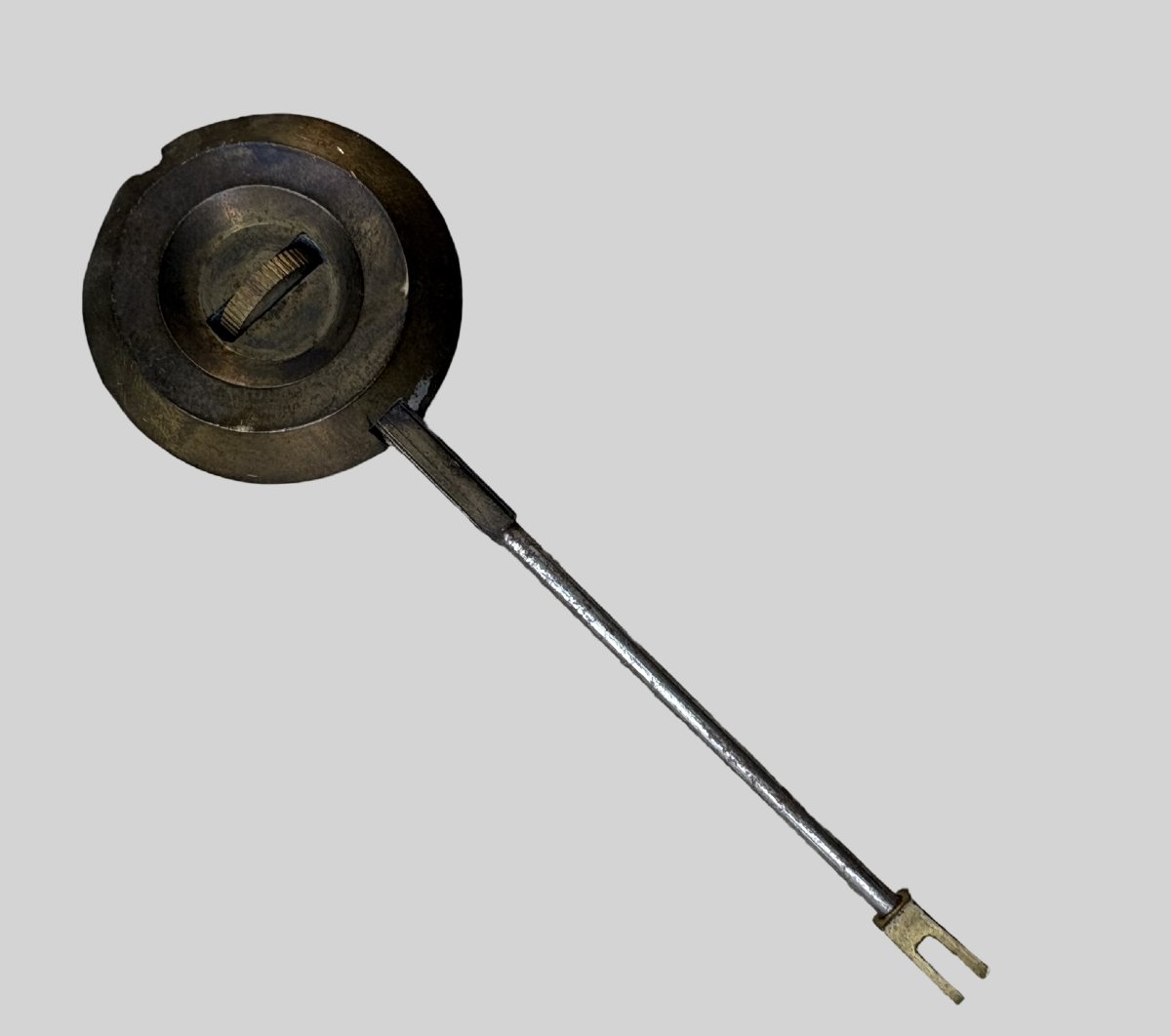
The clock is in excellent condition and the vase is intact. It comes complete with its original pendulum.
Dimensions:
H 64 cm
L 50 cm
D 17 cm +++++++++++++++++++++++++++++++++++++++++++++++++++++++++++++++++++++++++++++++++++++++++++++ SHIPPING VIA DHL OR CARRIER
Payment methods: Bank transfer - Online credit card (including AMEX) - PayPal (+3.7%) - NO checks https://internationalantiques.eu/fr/livraison-et-assurance/ +++++++++++++++++++++++++++++++++++++++++++++++++++++++++++++++++++++++++++++++++++++++++++++
Japonism in France refers to the enthusiasm for and influence of Japanese art and culture on French artists between 1860 and the early 20th century. Born out of the opening of Japan’s borders and the use of ukiyo-e prints as wrapping paper, it profoundly transformed Impressionist painting, the decorative arts, and architecture. After 1858 and the end of the policy of isolation (sakoku), objects and prints by Hokusai and Hiroshige arrived in Europe. The Paris World’s Fairs of 1867, 1878, and 1889 introduced Japanese art to the general public. The critic Philippe Burty coined the term “Japonism” in 1872. Collectors such as the Goncourt brothers and Émile Guimet helped spread this aesthetic.
The clock is in excellent condition and the vase is intact. It comes complete with its original pendulum.
Dimensions:
H 64 cm
L 50 cm
D 17 cm +++++++++++++++++++++++++++++++++++++++++++++++++++++++++++++++++++++++++++++++++++++++++++++ SHIPPING VIA DHL OR CARRIER
Payment methods: Bank transfer - Online credit card (including AMEX) - PayPal (+3.7%) - NO checks https://internationalantiques.eu/fr/livraison-et-assurance/ +++++++++++++++++++++++++++++++++++++++++++++++++++++++++++++++++++++++++++++++++++++++++++++
3 200 €
Period: 19th century
Style: Napoleon 3rd
Condition: Excellent condition
Material: Bronze
Width: 50
Height: 64
Depth: 17
Reference (ID): 1805604
Availability: In stock
Print