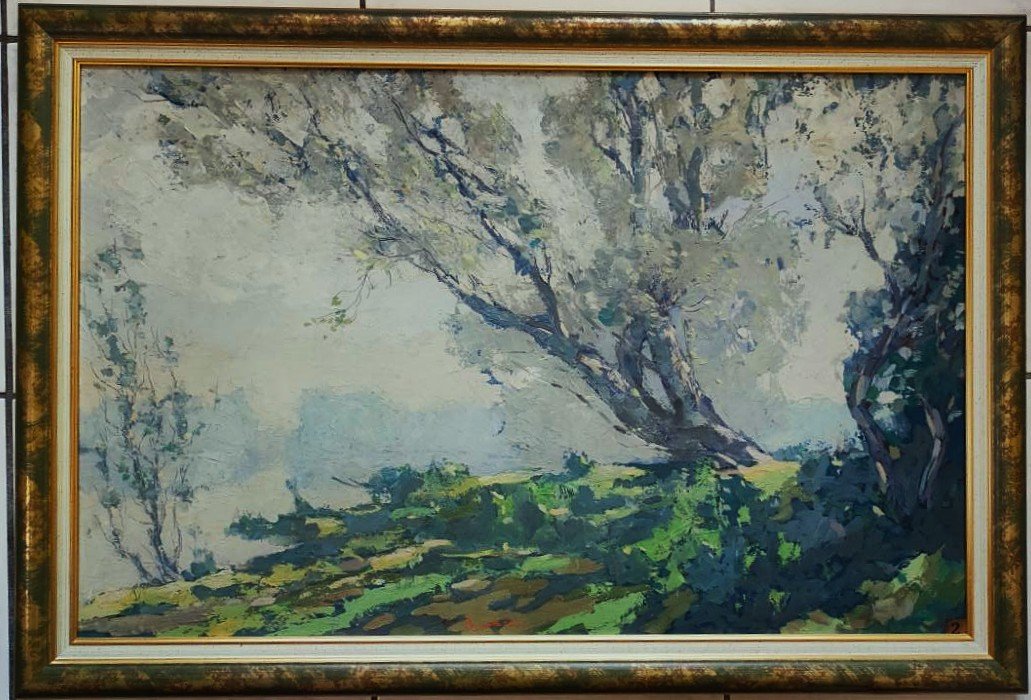
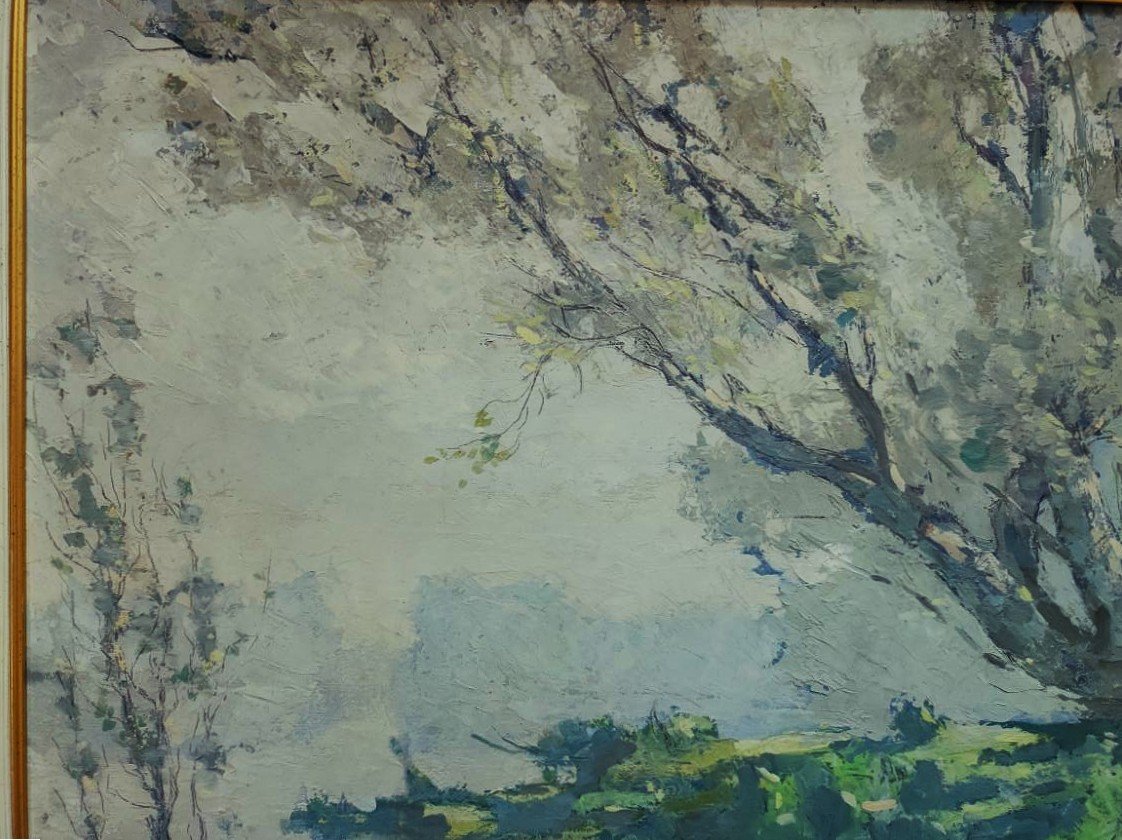
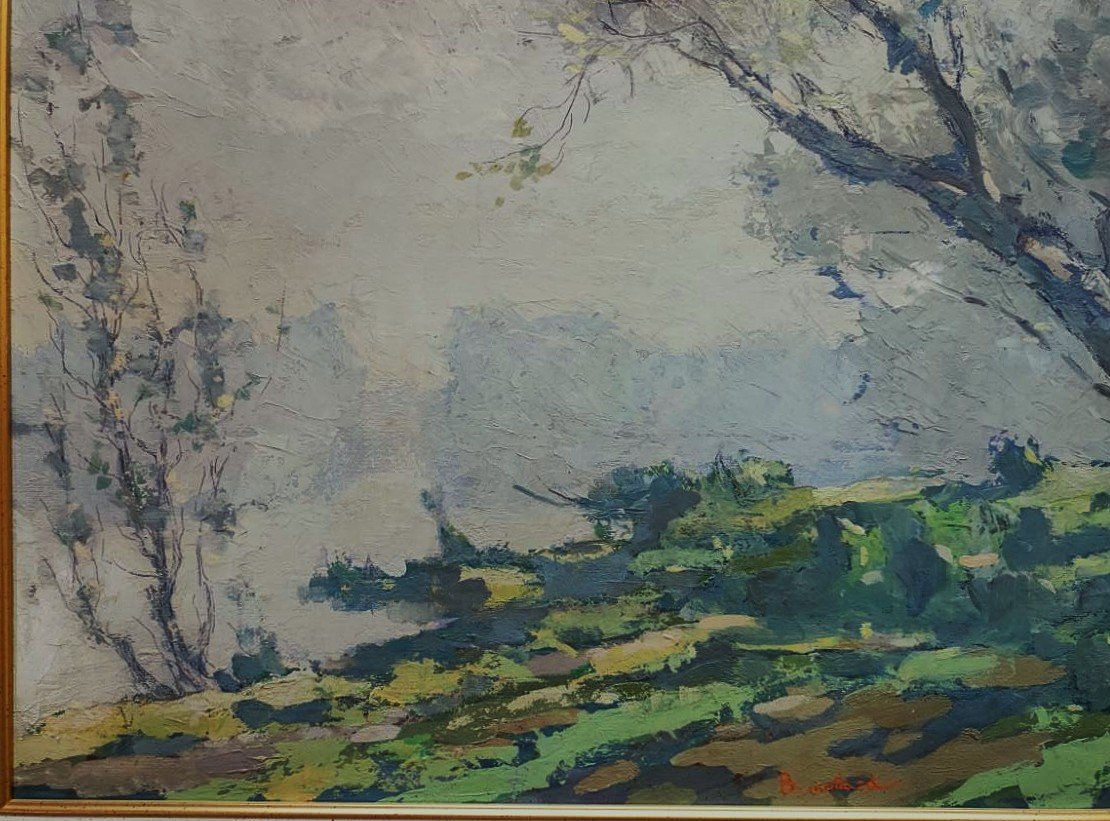
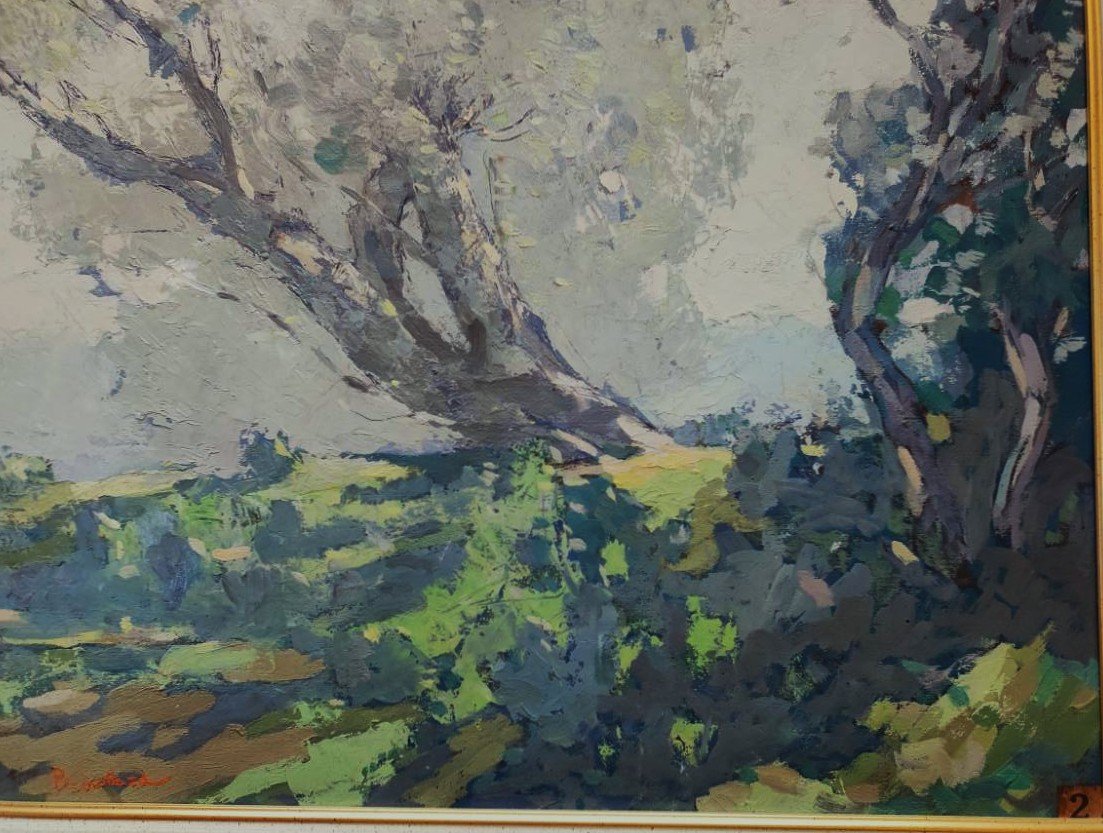
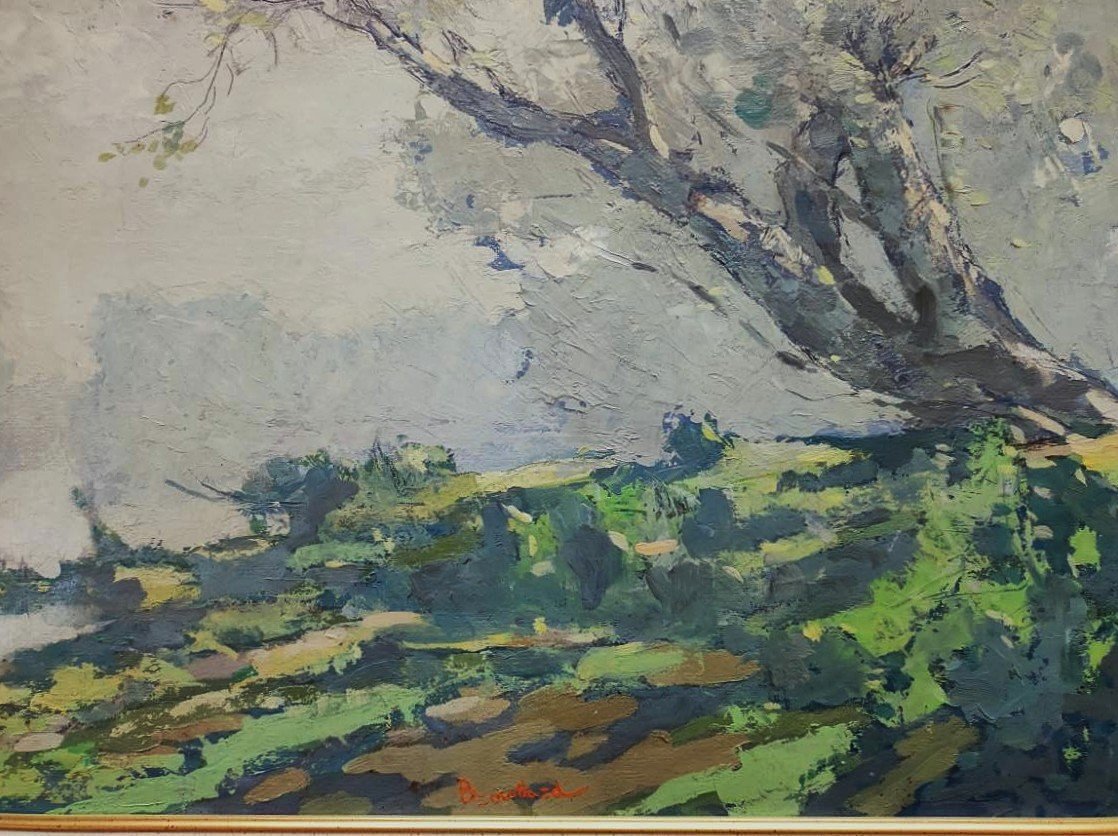
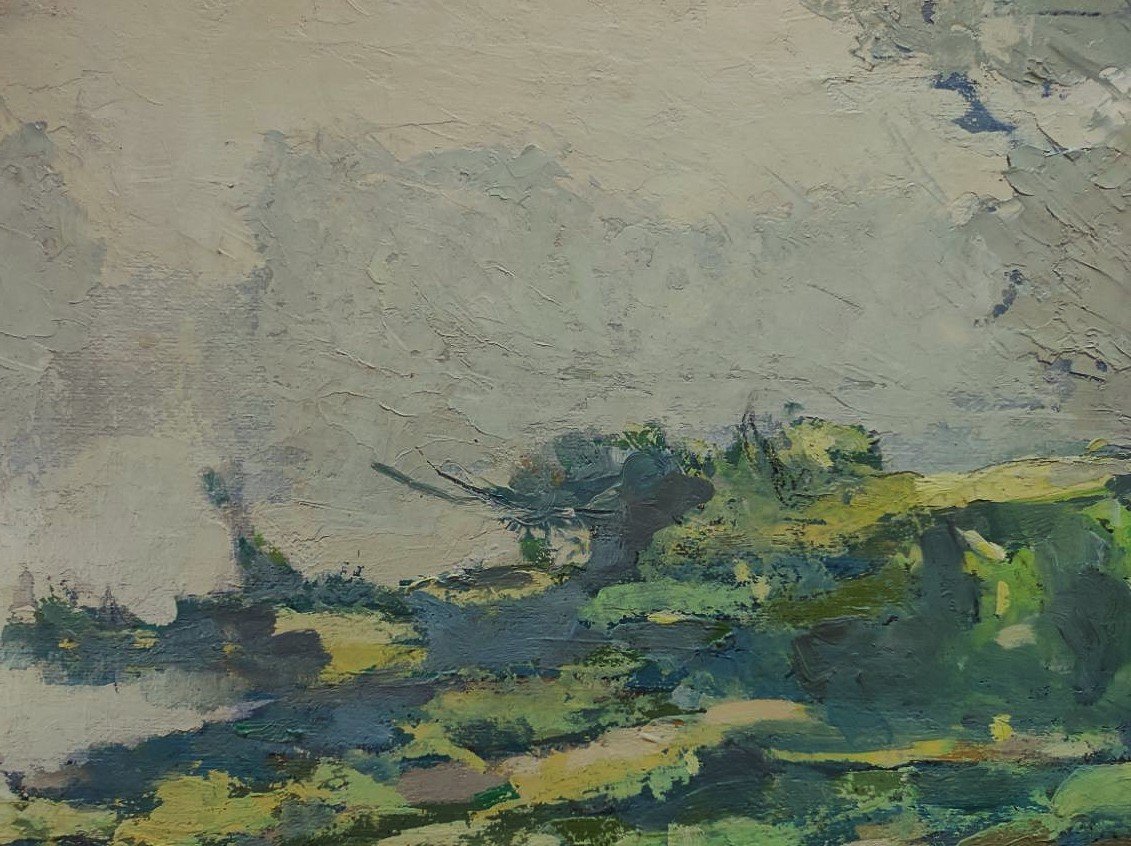
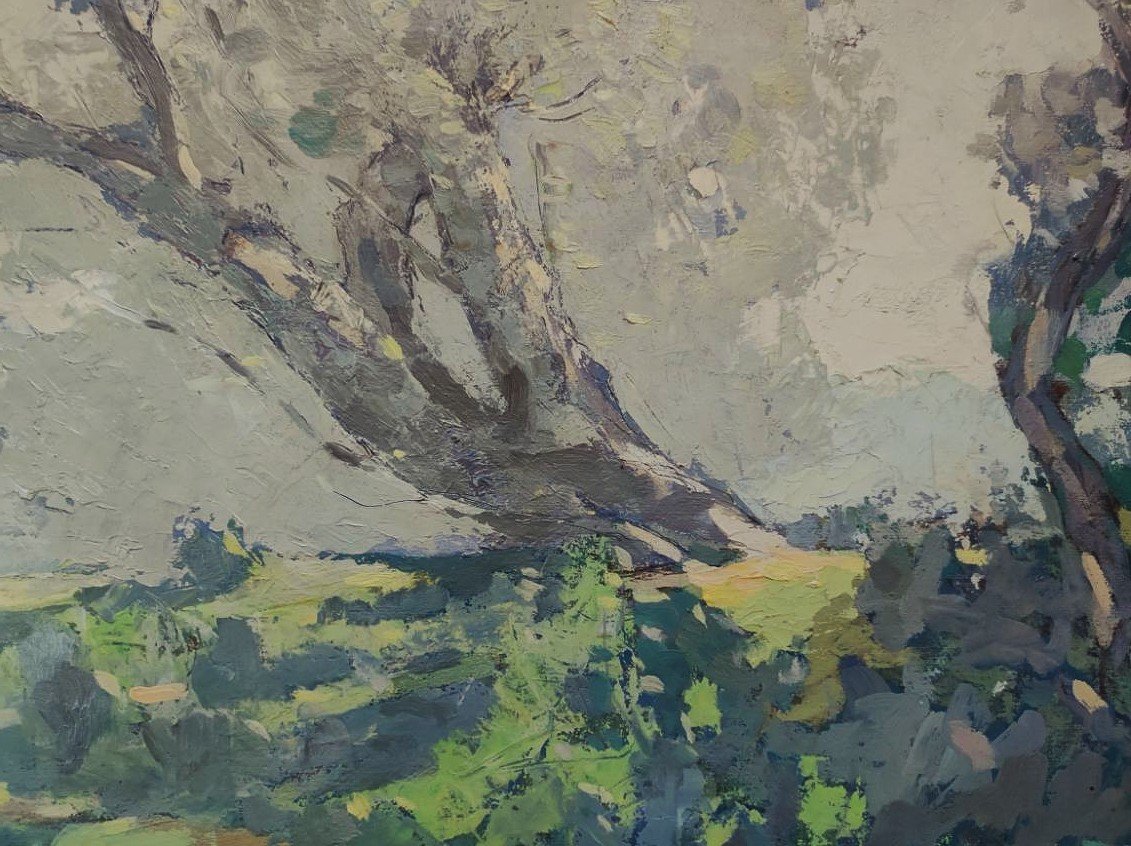
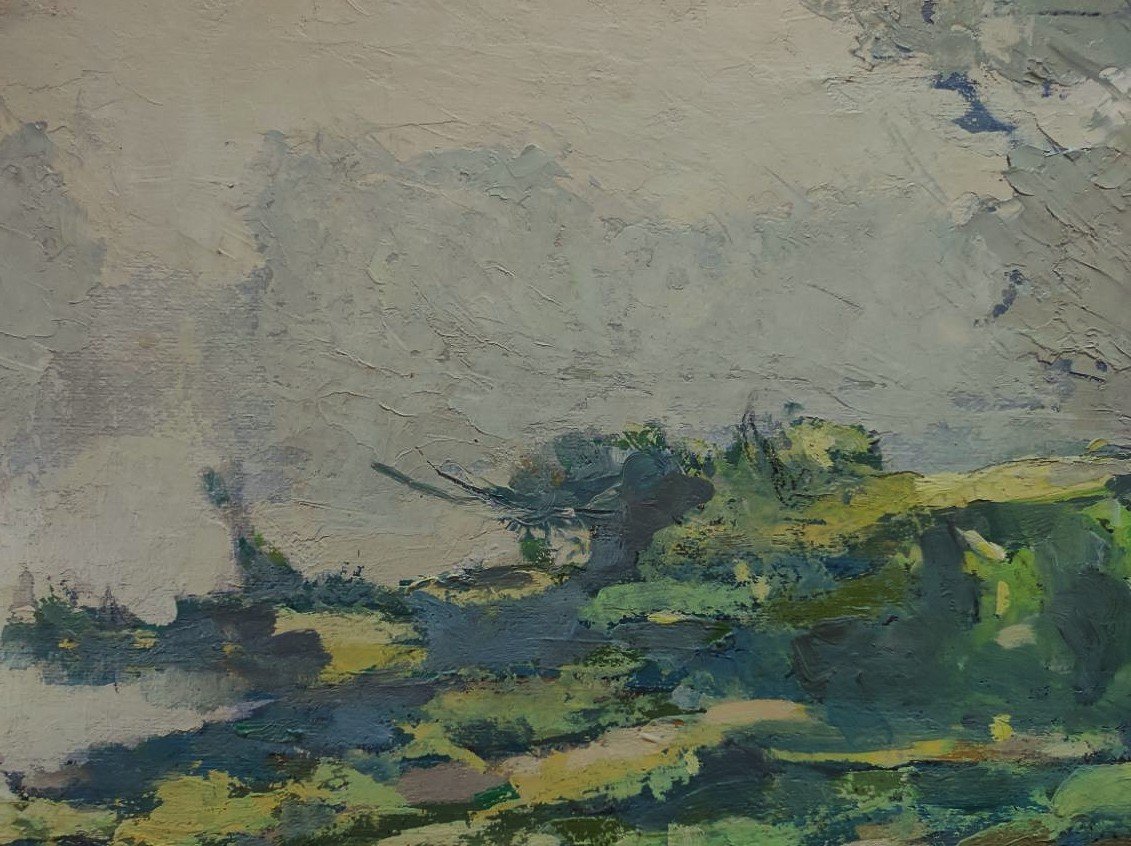


Eugène Brouillard (1870–1950) *mist On The River*. Lyon School, Fauvist, Musée d'Orsay, Carrand
Artist: Eugène Brouillard (1870-1950)
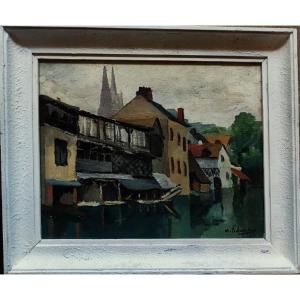
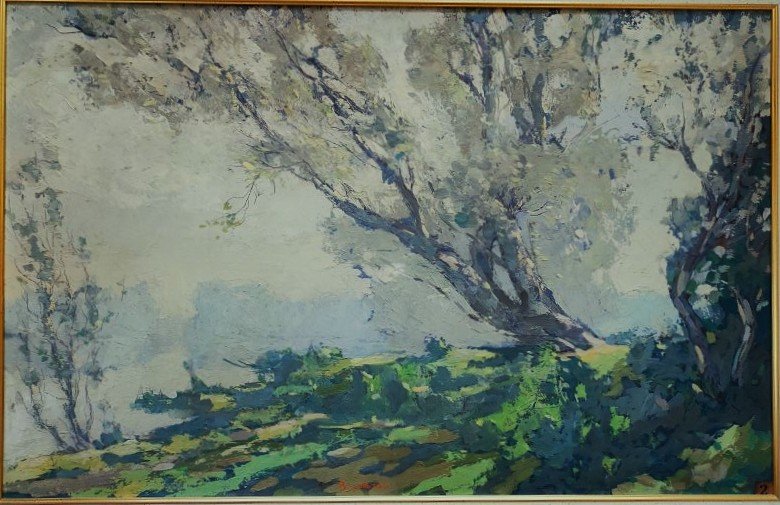
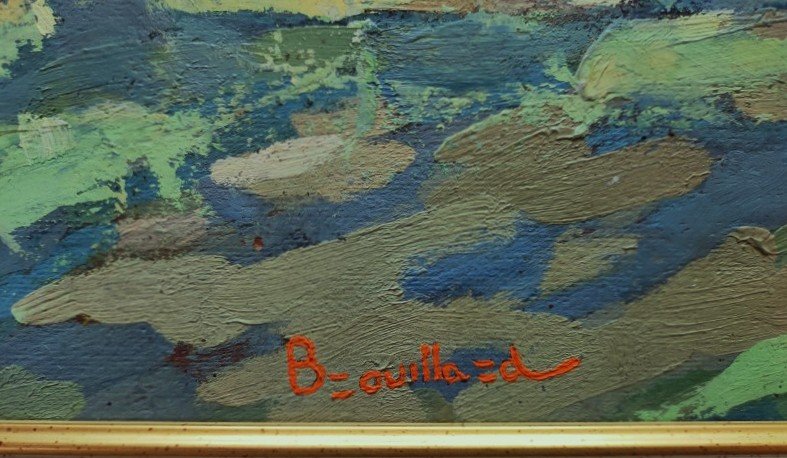
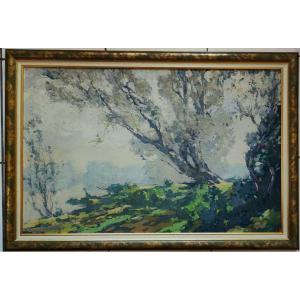
A new, large, and superb oil on cardboard by Eugène Brouillard depicting mist over a river, signed in red at the bottom near the center.
Dimensions of the painting alone (unframed): 54x85 cm; 64x95 cm including the frame.
The painting is in perfect condition and comes with a contemporary frame.
Authenticity guaranteed.
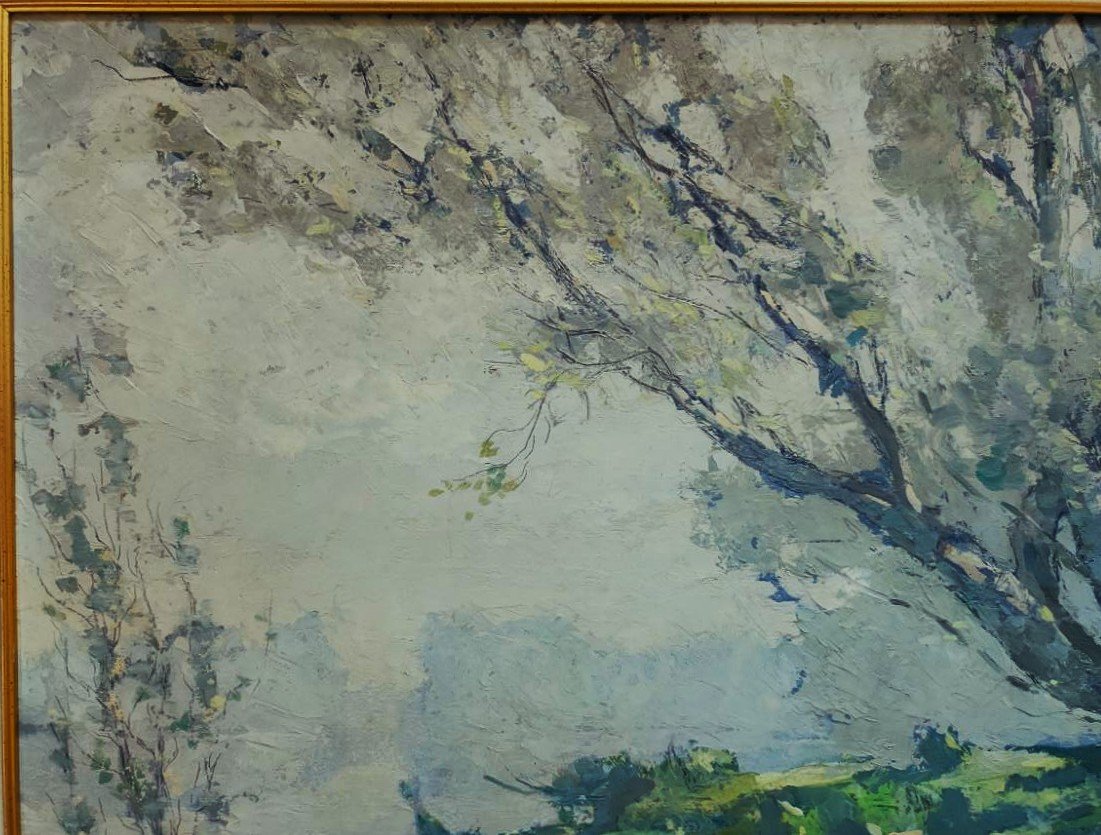
This is a new Post-Impressionist composition by Eugène Brouillard, depicting a riverbank shrouded in mist. I believe it was painted around 1930; at that time, Brouillard was at the height of his artistic powers, employing his characteristic, deliberate knife-painting technique and, of course, his signature palette—here featuring a sublime monochrome of greens and grays, accented by blues, ochre, and yellow.
Brouillard is an iconic painter of the Lyon School—unclassifiable yet instantly recognizable. There are two excellent books on this outstanding Lyon-based painter, and his works are featured in several museums, including the Musée d’Orsay in Paris.
Eugène Brouillard, born in Lyon on May 9, 1870, and died in the same city on April 15, 1950, was a French painter. He was a major figure in early 20th-century Lyon painting.
Eugène Antoine Brouillard was born on May 9, 1870,in the Croix-Rousse district, at 15 Rue Calas. His father, Adolphe, was a customs officer and his mother, Clémentine Boutoille, was a seamstress. He married Pauline Antoinette Bruiset in 1903 in Lyon (4th arrondissement). He lived his entire life in Croix-Rousse, which he referred to as his village. Yet his parents were from the North: thisheritage would influence his taste for Flemish painters and, naturally, for landscape painting. As a young man, he worked at the factory, which brought together workers from the textile industry. Thanks toevening classes, he became a patternmaker specializing in lace, set uphis own business, and achieved financial independence—which he fiercely defendedand which allowed him to express himself as he saw fit. Although disabled at a very young age by hip pain, his art remained free-spirited. Beforegaining recognition, he became involved in the local art scene and played an active role in founding the 1906 Salon d’Automne and the Société desArtistes Lyonnais. Brouillard exhibited for the first time in a Salon in 1890, then continued with a few sporadic submissions that became more frequent starting in 1903 and continued uninterrupted until his death. Self-taught, he learned by engaging with the works of the masters who appealed to him: Carrand, Corot, and Puvis de Chavannes at first, and undoubtedly the Nabis or the Pont-Aven School. Later, Signac, Ravier, and, above all, Vernay. Eugène Brouillard was friends with other painters of the Lyon School, such as Francisque Pomat and Bruno Guillermin, and with writers such as Pierre Aguétant, whose poems he illustrated. Brouillard is a landscape painter who adopts a personal technique in his landscapes of the Lyon region, one quite close to Pointillism: he indicates planes and volumes with broad brushstrokes applied regularly, creating a certain fluttering effect that the viewer perceives more clearly as they step back from the canvas. Brouillard painted in particular views along the shores of the Dombes ponds, often revisitingthe same themes, and culminating his various periods with a simplified form of Expressionismbeginning in 1939. In 1920, he painted 18 panels on the theme of “Poem of the Seasons, Trees, and Waters” for the wedding hall at the town hall of the 3rd arrondissement. An Officer of the Order of Public Instruction (1922) and a Knight of the Legion of Honor (1934), Eugène Brouillard passed away in Croix-Rousse on April 15, 1950.
Dimensions of the painting alone (unframed): 54x85 cm; 64x95 cm including the frame.
The painting is in perfect condition and comes with a contemporary frame.
Authenticity guaranteed.
This is a new Post-Impressionist composition by Eugène Brouillard, depicting a riverbank shrouded in mist. I believe it was painted around 1930; at that time, Brouillard was at the height of his artistic powers, employing his characteristic, deliberate knife-painting technique and, of course, his signature palette—here featuring a sublime monochrome of greens and grays, accented by blues, ochre, and yellow.
Brouillard is an iconic painter of the Lyon School—unclassifiable yet instantly recognizable. There are two excellent books on this outstanding Lyon-based painter, and his works are featured in several museums, including the Musée d’Orsay in Paris.
Eugène Brouillard, born in Lyon on May 9, 1870, and died in the same city on April 15, 1950, was a French painter. He was a major figure in early 20th-century Lyon painting.
Eugène Antoine Brouillard was born on May 9, 1870,in the Croix-Rousse district, at 15 Rue Calas. His father, Adolphe, was a customs officer and his mother, Clémentine Boutoille, was a seamstress. He married Pauline Antoinette Bruiset in 1903 in Lyon (4th arrondissement). He lived his entire life in Croix-Rousse, which he referred to as his village. Yet his parents were from the North: thisheritage would influence his taste for Flemish painters and, naturally, for landscape painting. As a young man, he worked at the factory, which brought together workers from the textile industry. Thanks toevening classes, he became a patternmaker specializing in lace, set uphis own business, and achieved financial independence—which he fiercely defendedand which allowed him to express himself as he saw fit. Although disabled at a very young age by hip pain, his art remained free-spirited. Beforegaining recognition, he became involved in the local art scene and played an active role in founding the 1906 Salon d’Automne and the Société desArtistes Lyonnais. Brouillard exhibited for the first time in a Salon in 1890, then continued with a few sporadic submissions that became more frequent starting in 1903 and continued uninterrupted until his death. Self-taught, he learned by engaging with the works of the masters who appealed to him: Carrand, Corot, and Puvis de Chavannes at first, and undoubtedly the Nabis or the Pont-Aven School. Later, Signac, Ravier, and, above all, Vernay. Eugène Brouillard was friends with other painters of the Lyon School, such as Francisque Pomat and Bruno Guillermin, and with writers such as Pierre Aguétant, whose poems he illustrated. Brouillard is a landscape painter who adopts a personal technique in his landscapes of the Lyon region, one quite close to Pointillism: he indicates planes and volumes with broad brushstrokes applied regularly, creating a certain fluttering effect that the viewer perceives more clearly as they step back from the canvas. Brouillard painted in particular views along the shores of the Dombes ponds, often revisitingthe same themes, and culminating his various periods with a simplified form of Expressionismbeginning in 1939. In 1920, he painted 18 panels on the theme of “Poem of the Seasons, Trees, and Waters” for the wedding hall at the town hall of the 3rd arrondissement. An Officer of the Order of Public Instruction (1922) and a Knight of the Legion of Honor (1934), Eugène Brouillard passed away in Croix-Rousse on April 15, 1950.
1 390 €
Period: 20th century
Style: Modern Art
Condition: Perfect condition
Material: Oil painting on cardboard
Length: 85
Width: é&²
Height: 54
Reference (ID): 1803732
Availability: In stock
Print