
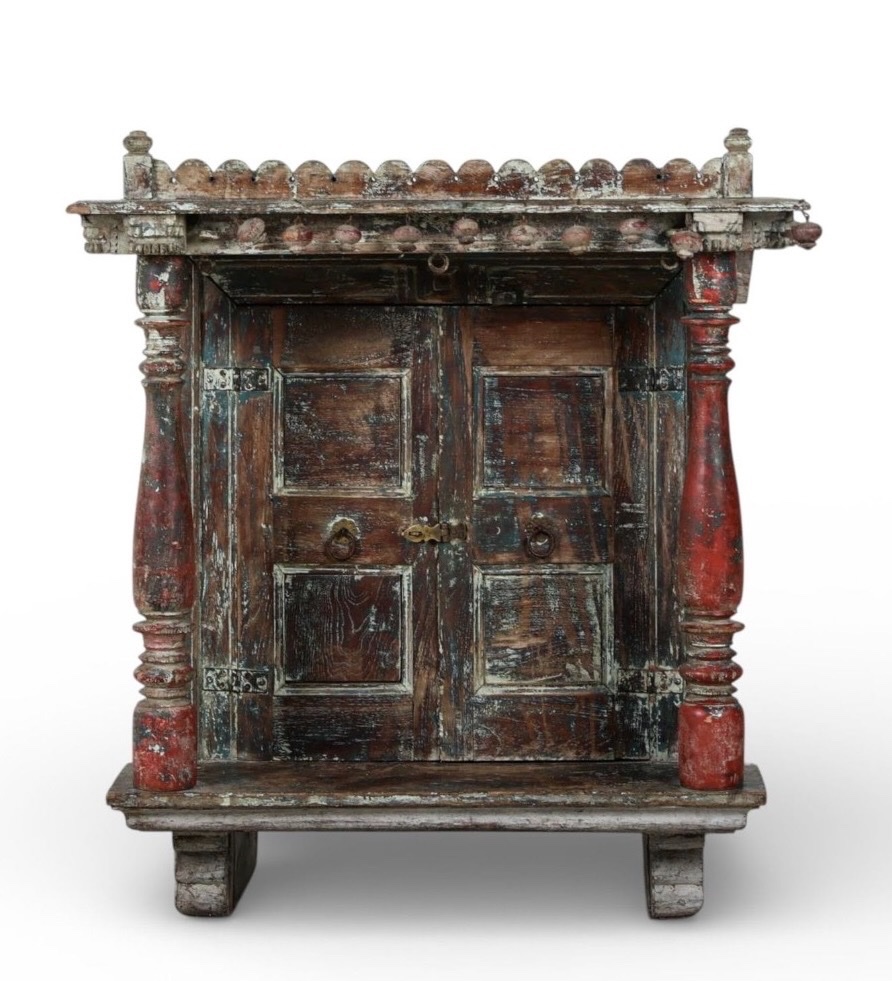
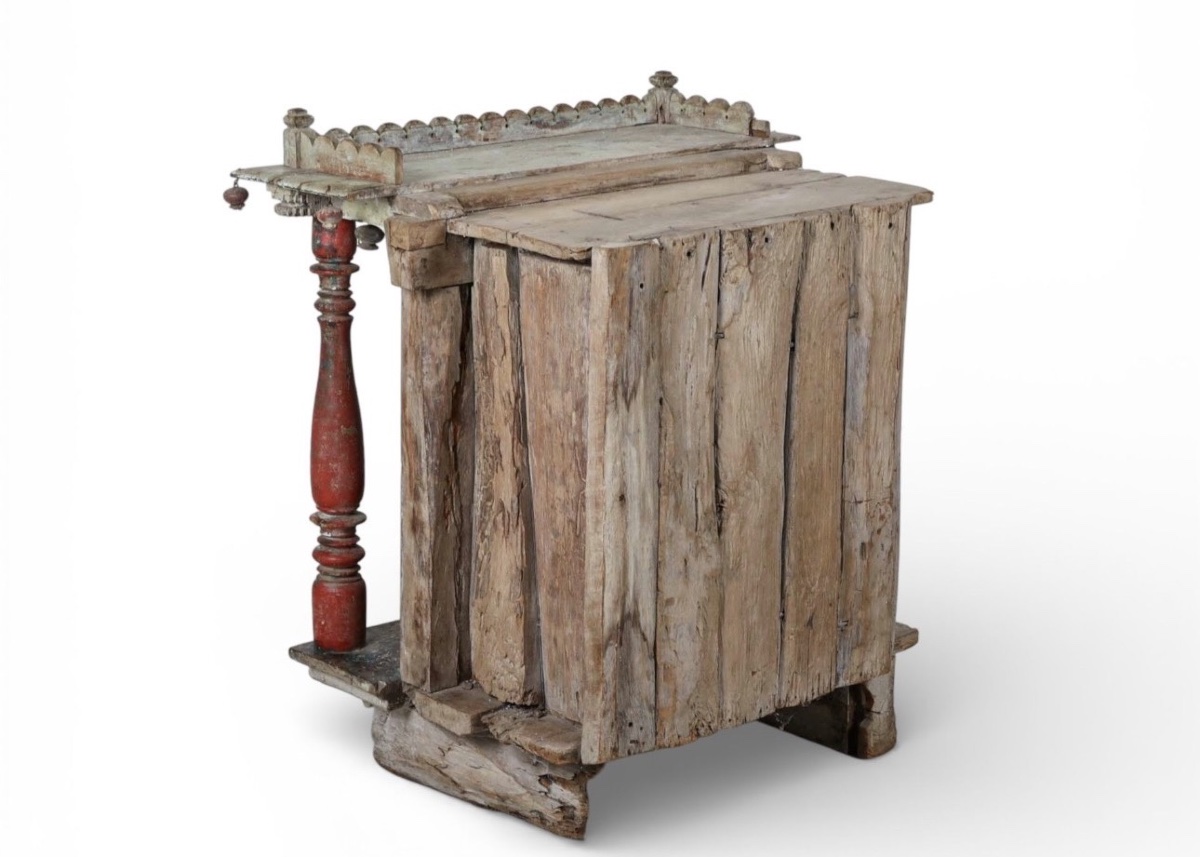


Large Polychrome Wooden Haveli Mandir, Probably Kutch, Gujarat (western India) 19th Century
T
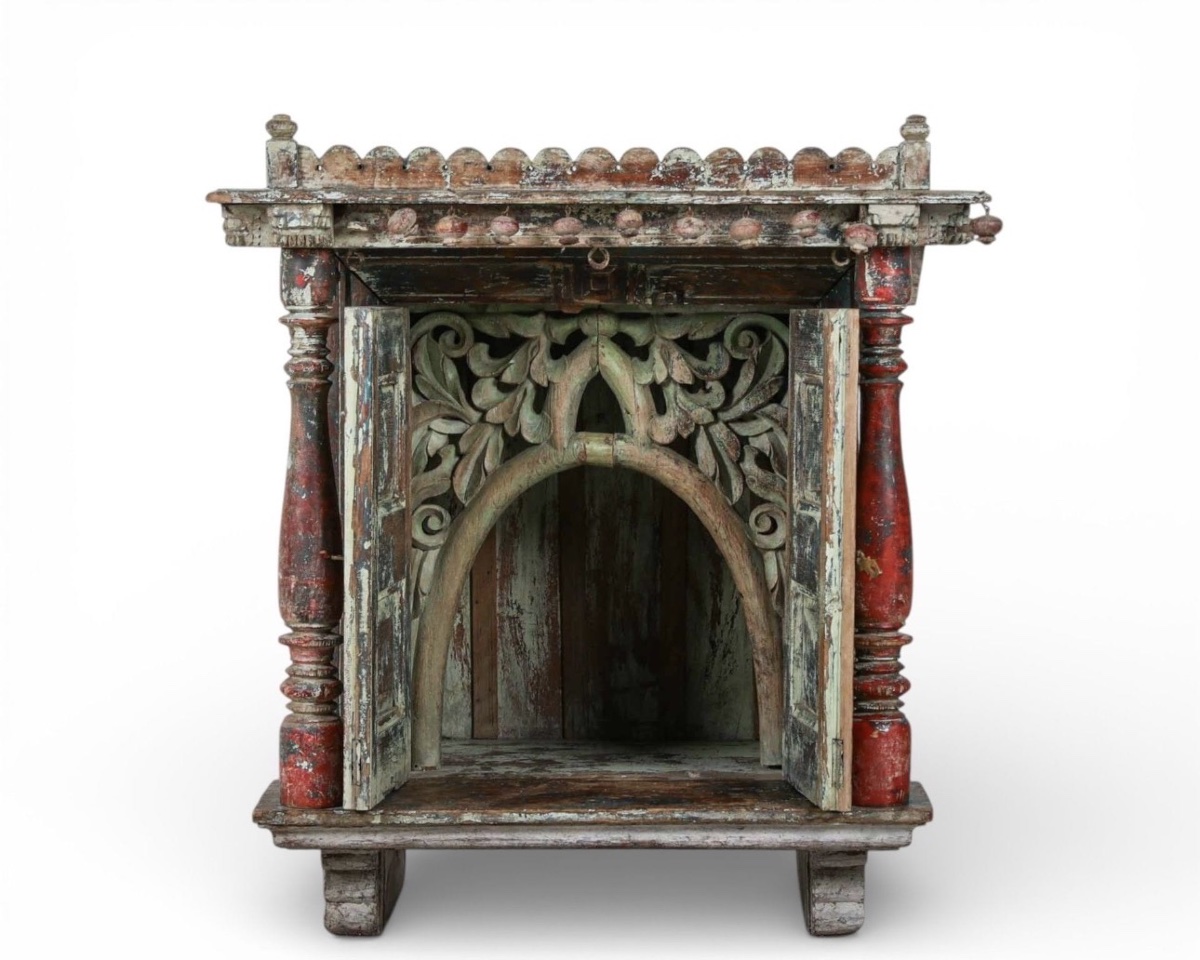
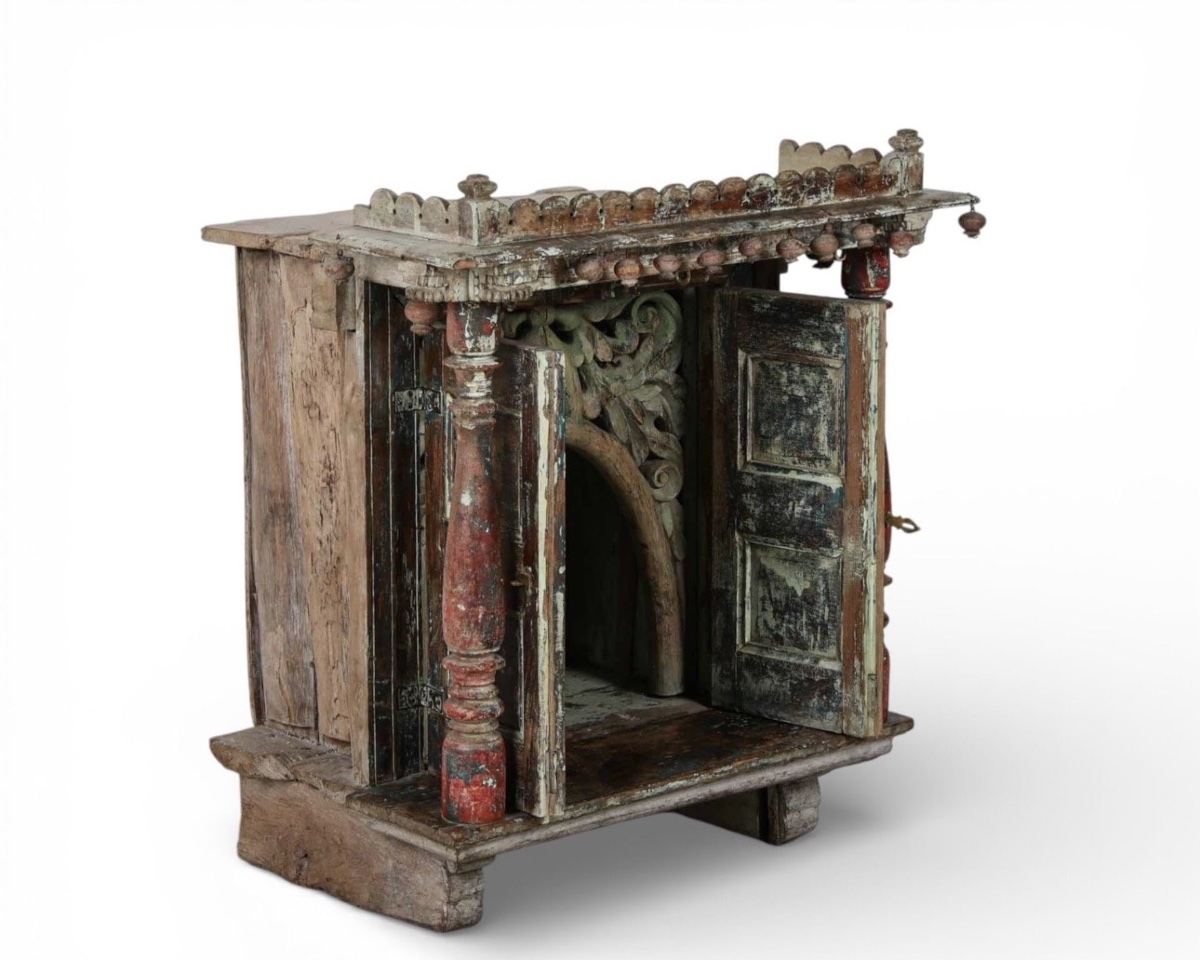
This remarkable mandir, or Hindu domestic shrine, was very likely originating from a haveli, the traditional mansion of a wealthy merchant or notable family in the Kutch region of western India. Owing to its monumental proportions, refined architectural design, richly carved decoration, and exceptional solid-wood construction, it stands apart from the smaller domestic shrines more commonly encountered.
Designed to house the family’s sacred images or household deities, the mandir formed the spiritual heart of the home. Daily prayers, ritual offerings, and religious ceremonies were performed here, making it the focal point of family devotion and worship.
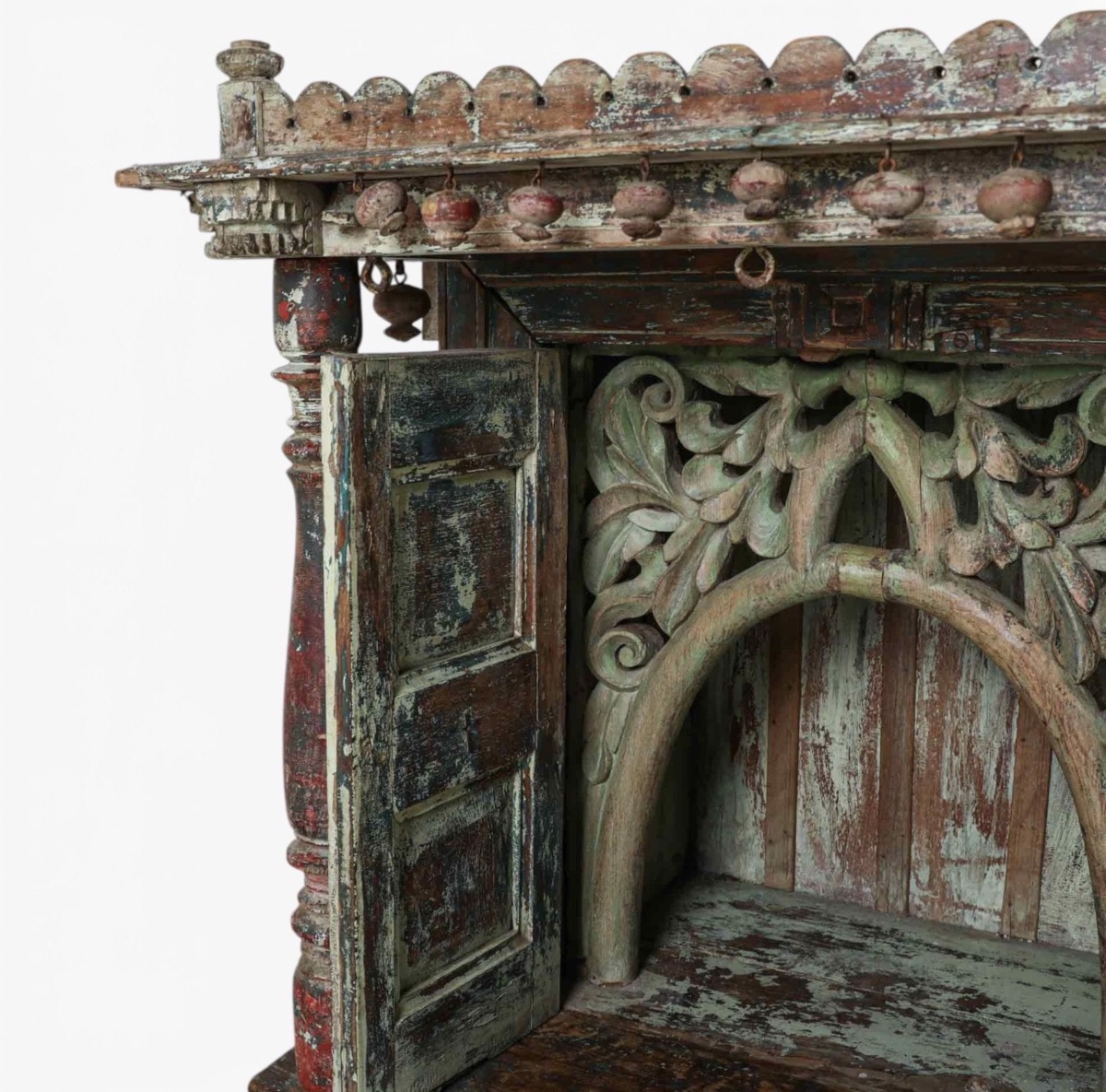
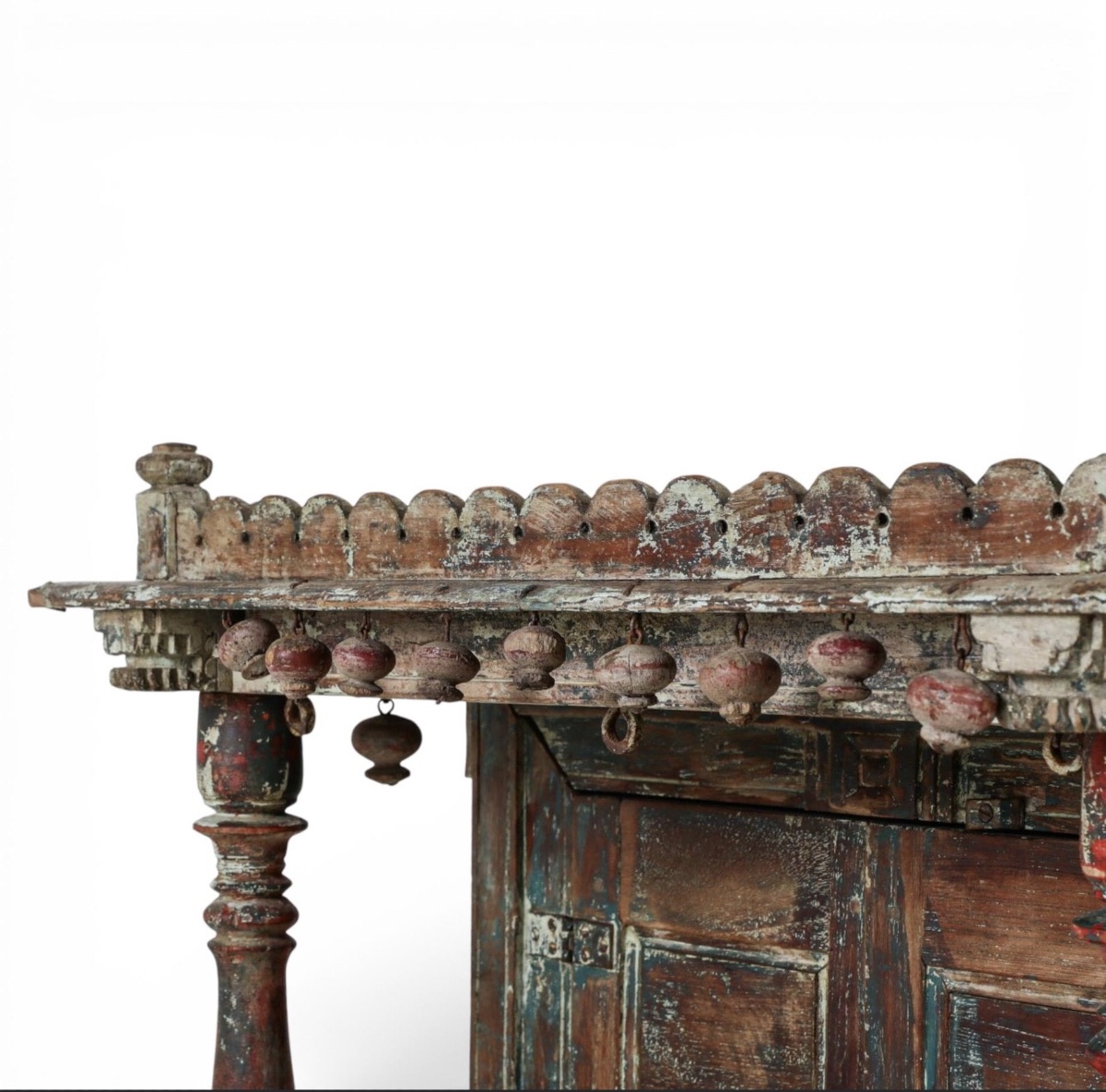
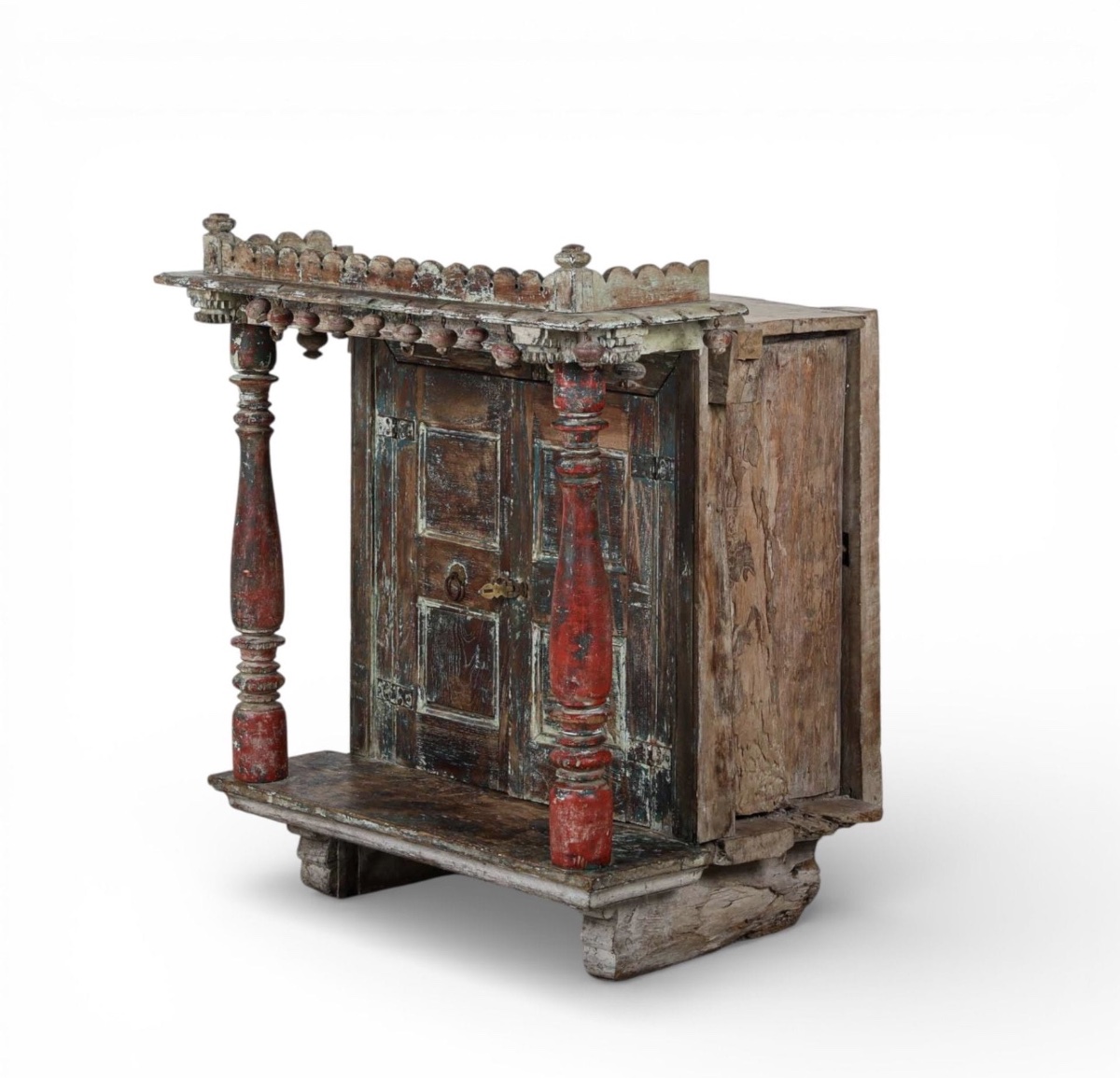
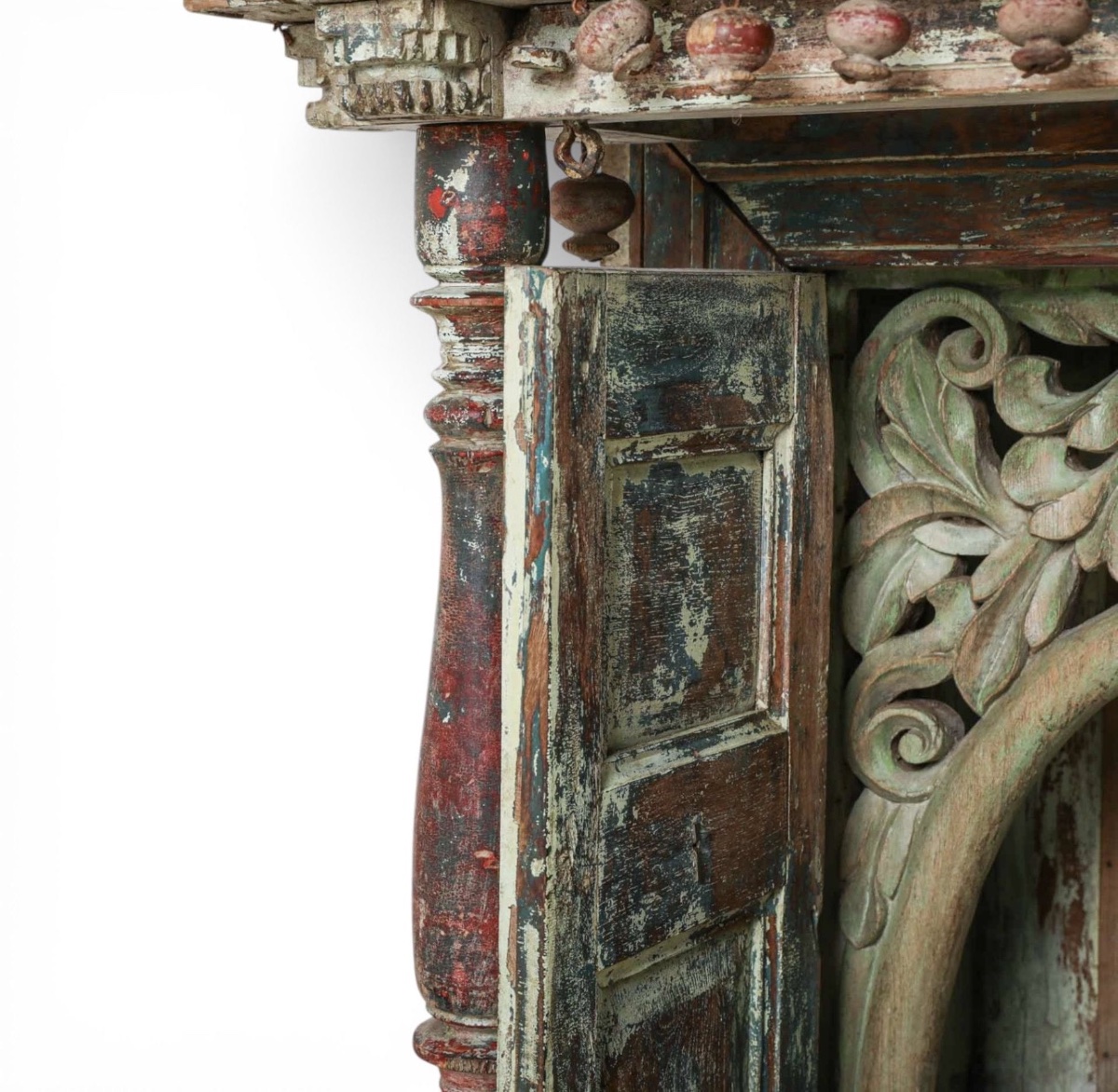
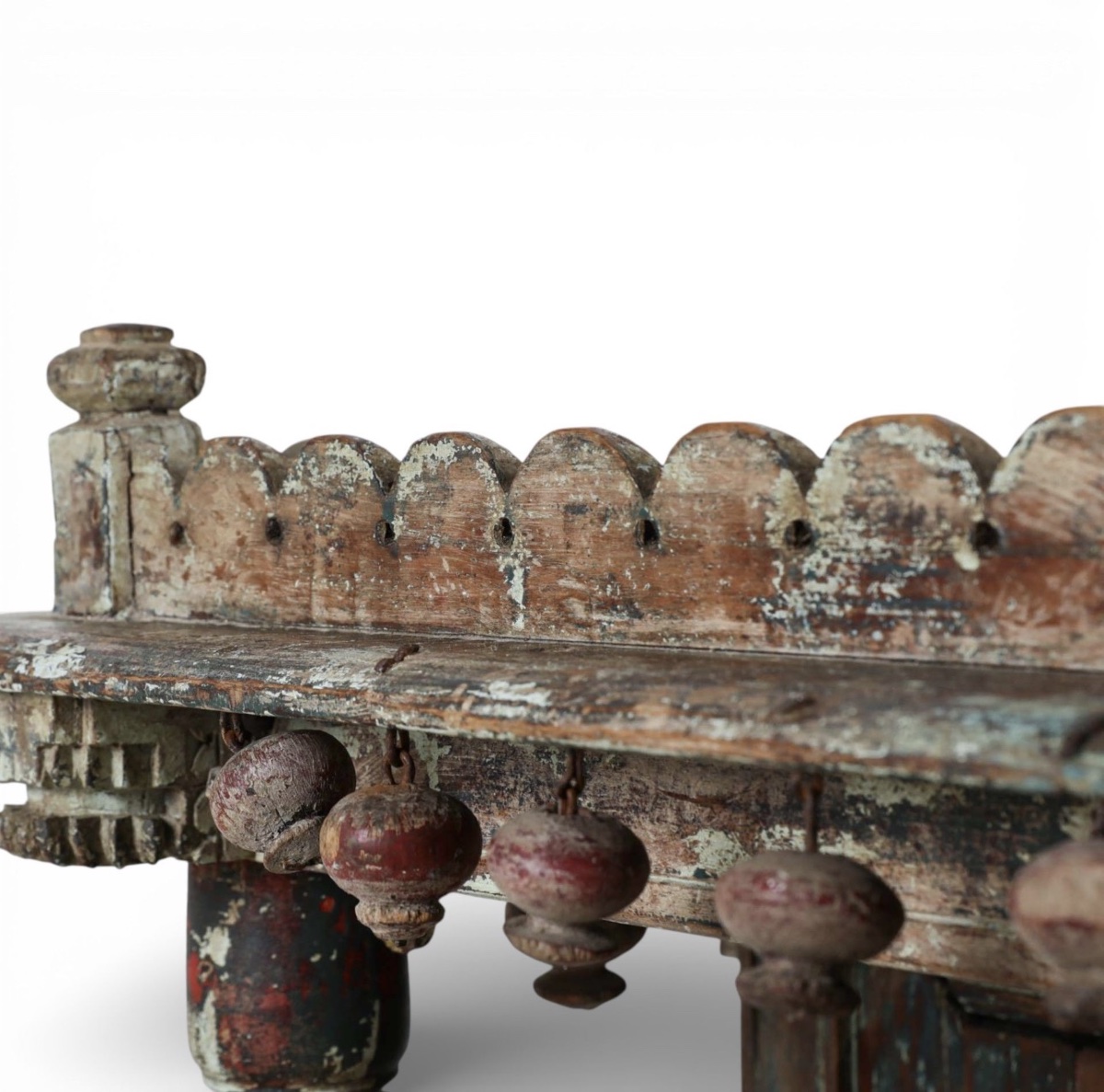
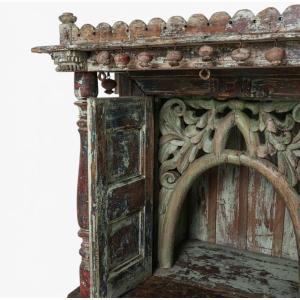
The elegant façade is framed by a pair of finely turned columns supporting a broad projecting cornice adorned with an exceptional series of carved wooden pendants, most of which have survived. Above, a crenellated parapet recalls the architecture of Hindu temples, while the double doors open onto a deep shrine framed by a delicately pierced vegetal arch, originally intended to enhance the sacred image placed within.
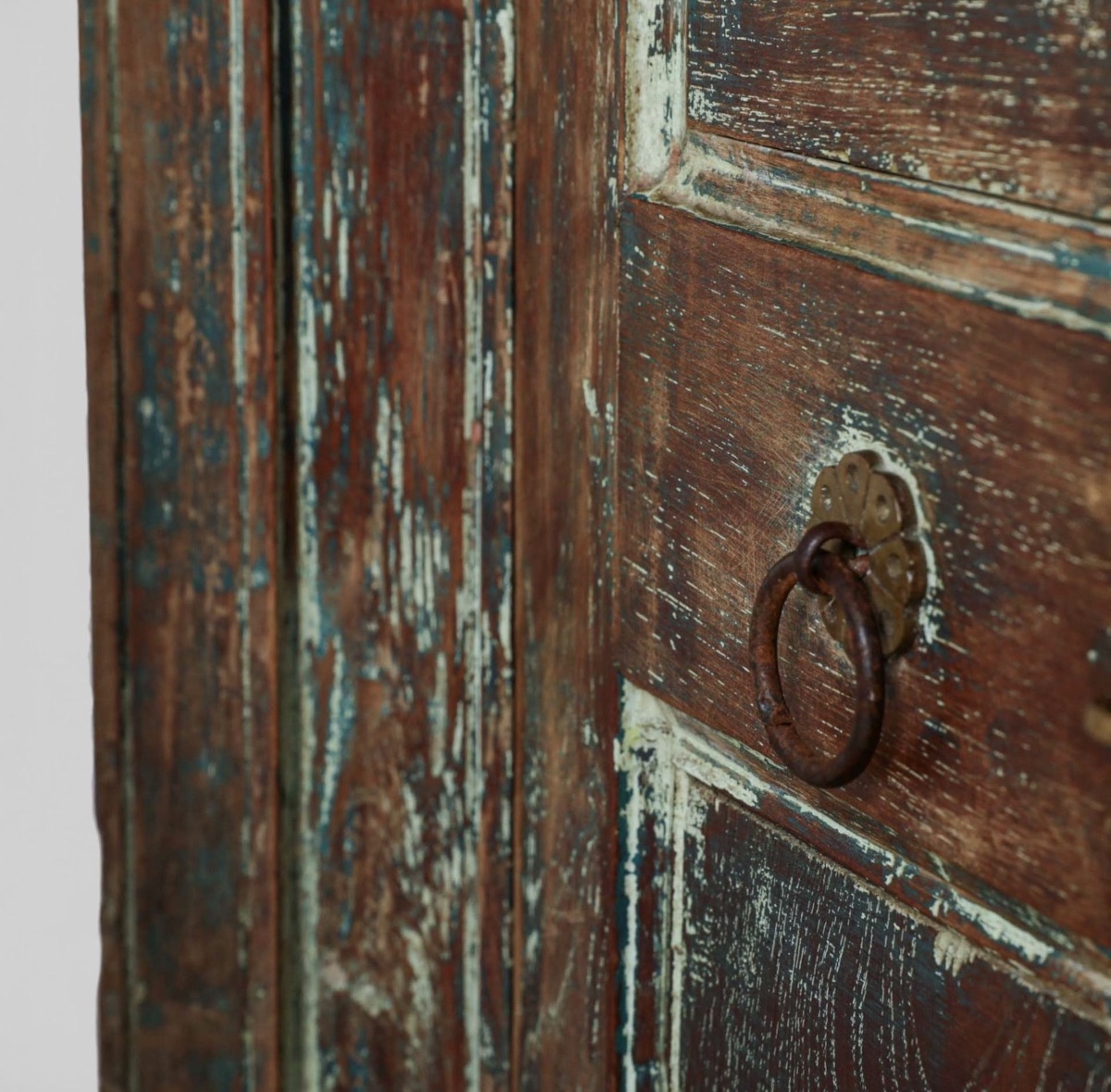
Its original polychromy, enriched by successive layers of vermilion red, white, blue-green and natural brown pigments, bears witness to generations of devotional use and ritual renewal, creating a surface of remarkable visual depth and authenticity.
Entirely constructed from massive hardwood, the shrine is exceptionally robust, weighing approximately 80 kg (176 lbs)—a highly unusual feature for this type of devotional furniture and further evidence of its prestigious character.
Its architectural vocabulary, quality of craftsmanship, and imposing scale closely relate it to the celebrated carved wooden traditions of Kutch, a region renowned for its richly ornamented havelis and religious architecture.
A rare and impressive example, combining architectural elegance, authentic devotional history, and outstanding state of preservation.
Dimensions
- Height: 90 cm (35.4 in)
- Width: 80 cm (31.5 in)
- Depth: 61 cm (24 in)
- Weight: approximately 80 kg (176 lbs)
Provenance
Former collection of Rota do Chá, Porto, Portugal.
Period: 19th century
Style: Asian art
Condition: Condition of use
Material: Solid wood
Width: 80
Height: 90
Depth: 61
Reference (ID): 1801405
Availability: In stock