

Important Chinese Display Cabinet (duobaoge 多宝阁), Finely Carved With Dragons
Important Chinese Display Cabinet (Duobaoge 多宝阁), Finely Carved with Dragons
China, Late Qing Dynasty – Early Republic Period (circa 1890–1915)
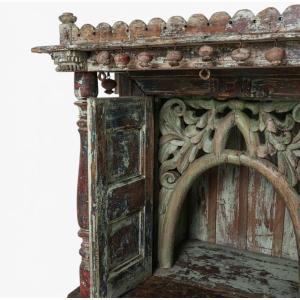
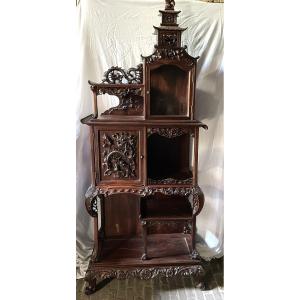
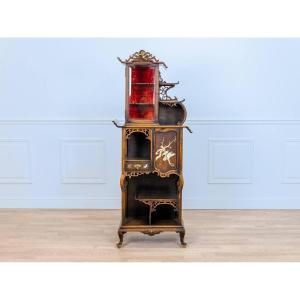
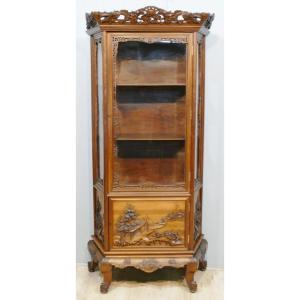
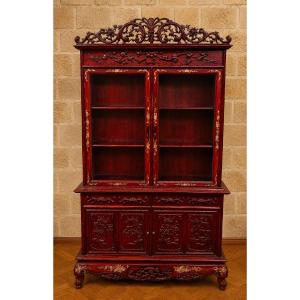
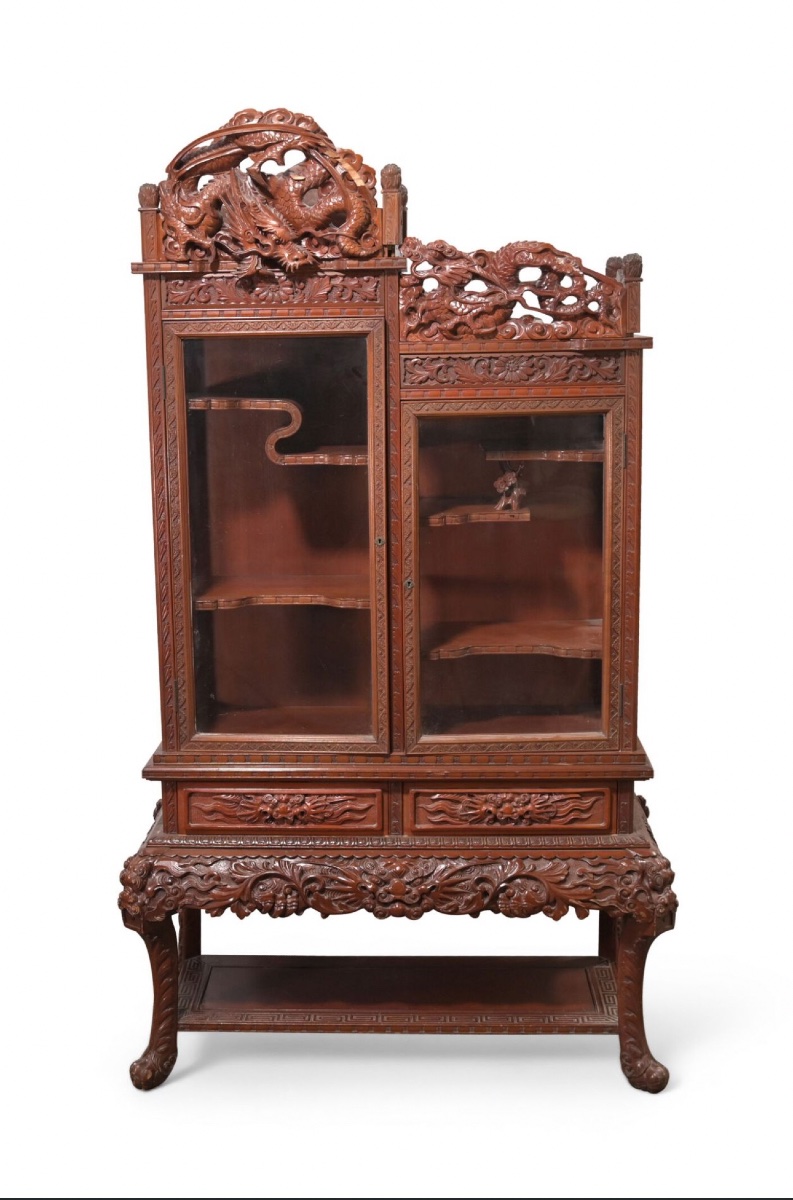
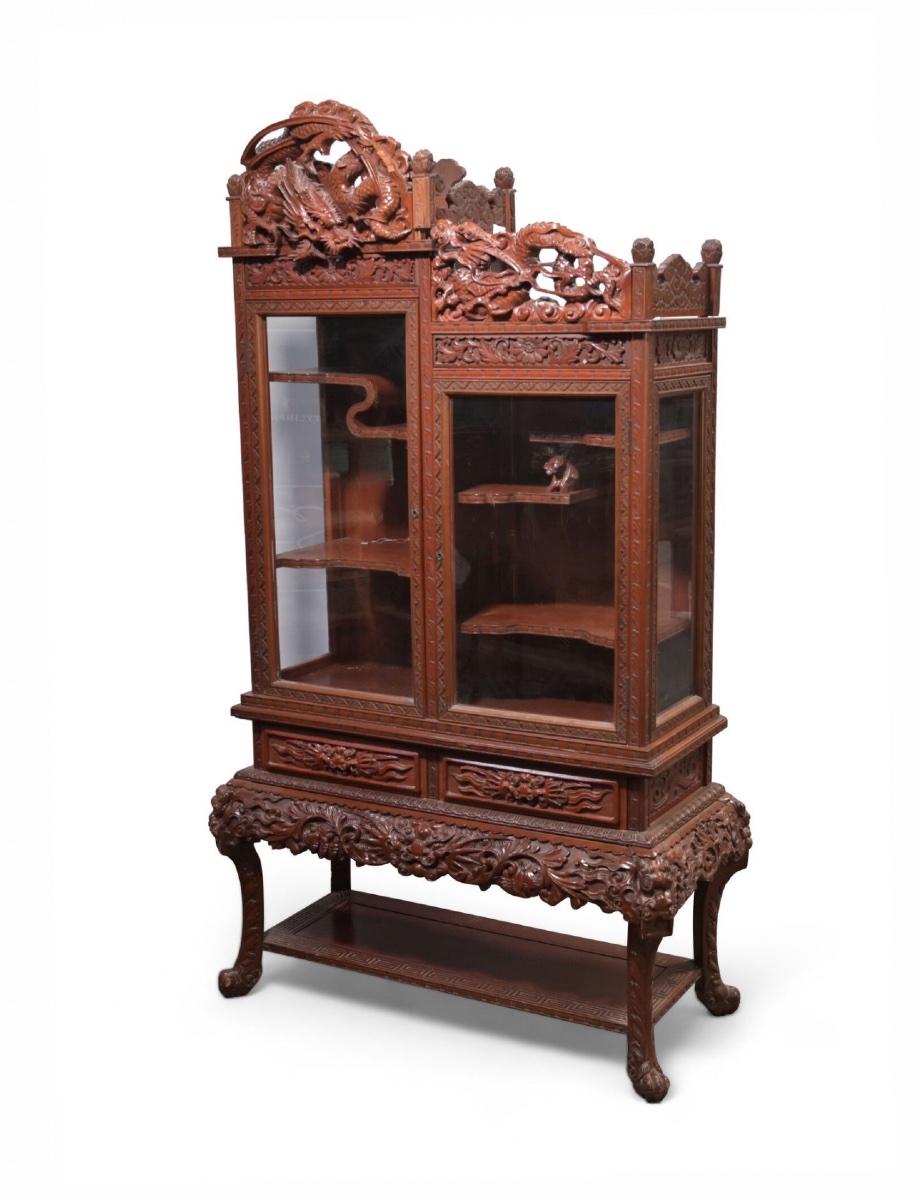
An important Chinese Duobaoge display cabinet, raised on an elegant independently carved openwork stand. Designed to display porcelain, jade, bronzes, scholar’s rocks (gongshi), sculptures and other treasured works of art, this type of furniture occupied a central place in the residences of scholars, high-ranking officials and distinguished collectors.
The cabinet features two glazed doors enclosing a carefully arranged series of asymmetrical display shelves, one of the defining characteristics of the Duobaoge, together with several small drawers intended to house precious objects. Glazed side panels allow natural light to illuminate the displayed collection, while the richly carved stand gives the cabinet remarkable visual elegance.
The decoration reflects exceptional craftsmanship. The upper crest is adorned with dragons emerging from swirling clouds, traditional Chinese symbols of power, wisdom, prosperity and protection. The rails, uprights and apron are richly ornamented with openwork carving and finely executed geometric motifs that enhance the cabinet’s refined architectural design.
In Chinese tradition, the Duobaoge was far more than a display cabinet. A true cabinet of curiosities for scholars and collectors, it was designed to present carefully selected works of art in a harmonious composition where each object occupied its rightful place. The balance between solid forms and empty spaces, materials and shapes encouraged contemplation while reflecting the owner’s scholarship, refined taste and aesthetic sensibility.
The significance of this cabinet is further enhanced by its outstanding provenance.
It comes from the collection of Tchen Gi-Vane (1924–2021), pianist, painter, collector and one of the leading figures in twentieth-century Franco-Chinese cultural exchange. The eldest daughter of the renowned Chinese newspaper publisher Cheng Shewo, she settled in France after marrying French engineer Philippe Bertrand.
In 1976, Philippe Bertrand built the celebrated Wan Yun Lou Pagoda (“Pavilion of Ten Thousand Clouds”) on their property in Rambouillet to house his wife’s remarkable collection of Chinese works of art, antique textiles and traditional musical instruments. For several decades, this exceptional building welcomed artists, scholars, diplomats and collectors from around the world, becoming one of France’s most important private centres dedicated to the promotion of traditional Chinese culture.
This cabinet was included in the auction dispersal of this prestigious collection.
Expertised by Cabinet Portier.
Dimensions
- Height: 164 cm
- Width: 85 cm
- Depth: 33 cm
Provenance
- Tchen Gi-Vane Collection (1924–2021)
- Wan Yun Lou Pagoda, Rambouillet, France
- Apodem Auction
- Expertised by Cabinet Portier
Period: 19th century
Style: Asian art
Condition: Excellent condition
Material: Solid wood
Width: 85 cm
Height: 164 cm
Depth: 33 cm
Reference (ID): 1802387
Availability: In stock