

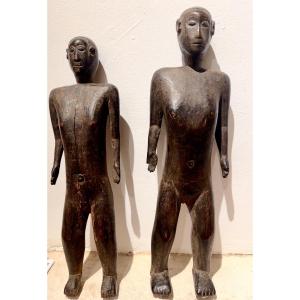


Pair Of Ngada Ancestor Figures, Bena Region, Central Flores, Indonesia, Carved Wood, Late 19th
Pair of Ngada Ancestor Figures
Bena Region, Central Flores, Indonesia
Carved wood, late 19th–early 20th century (c. 1880–1910)
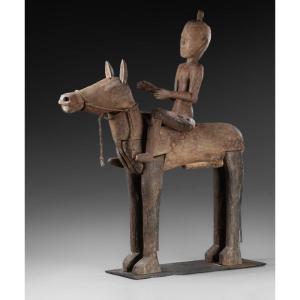
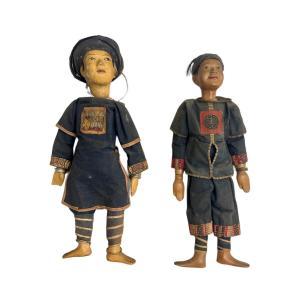
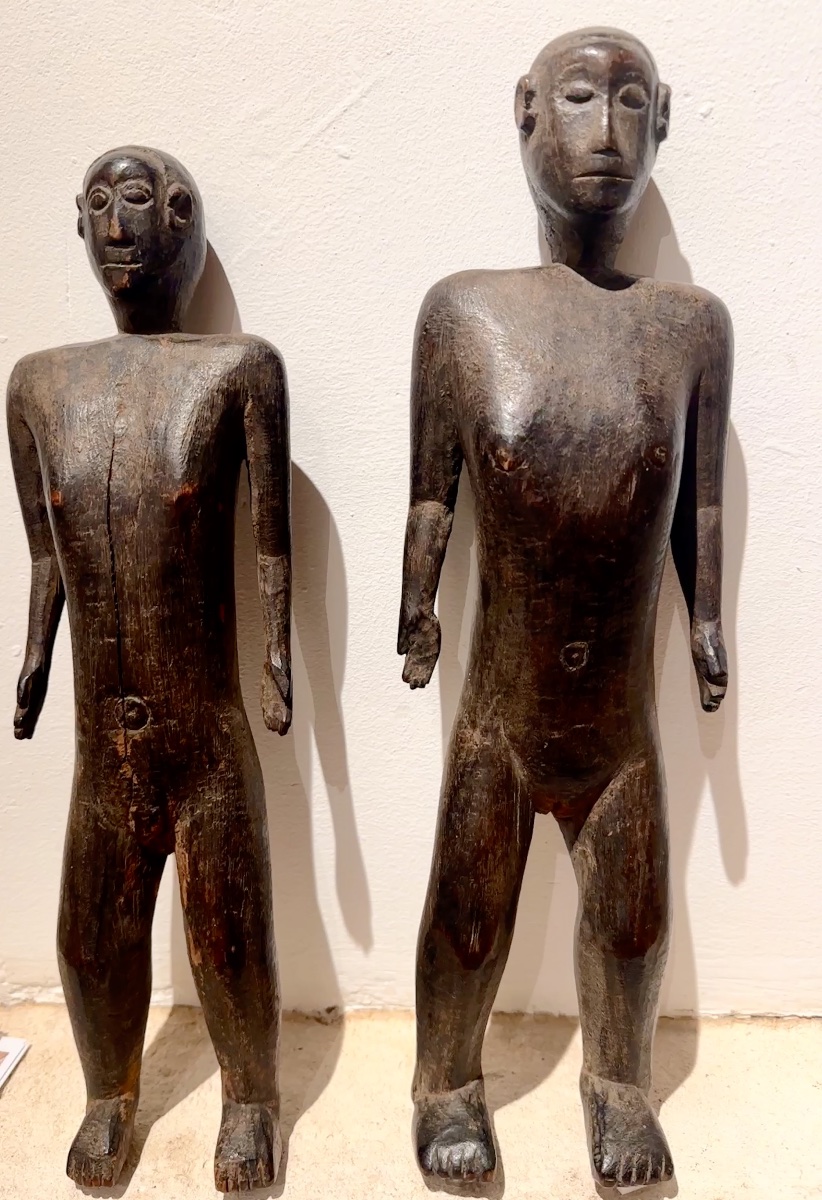
This remarkable pair of ancestor figures almost certainly originates from the Bena region in the heart of Ngada territory, Central Flores. They belong to the group of domestic lineage altar figures associated with the Ngadhu and Bhaga, the ritual monuments representing the founding clans of Ngada society.
Originally kept within the clan house, near the ritual granary or the village megalithic courtyard, such sculptures embodied the permanent presence of the ancestral founders, maintaining a spiritual link between the living and their lineage.
Pairs that have remained together since their creation are now exceptionally scarce. Every element suggests that these sculptures form an original pair, carved simultaneously rather than later assembled.
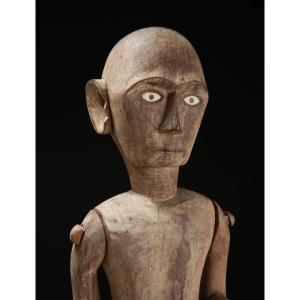
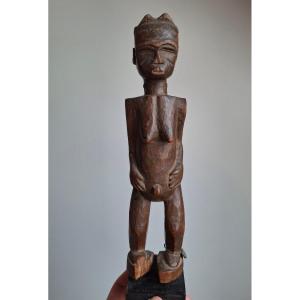
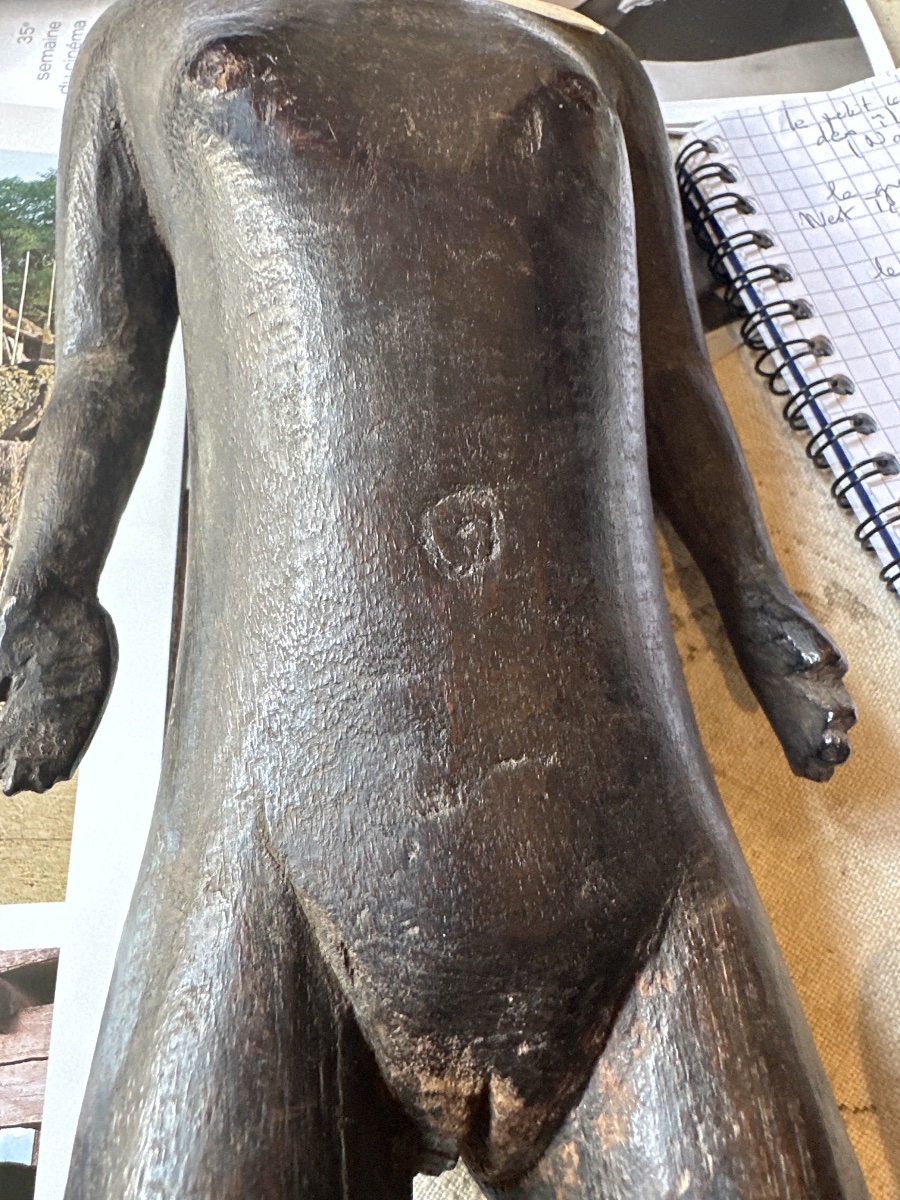
Both figures display identical stylistic and technical characteristics: nearly identical dimensions (36 and 35 cm), the same wood species, a deep and consistent old patina, closely matching proportions, identical facial treatment, and the distinctive circular lineage navel carved on each figure.
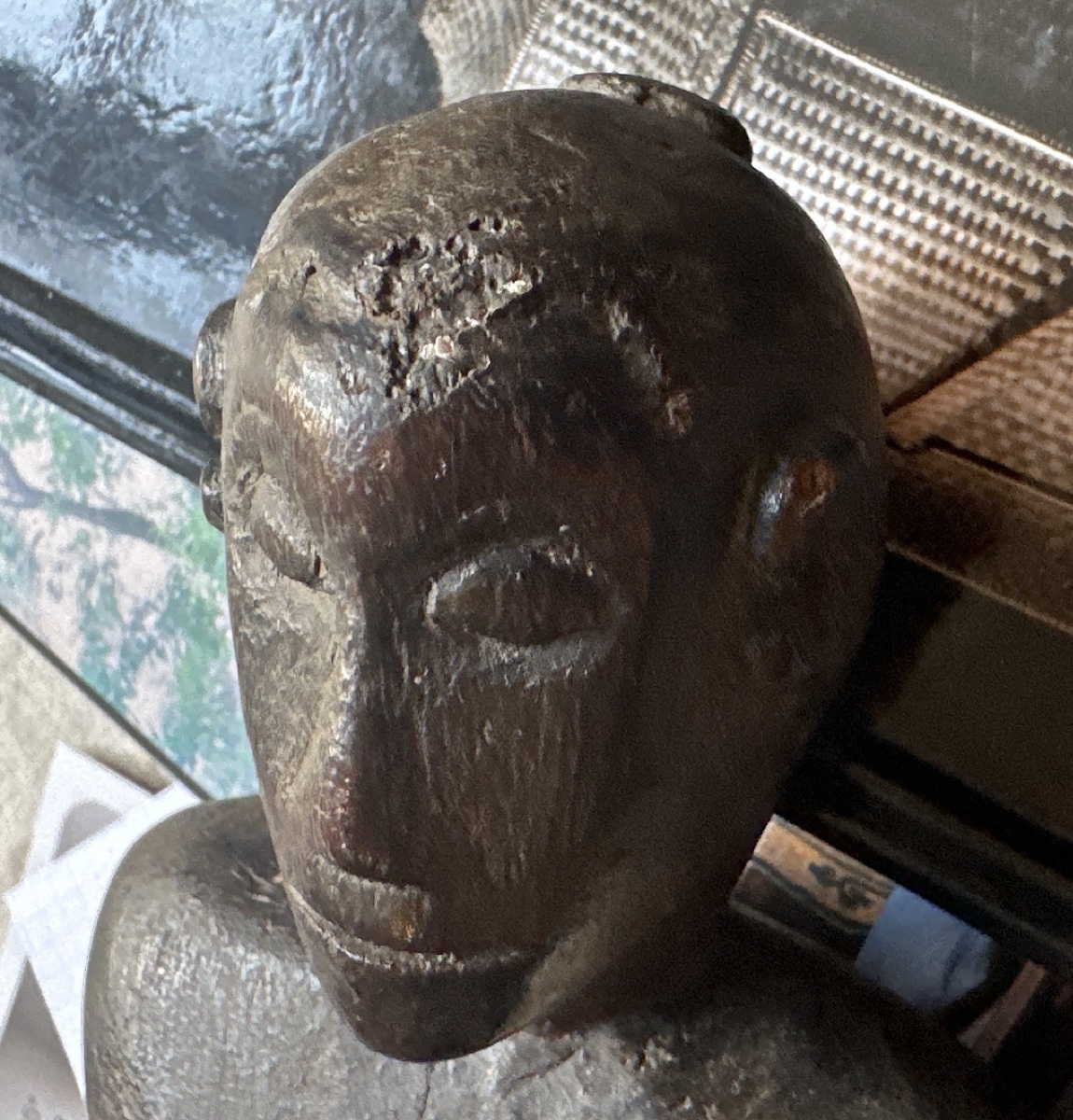
The style is characteristic of Central Ngada sculpture, particularly that of the Bena area: strict frontality, ovoid heads, applied disc-shaped eyes, a discreet horizontal mouth, simply rendered ears, elongated torsos, gently sloping shoulders, short arms held tightly against the body, and restrained anatomical modelling. This economy of form gives the sculptures an exceptional sculptural strength.
Among the Ngada, the navel is a powerful symbol of ancestry, representing the origin of the lineage and the enduring bond between descendants and their founding ancestors. Its careful depiction on both figures further confirms their ritual significance.
The rich patina, long-standing surface wear and the areas of erosion visible on the tops of the heads attest to prolonged ritual use, most likely resulting from repeated handling and ceremonial anointing over generations.
On stylistic and technical grounds, the pair can confidently be dated to approximately 1880–1910, preceding the production of carvings made for the tourist trade.
Dimensions
- Male figure: 36 cm
- Female figure: 35 cm
Provenance: Central Ngada region, Flores Island, Indonesia, most probably the village of Bena.
Period: 19th century
Style: Tribal Art
Condition: Good condition
Material: Solid wood
Height: 35 et 36 cm
Reference (ID): 1790822
Availability: In stock