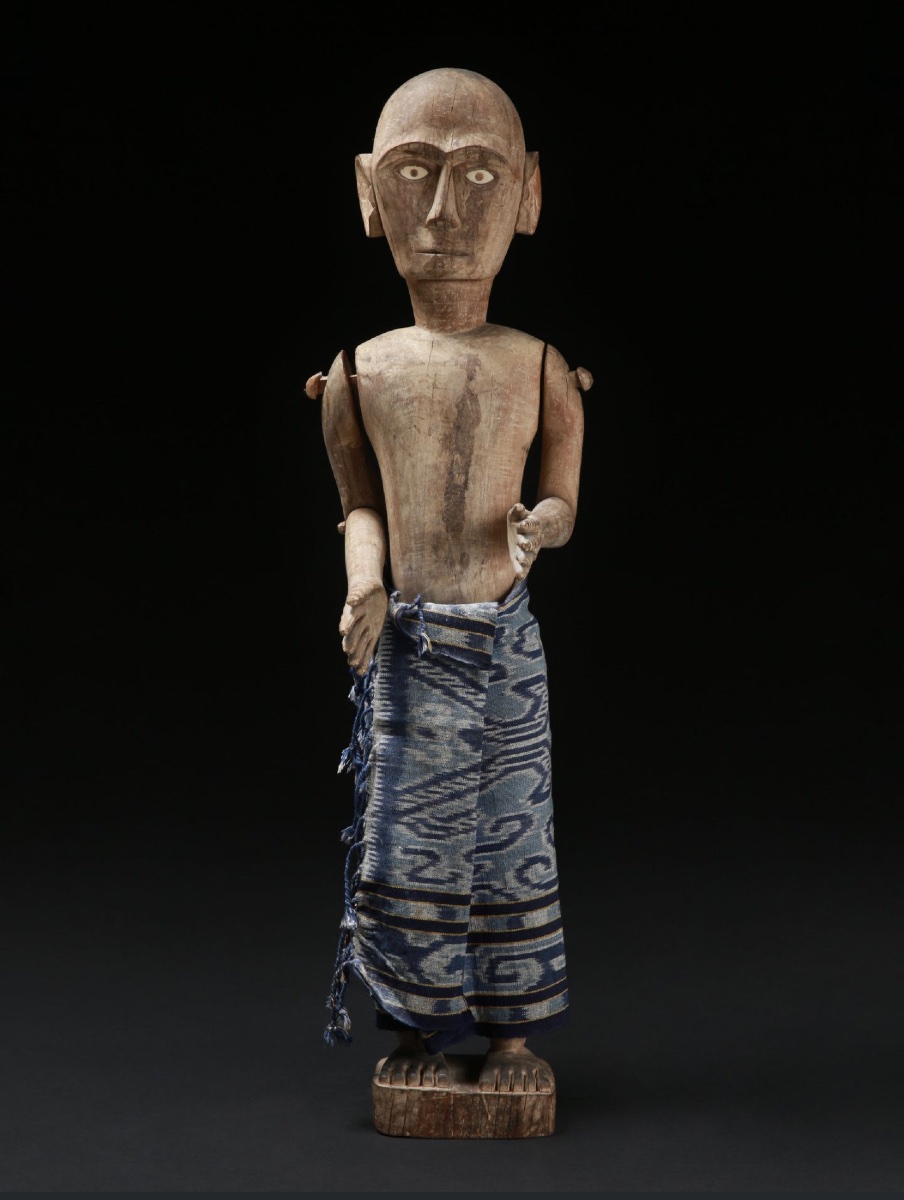
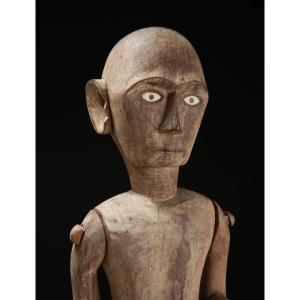


Tau Tau, An Ancestral Funerary Effigy, Tana Toraja, South Sulawesi (celebes), Indonesia
Tau Tau Ancestral Funerary Figure
Tana Toraja, South Sulawesi (Celebes), Indonesia
Jackfruit wood, inlaid eyes, articulated arms, ikat sarong
Late 19th – Early 20th century (c. 1880–1910)
Height: 77.5 cm
Weight: 4.2 kg
This Tau Tau funerary effigy originates from Tana Toraja, in the highlands of South Sulawesi, Indonesia. It belongs to the tradition of ancestral portrait figures commissioned for members of the Toraja nobility and installed before the cliff-cut burial chambers (liang) following the completion of the elaborate funerary ceremonies known as Rambu Solo’.
Within Toraja belief, a Tau Tau was not conceived as a commemorative portrait alone, but as the enduring embodiment of the deceased. Placed overlooking the funerary landscape, it perpetuated the symbolic presence of the ancestor, maintaining an enduring relationship between the living and the founding members of the lineage.
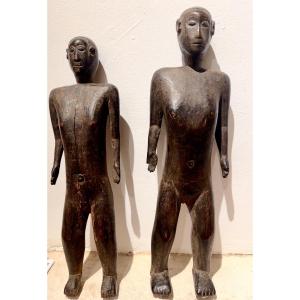
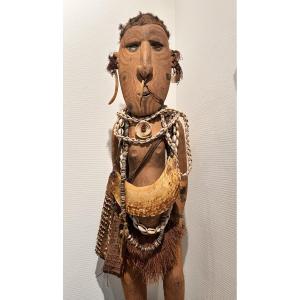
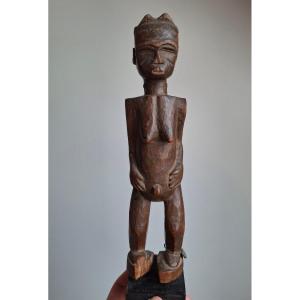
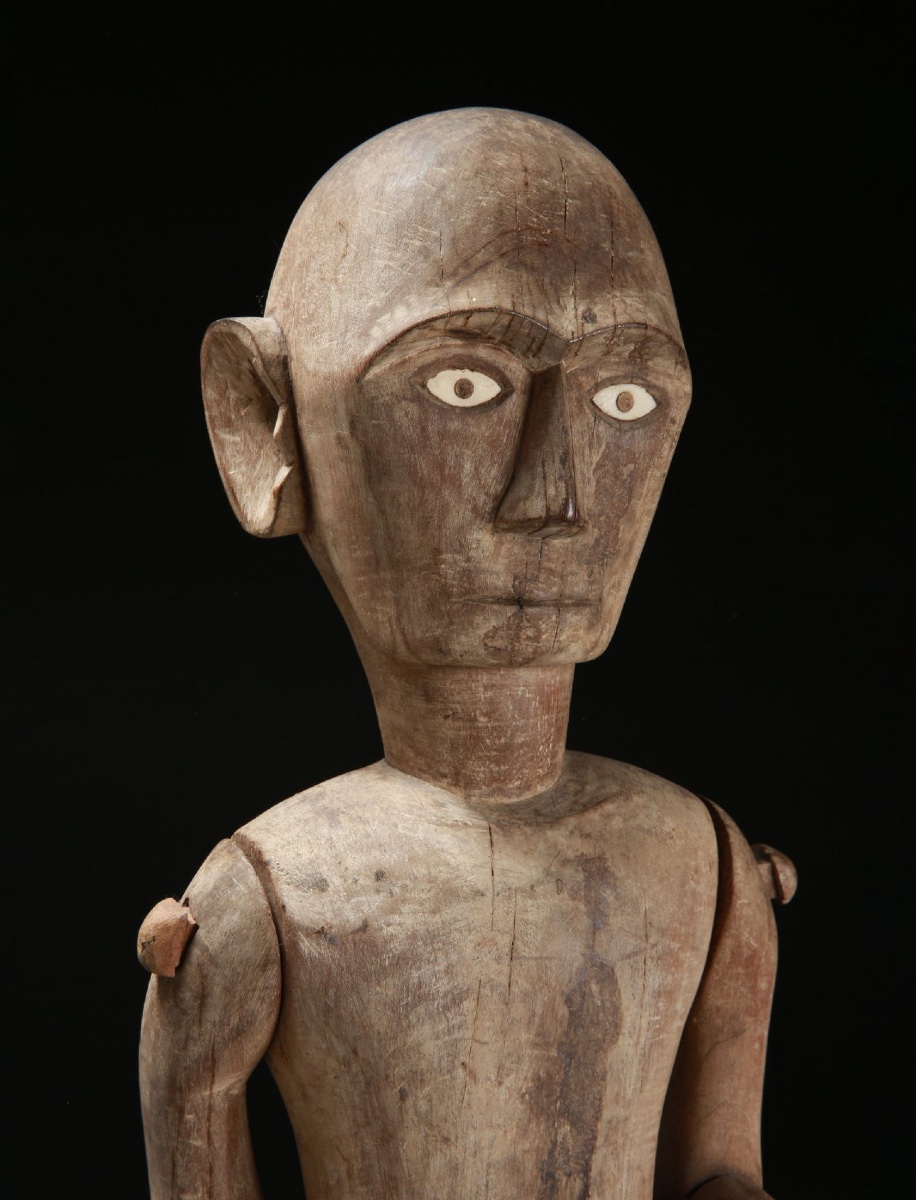
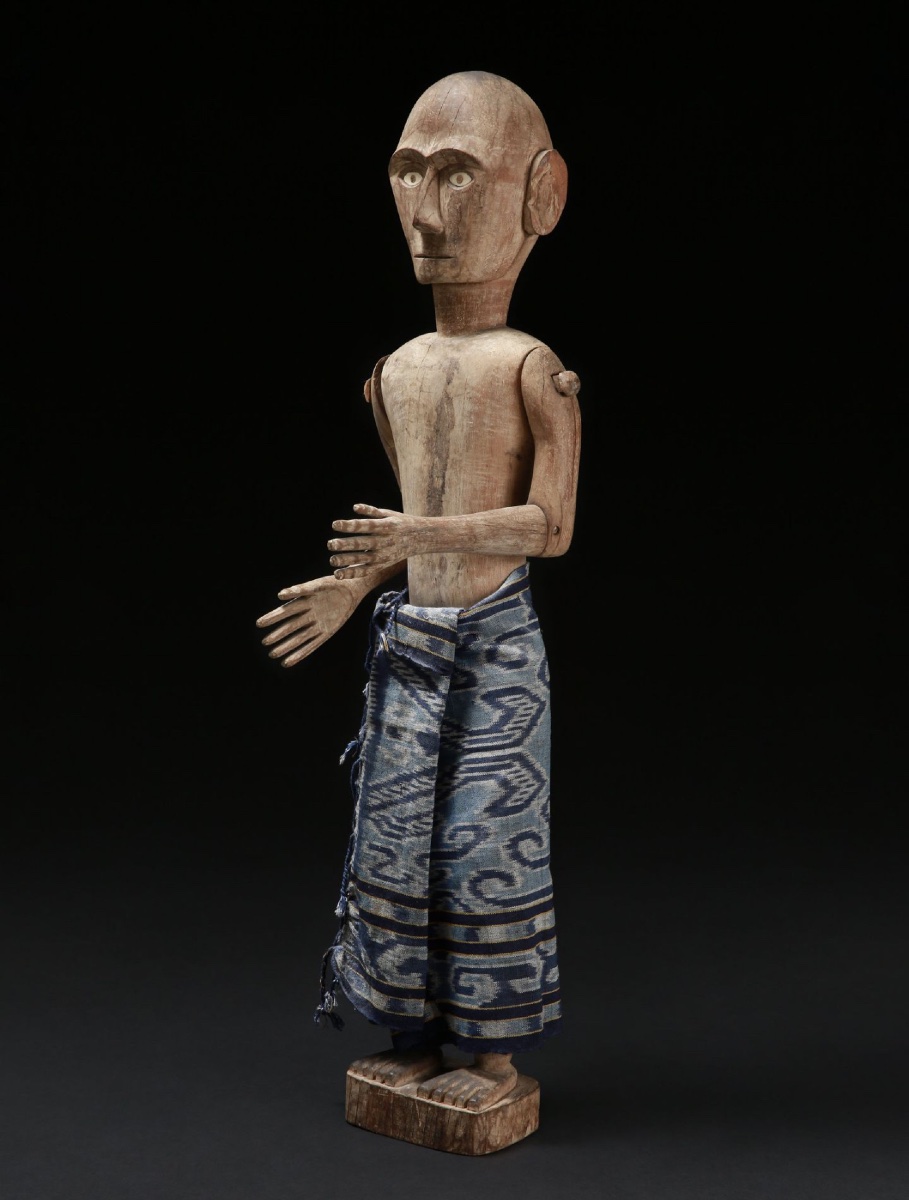
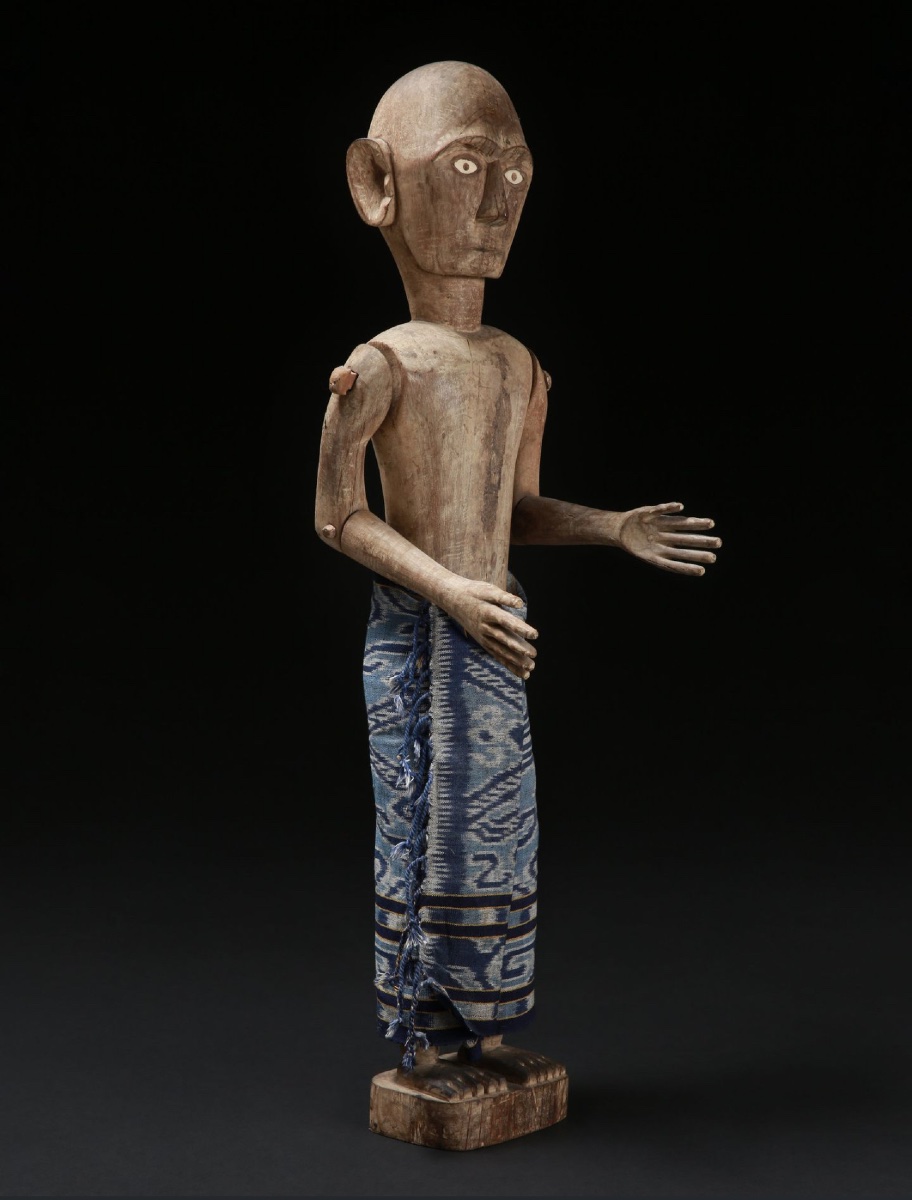
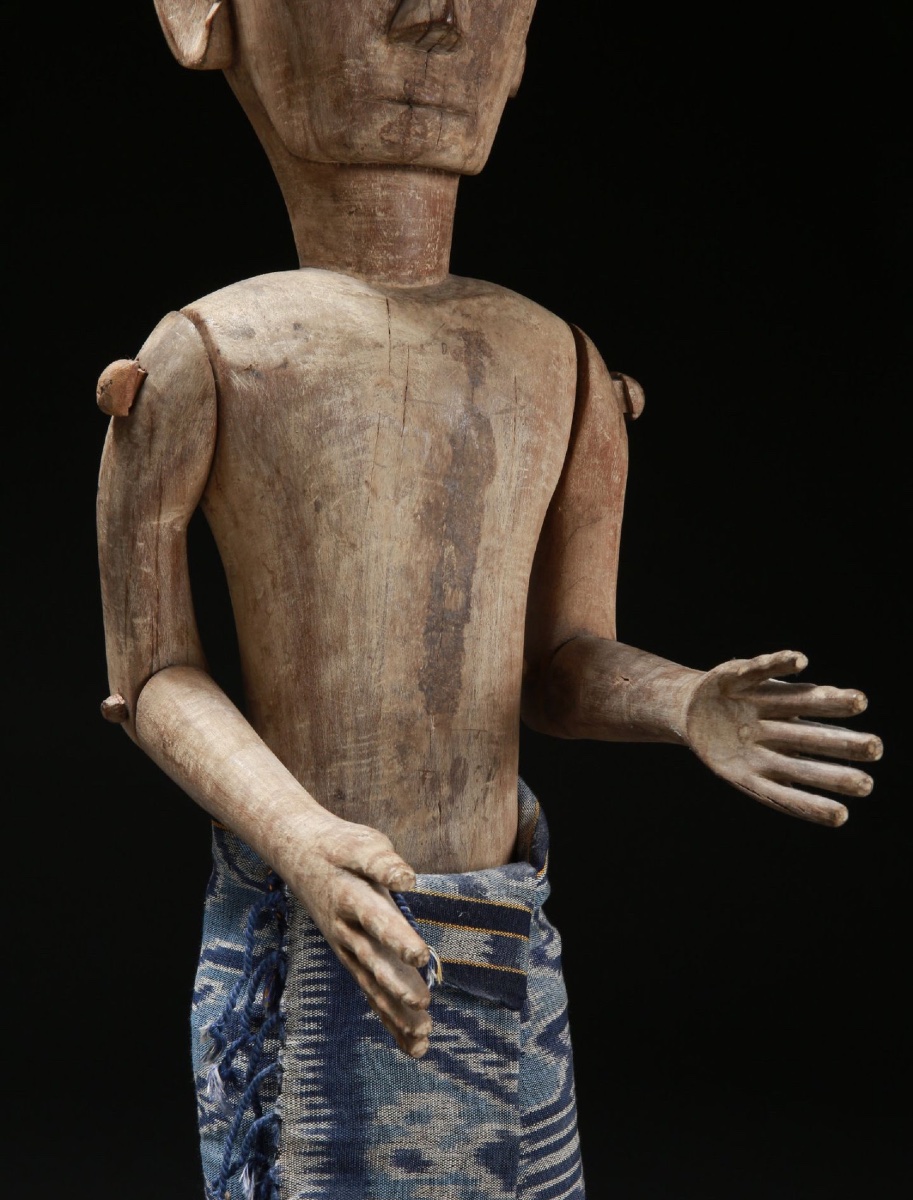
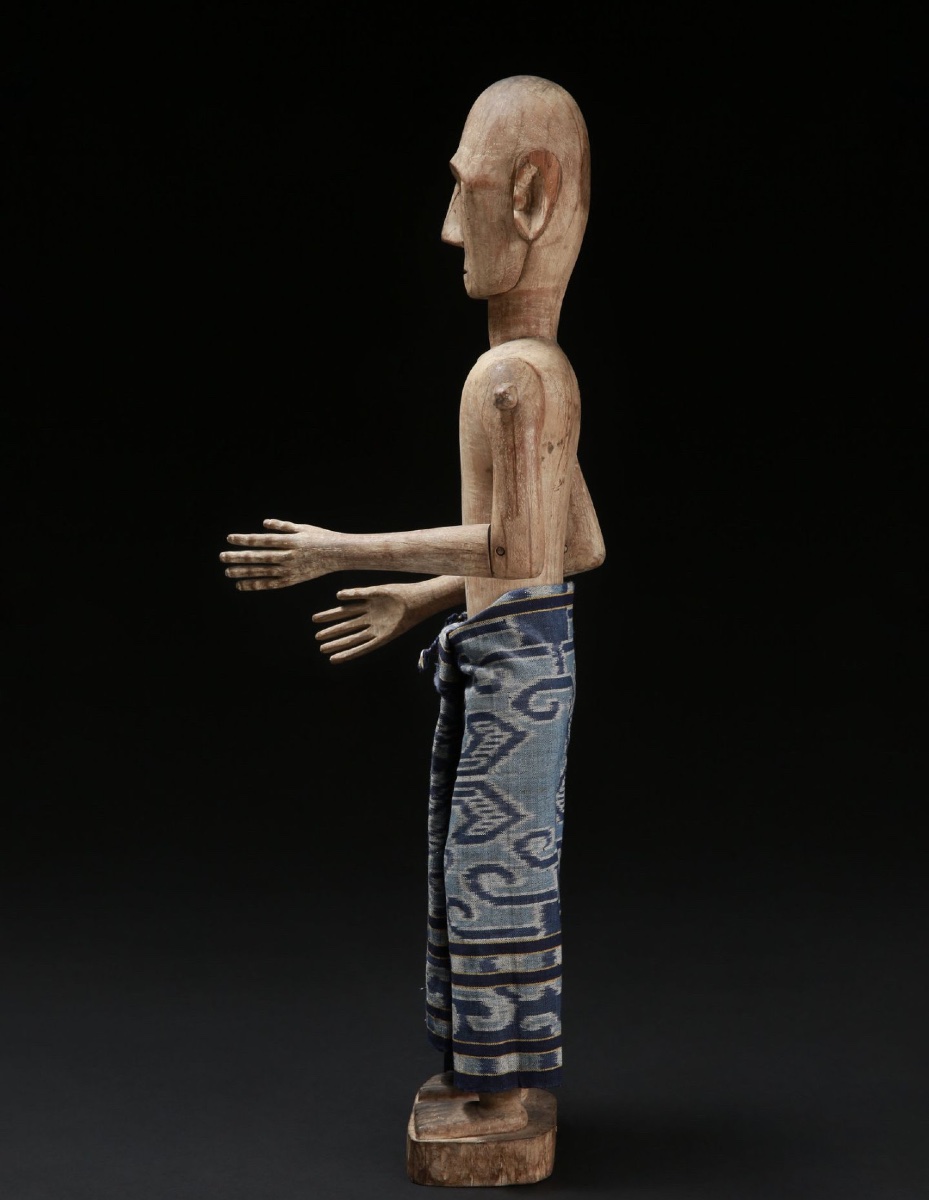
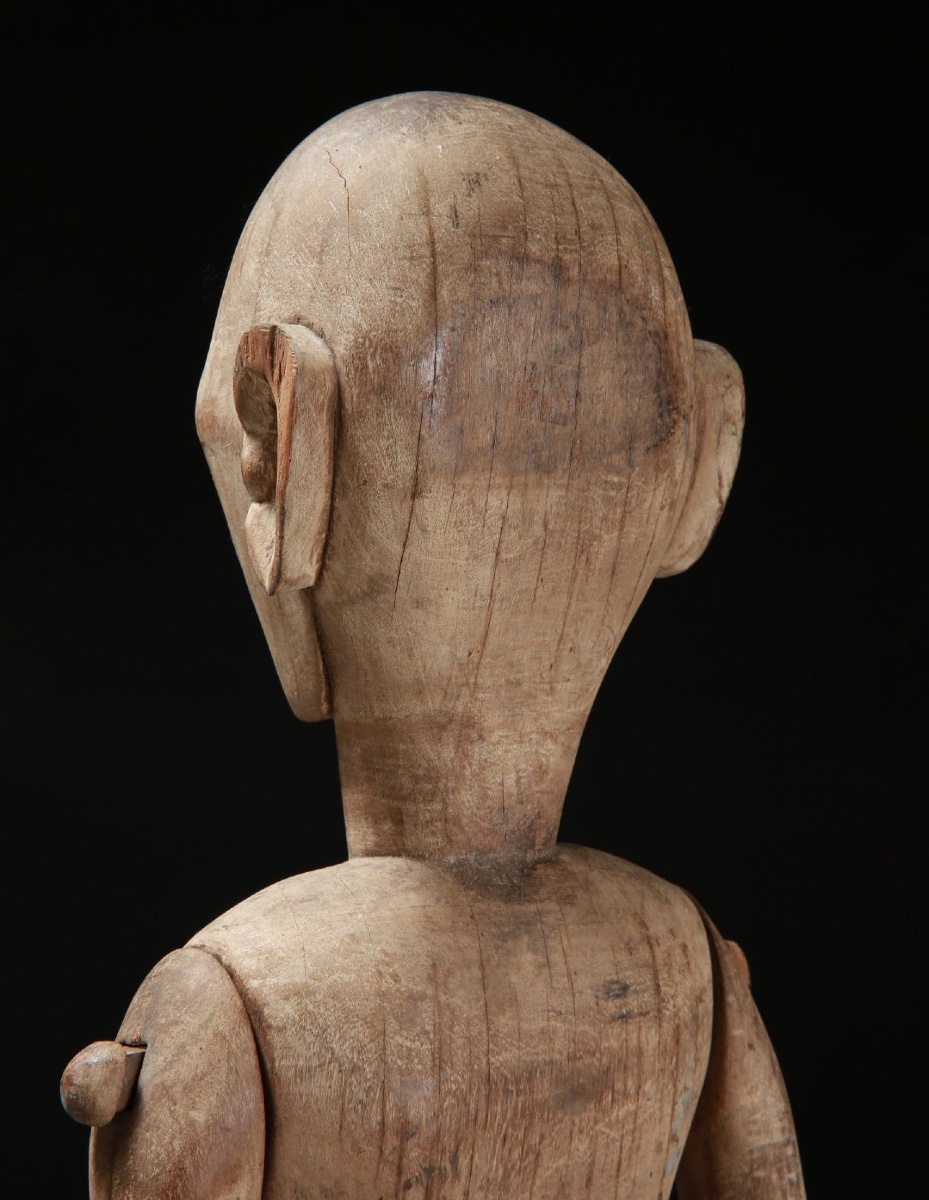
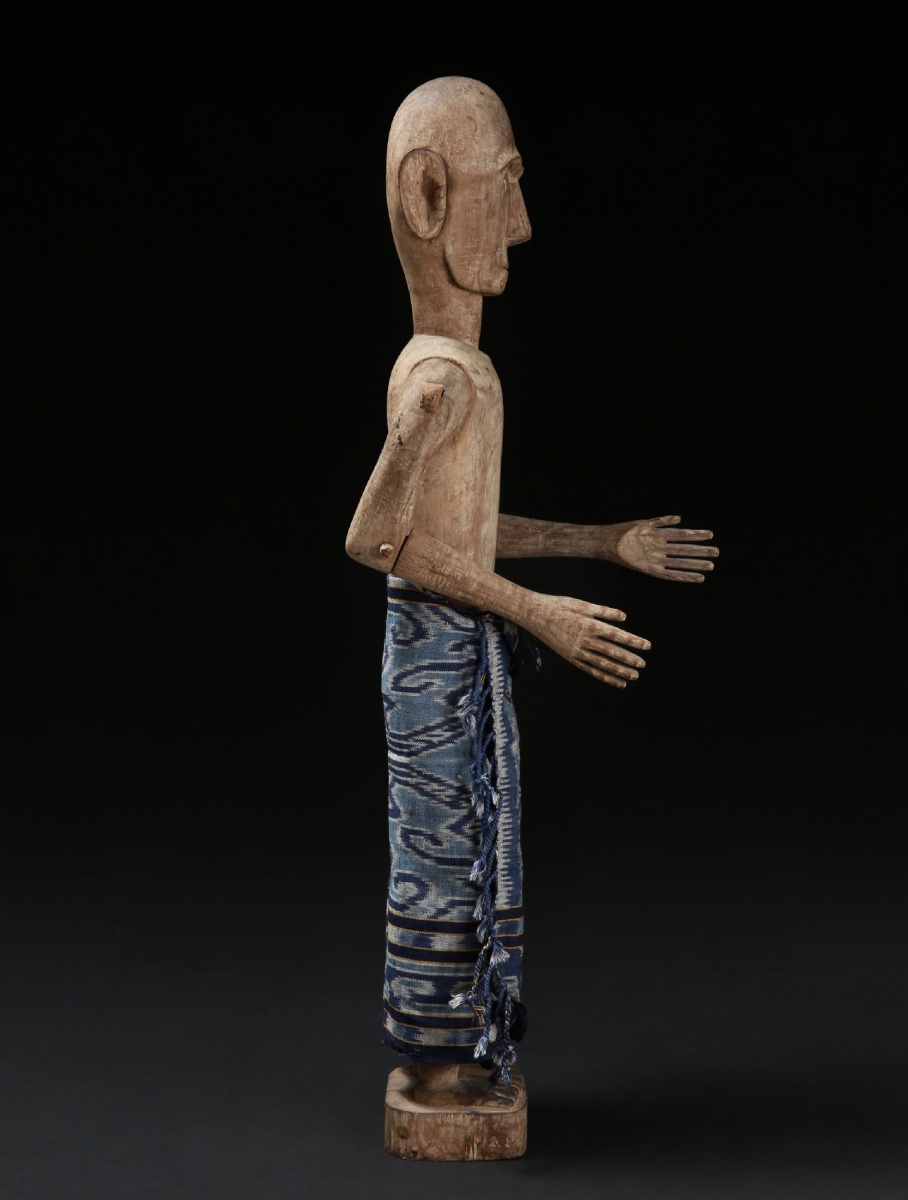
The figure displays the principal characteristics associated with early Tau Tau. Conceived in strict frontality, the head is defined by a broad domed forehead, prominent carved ears, a triangular nose and inlaid eyes whose restrained yet compelling gaze animates the sculpture. The elongated cylindrical neck, broad shoulders and open hands reinforce the monumentality of the figure while preserving the formal economy that characterises Toraja ancestral sculpture.
The articulated arms, preserved in their original construction, constitute an important technical feature found on early Tau Tau. They allowed the position of the hands to be adjusted during funerary ceremonies and when the effigy was installed upon the cliff façade.
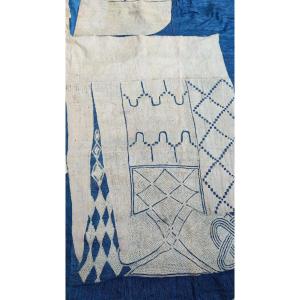
The sculpture is carved from jackfruit wood (Artocarpus heterophyllus), a timber traditionally associated with early Toraja funerary sculpture. Its surface displays a well-developed patina together with consistent handling wear and fine age cracks resulting from the natural ageing of the wood. The ikat sarong reflects the ceremonial textiles traditionally associated with these ancestral figures, although such garments were periodically renewed during the life of the effigy.
The sculpture deliberately avoids naturalistic portraiture. Instead, the restrained modelling, balanced proportions and measured expression convey the timeless spiritual presence expected of a Tau Tau. Despite this stylisation, the figure retains a distinct individuality, recalling its function as the representation of a specific deceased person rather than that of a generic ancestor.
Its formal balance, accomplished carving, preservation of traditional constructional features, documented provenance and excellent state of conservation make this sculpture a particularly representative example of Toraja funerary art dating from the late nineteenth or very early twentieth century.
Provenance
- Former private collection, Basel region, Switzerland.
- Hammer Auktionen, Basel.
Dating
Late 19th – Early 20th century (c. 1880–1910).
The proposed dating is supported by a coherent body of stylistic and technical evidence, including:
- the use of jackfruit wood, traditionally employed for early Tau Tau;
- original articulated arms characteristic of ritual funerary figures;
- inlaid eyes, probably of shell or bone;
- an individualised physiognomy representing a specific deceased person;
- the traditional construction, including strict frontality, elongated neck, broad shoulders and open hands;
- a mature patina with natural wear and age cracks consistent with long-term ageing;
- a documented collecting history and secure provenance.
Period: 19th century
Style: Tribal Art
Condition: En l'etat
Width: 18
Height: 77,5
Depth: 12
Reference (ID): 1797372
Availability: In stock