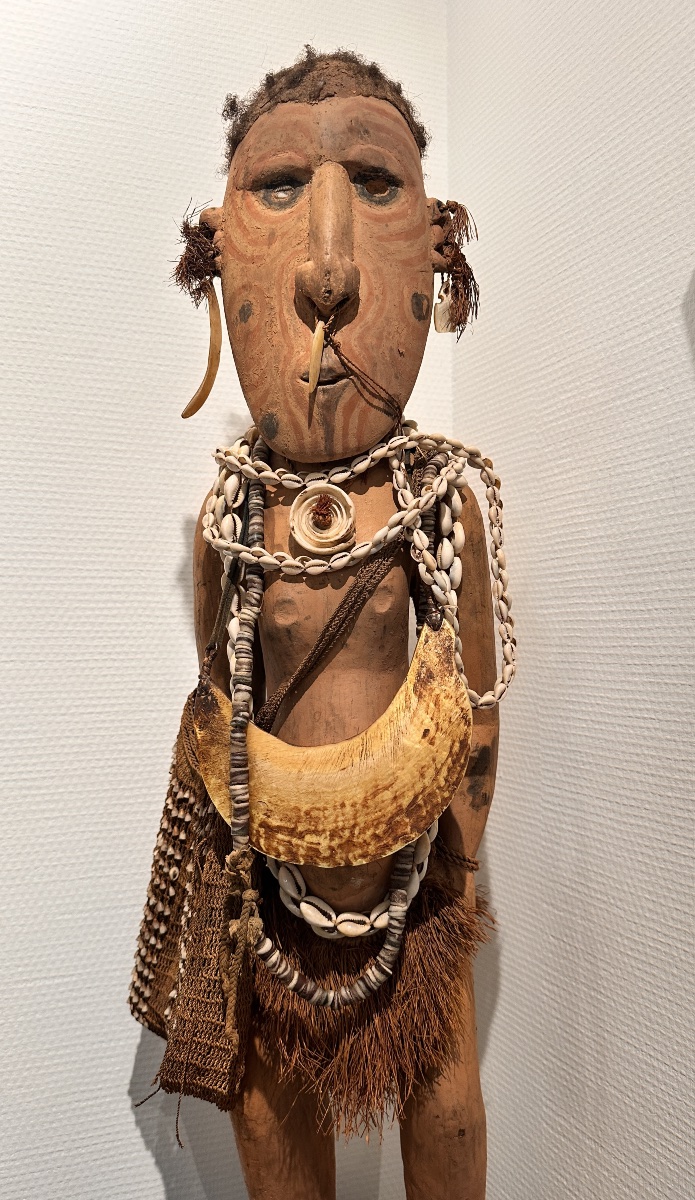
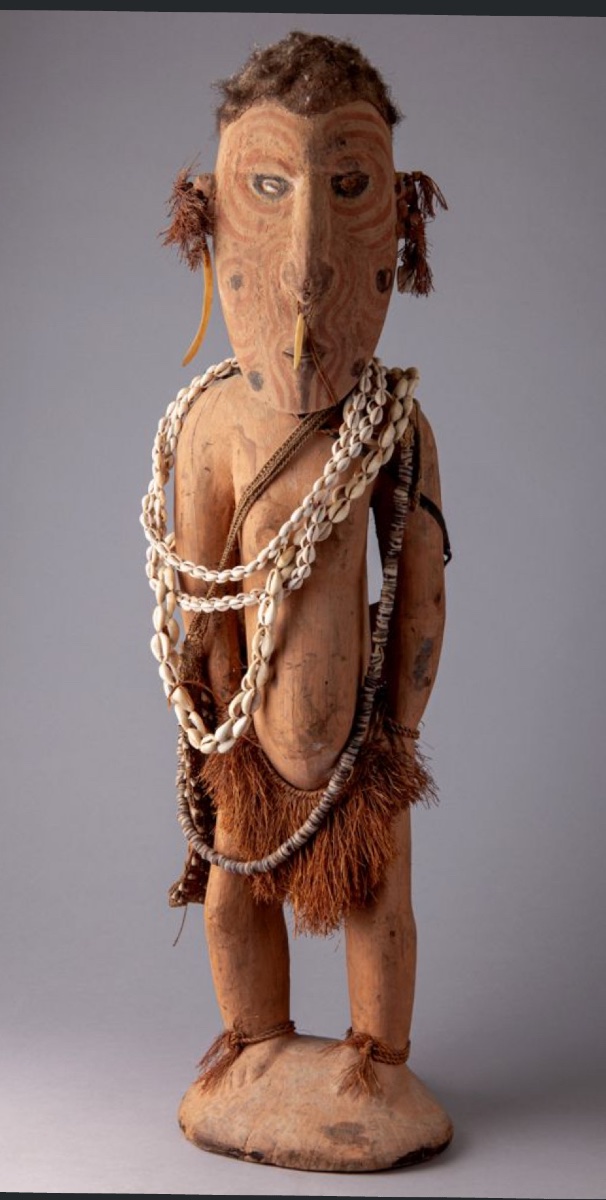
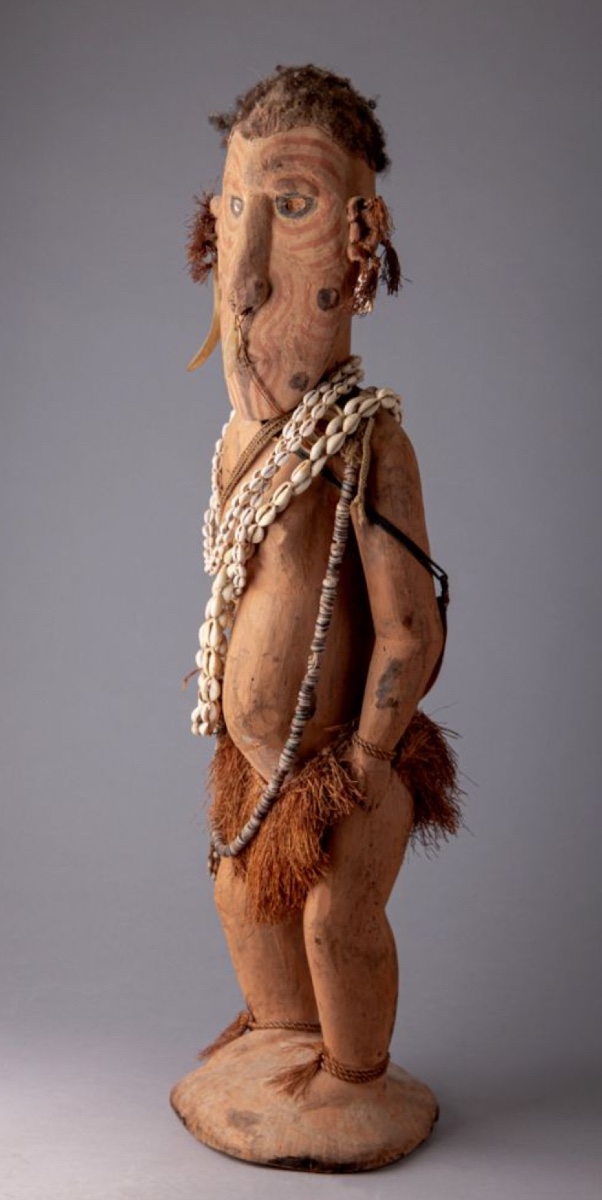
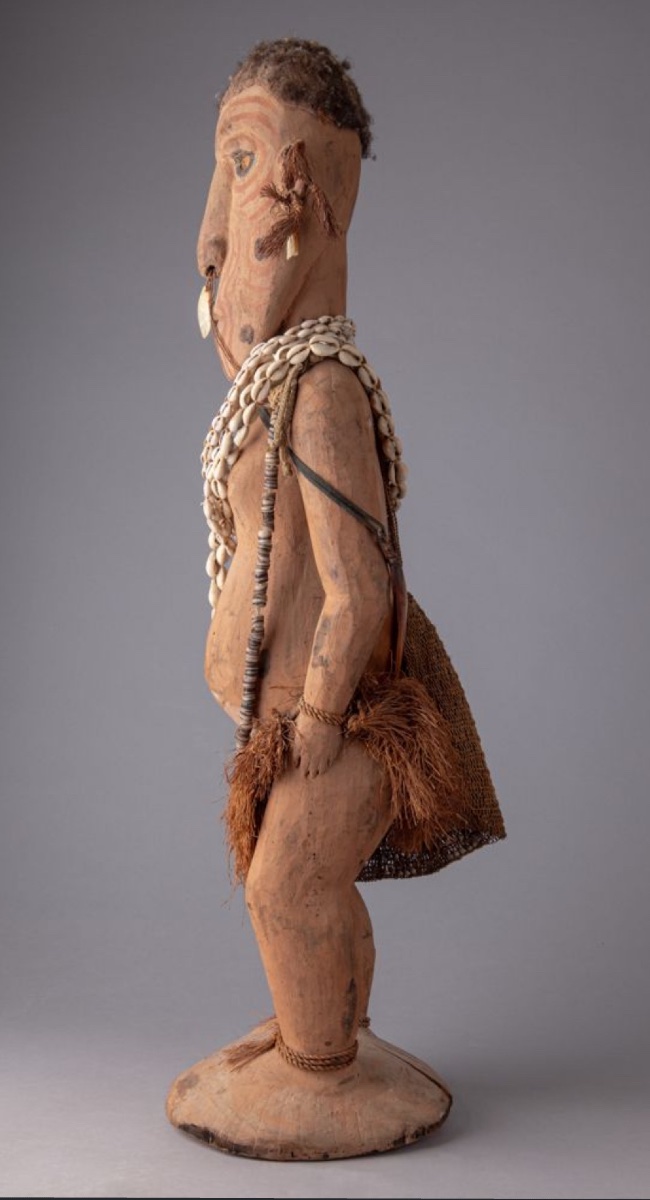
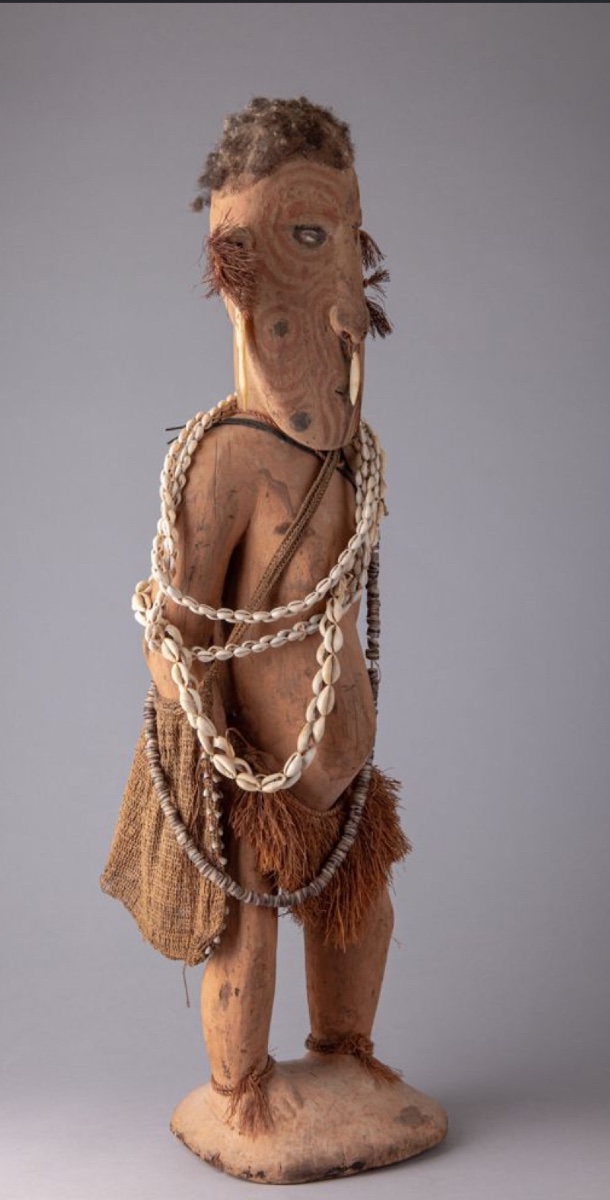
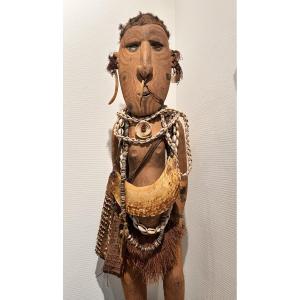


Rare Ancestral Female Figure (wan/waken) & Traditional Bilum, Sawos Mid Sepik, Papua New Guinea
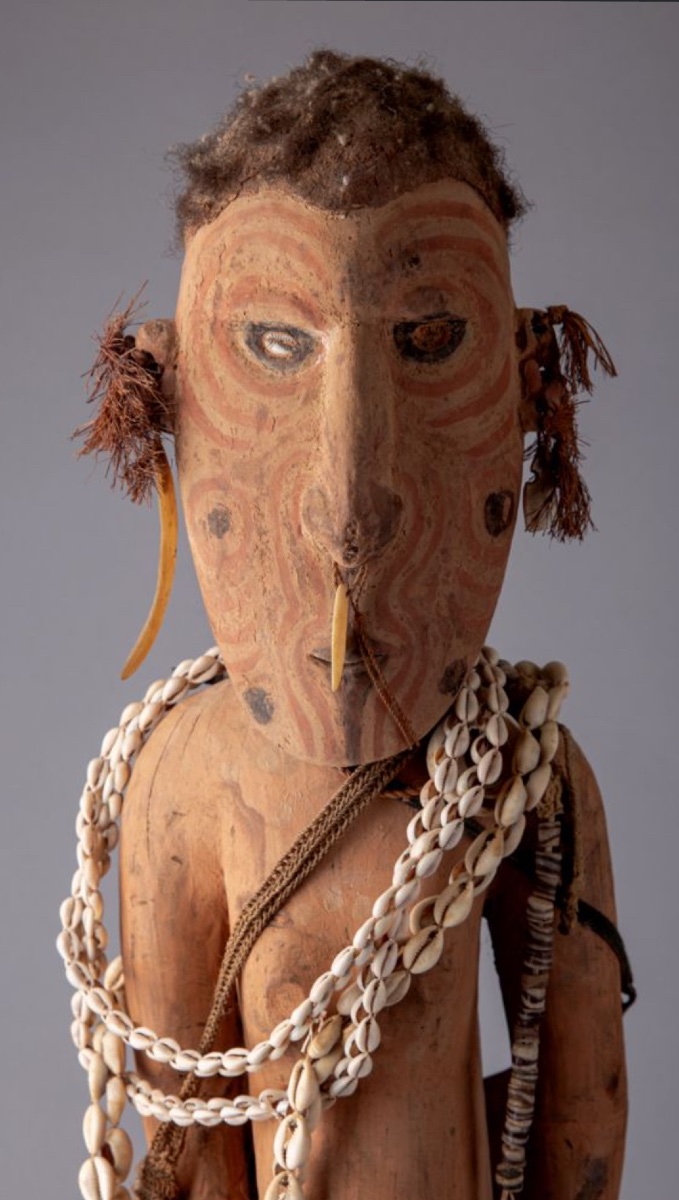
Large Female Ancestral Figure (Wan/Waken) with Exceptional Ceremonial Bilum. Sawos People – Middle Sepik, Papua New Guinea. Carved wood, natural pigments, human hair, cowrie shells, kina shell (Pinctada maxima), plant fibres and woven bilum.
Late 19th – Early 20th Century
Height: 80 cm
This important female ancestral figure originates from the Middle Sepik region of northern Papua New Guinea and can be attributed with a high degree of confidence to the Sawos people, a forest-dwelling society living in the swampy plains north of the Sepik River, particularly around the villages of Gaikorobi, Yamök and Kwalunggei. Closely connected to their Iatmul neighbours along the Sepik River, the Sawos were renowned as master sculptors whose artistic production played a major role in the development of Middle Sepik ceremonial art.
Although male figures are more frequently published, female ancestral figures occupied an equally important place within Sawos cosmology. They embodied ancestral lineages, clan continuity, fertility, spiritual protection and the transmission of sacred knowledge. Their relative rarity in both museum and private collections makes well-preserved examples retaining their original ceremonial attributes especially significant.
Among the Sawos, large anthropomorphic sculptures preserved in ceremonial men’s houses represented powerful ancestral beings generally referred to in the literature as wan or waken. Each figure belonged to a particular clan, bore the name of a founding ancestor and embodied that ancestor’s spiritual presence. These sculptures were not regarded merely as representations but as living entities capable of intervening in the destiny of the community.
The Metropolitan Museum of Art in New York preserves the celebrated Sawos ancestral figure Minjemtimi, reputedly from the village of Kwalunggei. According to oral tradition, the figure came to life during an enemy raid, defended its village in battle and returned to its wooden form only after being struck in the arm by a spear. This remarkable account illustrates the exceptional status attributed to ancestral sculptures throughout the Middle Sepik.
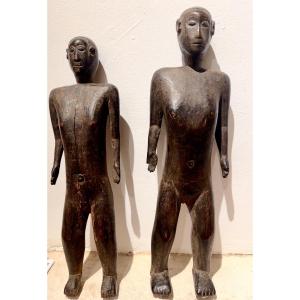
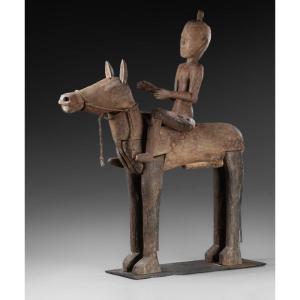
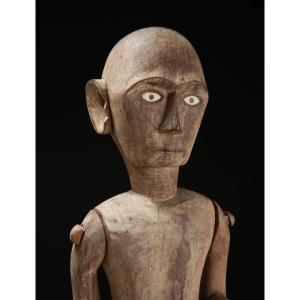
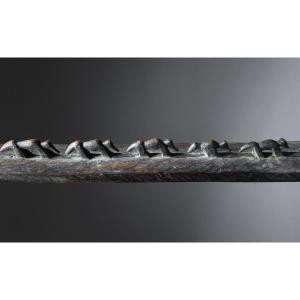
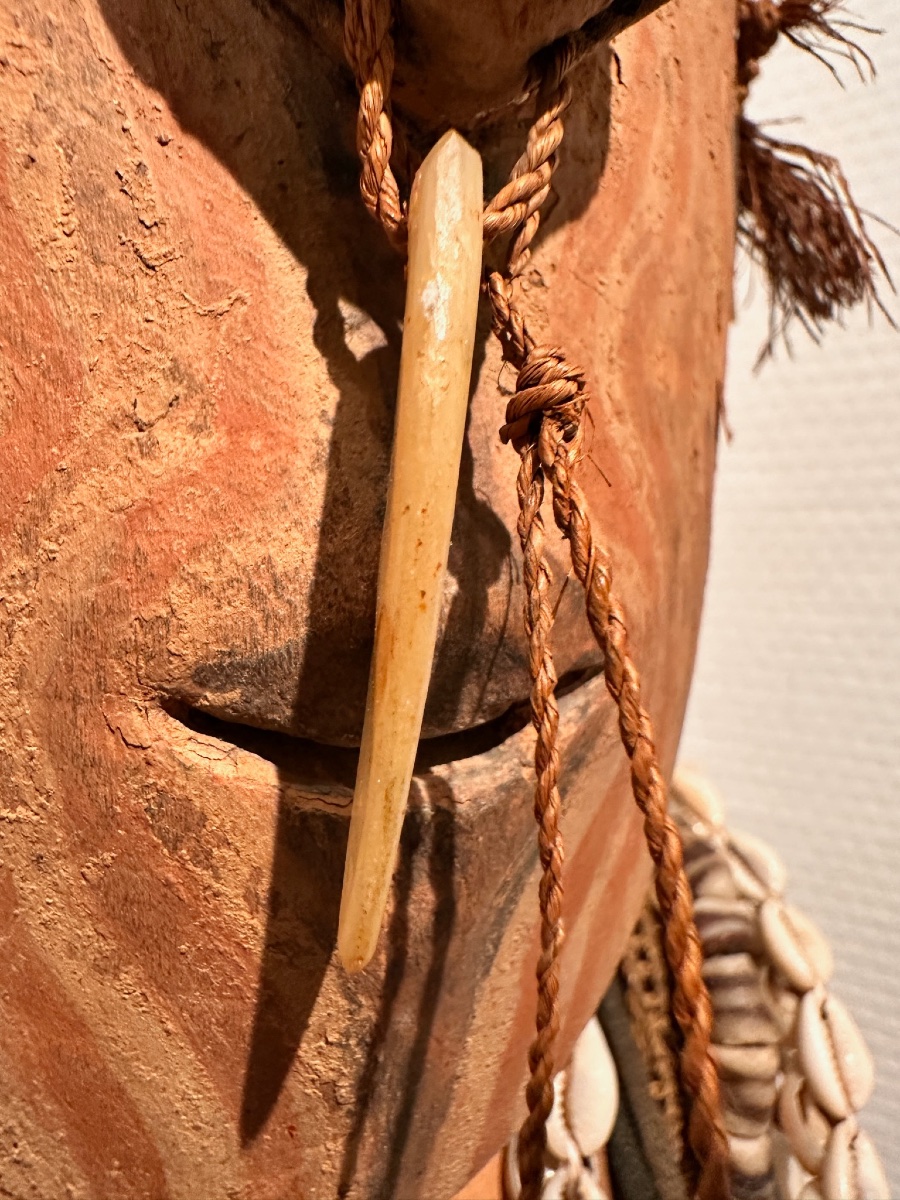
The present sculpture belongs fully within this artistic tradition. Its powerfully modelled face, cowrie-shell eyes and surviving red and white geometric pigments are characteristic of Sawos sculpture. The hieratic frontality, monumental head, elongated torso and deliberately shortened legs favour symbolic presence over anatomical realism. The facial treatment and ornamental details closely recall important female anthropomorphic figures and hooks preserved in the collections of the Musée du quai Branly – Jacques Chirac, reinforcing its attribution to this distinctive sculptural tradition.
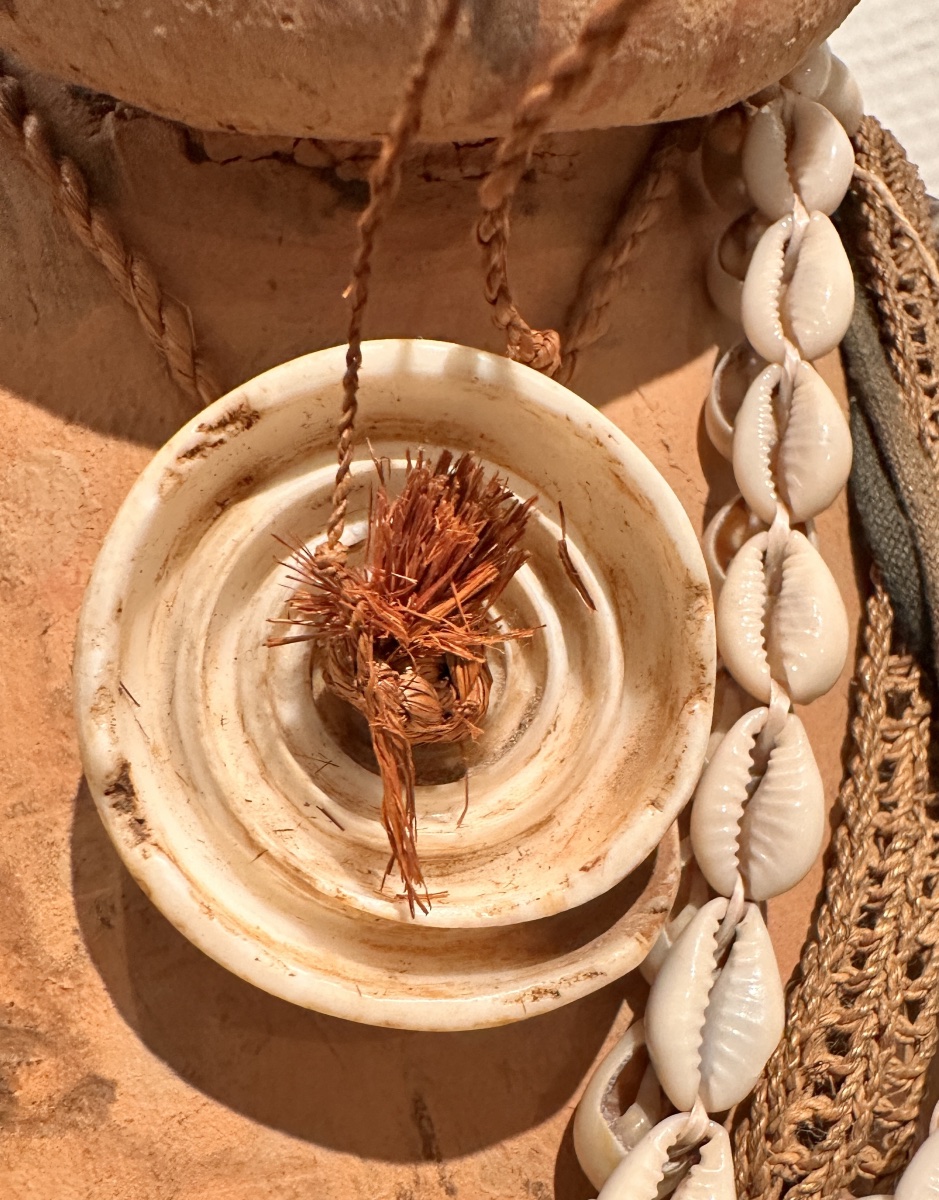
The figure retains an exceptional ensemble of original ceremonial elements. The head still preserves its human hair, while the ears, arms and ankles retain their traditional plant-fibre ornaments. A prestigious kina shell ornament (Pinctada maxima), together with cowrie-shell necklaces and other shell valuables, reflects the importance of shell wealth within Melanesian ceremonial life and exchange systems.
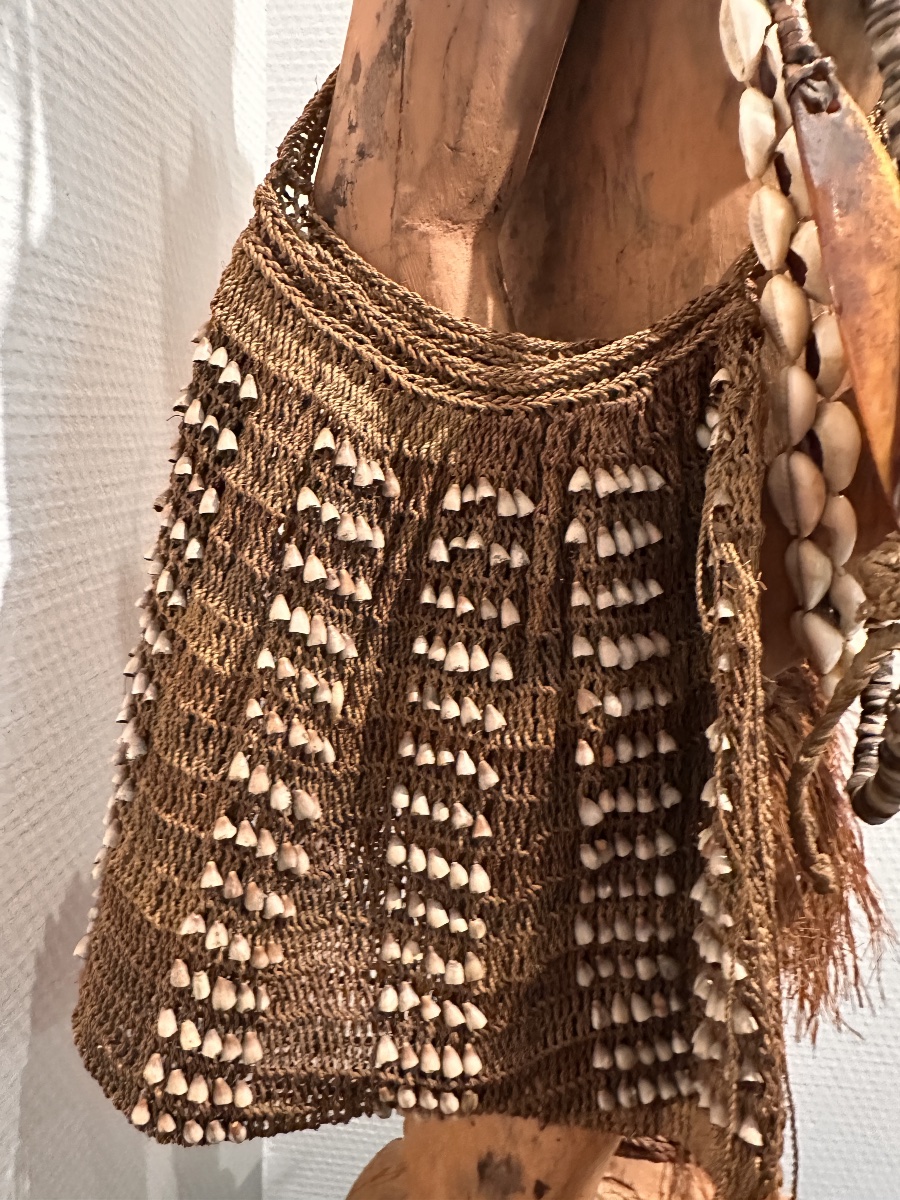
Particularly remarkable is the miniature ceremonial bilum, perfectly proportioned to the sculpture and very likely created specifically for this ancestral figure. Woven from an exceptionally fine plant fibre cord, it incorporates numerous small shells directly into its structure and terminates in an elegant conical shell. Far more than a simple accessory, this bilum is a genuine textile masterpiece demonstrating the extraordinary sophistication of Middle Sepik weaving traditions. Its exceptional craftsmanship, outstanding state of preservation and complete harmony with the sculpture greatly enhance the ethnographic importance of the ensemble.
The Sawos maintained long-standing relationships with their Iatmul neighbours, supplying them with sago—the region’s staple food—as well as numerous ceremonial carvings. The research of Markus Schindlbeck has demonstrated how exchange networks, clan organisation and religious beliefs formed a deeply integrated cultural system in which ancestral figures occupied a central role.
Comparable works are preserved today in major public collections including the Musée du quai Branly – Jacques Chirac (Paris), the Metropolitan Museum of Art (New York) and the Museum der Kulturen (Basel), confirming the importance of this sculptural tradition within the artistic heritage of the Middle Sepik.
Through its age, sculptural quality, comparatively rare female iconography, remarkable preservation of its human hair, ceremonial ornaments, prestigious kina shell and especially its exceptional ceremonial bilum, this sculpture forms an unusually coherent ensemble. It stands as an outstanding testimony to the artistic and spiritual traditions of the Sawos people and ranks among the finest expressions of Middle Sepik ceremonial art.
Provenance:
- Dawo’s Auction, March 2025, Lot 938.
- Former private collection.
Period: 20th century
Style: Tribal Art
Condition: Condition of use
Material: Solid wood
Width: 30 cm
Height: 80 cm
Reference (ID): 1800558
Availability: In stock