


Officer's Shako Of The 1st Hussar Regiment, 1812 Model, First Empire.
OFFICER'S SHAKO FROM THE 1ST HUSSAR REGIMENT, 1812 model, First Empire. 34225
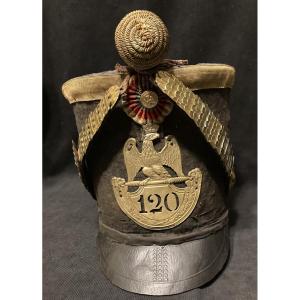
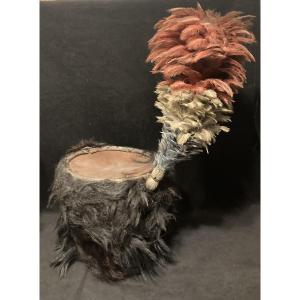
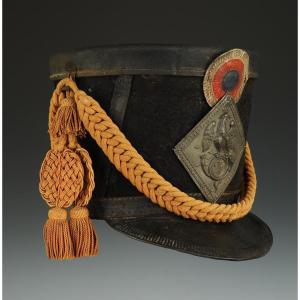
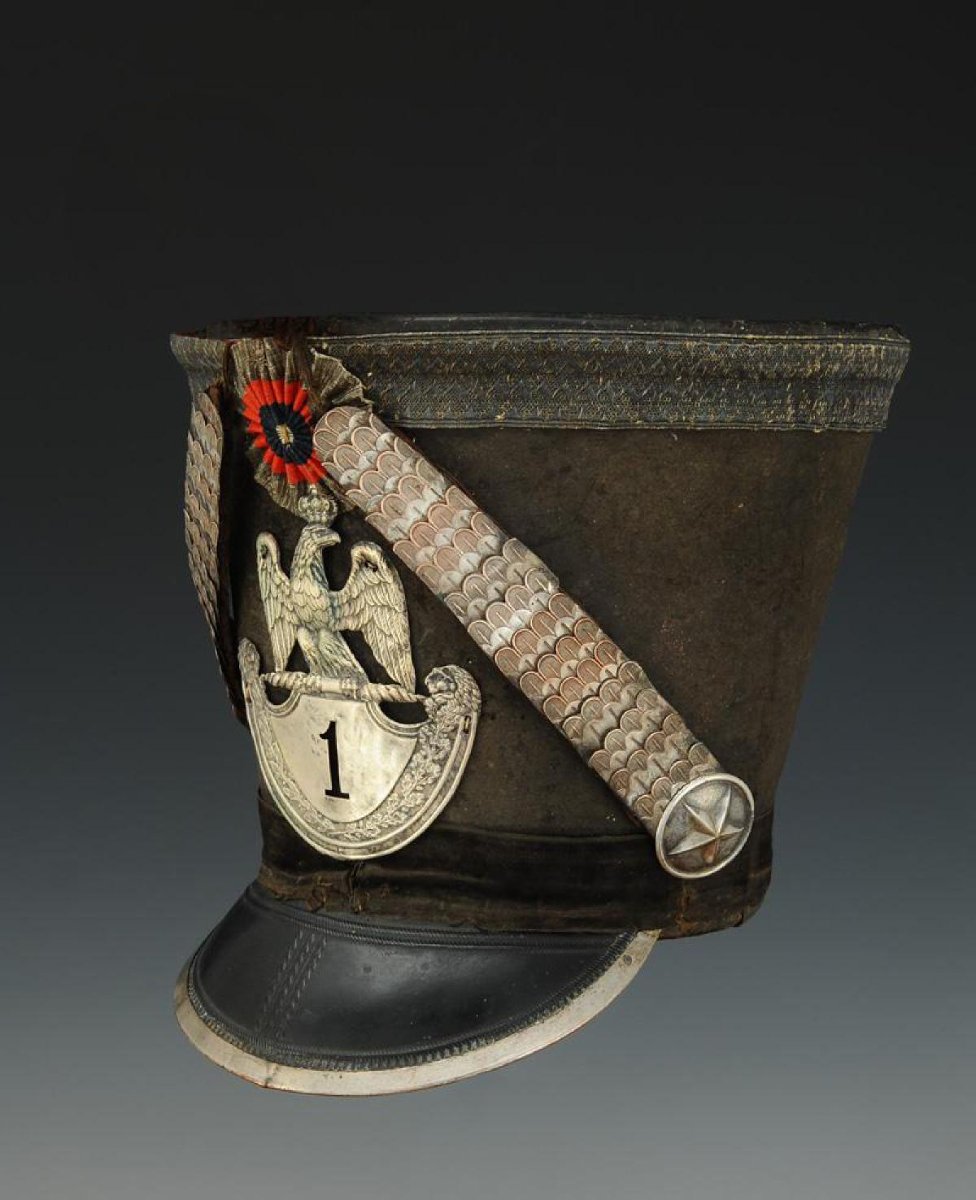
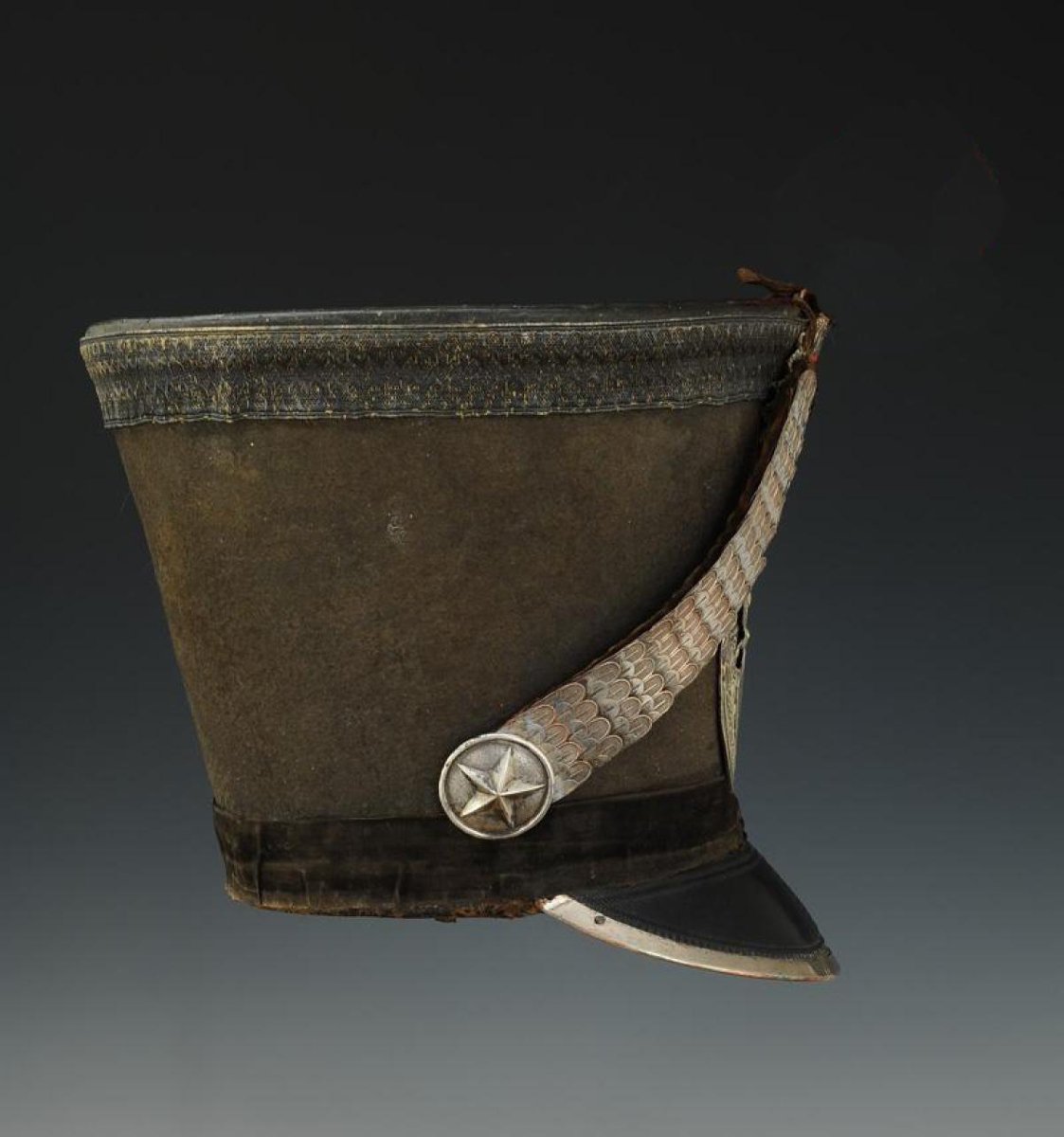
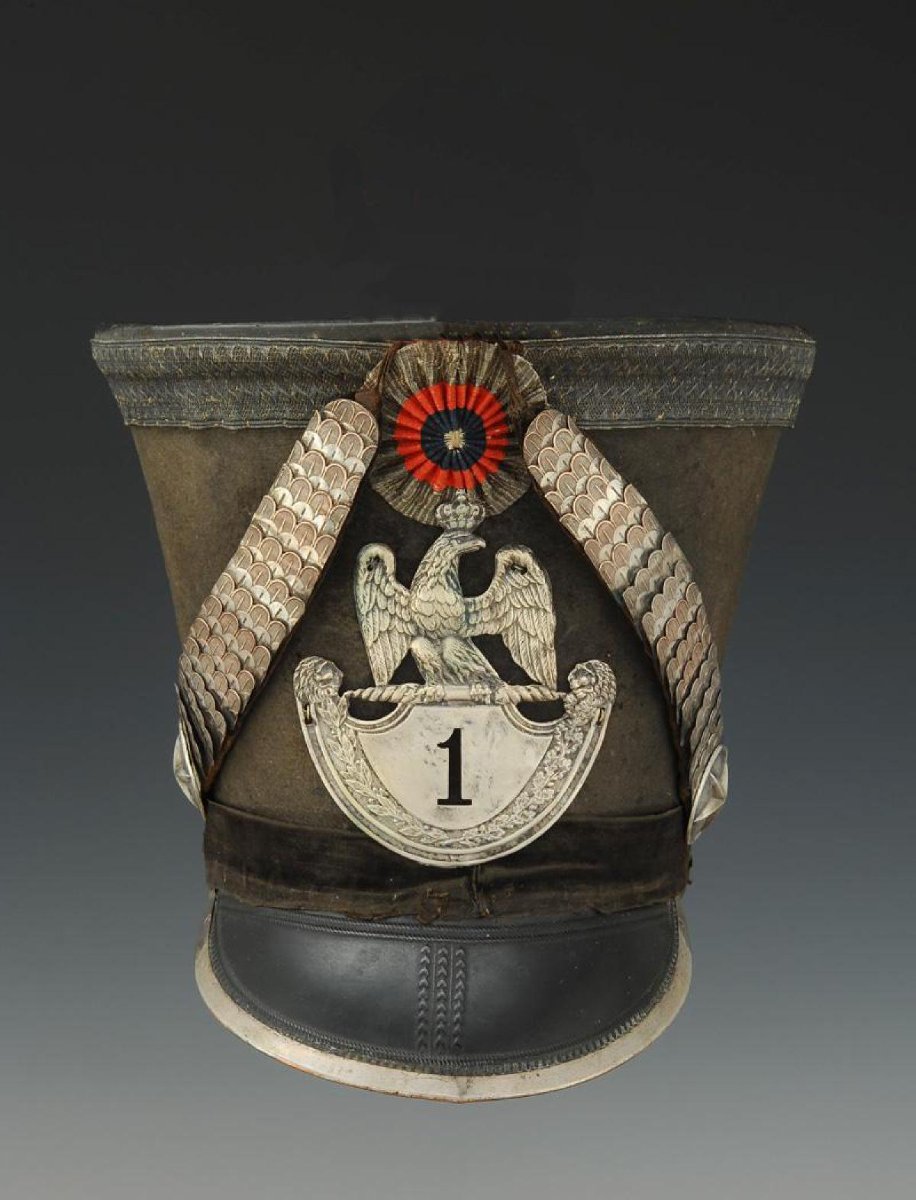
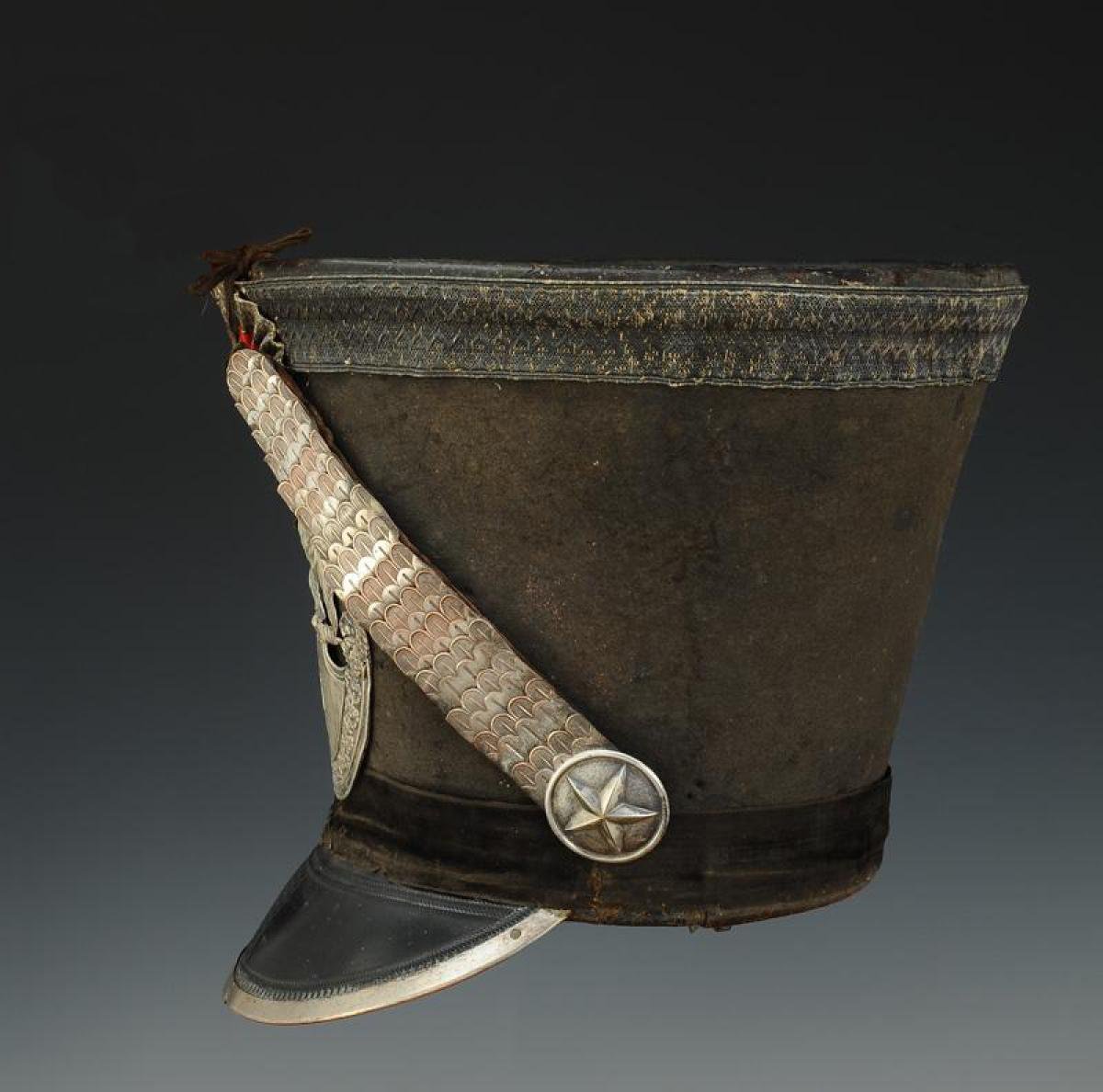
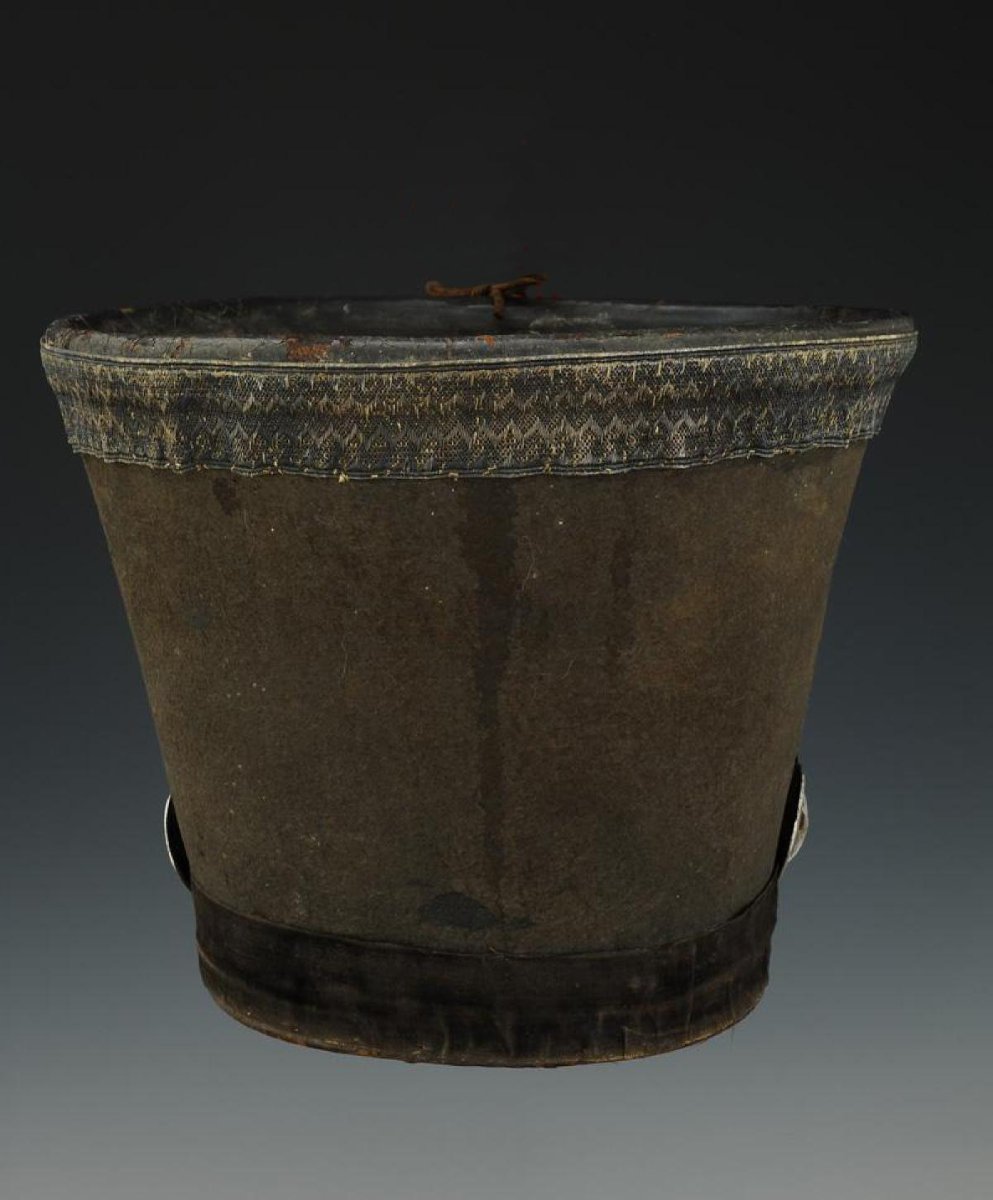
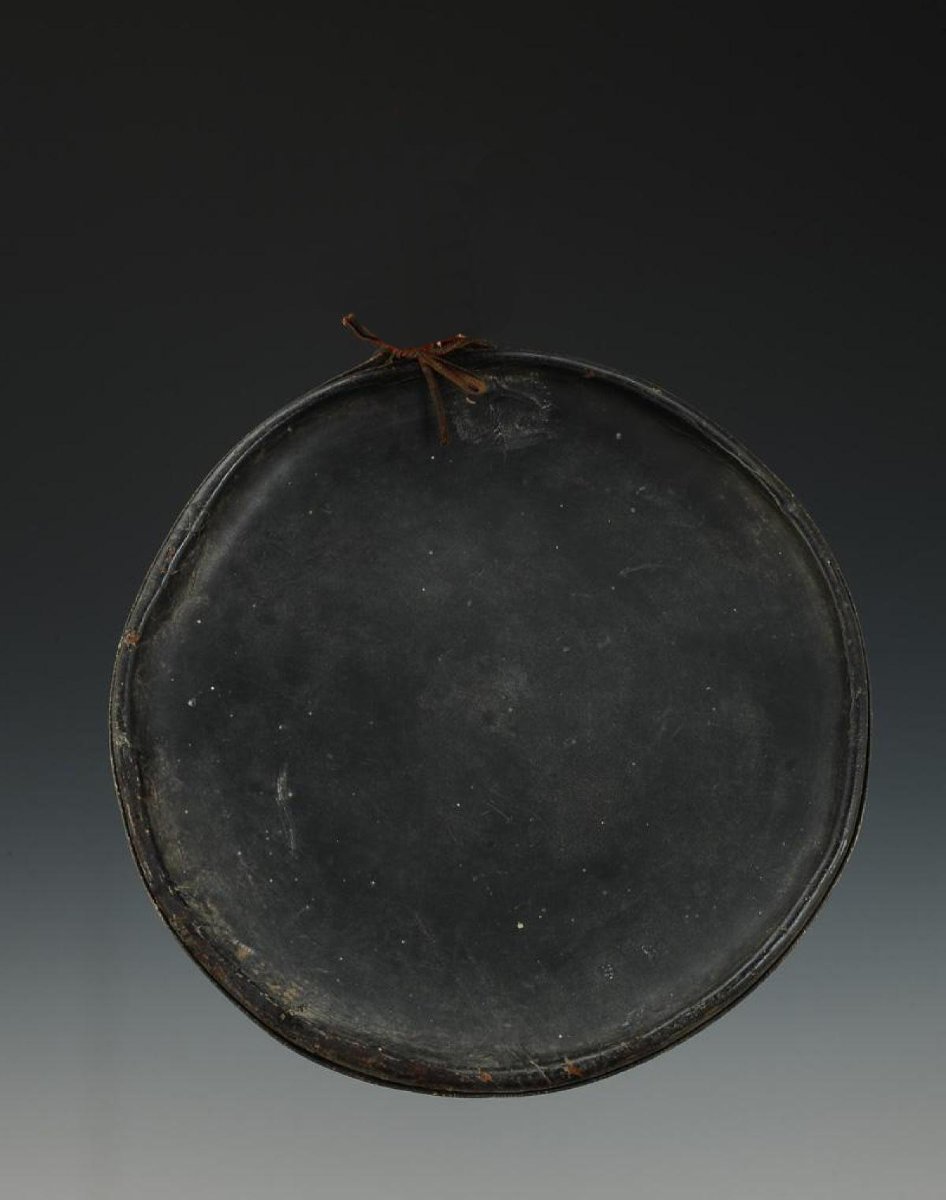
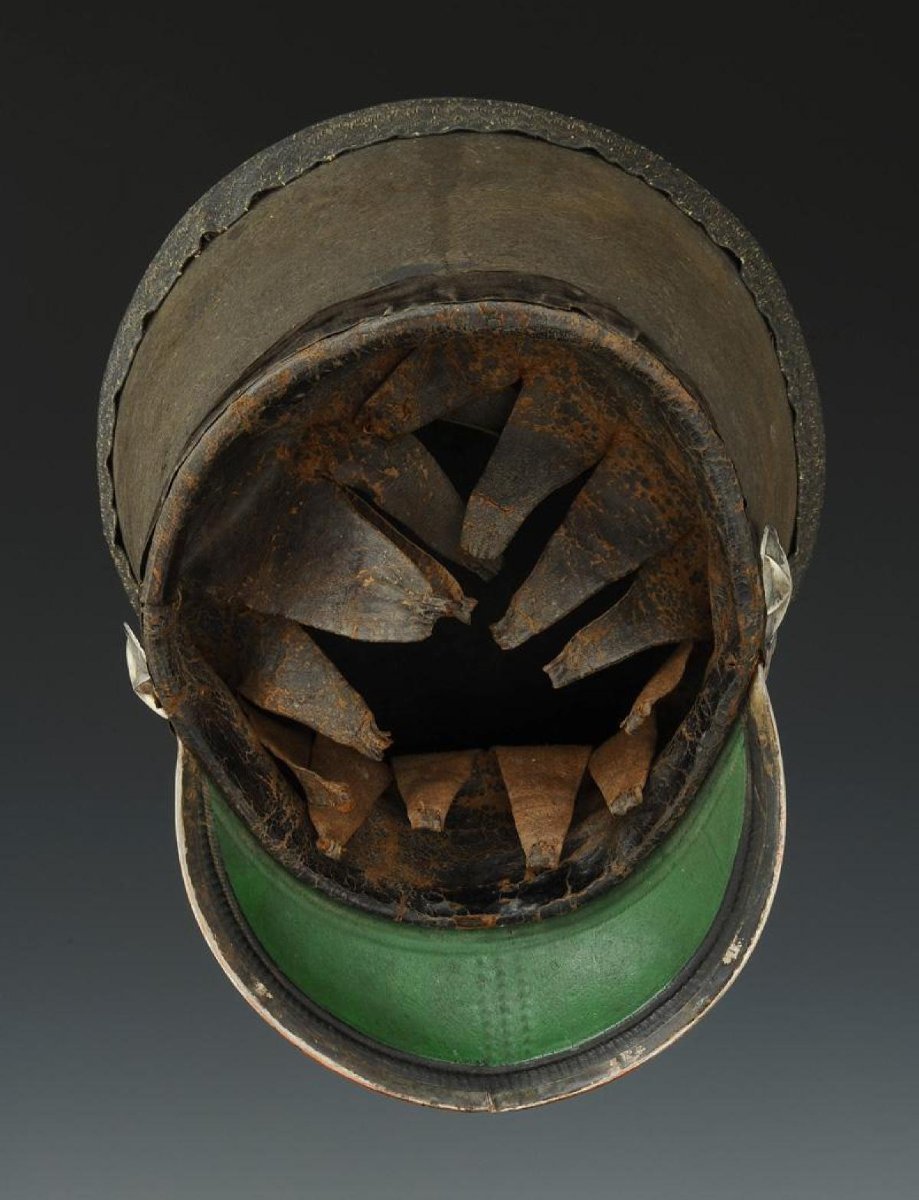
Felt shako covered in black taupe velvet (H 21.5 cm). Black patent leather crown (diameter 26 cm). The upper part of the crown is trimmed with a woven silver braid known as “à lézardes” (H 3.2 cm). The lower part features a black velvet brim (H 2.5 cm). Visor made of sturdy patent cowhide leather, attached to the front of the shako; the interior is green-waxed and embossed with a molded border featuring three vertical strips in the center imitating stylized branches; its outer border is trimmed with a silver-plated copper band folded over itself; the visor is 6.5 cm wide at its center.
Inside the shako is a black waxed sheepskin lining cut into 15 wolf’s teeth.
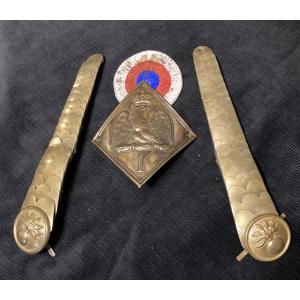
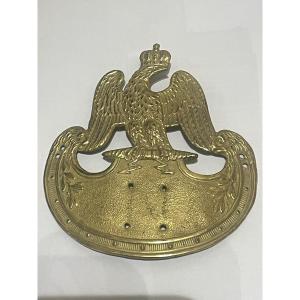
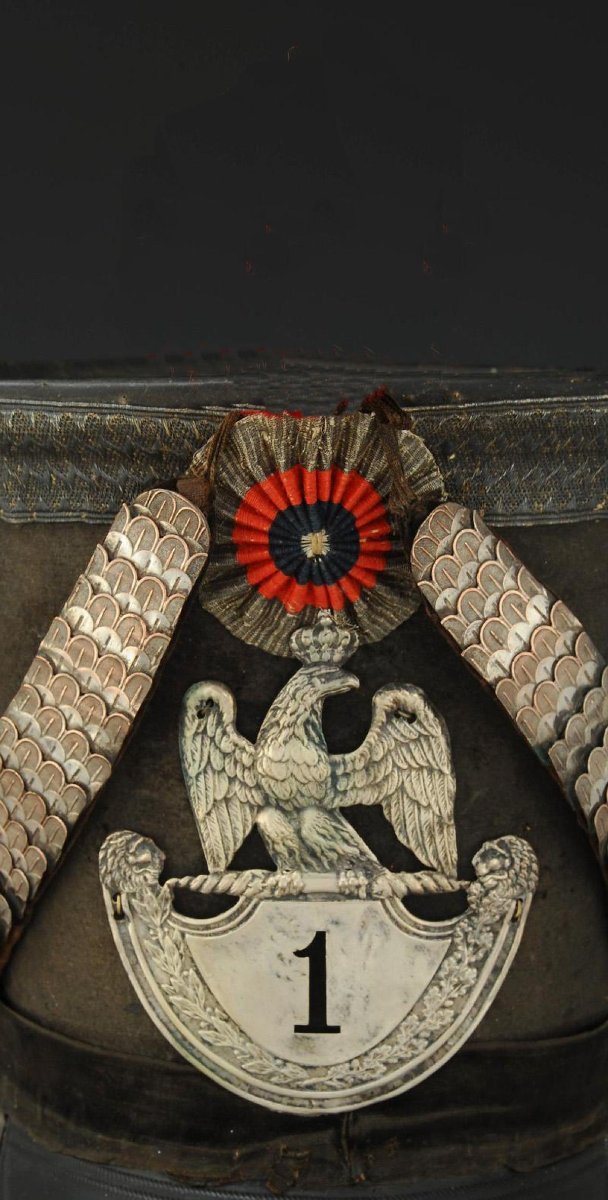
A silver-plated copper plate, stamped and cut into the shape of a crowned imperial eagle holding Jupiter’s sparkling spindle in its talons, set upon a shield cut with the numeral “1 ” and bordered at the bottom by a branch of oak and laurel and in each corner by a lion’s head (H 13 cm, width 11 cm). A cockade placed above the plate, made of scarlet, dark blue, and silver silk braid (diameter 6.5 cm).
Chin straps. On each side of the shako is a chin strap, consisting of a double sheepskin strap onto which is mounted a series of 15 scales of decreasing width, made of silver-plated copper, each cut into four scallops; the last scale is rounded. They are held in place by flat clasps. The first scale is 3.4 cm wide, and the last is 2.6 cm wide. Each scale is stamped to represent a double scale: one cut into five smooth scallops, burnished with agate stone, and another into four scallops with a sandblasted, matte finish. The chin strap is secured by a round, silver-plated metal rosette 3.5 cm in diameter, referred to in the 1812 regulations as a “large button.” The rosettes are embossed in relief with a star and a protruding border. The chin straps are finished with a black silk cord.
France.
First Empire.
Very good condition, oxidized silver braid, traces of a replaced plate.
HISTORY:
The 1st Hussar Regiment was established in 1791; it is the former Bercheny Hussars. From 1808 to 1812, it was assigned to the Army of Spain and Portugal and saw action at the battles of Braga, Santillo, Sabugal, and Monasterio in 1812. In 1813, it took part in the battles of Juterbock, Leipzig, and Hanau; in 1814, while attached to the Army of Italy, it fought in the Battle of Mincio. During the Belgian campaign of 1814, he distinguished himself at Namur.
Felt shako covered in black taupe velvet (H 21.5 cm). Black patent leather crown (diameter 26 cm). The upper part of the crown is trimmed with a woven silver braid known as “à lézardes” (H 3.2 cm). The lower part features a black velvet brim (H 2.5 cm). Visor made of sturdy patent cowhide leather, attached to the front of the shako; the interior is green-waxed and embossed with a molded border featuring three vertical strips in the center imitating stylized branches; its outer border is trimmed with a silver-plated copper band folded over itself; the visor is 6.5 cm wide at its center.
Inside the shako is a black waxed sheepskin lining cut into 15 wolf’s teeth.
A silver-plated copper plate, stamped and cut into the shape of a crowned imperial eagle holding Jupiter’s sparkling spindle in its talons, set upon a shield cut with the numeral “1 ” and bordered at the bottom by a branch of oak and laurel and in each corner by a lion’s head (H 13 cm, width 11 cm). A cockade placed above the plate, made of scarlet, dark blue, and silver silk braid (diameter 6.5 cm).
Chin straps. On each side of the shako is a chin strap, consisting of a double sheepskin strap onto which is mounted a series of 15 scales of decreasing width, made of silver-plated copper, each cut into four scallops; the last scale is rounded. They are held in place by flat clasps. The first scale is 3.4 cm wide, and the last is 2.6 cm wide. Each scale is stamped to represent a double scale: one cut into five smooth scallops, burnished with agate stone, and another into four scallops with a sandblasted, matte finish. The chin strap is secured by a round, silver-plated metal rosette 3.5 cm in diameter, referred to in the 1812 regulations as a “large button.” The rosettes are embossed in relief with a star and a protruding border. The chin straps are finished with a black silk cord.
France.
First Empire.
Very good condition, oxidized silver braid, traces of a replaced plate.
HISTORY:
The 1st Hussar Regiment was established in 1791; it is the former Bercheny Hussars. From 1808 to 1812, it was assigned to the Army of Spain and Portugal and saw action at the battles of Braga, Santillo, Sabugal, and Monasterio in 1812. In 1813, it took part in the battles of Juterbock, Leipzig, and Hanau; in 1814, while attached to the Army of Italy, it fought in the Battle of Mincio. During the Belgian campaign of 1814, he distinguished himself at Namur.
15 000 €
Period: 19th century
Style: Consulat, Empire
Condition: Good condition
Reference (ID): 1796395
Availability: In stock
Print