THIS OBJECT WAS SOLD
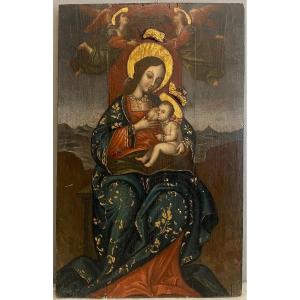
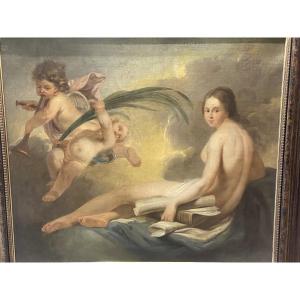
Diego Valentín Díaz (1586–1660) *angélus Custos* ‘valladolid’
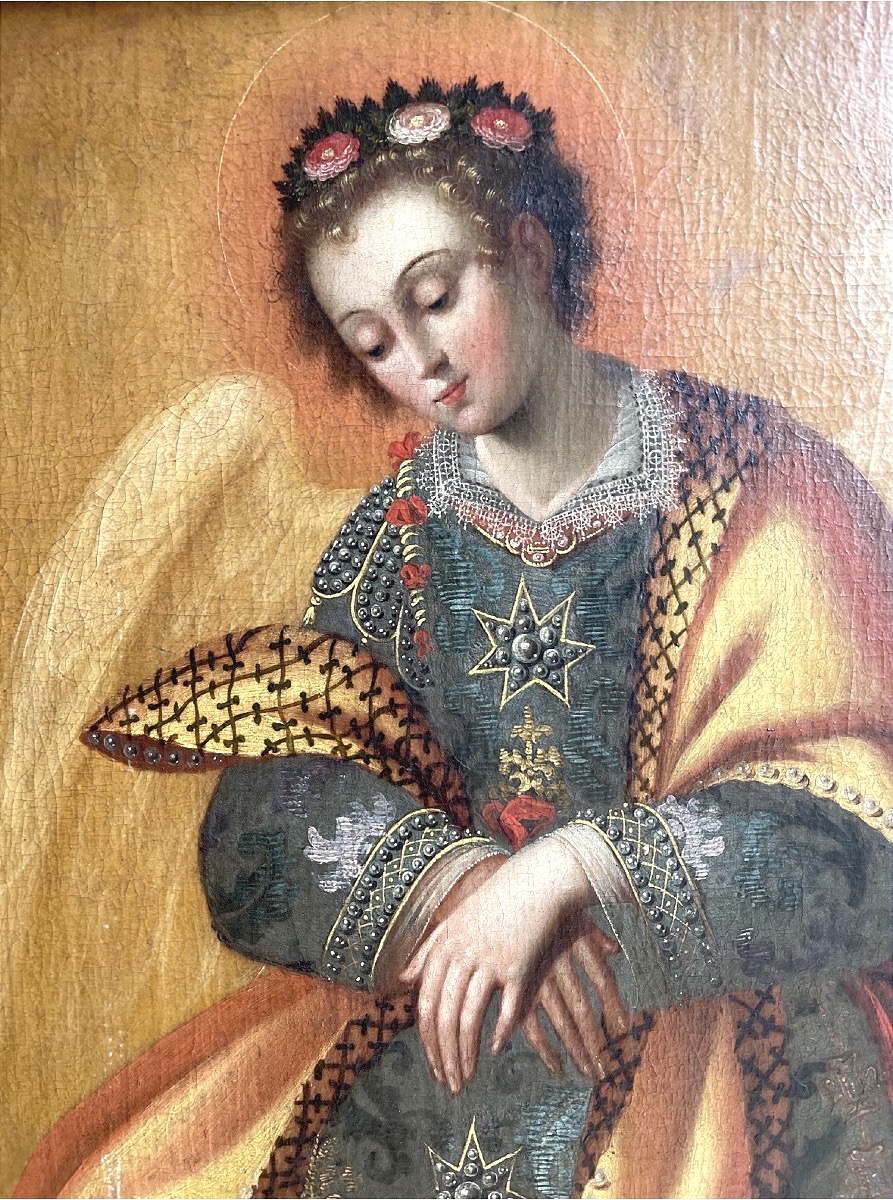
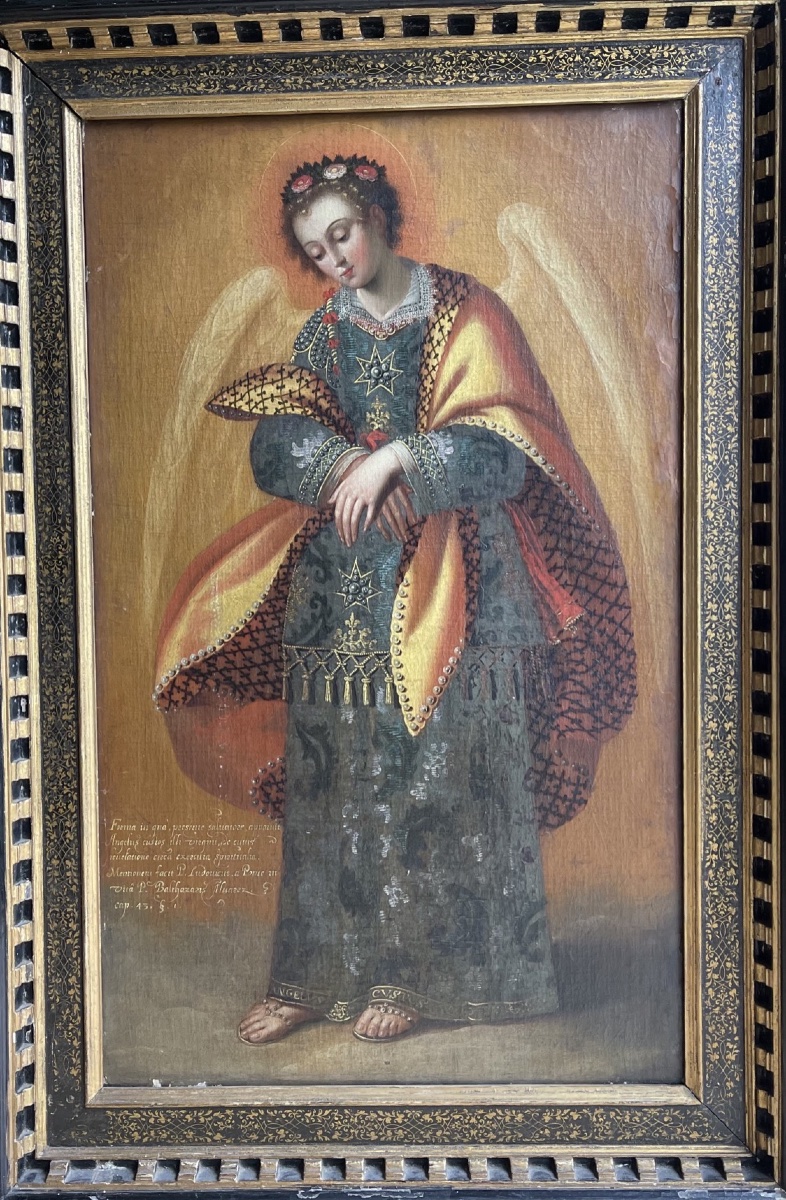
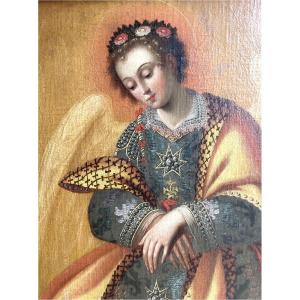


Artist: Diego Valentín Díaz (1586–1660)
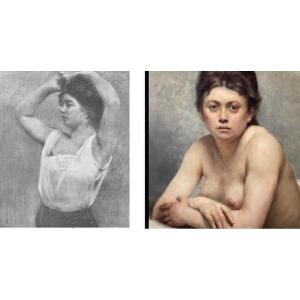
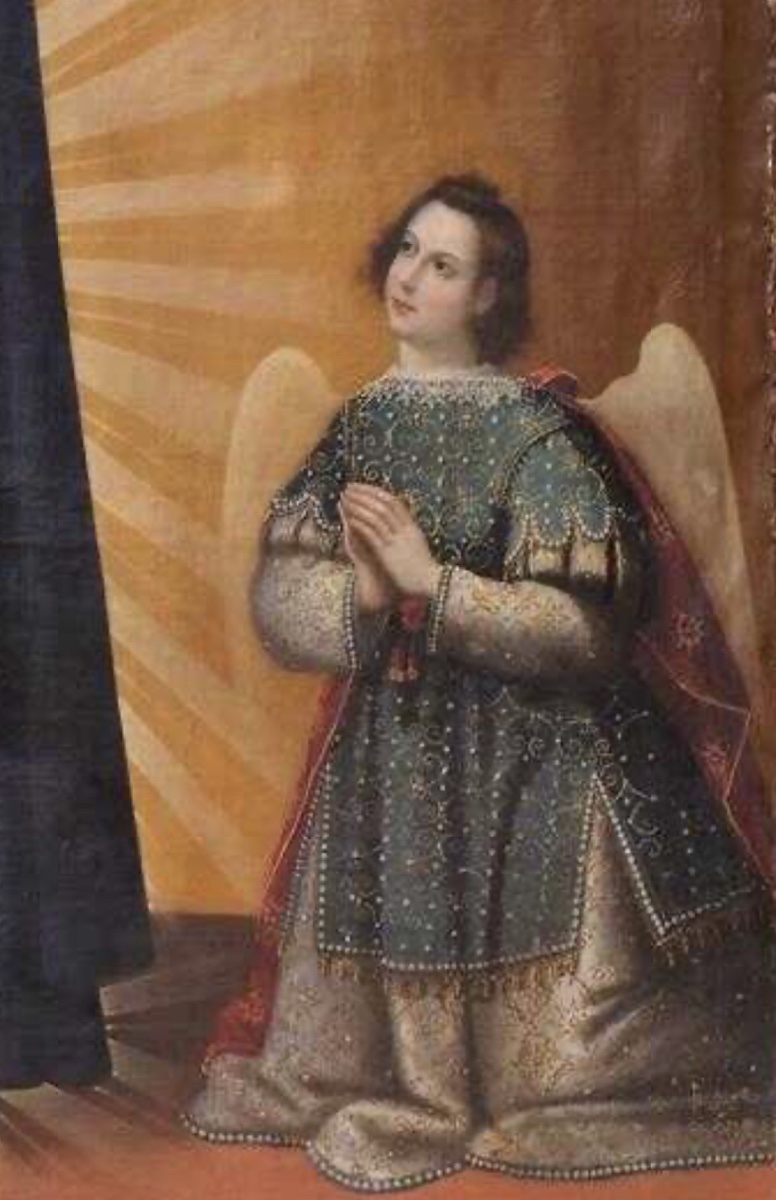
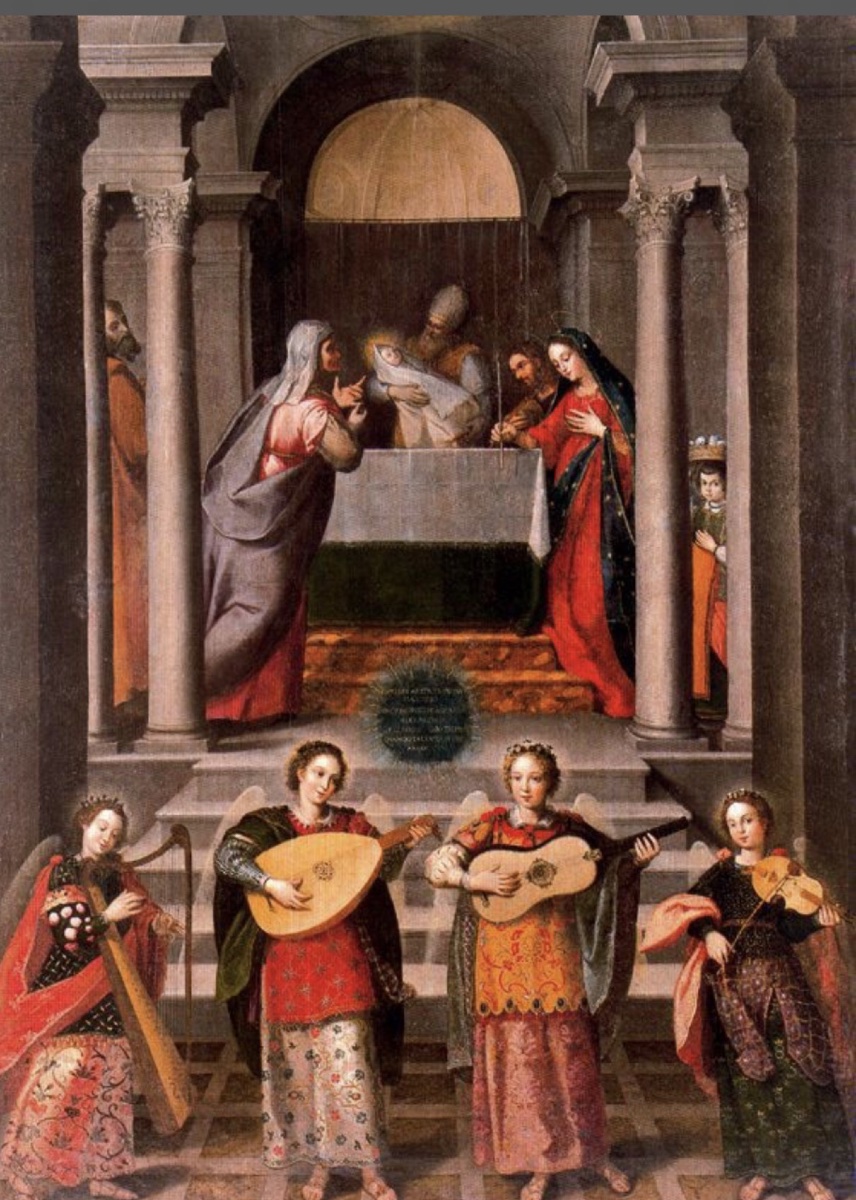
* I would like to apologize—in a previous post, I thought the work was from the Cuzco school (an American collector of Cuzco art), so I shifted my research to Spain and discovered the painter of this exceptional work. In my photos, you’ll find two examples of his work; there is no doubt that this is the most famous painter from Valladolid.
Subject: The Latin text in the lower left corner:
“Forma in qua plerumque salutare
canonis
Angelus eiusq[ue] illi comitis: ut
eiusqluel D.
revelatione circa exempta spiritualia
Monimentis: facit P. Ludouicus, a
Ponte in
vita P. Balthasaris Muner
Translation: This is the theological key to the work. Its rigorous translation is as follows: “The form in which the Angel and his companions are accustomed to bringing salvation: as shown by God’s revelation concerning the spiritual examples drawn from the Memoirs; written by Father Luis de la Ponte in the *Life of Father Baltasar Álvarez*, chapter 43. ”The inscription painted on the ground, between the feet of the celestial figure, confirms his exact identity: “ANGEL[VS] CVS[TOS]” (The Guardian Angel).
History and Spiritual Context This work is an ex-voto or a Jesuit devotional painting that directly depicts Chapter 43 of the Life of Father Baltasar Álvarez (1533–1580), a major spiritual biography written by his disciple, the famous priest and writer Luis de la Ponte (1554–1624). This specific chapter is entirely devoted to Father Baltasar’s mystical visions and ecstasies, detailing how angels appeared to him in corporeal form with dazzling nobility and beauty.
***All stylistic elements point to the undisputed master of religious painting in 17th-century Valladolid: Diego Valentín Díaz.
- The Valladolid Circle: Díaz was the favored painter of the Jesuit circles and the great mystics of Valladolid (he notably illustrated the visions of Doña Marina de Escobar). He was uniquely qualified to translate the writings of Luis de la Ponte—an intellectual figure from the same city—into images.
- The bridge to the Cuzco School: Father Baltasar Álvarez harbored a deep dream of going on a mission to Peru, a journey he was unable to undertake during his lifetime. Diego Valentín Díaz’s style—characterized by the solemnity of the figures’ postures, the refinement of the star-patterned embroidery, and the opulence of the gilded drapery—directly foreshadows the Spanish models that were sent en masse by the Jesuits to the New World. This painting embodies the missing link: “from the Cuzco school without being from Cuzco”, that is, the original Spanish model from Valladolid that would give rise, through imitation, to the splendor of Andean colonial art.
Dimensions: unframed 47 cm x 78 cm
Condition: in its original condition but still in very good shape; the paint is not crushed by the old canvas backing
On view at 'Sablon Antiques Center', 39 Place du Grand Sablon, 1000 Brussels
Explore similar pieces and discover your ideal find:
religious paintings