


17th-century Spanish Military Rapier
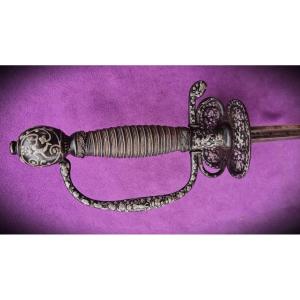
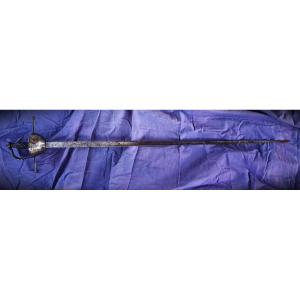
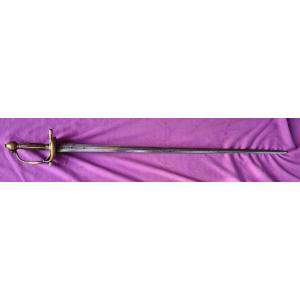
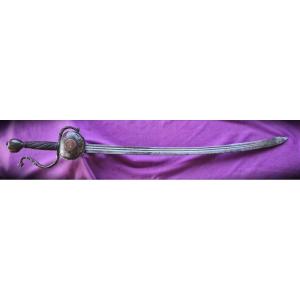
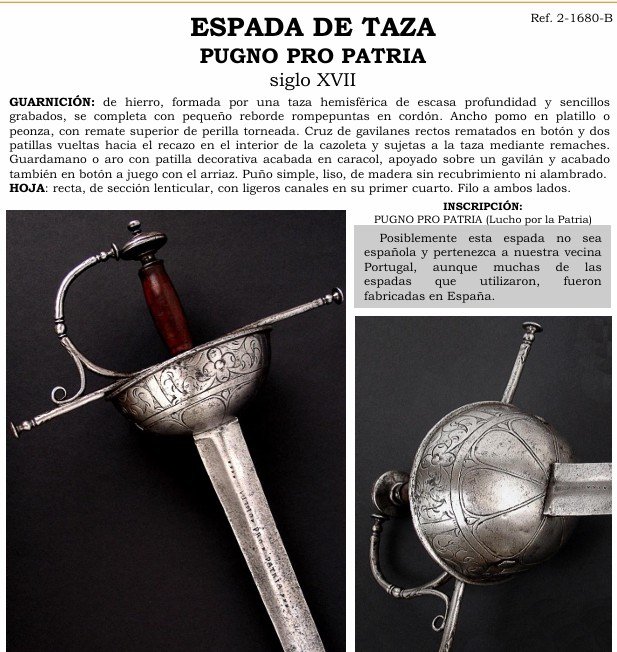
This rapier is typical of the simple swords of the mid-17th century. The style is typically Hispanic. The blade may have originated in Solingen, due to its geometry. However, a very similar rapier with an identical blade is described by Vicente Toledo Momparler as entirely Spanish (orPortuguese), including blade, in “Espadas Españolas,” p. 164
I will therefore maintain a Spanish attribution, although this type of rapier was also somewhat fashionable in Germany.
The mount, verysimple, is suited for military use. This is a rapier intended for warfare, capable of both cutting and thrusting.
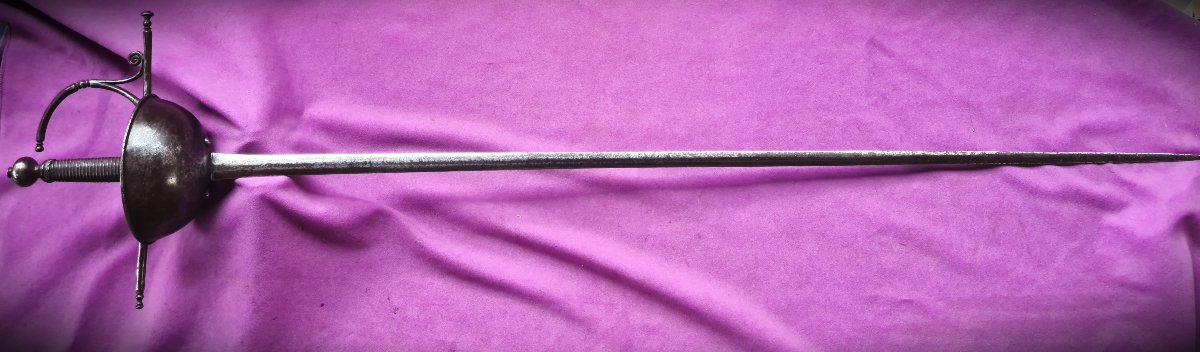
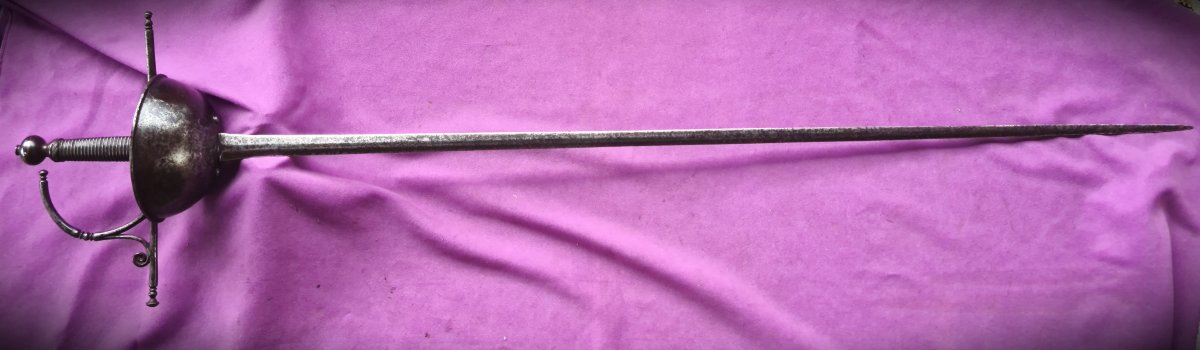
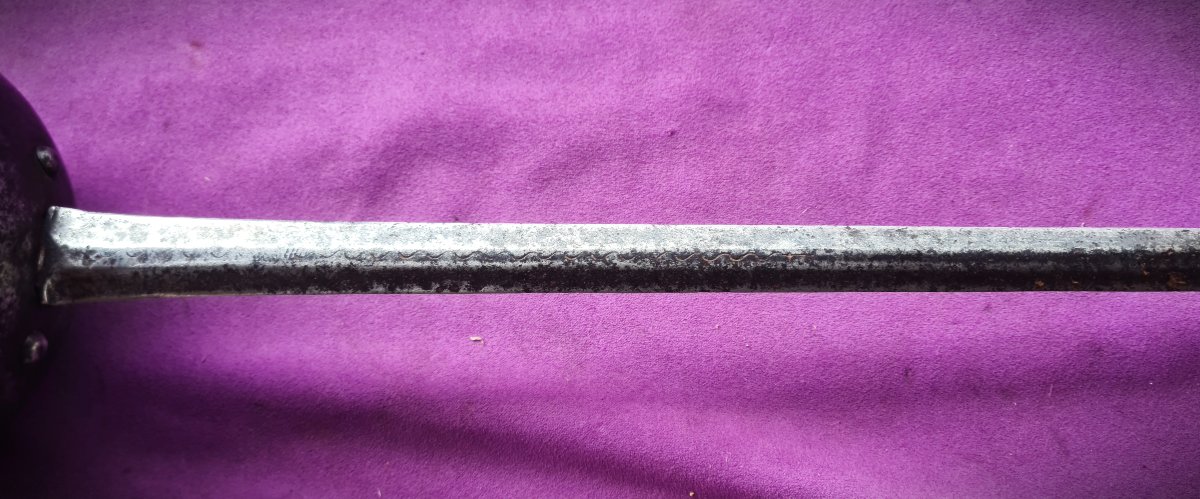
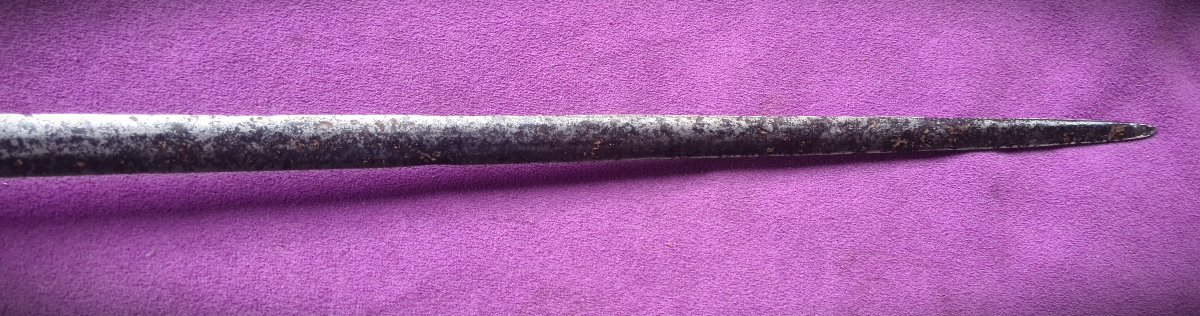
BLADE : After a very short ricasso, it takes on a hexagonal cross-section all the way to the point. On the first 20 centimeters, along the central face, there is an incised decoration depicting undulating lines.The blade has retained its original length.
Blade length = 101.5 cm from the quillons, 94.8 cm from the outer edge of the cup; width at the ricasso = 2.6 cm thickness at the ricasso = 7 mm. The balance point is 7 cm from the edge of the cup, which provides excellent balance when held
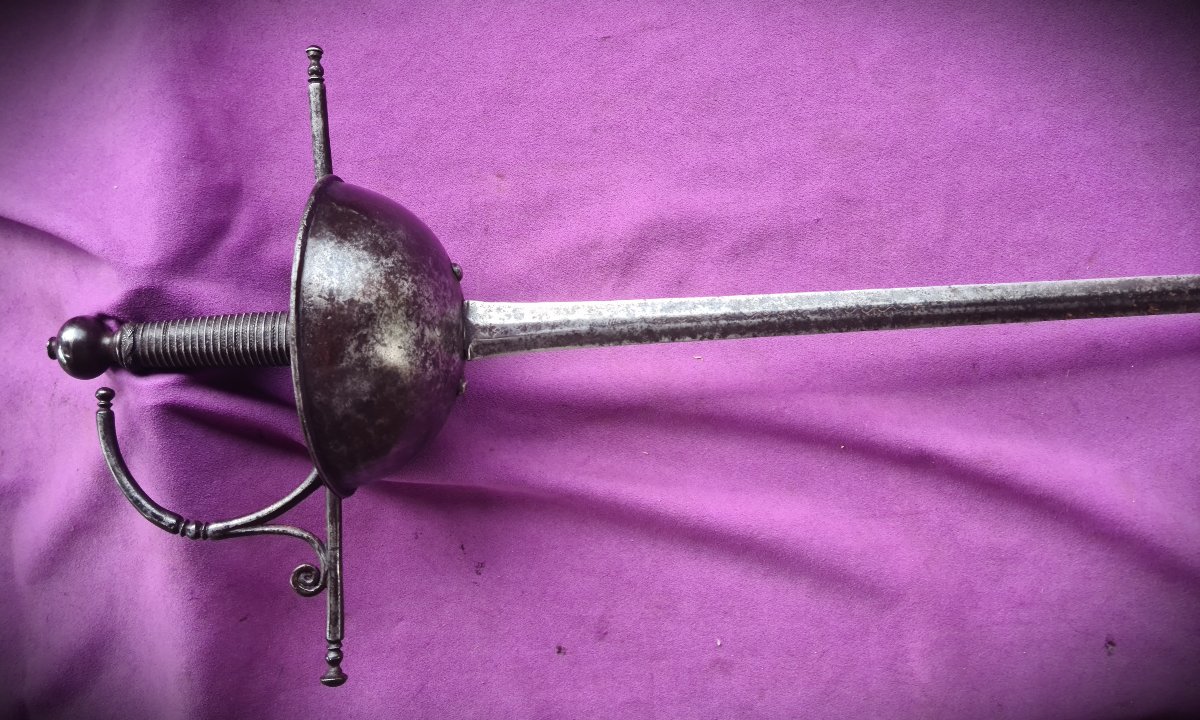
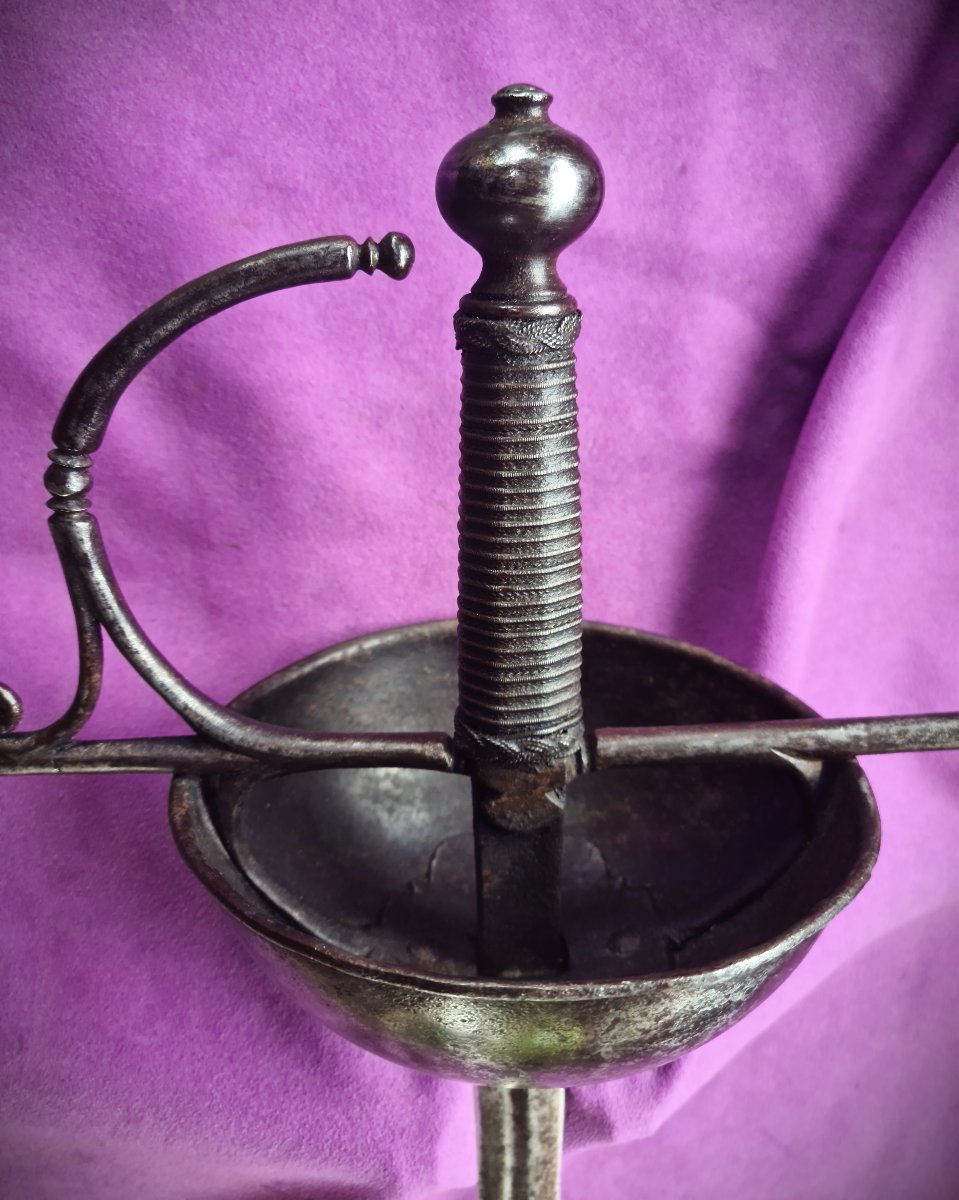
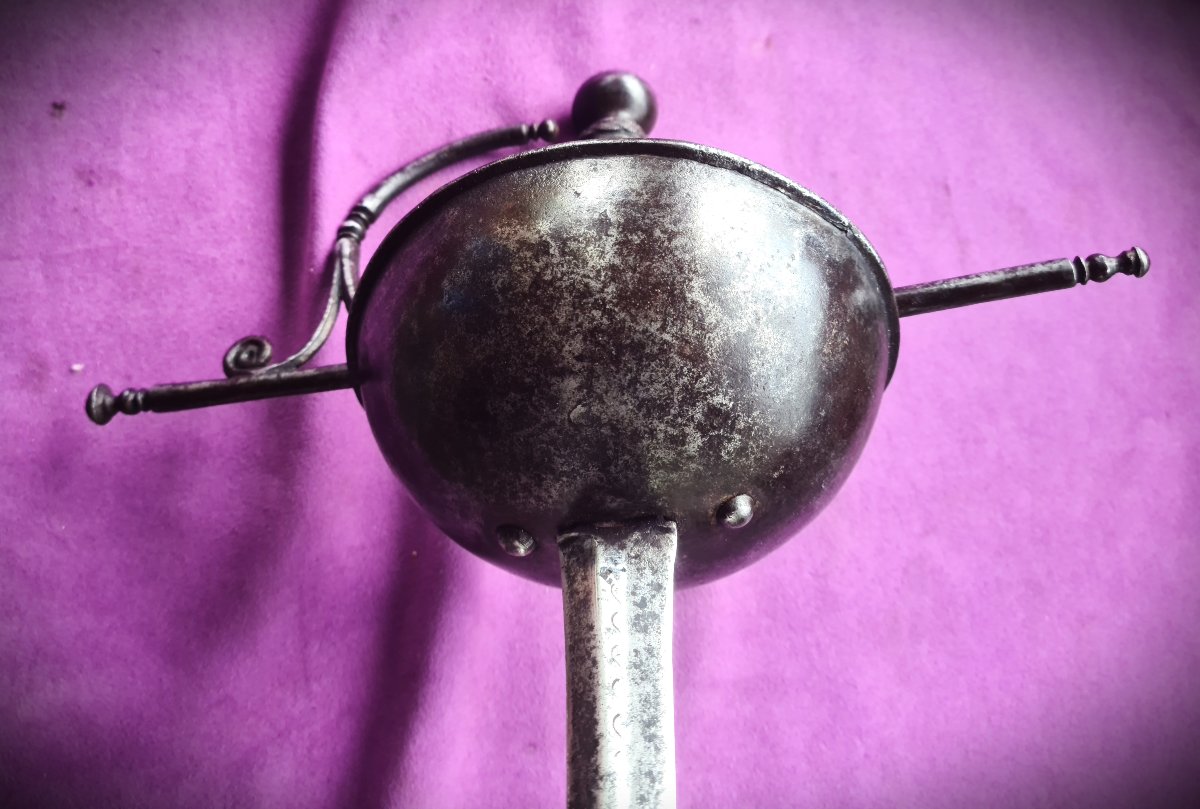
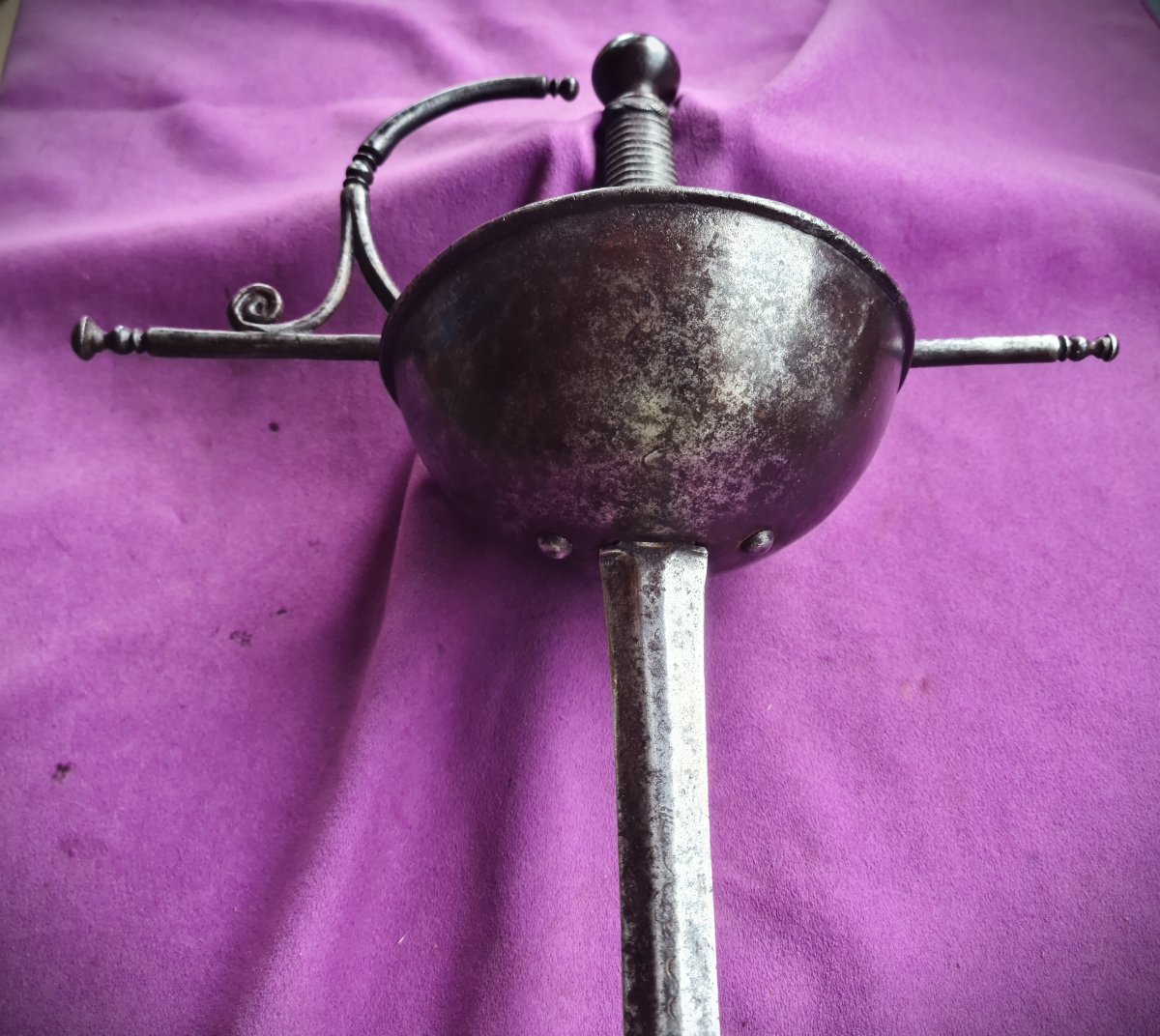
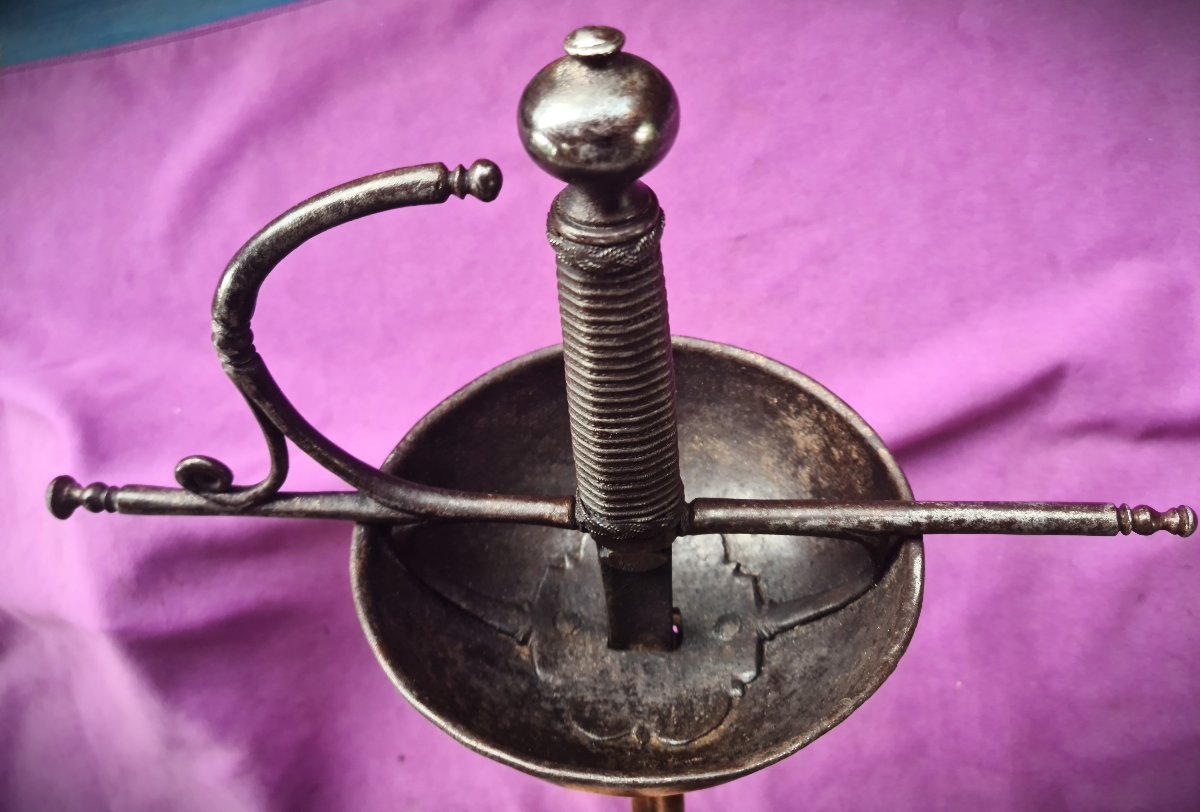
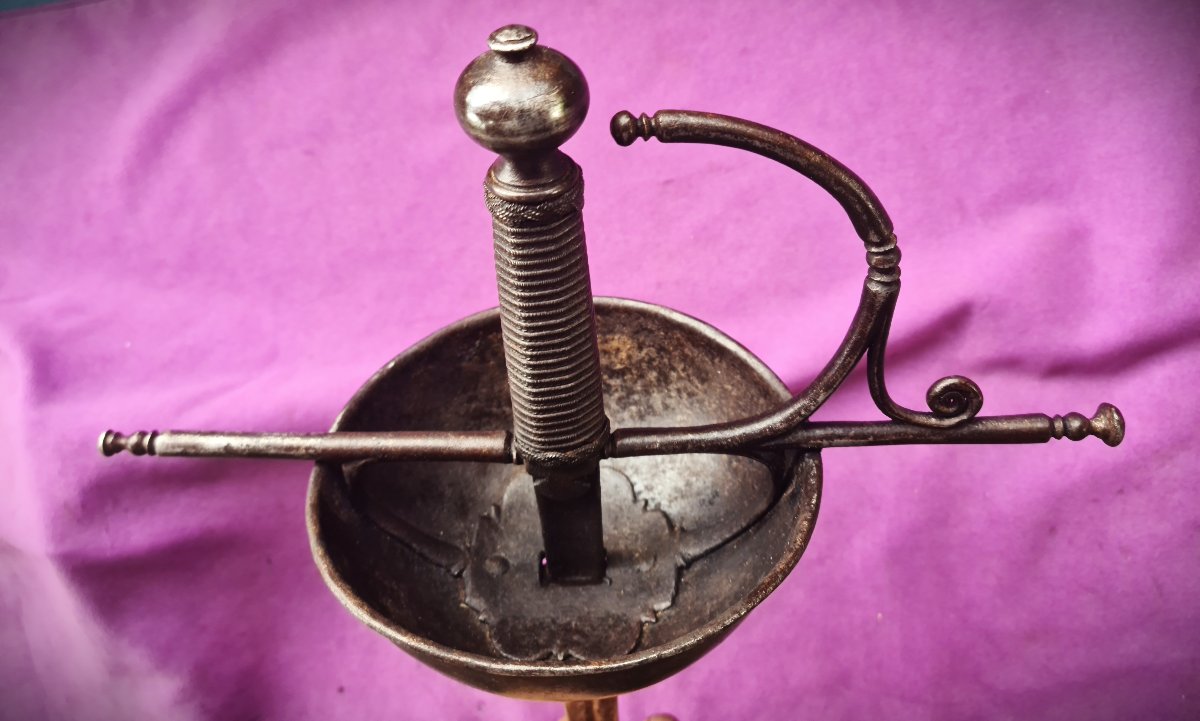
GUARD: this is a“taza-style” guard, with a shallow cup. This is typical of the oldest tazas. The edge of the cup is curved to form a beaded rim known as"point breaker" (“rompe puntas”). At the bottom of the bowl, one can se ea plate around the blade known as a “guarda polvo,” which is integral with the two finger rings "arms" or “donkey’s steps” ." These arms are riveted to the cup.
The quillons are straight, cylindrical, and end in a baluster.
The knuckle bow ends near the pommel without being attached to it. It is connected to the lower quillon by a volute-shaped branch
POMMEL: It is flattened spherical in shape, topped by a small, flattened knob to which the tang of the blade is riveted.
GRIP : It has an octagonal cross-section, covered with the original twisted wire binding, a complex design combining different sections of binding. The ferrule rings inthe form of braided crowns, known as “Turk's heads,” are present, original,and in perfect condition.
This rapier is entirely original, never disassembled, never restored. It has a fairly dark patina that could very easily be enhanced, if desired, by light polishing
Shipping costs:France €30, Europe €50
Ref DX2Y-2640
I will therefore maintain a Spanish attribution, although this type of rapier was also somewhat fashionable in Germany.
The mount, verysimple, is suited for military use. This is a rapier intended for warfare, capable of both cutting and thrusting.
BLADE : After a very short ricasso, it takes on a hexagonal cross-section all the way to the point. On the first 20 centimeters, along the central face, there is an incised decoration depicting undulating lines.The blade has retained its original length.
Blade length = 101.5 cm from the quillons, 94.8 cm from the outer edge of the cup; width at the ricasso = 2.6 cm thickness at the ricasso = 7 mm. The balance point is 7 cm from the edge of the cup, which provides excellent balance when held
GUARD: this is a“taza-style” guard, with a shallow cup. This is typical of the oldest tazas. The edge of the cup is curved to form a beaded rim known as"point breaker" (“rompe puntas”). At the bottom of the bowl, one can se ea plate around the blade known as a “guarda polvo,” which is integral with the two finger rings "arms" or “donkey’s steps” ." These arms are riveted to the cup.
The quillons are straight, cylindrical, and end in a baluster.
The knuckle bow ends near the pommel without being attached to it. It is connected to the lower quillon by a volute-shaped branch
POMMEL: It is flattened spherical in shape, topped by a small, flattened knob to which the tang of the blade is riveted.
GRIP : It has an octagonal cross-section, covered with the original twisted wire binding, a complex design combining different sections of binding. The ferrule rings inthe form of braided crowns, known as “Turk's heads,” are present, original,and in perfect condition.
This rapier is entirely original, never disassembled, never restored. It has a fairly dark patina that could very easily be enhanced, if desired, by light polishing
Shipping costs:France €30, Europe €50
Ref DX2Y-2640
1 550 €
Period: 17th century
Style: Renaissance, Louis 13th
Condition: Good condition
Material: Other
Length: 112.5 cm
Width: aux quillons 27 cm
Diameter: du bol 13.5 cm
Reference (ID): 1785940
Availability: In stock
Print