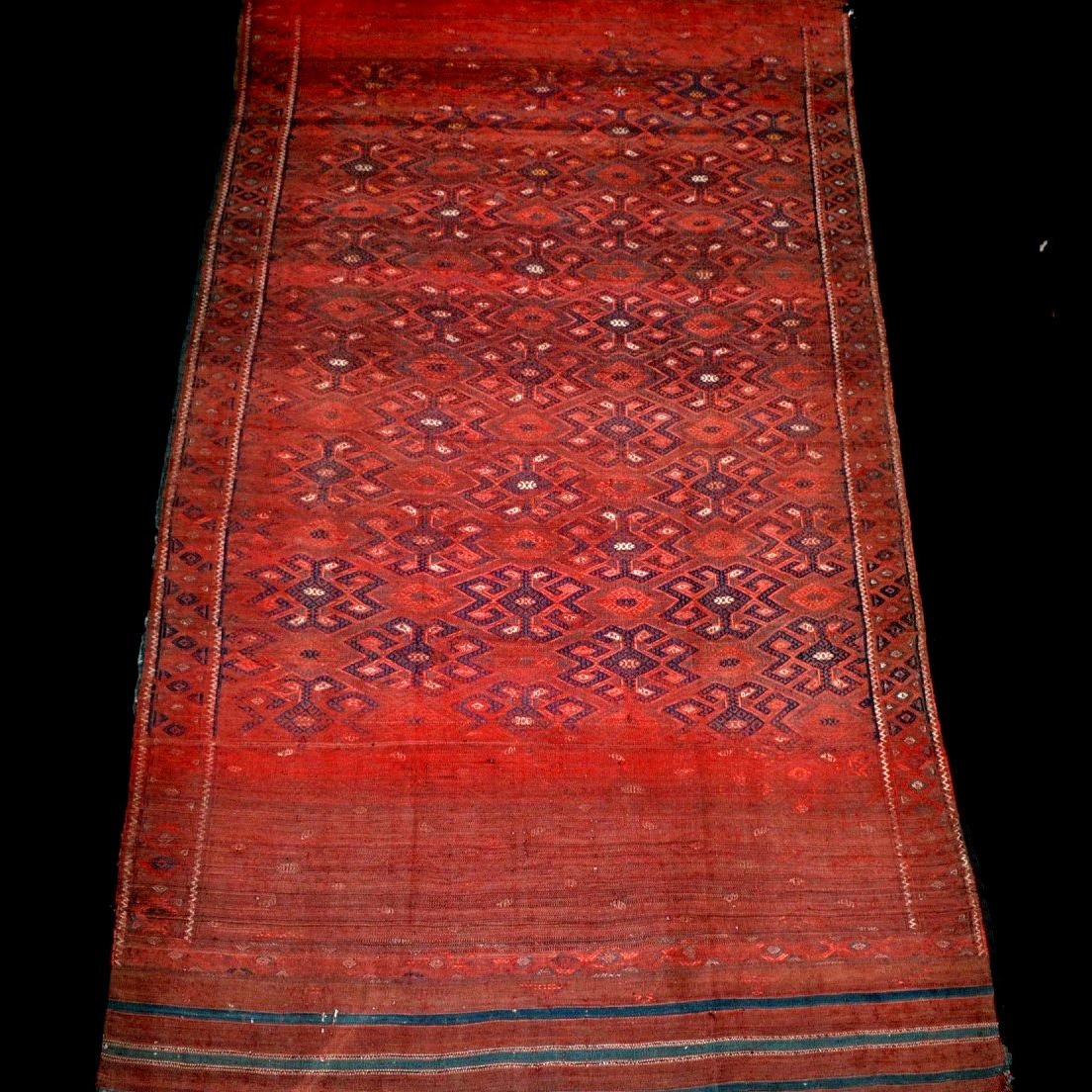
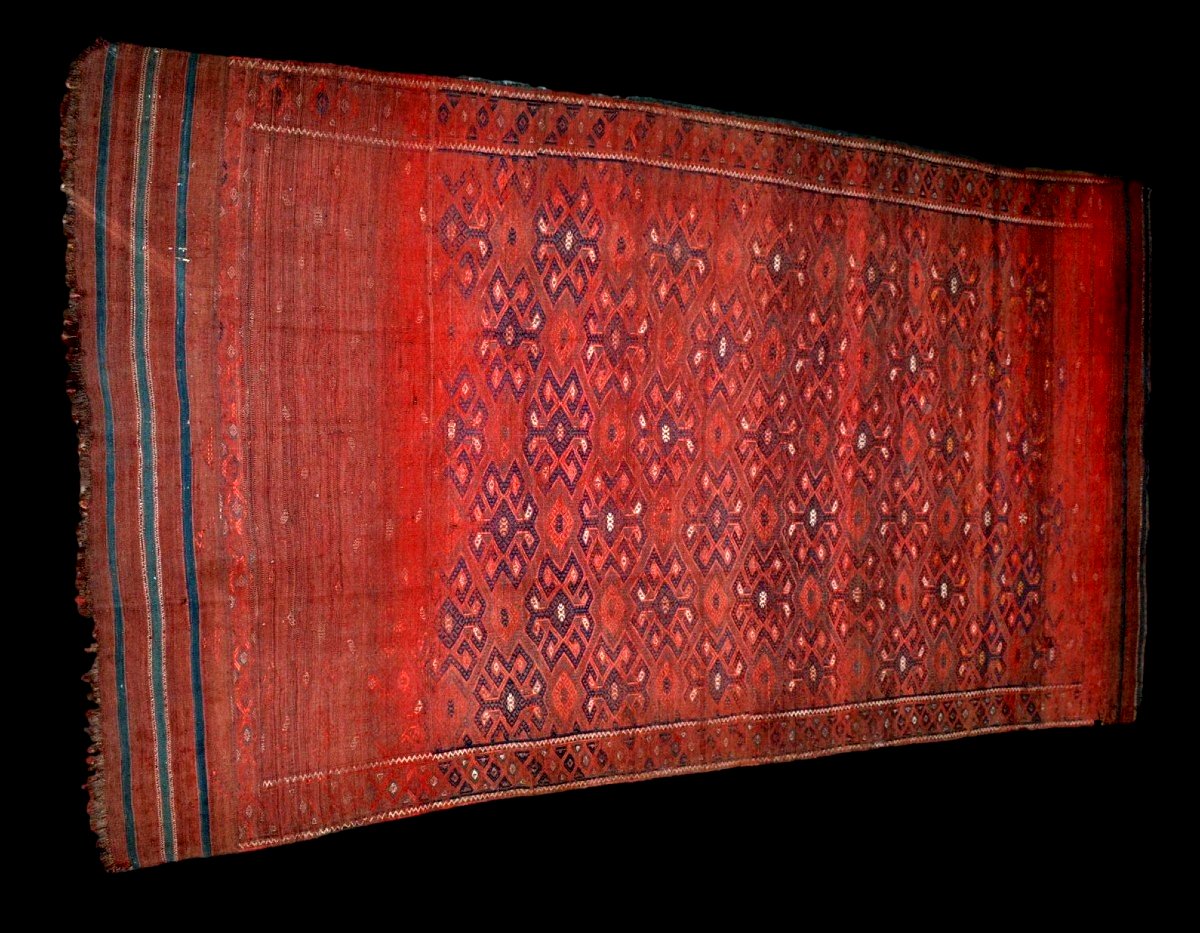
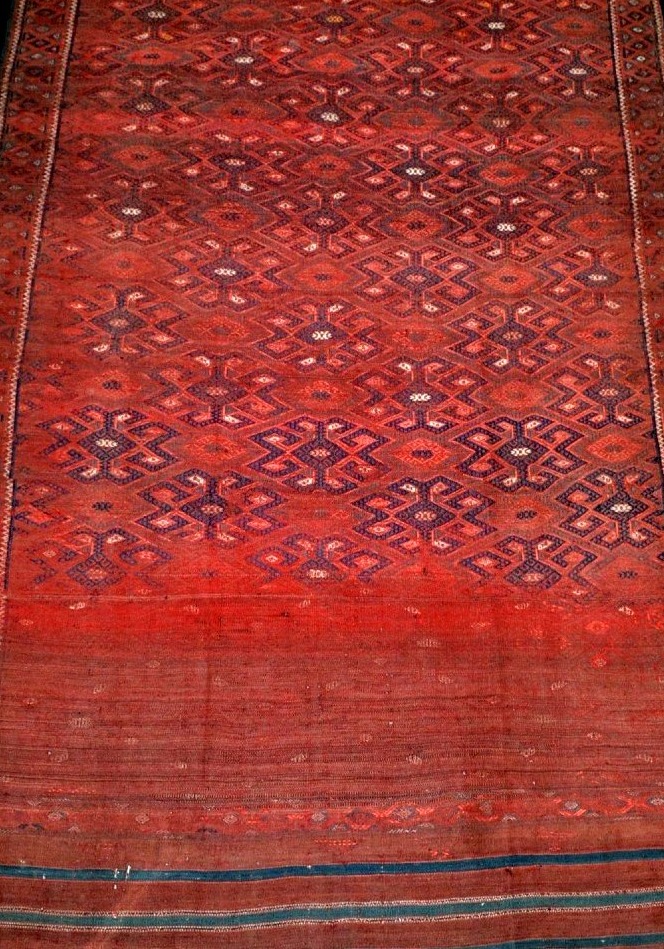
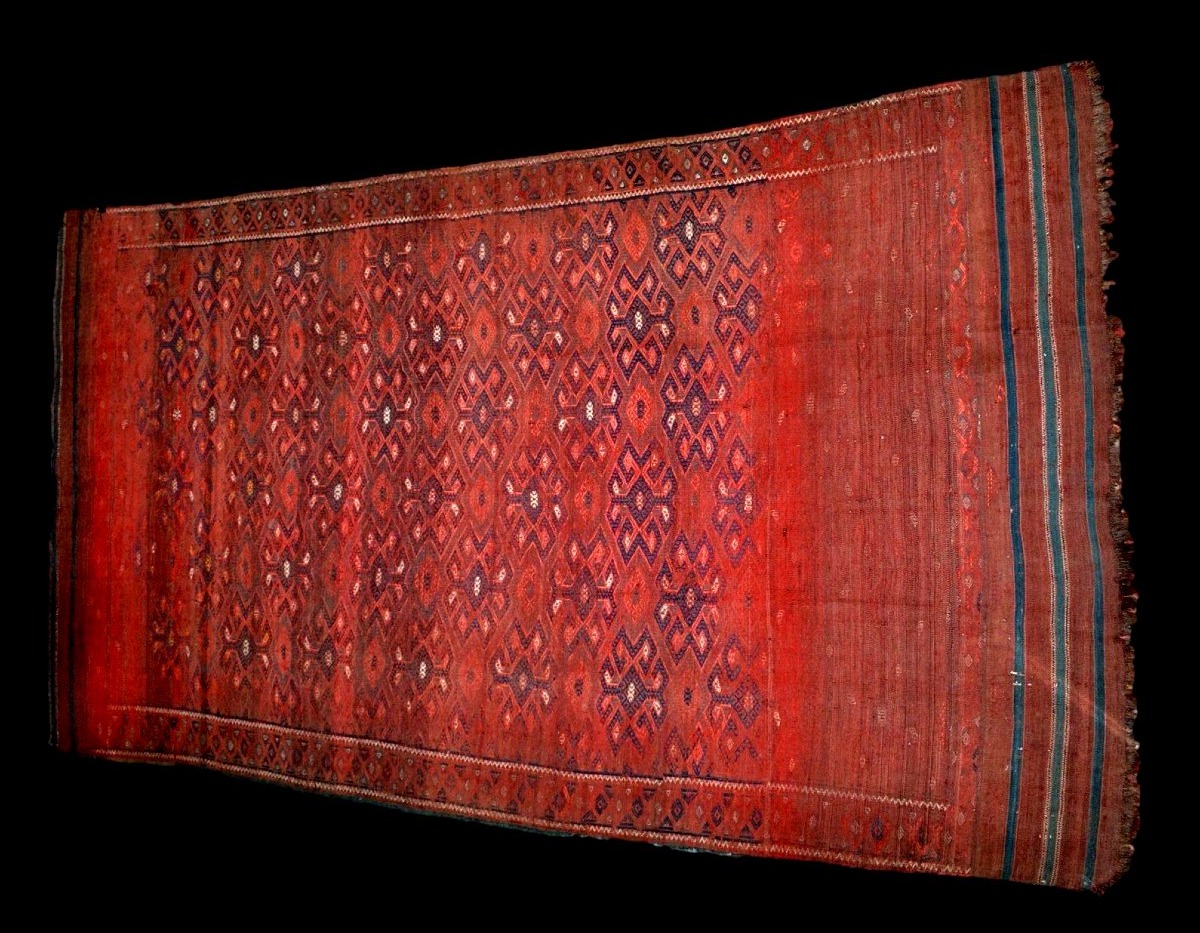
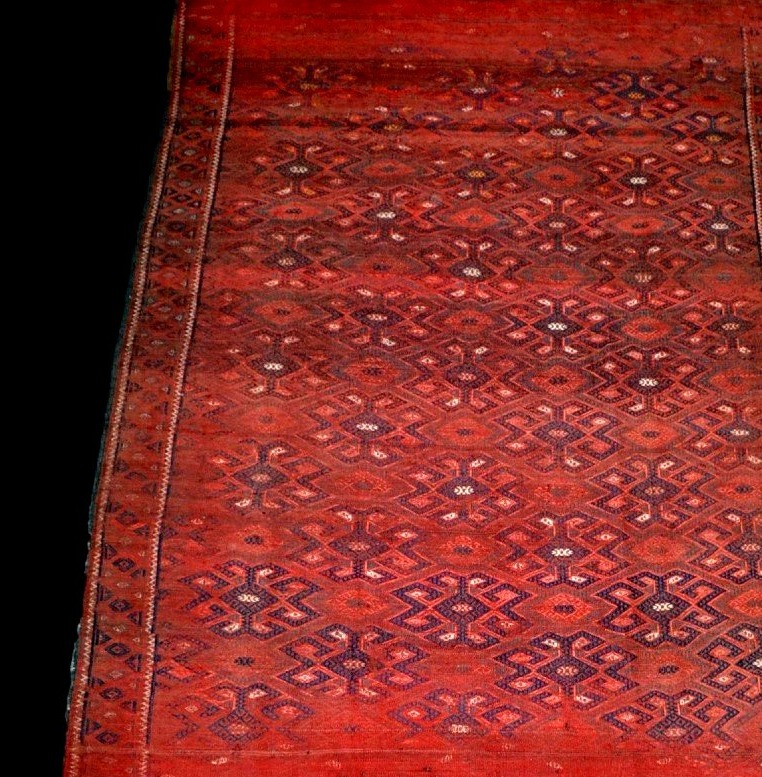
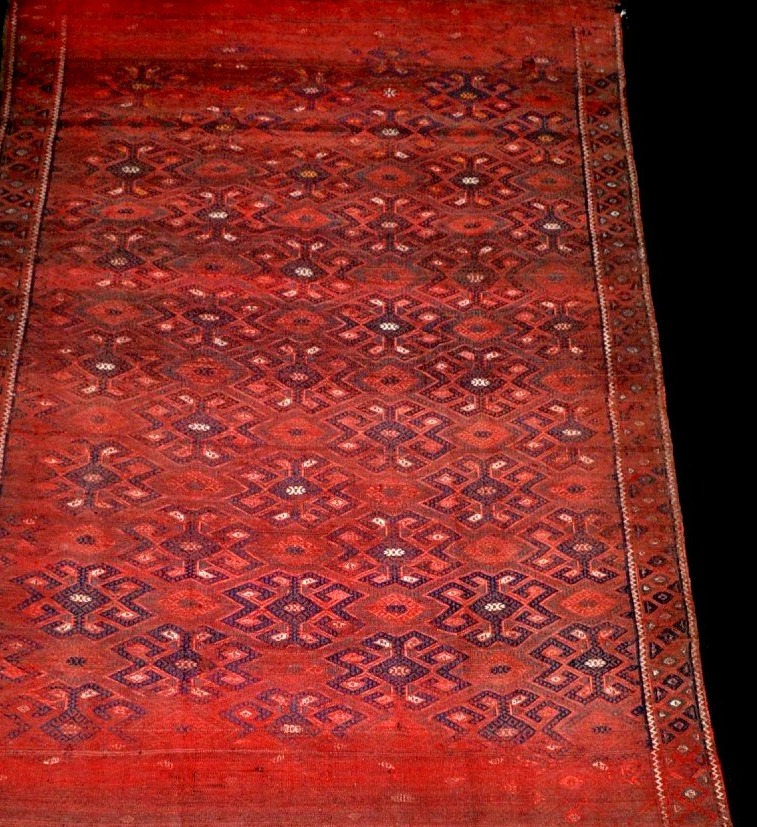
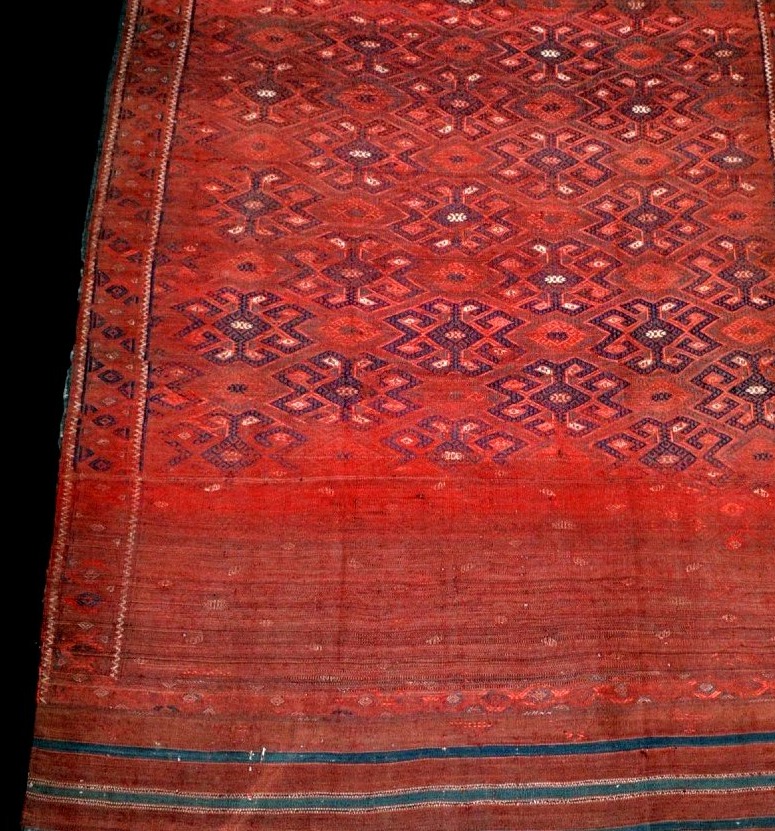
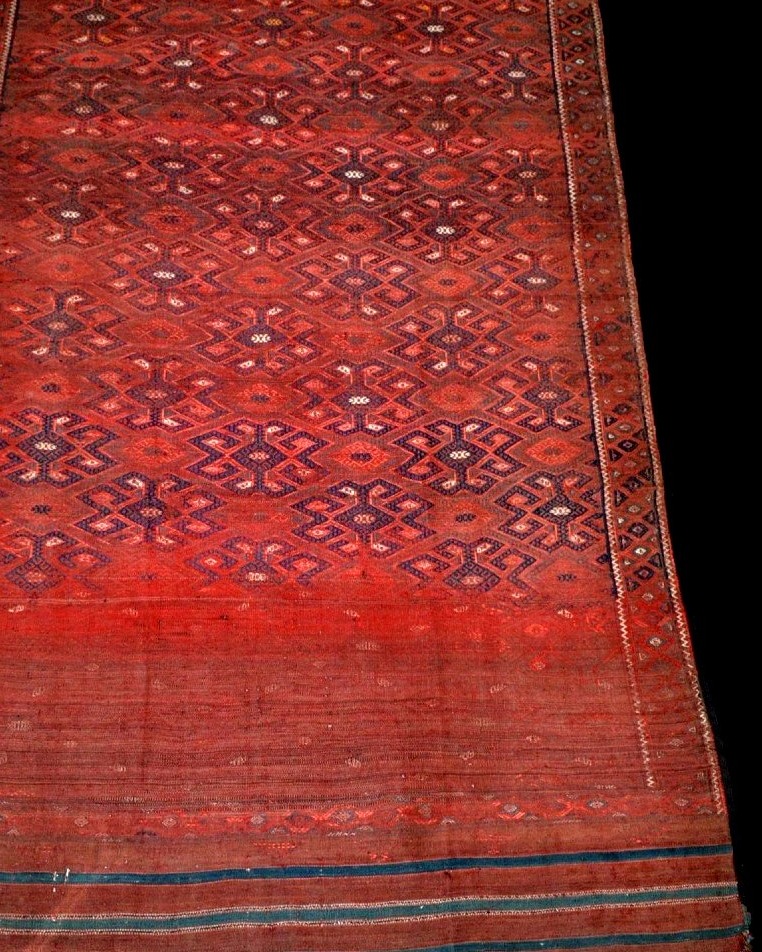
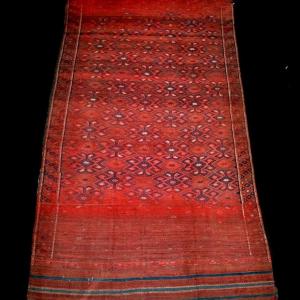


Kurdish Kilim, 185 X 340 Cm, 19th-century Textile Artifact From The Macchad Region, In Its Original Condition
Artist: Art Nomade Kurde
Artist: Nomads Kurds
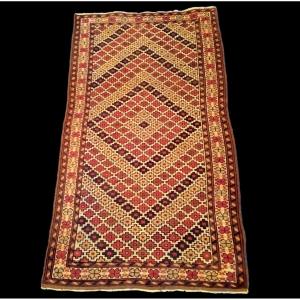
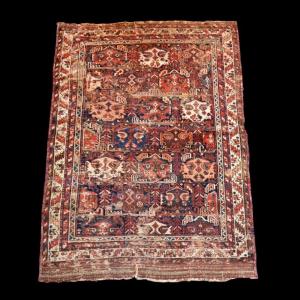
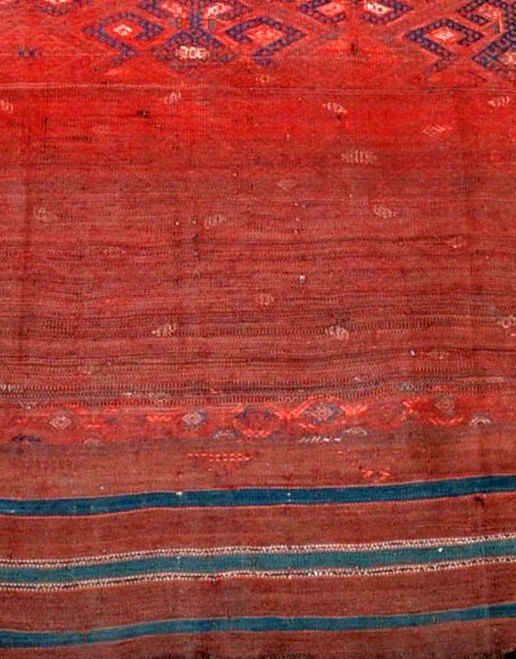
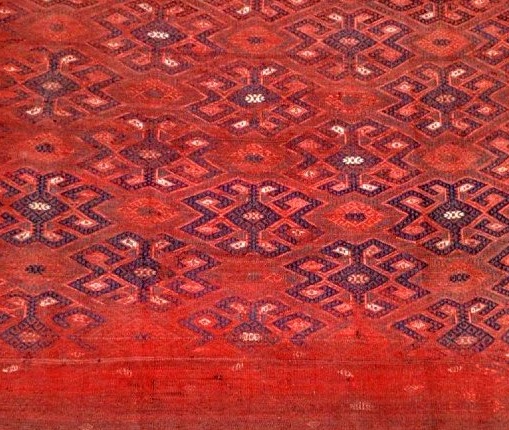
Antique kilim, woven wool, 185 x 340 cm in length, from the 19th century, in excellent condition, from a collection.
In the vicinity of Macchad (Meched), there are two ethnic groups: the Baluch and the Kurds.
The Kurds have settled in the villages of Bojnurd, Quchan, and especially Kalat.
They are the ones responsible for these vibrant and colorful kilims.
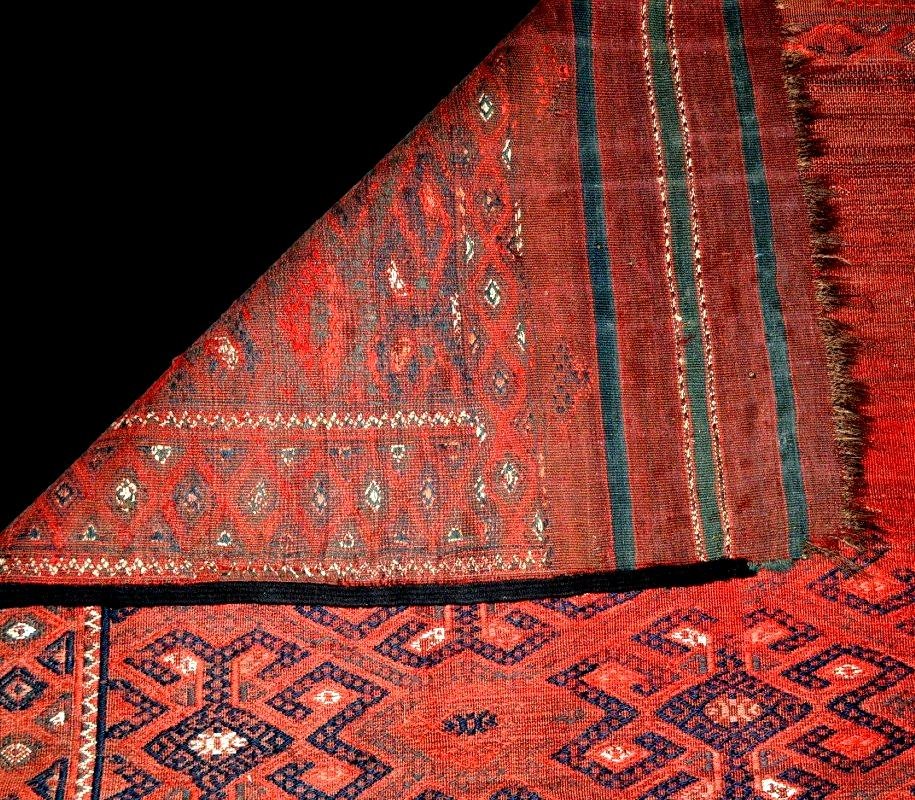
They combine knotted weaving, kilim weaving, and twisted weft.
This distinctive technique gives the impression of a quilted kilim.
This style can also be found on the Hambels of the Berber tribes of the Maghreb.
This hook-patterned motif also appears in hexagons; in folk tradition, they represent crabs or spiders, derived from star-shaped cross motifs, which are also found on the Shahsavan rugs of Iran.
The tradition of the hook-shaped diamond represents the tarantula and is meant to ward it off.
Both ends are finished with a blue and red border, and the edges feature hexagonal patterns flanked by Médahils (arrows).
Our 19th-century specimen is quite rare in good condition and of museum-quality.
A genuine artifact of Kurdish culture, this type of kilim nonetheless features Turkmen and Afghan motifs as well as their colors.
Since nomads know no borders, the influence of patterns, colors, and shapes from other ethnic groups is common in these artifacts.
The kilim is a woolen rug, woven on a flat loom, a traditional craft specific to Muslim nomadic peoples, particularly those of Anatolia, Iran, and the Caucasus.
The kilim, also spelled klim or kélim (a word of Turkish origin), is a rug without a pile because it is woven rather than knotted.
Kilims are made in various cities in Anatolia and Iran.
Its name, which comes from the Persian word “gelim,” refers to a flat-woven woolen rug found primarily in the Middle East, the Caucasus, and Central Asia—a tradition that dates back nearly 10,000 years!
Kilims carry deep meaning. They embody a strong identity that reflects the heritage of the sedentary, nomadic, and semi-nomadic peoples who craft them.
A particular style and identity characterize a tribe or village: vibrant or subdued colors, complex or simple patterns, depending on the region.
The patterns correspond to an ancestral symbolic language inherited from shamanistic beliefs.
The geometry of the patterns and their ethnic character define their very essence.
The kilim was originally used as an indoor shawl, a blanket, or a rug to protect the floors of mosques and yurts.
Today, it can be used on the floor, on walls, as a sofa throw, a headboard, or curtains.
Dimensions: Width: 185 cm (73") x Length: 340 cm (134")
FREE SHIPPING TO FRANCE. 0€ / EUROPE 25€ / WORLD 50€
For any inquiries, please feel free to contact me at 06 13 36 09 30 or at winsteinprovence@gmail.com
You’ll find a wide selection of Persian, Anatolian, and Caucasian rugs on our website or in our Proantic gallery.
www.winsteinprovence.com
(text and photo credits: winstein; all rights reserved)
Antique kilim, woven wool, 185 x 340 cm in length, from the 19th century, in excellent condition, from a collection.
In the vicinity of Macchad (Meched), there are two ethnic groups: the Baluch and the Kurds.
The Kurds have settled in the villages of Bojnurd, Quchan, and especially Kalat.
They are the ones responsible for these vibrant and colorful kilims.
They combine knotted weaving, kilim weaving, and twisted weft.
This distinctive technique gives the impression of a quilted kilim.
This style can also be found on the Hambels of the Berber tribes of the Maghreb.
This hook-patterned motif also appears in hexagons; in folk tradition, they represent crabs or spiders, derived from star-shaped cross motifs, which are also found on the Shahsavan rugs of Iran.
The tradition of the hook-shaped diamond represents the tarantula and is meant to ward it off.
Both ends are finished with a blue and red border, and the edges feature hexagonal patterns flanked by Médahils (arrows).
Our 19th-century specimen is quite rare in good condition and of museum-quality.
A genuine artifact of Kurdish culture, this type of kilim nonetheless features Turkmen and Afghan motifs as well as their colors.
Since nomads know no borders, the influence of patterns, colors, and shapes from other ethnic groups is common in these artifacts.
The kilim is a woolen rug, woven on a flat loom, a traditional craft specific to Muslim nomadic peoples, particularly those of Anatolia, Iran, and the Caucasus.
The kilim, also spelled klim or kélim (a word of Turkish origin), is a rug without a pile because it is woven rather than knotted.
Kilims are made in various cities in Anatolia and Iran.
Its name, which comes from the Persian word “gelim,” refers to a flat-woven woolen rug found primarily in the Middle East, the Caucasus, and Central Asia—a tradition that dates back nearly 10,000 years!
Kilims carry deep meaning. They embody a strong identity that reflects the heritage of the sedentary, nomadic, and semi-nomadic peoples who craft them.
A particular style and identity characterize a tribe or village: vibrant or subdued colors, complex or simple patterns, depending on the region.
The patterns correspond to an ancestral symbolic language inherited from shamanistic beliefs.
The geometry of the patterns and their ethnic character define their very essence.
The kilim was originally used as an indoor shawl, a blanket, or a rug to protect the floors of mosques and yurts.
Today, it can be used on the floor, on walls, as a sofa throw, a headboard, or curtains.
Dimensions: Width: 185 cm (73") x Length: 340 cm (134")
FREE SHIPPING TO FRANCE. 0€ / EUROPE 25€ / WORLD 50€
For any inquiries, please feel free to contact me at 06 13 36 09 30 or at winsteinprovence@gmail.com
You’ll find a wide selection of Persian, Anatolian, and Caucasian rugs on our website or in our Proantic gallery.
www.winsteinprovence.com
(text and photo credits: winstein; all rights reserved)
1 550 €
Period: 19th century
Style: Orientalism
Condition: Good condition
Material: Wool
Length: 340 cm - 134"
Width: 185 cm - 73"
Reference (ID): 1784383
Availability: In stock
Print