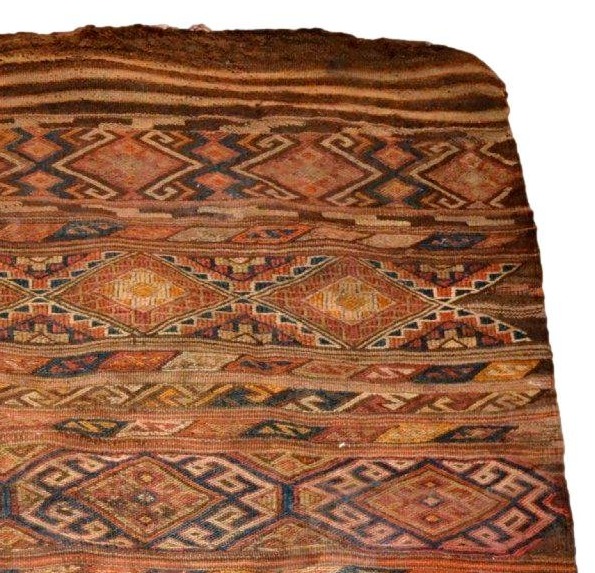
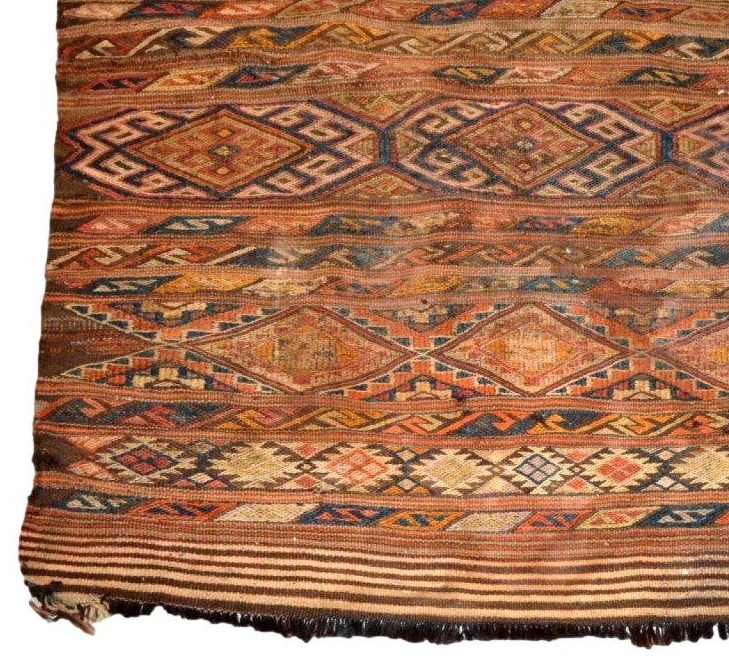
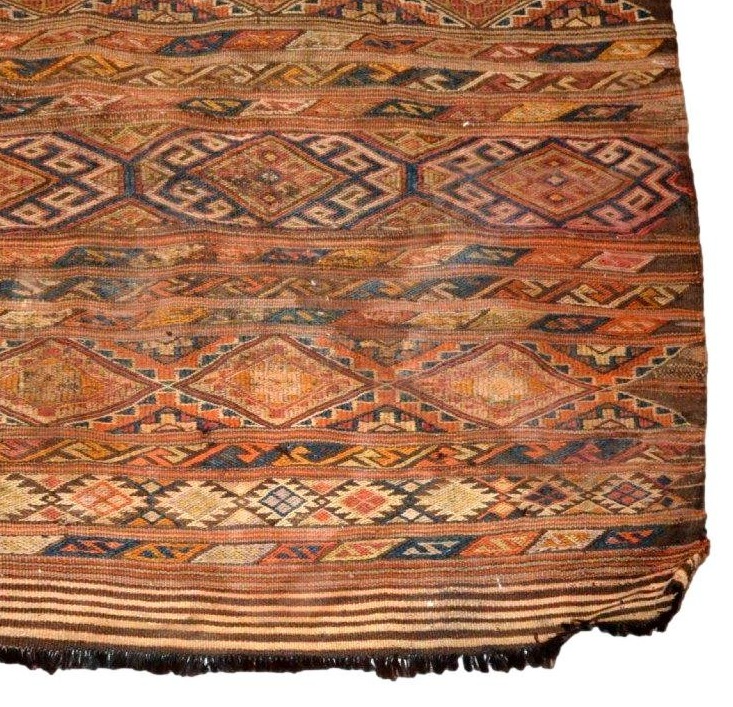
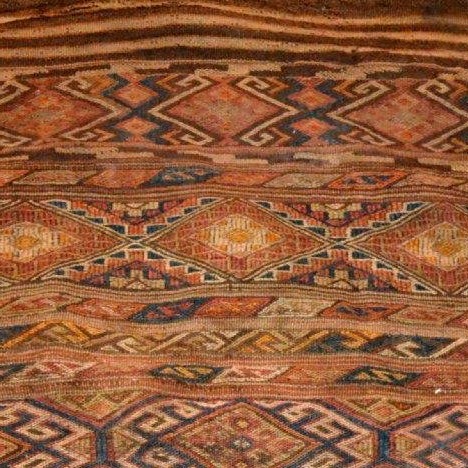
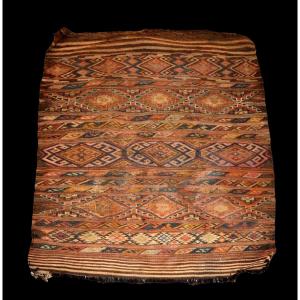


Mafrash, Shahsavan Kilim From The Moghan Tribe, 97 X 112 Cm, Wool/wool, Woven In The Sumak Style, 19th Century
Artist: Tribu Moghan
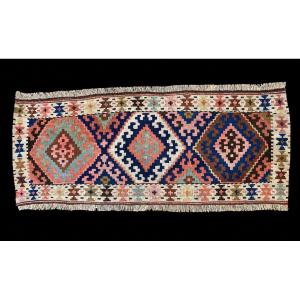
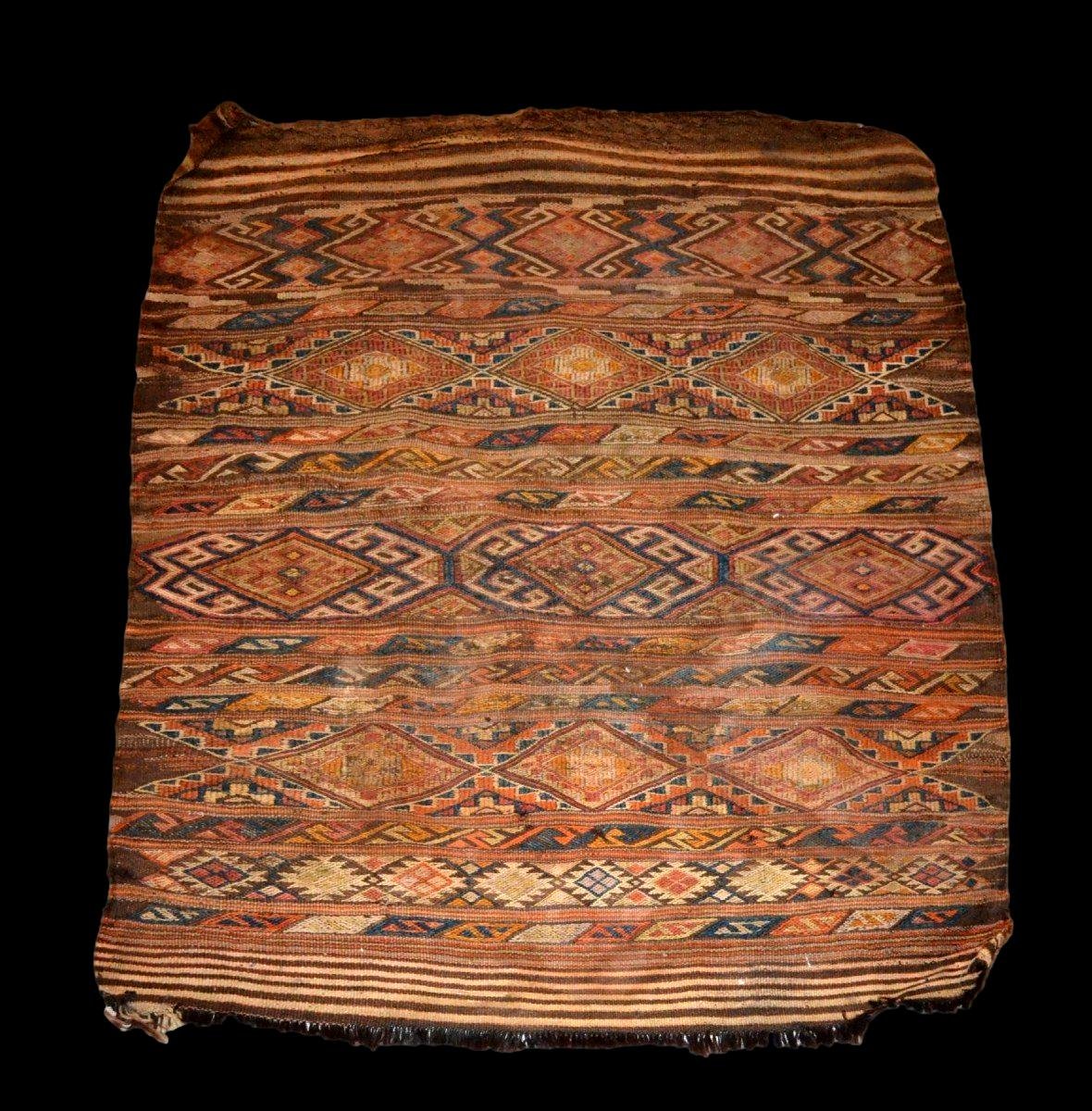
Shahsavan Moghan kilim mafrash, 97 x 112 cm, wool-on-wool, handwoven in the 19th-century sumak style
Artist: Shahsavan Moghan
19th-century Shahsavan kilim by the Moghan people, originating from northwestern Iran.
Woven wool-on-wool piece combining the sumak technique with the kilim technique.
## It is quite clear that these antique textiles bear no resemblance to modern mafrash, jajim (blankets), and gelim, which have been manufactured since the 1950s and 1960s for purely commercial purposes.
For those familiar with these ethnic groups, these products are their primary source of income.
The color shades and patterns used are no longer quite the same—or even at all the same.
The eleventh photo shows the long-pile reverse side, typical of the sumak technique.
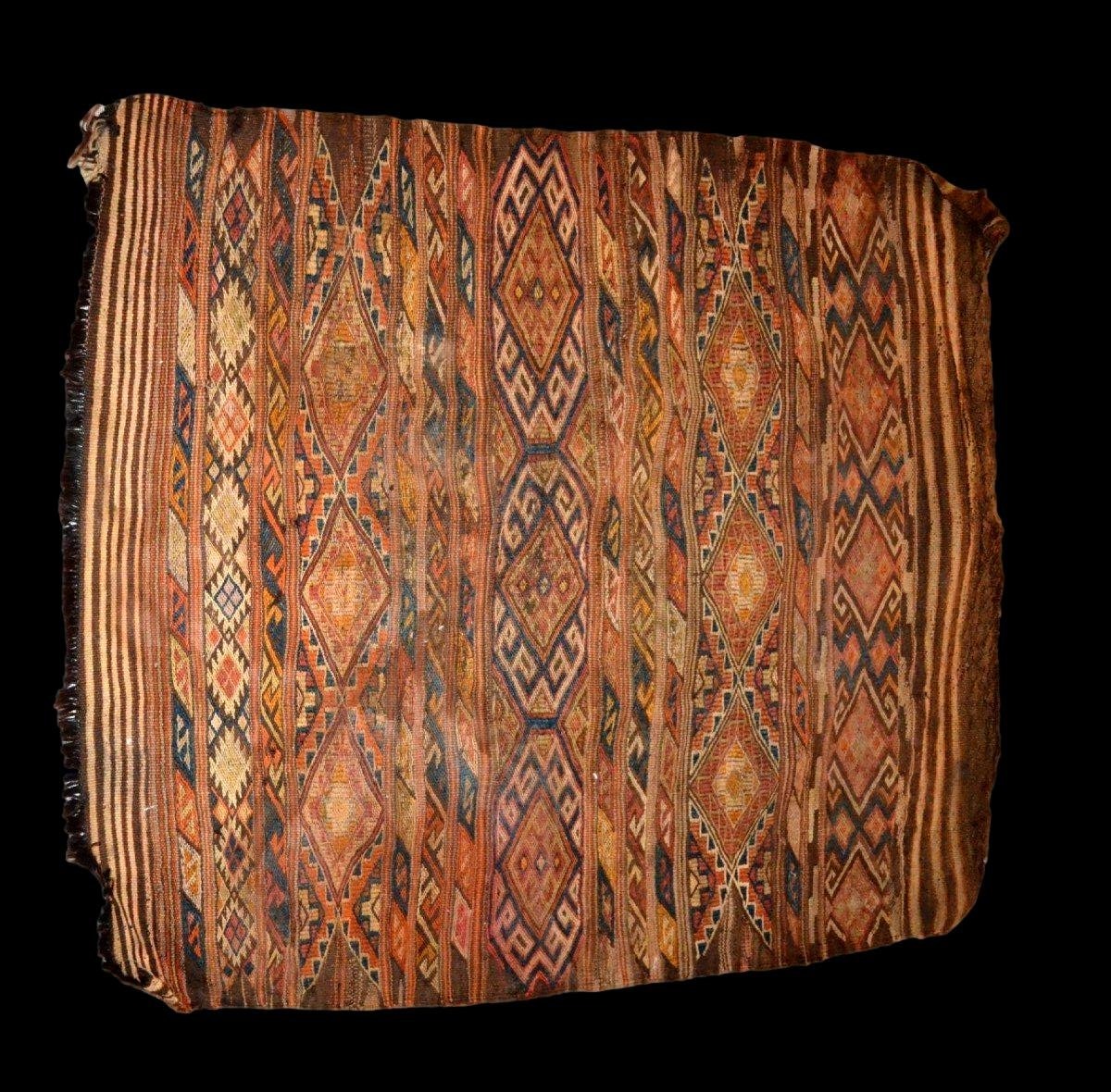
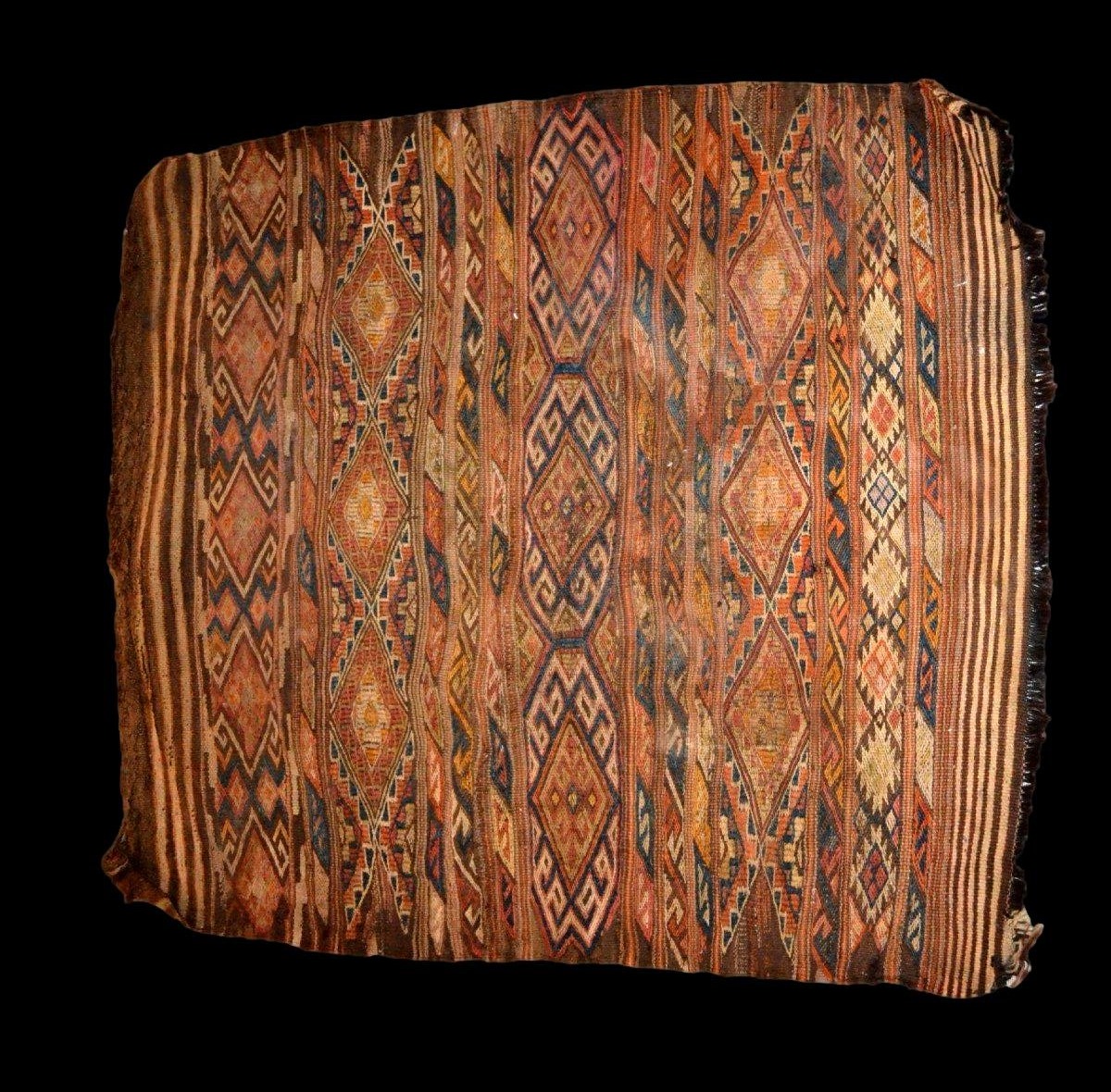
This rug is the front panel of a mafrash, a very durable three-dimensional textile that serves the same functions as a chest.
This panel typically features decorations on both sides and a plain background to form the chest.
The very modern geometric designs are always stunning, regardless of the model.
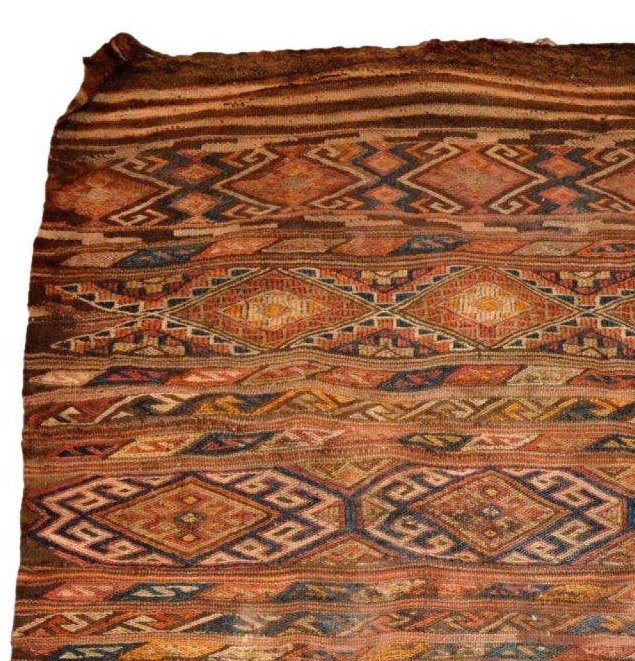
This one features a beautiful blend of ochre, ivory, indigo blue, curry, and almond-colored wool.
Both ends are made of brown wool—one fringed, the other woven.
The colors remain very vibrant, and the wool retains a slightly rough texture.
This rug is sold as-is, in very good condition, as shown in the photos.
It is a testament to antique rugs, a true artifact of these nomadic tribes.
This piece is now considered a museum-quality example of the ancestral traditions of Iran, formerly Persia.
The Shahsavan are a major tribe of nomads of Turkish origin in northwestern Iran.
There are the Shahsavan of Moghan, Mianeh, and Hashtrud, who produce mafrash rugs without flaps, and the Shahsavan of Bidjar and Khamseh, who produce those with flaps.
Originally, these nomads came from Anatolia and settled in northwestern Persia at the end of the 16th century after requesting permission from the Safavid king Shah Abbas to settle on his territory.
The nomads’ request to Shah Abbas coincided with his need to protect the kingdom’s northern borders.
The name of the nomads, “Shahsavan,” literally means “friends of the king (Shah)” or “those who love the king (Shah).”
Today, only a few Shahsavan remain nomadic.
## The Moghan live primarily between Belasavar, Astara, and Khalkhal, along the Caspian Sea.
Most lead a semi-nomadic lifestyle or have settled further south, primarily between Tabriz and Tehran, as well as around the city of Veramin.
Others also live in the northern part of the country on the border with Azerbaijan.
Characteristics of Shahsavan rugs:
Typical Shahsavan colors are often deep indigo blue and red; the Moghan, on the other hand, use more earth tones and ochre combined with indigo blue.
These rugs are finely woven with highly complex geometric patterns specific to each region and ethnic group.
Compared to other Iranian nomadic tribes, the Shahsavan produce virtually no knotted pile rugs anymore.
The weft is made of high-quality pure wool; the warp is either wool or cotton.
It is interesting to note that Shahsavan tents, known as “Alachiq,” differ greatly from other tents used in Iran.
They closely resemble Turkmen yurts.
Dimensions: width: 97 cm (38") x length: 112 cm (44")
This rug can be used as a decorative floor piece, but given its great beauty, it can also be hung as wall art.
Note: Text and photos by WINSTEIN—all rights reserved.
For more information or additional photos, please call me at:
06 13 36 09 30 or email winsteinprovence@gmail.com
. This rug has been professionally cleaned using eco-friendly methods.
FREE SHIPPING TO FRANCE, just like all our rugs!
FRANCE €0 / EUROPE €15 / WORLD €50
www.winsteinprovence.com
Artist: Shahsavan Moghan
19th-century Shahsavan kilim by the Moghan people, originating from northwestern Iran.
Woven wool-on-wool piece combining the sumak technique with the kilim technique.
## It is quite clear that these antique textiles bear no resemblance to modern mafrash, jajim (blankets), and gelim, which have been manufactured since the 1950s and 1960s for purely commercial purposes.
For those familiar with these ethnic groups, these products are their primary source of income.
The color shades and patterns used are no longer quite the same—or even at all the same.
The eleventh photo shows the long-pile reverse side, typical of the sumak technique.
This rug is the front panel of a mafrash, a very durable three-dimensional textile that serves the same functions as a chest.
This panel typically features decorations on both sides and a plain background to form the chest.
The very modern geometric designs are always stunning, regardless of the model.
This one features a beautiful blend of ochre, ivory, indigo blue, curry, and almond-colored wool.
Both ends are made of brown wool—one fringed, the other woven.
The colors remain very vibrant, and the wool retains a slightly rough texture.
This rug is sold as-is, in very good condition, as shown in the photos.
It is a testament to antique rugs, a true artifact of these nomadic tribes.
This piece is now considered a museum-quality example of the ancestral traditions of Iran, formerly Persia.
The Shahsavan are a major tribe of nomads of Turkish origin in northwestern Iran.
There are the Shahsavan of Moghan, Mianeh, and Hashtrud, who produce mafrash rugs without flaps, and the Shahsavan of Bidjar and Khamseh, who produce those with flaps.
Originally, these nomads came from Anatolia and settled in northwestern Persia at the end of the 16th century after requesting permission from the Safavid king Shah Abbas to settle on his territory.
The nomads’ request to Shah Abbas coincided with his need to protect the kingdom’s northern borders.
The name of the nomads, “Shahsavan,” literally means “friends of the king (Shah)” or “those who love the king (Shah).”
Today, only a few Shahsavan remain nomadic.
## The Moghan live primarily between Belasavar, Astara, and Khalkhal, along the Caspian Sea.
Most lead a semi-nomadic lifestyle or have settled further south, primarily between Tabriz and Tehran, as well as around the city of Veramin.
Others also live in the northern part of the country on the border with Azerbaijan.
Characteristics of Shahsavan rugs:
Typical Shahsavan colors are often deep indigo blue and red; the Moghan, on the other hand, use more earth tones and ochre combined with indigo blue.
These rugs are finely woven with highly complex geometric patterns specific to each region and ethnic group.
Compared to other Iranian nomadic tribes, the Shahsavan produce virtually no knotted pile rugs anymore.
The weft is made of high-quality pure wool; the warp is either wool or cotton.
It is interesting to note that Shahsavan tents, known as “Alachiq,” differ greatly from other tents used in Iran.
They closely resemble Turkmen yurts.
Dimensions: width: 97 cm (38") x length: 112 cm (44")
This rug can be used as a decorative floor piece, but given its great beauty, it can also be hung as wall art.
Note: Text and photos by WINSTEIN—all rights reserved.
For more information or additional photos, please call me at:
06 13 36 09 30 or email winsteinprovence@gmail.com
. This rug has been professionally cleaned using eco-friendly methods.
FREE SHIPPING TO FRANCE, just like all our rugs!
FRANCE €0 / EUROPE €15 / WORLD €50
www.winsteinprovence.com
620 €
Period: 19th century
Style: Orientalism
Condition: Good condition
Material: Wool
Length: 112 cm - 44
Width: 97 cm - 38"
Reference (ID): 1791204
Availability: In stock
Print