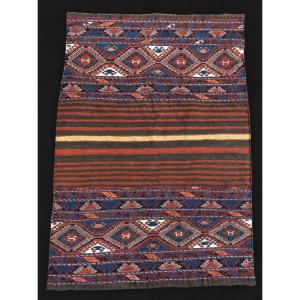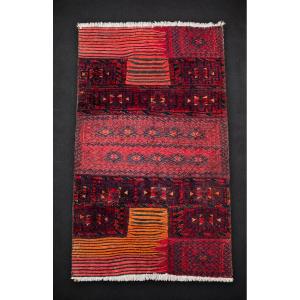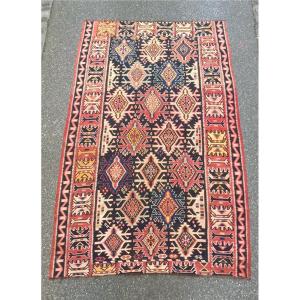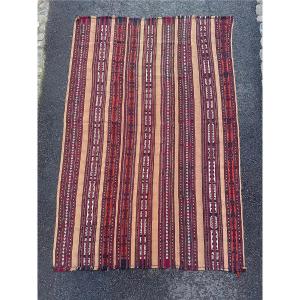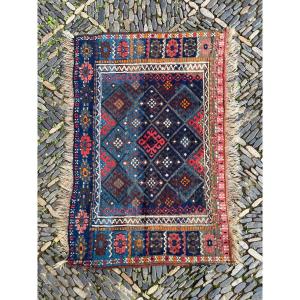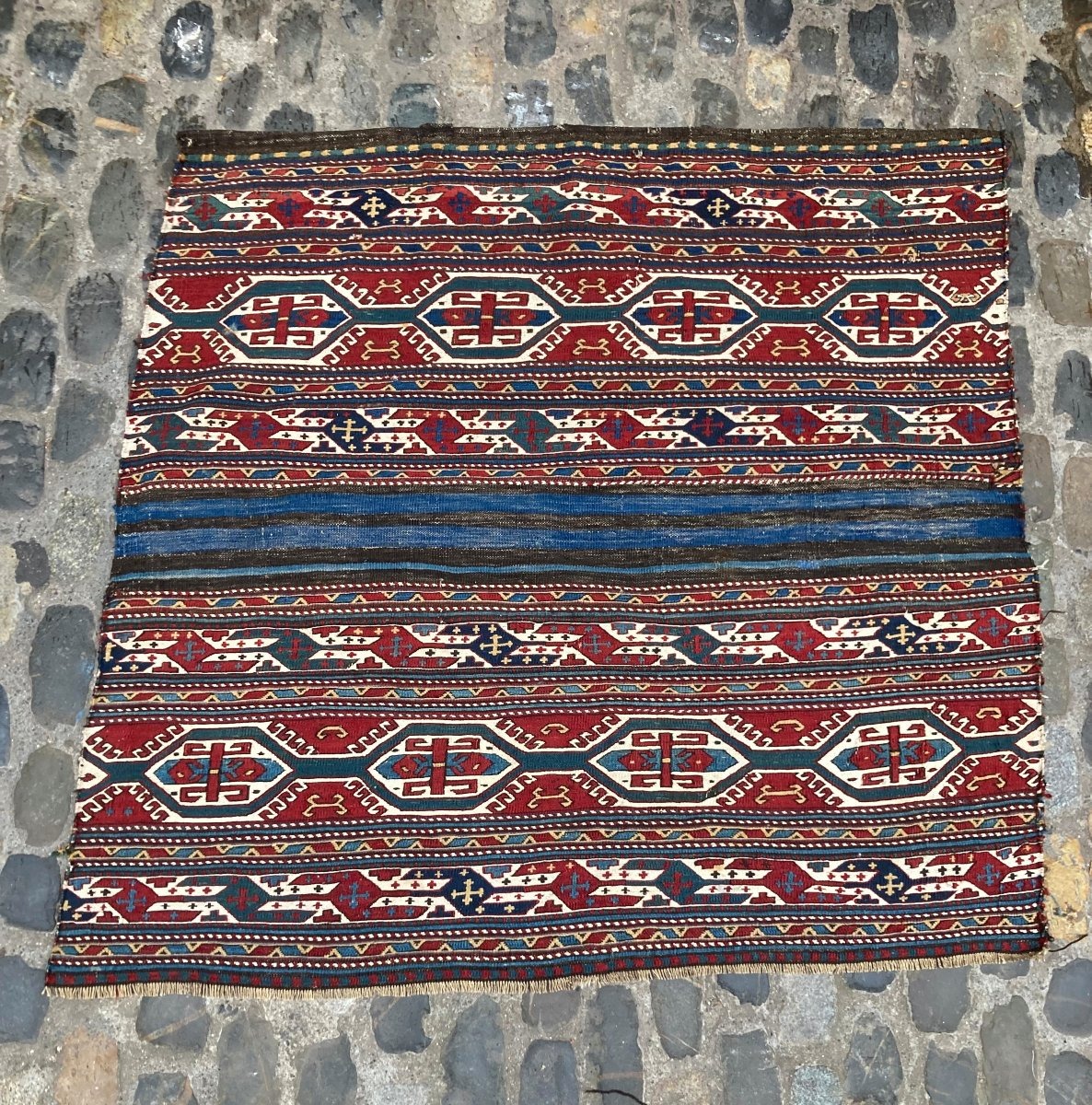

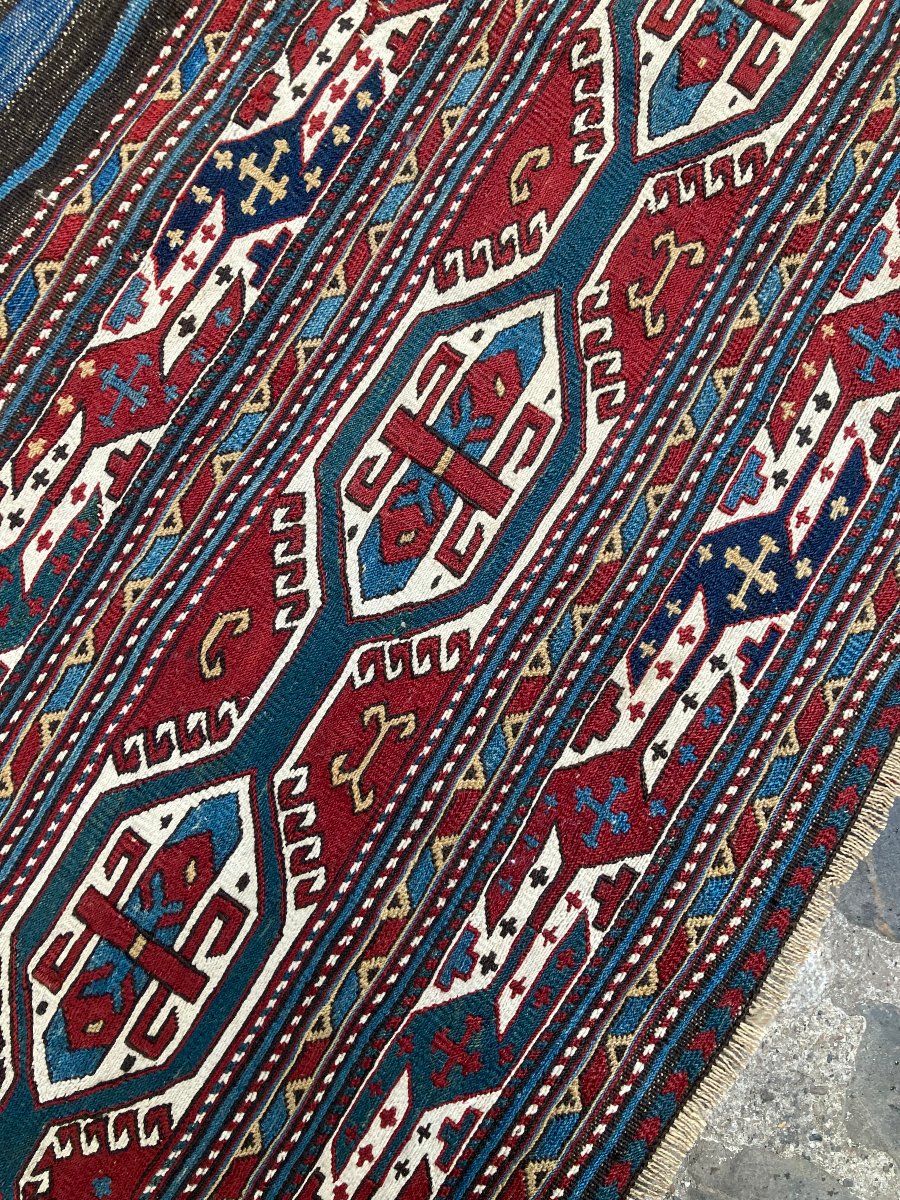
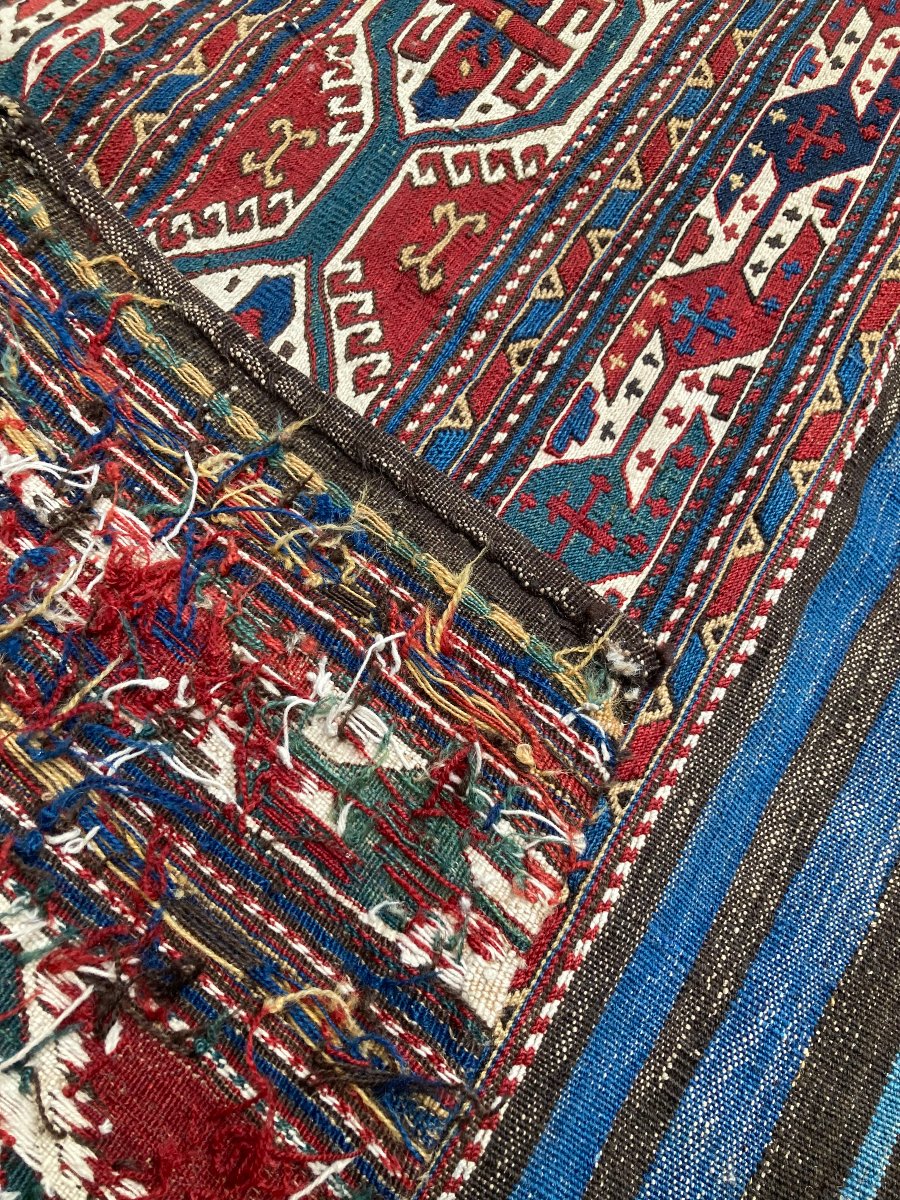
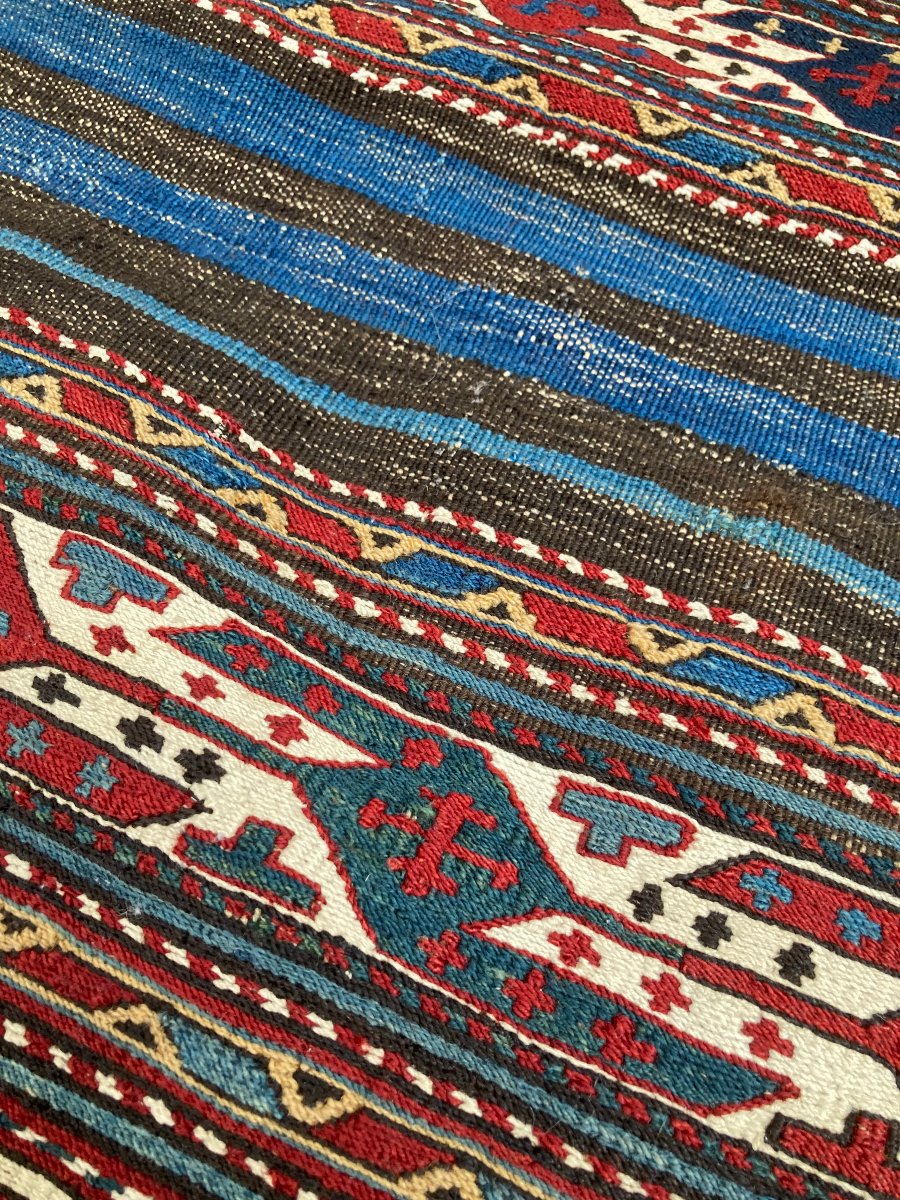


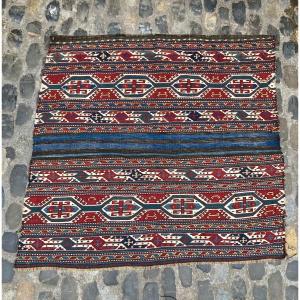


Karabakh Caucasus Maffrash. Circa 1850. 108 X 104 Cm
I sometimes address certain topics in my posts. Most often, these are recurring themes or well-founded questions. I try to introduce newcomers to the subject and also to shed light on aspects of the field that are sometimes deliberately kept obscure through certain techniques...
Dating.
It is not an exact science; it involves estimating the age of a piece. In reality, the best way is to have seen several thousand of them over many years!
The key factor lies in the hues.
The appearance, depth, luminosity, and brilliance tell us about the age of a hue; each of these elements corresponds to a relatively specific period. Thus, we divide a century into four quarters.
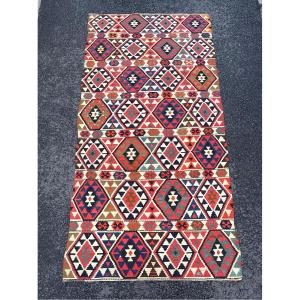
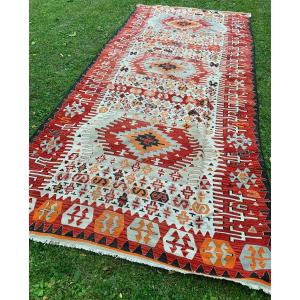
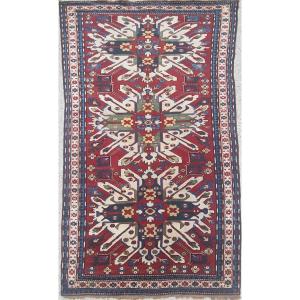
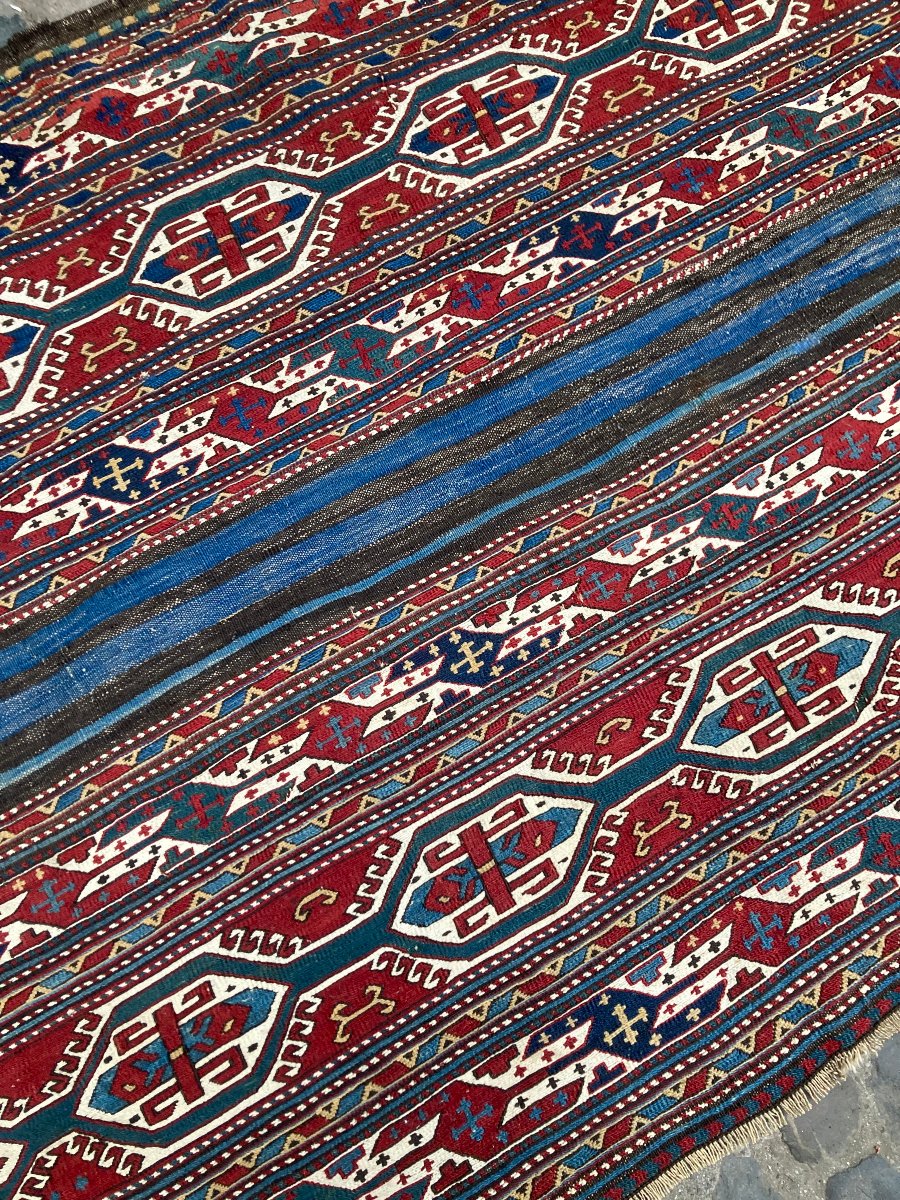
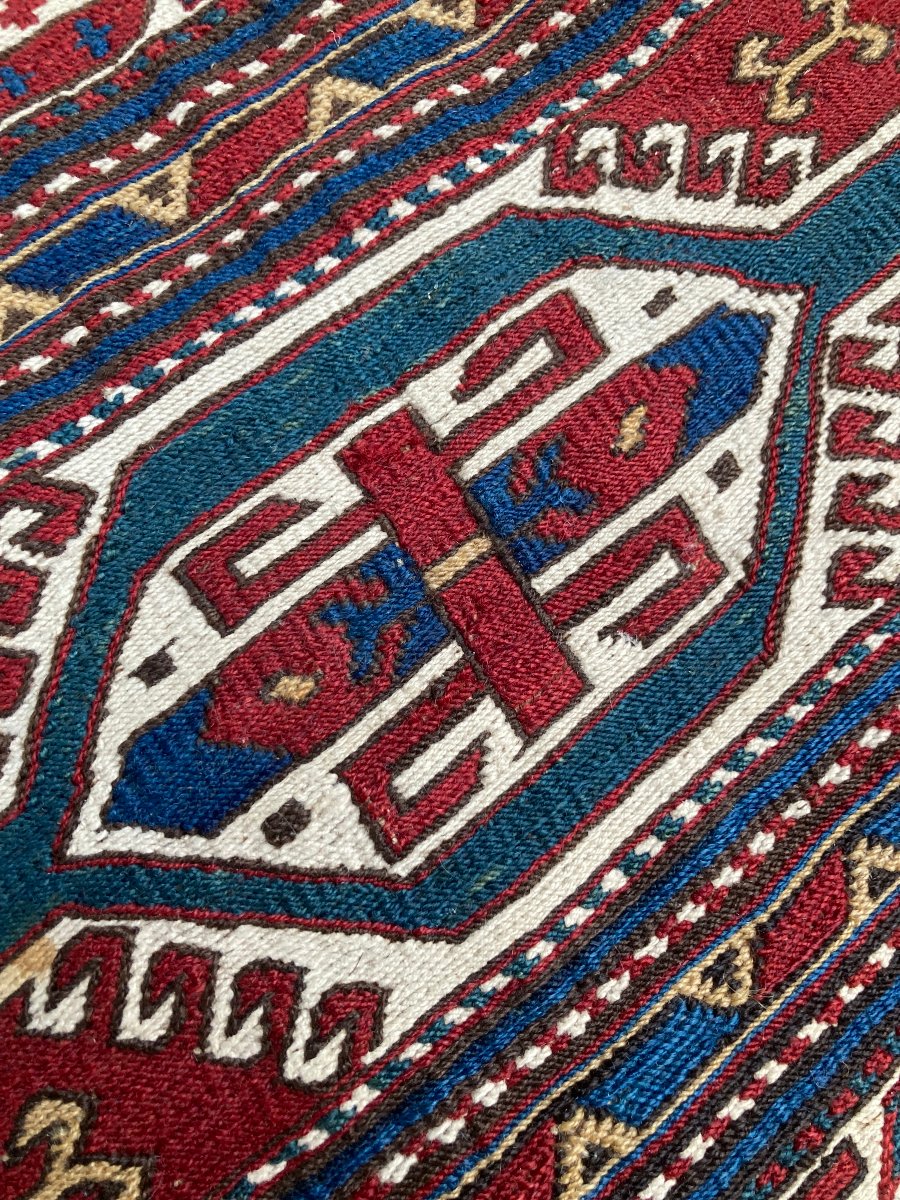
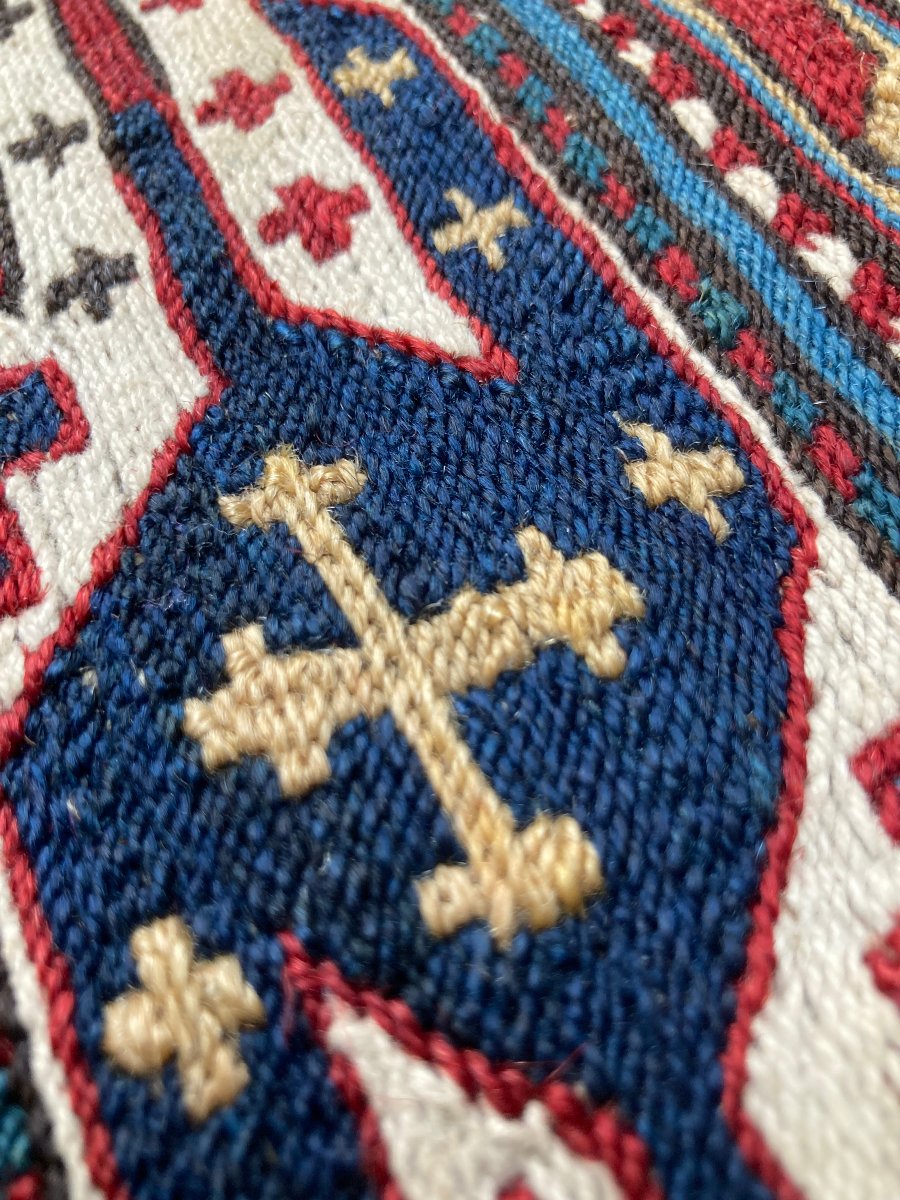
Let’s take this piece. The colors are deep and intense; they are as luminous as they are captivating. We speak of purity, density, and saturation. I find the term “incandescence” even more fitting at times. From this point, we are in a period prior to the 20th century.
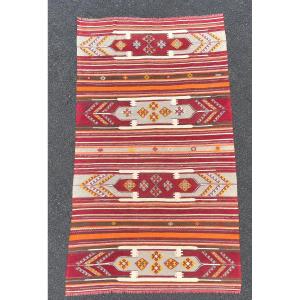
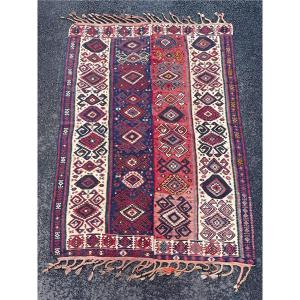
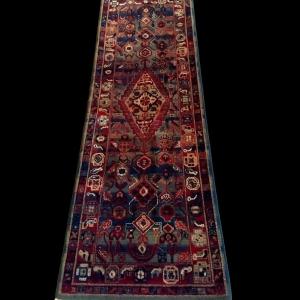
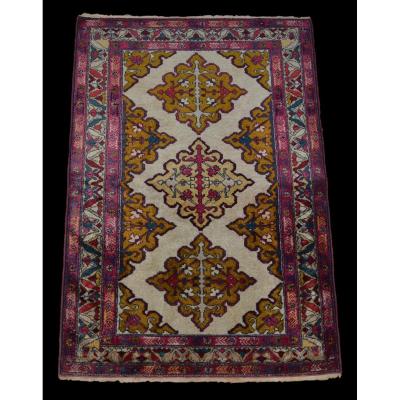
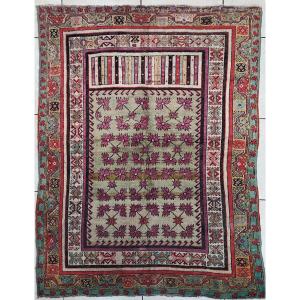
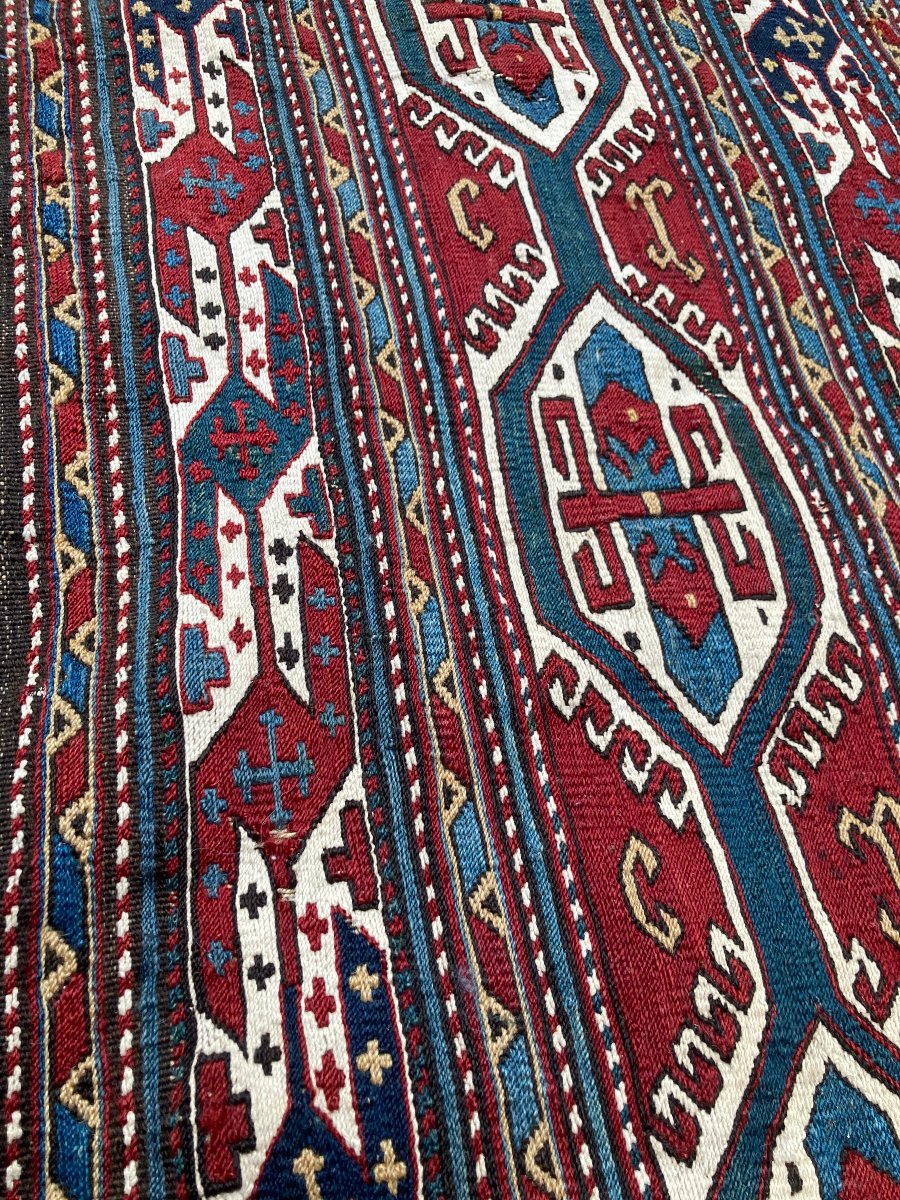
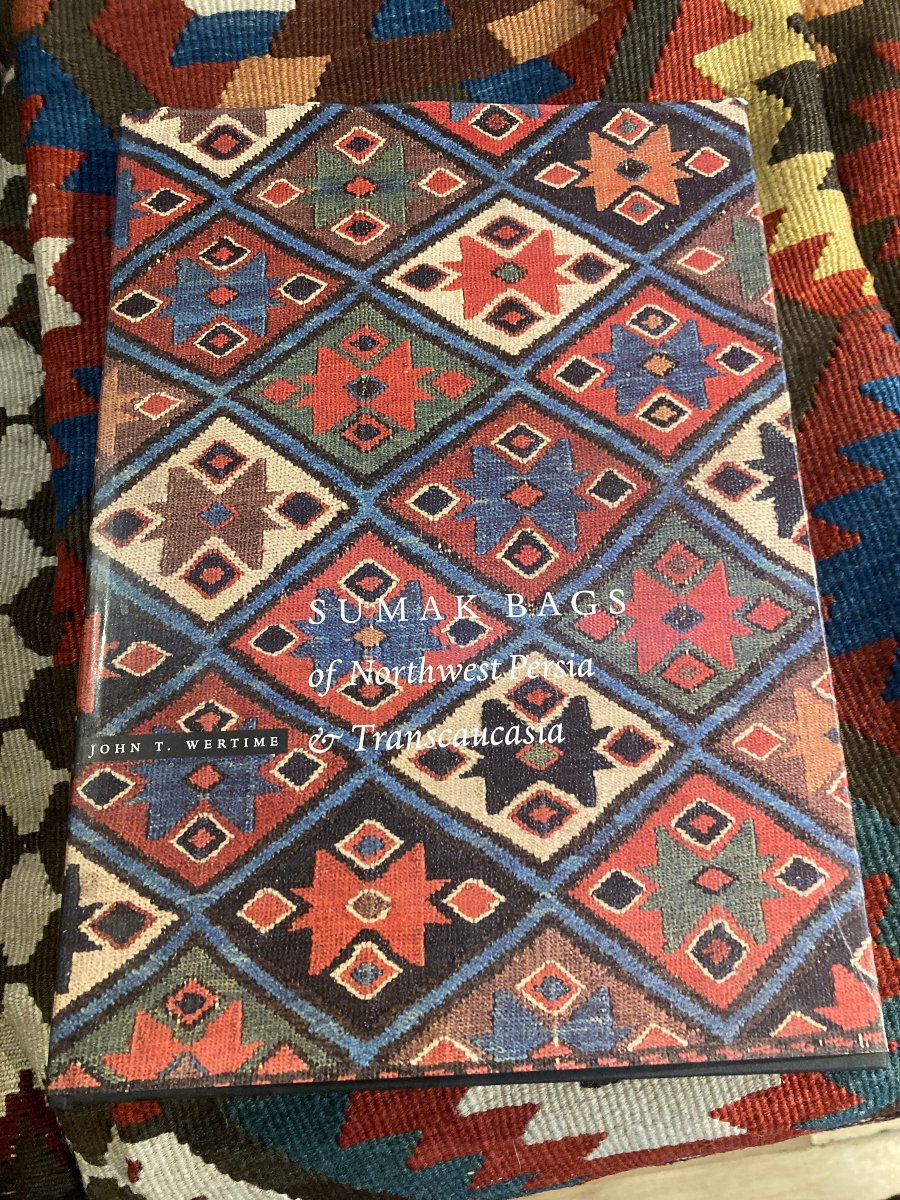
Let’s continue our investigation and turn our attention to the weaving. Sumak technique. Extremely fine, even, and precise. It is a masterpiece; the patterns seem carved into the fabric, bordering on perfection. This craftsmanship is equally characteristic of a specific period, and we are gradually moving toward the mid-to-early 19th century. A brief visit to the archives will allow us to gather corroborating evidence, as the piece is listed in a reference work on the object in question; see photos.
In short, we don’t determine a piece’s age by a guess, but more precisely by a close examination—as you might have guessed!
Less technical, more emotional now. This Maffrash is a jewel that shines brilliantly. The weaving is masterful. It is delicate and refined. Rare and precious. Virtually impossible to find. A condition bordering on a miracle. A highly decorative piece, the kind you never tire of.
Origin: Karabakh - Caucasus
Circa 1850
Dimensions: 108 x 104 cm
Laurent
Beauty of Kilims
Dating.
It is not an exact science; it involves estimating the age of a piece. In reality, the best way is to have seen several thousand of them over many years!
The key factor lies in the hues.
The appearance, depth, luminosity, and brilliance tell us about the age of a hue; each of these elements corresponds to a relatively specific period. Thus, we divide a century into four quarters.
Let’s take this piece. The colors are deep and intense; they are as luminous as they are captivating. We speak of purity, density, and saturation. I find the term “incandescence” even more fitting at times. From this point, we are in a period prior to the 20th century.
Let’s continue our investigation and turn our attention to the weaving. Sumak technique. Extremely fine, even, and precise. It is a masterpiece; the patterns seem carved into the fabric, bordering on perfection. This craftsmanship is equally characteristic of a specific period, and we are gradually moving toward the mid-to-early 19th century. A brief visit to the archives will allow us to gather corroborating evidence, as the piece is listed in a reference work on the object in question; see photos.
In short, we don’t determine a piece’s age by a guess, but more precisely by a close examination—as you might have guessed!
Less technical, more emotional now. This Maffrash is a jewel that shines brilliantly. The weaving is masterful. It is delicate and refined. Rare and precious. Virtually impossible to find. A condition bordering on a miracle. A highly decorative piece, the kind you never tire of.
Origin: Karabakh - Caucasus
Circa 1850
Dimensions: 108 x 104 cm
Laurent
Beauty of Kilims
950 €
Period: 19th century
Style: Orientalism
Condition: Perfect condition
Material: Wool
Length: 108 cm
Width: 104 cm
Reference (ID): 1778292
Availability: In stock
Print