

Silver Tea Caddy, Far East, 19th - Early 20th Century
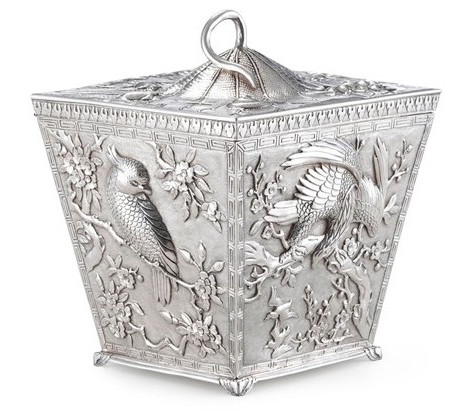
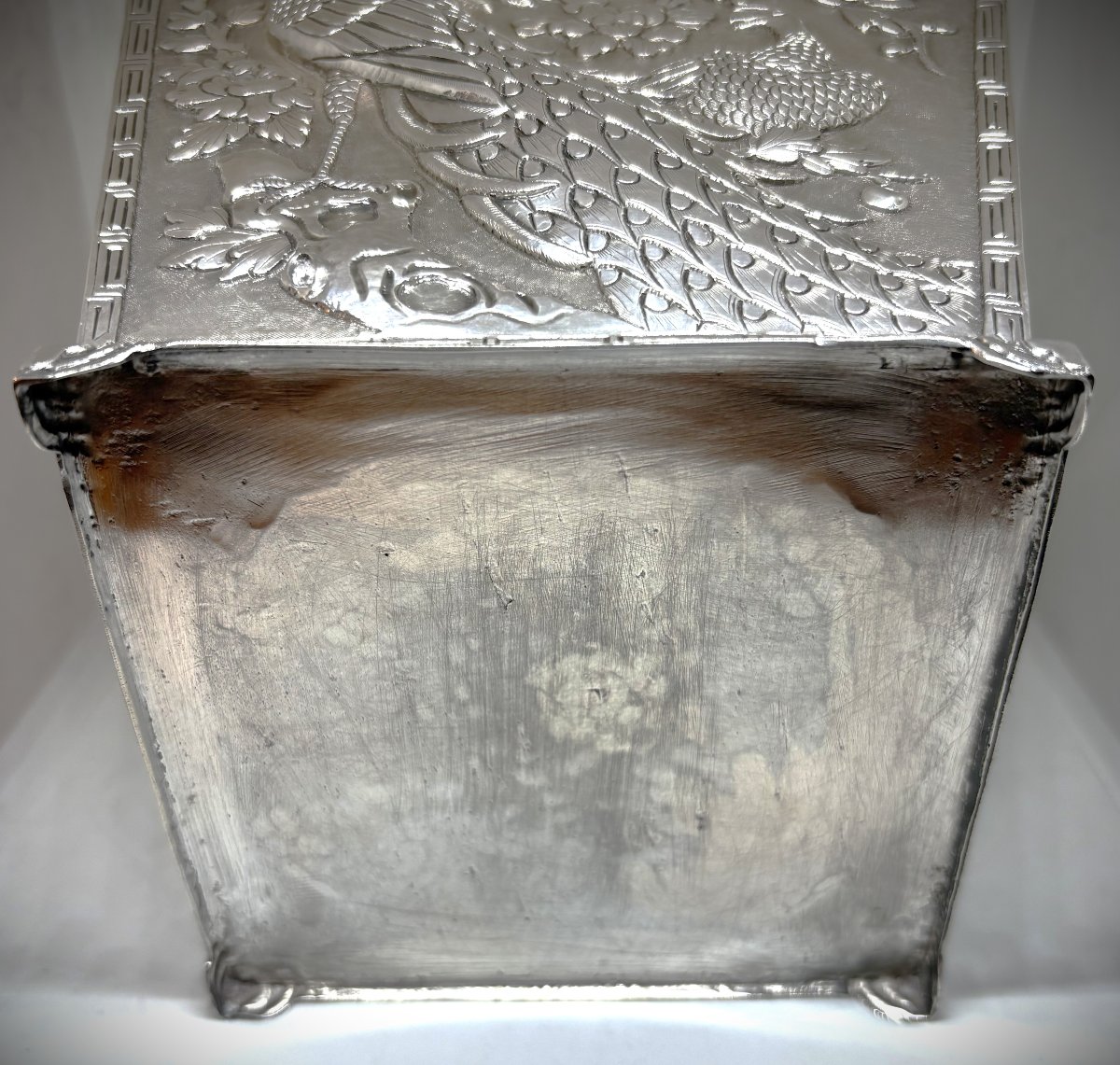
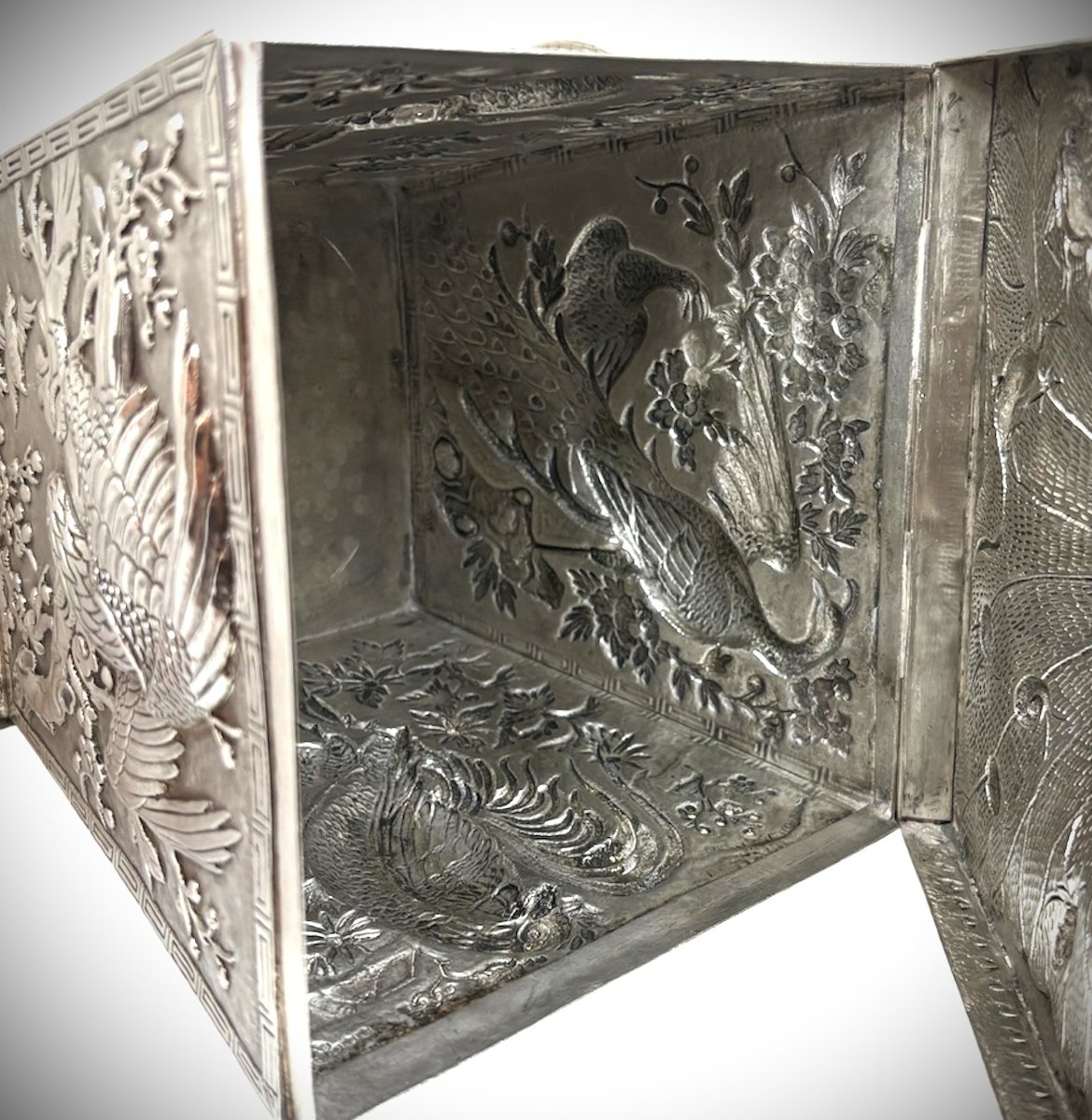
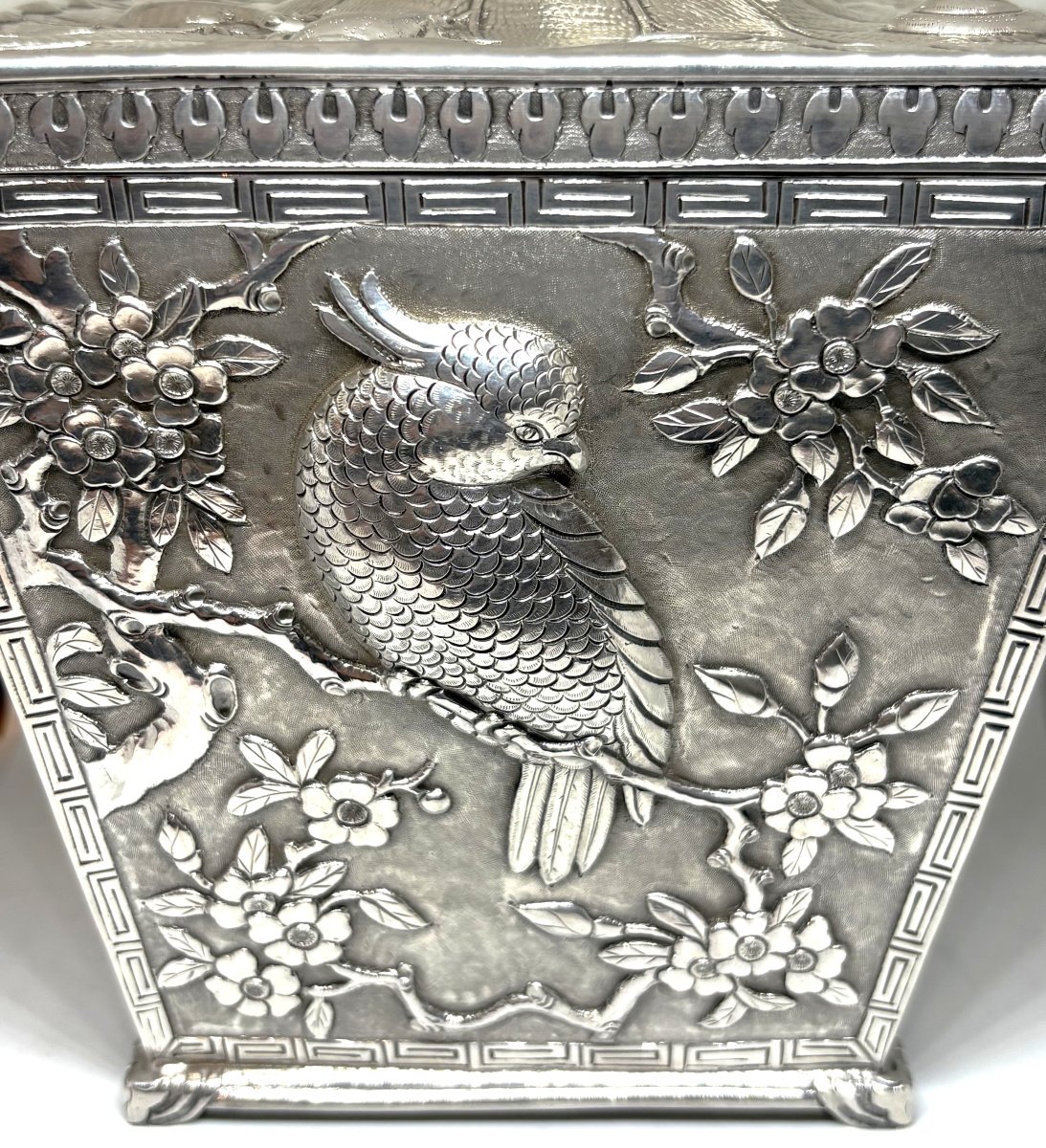
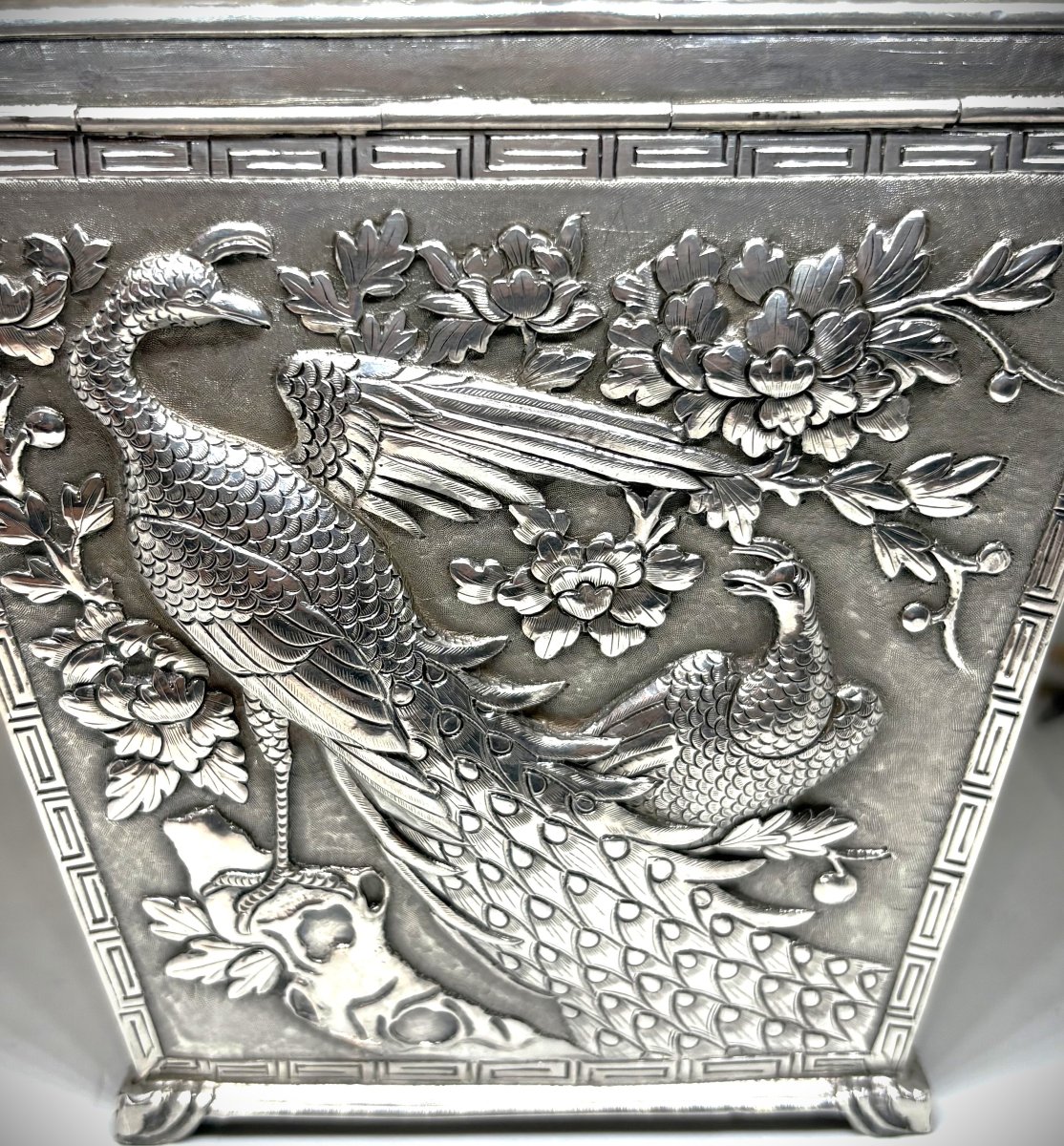
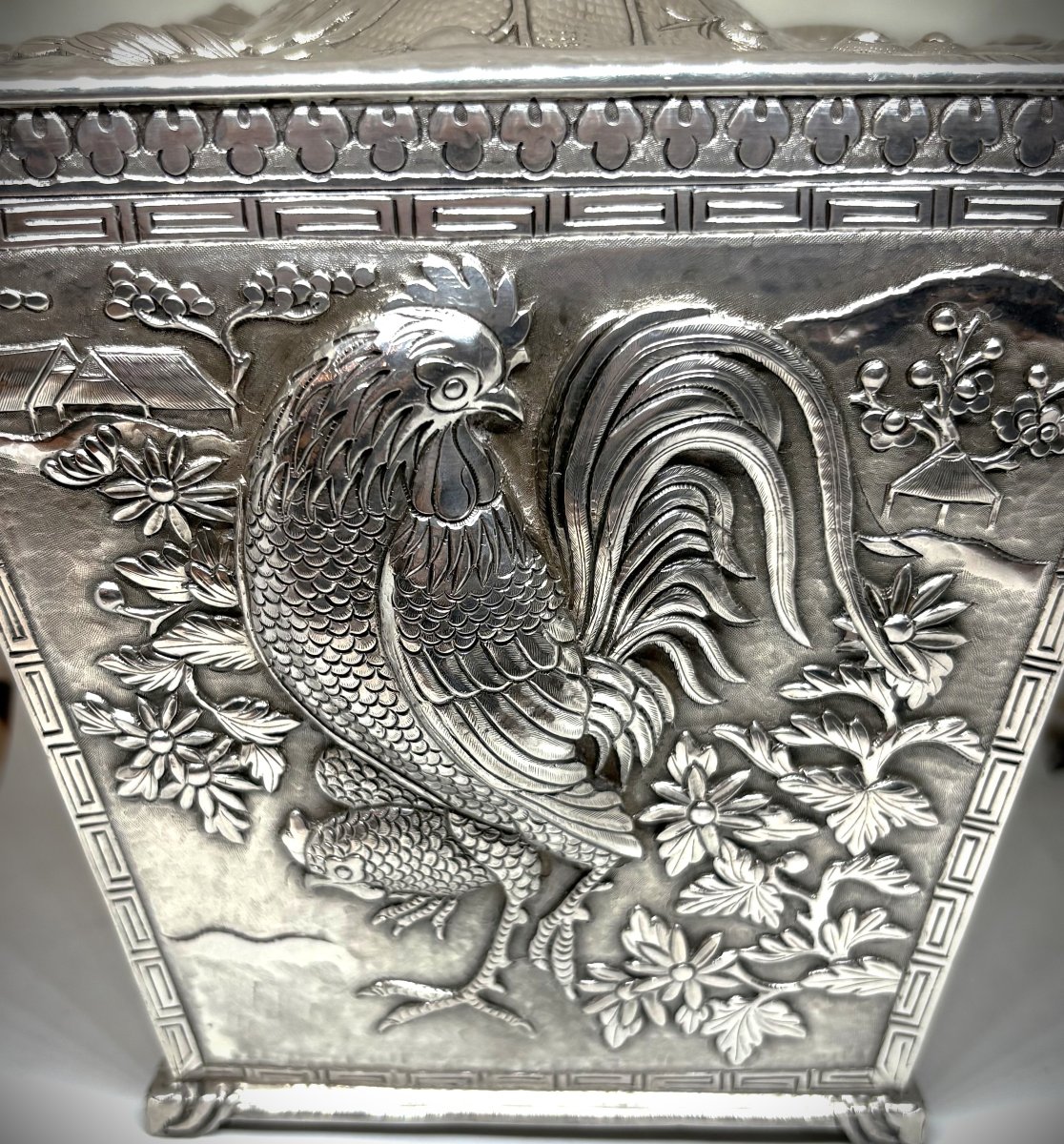
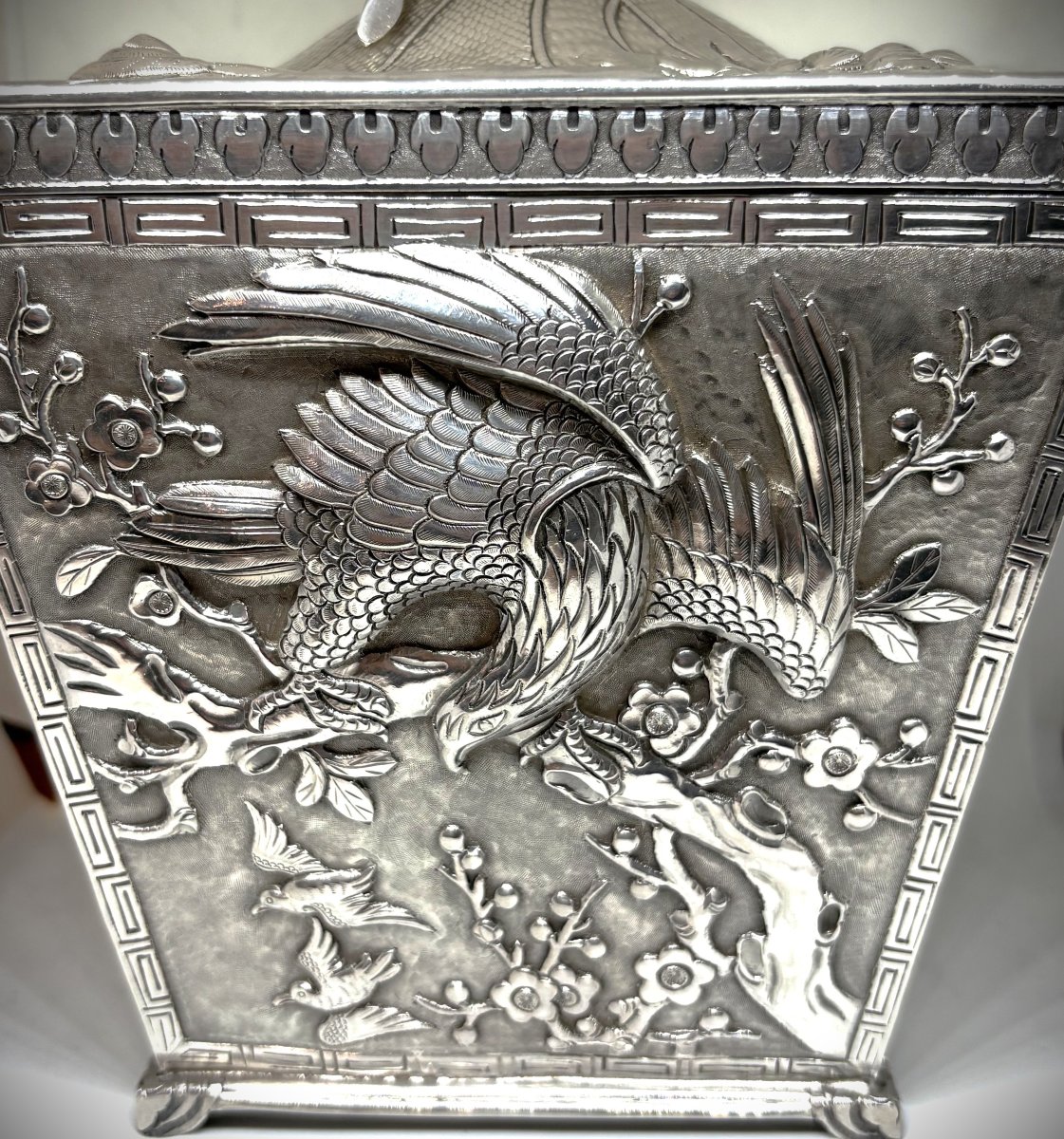
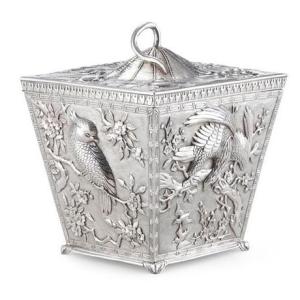
Elegant silver tea caddy trunco-pyramidal shape with square base, resting on small corner feet and with a hinged, opening lid; the rims are decorated with a delicate frieze of stylized aquatic leaves arranged in palmettes. The entire surface is finely embossed and chased in the taste of oriental products intended for export.
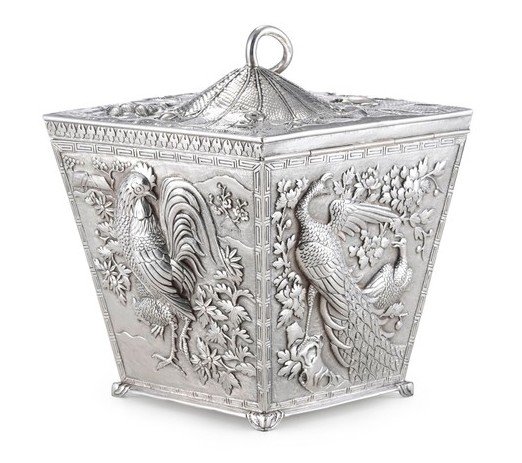
The four sides featurenaturalistic scenes of a symbolic nature:
a rooster dominating a hen in a gardenwith architecture in the background, alluding to vigilance and domestic harmony;
a phoenix (fenghuang) on a flowering branch,emblem of virtue, peace and renewal;
a parrot perched on a branchin bloom, symbolizing elegance and refinement;
finally, a pair of peacock slush vegetation, evoking beauty, dignity and marital happiness.
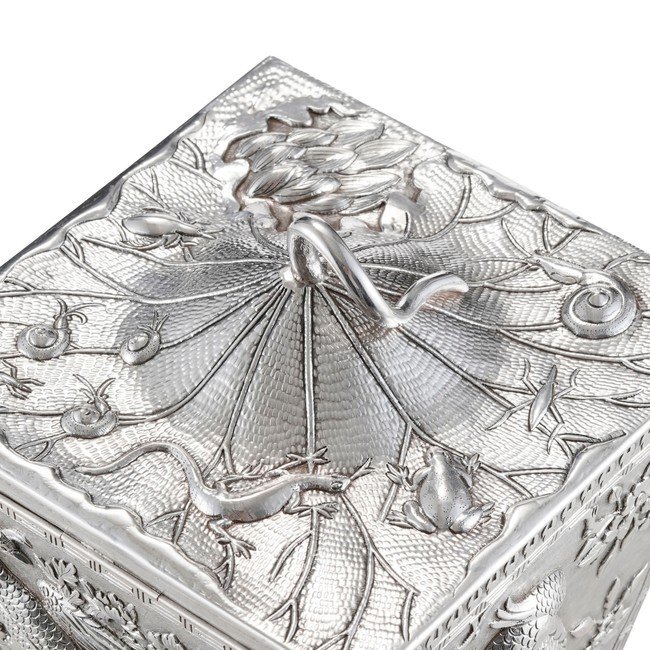
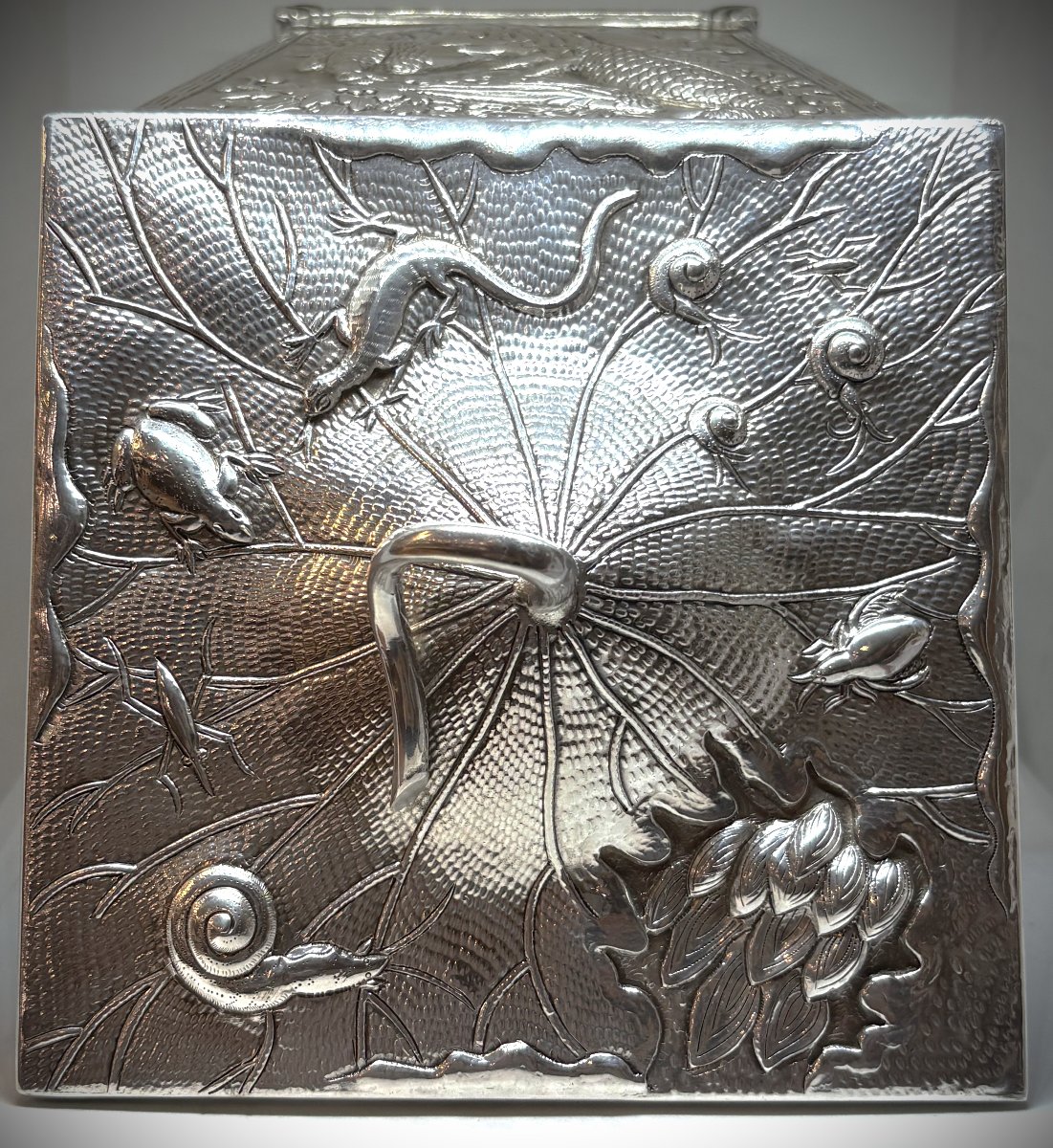
The lid, slightly domedis centered on a large aquatic water lily or lotus leaf, rendered with radial veins and a delicately surface. The leaf is covered with a microfauna treated with lively naturalism: four snails, a frog, a lizard, an aquatic insect - probably a beetle - and a stylized mosquito. This ensemble evokes the cycle of life, fertility and abundance, lending the composition analmost painterly quality. In the center stands a mobile is both functional and harmoniously integrated.
Far from being purely ornamental, develops a coherent symbolic language evoking prosperity, harmony and auspiciousness. These motifs are particularly well for an object designed to hold tea, a precious product in Eastern culture, associated with ritual, balance and well-being, here enhanced by a rich decoration intended for the Western market.
A fine example of late 19th-centuryproduction from the late 19th or early 20th century, with fine craftsman ship without hallmarks.
h. 19 x 15.5 x 15 cm.
Weight 880 gr.
The four sides featurenaturalistic scenes of a symbolic nature:
a rooster dominating a hen in a gardenwith architecture in the background, alluding to vigilance and domestic harmony;
a phoenix (fenghuang) on a flowering branch,emblem of virtue, peace and renewal;
a parrot perched on a branchin bloom, symbolizing elegance and refinement;
finally, a pair of peacock slush vegetation, evoking beauty, dignity and marital happiness.
The lid, slightly domedis centered on a large aquatic water lily or lotus leaf, rendered with radial veins and a delicately surface. The leaf is covered with a microfauna treated with lively naturalism: four snails, a frog, a lizard, an aquatic insect - probably a beetle - and a stylized mosquito. This ensemble evokes the cycle of life, fertility and abundance, lending the composition analmost painterly quality. In the center stands a mobile is both functional and harmoniously integrated.
Far from being purely ornamental, develops a coherent symbolic language evoking prosperity, harmony and auspiciousness. These motifs are particularly well for an object designed to hold tea, a precious product in Eastern culture, associated with ritual, balance and well-being, here enhanced by a rich decoration intended for the Western market.
A fine example of late 19th-centuryproduction from the late 19th or early 20th century, with fine craftsman ship without hallmarks.
h. 19 x 15.5 x 15 cm.
Weight 880 gr.
3 700 €
Period: 19th century
Style: Orientalism
Condition: Perfect condition
Material: Sterling silver
Width: 15,5 cm.
Height: 19 cm.
Depth: 15 cm.
Reference (ID): 1750471
Availability: In stock
Print