

Painted Terracotta Sculpture: Minos, The Guardian Of The Underworld. Italy, 20th Century
Artist: Vittorio Renzo Baldi
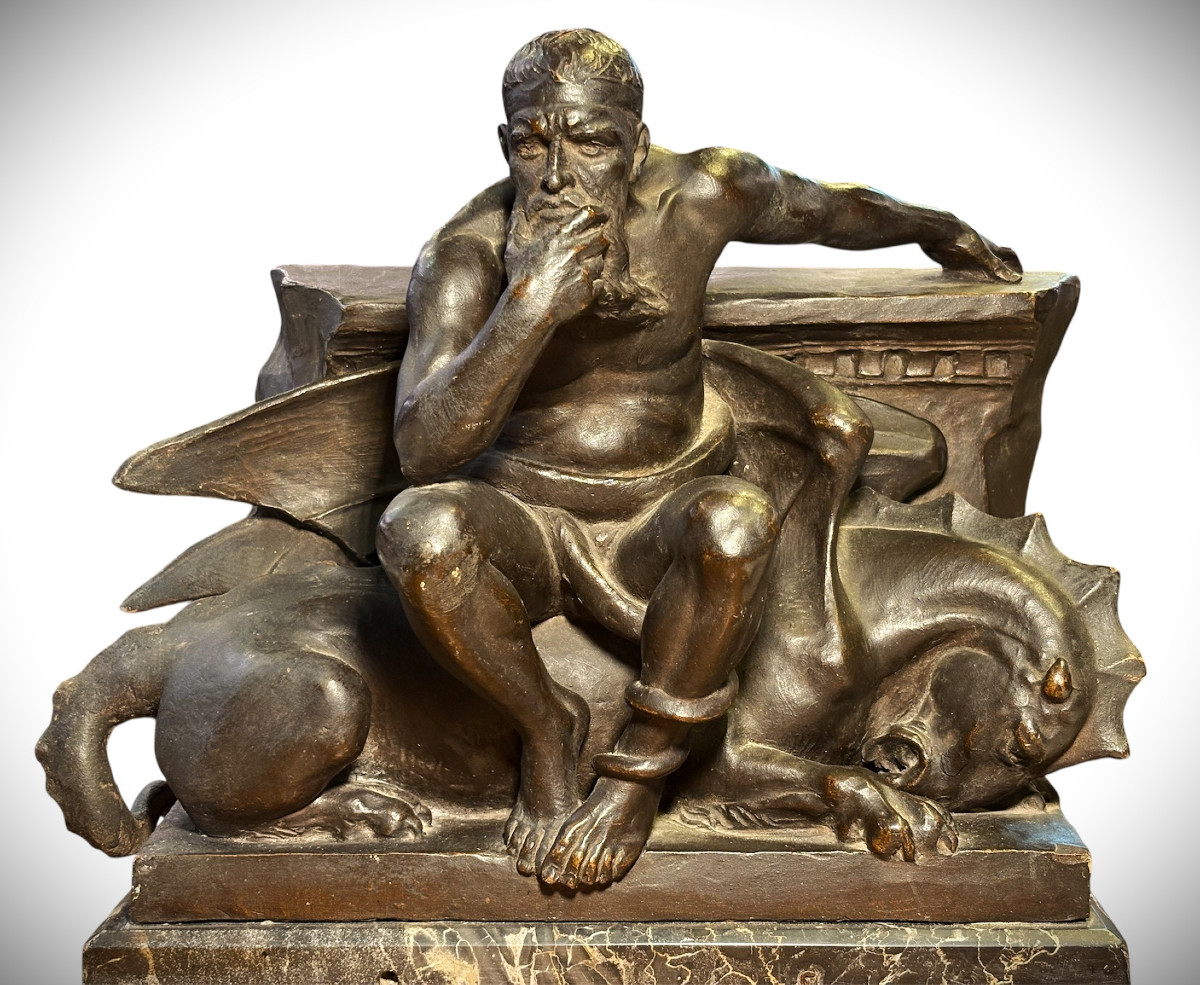
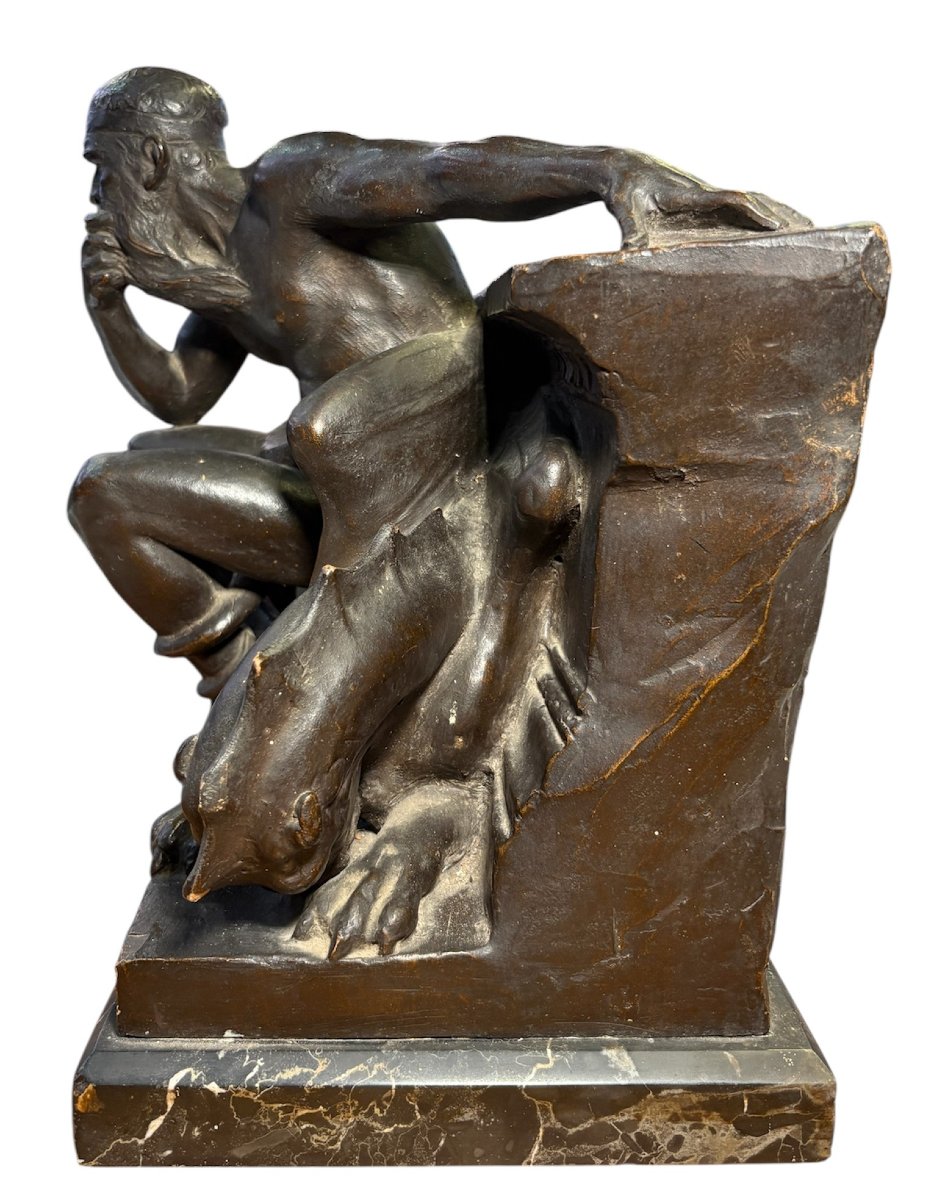
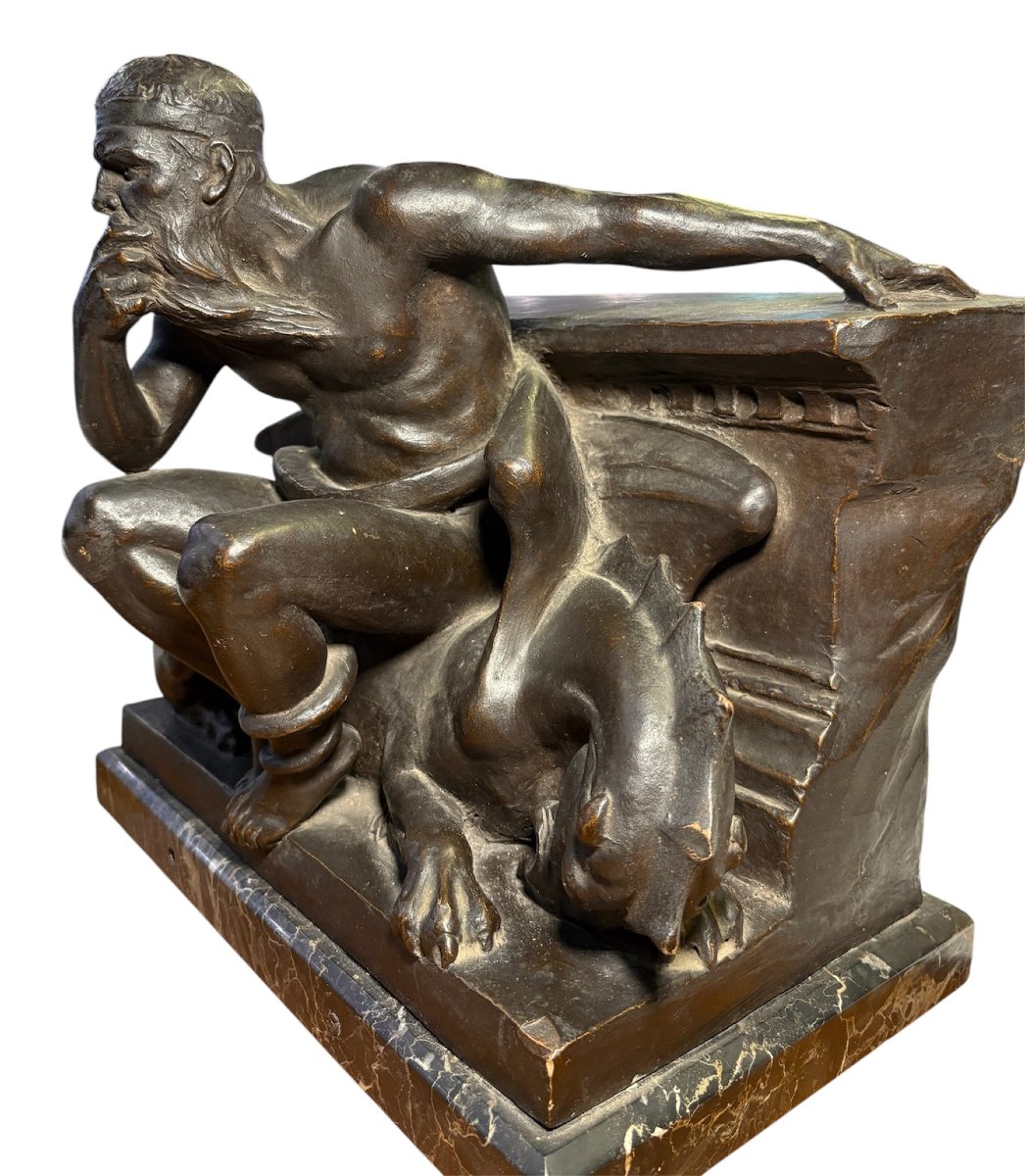
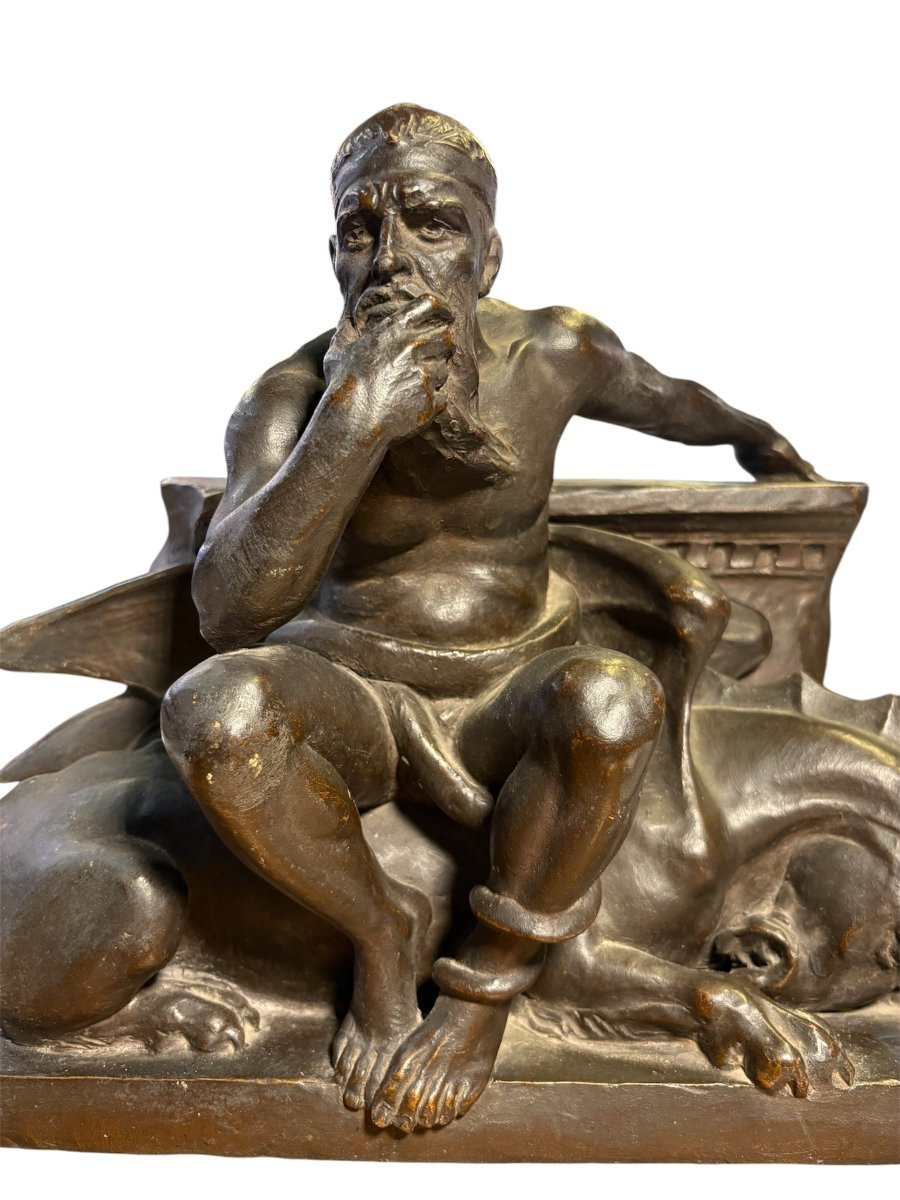
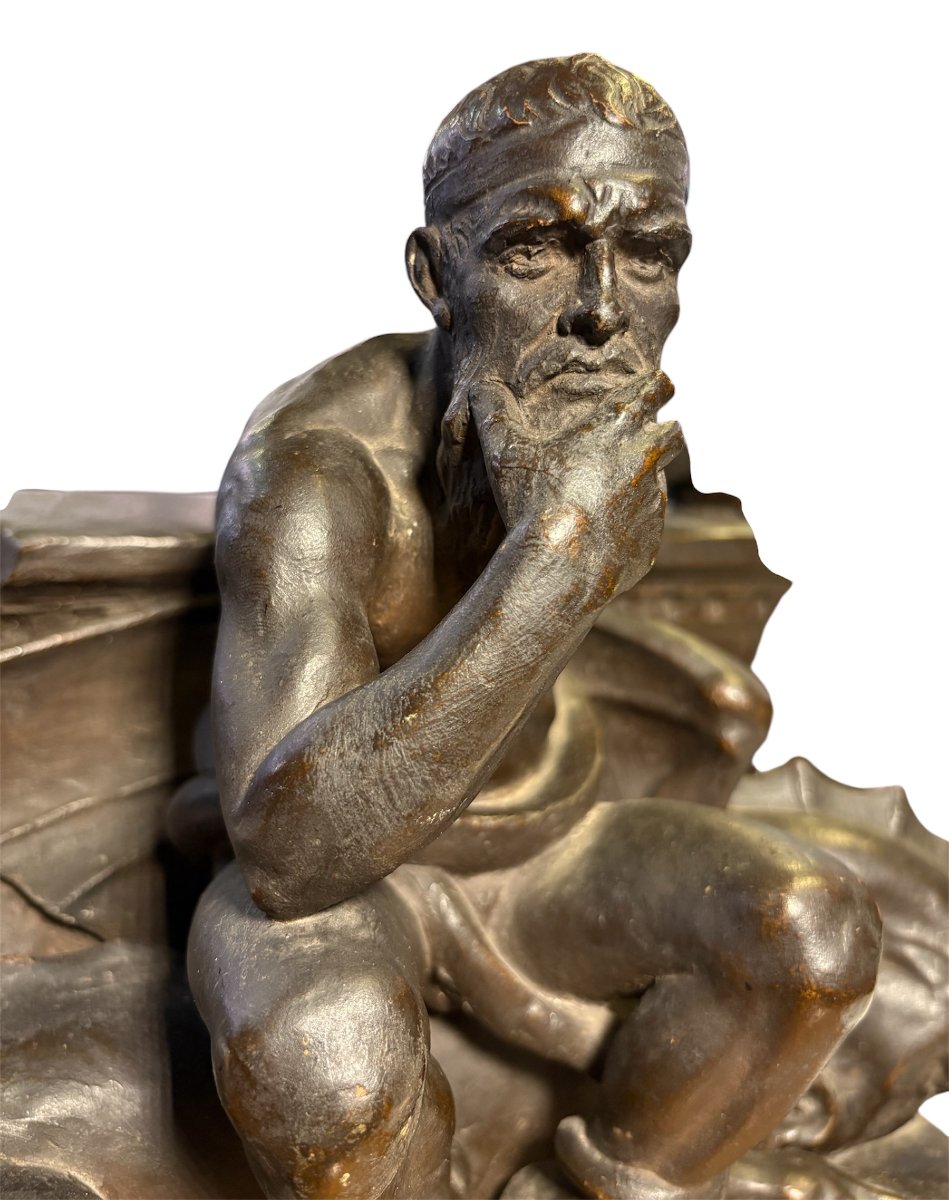
A beautiful black-painted terracotta sculpture depicting Minos, the legendary judge of the damned whom Dante placed at the entrance to Hell.
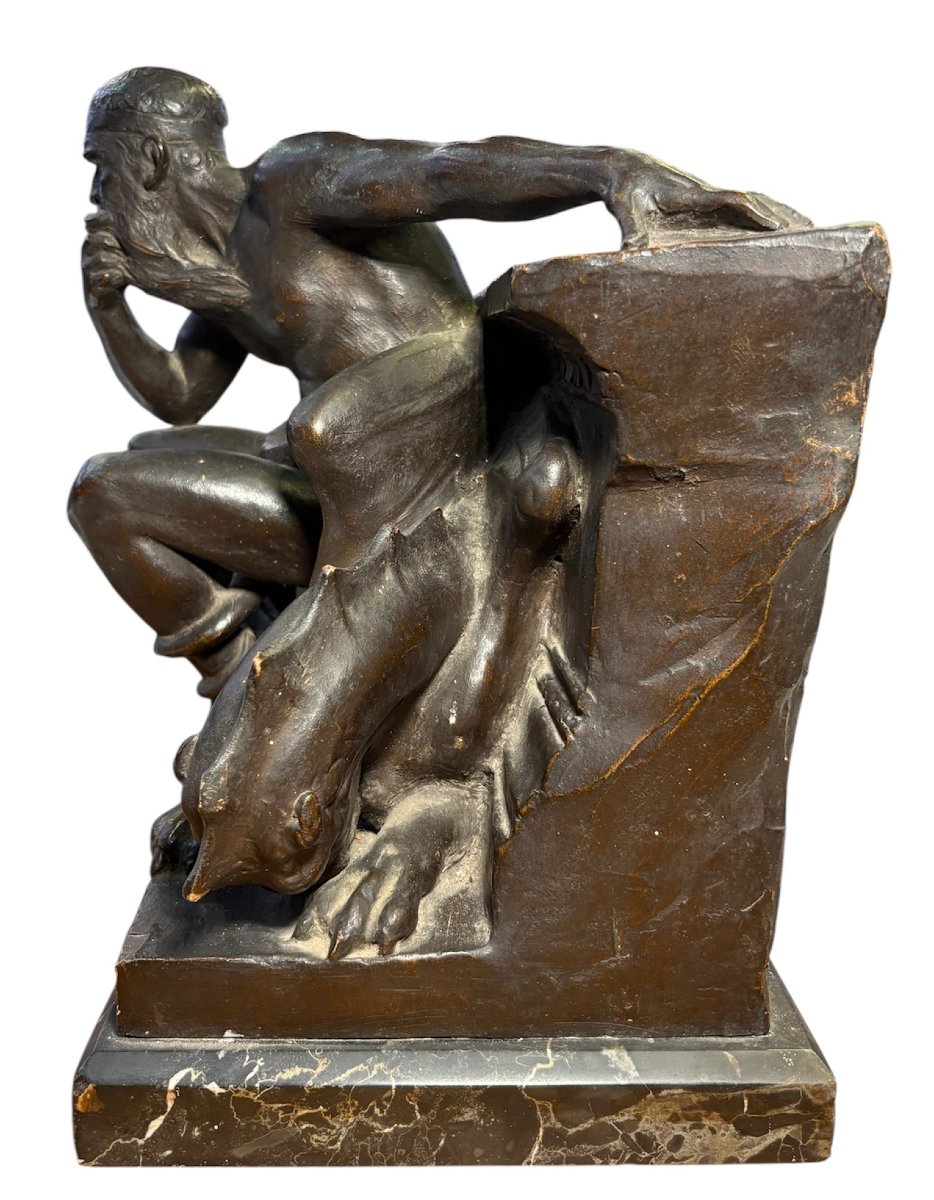
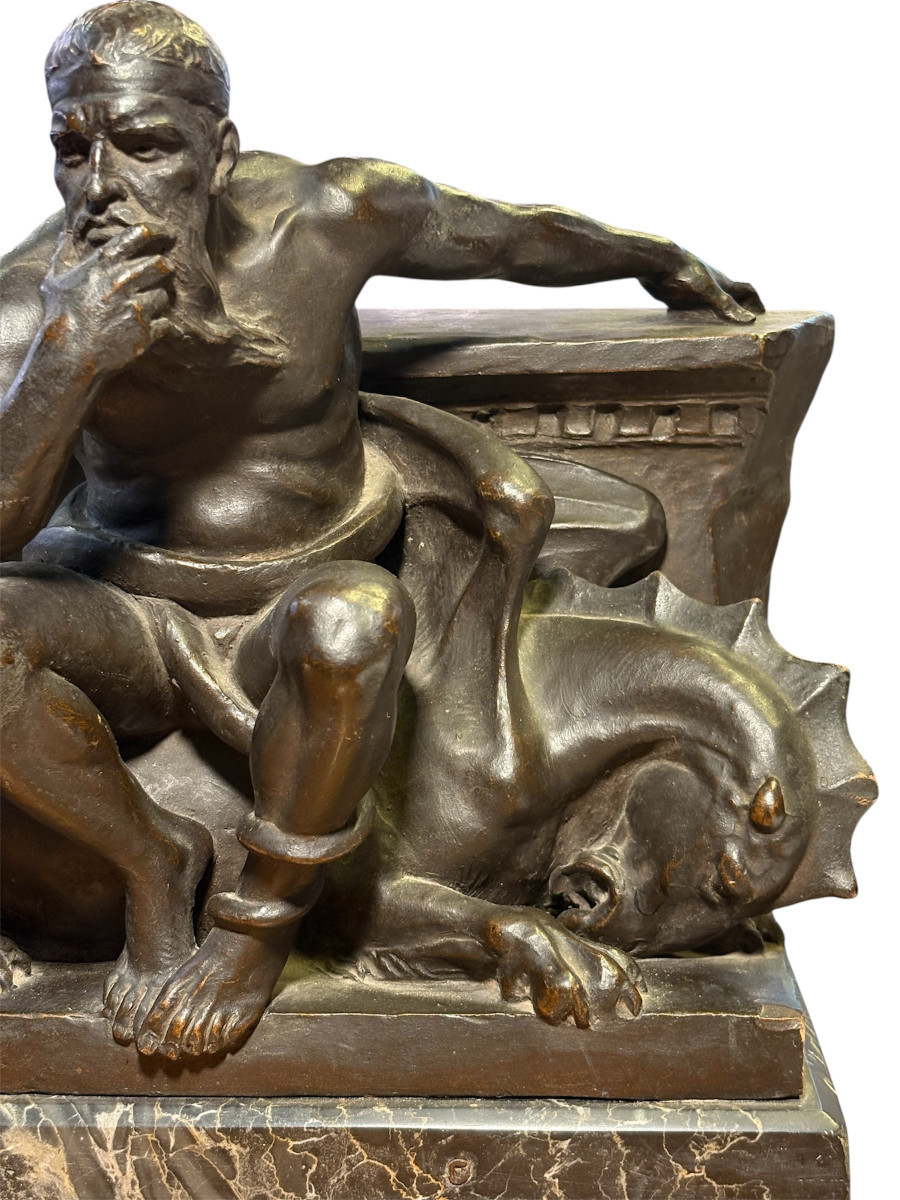
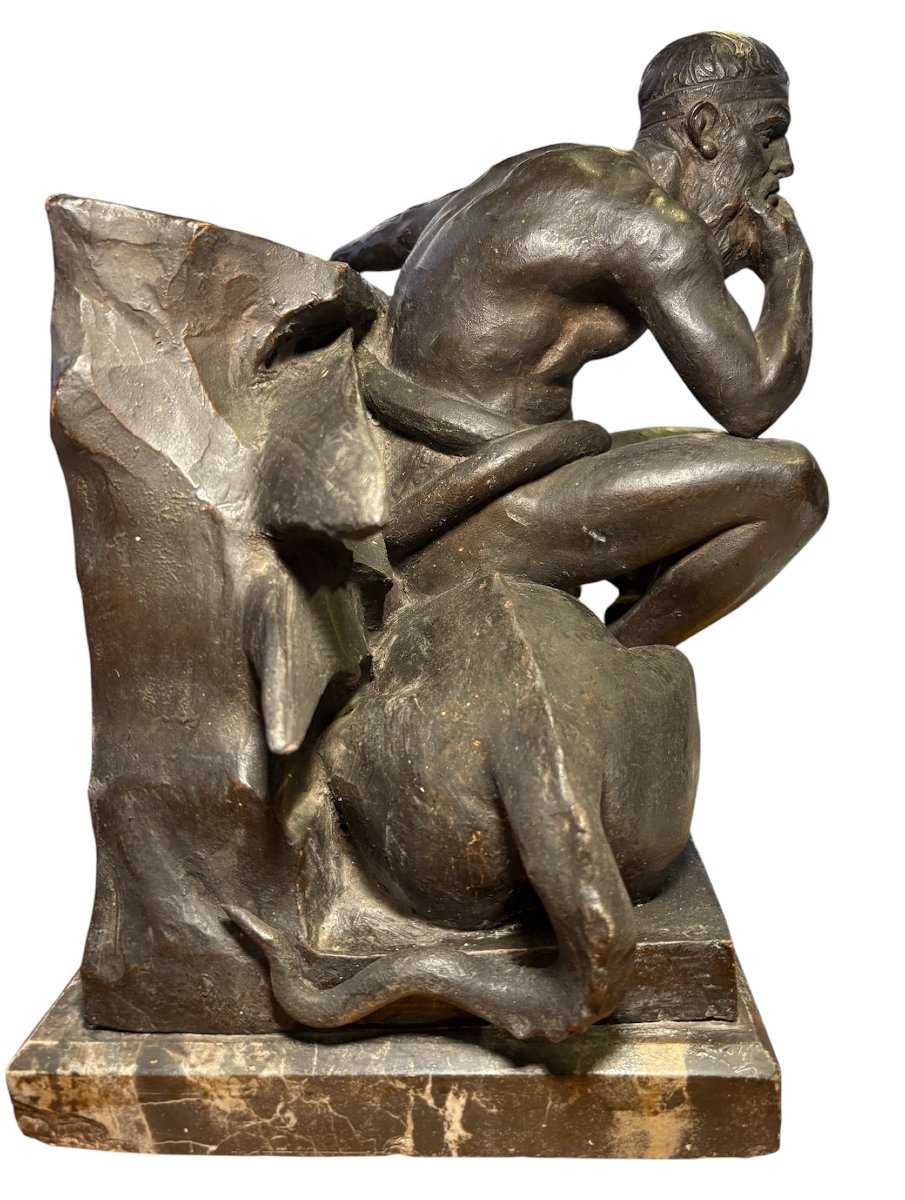
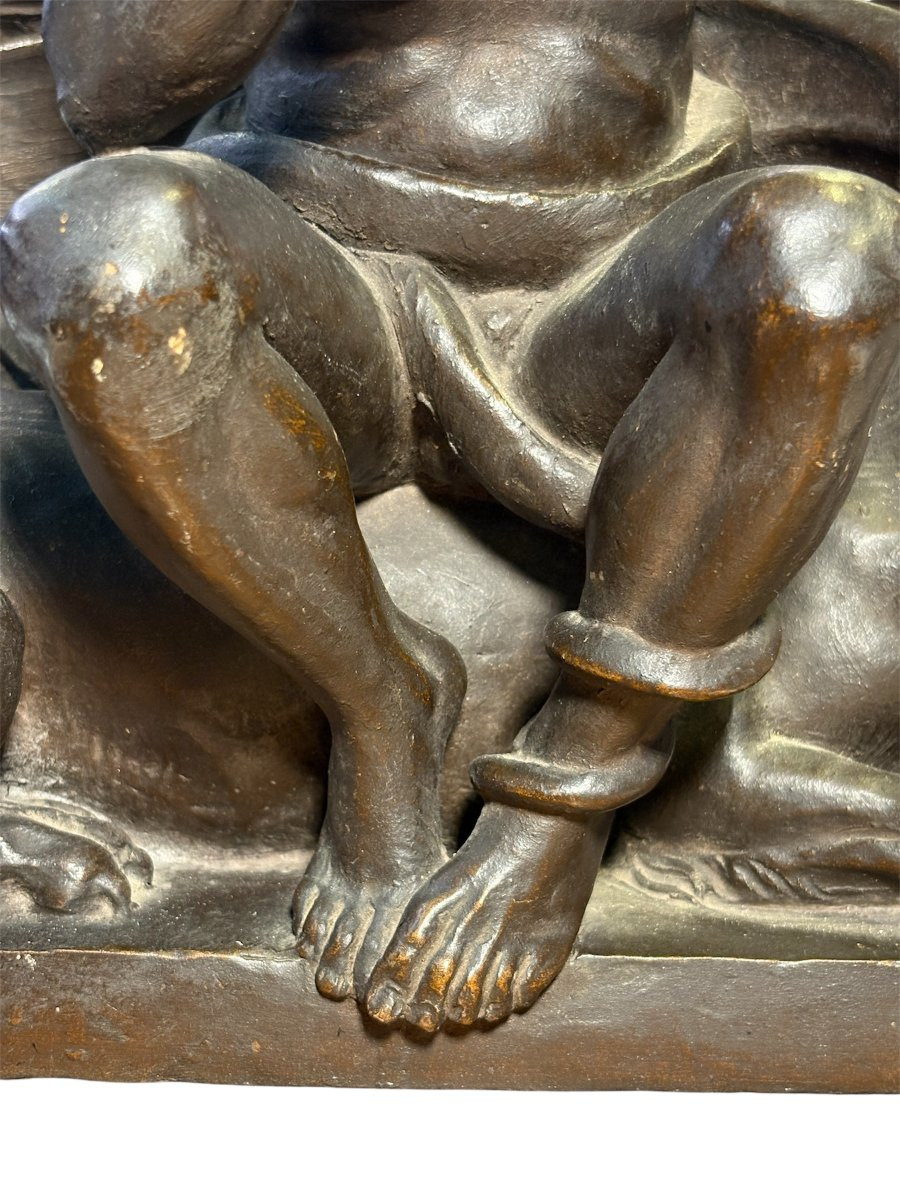
The figure is shown in a meditative attitude: his bust leaning forward, his chin resting on the back of his hand, his gaze severe and absorbed. This is an obvious reference to Auguste Rodin's famous "Thinker," here reinterpreted in an allegorical and Dantean key. Minos is not seated on a throne, but on the body of a monstrous dragon, while a snake coils around his leg—a further symbol of sin and punishment, which reinforces the infernal atmosphere. The composition oscillates between tension and stillness, between the muscular strength of the figure and the dramatic presence of the creatures, emphasizing the moral dimension of the scene: Minos is not only the arbiter of punishment, he embodies Justice itself.
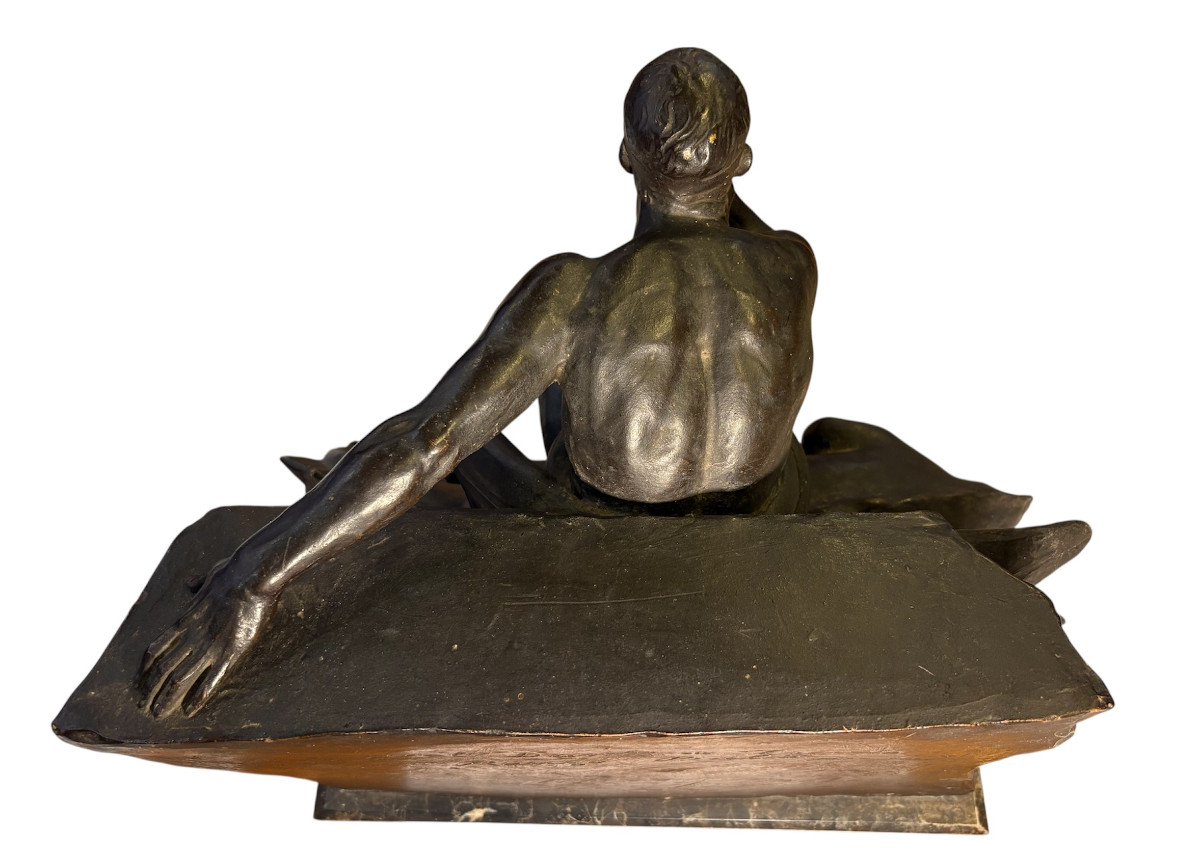
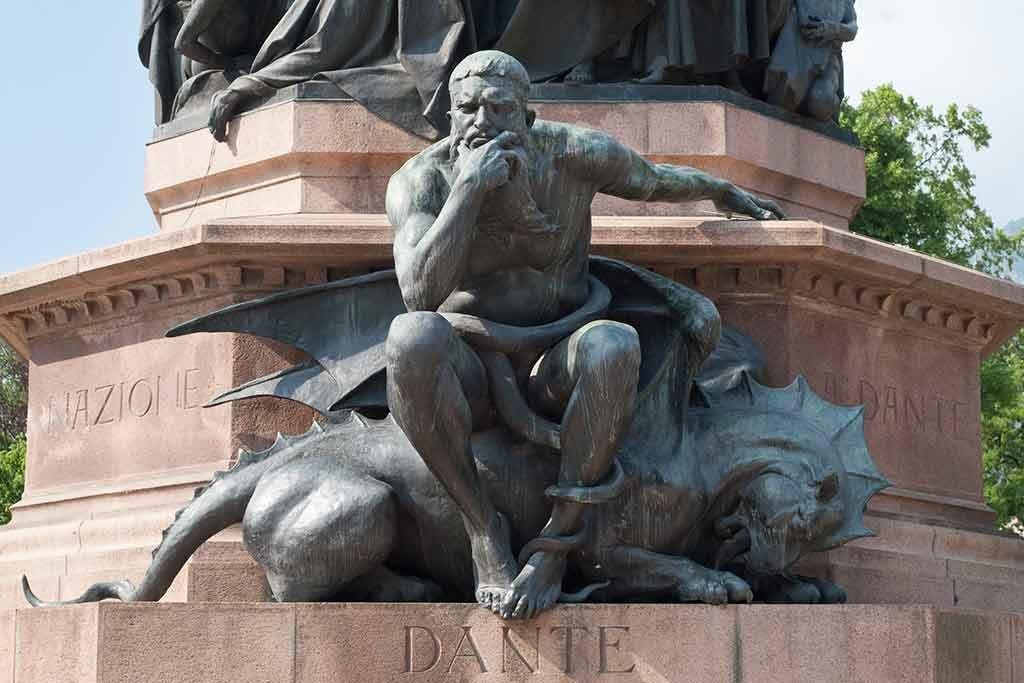
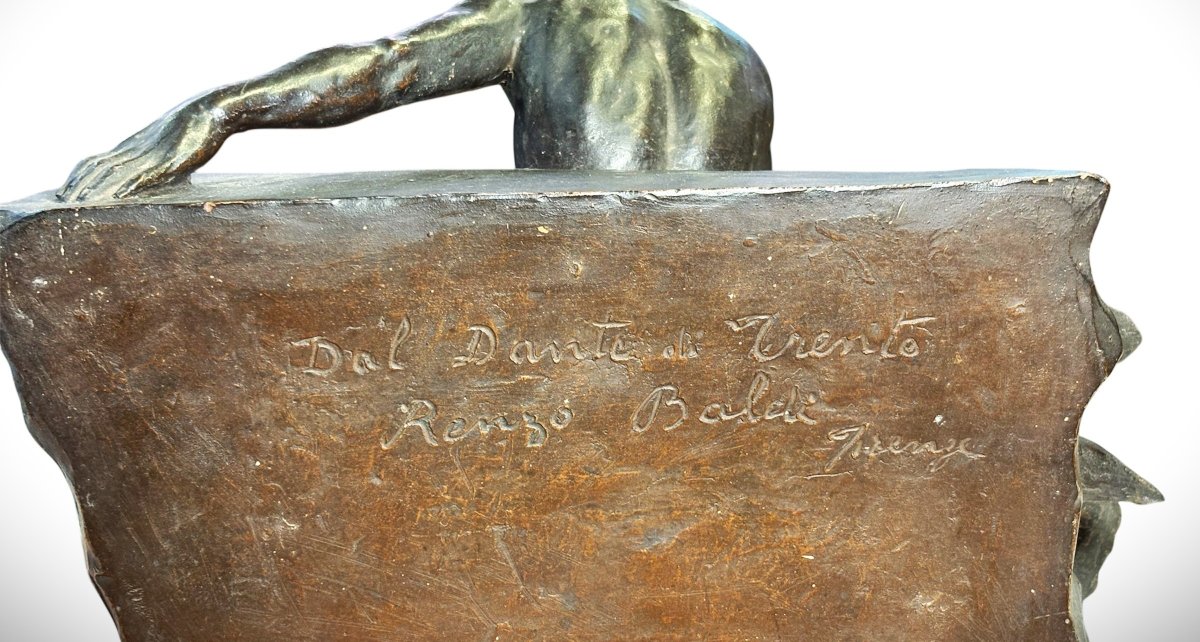
On the back of the sculpture is the inscription "Dal Dante in Trento - Renzo Baldi - Firenze", which sheds light on the author's intention. The work is in fact inspired by the monument to Dante Alighieri created by Cesare Zocchi and erected in Trento in 1896 (attached image), a symbol of the city's Italian character during the Austro-Hungarian era, which quickly became a landmark of the patriotic imagination. Baldi, with explicit devotion, transposes one of the allegorical figures into this terracotta version, characterized by high quality of execution and a strong plastic presence.
Vittorio Renzo Baldi, born in Florence in 1881, trained with Cesare Zocchi, to whom he always remained artistically and emotionally attached. He dedicated a commemorative bust to him, now preserved in the cemetery of San Miniato al Monte. His career developed between exhibitions and distinctions, from his participation in the First Tuscan Winter Exhibition in 1914—where he presented the Portrait of the Dragon Santucci—to his admission in 1924 as Honorary Academician, a sign of the prestige achieved in the Florentine artistic community.
This sculpture is preserved in very good condition, with only a small conservation restoration at the tips of the dragon's tail. It rests on a gray marble base, on the front of which there was originally a small plaque—perhaps bearing the title or the artist's name—now lost. In this balance between monumental memory and collector's item, Baldi brings together the legacy of Zocchi, Rodinian inspiration, and the allegorical power of Dante to give life to a work imbued with symbolism and historical memory.
Dimensions: h. 32 x 34.5 x 20.5 cm.
The figure is shown in a meditative attitude: his bust leaning forward, his chin resting on the back of his hand, his gaze severe and absorbed. This is an obvious reference to Auguste Rodin's famous "Thinker," here reinterpreted in an allegorical and Dantean key. Minos is not seated on a throne, but on the body of a monstrous dragon, while a snake coils around his leg—a further symbol of sin and punishment, which reinforces the infernal atmosphere. The composition oscillates between tension and stillness, between the muscular strength of the figure and the dramatic presence of the creatures, emphasizing the moral dimension of the scene: Minos is not only the arbiter of punishment, he embodies Justice itself.
On the back of the sculpture is the inscription "Dal Dante in Trento - Renzo Baldi - Firenze", which sheds light on the author's intention. The work is in fact inspired by the monument to Dante Alighieri created by Cesare Zocchi and erected in Trento in 1896 (attached image), a symbol of the city's Italian character during the Austro-Hungarian era, which quickly became a landmark of the patriotic imagination. Baldi, with explicit devotion, transposes one of the allegorical figures into this terracotta version, characterized by high quality of execution and a strong plastic presence.
Vittorio Renzo Baldi, born in Florence in 1881, trained with Cesare Zocchi, to whom he always remained artistically and emotionally attached. He dedicated a commemorative bust to him, now preserved in the cemetery of San Miniato al Monte. His career developed between exhibitions and distinctions, from his participation in the First Tuscan Winter Exhibition in 1914—where he presented the Portrait of the Dragon Santucci—to his admission in 1924 as Honorary Academician, a sign of the prestige achieved in the Florentine artistic community.
This sculpture is preserved in very good condition, with only a small conservation restoration at the tips of the dragon's tail. It rests on a gray marble base, on the front of which there was originally a small plaque—perhaps bearing the title or the artist's name—now lost. In this balance between monumental memory and collector's item, Baldi brings together the legacy of Zocchi, Rodinian inspiration, and the allegorical power of Dante to give life to a work imbued with symbolism and historical memory.
Dimensions: h. 32 x 34.5 x 20.5 cm.
3 500 €
Period: 20th century
Style: Other Style
Condition: Excellent condition
Material: Terracotta
Length: 34,5 cm.
Width: 20,5 cm.
Height: 32 cm.
Reference (ID): 1608849
Availability: In stock
Print