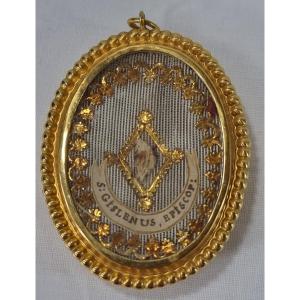
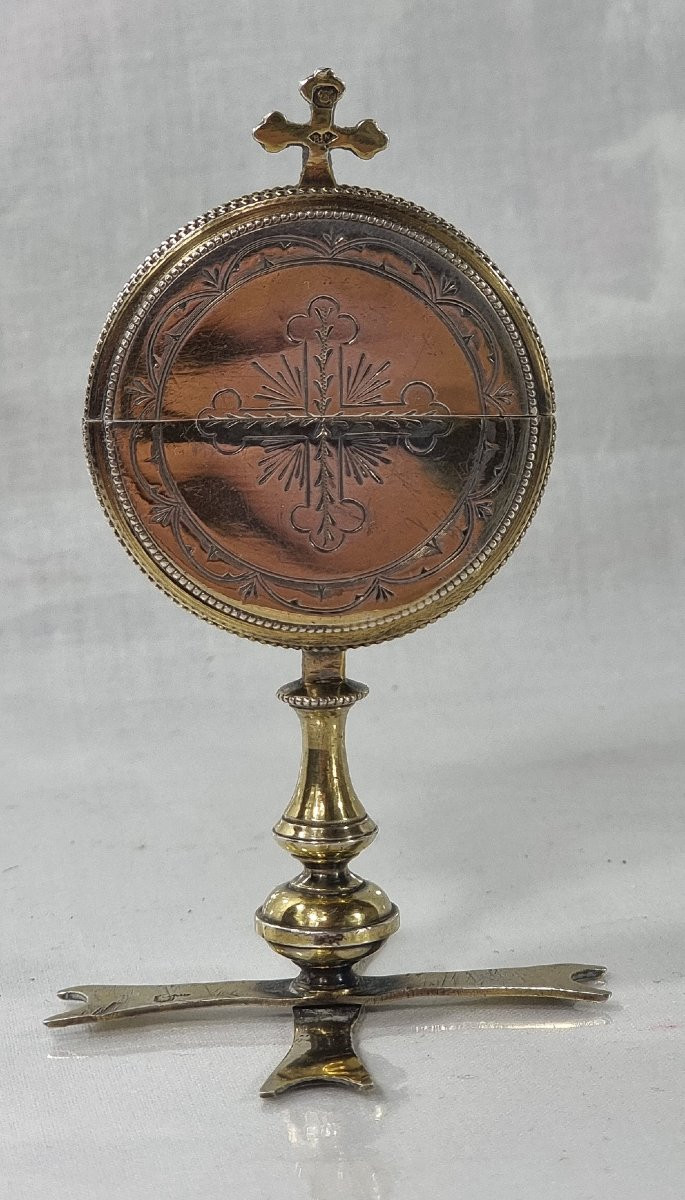


Antique French Monstrance, Gold-plated Silver, 1899, Bizolier & Nidriche
Artist: Bizolier & Nidriche
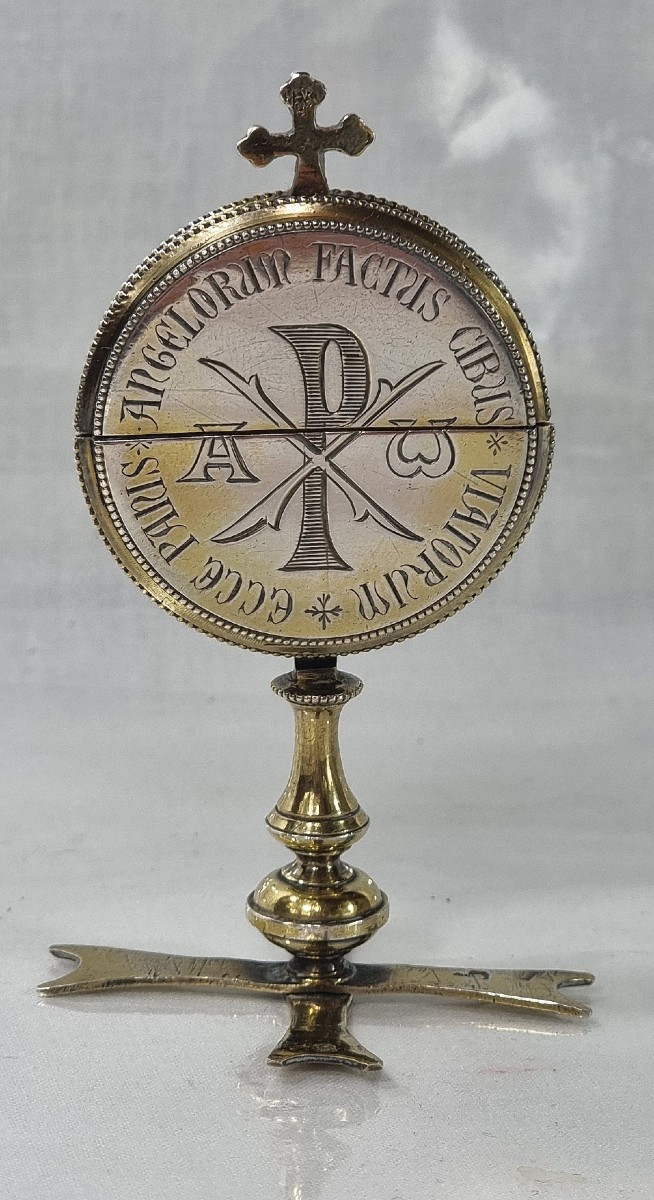
A beautiful late 19th-century monstrance, also known as a small Custodiale in Latin.
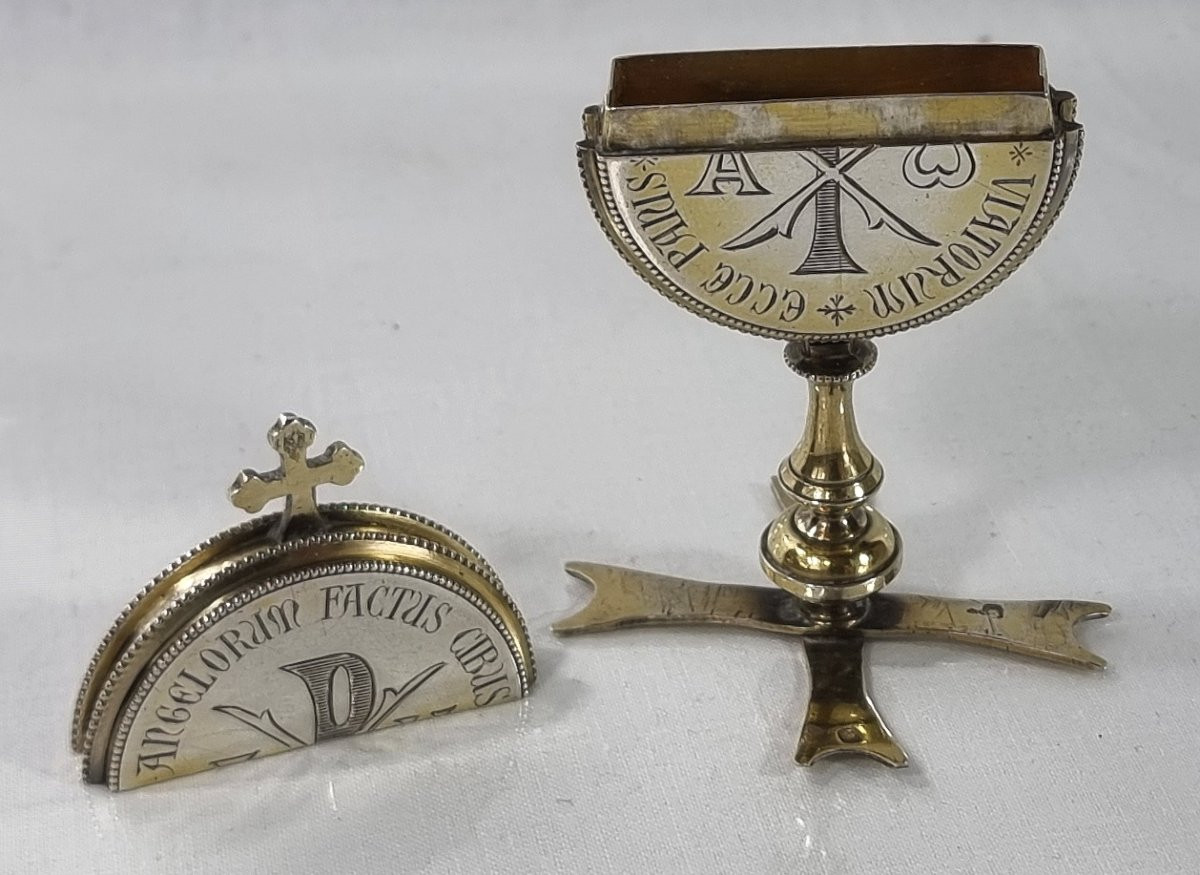
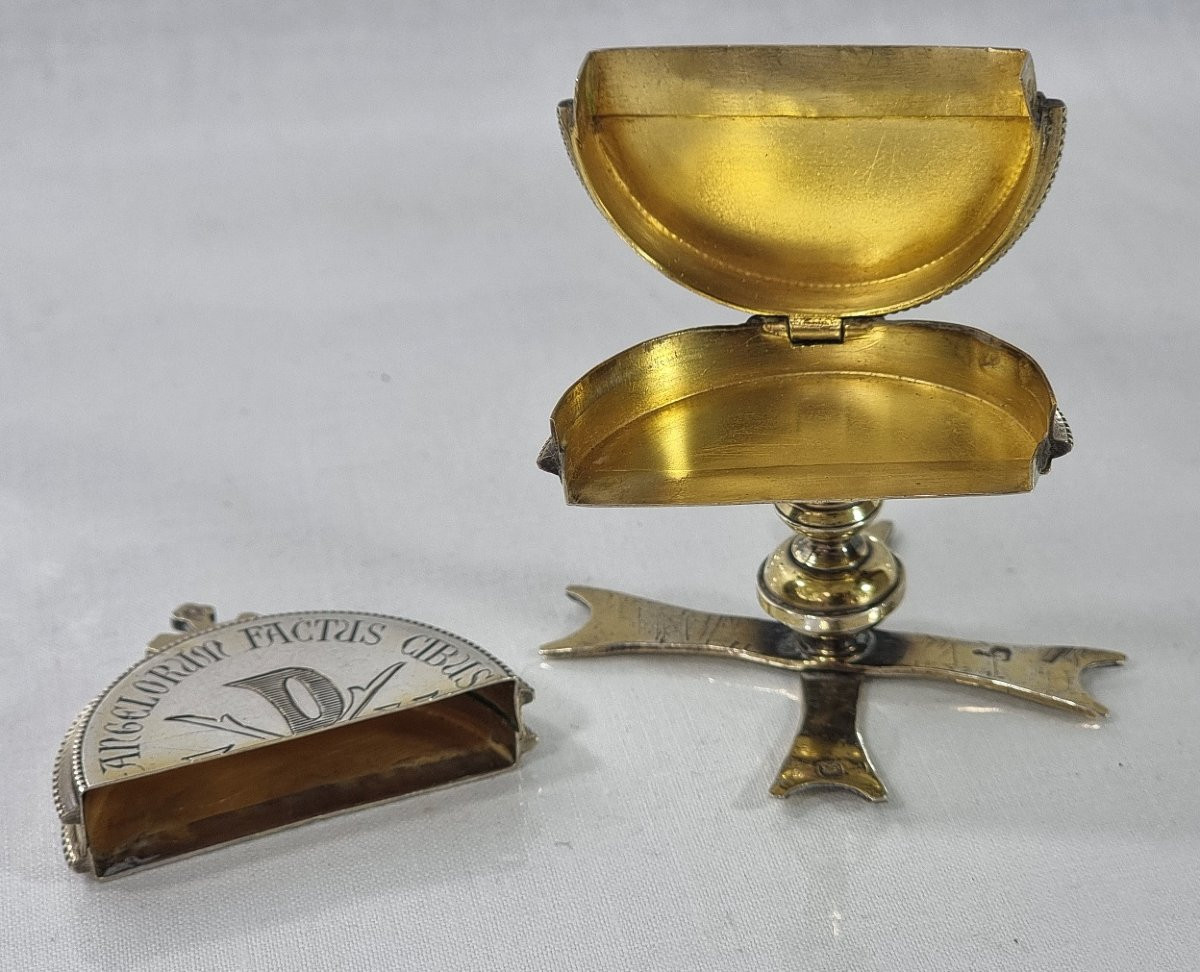
A special type of liturgical vessel in the shape of a small monstrance on a folding base.
It is used for the temporary storage or presentation of the consecrated host, particularly during visits to the sick or processions.
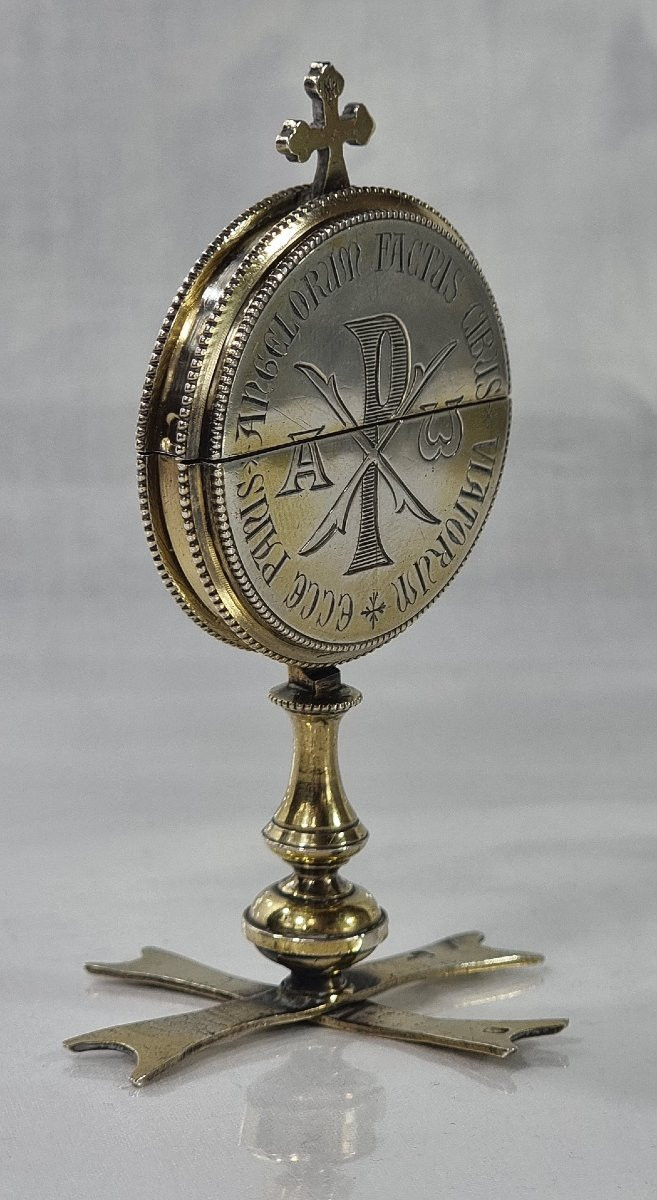
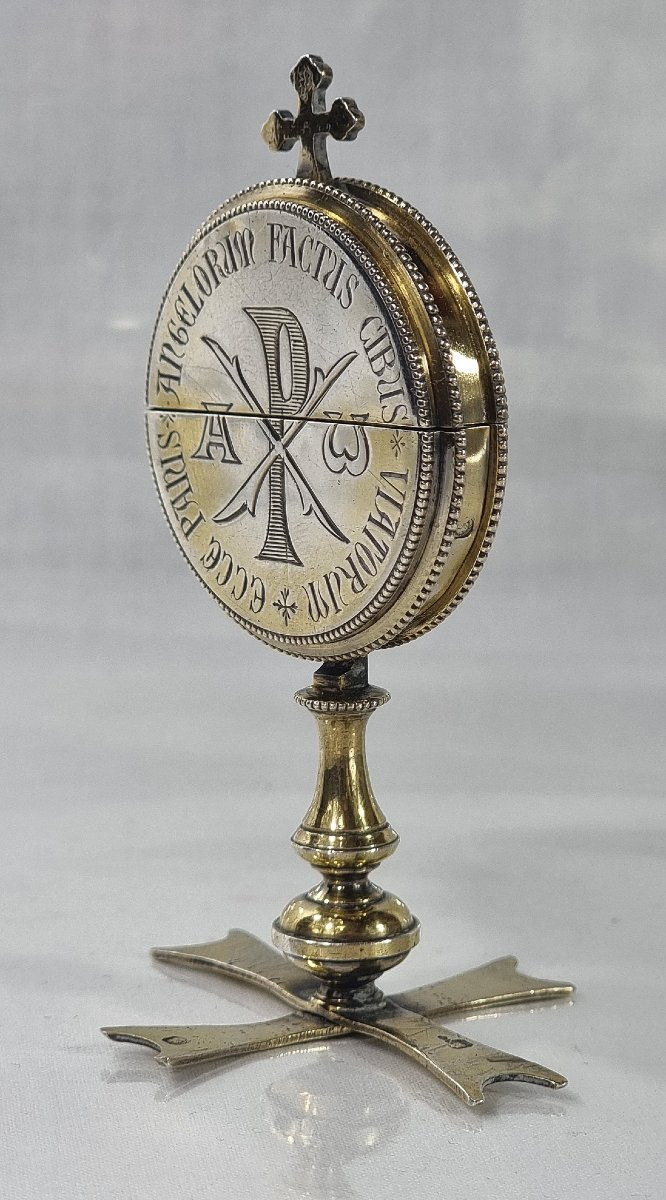
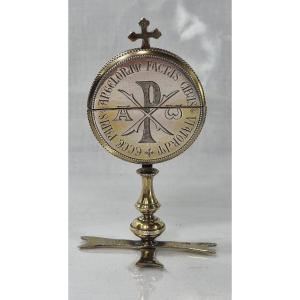
Signification of the obverse motif:
In the center: Chi-Rho. This symbol is formed from the Greek letters X (Chi) and P (Rho), the initials of Christ's name.
Outside the Chi-Rho: Alpha and Omega, representing God as beginning and end.
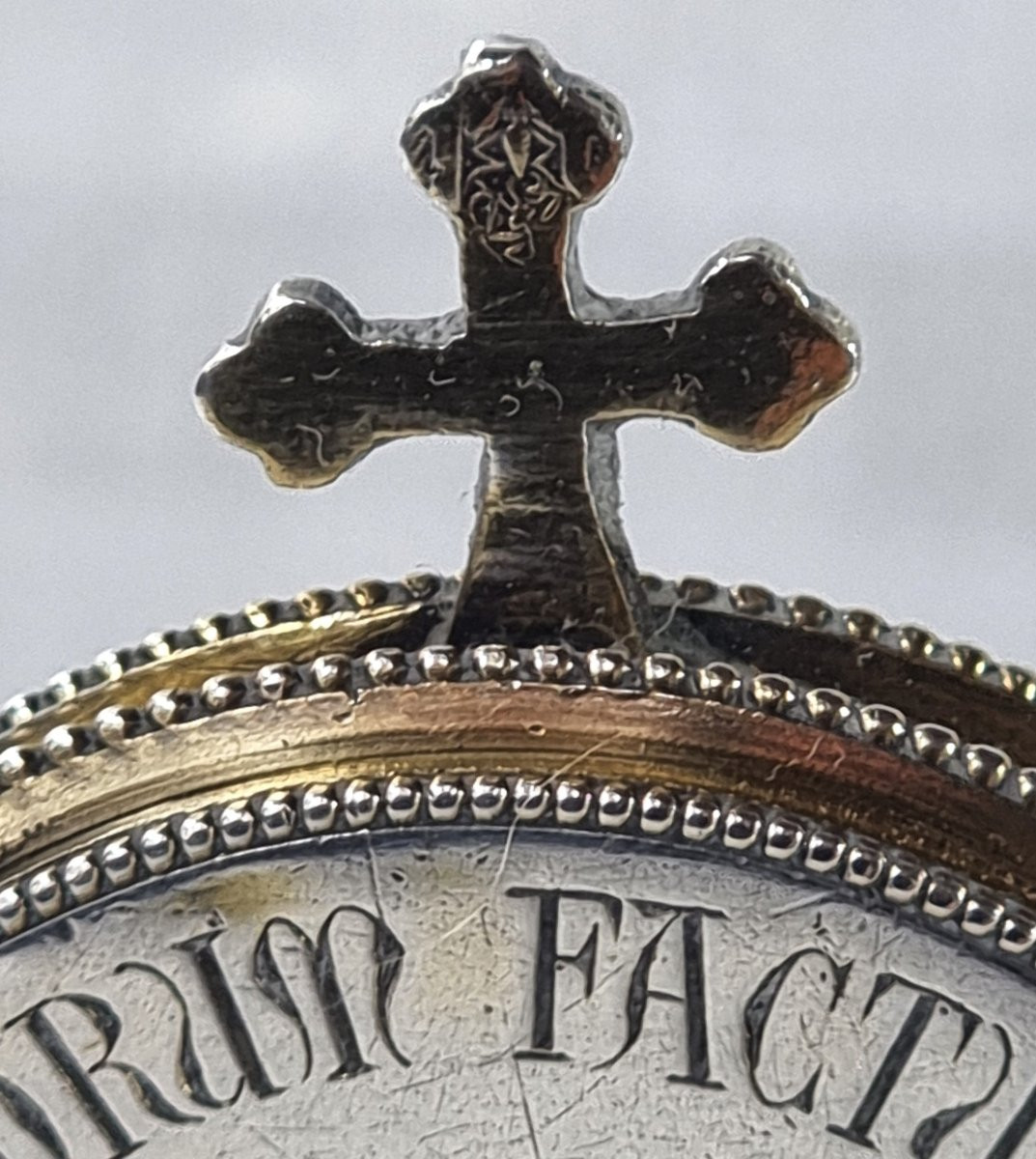
Inscription on the edge: Ecce Panis Angelorum, Factus Cibus Viatorum (Here is the Bread of Angels, become food for travelers). The words are taken from the hymn *Lauda sion* composed by Saint Thomas Aquinas in the 13th century for Corpus Christi.
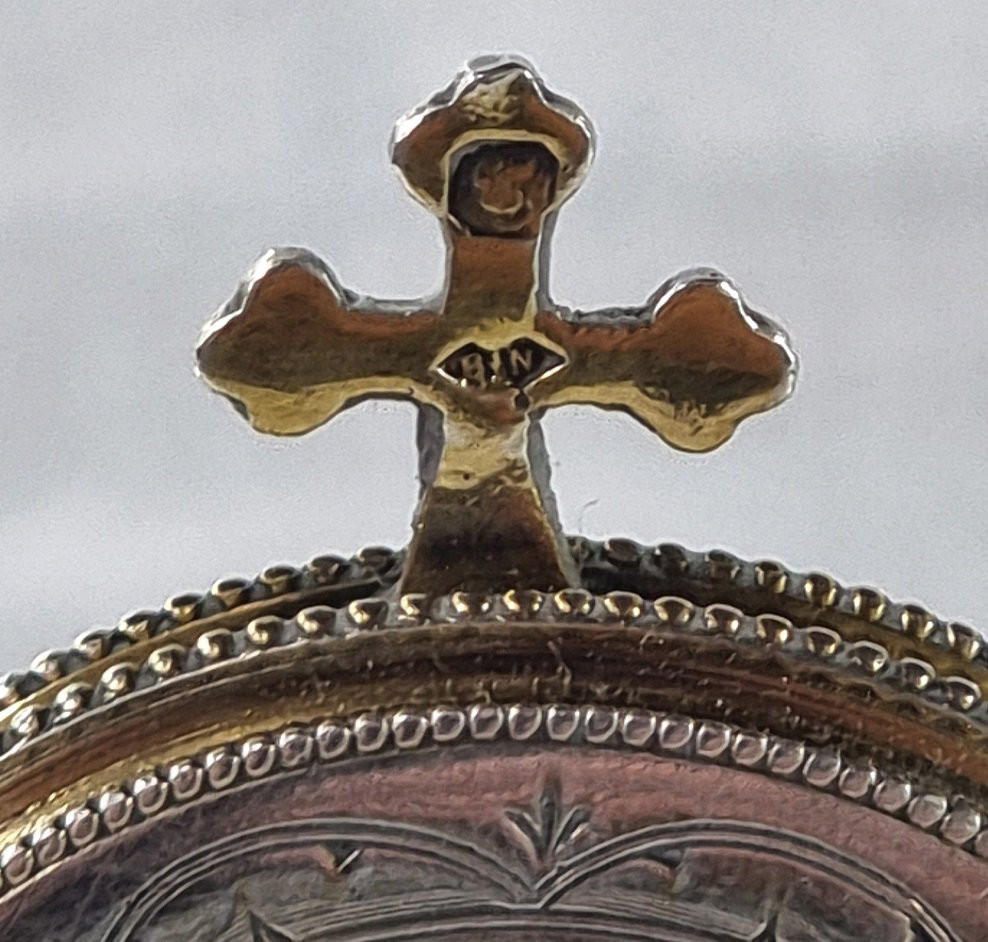
The object is entirely in gilded silver. The hallmark represents a B and an N, separated by a chalice or filter. The firm Bizolier & Nidriche existed very briefly and used this hallmark between 1899 and 1900. Markings from top to bottom:
Cross: Marked 3 times (Minerve 1st degree + maker's mark, an insect mark on the other side)
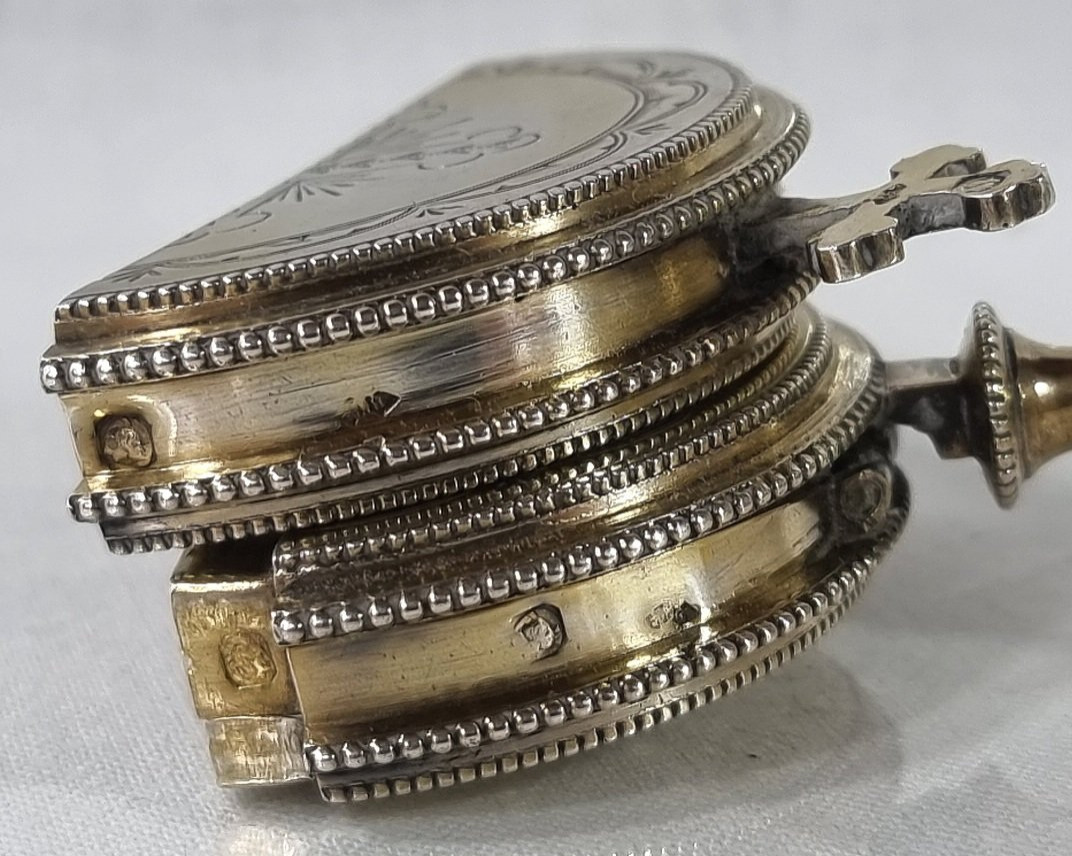
Top piece: Marked 2 times on the side (Minerve 1st degree + maker's mark)
Folding bottom piece: Marked 2 times on the side (Minerva 1st degree + maker's mark)
Fixed lower part: Marked 1 time (Minerva 1st degree)
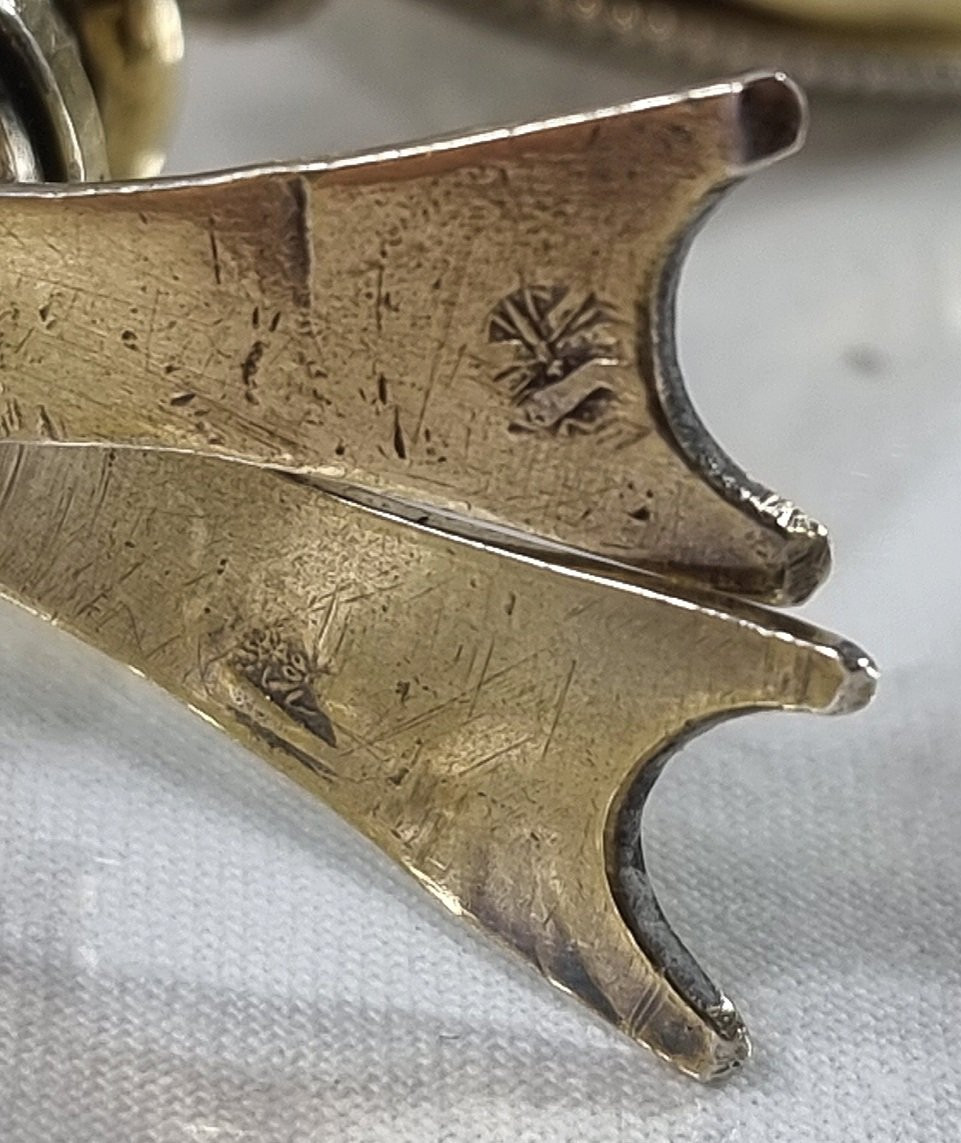
Moving feet: One is marked three times (Minerva 1st degree + maker's mark on one side,
an insect mark on the other side). Second foot: Minerve on one side and an insect mark on the other.
Dimensions:
Height: 10 cm
Width: 5 cm
In very good condition, the natural gold plating shows traces of use.
For any questions, please do not hesitate to contact me.
Cordially, Ben
A special type of liturgical vessel in the shape of a small monstrance on a folding base.
It is used for the temporary storage or presentation of the consecrated host, particularly during visits to the sick or processions.
Signification of the obverse motif:
In the center: Chi-Rho. This symbol is formed from the Greek letters X (Chi) and P (Rho), the initials of Christ's name.
Outside the Chi-Rho: Alpha and Omega, representing God as beginning and end.
Inscription on the edge: Ecce Panis Angelorum, Factus Cibus Viatorum (Here is the Bread of Angels, become food for travelers). The words are taken from the hymn *Lauda sion* composed by Saint Thomas Aquinas in the 13th century for Corpus Christi.
The object is entirely in gilded silver. The hallmark represents a B and an N, separated by a chalice or filter. The firm Bizolier & Nidriche existed very briefly and used this hallmark between 1899 and 1900. Markings from top to bottom:
Cross: Marked 3 times (Minerve 1st degree + maker's mark, an insect mark on the other side)
Top piece: Marked 2 times on the side (Minerve 1st degree + maker's mark)
Folding bottom piece: Marked 2 times on the side (Minerva 1st degree + maker's mark)
Fixed lower part: Marked 1 time (Minerva 1st degree)
Moving feet: One is marked three times (Minerva 1st degree + maker's mark on one side,
an insect mark on the other side). Second foot: Minerve on one side and an insect mark on the other.
Dimensions:
Height: 10 cm
Width: 5 cm
In very good condition, the natural gold plating shows traces of use.
For any questions, please do not hesitate to contact me.
Cordially, Ben
1 250 €
Period: 19th century
Style: Other Style
Condition: Excellent condition
Material: Sterling silver
Width: 5
Height: 10
Reference (ID): 1747656
Availability: In stock
Print