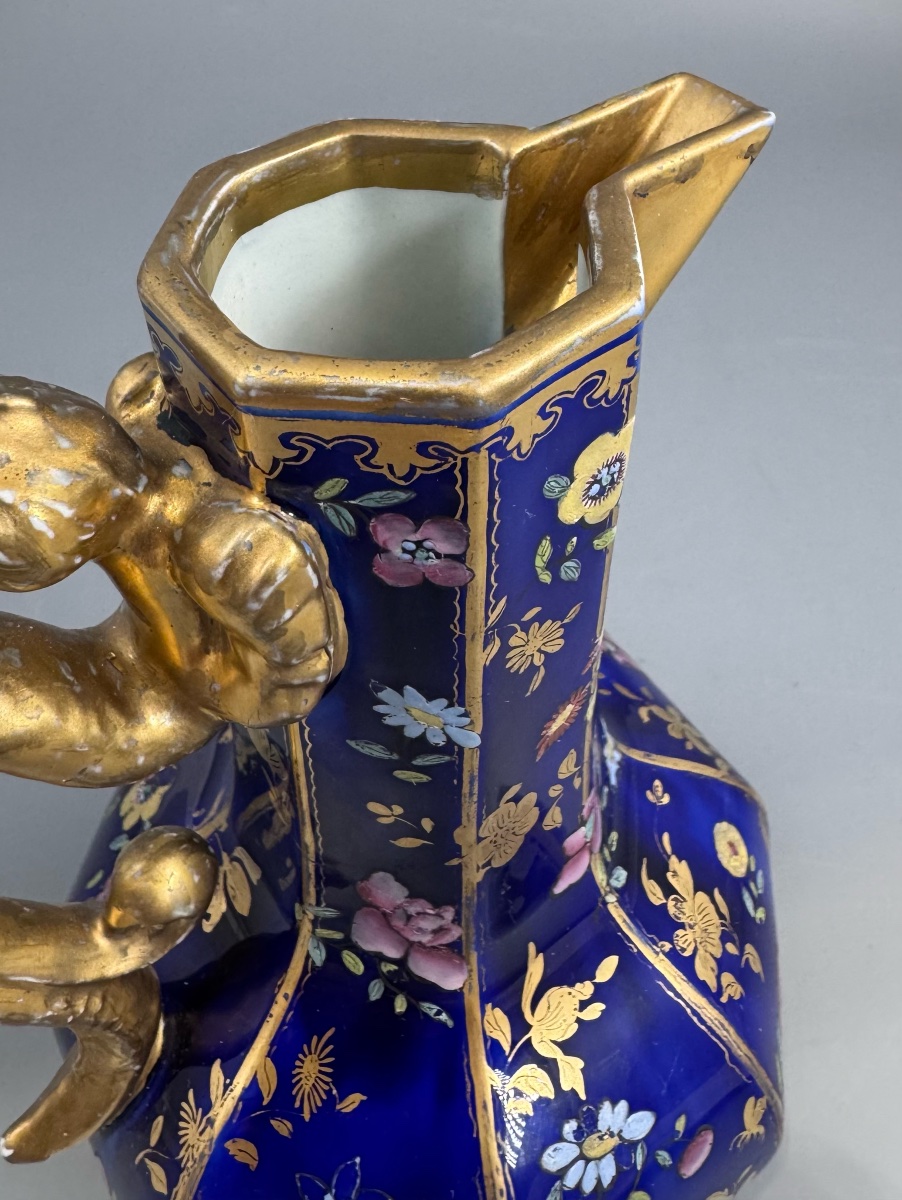
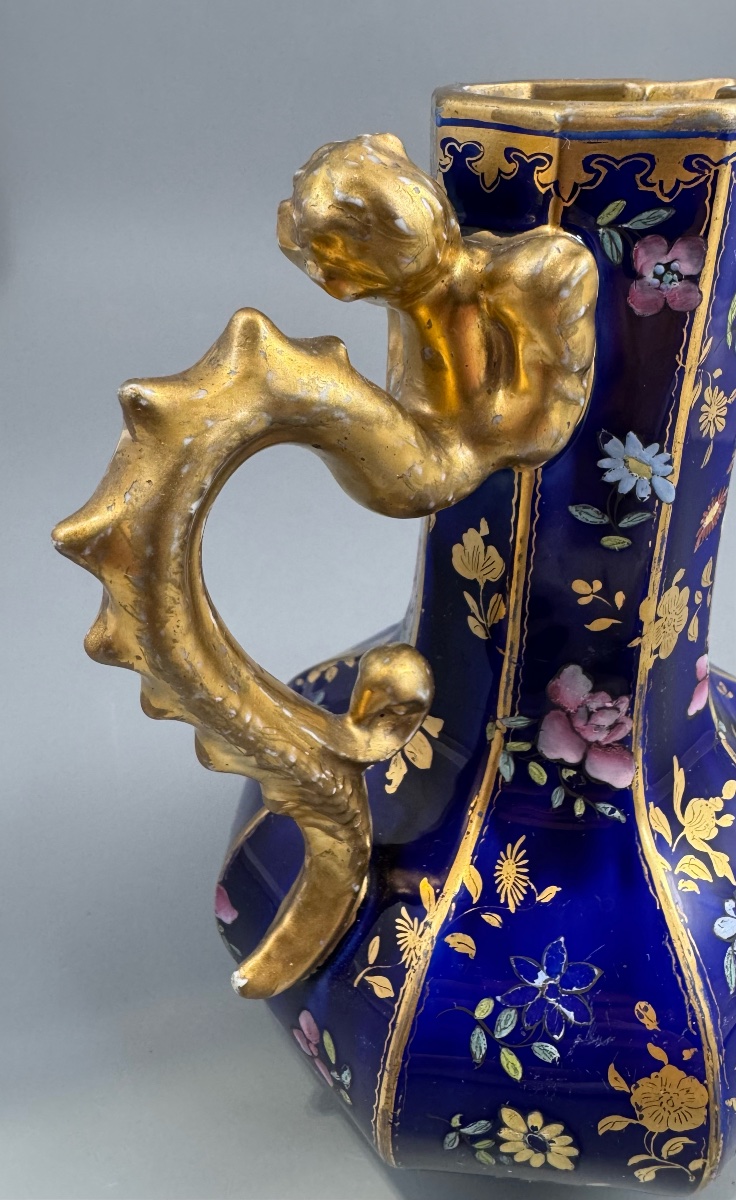
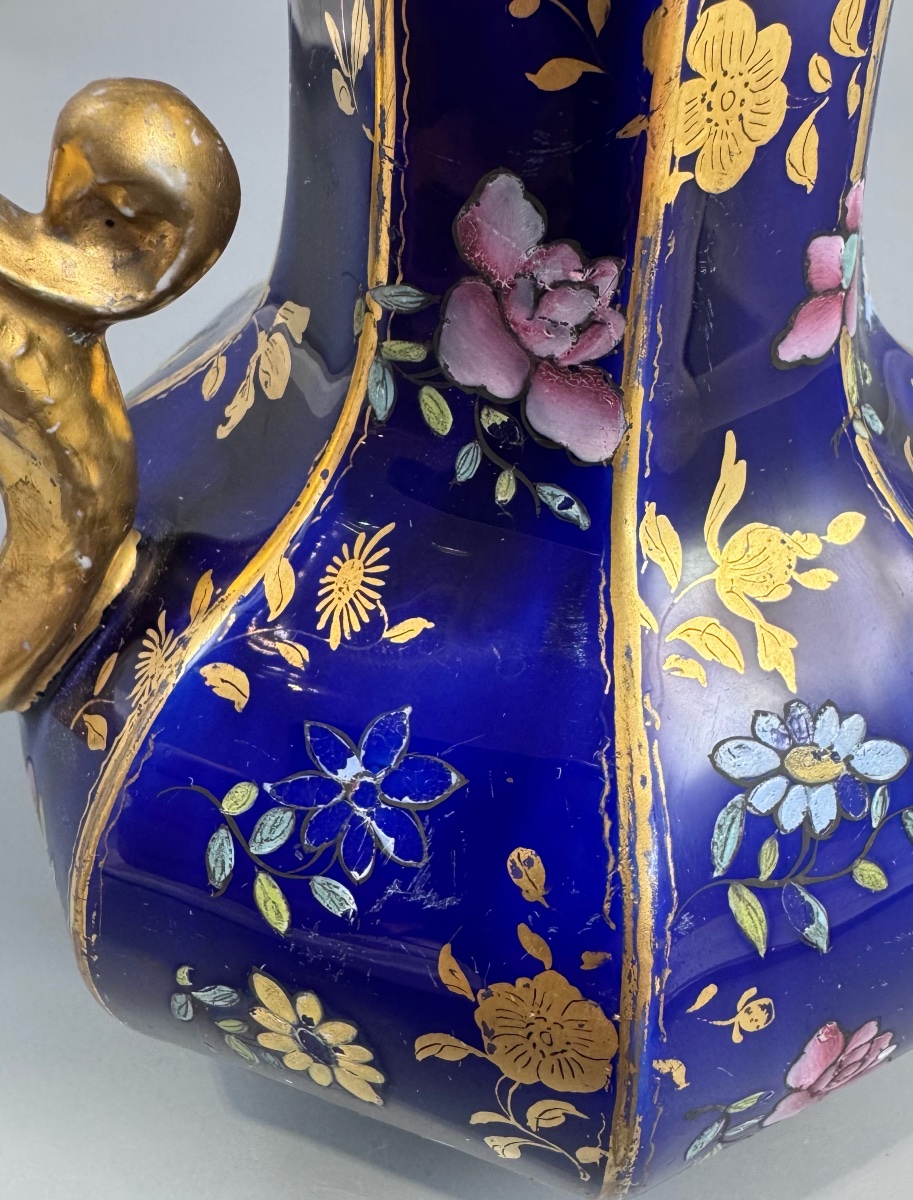
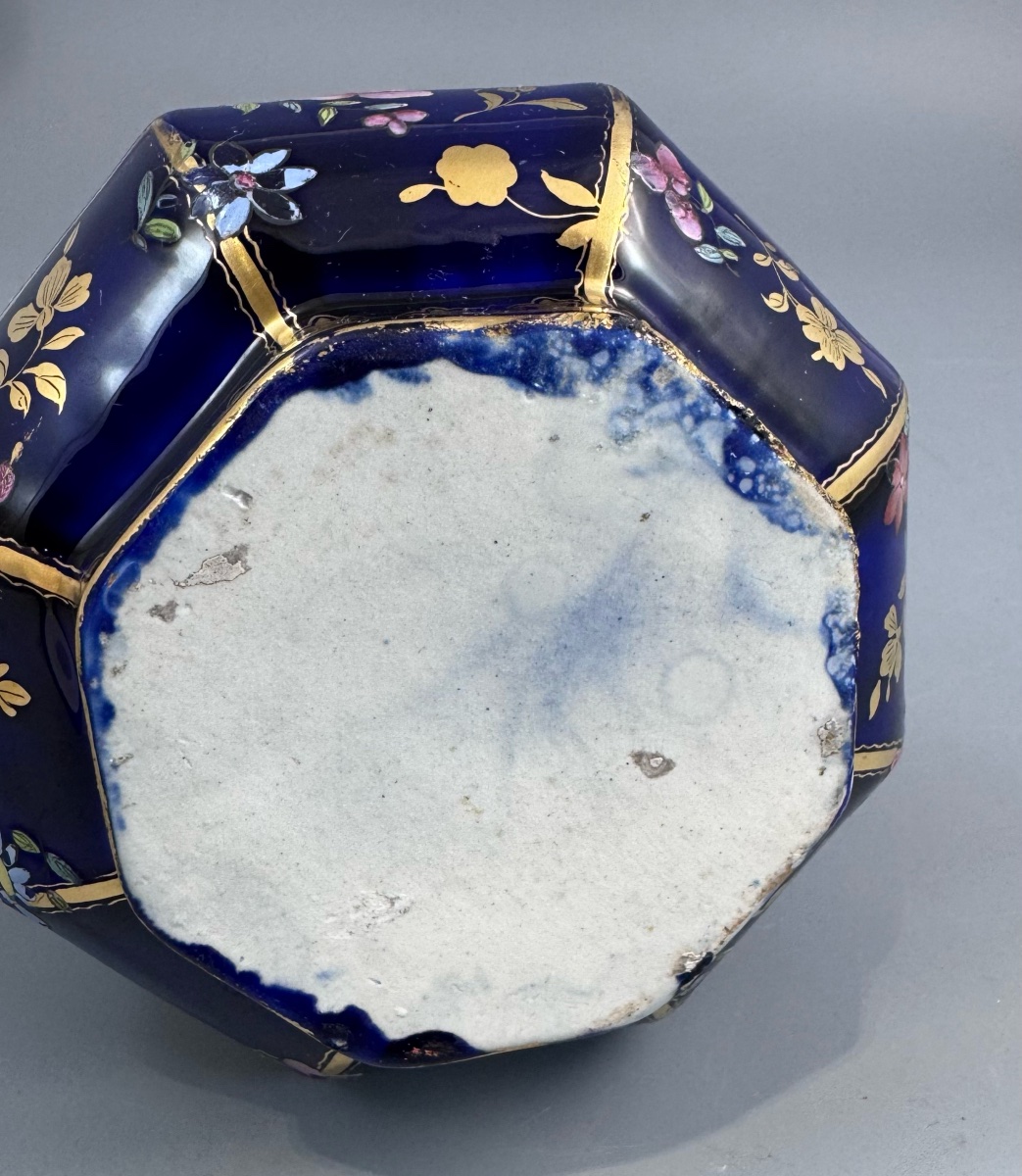


A Mason's Patent Ironstone China Ewer Of Octagonal Baluster Form, England, Staffordshire
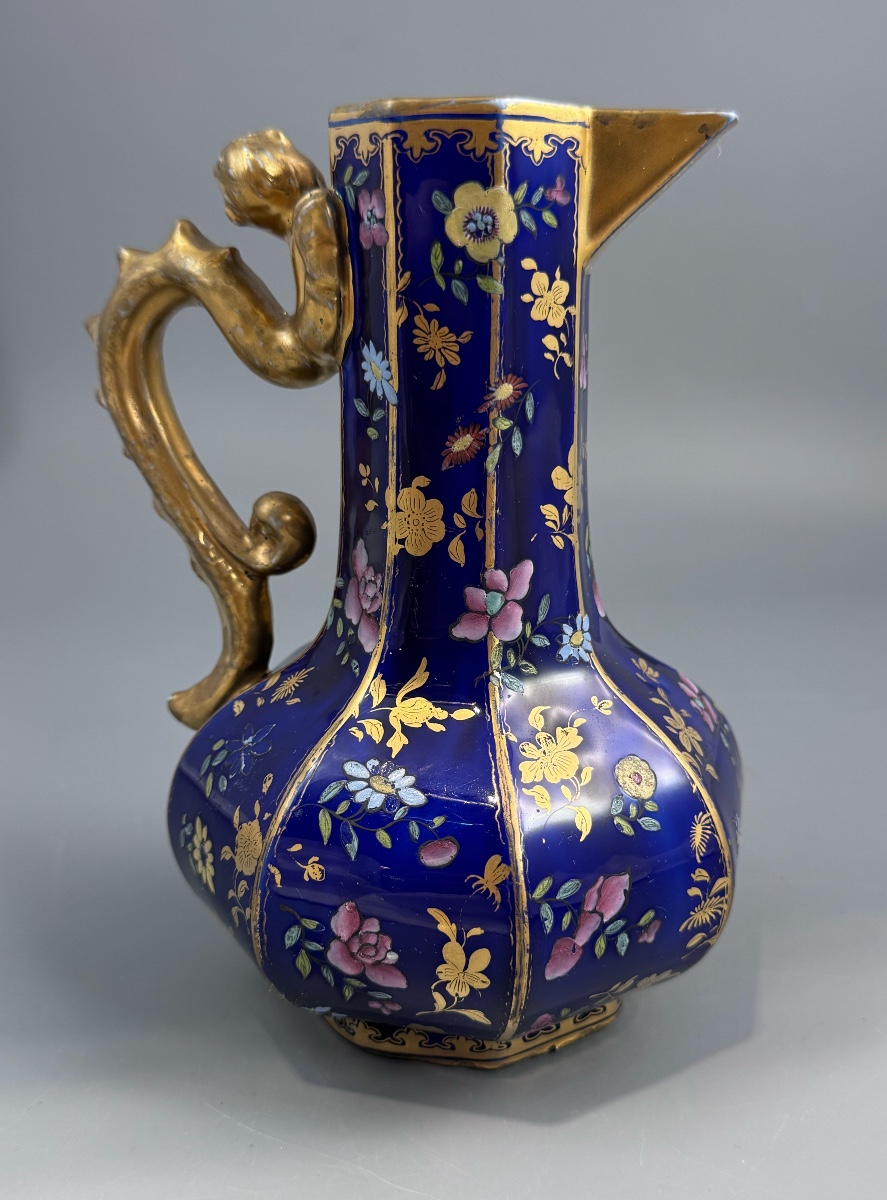
A Mason's Patent Ironstone China ewer of octagonal baluster form, England, Staffordshire, second quarter of the 19th century, c. 1830–1850.
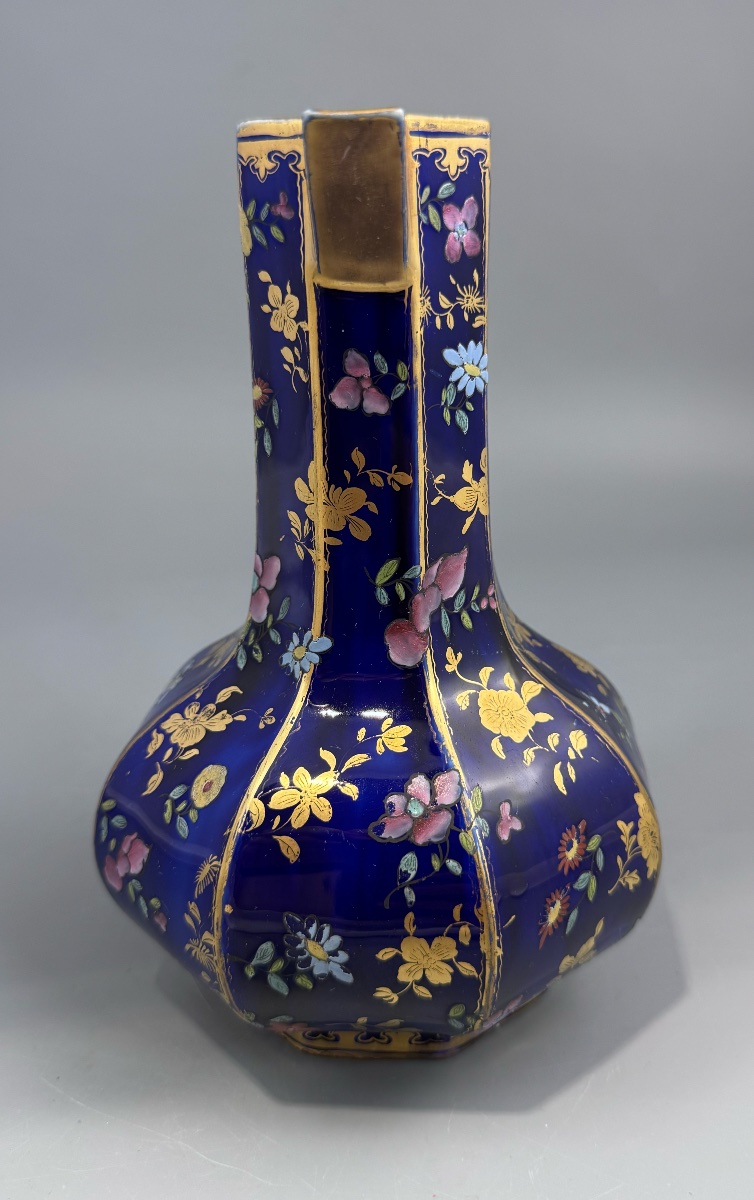
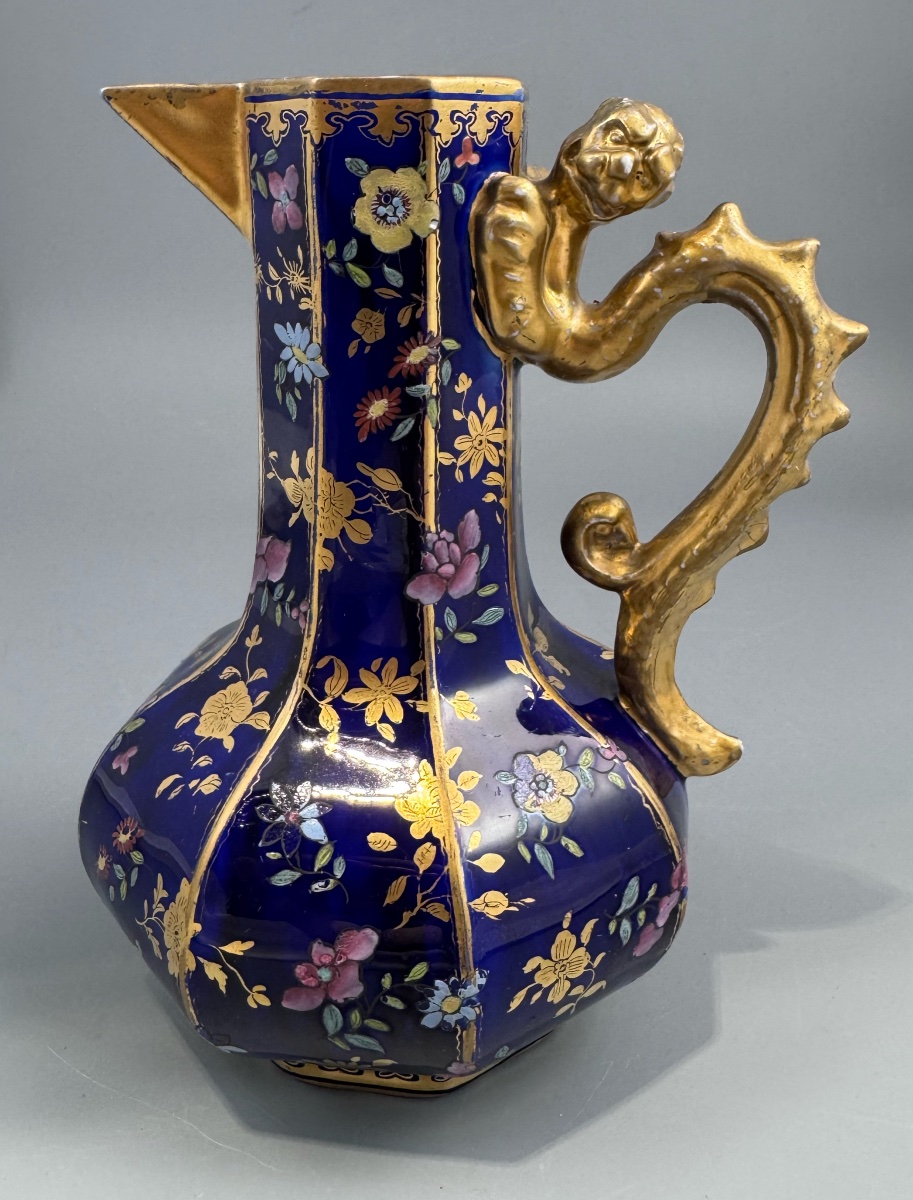
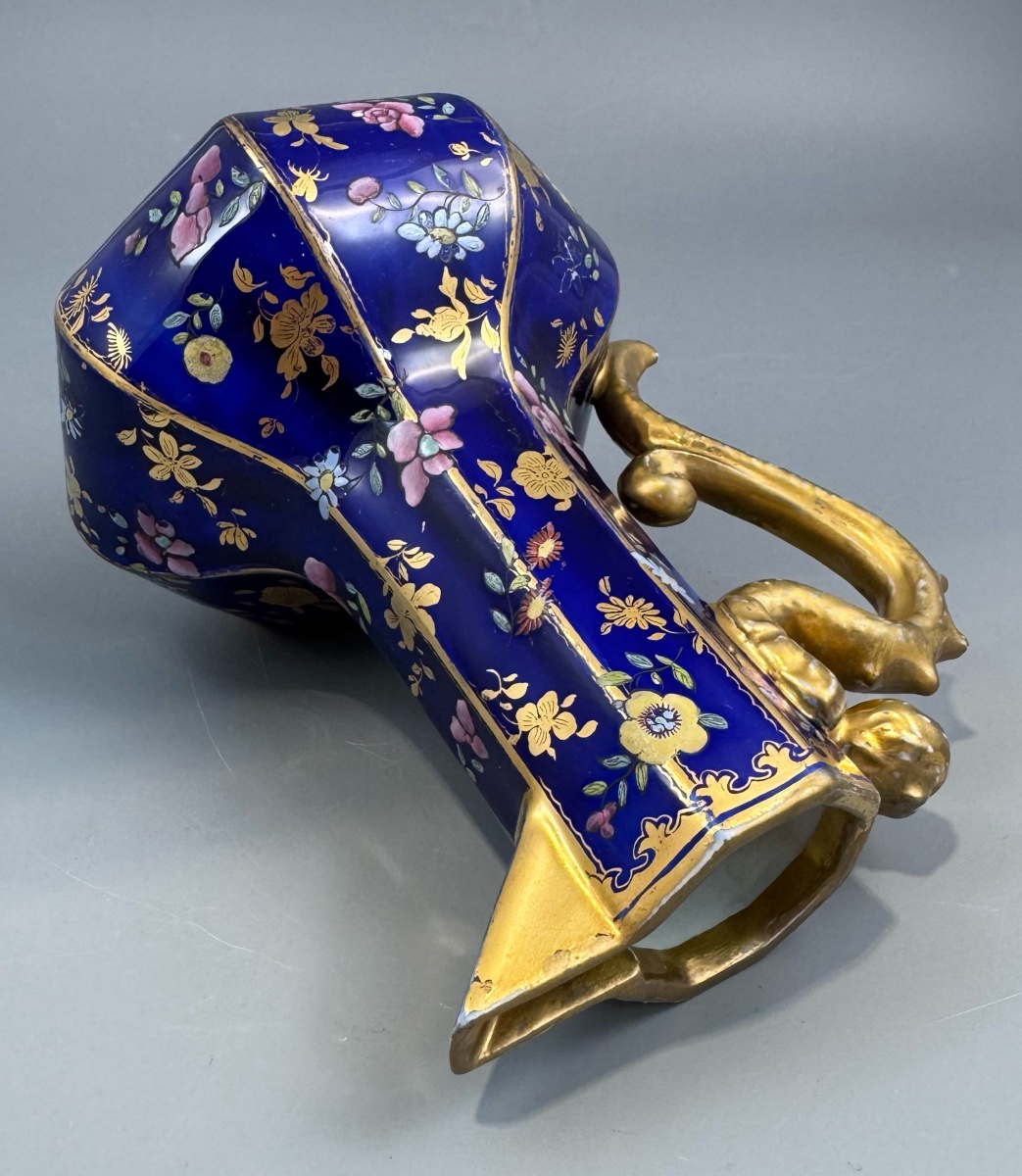
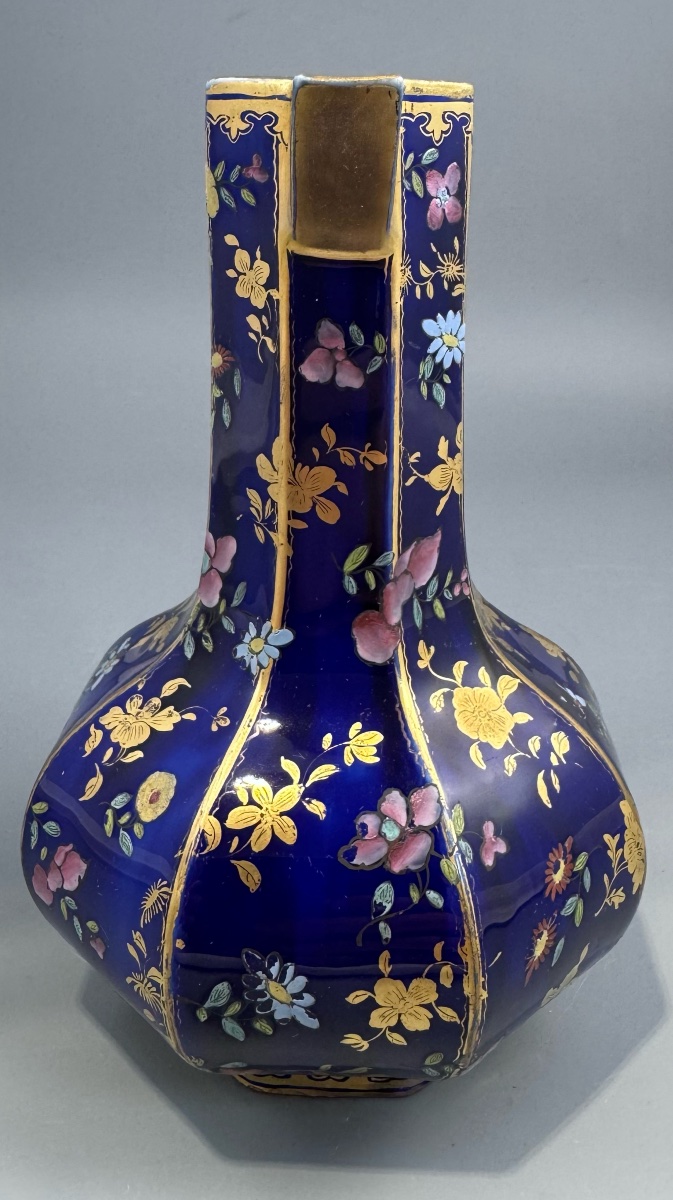
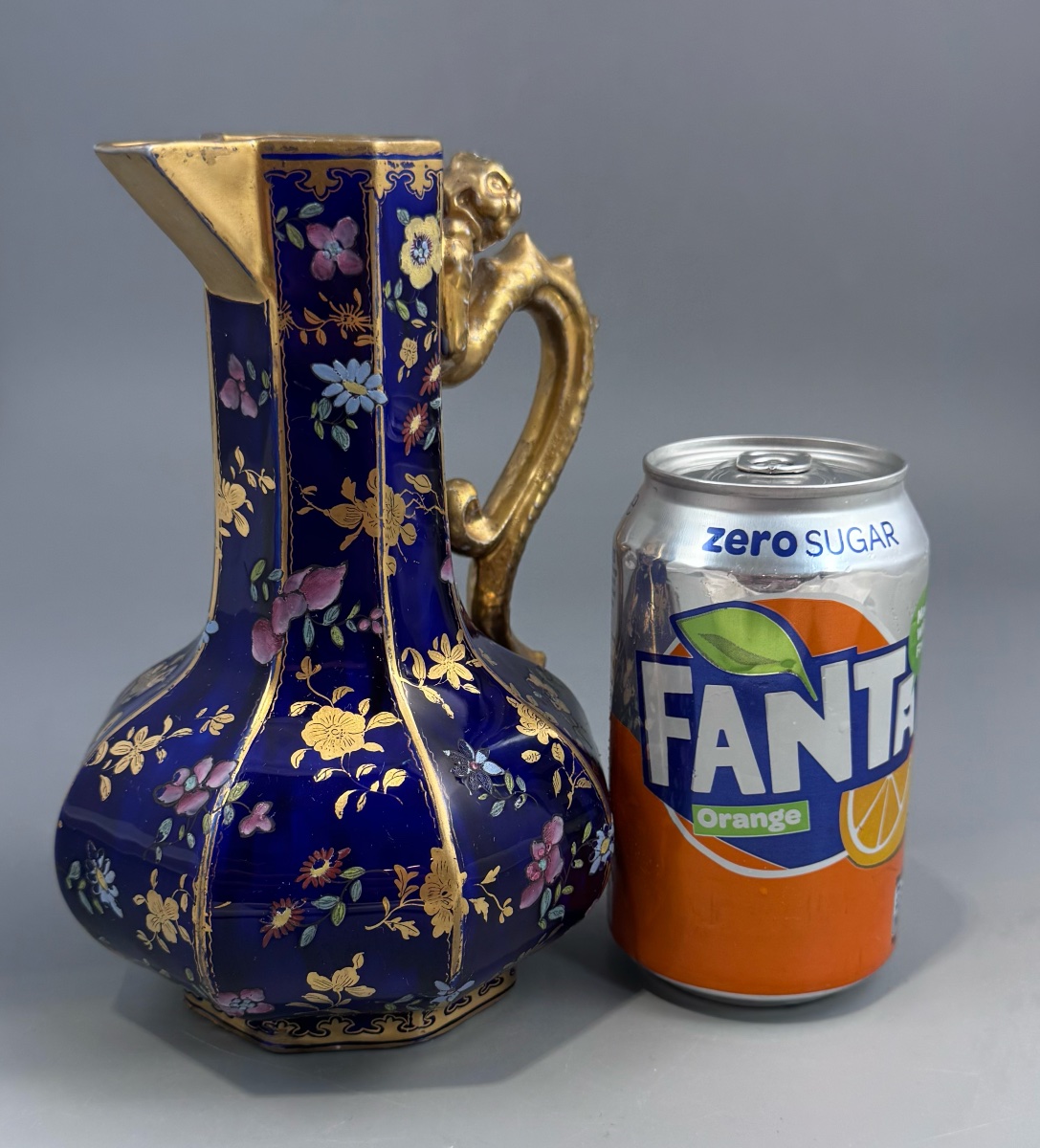
A dense, opaque ironstone body, the hard, semi-vitreous earthenware patented by Charles James Mason in 1813, potted as a faceted bottle with bulbous octagonal lower body, tall slender neck and trefoil-spouted rim, surmounting a stepped rectangular foot. The entire surface is covered in a deep cobalt blue ground, the panels divided by broad gilt vertical borders and bounded top and bottom by gilt foliate strapwork friezes in the Gothic taste.
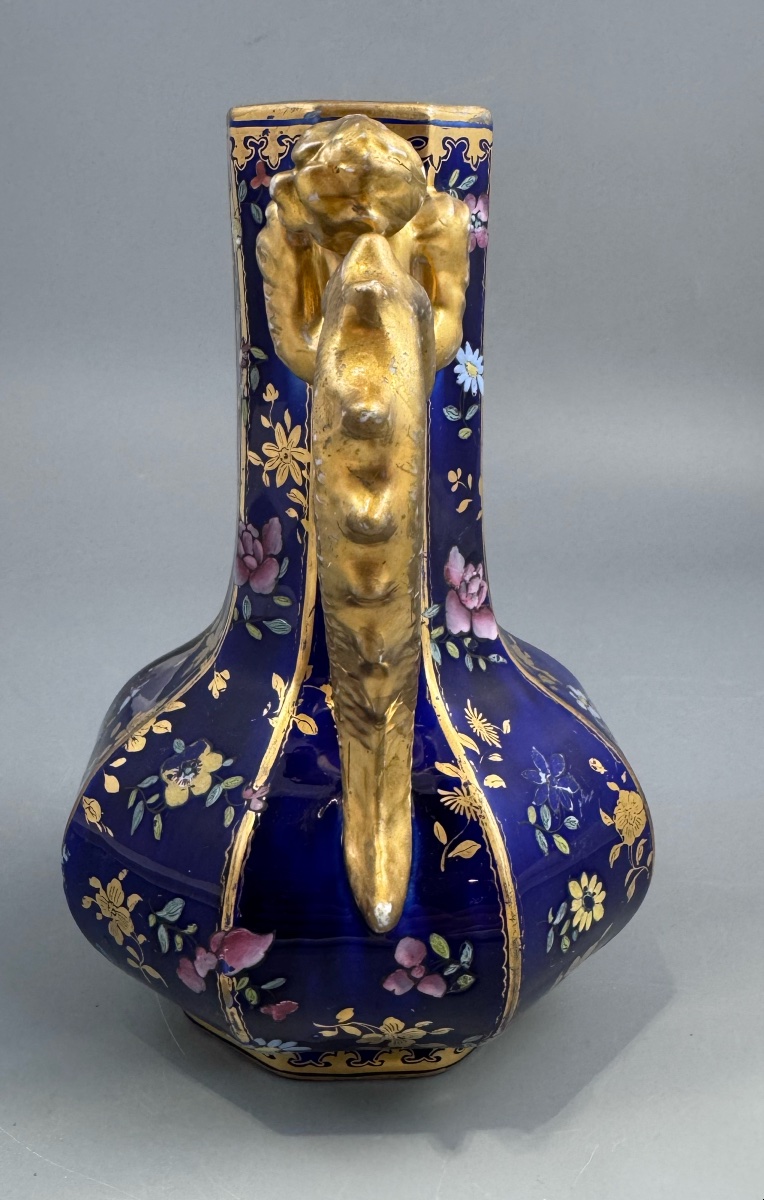
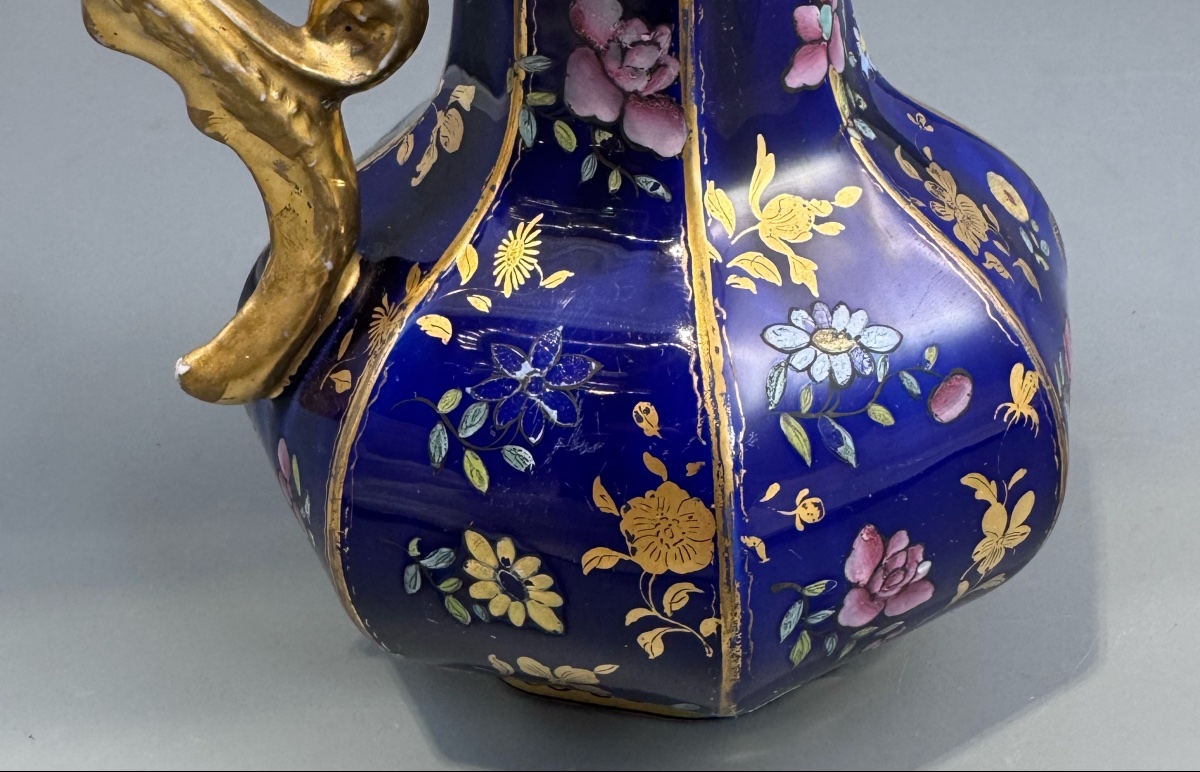
The decoration is in the Chinoiserie manner, drawing directly on late Kangxi and Qianlong Chinese export famille rose prototypes, with each facet scattered with flowering sprays of peony, chrysanthemum, aster and prunus. The painting is executed in polychrome enamels over the cobalt ground in pink, yellow, iron red, pale blue, green and white, the larger peony blossoms raised in thickly applied pâte-sur-pâte slip and picked out in shaded rose enamel, some sprays drawn entirely in raised gilding, the characteristic richly layered Mason's chinoiserie palette of the period.
The handle is modeled in the form of a grotesque winged chimera or dragon, seated upright against the neck with its tail forming the scrolled spined grip, finished overall in burnished matt and bright gilding. The trefoil spout and neck rim are similarly gilt. The underside is unglazed, revealing the characteristic dense white ironstone body.
Hallmark: unmarked, as is commonly the case for Mason's decorative wares of this quality and period; the body, palette, form and raised-enamel chinoiserie decoration are wholly consistent with Mason's Patent Ironstone China production.
573 g, 18 cm in height
Period: 19th century
Style: English Style
Condition: Excellent condition
Material: Porcelain
Height: 18
Reference (ID): 1746237
Availability: In stock