




Spanish Cavalry Sword Model 1728, Mark Of Carlos IV , Toledo, Troop
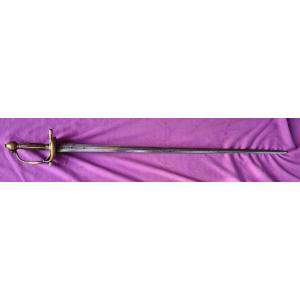
This Spanish cavalry sword is the so-called 1728 model,in reference to the Royal Order of July 12, 1728.
This Royal Order of July 12, 1728 merely regularized a model that had been widely adopted by the cavalry for a century, but with many variations. These 17th century models, which preceded the strictly regulatory model were called "espadas de conchas" (= "clamshell swords"). From the 1730-1740, the term "boca de caballo" (=horse's mouth) became the most used. reference to the two asymmetrical guard shells that evoke the horse's mouth.
These swords1728 regulation swords remained in cavalry service until 1803, when they were replaced by sabers.
Our example is a strictly regulation troop model with the monogram of King Carlos IV (1788-1808), manufactured at the Toledo manufacture in 1801.
Curiously, these regulation models are far less frequent on the market than officer's models, because as being state property, they most often ended their lives in the arsenals.
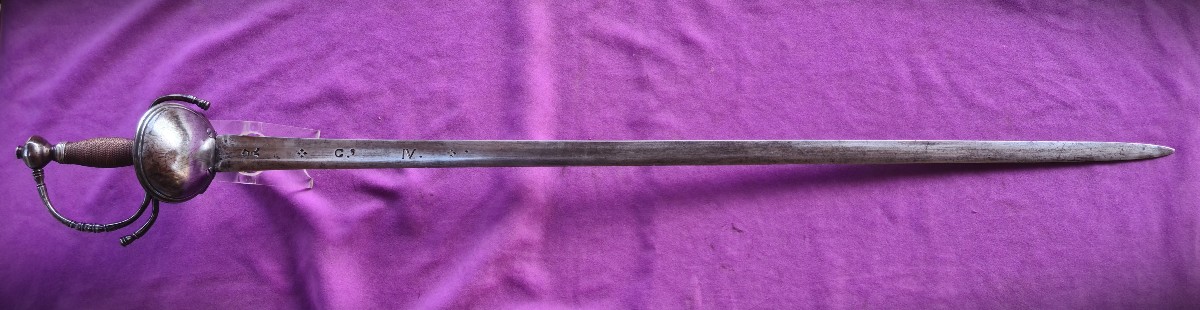
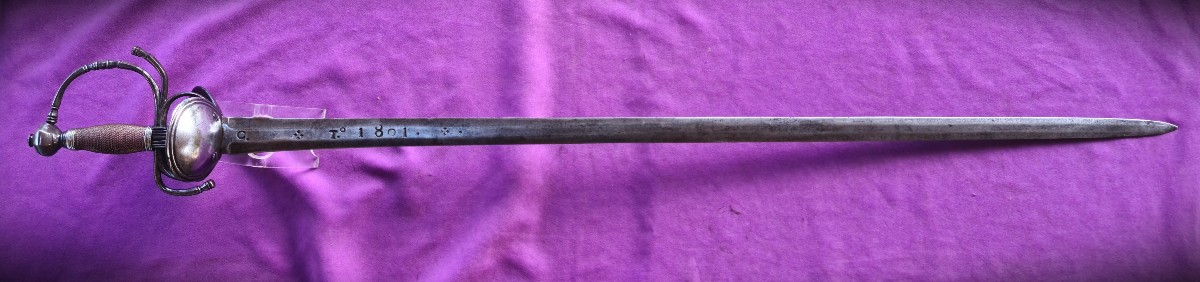
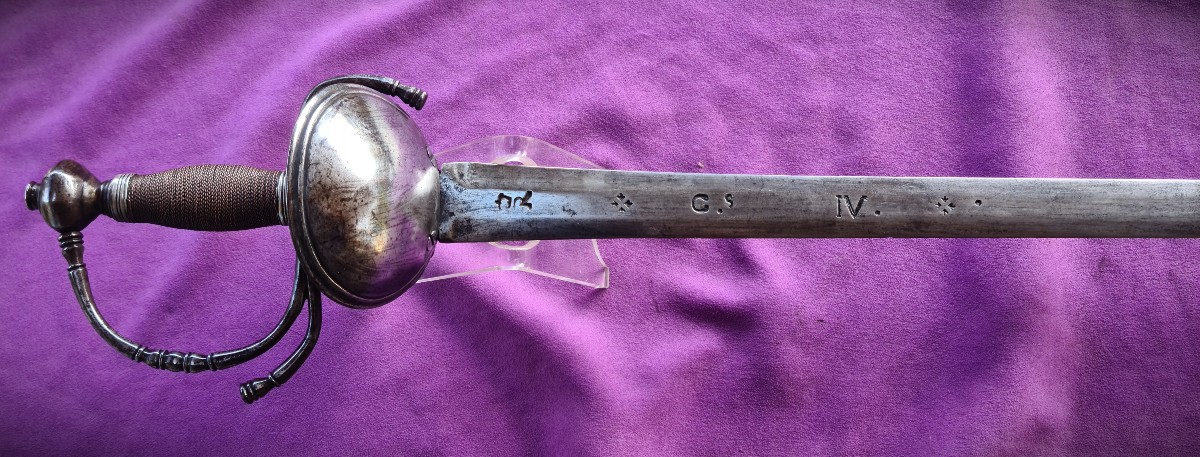
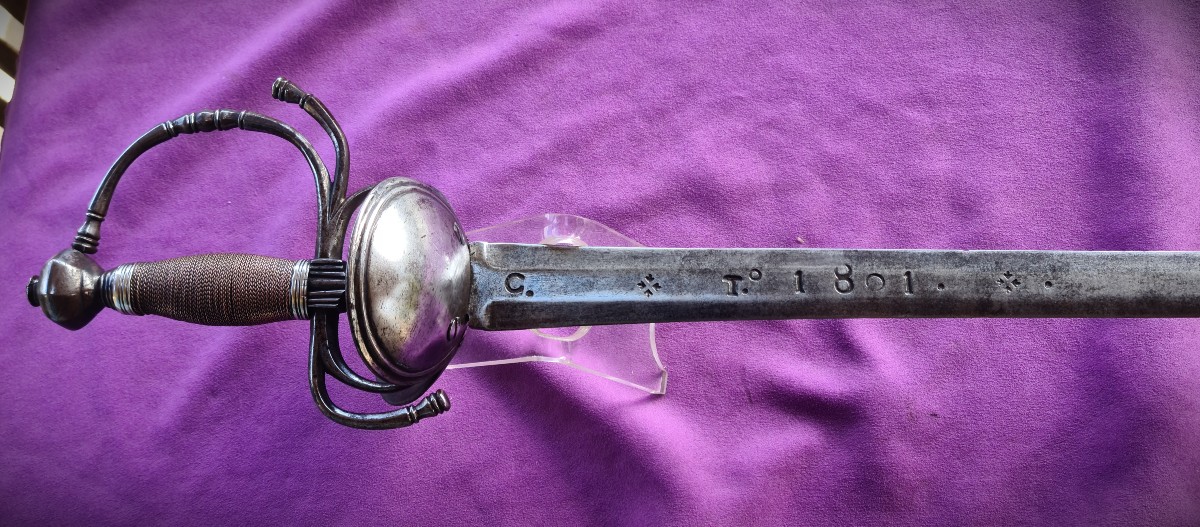
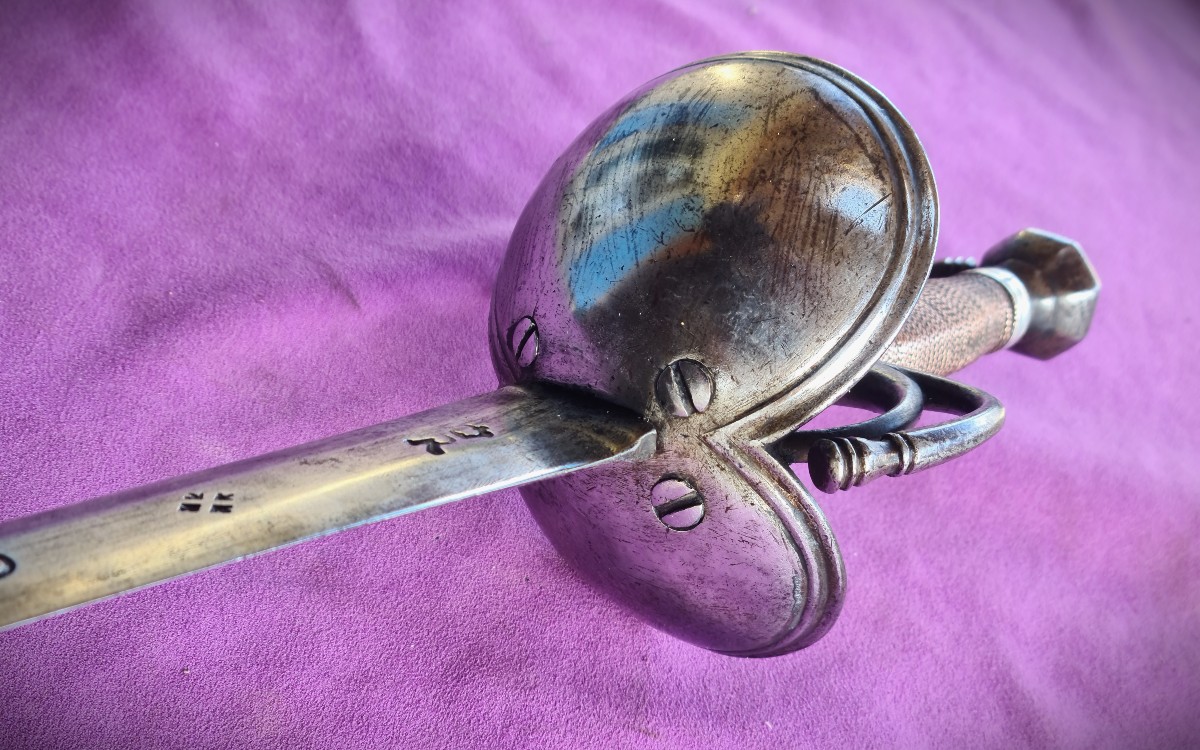
BLADE: after a very short ricasso, it takes on a 6-sided section to the tip. The regulation markings are present, in very good condition:
Outer face = C. - :- T.o 1801. - :- C for "caballeria"(cavalry), To for "Toledo"
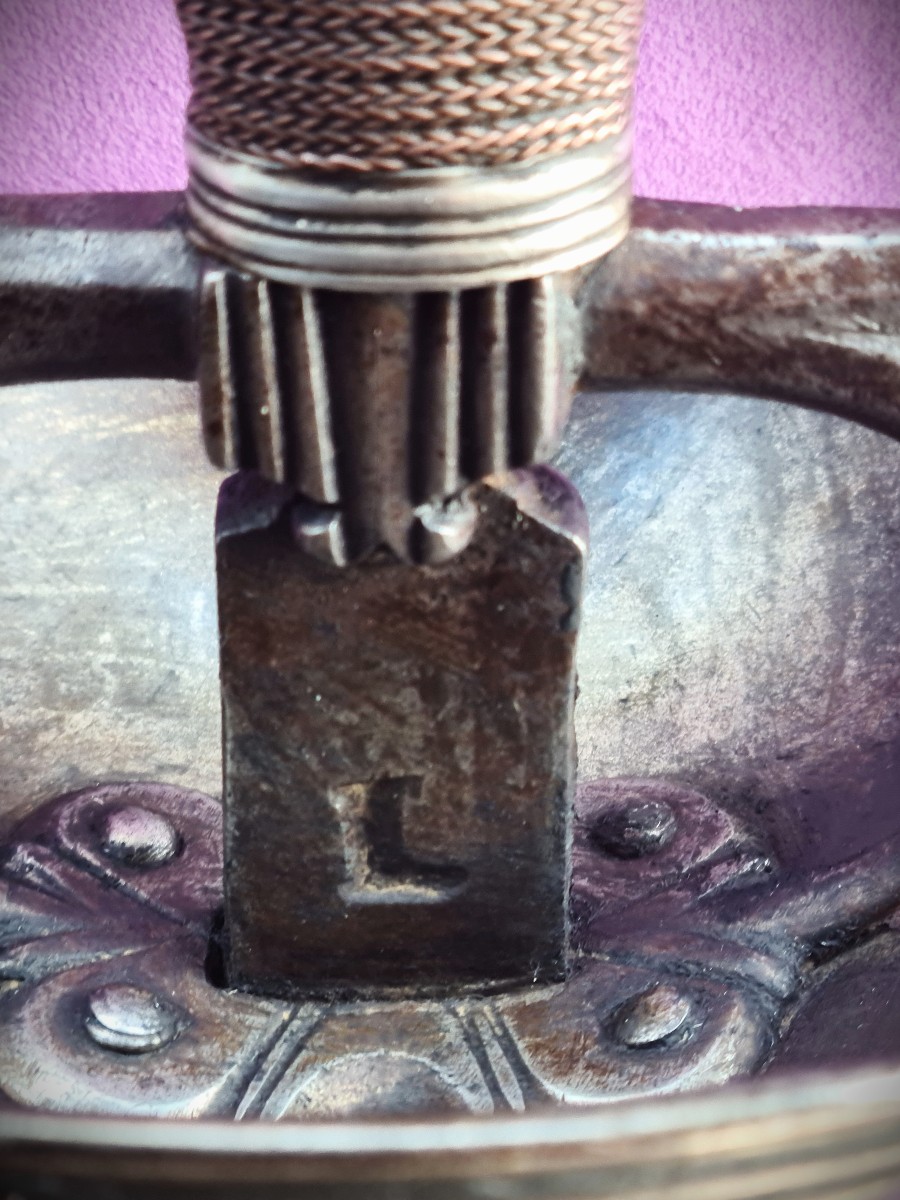
Inside = R crowned- :- Cs. IV. - :- . R crowned for "propiedad Real (property of the King) , Cs forCarlos. On the strong ricasso punch marlk = the "L", which some authors believe corresponds toto "listo" (ready, correct) in the sense of "ready for use"
Blade length = 95 cm, width at ricasso = 3.5 cm,thickness at ricasso = 7 mm
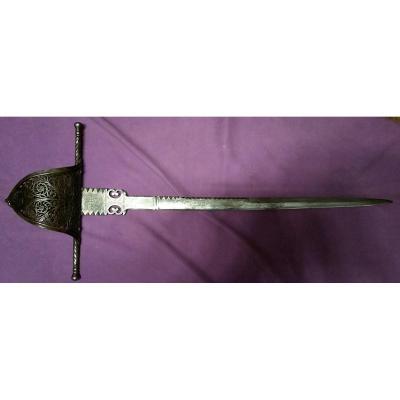
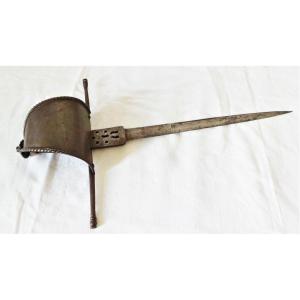
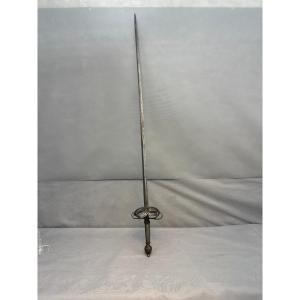
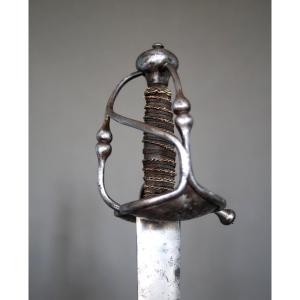
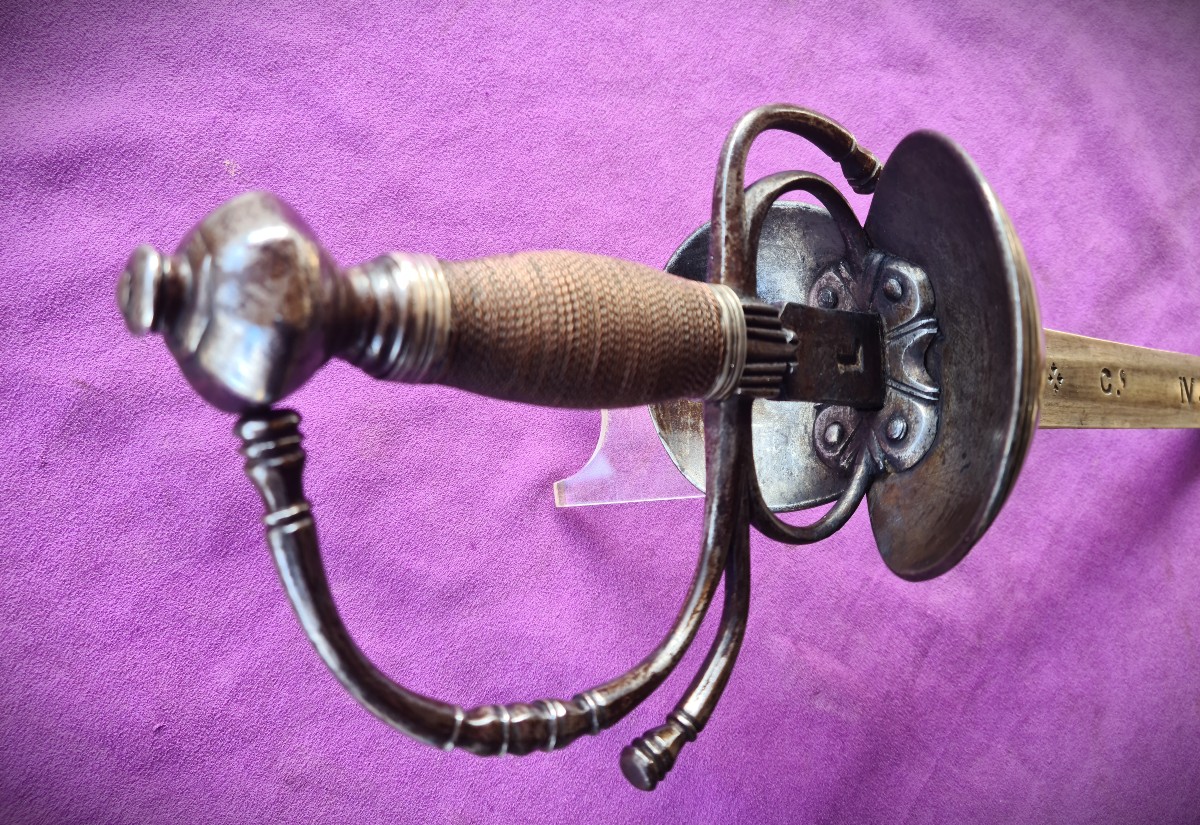
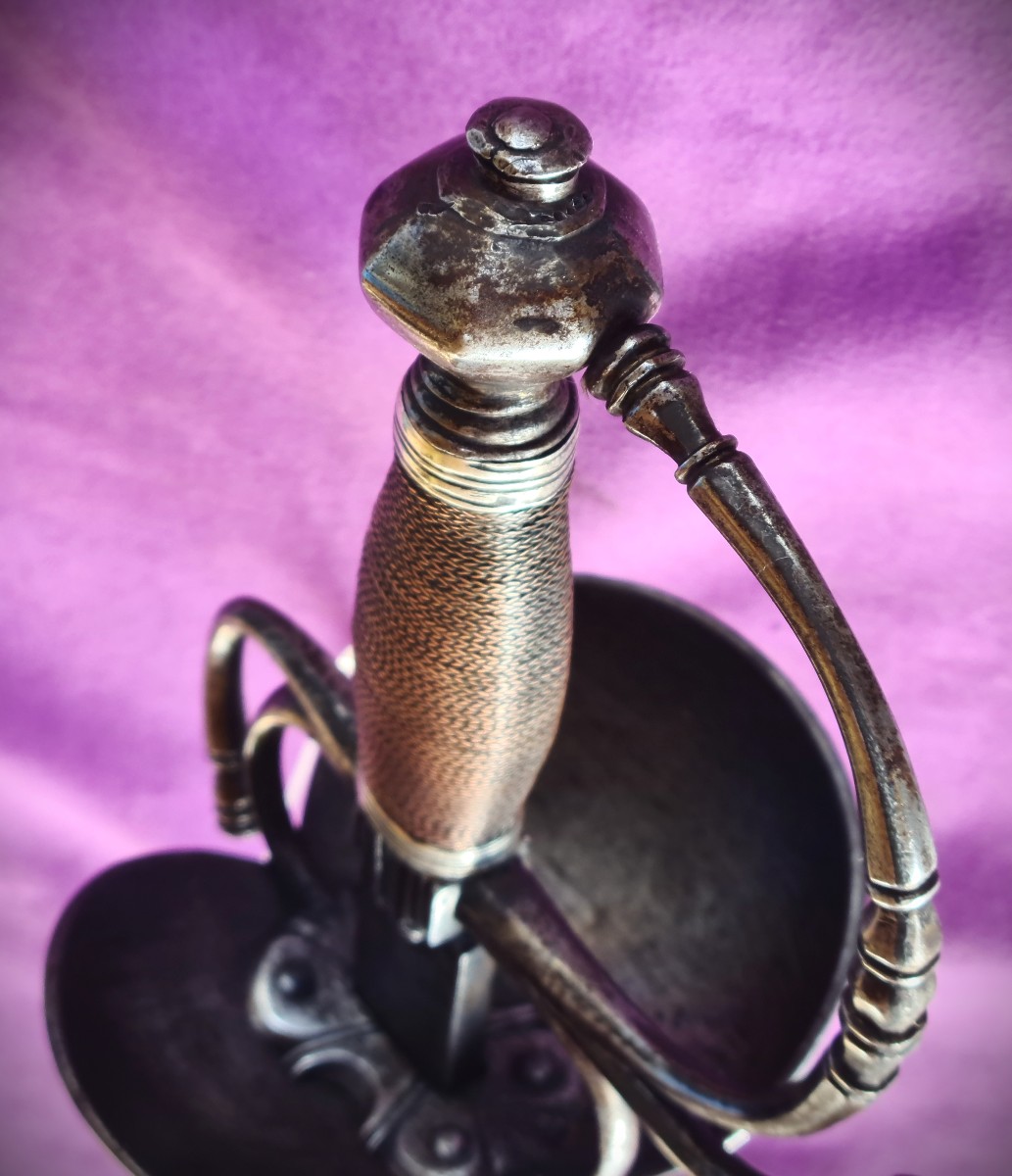
GUARD : this is the classic "boca de caballo" with 2 large shells. The quillons are counter-curved. The 2 large finger rings (arms or "pas d'âne") join the shells, to which they are attached by 4 screws. The knuckle bow ends near the pommel, but is not attached to it.
POMMEL : shaped like an 8-sided baluster. It is surmounted by a small button to which the blade tang is riveted.
GRIP : it is covered with double copper twisted wire binding . The ferrules are silver.
This sword is a historical reference model : it was the last model of cavalry straight sword or cavalry rapier used in Europe.
Ref C-2446
Shipping costs France 30 €, Europe 40€.
This Royal Order of July 12, 1728 merely regularized a model that had been widely adopted by the cavalry for a century, but with many variations. These 17th century models, which preceded the strictly regulatory model were called "espadas de conchas" (= "clamshell swords"). From the 1730-1740, the term "boca de caballo" (=horse's mouth) became the most used. reference to the two asymmetrical guard shells that evoke the horse's mouth.
These swords1728 regulation swords remained in cavalry service until 1803, when they were replaced by sabers.
Our example is a strictly regulation troop model with the monogram of King Carlos IV (1788-1808), manufactured at the Toledo manufacture in 1801.
Curiously, these regulation models are far less frequent on the market than officer's models, because as being state property, they most often ended their lives in the arsenals.
BLADE: after a very short ricasso, it takes on a 6-sided section to the tip. The regulation markings are present, in very good condition:
Outer face = C. - :- T.o 1801. - :- C for "caballeria"(cavalry), To for "Toledo"
Inside = R crowned- :- Cs. IV. - :- . R crowned for "propiedad Real (property of the King) , Cs forCarlos. On the strong ricasso punch marlk = the "L", which some authors believe corresponds toto "listo" (ready, correct) in the sense of "ready for use"
Blade length = 95 cm, width at ricasso = 3.5 cm,thickness at ricasso = 7 mm
GUARD : this is the classic "boca de caballo" with 2 large shells. The quillons are counter-curved. The 2 large finger rings (arms or "pas d'âne") join the shells, to which they are attached by 4 screws. The knuckle bow ends near the pommel, but is not attached to it.
POMMEL : shaped like an 8-sided baluster. It is surmounted by a small button to which the blade tang is riveted.
GRIP : it is covered with double copper twisted wire binding . The ferrules are silver.
This sword is a historical reference model : it was the last model of cavalry straight sword or cavalry rapier used in Europe.
Ref C-2446
Shipping costs France 30 €, Europe 40€.
1 300 €
Period: 19th century
Style: Renaissance, Louis 13th
Condition: Excellent condition
Material: Other
Length: 113 cm
Width: 14.5 cm
Reference (ID): 1736774
Availability: In stock
Print