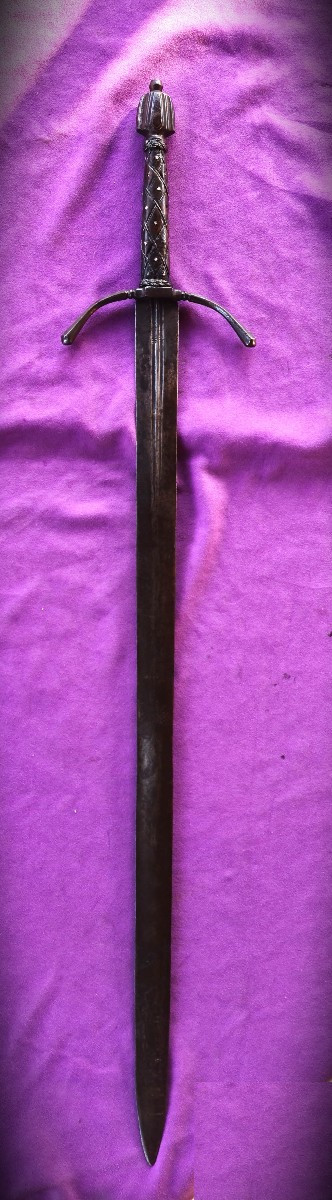





Sword, Early 16th Century, Italy
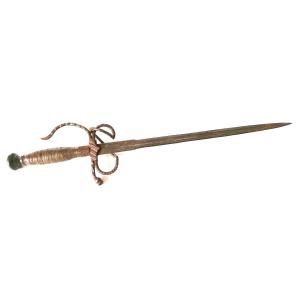
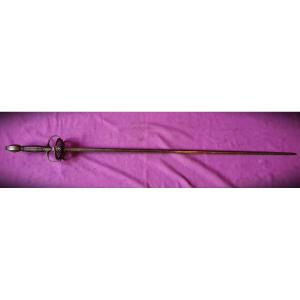
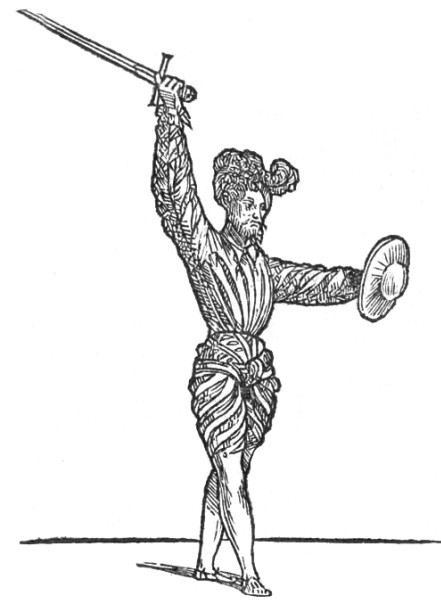
This sword's overall style evokes the late 15th century, but to be prudent I would date it from a few years later, the early 16th century, based on the type of pommel and guard. Representations of this type of sword can be seen in some illustrations of Achille Marozzo's fencing treatise "Opera Nova," published in 1538, which clearly demonstrates that these somewhat archaic swords were still in use in early 16th-century Italy.
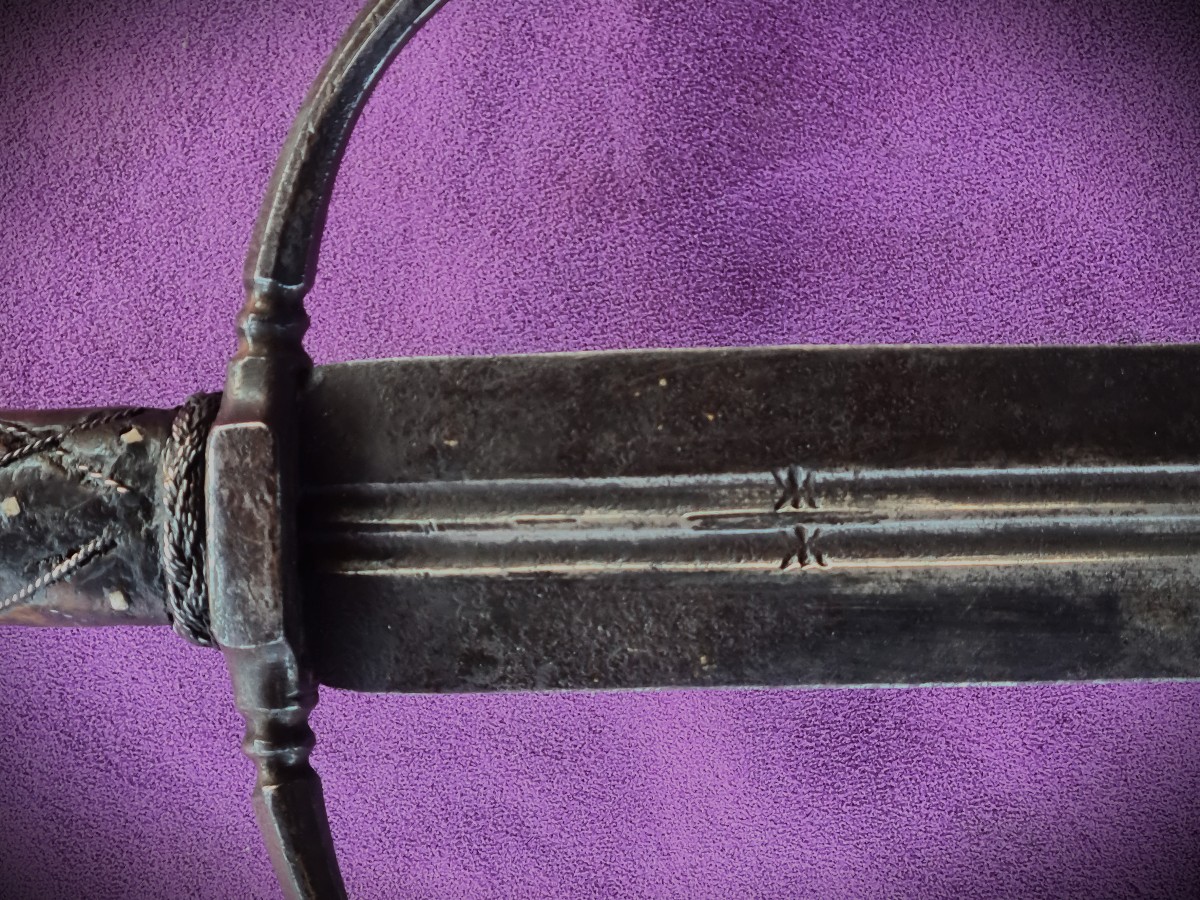
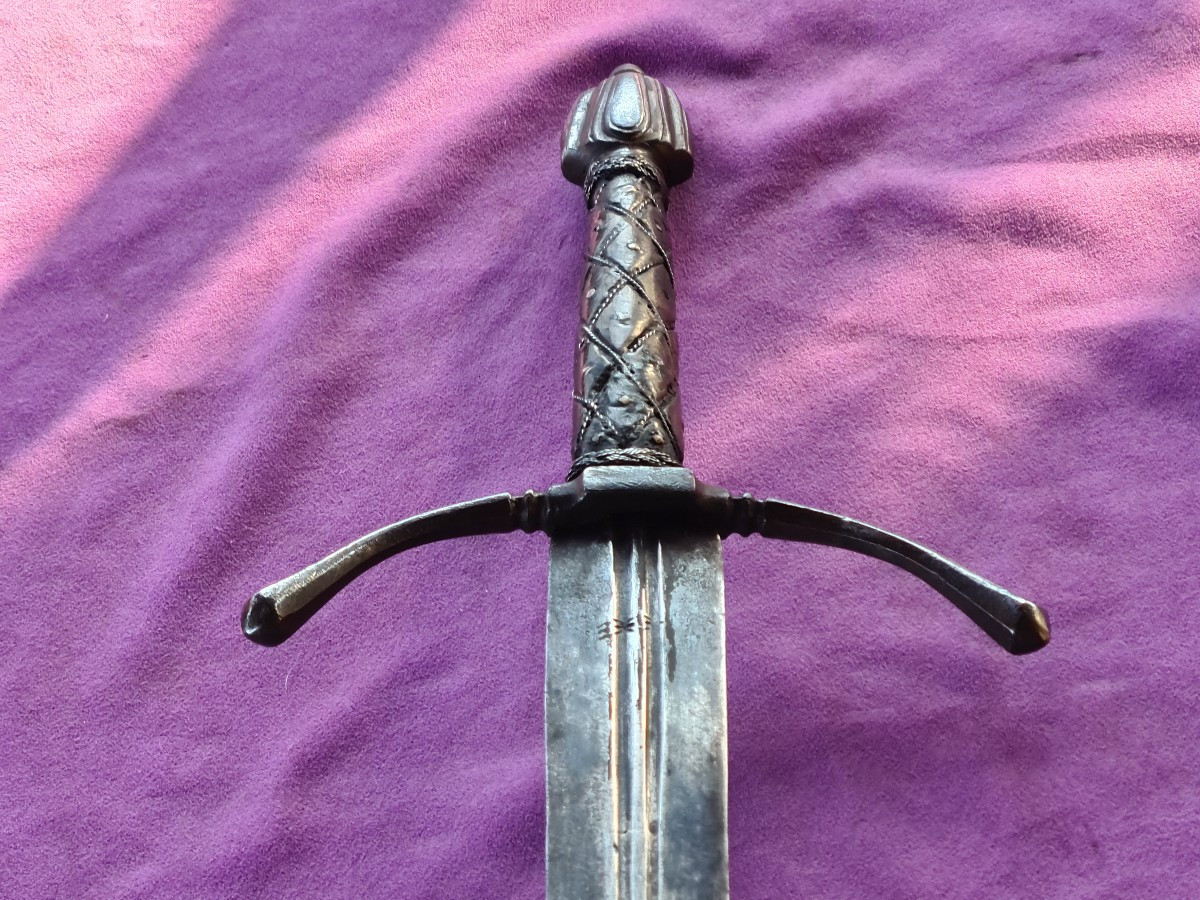
The blade features the classic double fullers in the first third, frequently found on 15th-century blades from Passau or Solingen. Each face bears a double star-shaped hallmark, a motif quite common, with some variations, on many Germanic blades of the period. The hilt, however, is more characteristic of Italy, with bone inlays and the division of the grip into lozenges.
BLADE: It is double-edged. It has a lenticular cross-section, which was probably originally a flattened diamond shape. On each face, there are two fine central grooves extending 17 cm from the guard. A double six-pointed star hallmark is present on each face. The blade has a brown patina, which I have chosen to retain, but it could easily be given a much shinier appearance with a light polish.
The blade is flexible and particularly responsive to vibration, a sign of quality forging. The edges are exceptionally sharp. There are the usual traces of oxidation, but nothing serious.
Blade length = 73 cm, width near the guard = 3.7 cm, thickness near the guard = 4.8 mm. The balance point is 13 cm from the guard, which could correspond to a sword used by a mounted swordsman, but could also be related to the "one-and-a-half-handed" grip technique of the Italian and Southern German schools during the second half of the 15th century. This grip is quite possible due to the length of the grip and pommel, which allows a second hand to be placed on the back of the handle.
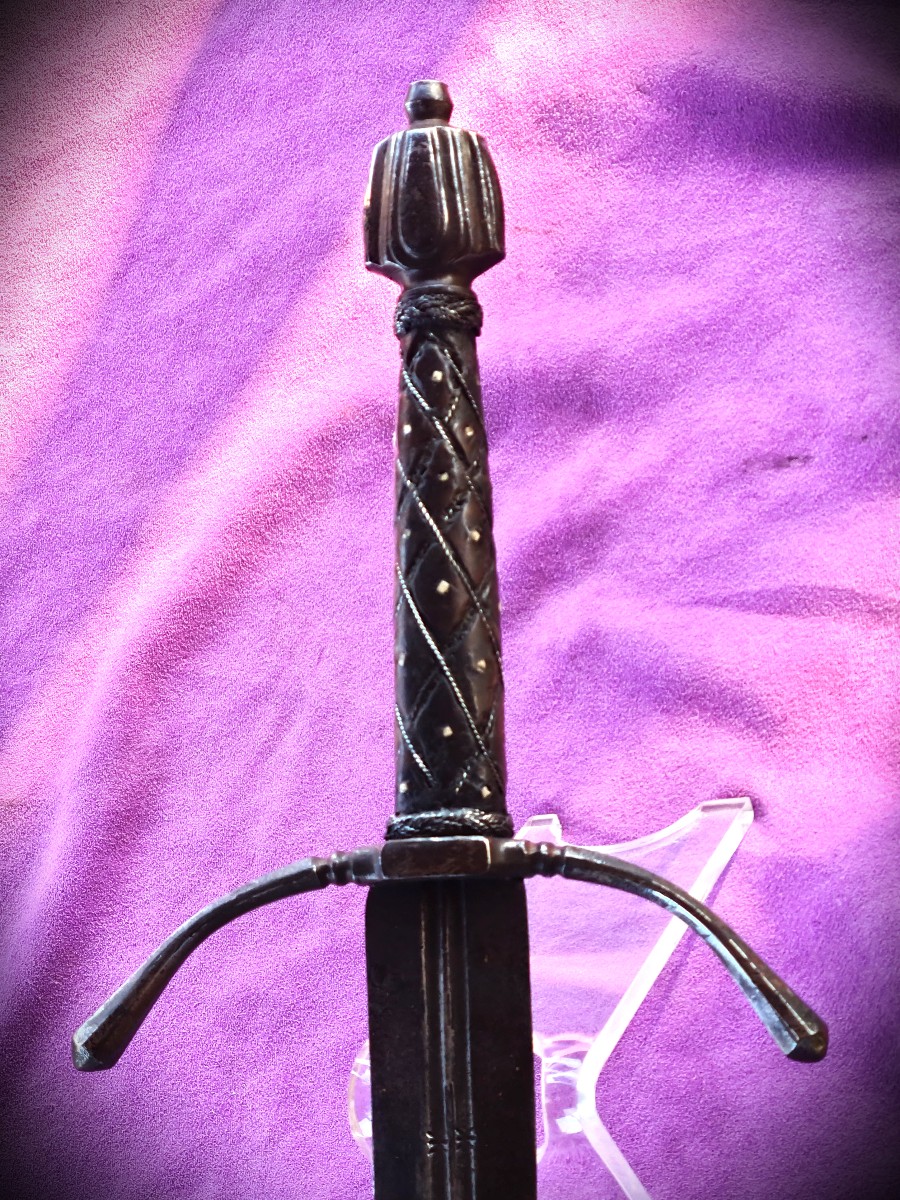
GUARD : The crossguard has quillons that curve towards the blade. The quillons are octagonal in section and widen from the center of the guard to their tips.
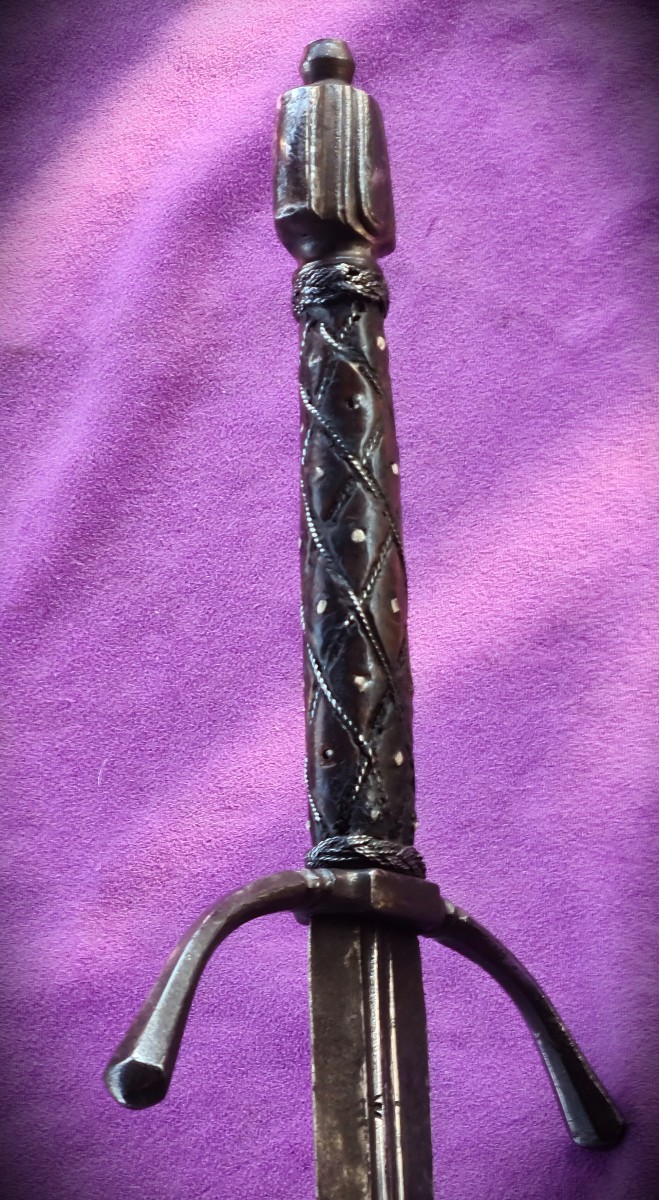
POMMEL : It is described as "draped," typical of the 16th century. It is surmounted by a small biconical button to which the tang of the blade is riveted. The riveting is clearly old.
GRIP: It is made of dark wood, carved in a diamond pattern, and inlaid with bone. Within the recesses of the lozenges, one finds a twisted iron wire binding. (The wear and tear on the wood over time has caused this filigree to become slightly raised in places, which is not surprising). The iron wire binding ferrulescalled turk's heads are present and in good condition.
This lozenge decoration on the hilt strongly resembles the type of decoration found on 14th-century swords, particularly in church statuary.
In conclusion: A beautiful sword of a rare type, at a very reasonable price.
Shipping costs: France €30, Europe €40. For other destinations, please contact me.
Ref AX-24-44
The blade features the classic double fullers in the first third, frequently found on 15th-century blades from Passau or Solingen. Each face bears a double star-shaped hallmark, a motif quite common, with some variations, on many Germanic blades of the period. The hilt, however, is more characteristic of Italy, with bone inlays and the division of the grip into lozenges.
BLADE: It is double-edged. It has a lenticular cross-section, which was probably originally a flattened diamond shape. On each face, there are two fine central grooves extending 17 cm from the guard. A double six-pointed star hallmark is present on each face. The blade has a brown patina, which I have chosen to retain, but it could easily be given a much shinier appearance with a light polish.
The blade is flexible and particularly responsive to vibration, a sign of quality forging. The edges are exceptionally sharp. There are the usual traces of oxidation, but nothing serious.
Blade length = 73 cm, width near the guard = 3.7 cm, thickness near the guard = 4.8 mm. The balance point is 13 cm from the guard, which could correspond to a sword used by a mounted swordsman, but could also be related to the "one-and-a-half-handed" grip technique of the Italian and Southern German schools during the second half of the 15th century. This grip is quite possible due to the length of the grip and pommel, which allows a second hand to be placed on the back of the handle.
GUARD : The crossguard has quillons that curve towards the blade. The quillons are octagonal in section and widen from the center of the guard to their tips.
POMMEL : It is described as "draped," typical of the 16th century. It is surmounted by a small biconical button to which the tang of the blade is riveted. The riveting is clearly old.
GRIP: It is made of dark wood, carved in a diamond pattern, and inlaid with bone. Within the recesses of the lozenges, one finds a twisted iron wire binding. (The wear and tear on the wood over time has caused this filigree to become slightly raised in places, which is not surprising). The iron wire binding ferrulescalled turk's heads are present and in good condition.
This lozenge decoration on the hilt strongly resembles the type of decoration found on 14th-century swords, particularly in church statuary.
In conclusion: A beautiful sword of a rare type, at a very reasonable price.
Shipping costs: France €30, Europe €40. For other destinations, please contact me.
Ref AX-24-44
1 850 €
Period: 16th century
Style: Renaissance, Louis 13th
Condition: Good condition
Material: Other
Length: 91.5 cm
Width: aux quillons 17 cm
Reference (ID): 1730823
Availability: In stock
Print