THIS OBJECT WAS SOLD
Bronze Statuette With Brown Patina - Souvenir Of The Grand Tour, 19th Century
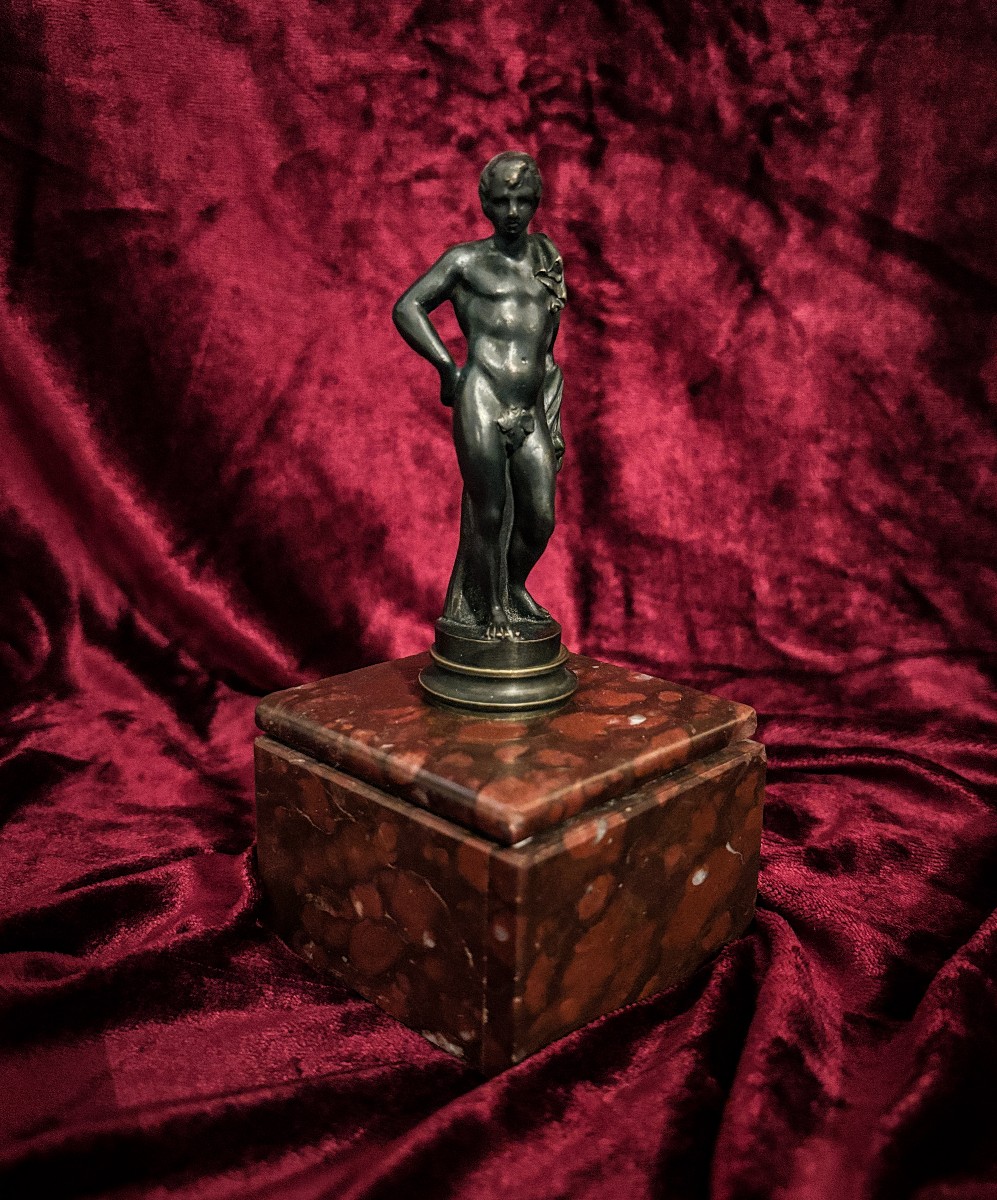
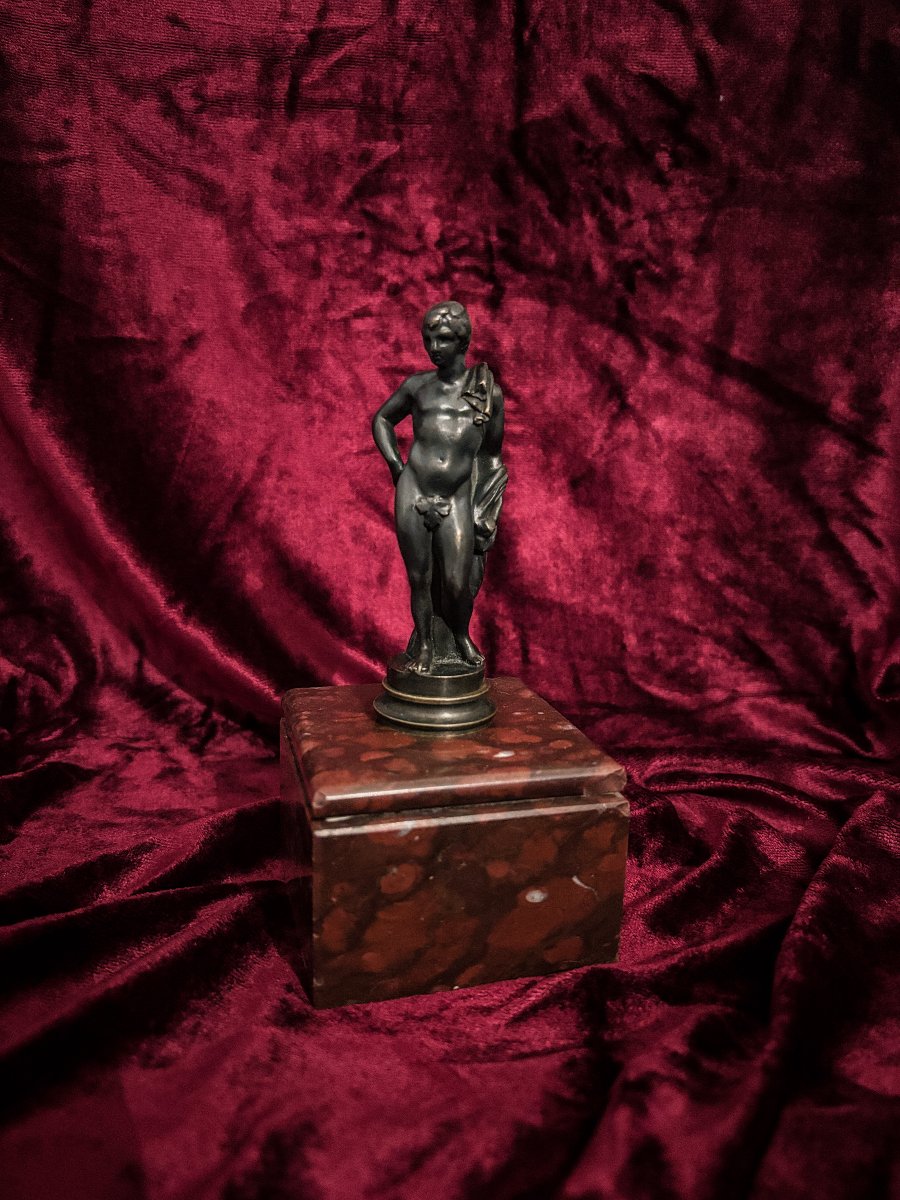
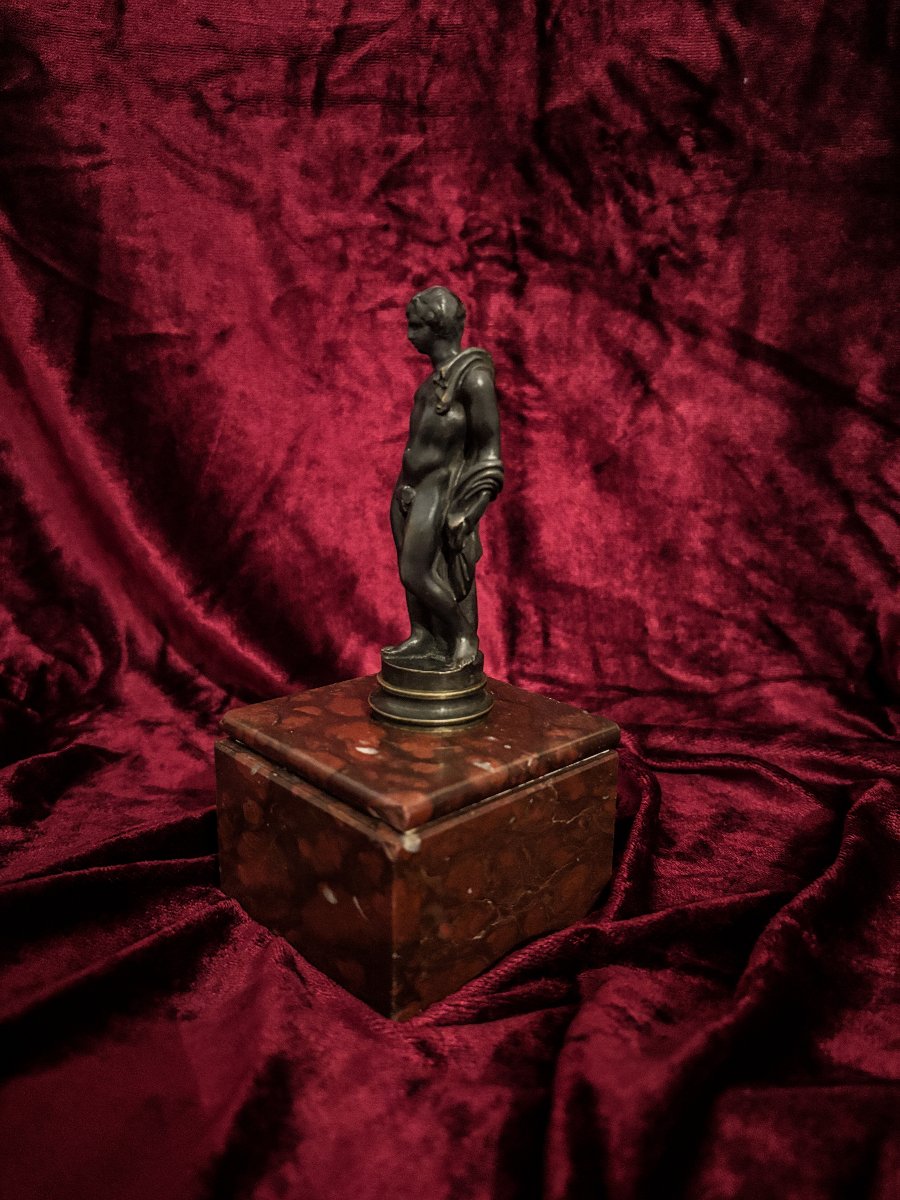




Small bronze statuette with a brown patina, after the antique Antinous of the Belvedere, on a griotte red marble base (added later). Italy, 19th century.
Height of the statuette alone: 10 cm. Total height: 15 cm.
(Slight wear, small chip to the marble base).
The Antinous of the Belvedere is one of the most famous masterpieces of ancient sculpture, housed in the Pio-Clementino Museum (Vatican). Despite its name, this statue does not represent Hadrian's young lover, but rather another mythological figure. Although named "Antinous" upon its discovery in 1543 near Castel Sant'Angelo, art historians now generally agree that it depicts Hermes (the messenger of the gods). The statue belongs to the Hermes of Psyche type. It is a high-quality Roman marble copy, dating from the time of Emperor Hadrian (2nd century AD), made after a Greek bronze original (probably from the 4th century BC, attributed to the school of Praxiteles). For the famous art historian Johann Joachim Winckelmann, this statue represented the absolute ideal of the male body, placing it just after the Apollo Belvedere in his hierarchy of perfection.
Height of the statuette alone: 10 cm. Total height: 15 cm.
(Slight wear, small chip to the marble base).
The Antinous of the Belvedere is one of the most famous masterpieces of ancient sculpture, housed in the Pio-Clementino Museum (Vatican). Despite its name, this statue does not represent Hadrian's young lover, but rather another mythological figure. Although named "Antinous" upon its discovery in 1543 near Castel Sant'Angelo, art historians now generally agree that it depicts Hermes (the messenger of the gods). The statue belongs to the Hermes of Psyche type. It is a high-quality Roman marble copy, dating from the time of Emperor Hadrian (2nd century AD), made after a Greek bronze original (probably from the 4th century BC, attributed to the school of Praxiteles). For the famous art historian Johann Joachim Winckelmann, this statue represented the absolute ideal of the male body, placing it just after the Apollo Belvedere in his hierarchy of perfection.
Explore similar pieces and discover your ideal find:
bronze sculptures