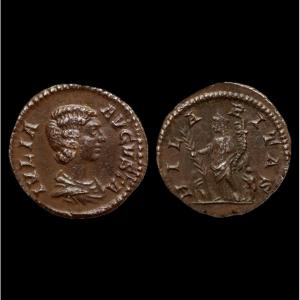


Julia Domna Denarius “hilaritas With Children” — Certificate Of Authenticity
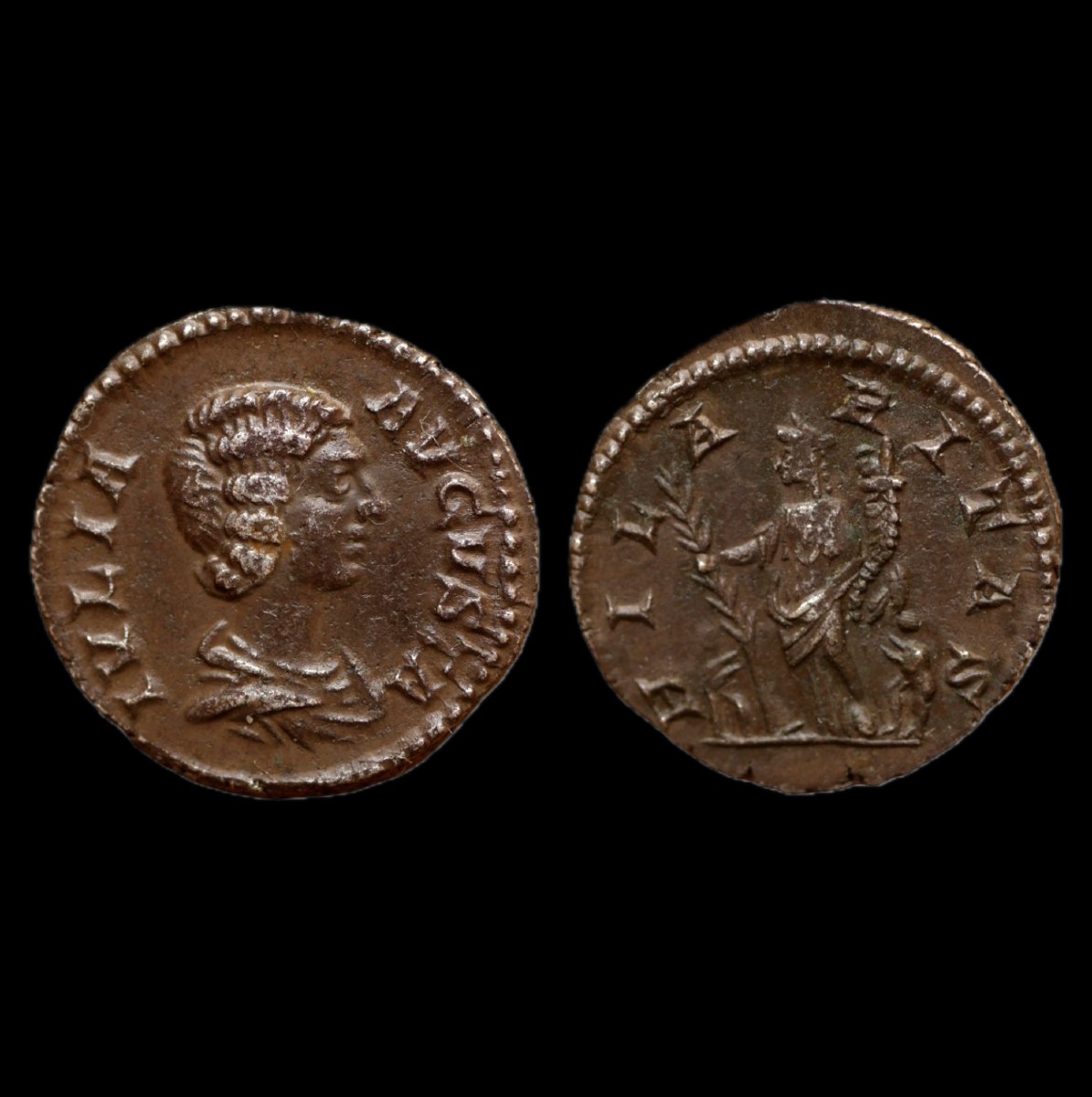
A silver denarius of Julia Domna, particularly endearing to Severan enthusiasts, in that it combines, in a composition both elegant and immediately intelligible, the official portrait of the Augusta with the allegory of Hilaritas, flanked by two children—an arrangement emblematic of the issues of the AD 196–211 period and firmly established in the major repertories under RIC IV 557 (Septimius Severus) / BMCRE 34 / RSC 79; the concordance of legends and iconography allows a certain identification of the type, as consistently repeated in accessible numismatic catalogues and archival records.
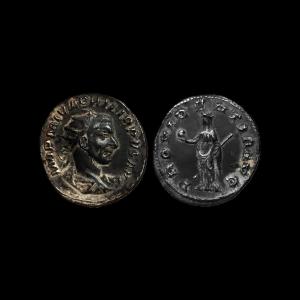
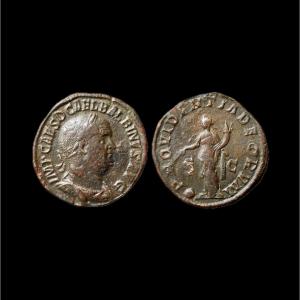
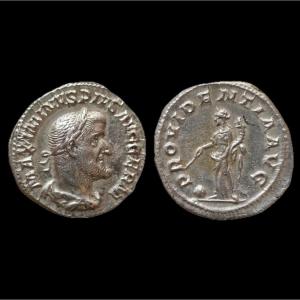
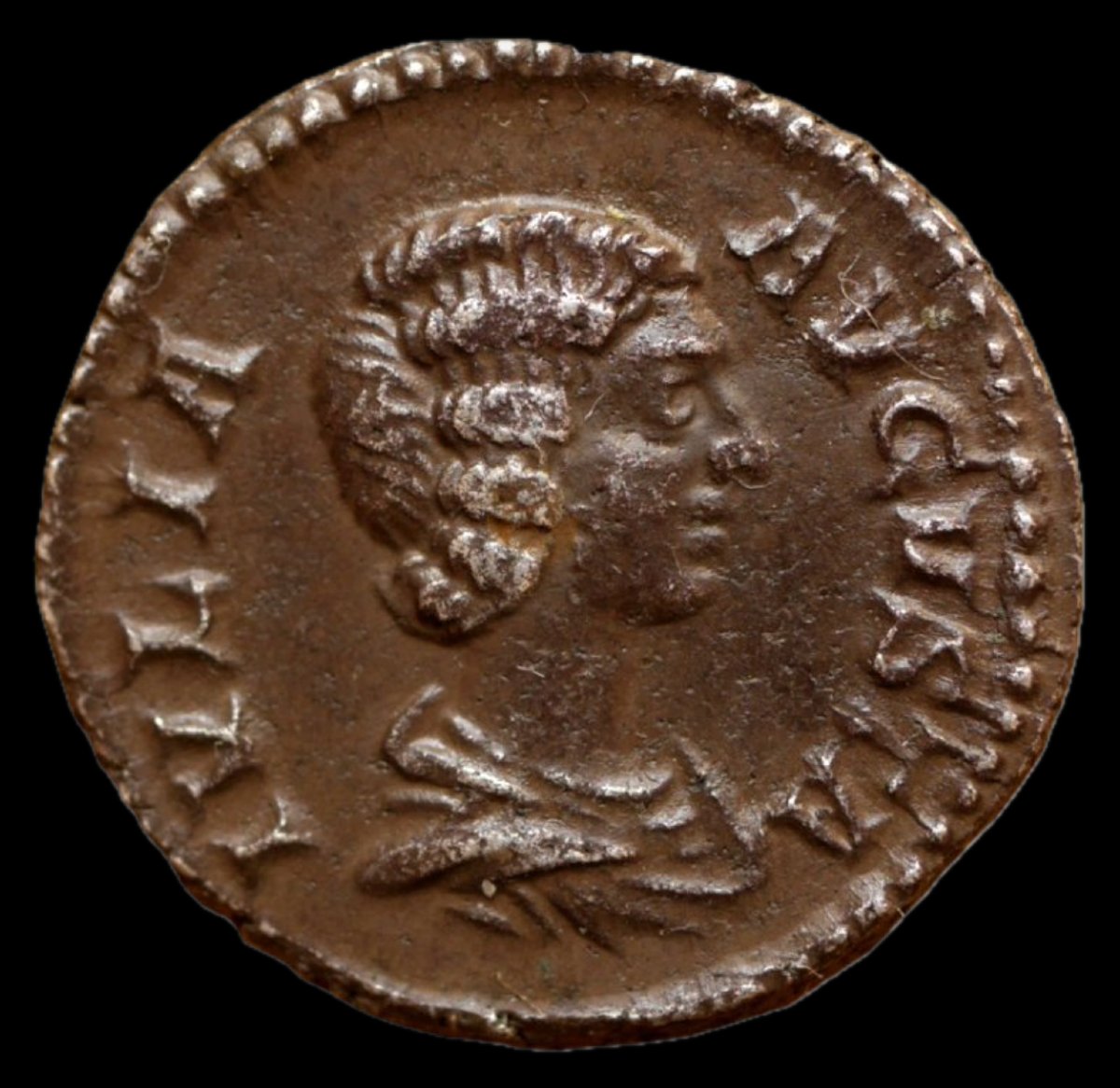
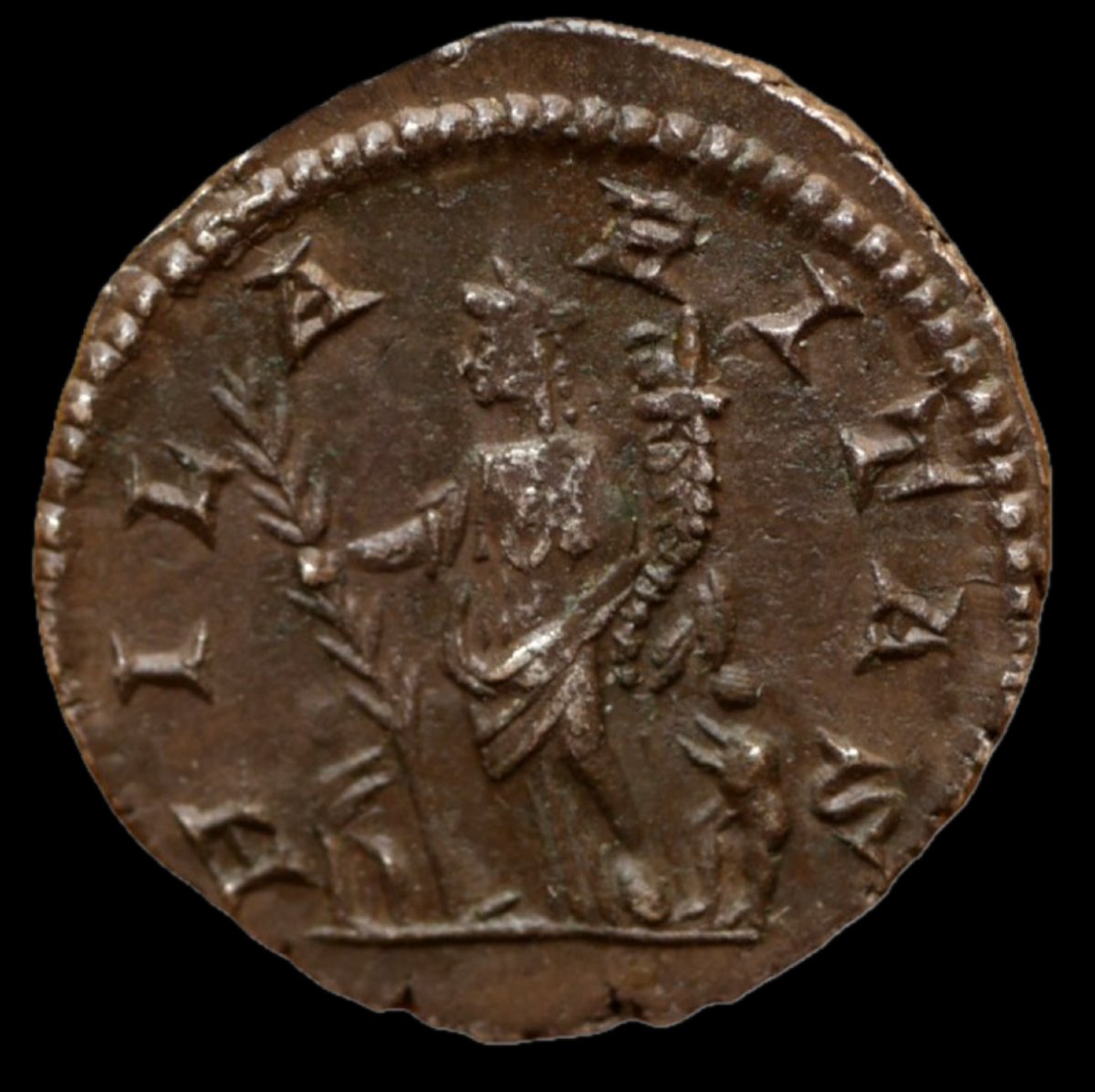
Careful observation under ×10 magnification and raking light: examination of the flan reveals an overall regular strike, a well-defined rim, and a readable peripheral beading; the obverse offers a draped bust right in which Julia Domna’s Severan hairstyle—wavy locks gathered into a rear mass—remains clearly structured, and the reverse preserves the decisive iconographic markers—Hilaritas standing left, palm and cornucopia, two children placed on either side—which make this type especially desirable to collectors, rightly appreciated for its narrative dimension and its message of serene abundance.
SpecificationsAuthority / period: Julia Domna, Augusta (Severan era), issue placed within AD 196–211 for this type.
Mint: Rome, attribution commonly given for the RIC 557 issue.
Denomination / metal: Denarius, silver (AR).
Weight: 3.72 g (as stated).
Obverse (type and legend): IVLIA AVGVSTA, draped bust right, the portrait showing a readable profile modeling and a characteristic “banded” hairstyle typical of the Augusta’s effigies.
Reverse (type and legend): HILARITAS, Hilaritas standing left, holding palm and cornucopia, with two flanking children, a composition stably described by RIC IV 557 / BMCRE 34 / RSC 79.
Surface condition (descriptive observations): grey toning with a brownish nuance, even and pleasing, with small contact marks compatible with the normal life of an ancient denarius; the major reliefs—titulature, hairstyle, drapery, Hilaritas’ attributes, and the children’s silhouettes—remain sufficiently present to provide stable readability and a strong cabinet presence.
Historical contextIn the Severan political universe, where imperial imagery seeks to appear at once maternal, prosperous, and ordering, the allegory Hilaritas expresses an institutionalized public joy—not private emotion, but civic serenity—and the presence of the two children gives this message particular density, suggesting, through an iconographic language immediately understood, dynastic fertility and continuity, central themes of Rome’s monetary communication at the turn of the 2nd–3rd centuries.
Cultural valueFor the collector, this specimen brings together several first-rank attractions: the portrait of Julia Domna, a major figure of the Severan court, is paired here with a narrative, “inhabited” reverse whose scene—more descriptive than purely emblematic—immediately enriches a cabinet devoted to empresses, Roman personifications, or messages of public prosperity; it may be noted, as a market reference, that this type is frequently reported as presenting a high rarity index in certain collection catalogues, a factor that enhances its select interest without diminishing its legibility or iconographic clarity.
Traceability & guaranteesThe provenance is European, from an established numismatic dealer, and the acquisition was conducted through a specialized international transaction within a recognized numismatic network, in accordance with the expected practices of the art and heritage market; the attribution rests on direct concordance with RIC IV 557 / BMCRE 34 / RSC 79, references cited consistently in numismatic documentation and sale comparanda.
Each specimen is examined, described, and accompanied by a certificate of authenticity consistent with the standards of the art and heritage market, the account being deliberately anchored to observable elements and consultable reference works, so that the collector’s confidence is grounded in a verifiable documentary basis.
Period: Before 16th century
Style: Rome and Antic Greece
Condition: En l'etat
Reference (ID): 1721404
Availability: In stock