THIS OBJECT WAS SOLD
Pair Of Imperial Eagles Stamp D. Campagne / Leblanc
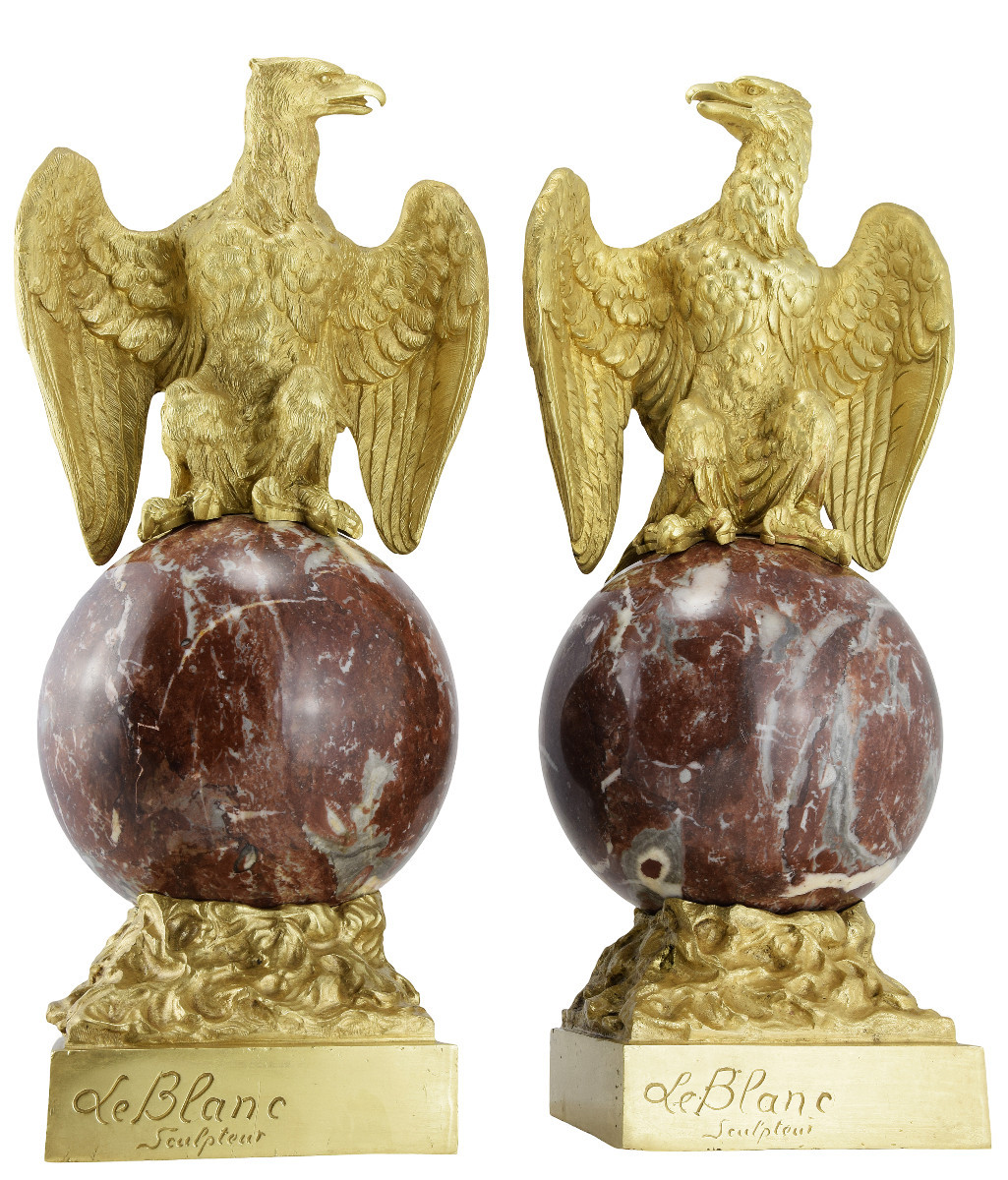
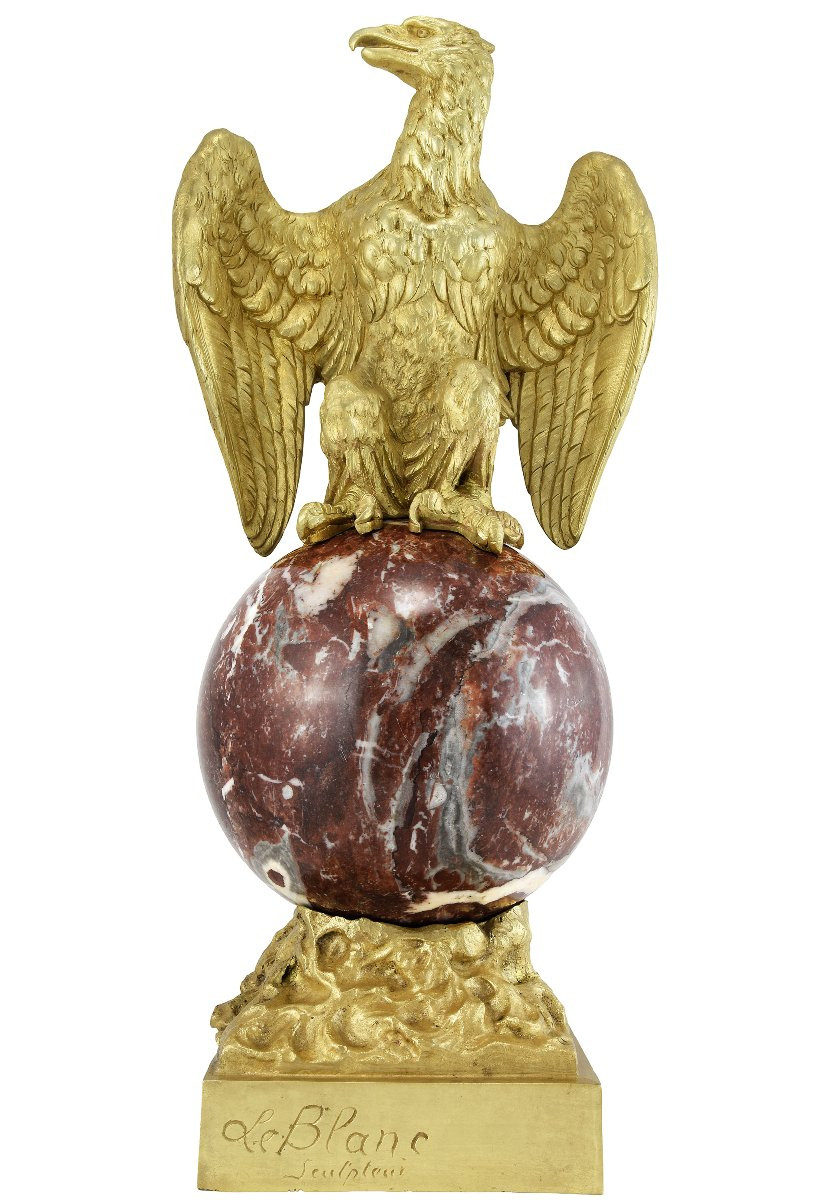
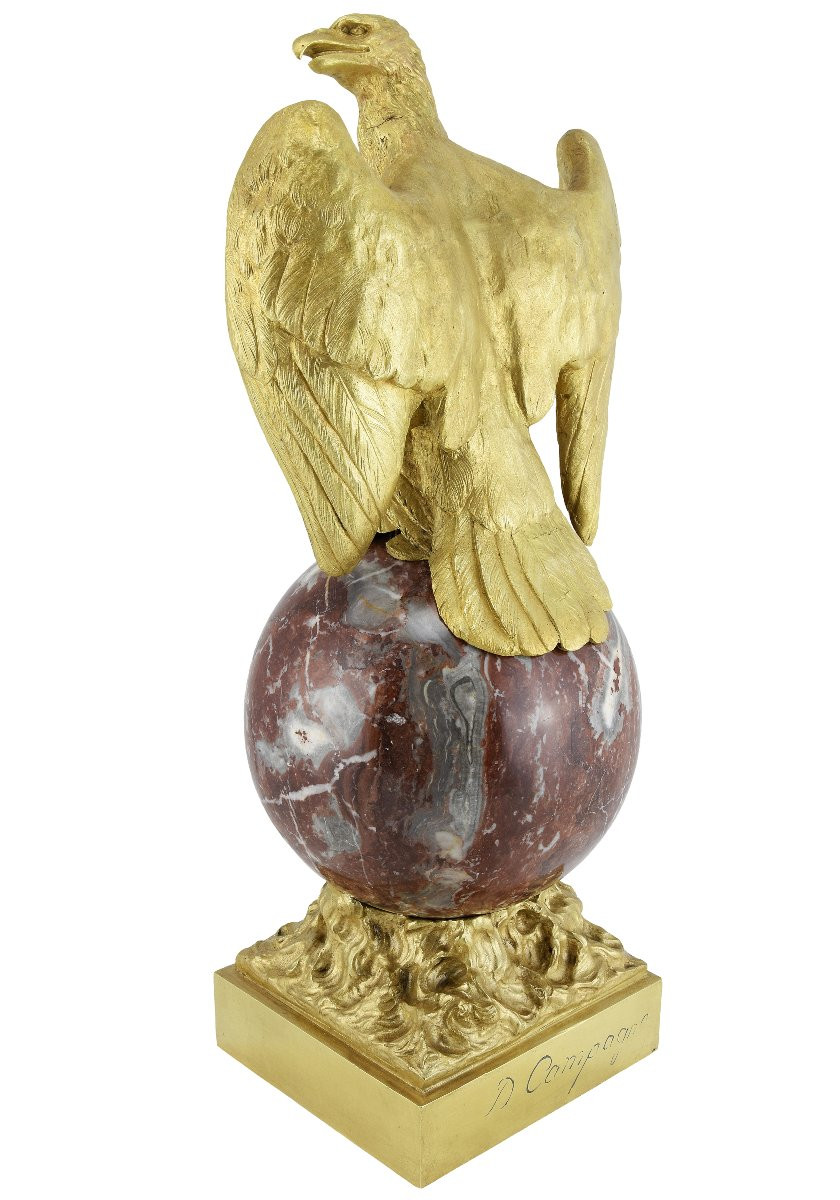
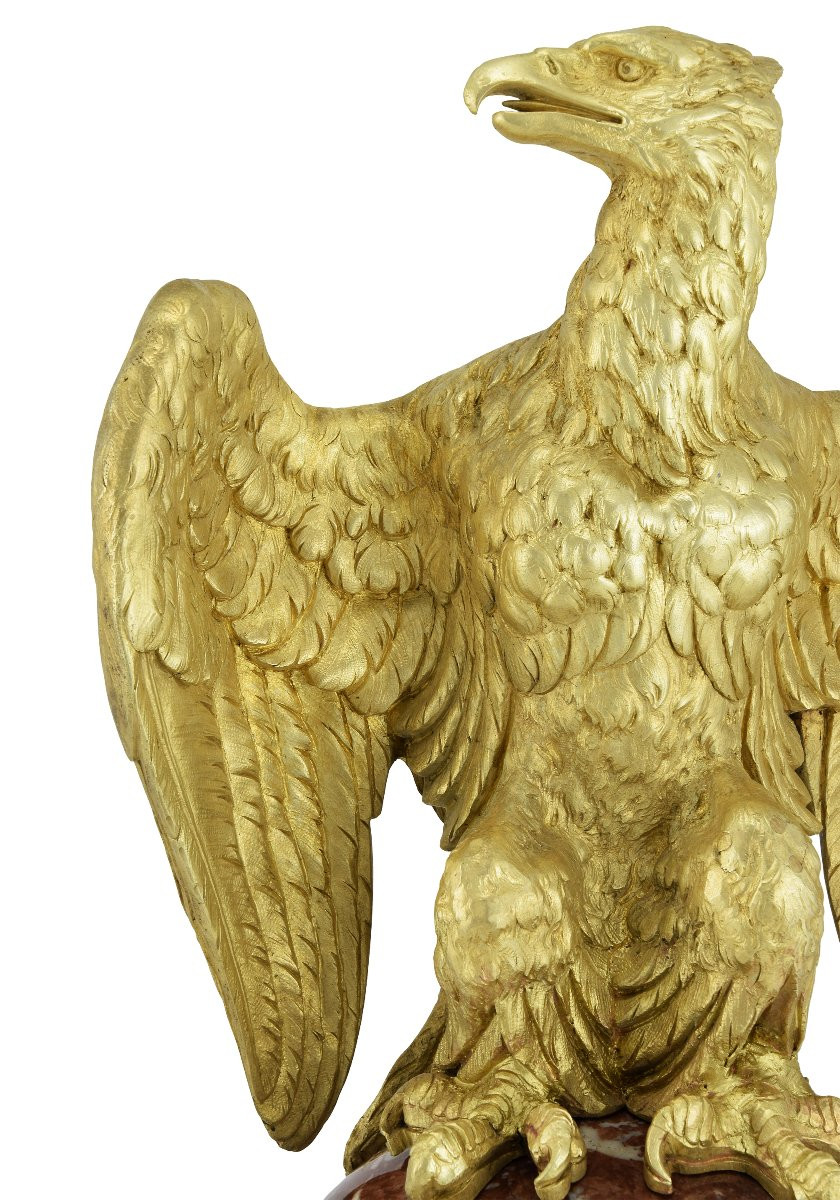
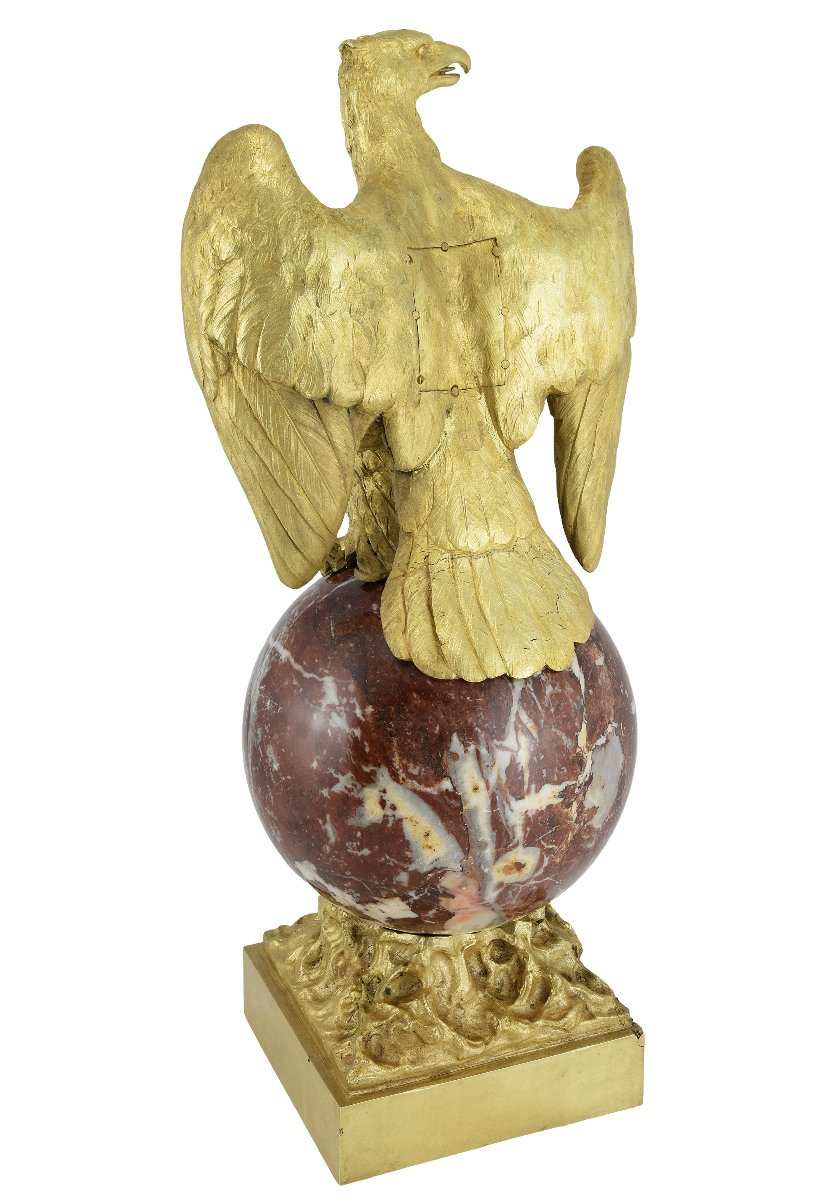


This large pair of decorative sculptures
combines gilt bronze and solid marble (about the size of a bowling
ball) in an aesthetic style inherited from the Neoclassical and
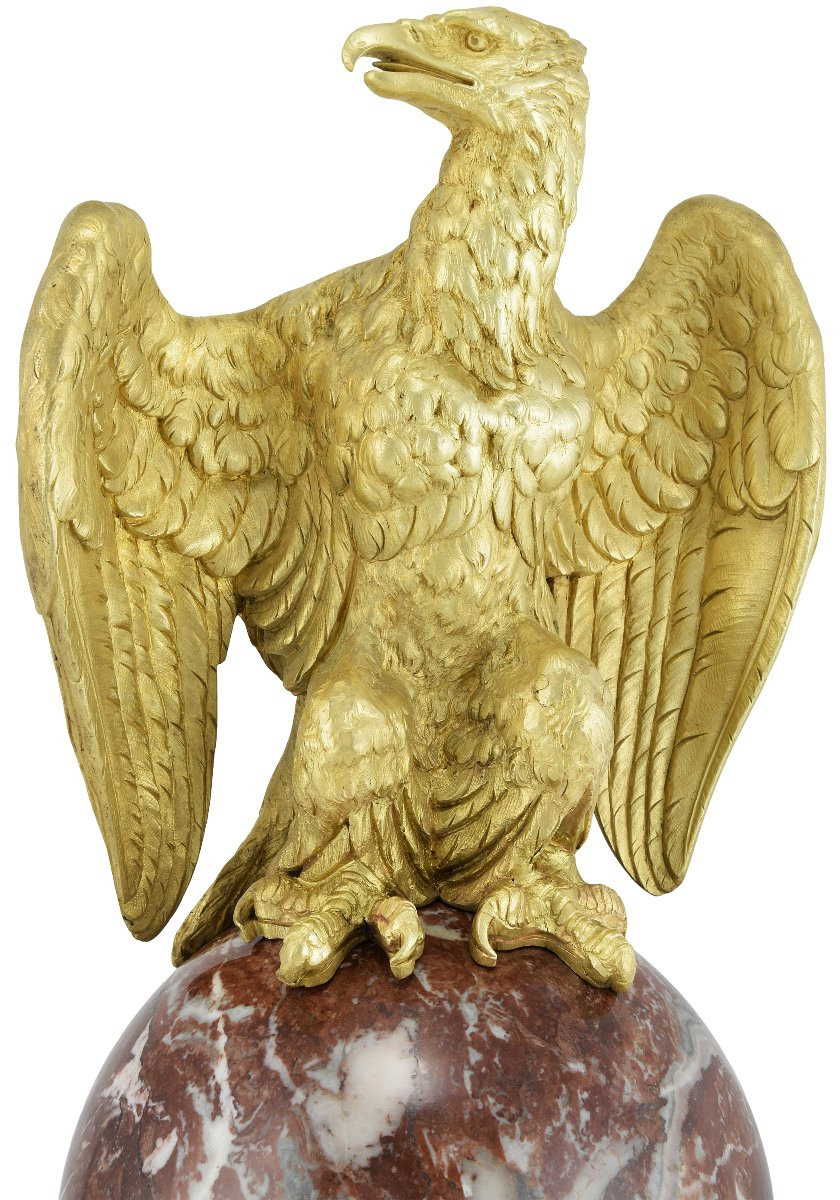
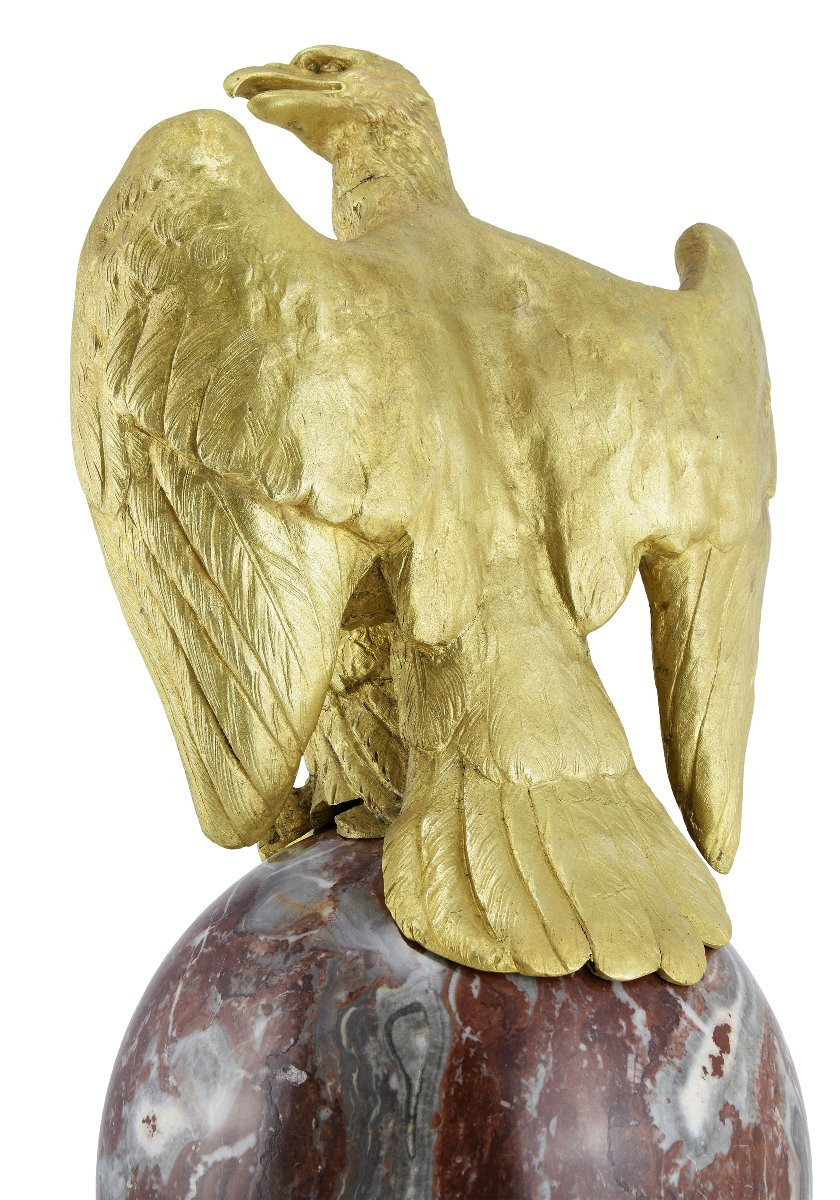
Imperial tastes of the 19th century. The work depicts a majestic eagle
with outstretched wings, modeled with great naturalism, dominating the
scene from the top of a perfectly polished sphere with a beautiful
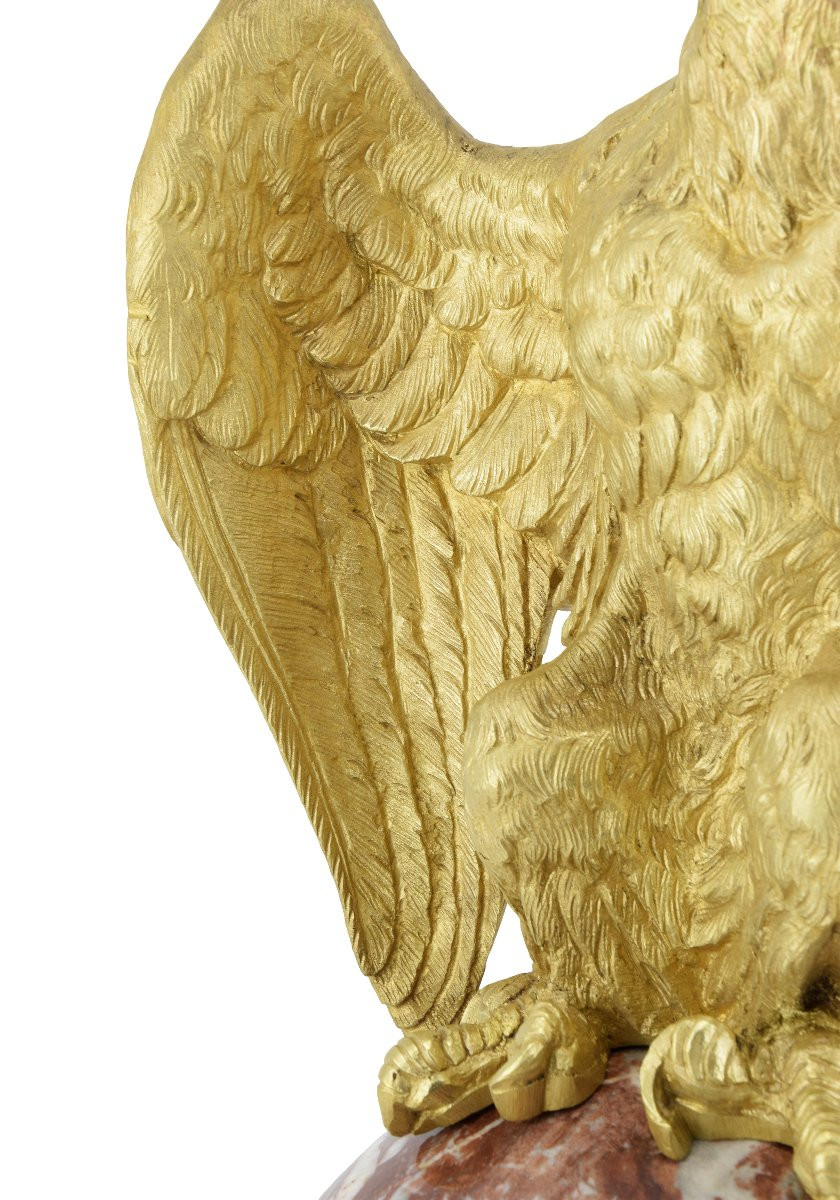
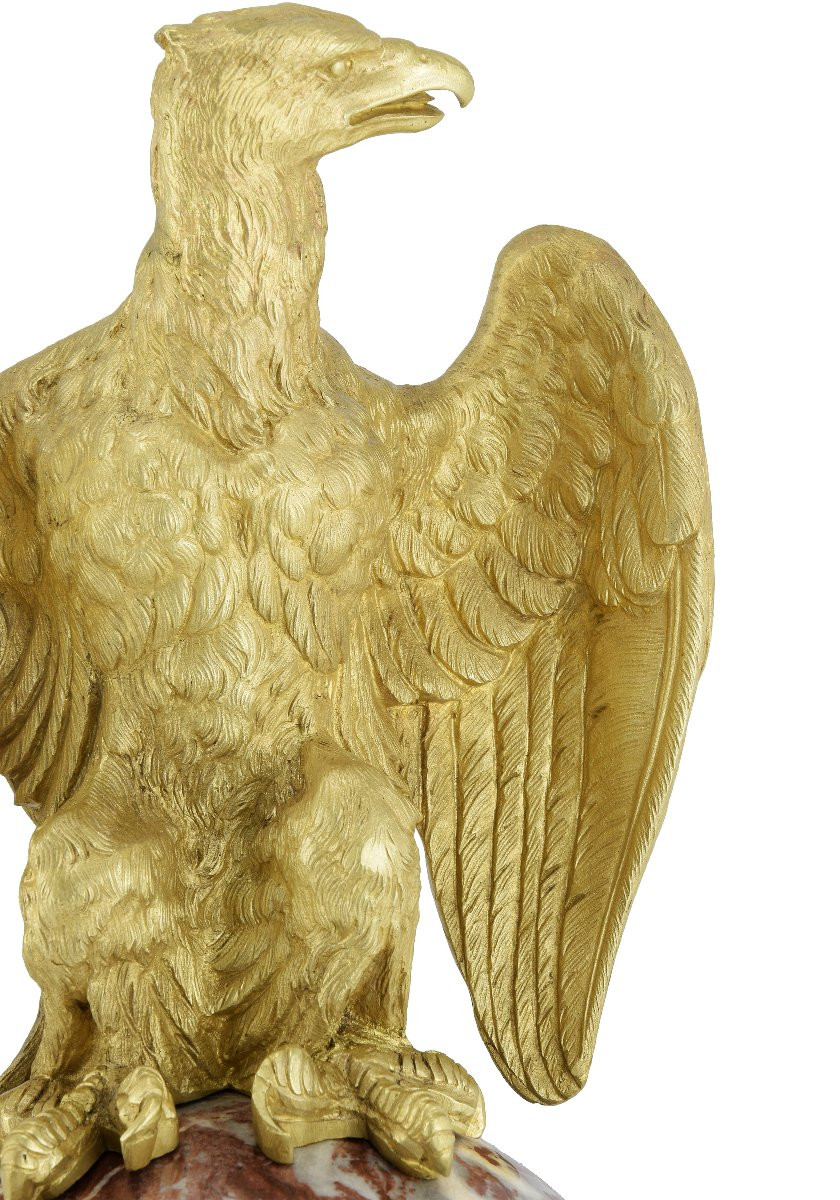
sheen. Finely chiseled, the precision of the plumage gives the bird a
solemn and authoritative presence, reinforced by the brilliance of the
gilding which captures the light and accentuates the nobility of the
figure.
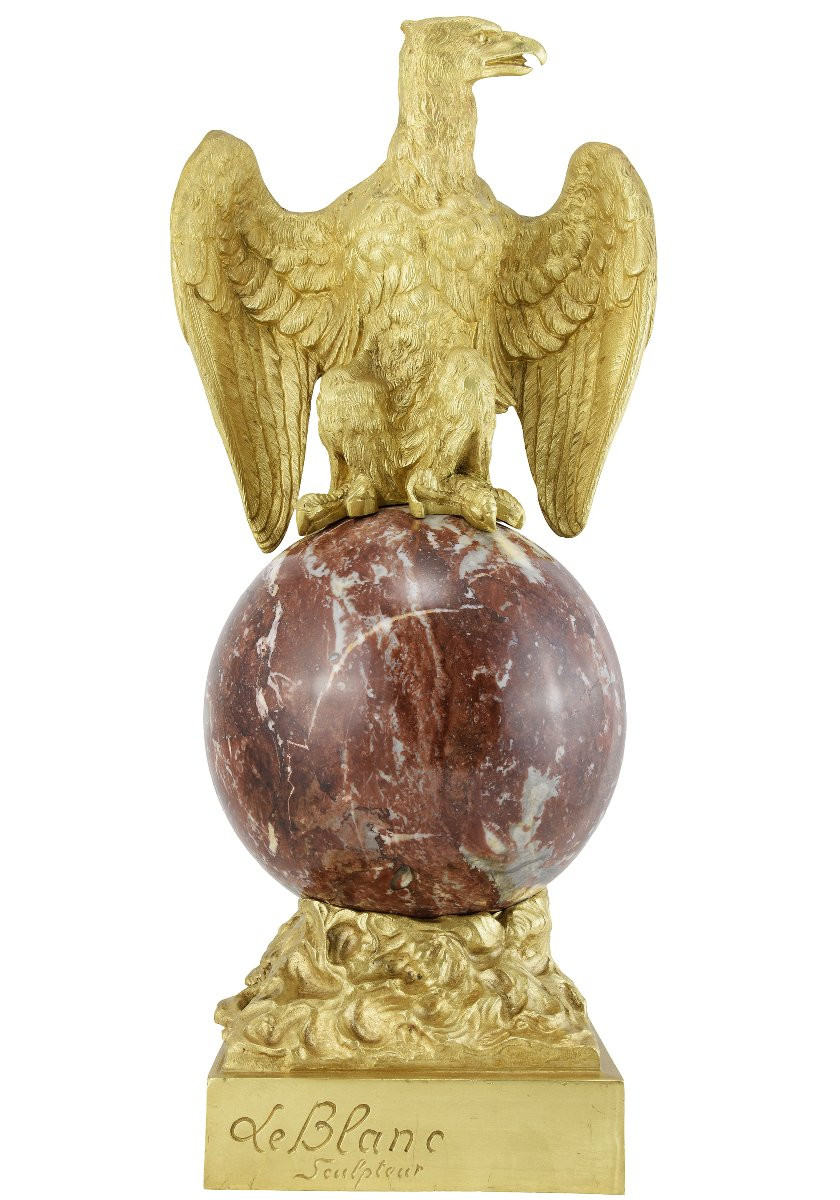
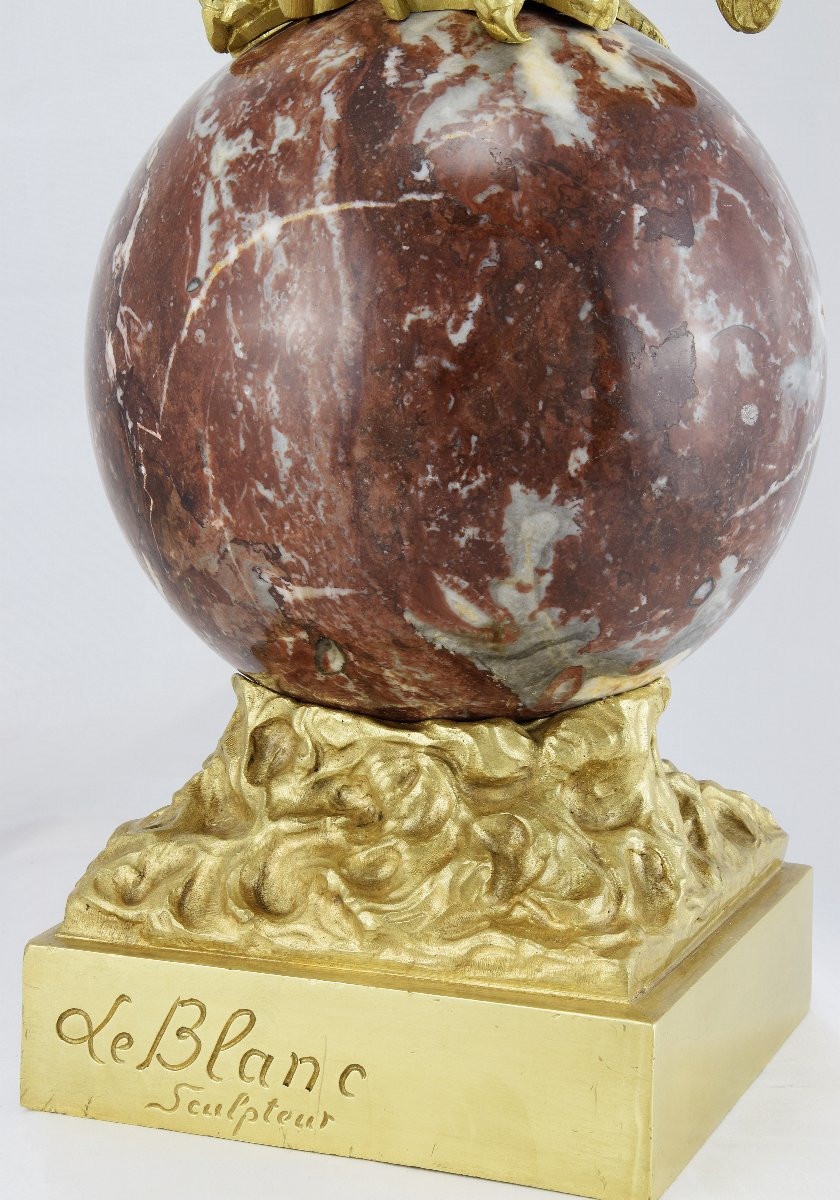
The object's architecture rests on a clearly hierarchical tripartite structure. At the base, a quadrangular base of gilt bronze ensures the visual and material stability of the whole. It is adorned with a sculpted relief decoration representing a flurry of swirling clouds, rendered in a dynamic and almost fluid manner. This cloud forms a symbolic transition between earth and sky, giving the impression that the composition rises into space. Above this base stands a sphere of red marble veined with white and gray, its polished surface contrasting with the animated texture of the clouds and the detailed modeling of the bronze. The sphere constitutes the central axis of the composition, both visually and symbolically. Its perfect form evokes the globe, universality, and cosmic harmony. It acts as a point of equilibrium between the material world represented by the base and the celestial dimension suggested by the eagle and the clouds.
The eagle (24 cm), perched firmly on the globe, dominates the whole with authority. A universal symbol of power, sovereignty, and vigilance, it directly references the imperial imagery inherited from Rome and later adopted in Napoleonic traditions. Its outstretched wings suggest both protection and dominion, while its gaze turned toward the horizon evokes vision and mastery. From its dominant position, the bird seems to reign over the world it overlooks. The decoration thus combines several stylistic registers: a precise naturalism in the depiction of the animal, an allegorical dimension in the representation of the clouds and the globe, and a neoclassical spirit marked by symmetry, monumentality, and the use of noble materials.
The gilding reinforces the prestigious and ceremonial dimension of the work, lending it an almost official character. Symbolically, the whole can be interpreted as a true allegory of power elevated above the world. The sphere represents the universality and totality of the earthly world, the cloud formation evokes spiritual elevation and the passage to the celestial realm, while the eagle embodies supreme authority, positioned between heaven and earth. The work thus expresses an idea of ascension, universal sovereignty, and transcendent power, where power, borne by a superior legitimacy, dominates the world from the symbolic heights of the sky.
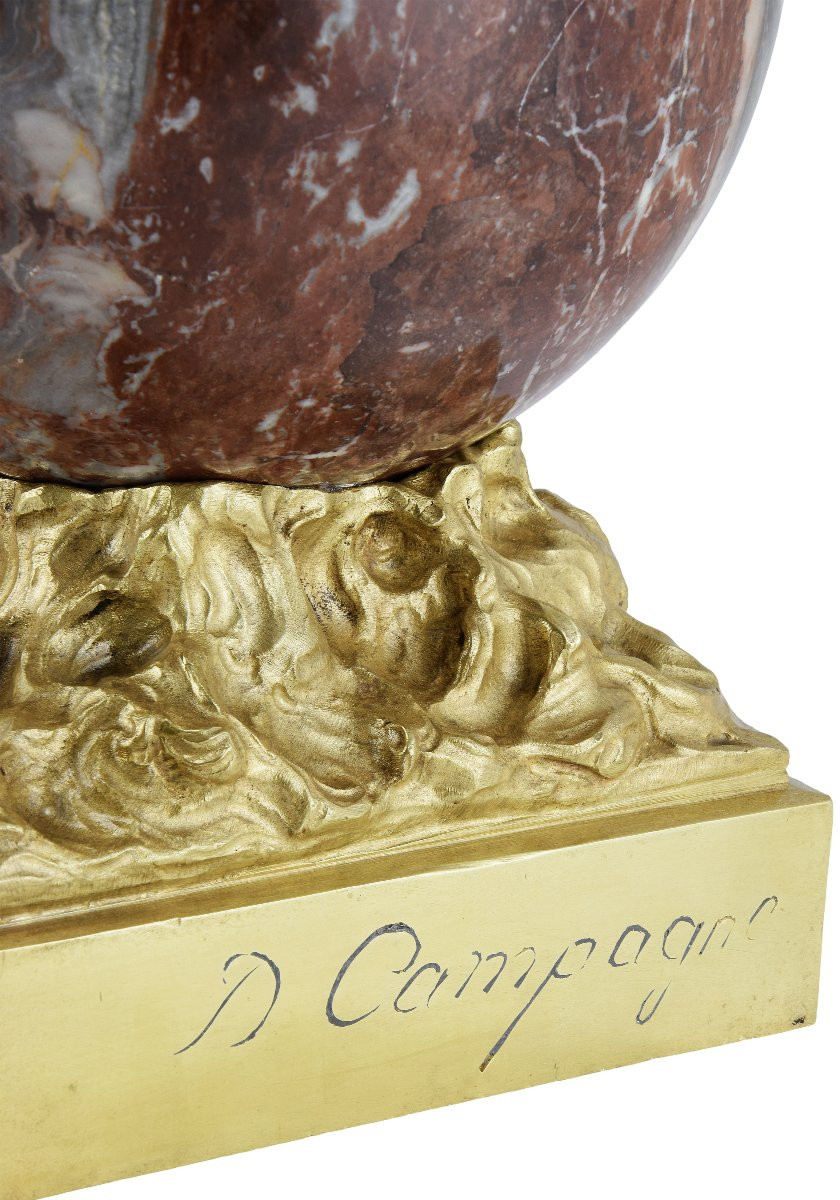
French decorative sculpture from the late 19th century, likely created between 1880 and 1900, during the period known as the late Napoleon III era or the early Belle Époque. The presence of two distinct signatures was common practice in 19th-century French decorative sculpture, as the works were frequently the result of collaborative efforts. The handwritten signature "D. Campagne," attributable to Pierre-Étienne Daniel Campagne (1851-1914), is present, as is the inscription "LeBlanc sculpteur" on the base.
ORDERING AND ADDITIONAL INFORMATION FROM OUR WEBSITE
The object's architecture rests on a clearly hierarchical tripartite structure. At the base, a quadrangular base of gilt bronze ensures the visual and material stability of the whole. It is adorned with a sculpted relief decoration representing a flurry of swirling clouds, rendered in a dynamic and almost fluid manner. This cloud forms a symbolic transition between earth and sky, giving the impression that the composition rises into space. Above this base stands a sphere of red marble veined with white and gray, its polished surface contrasting with the animated texture of the clouds and the detailed modeling of the bronze. The sphere constitutes the central axis of the composition, both visually and symbolically. Its perfect form evokes the globe, universality, and cosmic harmony. It acts as a point of equilibrium between the material world represented by the base and the celestial dimension suggested by the eagle and the clouds.
The eagle (24 cm), perched firmly on the globe, dominates the whole with authority. A universal symbol of power, sovereignty, and vigilance, it directly references the imperial imagery inherited from Rome and later adopted in Napoleonic traditions. Its outstretched wings suggest both protection and dominion, while its gaze turned toward the horizon evokes vision and mastery. From its dominant position, the bird seems to reign over the world it overlooks. The decoration thus combines several stylistic registers: a precise naturalism in the depiction of the animal, an allegorical dimension in the representation of the clouds and the globe, and a neoclassical spirit marked by symmetry, monumentality, and the use of noble materials.
The gilding reinforces the prestigious and ceremonial dimension of the work, lending it an almost official character. Symbolically, the whole can be interpreted as a true allegory of power elevated above the world. The sphere represents the universality and totality of the earthly world, the cloud formation evokes spiritual elevation and the passage to the celestial realm, while the eagle embodies supreme authority, positioned between heaven and earth. The work thus expresses an idea of ascension, universal sovereignty, and transcendent power, where power, borne by a superior legitimacy, dominates the world from the symbolic heights of the sky.
French decorative sculpture from the late 19th century, likely created between 1880 and 1900, during the period known as the late Napoleon III era or the early Belle Époque. The presence of two distinct signatures was common practice in 19th-century French decorative sculpture, as the works were frequently the result of collaborative efforts. The handwritten signature "D. Campagne," attributable to Pierre-Étienne Daniel Campagne (1851-1914), is present, as is the inscription "LeBlanc sculpteur" on the base.
ORDERING AND ADDITIONAL INFORMATION FROM OUR WEBSITE
Explore similar pieces and discover your ideal find:
Bronze Animal Sculptures