

A 19th-century Franco-english, Produced By Bianchetti & Cie (marseille)
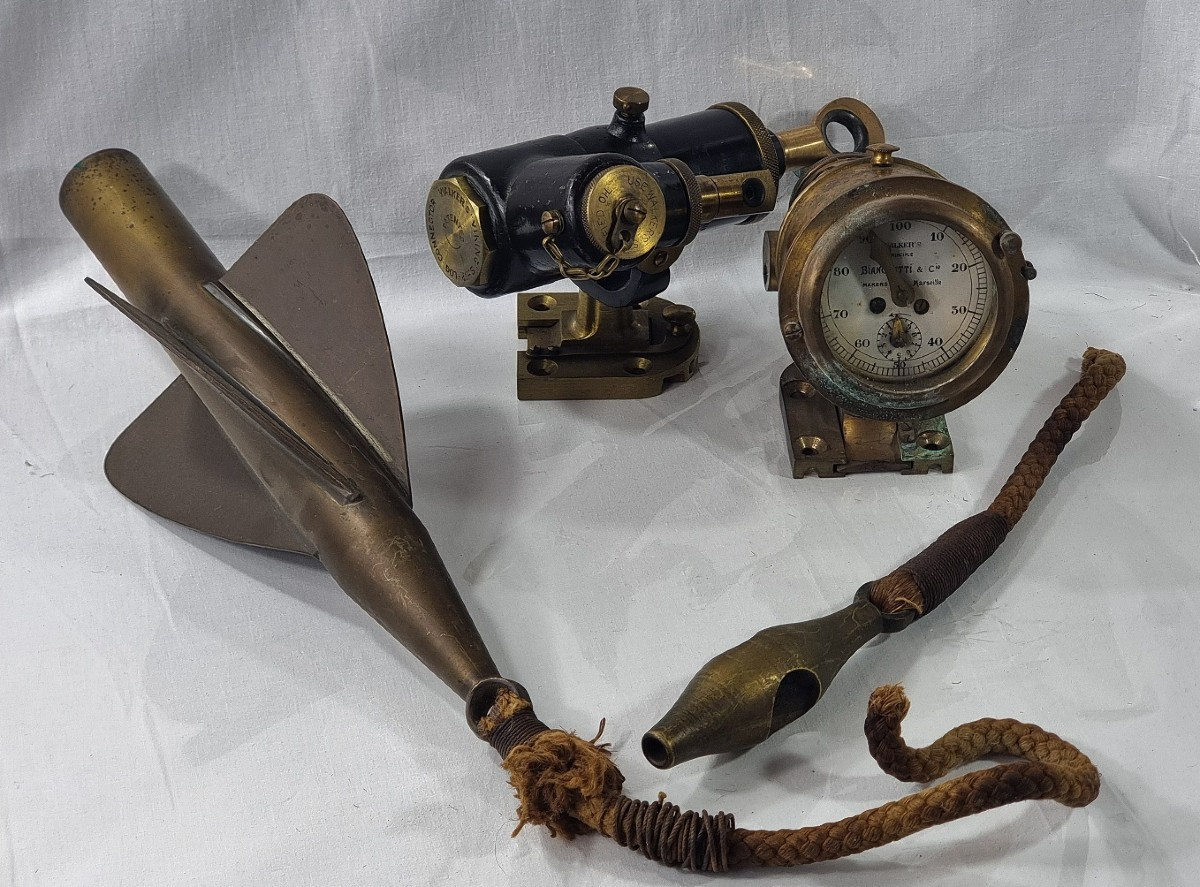
This instrument was used to measure the distance traveled by a ship and, taking time into account, to determine its speed. This information facilitated navigation and logbook keeping. This unique and comprehensive logbook consists of the following elements:
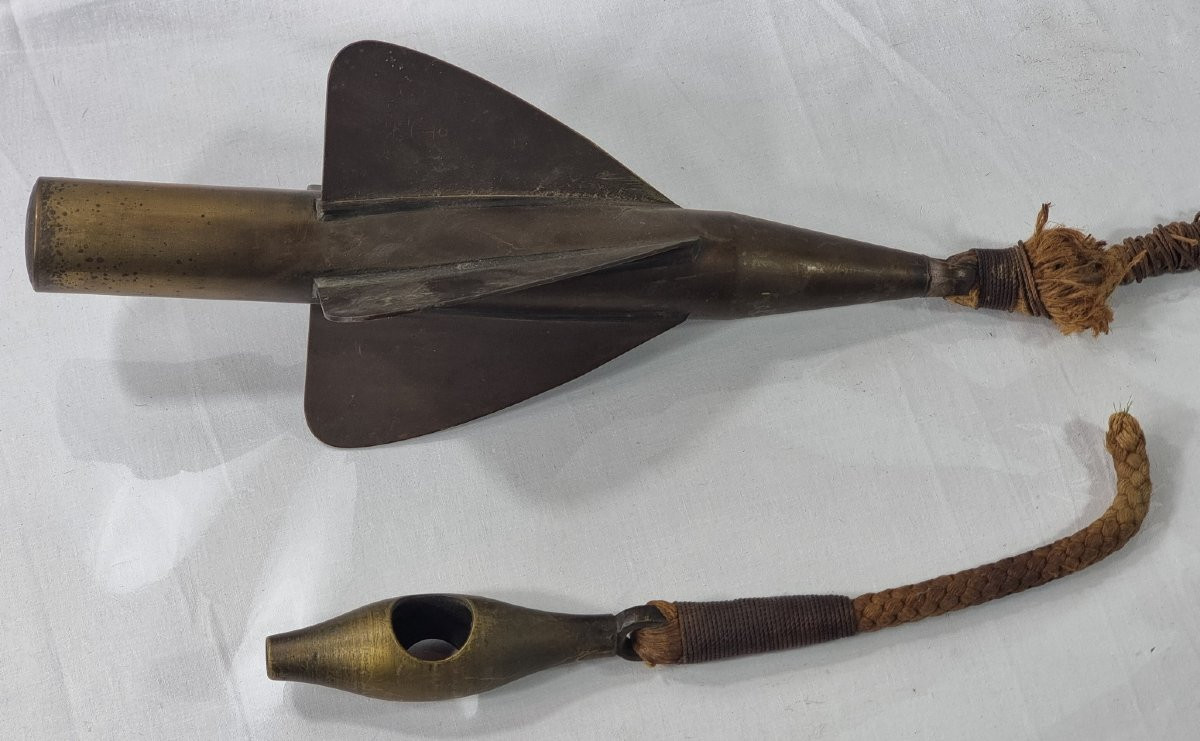
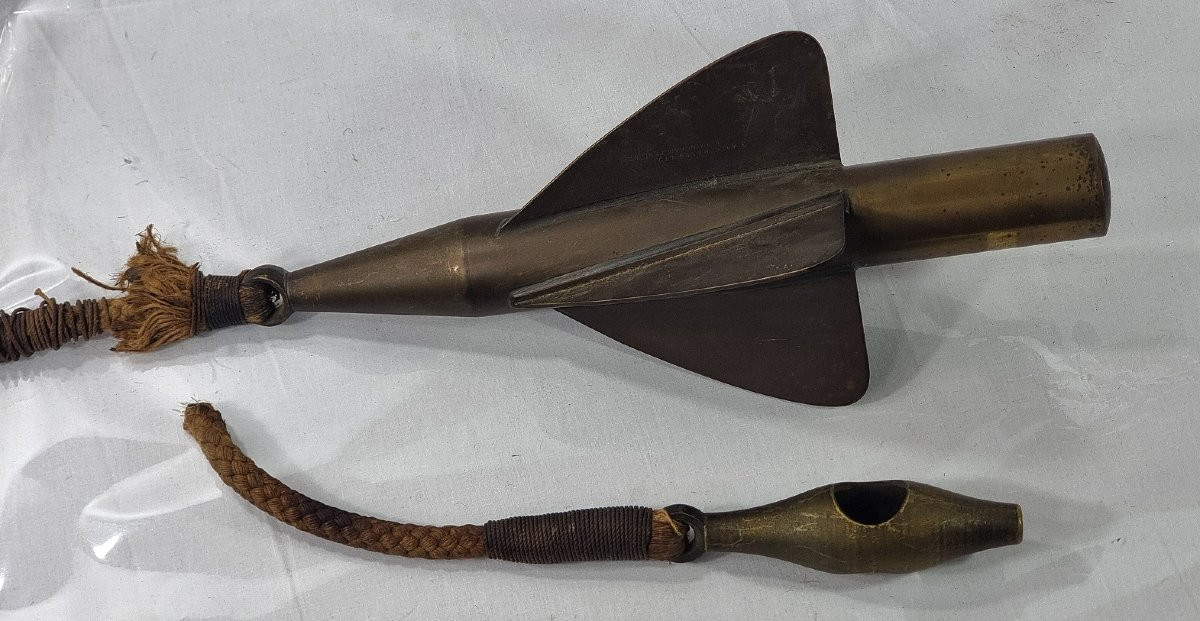
The log propeller. This is towed overboard. The propeller rotates thanks to the ship's inertia.
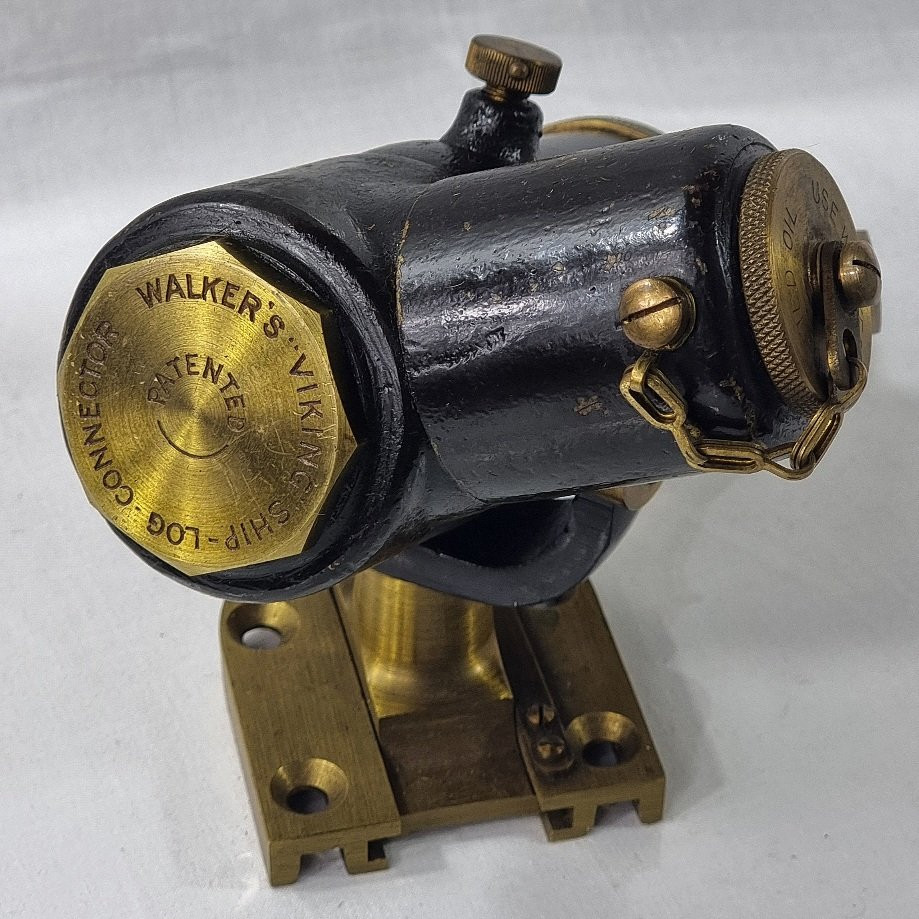
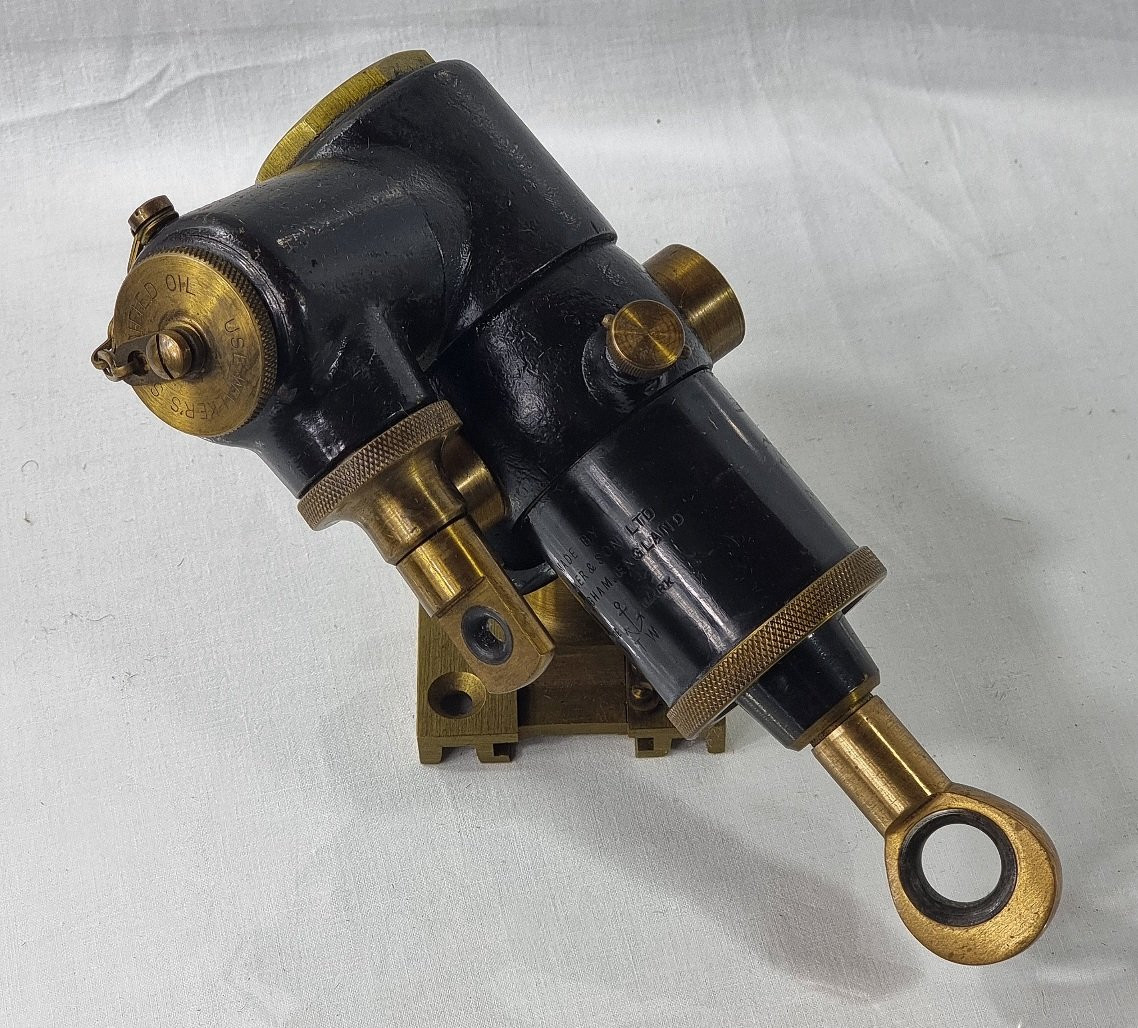
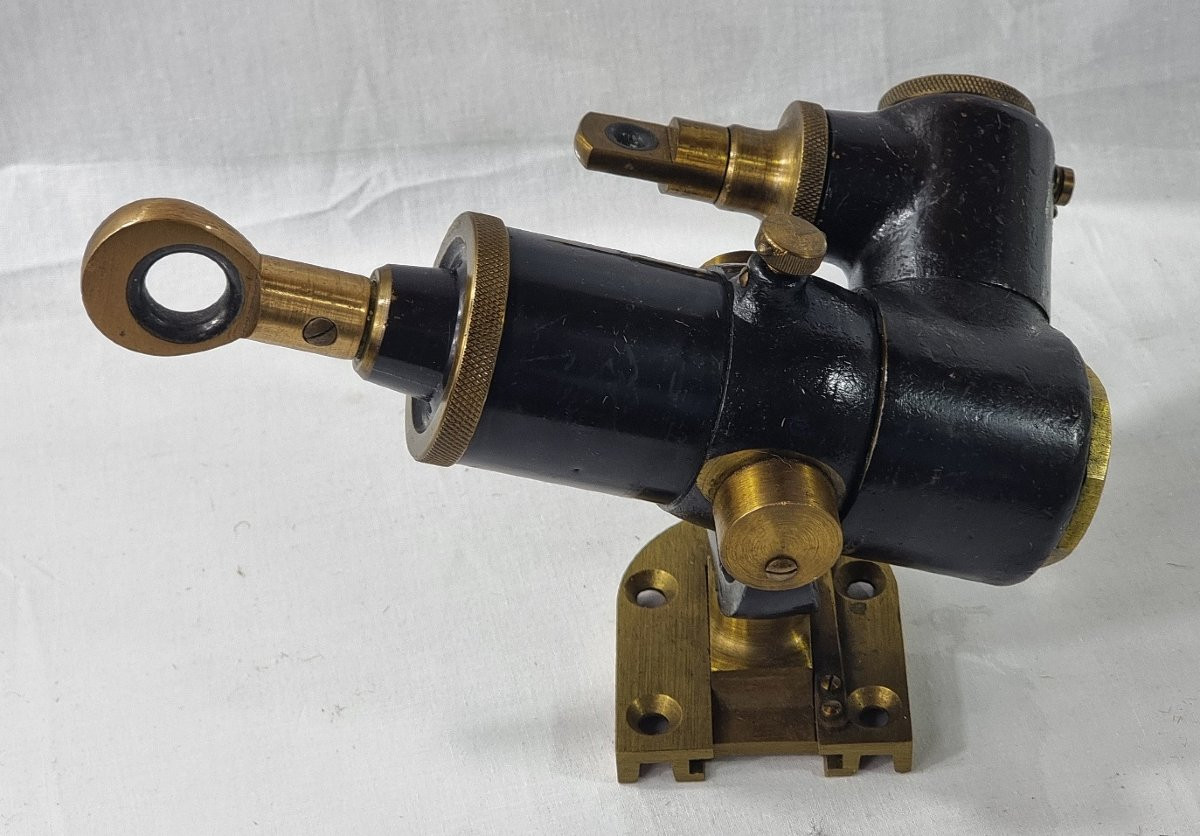
The log cable, made of braided rope and a brass fitting, connects the propeller to the speedometer. It mechanically transmits the propeller's rotation. The black part is the log reversing and closing device (Walker patent) – a mechanical transmission system. It is located between the log cable (of the towed propeller) and the speedometer, and its main function is to transmit the rotation: the propeller's rotation in the water is picked up by the log cable, mechanically converted, and transmitted to the speedometer (distance meter). This device allows the speedometer to accurately record the distance traveled by the ship. It forms the central element of the logbook; without it, the speedometer would be inaccurate.
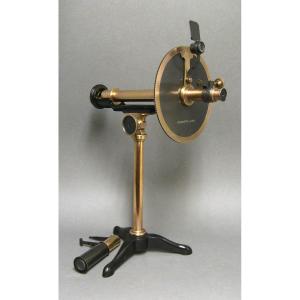
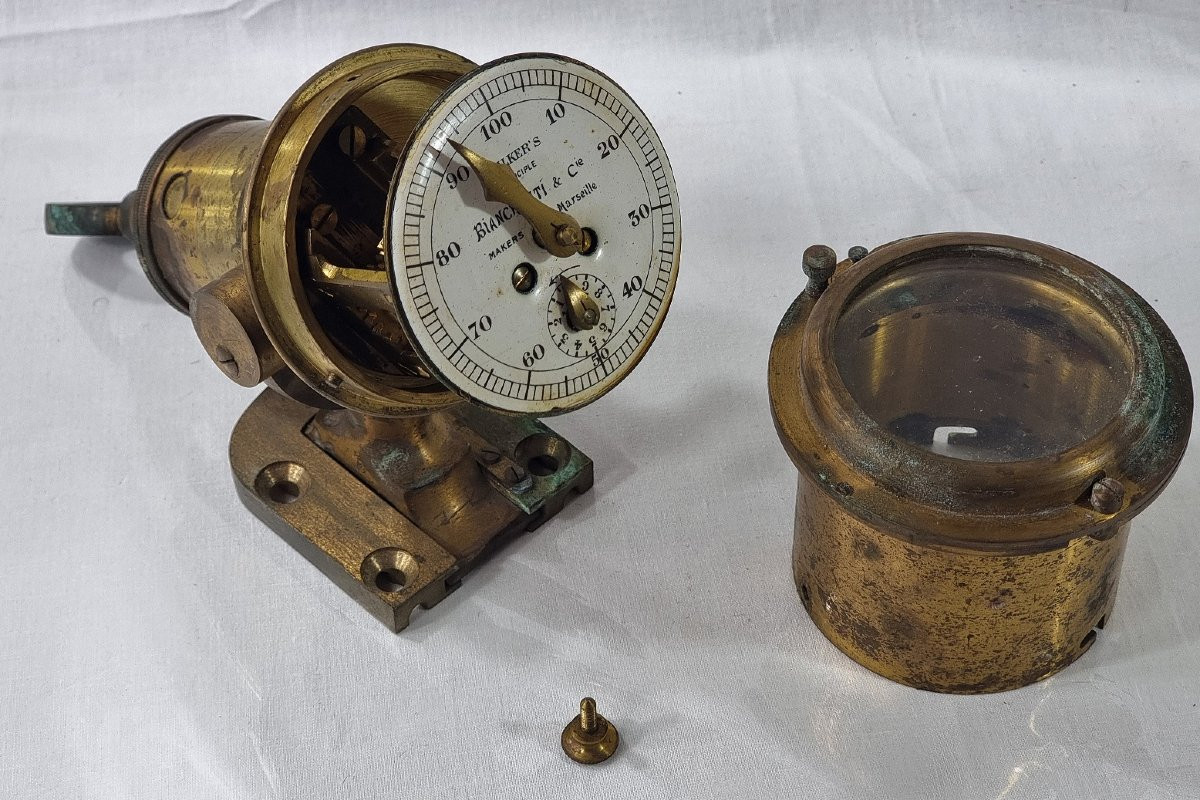
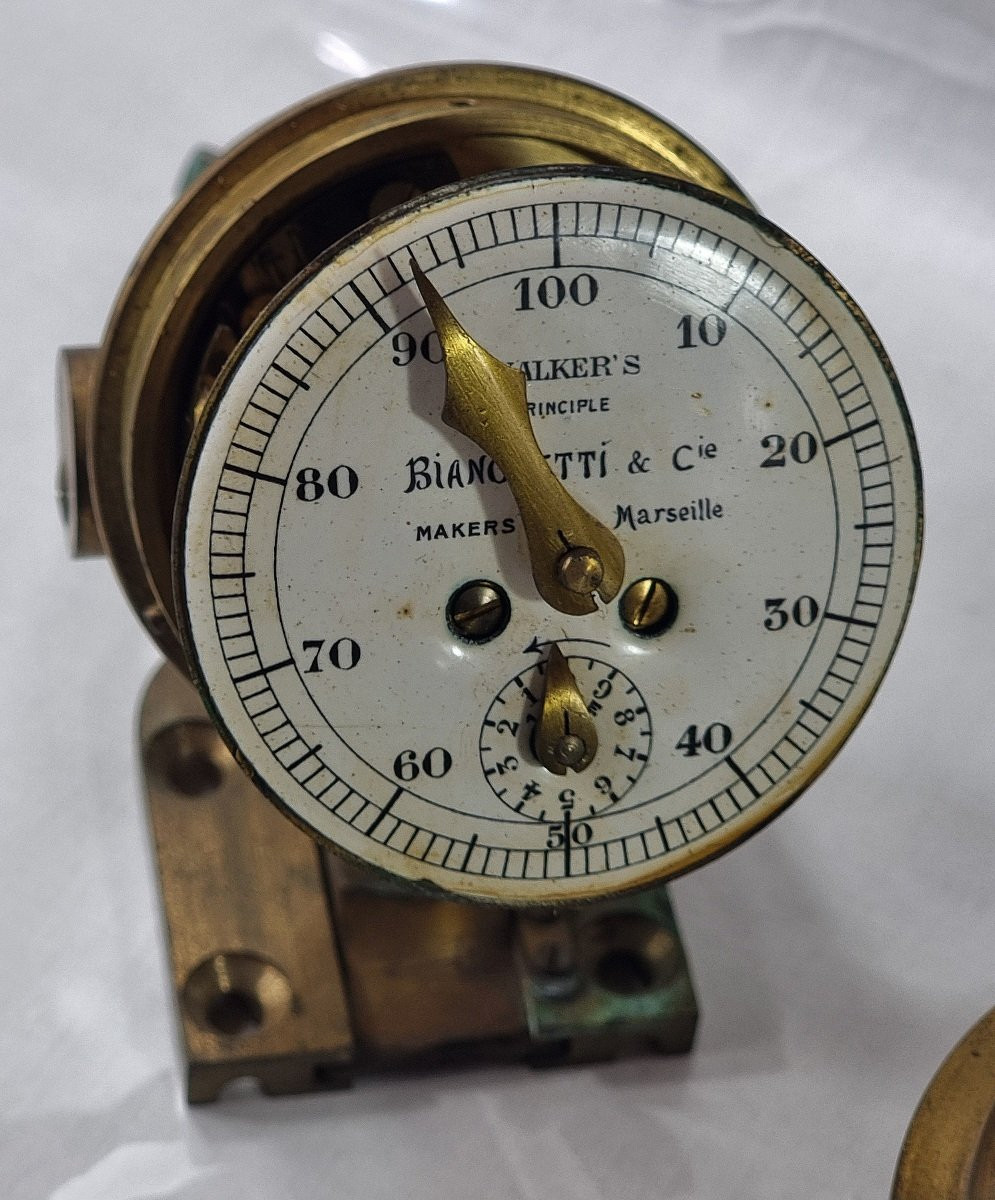
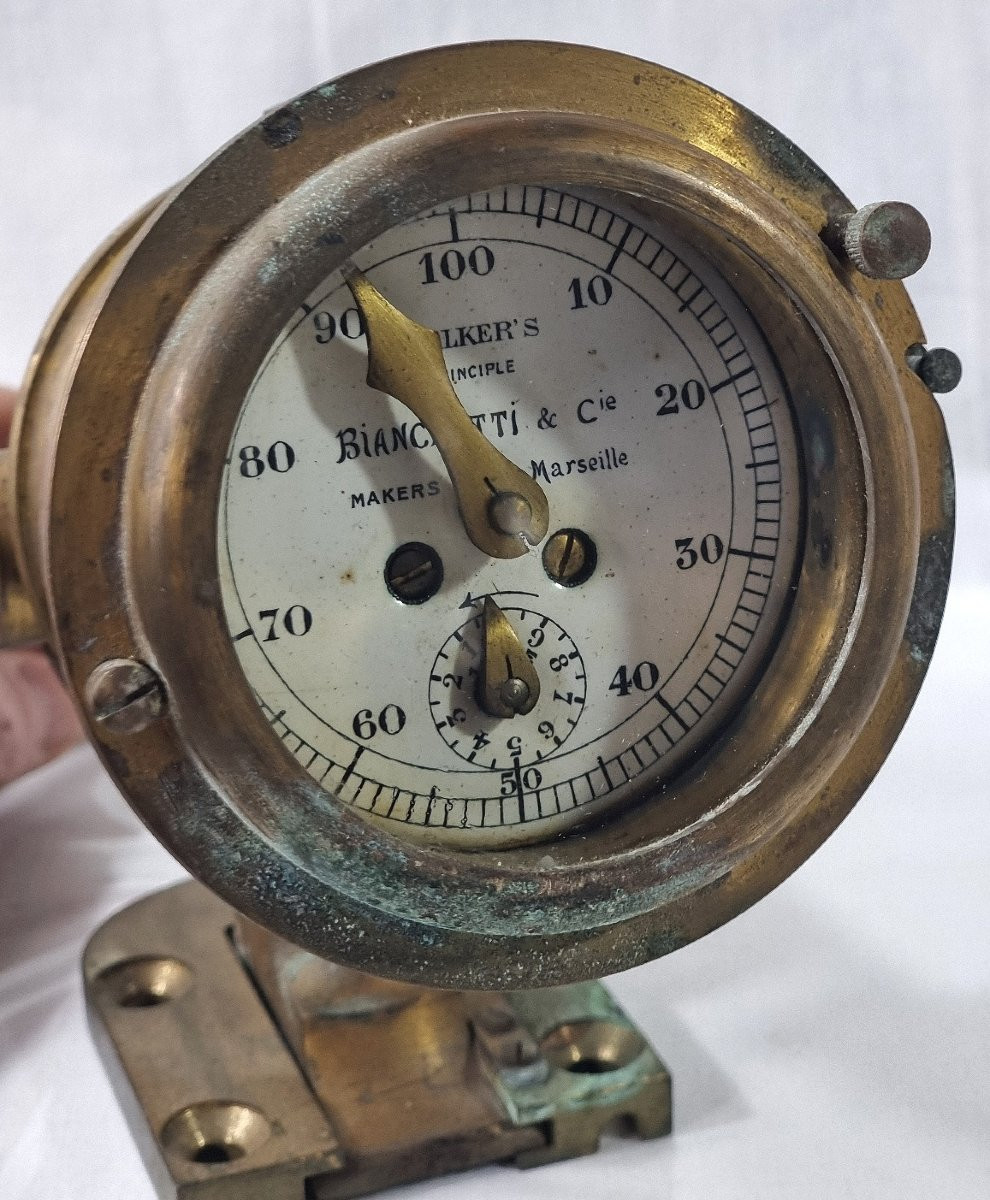
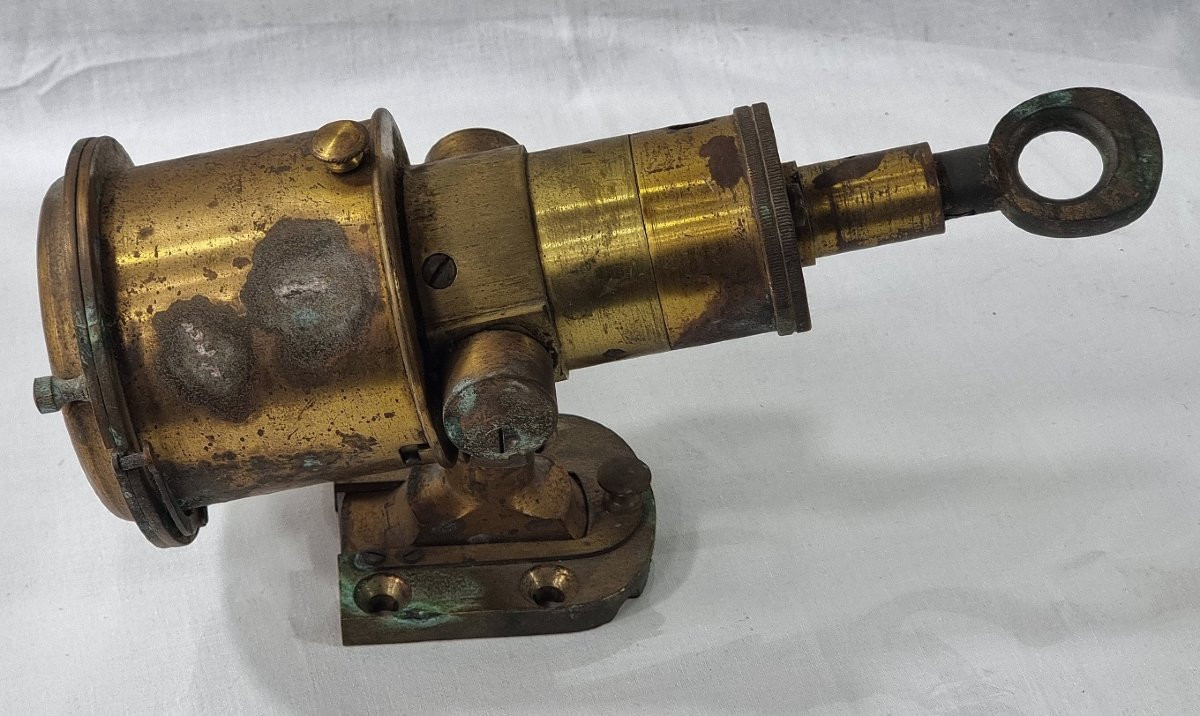
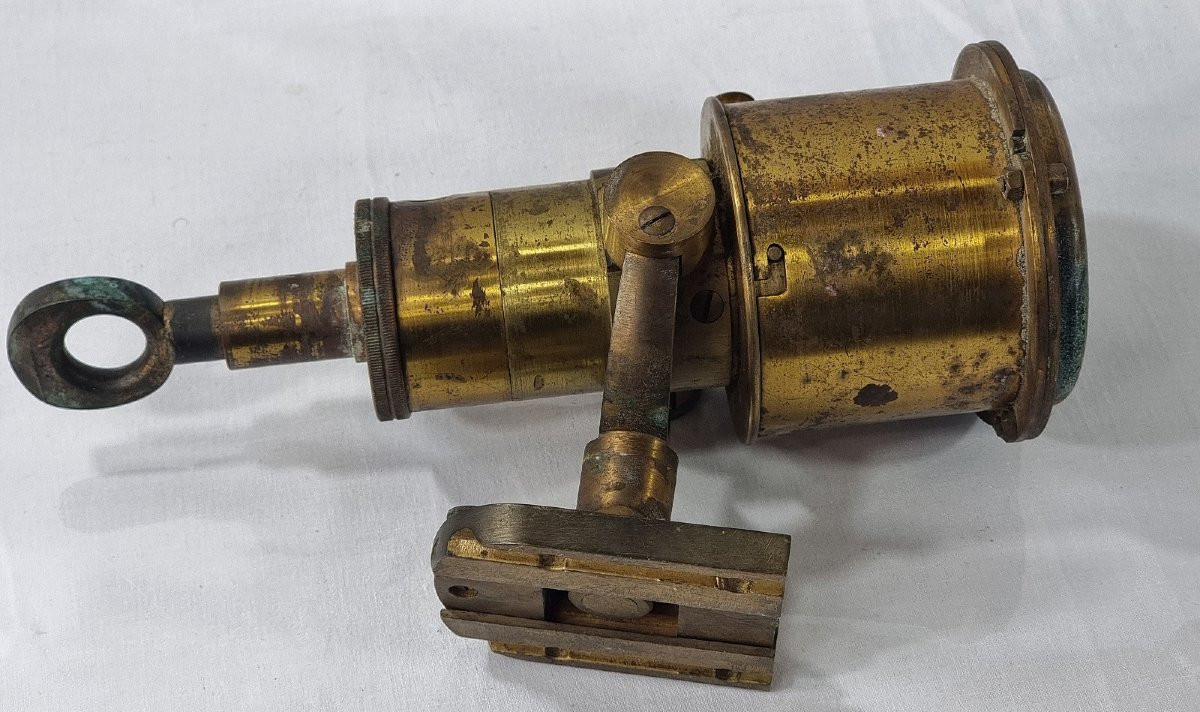
The measuring instrument/speedometer, manufactured by Bianchetti & Cie in Marseille, operates on the Walker principle, for which a partial patent was probably filed. The large hand generally indicates the distance traveled (often in nautical miles). The small counter records additional revolutions/fractions. Duration and markings: Considering the mechanical speedometer, its brass construction, and the mention of both manufacturers, it was probably made between 1880 and 1920. The materials used are typical of merchant and military vessels from before the advent of electronic logs.
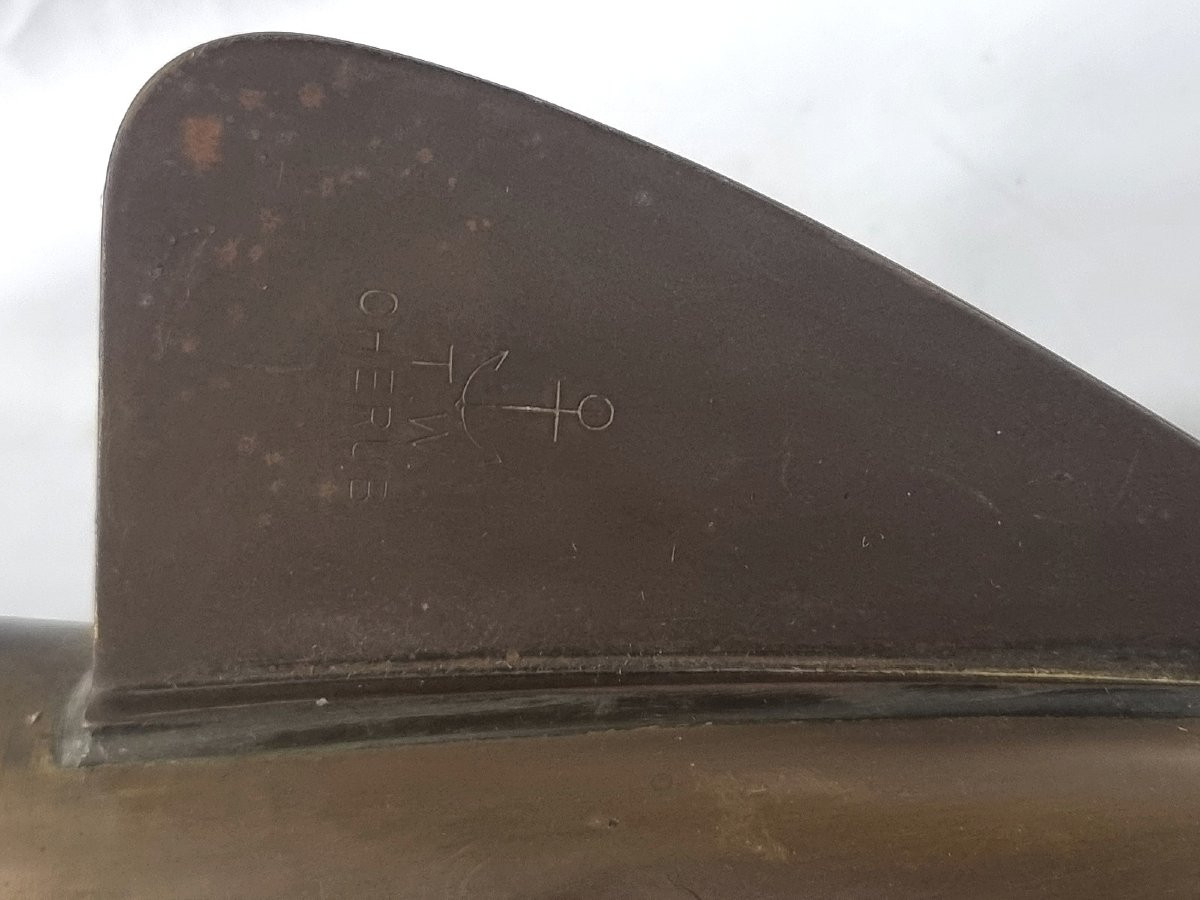
The log propeller bears the mark TW on its four blades, as well as a cherub and an anchor, and formerly bore the number 254; the rope connector is unmarked. The black transmission component is marked: T. Walker & Son Ltd. Birmingham Trade Mark, with an image of an anchor and the number A1262. The log counter is inscribed: Bianciattie & Cie Maker Marseille, with "Walker's Principle" above it. The inside of the counter has a black anchor mark, referring to T. Walker. It is possible that this company supplied the internal components and held a patent.
The name Bianchetti & Cie, Marseille, refers to a former French optics and navigation workshop based in Marseille.
Condition: All components are in good condition. The log counter has some slight discoloration but can be polished. The black transmission case is functional. Both the transmission case and the log counter have their original brackets. The log counter is functional.
Dimensions:
Log counter: 26 cm long x 14 cm high;
Transmission case: 23 cm long x 18 cm high;
Connector: 14.5 cm long x 4 cm wide;
Log fin: 38 cm long x 16 cm wide.
Please feel free to ask any questions.
Thank you for your visit. Best regards, Ben
The log propeller. This is towed overboard. The propeller rotates thanks to the ship's inertia.
The log cable, made of braided rope and a brass fitting, connects the propeller to the speedometer. It mechanically transmits the propeller's rotation. The black part is the log reversing and closing device (Walker patent) – a mechanical transmission system. It is located between the log cable (of the towed propeller) and the speedometer, and its main function is to transmit the rotation: the propeller's rotation in the water is picked up by the log cable, mechanically converted, and transmitted to the speedometer (distance meter). This device allows the speedometer to accurately record the distance traveled by the ship. It forms the central element of the logbook; without it, the speedometer would be inaccurate.
The measuring instrument/speedometer, manufactured by Bianchetti & Cie in Marseille, operates on the Walker principle, for which a partial patent was probably filed. The large hand generally indicates the distance traveled (often in nautical miles). The small counter records additional revolutions/fractions. Duration and markings: Considering the mechanical speedometer, its brass construction, and the mention of both manufacturers, it was probably made between 1880 and 1920. The materials used are typical of merchant and military vessels from before the advent of electronic logs.
The log propeller bears the mark TW on its four blades, as well as a cherub and an anchor, and formerly bore the number 254; the rope connector is unmarked. The black transmission component is marked: T. Walker & Son Ltd. Birmingham Trade Mark, with an image of an anchor and the number A1262. The log counter is inscribed: Bianciattie & Cie Maker Marseille, with "Walker's Principle" above it. The inside of the counter has a black anchor mark, referring to T. Walker. It is possible that this company supplied the internal components and held a patent.
The name Bianchetti & Cie, Marseille, refers to a former French optics and navigation workshop based in Marseille.
Condition: All components are in good condition. The log counter has some slight discoloration but can be polished. The black transmission case is functional. Both the transmission case and the log counter have their original brackets. The log counter is functional.
Dimensions:
Log counter: 26 cm long x 14 cm high;
Transmission case: 23 cm long x 18 cm high;
Connector: 14.5 cm long x 4 cm wide;
Log fin: 38 cm long x 16 cm wide.
Please feel free to ask any questions.
Thank you for your visit. Best regards, Ben
750 €
Period: 19th century
Style: Other Style
Condition: Excellent condition
Material: Brass
Length: 26
Width: 14
Reference (ID): 1687342
Availability: In stock
Print