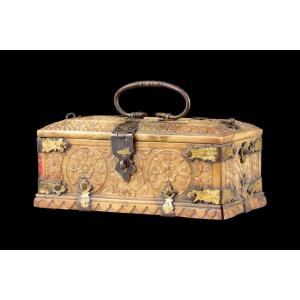
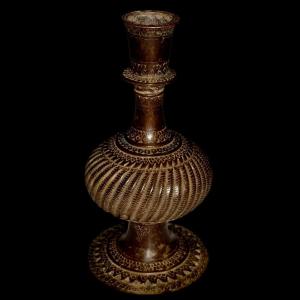
Huqqa, bronze huqqa base dating from the 17th-18th century, an Indian water pipe similar to the Turkish hookah, from the Arabic "huqqah". This magnificent object of Mughal art, abundantly decorated, o[...]
Early 17th-century copper engraving by Jean Théodore de Bry, engraved to illustrate travelogues, particularly those to India, by the English traveler Robert Coverte. Engraving entitled "The Lord Treas[...]
A rare large Safavid Persian ceramic bowl or cup, decorated with epigraphic poems or religious texts inside, surrounding a medallion at the base with bouquets of flowers, a stylized geometric frieze, [...]
Rare fragment of a decorative Turkish-Ottoman ceramic tile, decorated with a cherub or seraph's head, from the Sivas region of Turkey, with an old label from the renowned Muslim art antique shop of Jo[...]
Mortar and pestle made of elephant ivory (Elephantidae spp.), turned and decorated with horizontal striations in low relief and incised; origin Goa, Indo-Portuguese work, 17th century. Height: 14.5 cm[...]
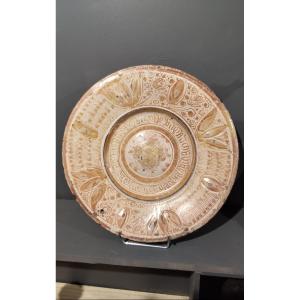
HAUTE EPOQUE / Folk Art Spain first half of 17th cty Large flared and hollow bowl decorated with a large bird in burnished copper on an ivory ground, with large staples on the reverse and some enamel [...]
Indo-Persian armor. Composed of a barleycorn-type chainmail reinforced with metal plates. There are 102 plates, with two missing. Three rows of 32 plates on the back, four on each side along the ribs,[...]
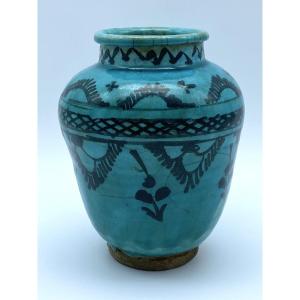
Persia, circa 1700-1735. Late Safavid dynasty (1501-1736). Antique Islamic faience vase with a turquoise tin or alcine glaze and black slip decoration. Fluid motif typical of the Kashan ceramic tradit[...]
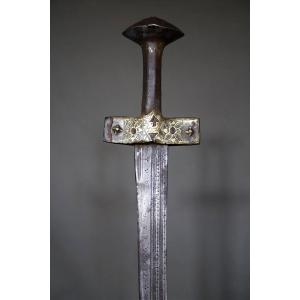
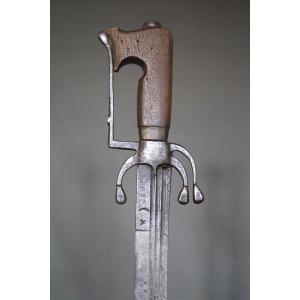
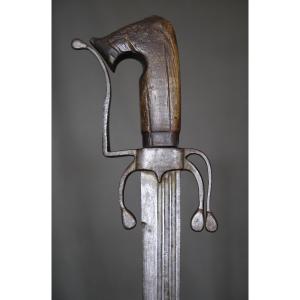
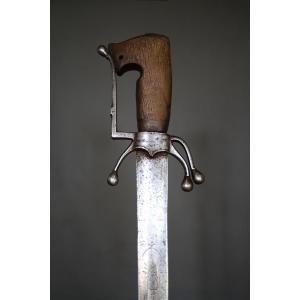
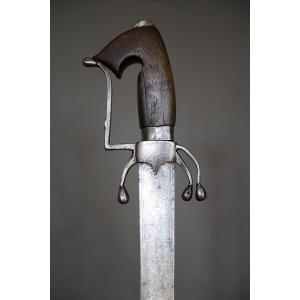
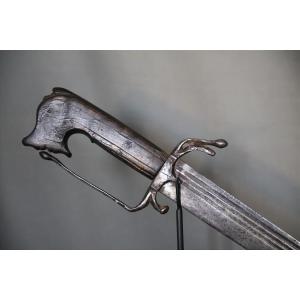
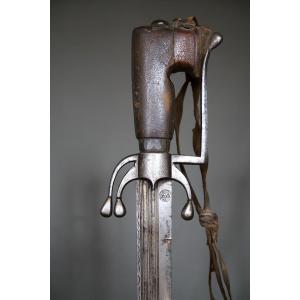
Moroccan nimcha saber with strong European blade - Morocco, 17th century Beautiful and strong European blade from the 17th century. Typical 17th century blade that is frequently found in Europe mounte[...]
Rapier sabre/nimcha - Late 16th early 17th centuryStraight single-edged blade, flat dot and three deep fullers.Markings of the famous serrated semicircles (also called eyelashes in English) on both si[...]
This work probably dates from the 16th or 17th century, it is a beautifully painted parchment. A child sits in the middle, an oriental character on the left. We note rubbing and wear, chipped corners,[...]
Handwritten page in Nastaliq calligraphy - Safavid Persia or Mughal India, 16th-18th century. The page features high-quality Nastaliq calligraphy on both sides and an illustration on the front. Framed[...]
Moroccan nimcha saber with strong European blade - Morocco, 17th century Beautiful and strong European blade from the 17th century. Typical 17th century blade that is frequently found in Europe mounte[...]
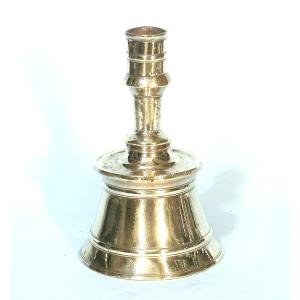
Free shipping for mainland France via La Poste or Mondial Relay****************Brass torch with tubular shaft and ringed socket resting on a flared truncated cone base. Height: 18.5 cm. OTTOMAN EMPIRE[...]
Moroccan Nimcha Saber - Morocco, 17th century Beautiful European blade from the 17th century. Straight double-edged blade, engraved on both sides in the first third of interlacing. Quality blade, thin[...]
Moroccan Nimcha Saber - Morocco, 17th century Beautiful European blade from the 17th century. Straight double-edged blade, engraved on both sides in the first third with interlacing and an anthropomor[...]
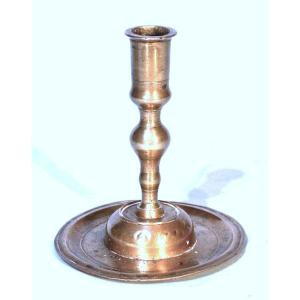
Shipping is free for mainland France via La Poste or Mondial Relay************TORCH in cast and turned bronze with a base in a humped bowl surmounted by a leg with a baluster and a cylindrical socket.[...]
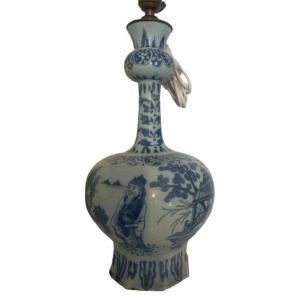
Delft bottle in white earthenware with Delft blue Asian rotating decoration, very fine workmanship, small old restoration on the neck and one on the foot, second lamp in the model available but to be [...]
Five pipe bowls (Al-Šhūbūk” or “ҫubuk” in Turkish) - Egypt, Ottoman period (17th-18th century) Some small chips in places otherwise in good condition. Length 3 to 5.55 cm
Description: Gold nielloed steel, gilded bronze. These scissors were used to precisely cut the paper, which received the inscriptions of this calligraphy. The amounts of the rings bear the inscription[...]
Moroccan Nimcha Saber - Morocco, 17th century Strong, slightly curved single-edged blade with 3 deep fullers 17th century European blade with Roman letter markings (V and N) in the central fuller on b[...]
Bronze Ottoman candlestick (Turkey) 17th century The base is bell-shaped, slightly flared, and the socket adopts a characteristic floral shape, like a tulip with a toothed edge. Dimensions 24cm heig[...]
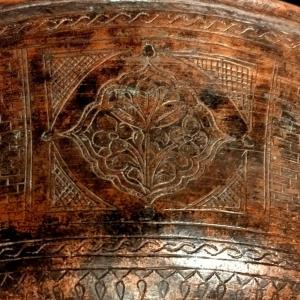
Large basin from the Safavid or Safavid period: End of the 17th, beginning of the 18th century Exceptional piece of Persian history.
Rare beautiful patina on copper.
- The outer rim is composed of s[...]
An exceptionally high quality topographical watercolor (location unknown at present) by a 19th-century painter. The identity of the artist is unidentified at present. With clear influences from David [...]
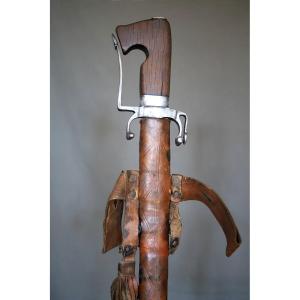
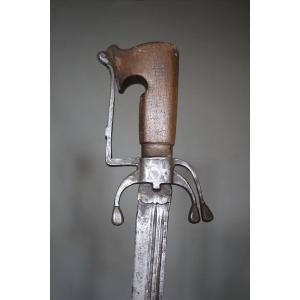
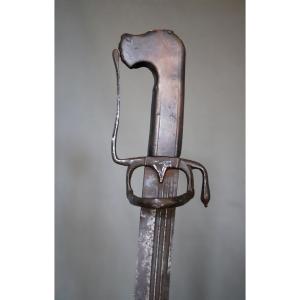
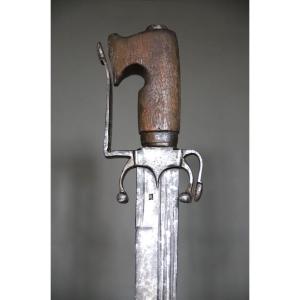
This saber is to be classified in the "FIRANGI", that is to say the sabers of India mounted from a European blade. This is a so-called “KHANDA” mount typical of the state of Maha Rashtra (Bombay regio[...]
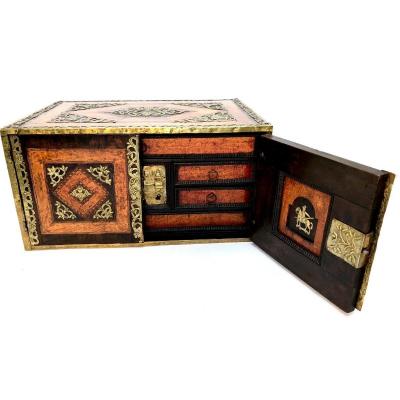
A North European 17th century brass mounted elm and walnut table cabinet
The pair of doors enclosing a fitted interior of drawers including 'secret' compartments, the central panel decorated with an [...]
Rare polychrome sculpture, depicting a figure wearing a turban (probably an Ottoman Turkish). Carrillon element? Late seventeenth and early eighteenth century. H. 138 cm
Proantic uses a cookie to analyze traffic and improve its service by using Google Analytics. Data sent to Google Analytics (frequency of visits to the site and pages visited) are anonymous. No other cookie tracks your activity, your personal data is not collected. Thank you for helping us to have better understanding how Proantic is used.