


Large Persian Ceramic Bowl With Safavid Epigraphic Decoration, Soustiel, 17th Century
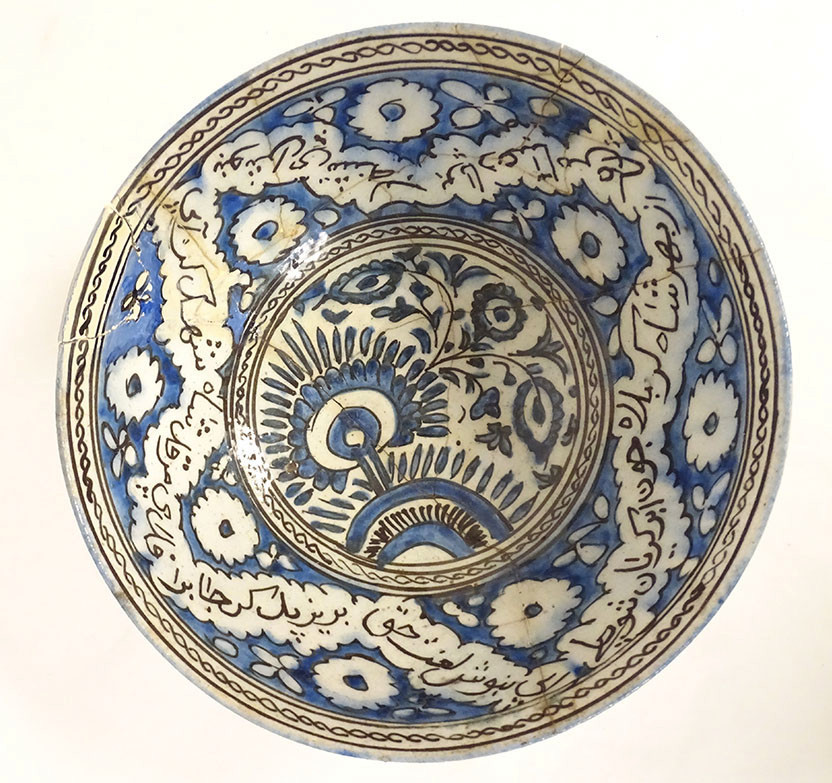
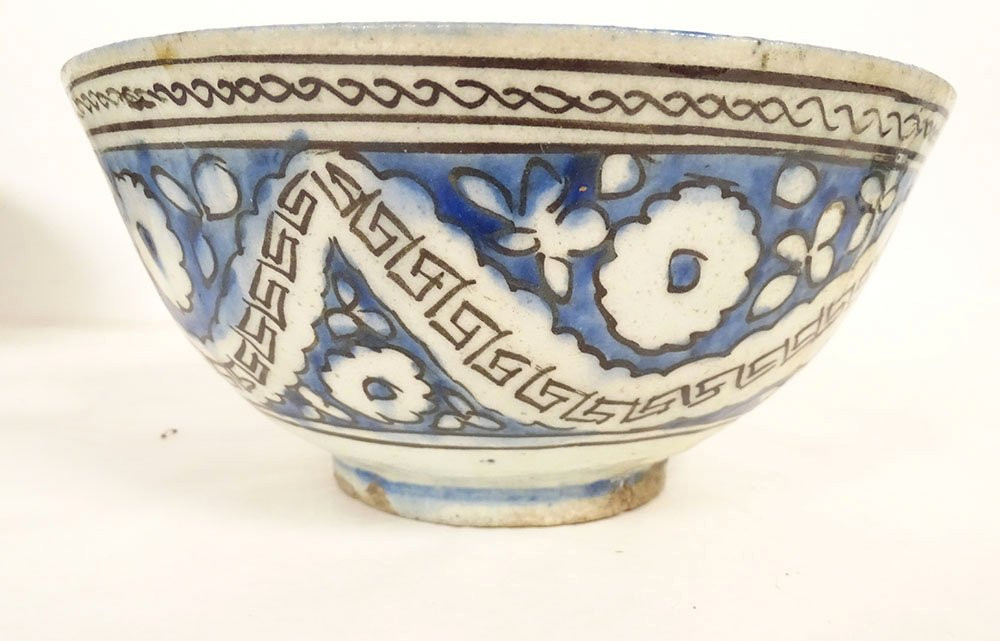
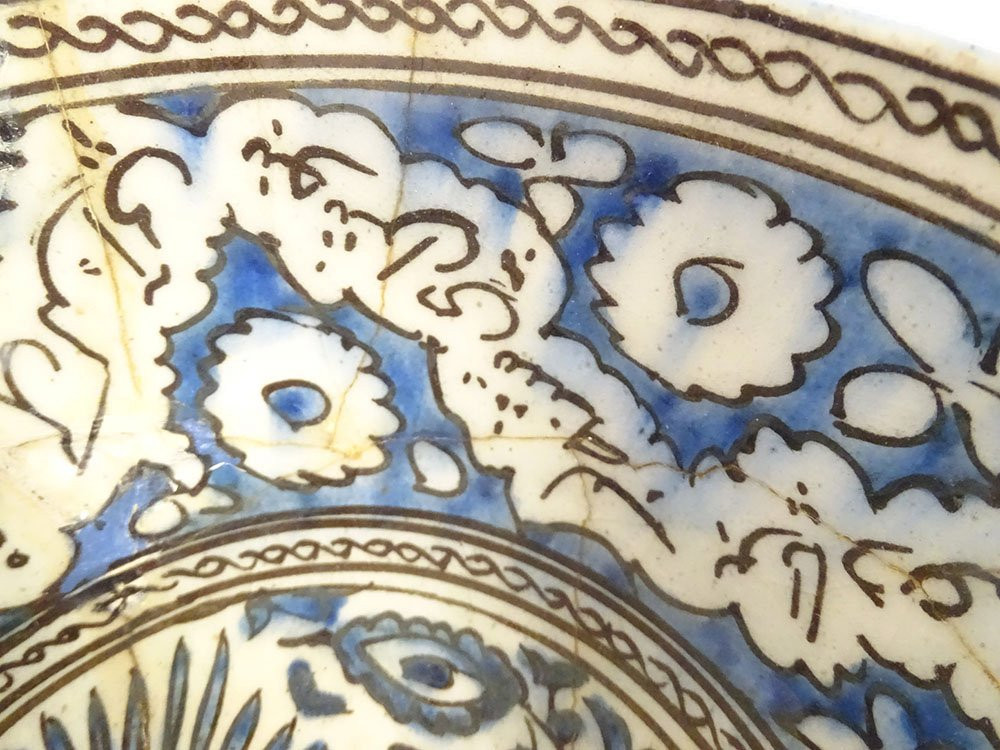
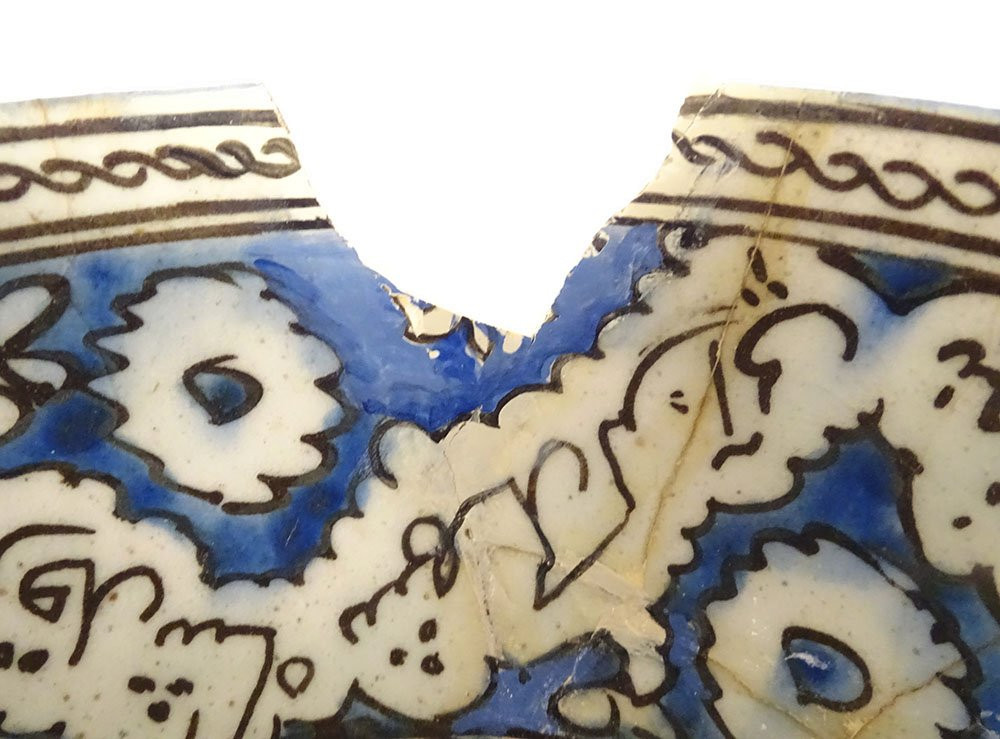
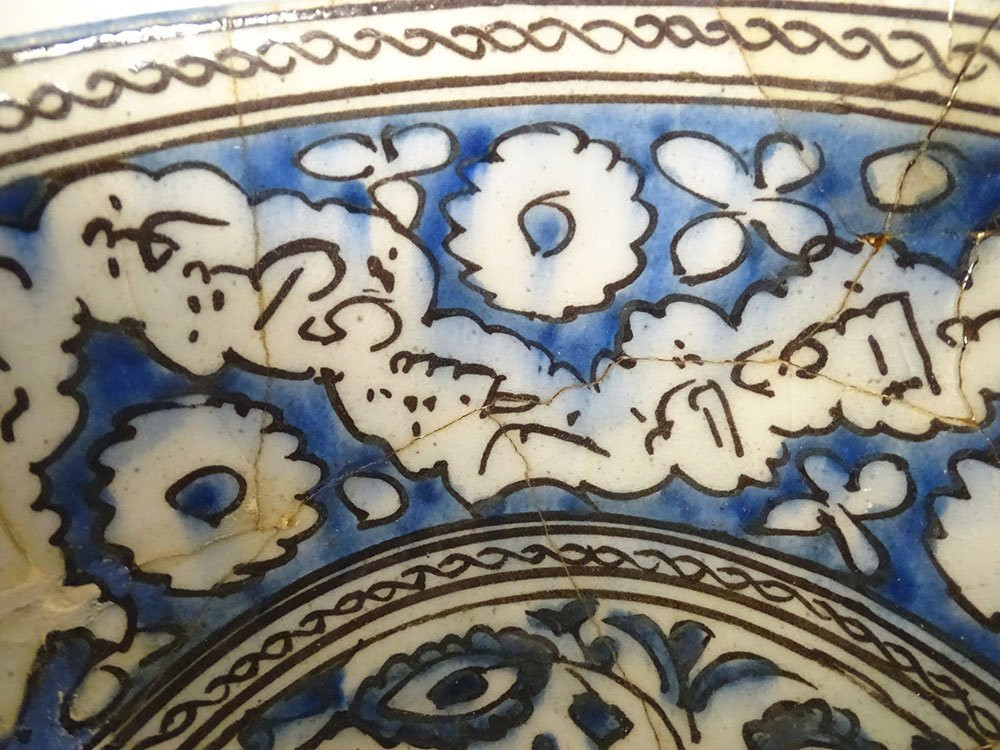
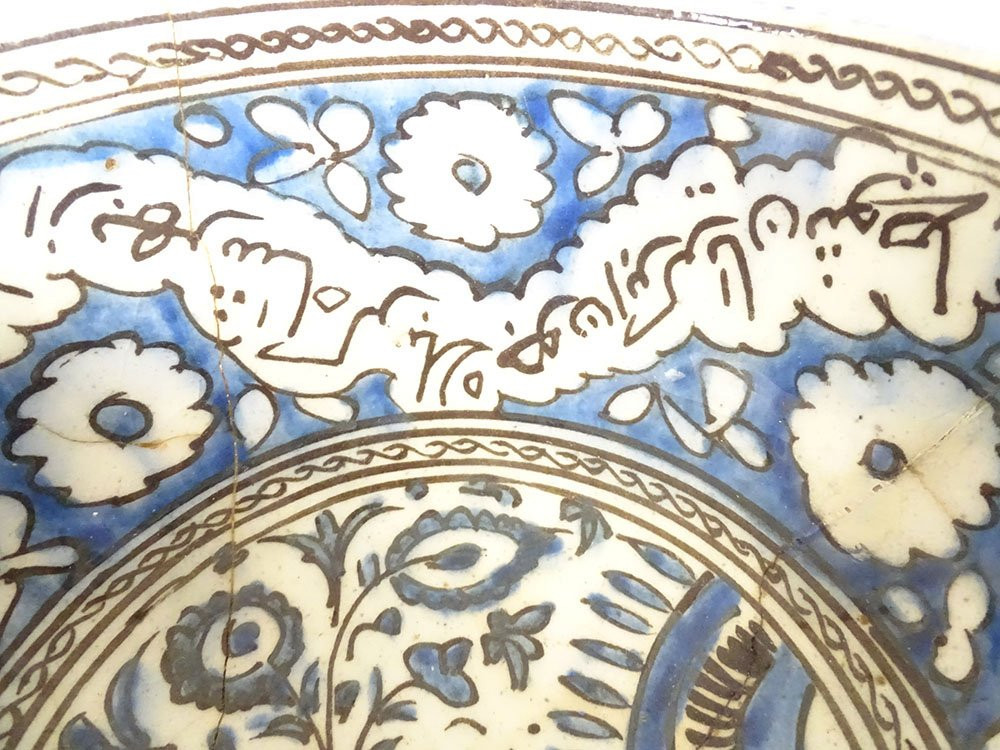
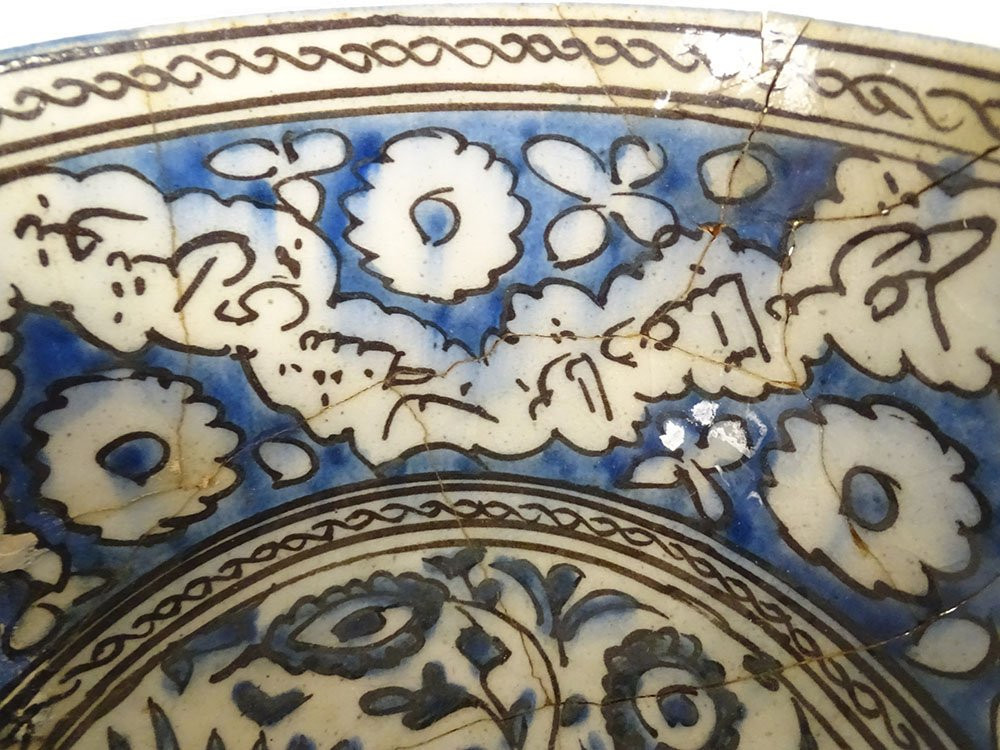
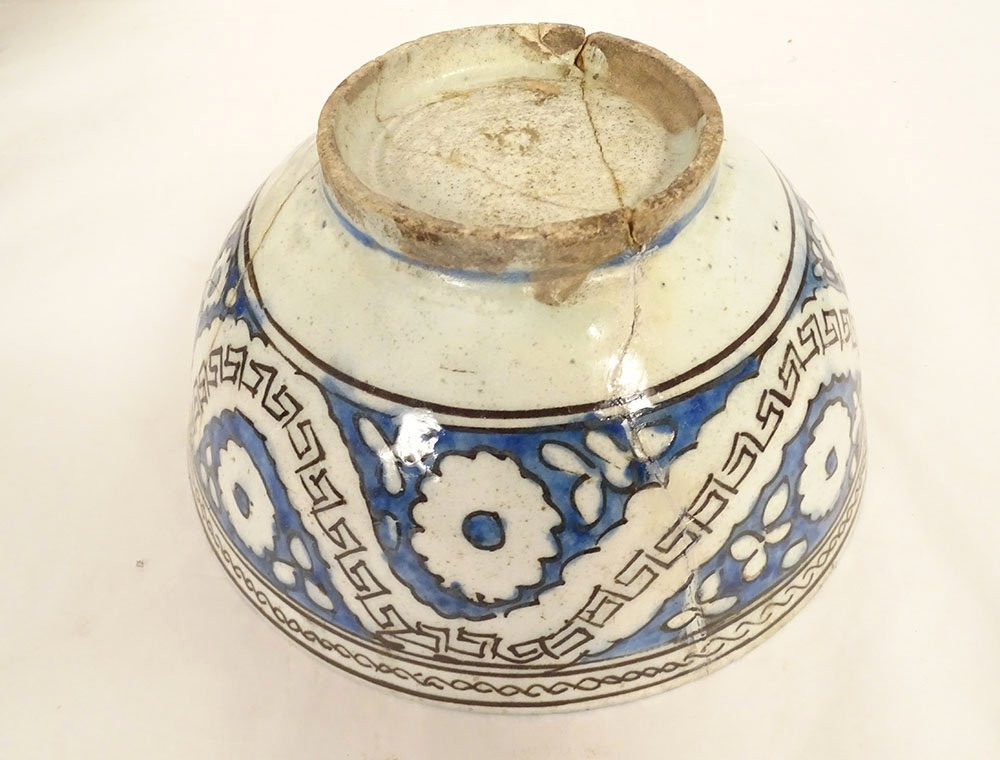
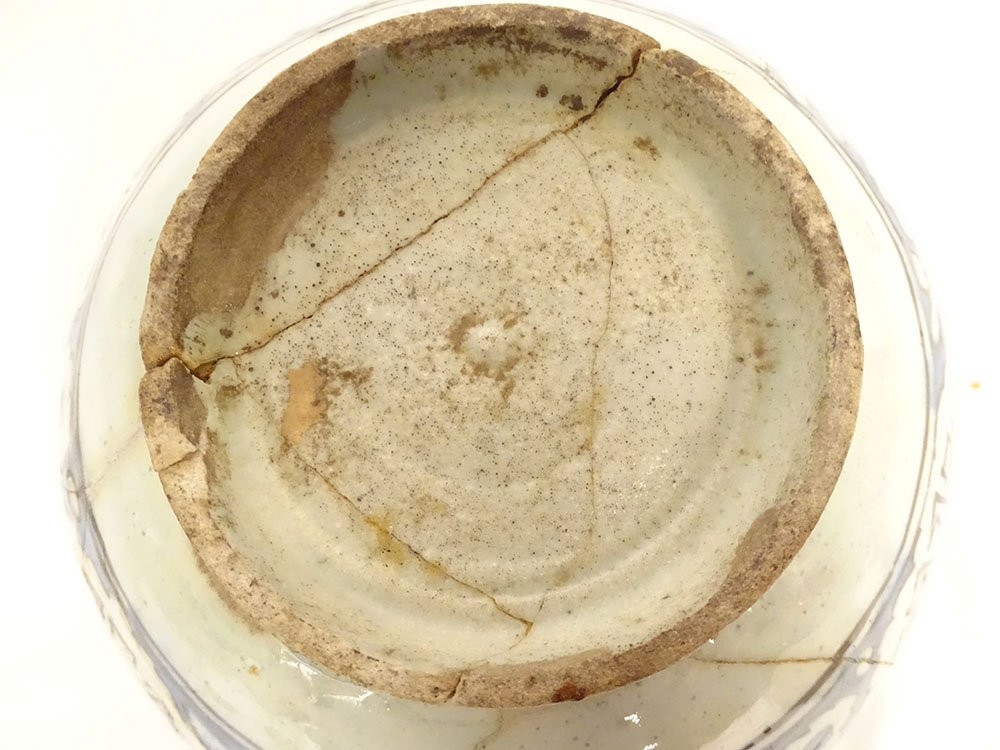
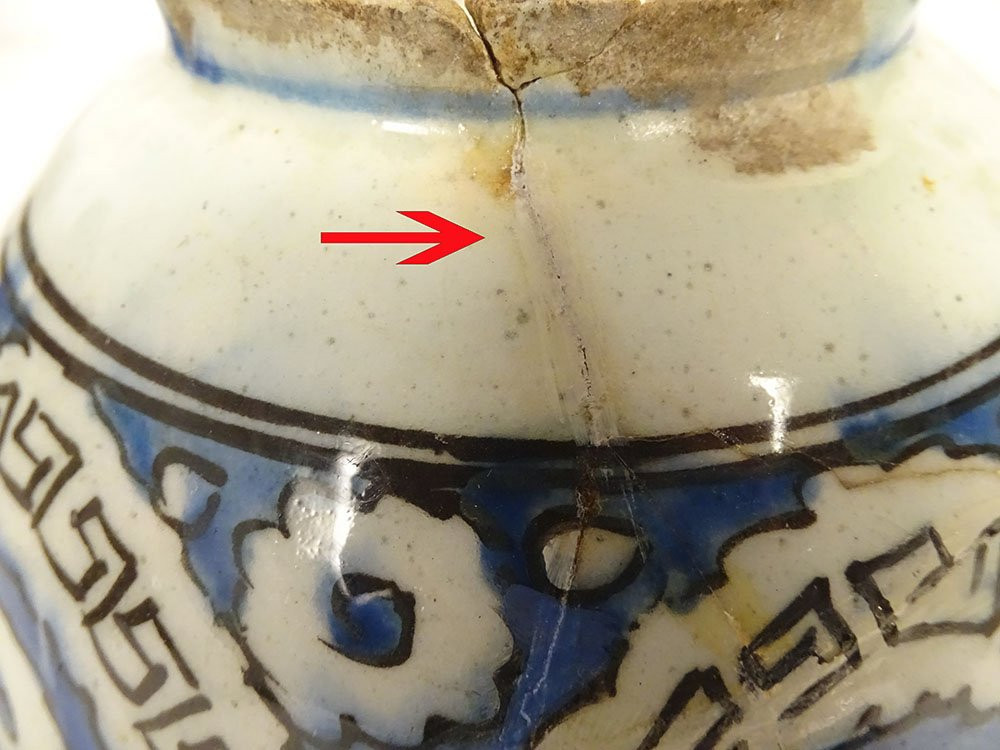
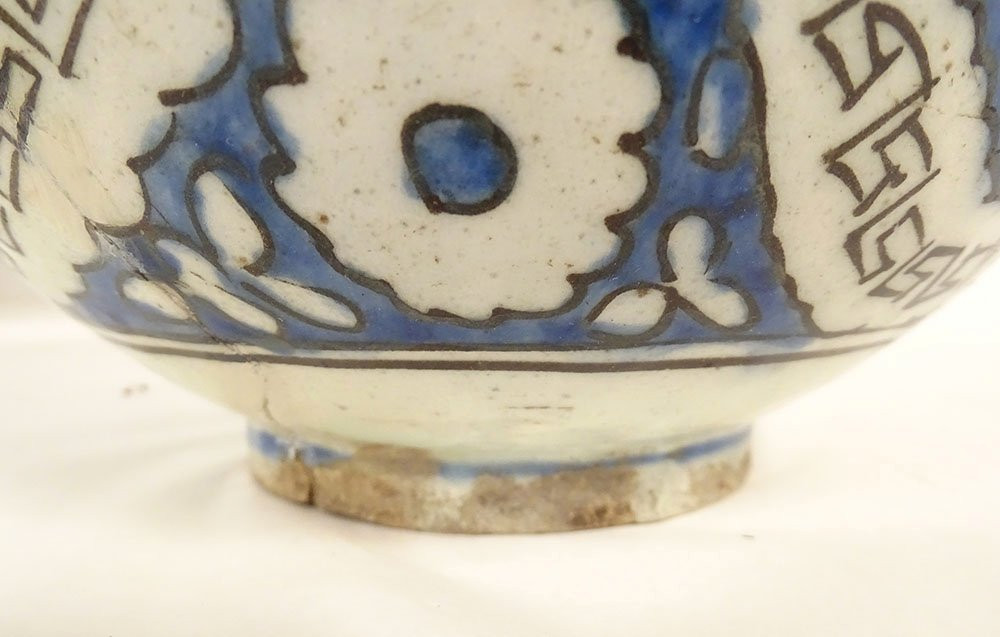
A rare large Safavid Persian ceramic bowl or cup, decorated with epigraphic poems or religious texts inside, surrounding a medallion at the base with bouquets of flowers, a stylized geometric frieze, and flowers on the sides. Provenance: private collection (possibly from the Muslim art shop of Joseph Soustiel*), Persian Peninsula, 17th century. This bowl is in its original condition and shows signs of age. It has been broken and then repaired; a piece will need to be reattached. Two bowls with similar (later) epigraphic decoration are held at the Louvre Museum in the Department of Islamic Art (inventory numbers OA 5975 and OA 4092). This object comes from a private collection, some of whose pieces were purchased from Joseph Soustiel's Parisian shop (labels and numbers on the base). We have many other items from this collection for sale on this website. Note: numerous accidents and restorations, chip at the base, enamel defects, wear consistent with age, see photos. * SOUSTIEL Joseph (1904-1990): Antique dealer and expert in Islamic art. Joseph Soustiel was the heir to a dynasty of antique dealers whose ancestors, Abraham and his grandfather Moses (1836-1916), founded an antique shop in Thessaloniki in 1883, with warehouses in Skopje (Üsküb), Sarajevo, and Istanbul. Thirteen years later, his father, Haim (1871-1939), settled in Istanbul, where he opened a shop in the Grand Bazaar (Tarakçılar Sokak), followed by a second in the Zincirli Khan in 1913. After completing his primary and secondary education at the Brothers' School in Thessaloniki and then at the German School in Istanbul, Joseph left the Ottoman capital in October 1921. While en route to Tunis aboard the Mega Hellas, a violent storm forced his ship to stop in Marseille. He took the opportunity to visit his uncle Albert in Paris. In 1926, he partnered with Berthe Léger-Eskénazi (d. 1929), an antique dealer located a short walk from the Hôtel Drouot at 26 rue Grange-Batelière, and developed the business, Art Musulman. In 1935, he married Irène Eskénazi, the daughter of his business partner, and that same year the young couple moved to 146 Boulevard Haussmann. A perfect polyglot and a great connoisseur of Islamic art, he participated in the creation of the France-Turkey Committee in 1949 and, from 1952, with Jean David-Weill, oversaw the organization of the first exhibition devoted to Turkish art at the Pavillon de Marsan of the Musée des Arts Décoratifs in Paris (Splendor of Turkish Art, February-April 1953). His most cherished areas remained textiles and Islamic ceramics, to which he devoted several articles. A patron of the arts, he was a generous donor who contributed to the enrichment of the Islamic collections of the Louvre, the National Ceramics Museum in Sèvres, the Museum of Decorative Arts, as well as numerous provincial museums, museums in Turkey (door of the Green Türbe and cradle of Sultan Mahmud II in the Bursa Museum), and museums around the world. Appointed a Knight of the Legion of Honor in 1977, he handed over his gallery to his son Jean in 1983. Frédéric Hitzel, CNRS / Entry published in François Pouillon (ed.), Dictionnaire des orientalistes de langue française, Editions Karthala, Paris, 2008, pp. 908-909. Dimensions: Neck diameter 21.5 cm, Base diameter 9.5 cm, Height 10.3 cm. Reference: 500 979. All photos are available at: www.antiques-delaval.com
2 500 €
Period: 17th century
Style: Orientalism
Condition: En l'etat
Diameter: au col 21,5 cm diamètre au cul 9,5 cm
Height: 10,3 cm
Reference (ID): 1675456
Availability: In stock
Print