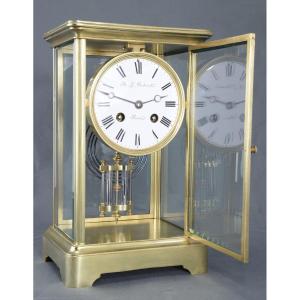


Clock Glass Cage Watchmaker: Vinventi Et Cie 1860
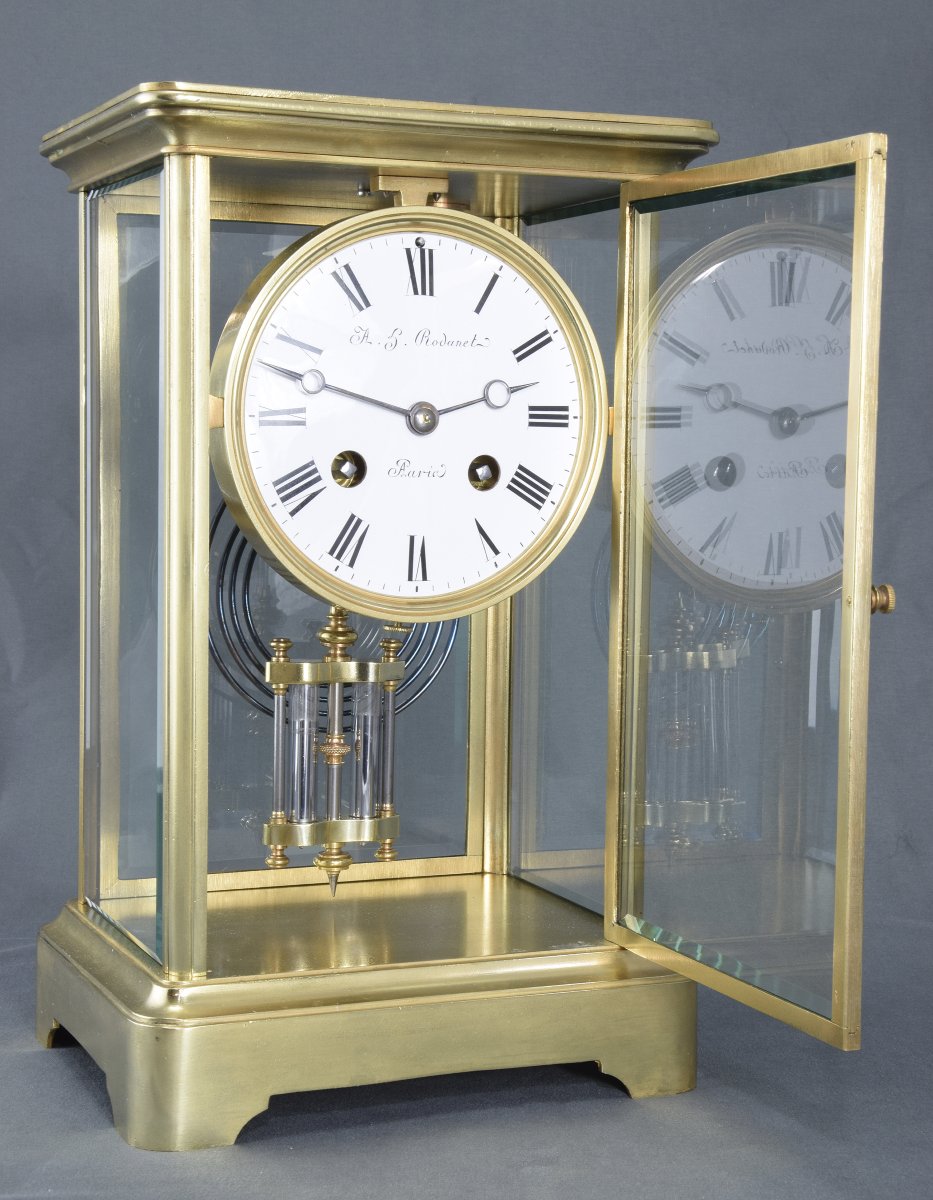
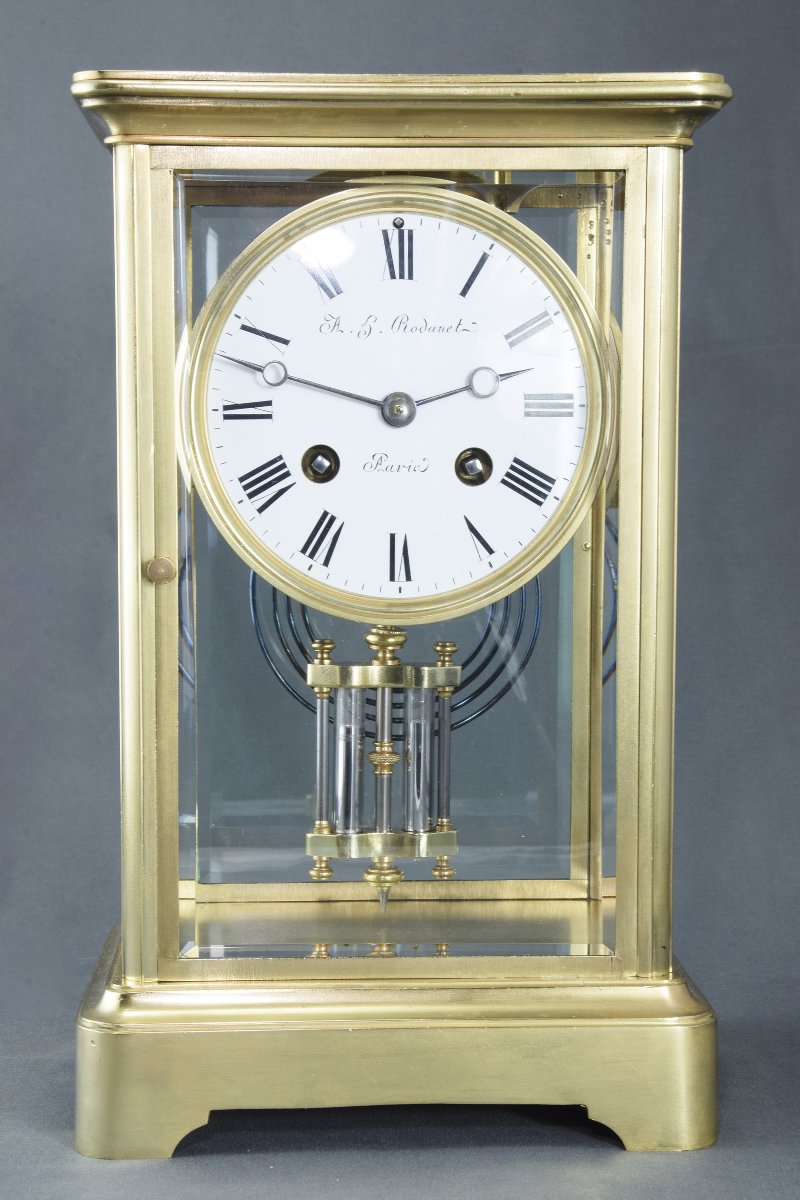
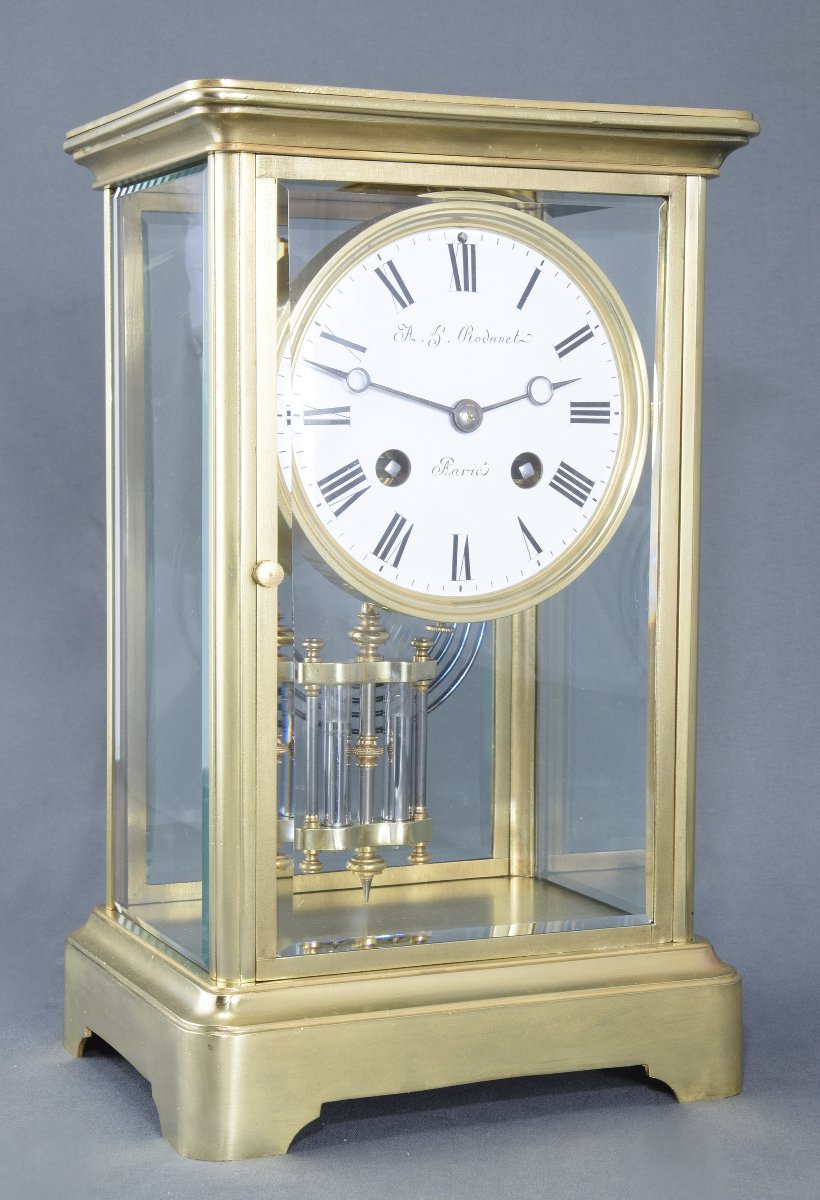
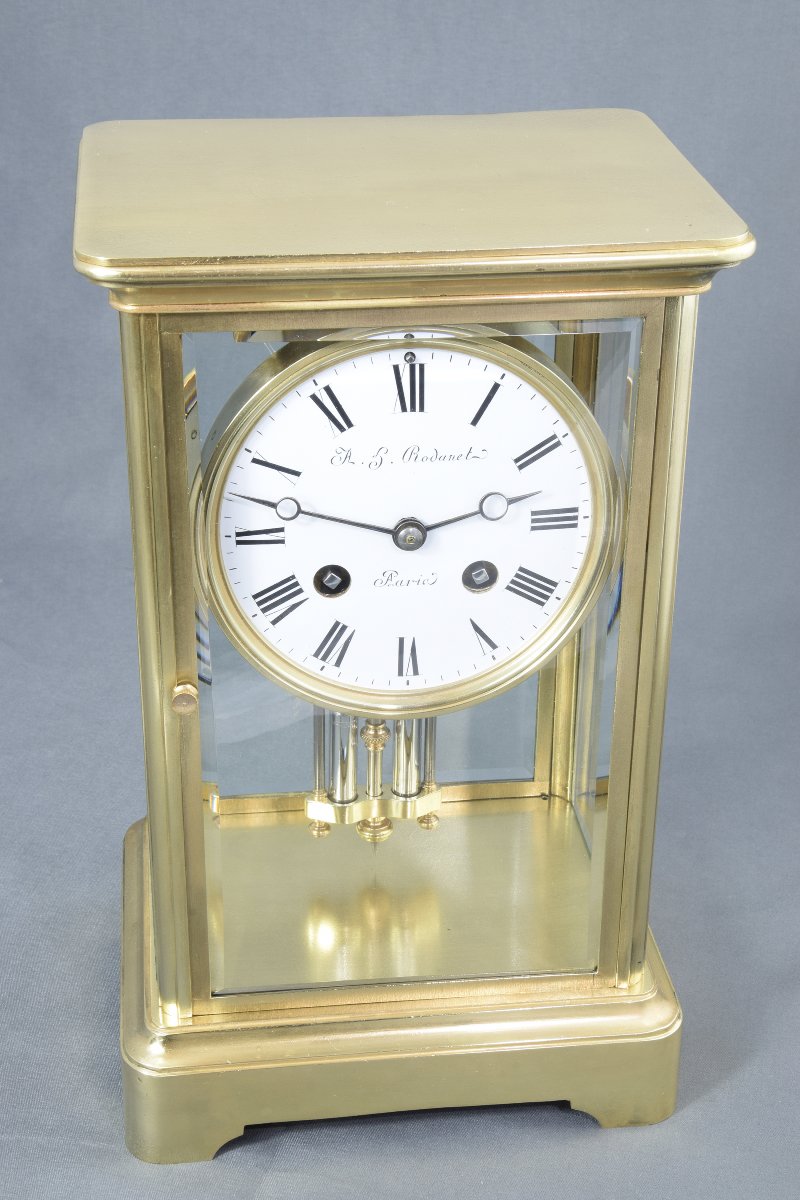
A luxurious four-glass mantel clock from the Napoleon III period, circa 1860, signed on the dial and stamped on the movement “A. J. Rodanet à Paris”, bearing the name of a Parisian clockmaker listed in Tardy’s Dictionary of French Clockmakers. This elegant precision timepiece is distinguished by the noble architecture of its gilt-bronze case, the transparency of its glazed panels and the sophistication of its exposed movement. Its aesthetic, both rigorous and refined, showcases the mechanical ingenuity of nineteenth-century horology, making this clock a remarkable collector’s piece for both its quality of manufacture and its technical interest.
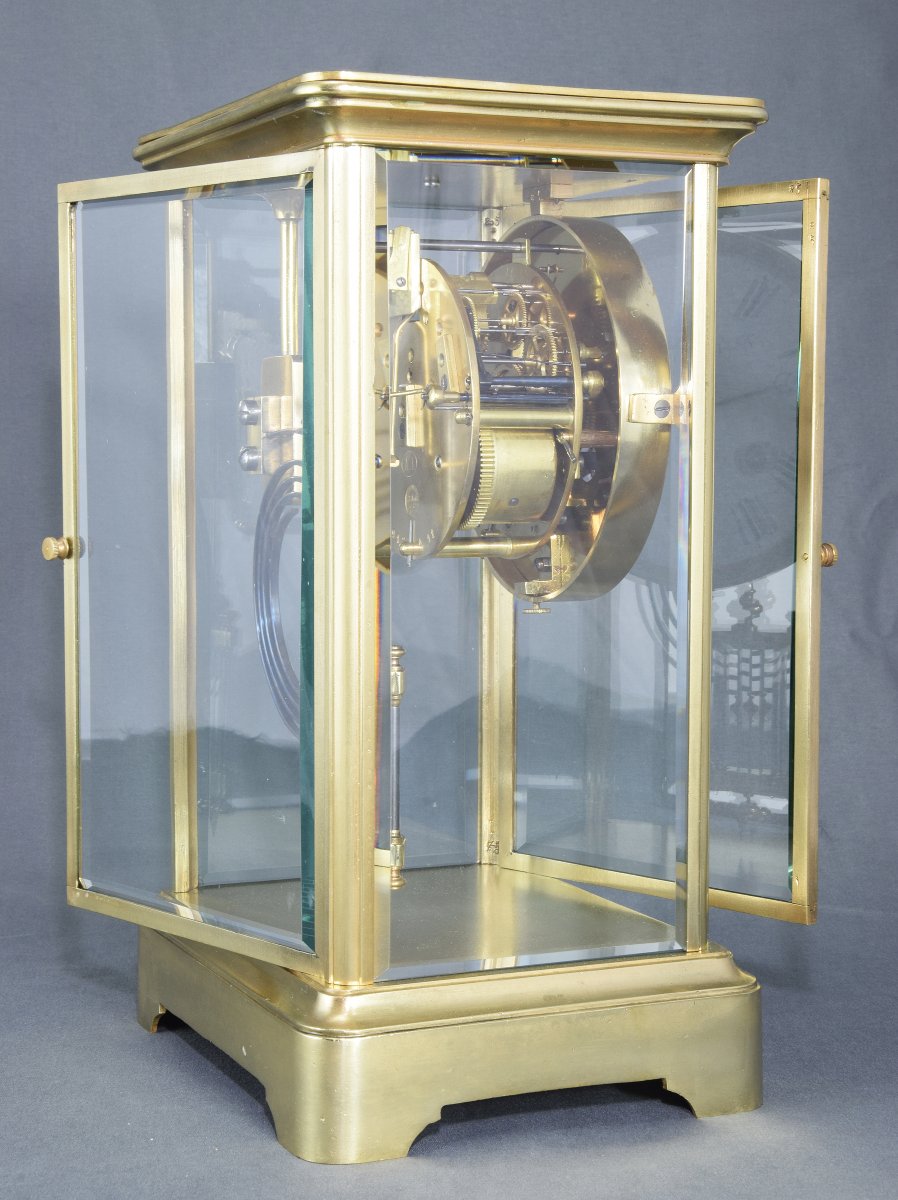
The case rests on a rectangular base with restrained yet powerful lines, whose successive mouldings emphasise the solidity and stability of the whole. The four corner uprights, featuring carefully worked profiles, support an overhanging upper cornice with several stepped mouldings, lending the composition an architectural silhouette and an elegant presence. The gilt-bronze framework forms a luminous setting for four thick glass panels with bevelled edges, whose transparency allows the movement to be admired from various angles. The quality of the joints, the regularity of the mouldings and the harmonious proportions testify to meticulous craftsmanship, combining structural robustness with the desire to showcase the mechanism.
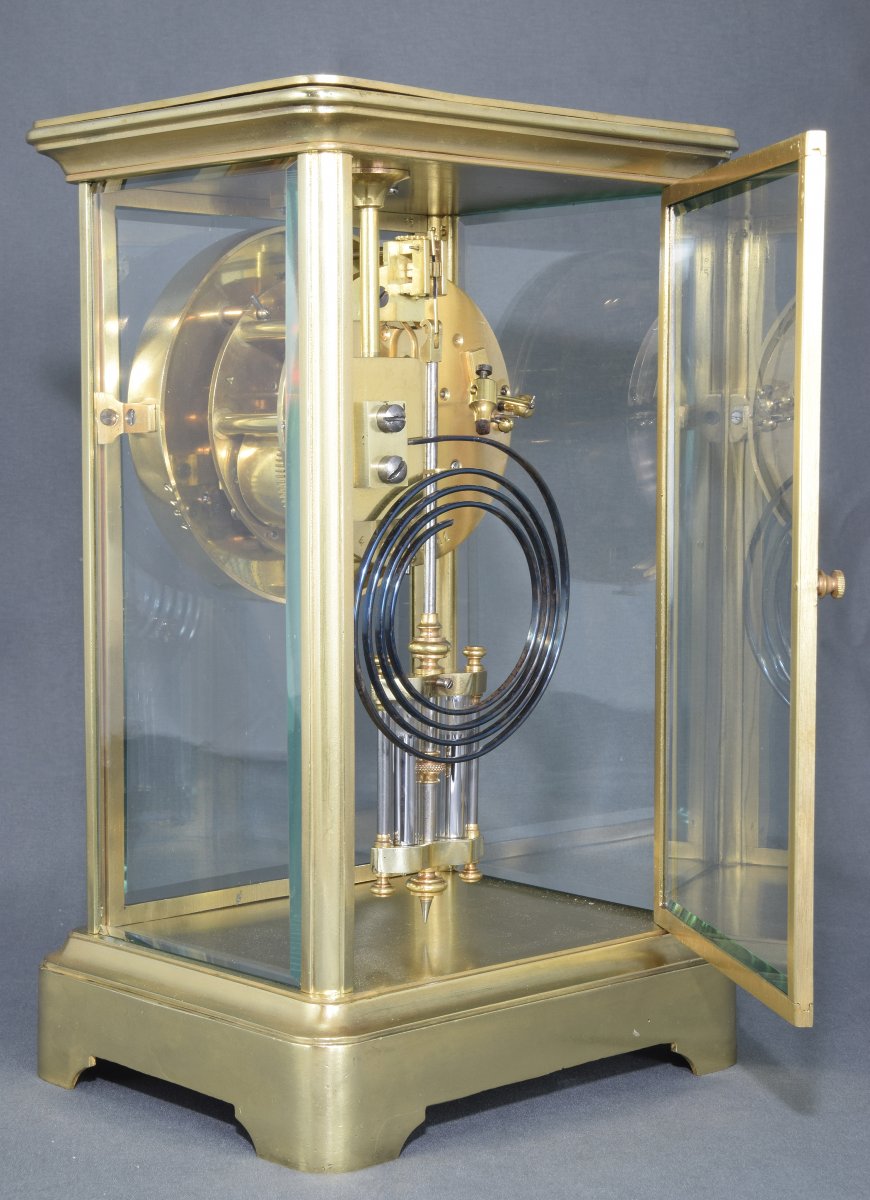
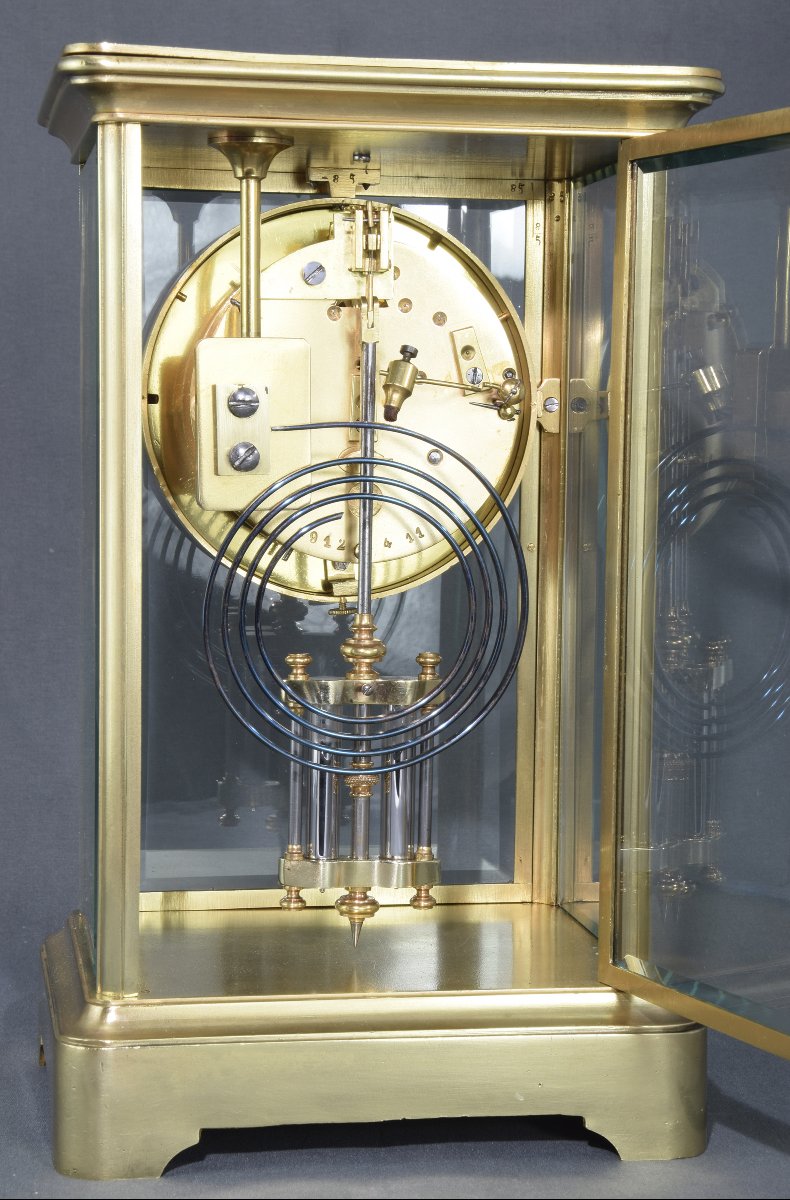
At the top, an overhanging rectangular cornice, accentuated by stepped mouldings, crowns the structure. It rests upon a four-sided glazed case framed by vertical gilt-bronze uprights with softened edges. At the base, a substantial, similarly moulded plinth provides a stable foundation while extending the geometric elegance of the design. The front features a circular white enamel dial, surrounded by a gilt-bronze bezel and fitted with black Roman numerals, a chemin-de-fer minute track and finely crafted hands. Two winding apertures provide access for winding the movement, while the signature “A. J. Rodanet” and the inscription “Paris” identify the clockmaking establishment. The hinged front glass door provides convenient access to the dial and movement, while the side and rear glass panels offer an unobstructed view of the movement and its working components. The glazed rear door, in particular, reveals the mechanical arrangement and pendulum, emphasising the clock’s dual aesthetic and technical purpose.
The mercury-compensated pendulum
The mercury-jar pendulum, suspended beneath the movement, is one of the most remarkable features of this precision timepiece. This ingenious device uses the thermal expansion of mercury to compensate, to a certain extent, for variations in the pendulum rod’s length caused by temperature changes. As the temperature rises, the expansion of the mercury alters the distribution of mass, helping to maintain a more constant period of oscillation. This principle of thermal compensation, particularly valued in fine nineteenth-century horology, reflects the efforts made by clockmakers to improve the timekeeping accuracy of their timepieces. The presence of this mechanism, combined with a fully visible construction, lends the clock additional technical interest and offers a tangible illustration of the ingenuity of horological solutions developed during this period.
With its balanced architecture, glazed gilt-bronze case and exposed movement, this four-glass clock brings together the qualities sought by collectors of antique horology: decorative elegance, mechanical interest and the signature of an identifiable Parisian clockmaker. The mercury-compensated pendulum is a particularly noteworthy feature, offering an instructive insight into nineteenth-century clockmaking expertise. Both a work of decorative art and a testament to the evolution of precision mechanisms, this clock would make a distinguished addition to a specialised collection, a horological cabinet or a classically styled interior, where it would bring a refined and timeless presence.
The original movement, without modifications. Strikes the hours and half-hours on a gong, producing a clear and authentic tone.
Period: 19th century
Style: Napoleon 3rd
Condition: Fully restored in our whorkshop
Material: Bronze
Width: 16 cm
Height: 26 cm
Depth: 12 cm
Reference (ID): 1861891
Availability: In stock