


Constant Force Ball Pendulum, Or Ball Pendulum, Circa 1900, By Mr. Hour
Artist: Hour
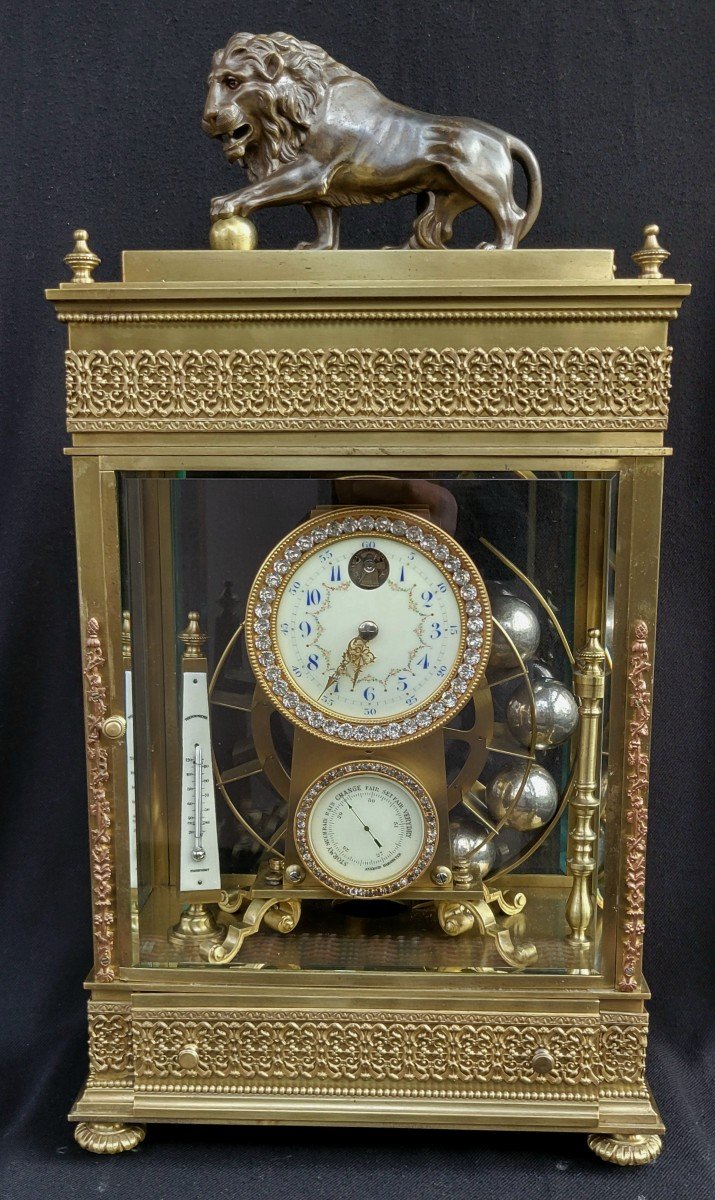
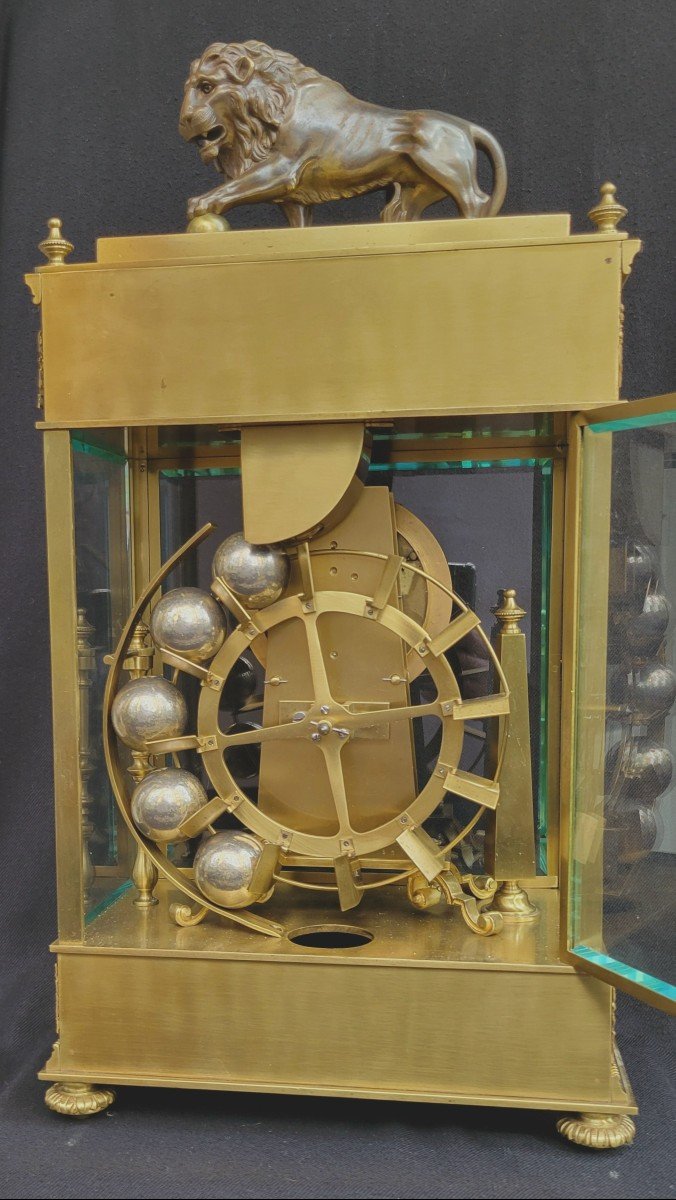
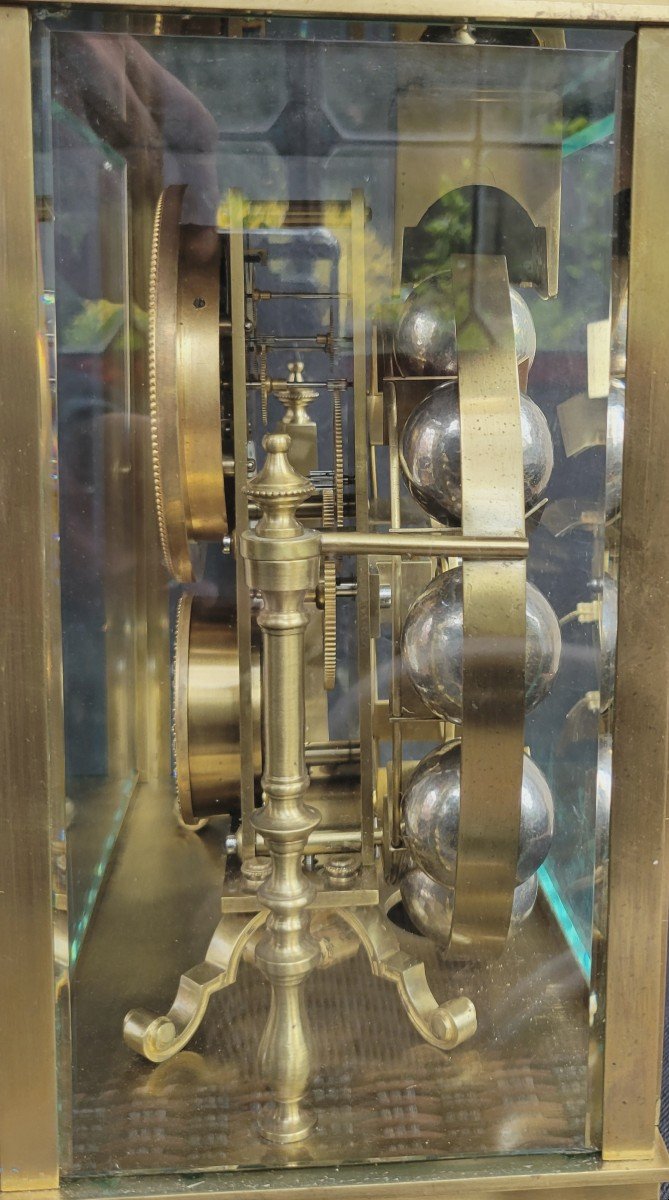
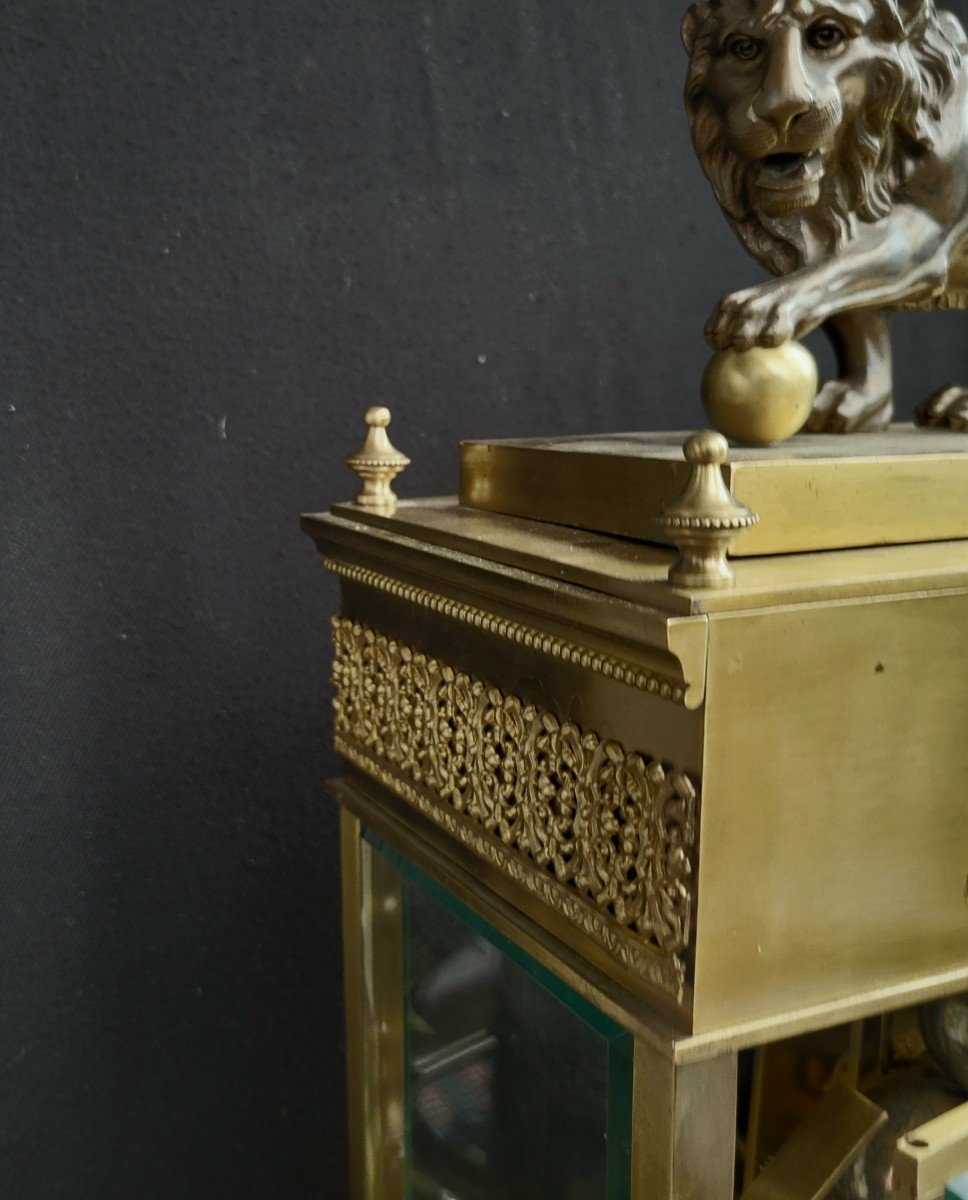
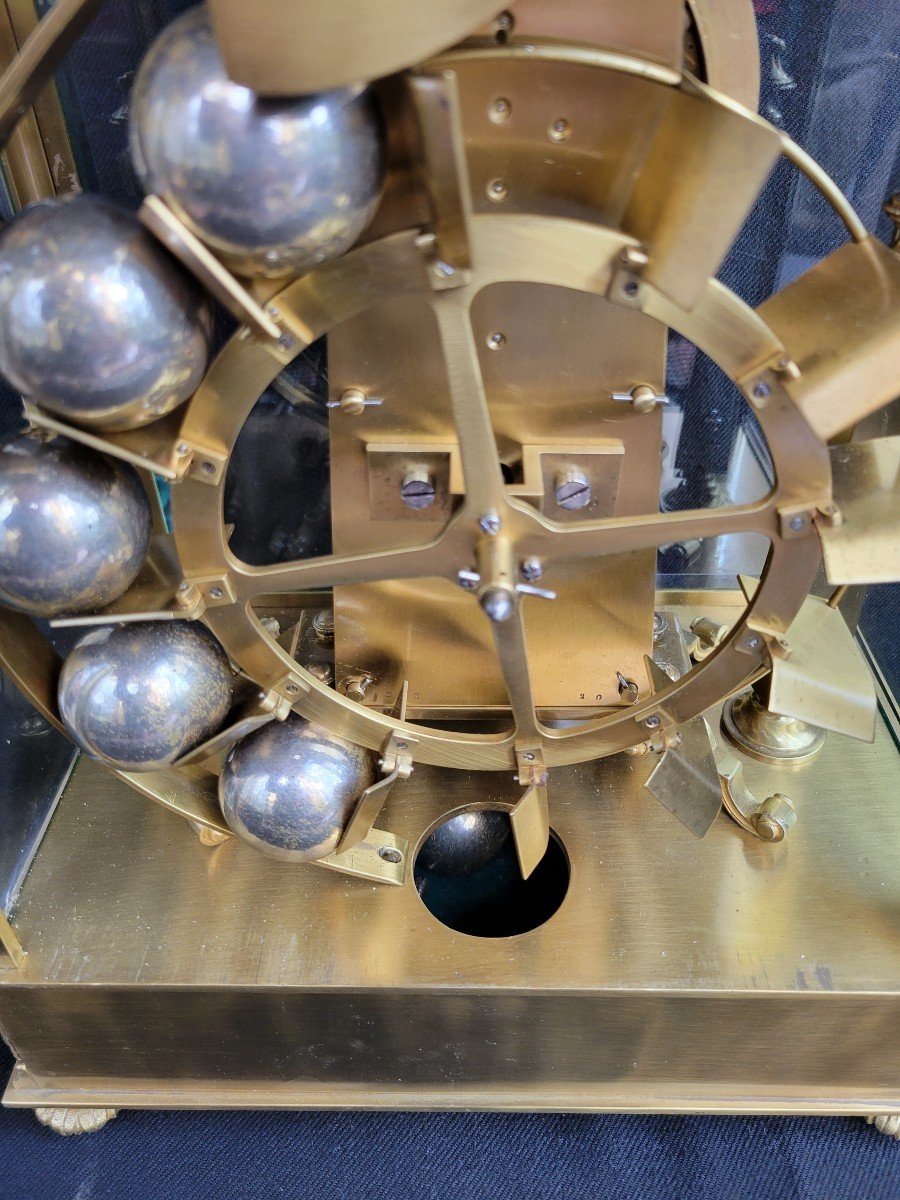
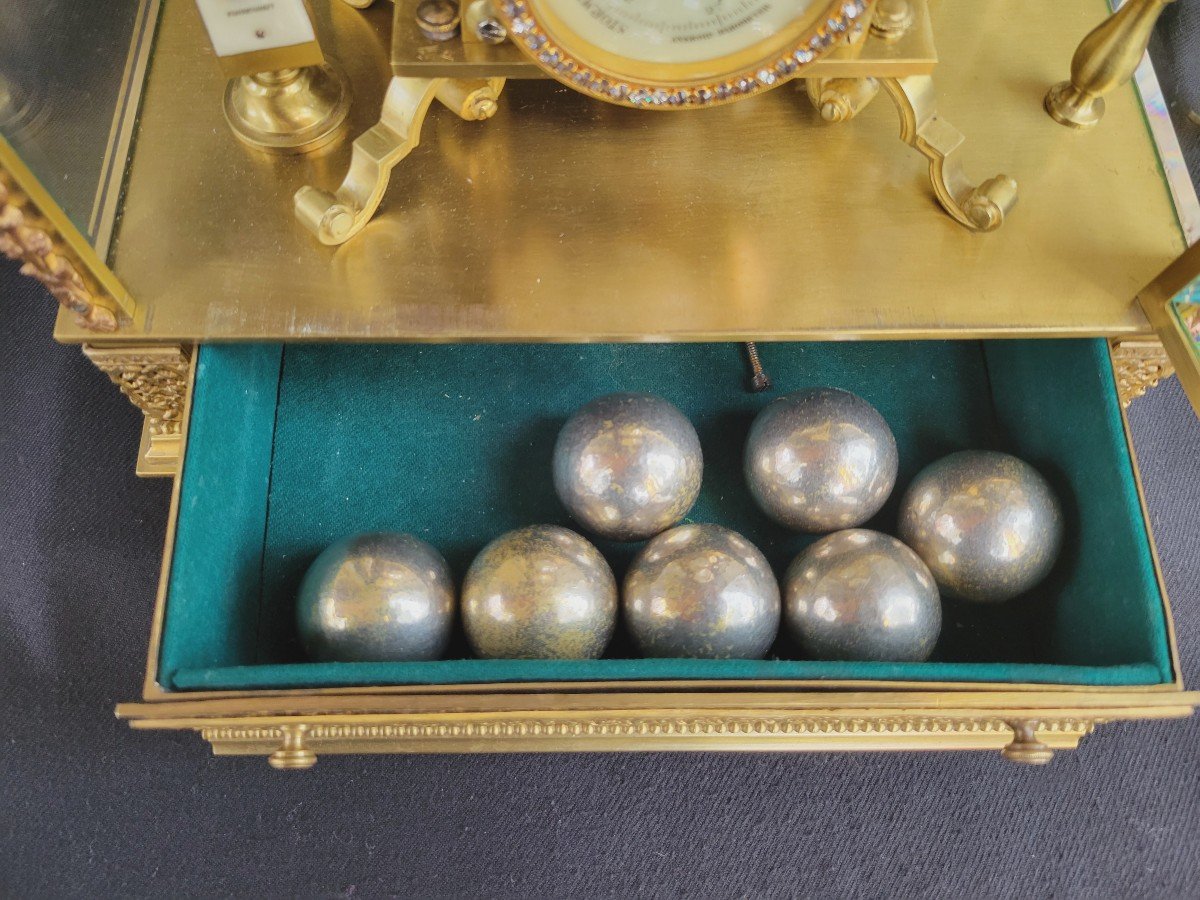
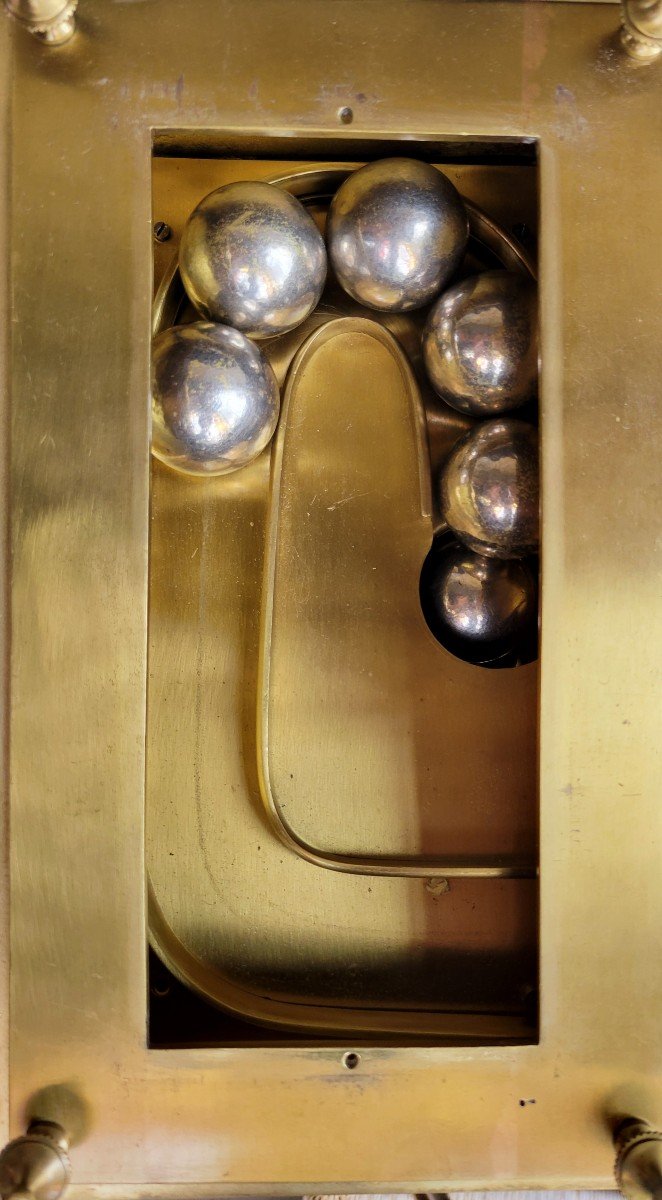
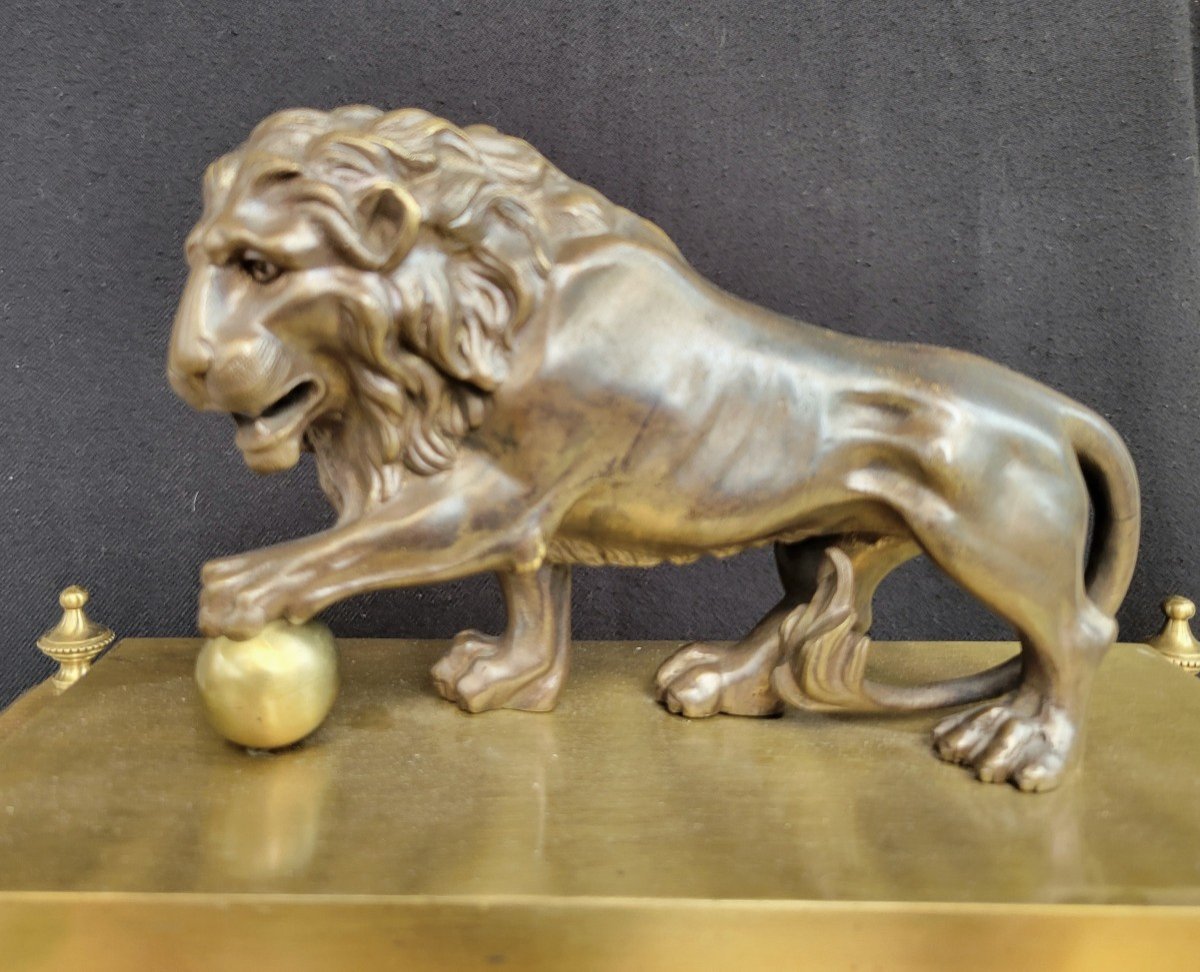
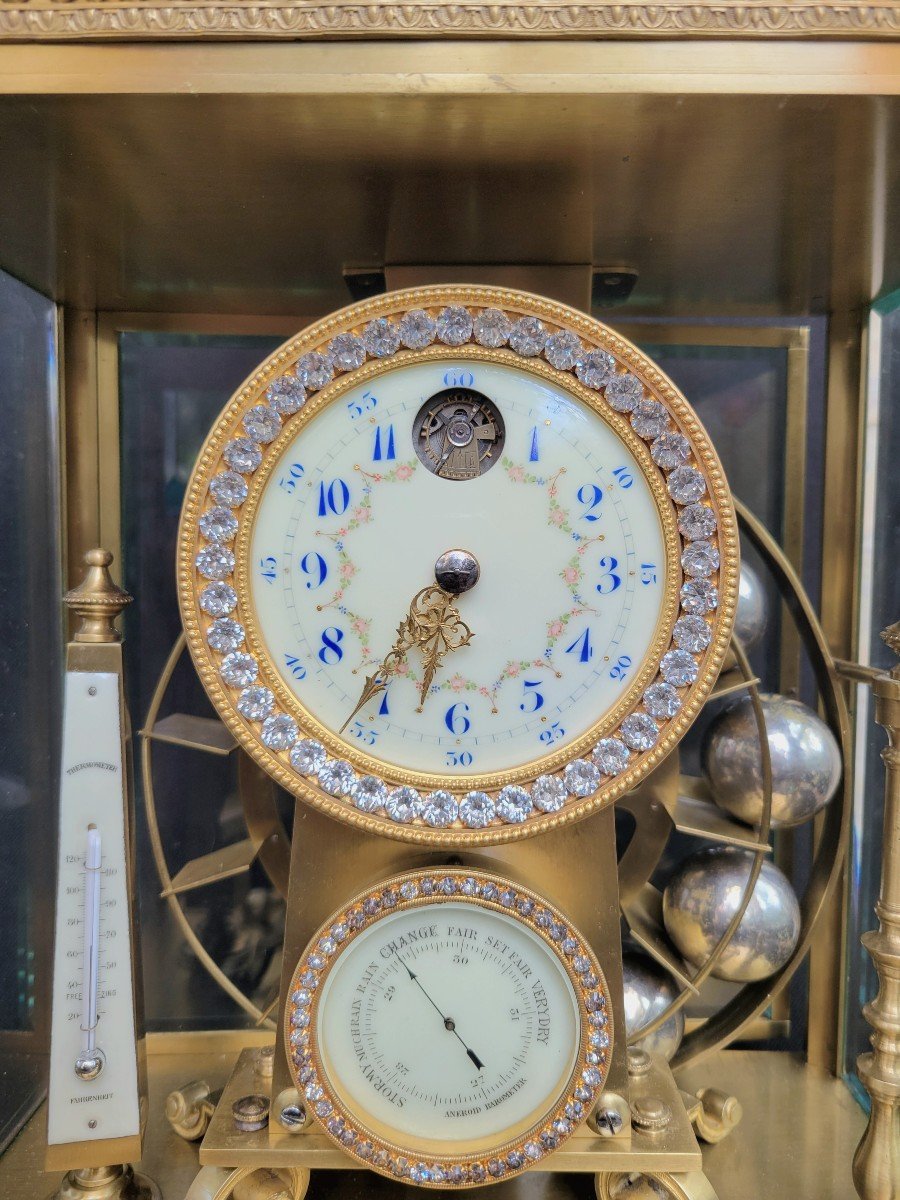
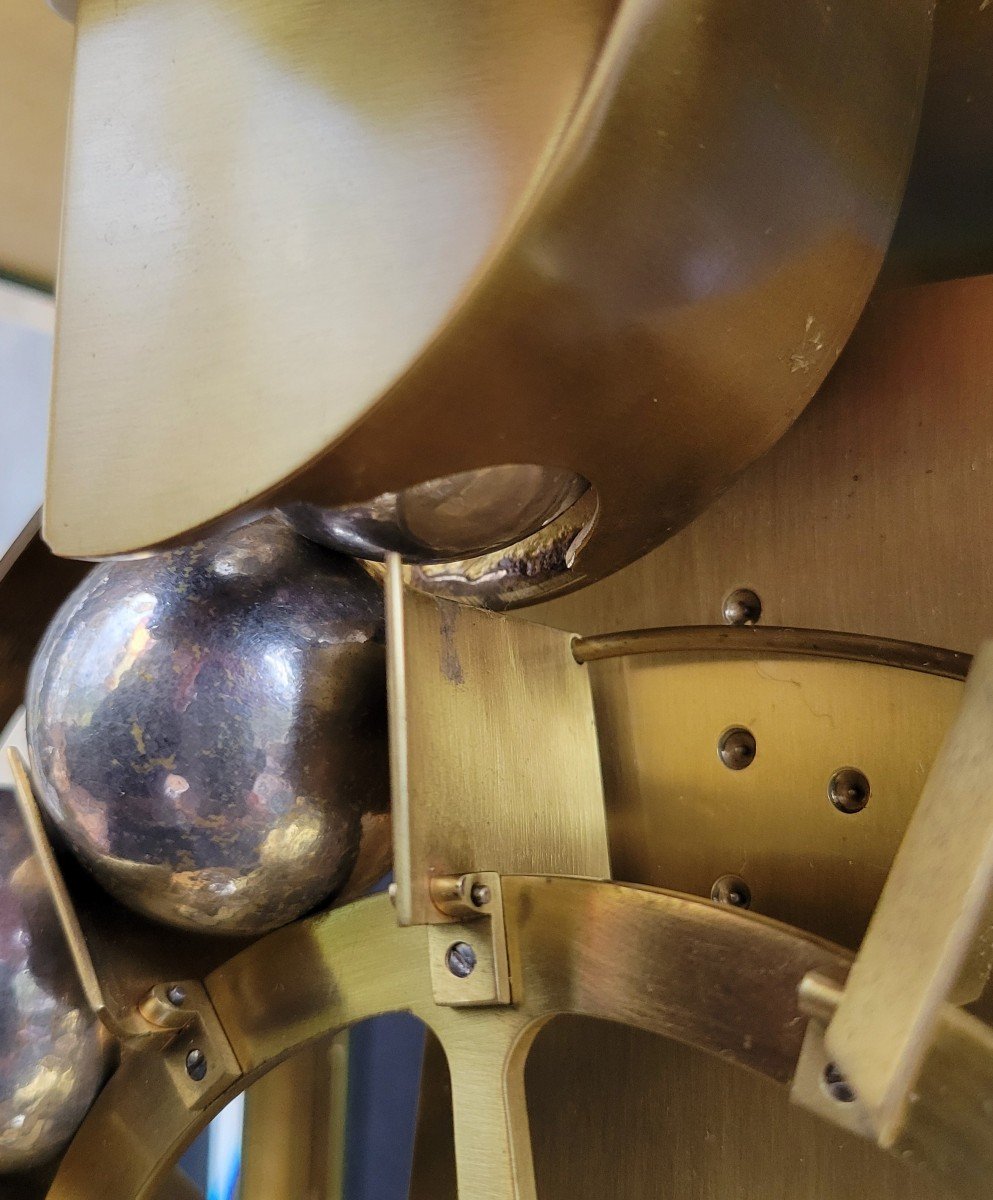
A very rare, late 19th-century constant-force ball clock, also known as a "ball clock." (Given its size, the term "ball clock" would be more accurate.) The bronze case is surmounted by a patinated lion, and the four sides are made of beveled glass. The clock includes an aneroid barometer, a mercury thermometer with a Fahrenheit reading, and a clock simulating a "perpetual motion" mechanism. Instead of a mainspring, it uses a large, multi-chambered wheel inspired by the operating principle of a waterwheel. The chambers hold the balls one after another, which are stored in a guide compartment located above the movement. The wheel is permanently filled with five balls, whose weight drives its rotation, releasing one ball every 16 hours into a drawer located below the movement. The guide compartment is manually fed by the weights dropped into the drawer. Each weight provides 16 hours of power. The drawer holds 15 weights (3 are missing, reducing the running time by 2 days).
The dial is enameled with a floral garland design and blue Arabic numerals. The movement has a visible escapement through an aperture in the dial. The movement and barometer bezels are set with rhinestones.
Height: 55 cm
Width: 28 cm
Depth: 17.5 cm
Weight of each weight: 282.5 grams
Total weight of the clock: 22.7 kg
Manufactured: late 19th century, 1885.
Only a few examples are known.
Condition report: The clock is in good condition and functions correctly. The barometer is not working. References: Model presented at the Universal Exhibition in Paris in 1900.
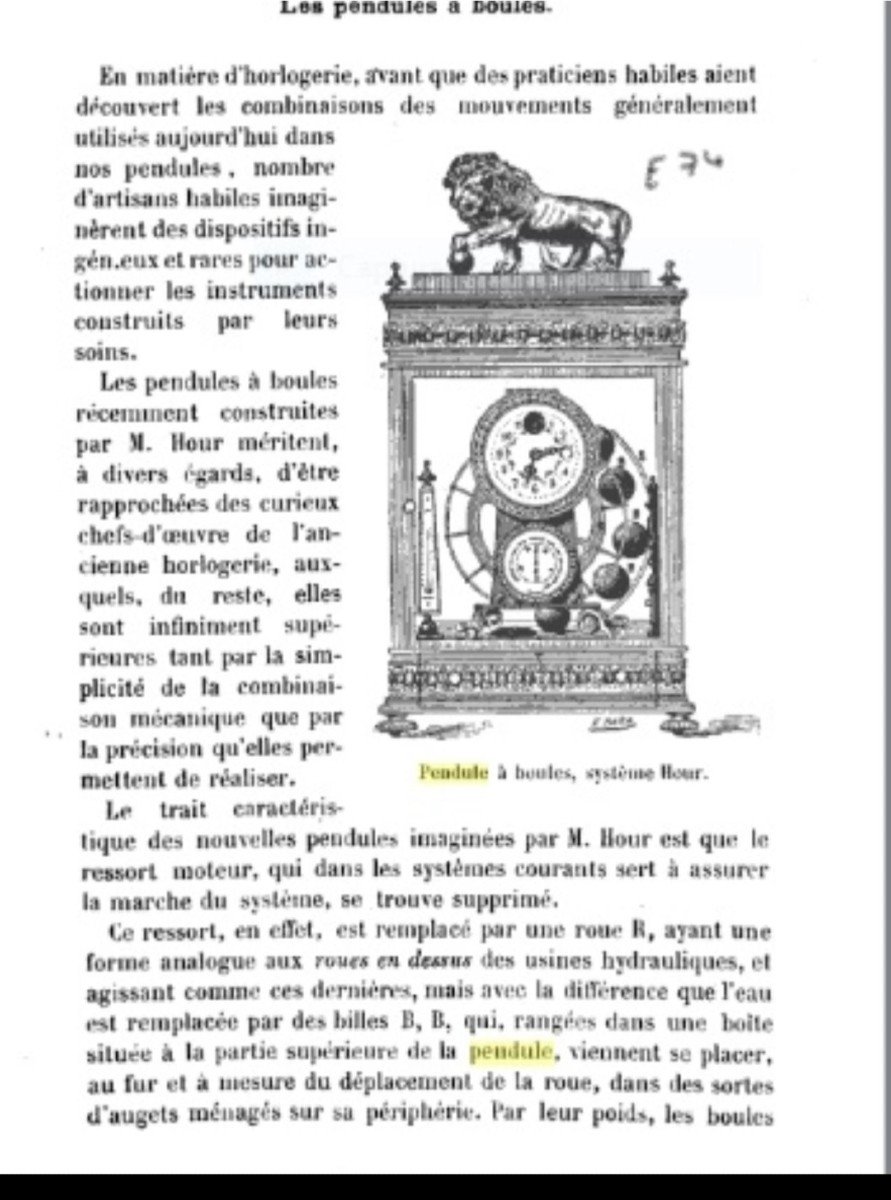
Clock described by Mathieu Planchon in the exhibition report and published in the chronometric review of October 1900.
See:
- Chayette/Calmes sale with the collaboration of Habsburg, Feldman, June 21, 1989, Maitzner collection, lot 225.
- Bonhams San Francisco sale, June 16, 2008, lot 9218.
- Case Auctions Knoxville sale, July 17, 2015, lot 228.
- Daxson's Auctioneers England sale, June 29, 2023, lot 161.
A similar clock is held at the Imperial Palace Museum of the Ming and Qing dynasties (Palace of the Forbidden City). Clock presented in 1885 by the French government to Emperor Ging of the Dynasty.
Model illustrated in *Mystery, Novelty and Fantasy Clocks* by Derek Roberts, page 74
The dial is enameled with a floral garland design and blue Arabic numerals. The movement has a visible escapement through an aperture in the dial. The movement and barometer bezels are set with rhinestones.
Height: 55 cm
Width: 28 cm
Depth: 17.5 cm
Weight of each weight: 282.5 grams
Total weight of the clock: 22.7 kg
Manufactured: late 19th century, 1885.
Only a few examples are known.
Condition report: The clock is in good condition and functions correctly. The barometer is not working. References: Model presented at the Universal Exhibition in Paris in 1900.
Clock described by Mathieu Planchon in the exhibition report and published in the chronometric review of October 1900.
See:
- Chayette/Calmes sale with the collaboration of Habsburg, Feldman, June 21, 1989, Maitzner collection, lot 225.
- Bonhams San Francisco sale, June 16, 2008, lot 9218.
- Case Auctions Knoxville sale, July 17, 2015, lot 228.
- Daxson's Auctioneers England sale, June 29, 2023, lot 161.
A similar clock is held at the Imperial Palace Museum of the Ming and Qing dynasties (Palace of the Forbidden City). Clock presented in 1885 by the French government to Emperor Ging of the Dynasty.
Model illustrated in *Mystery, Novelty and Fantasy Clocks* by Derek Roberts, page 74
15 000 €
Period: 19th century
Style: Napoleon 3rd
Condition: Good condition
Material: Bronze
Width: 28 cm
Height: 55 cm
Depth: 17,5 cm
Reference (ID): 1306626
Availability: In stock
Print