





French Régence-style Carved Walnut Armchair – Circa 1900
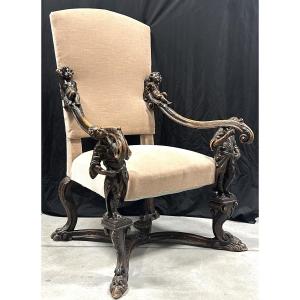
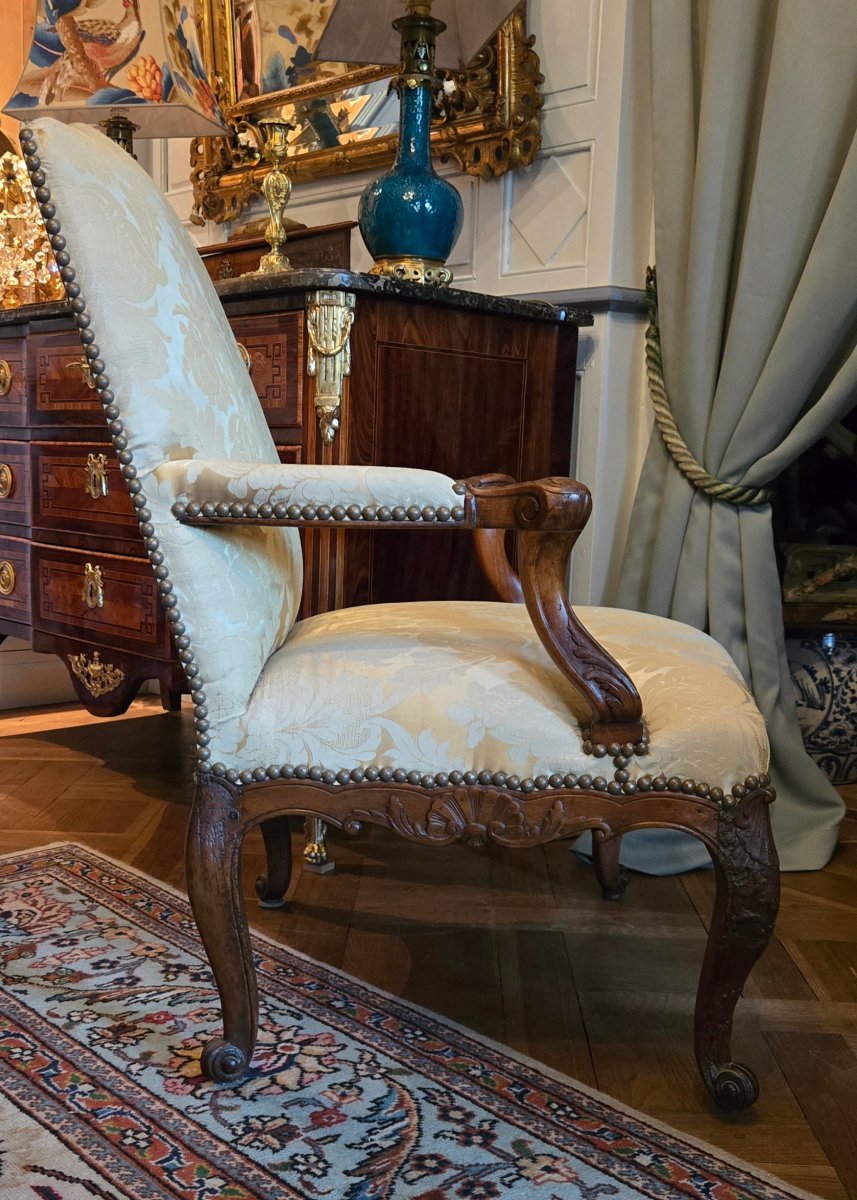
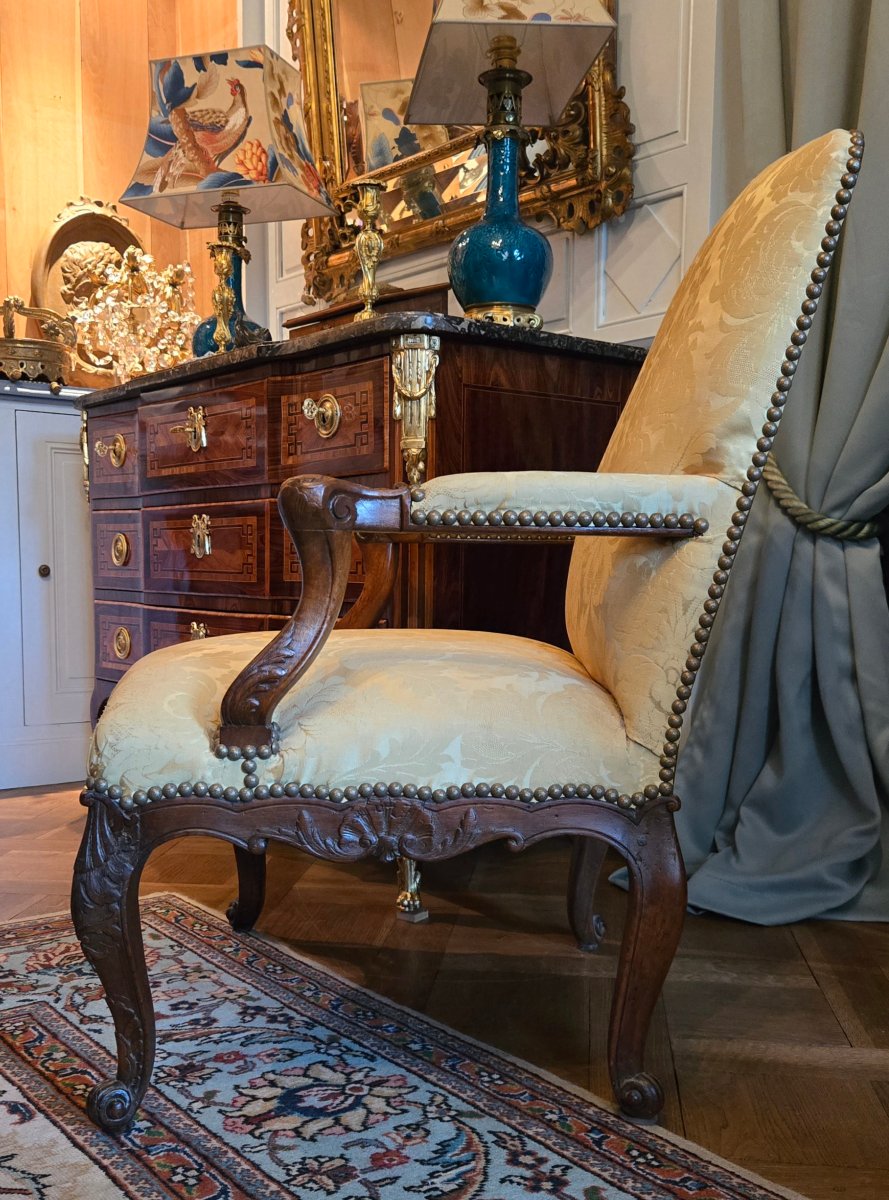
A finely crafted French Régence-style armchair (fauteuil à la reine) in carved and molded walnut, made in the late 19th or early 20th century, faithfully inspired by French seating furniture of the early 18th century, particularly the period around 1725–1735.
The armchair reflects the stylistic transition between the reign of Louis XIV and the Régence period, when furniture designs gradually evolved toward greater fluidity, elegance, and comfort.
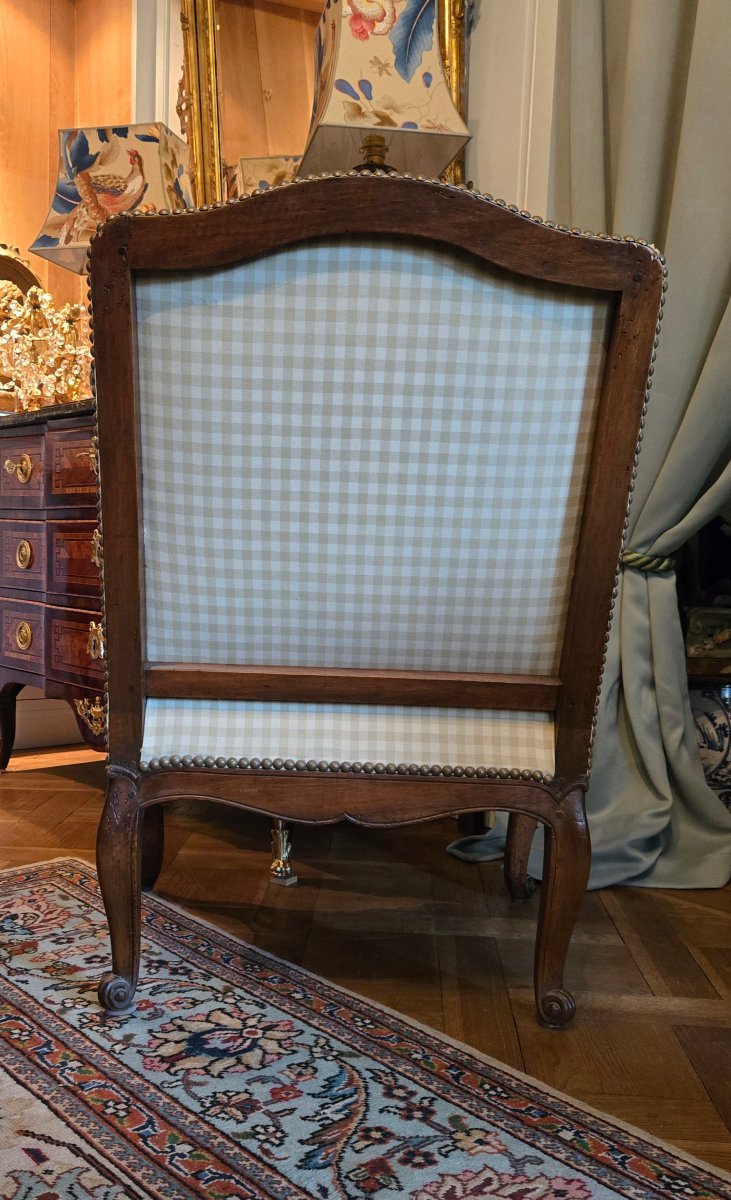
It features a tall, slightly reclining flat back, with the upper rail completely concealed beneath the upholstery on the front. This distinctive construction recalls earlier French seating traditions of the late 17th and early 18th centuries. The reverse reveals the walnut uprights and gently curved upper rail.
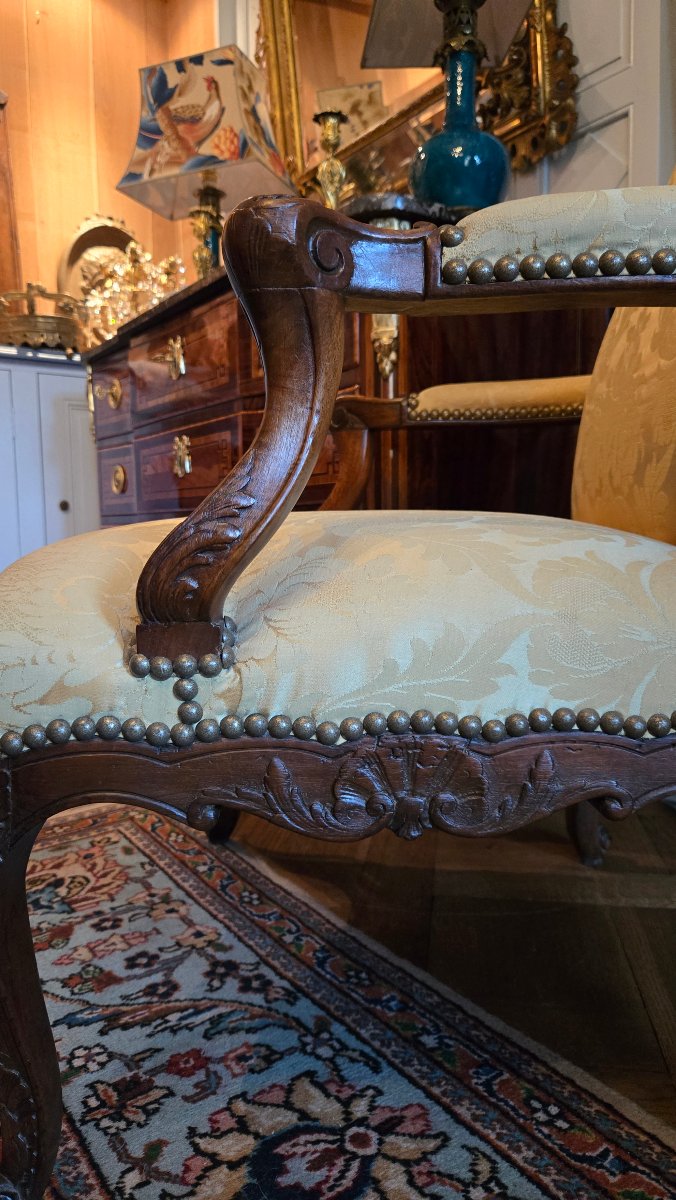
The armchair stands on four cabriole legs terminating in scroll feet. The front legs are carved with cascading foliage and floral ornamentation, extending from the seat rail toward the lower sections. The more restrained rear legs continue directly from the back uprights.
The shaped front seat rail is centered by a carved stylized shell, surrounded by scrolling foliage, volutes, and acanthus motifs. The side rails are likewise shaped and carved.
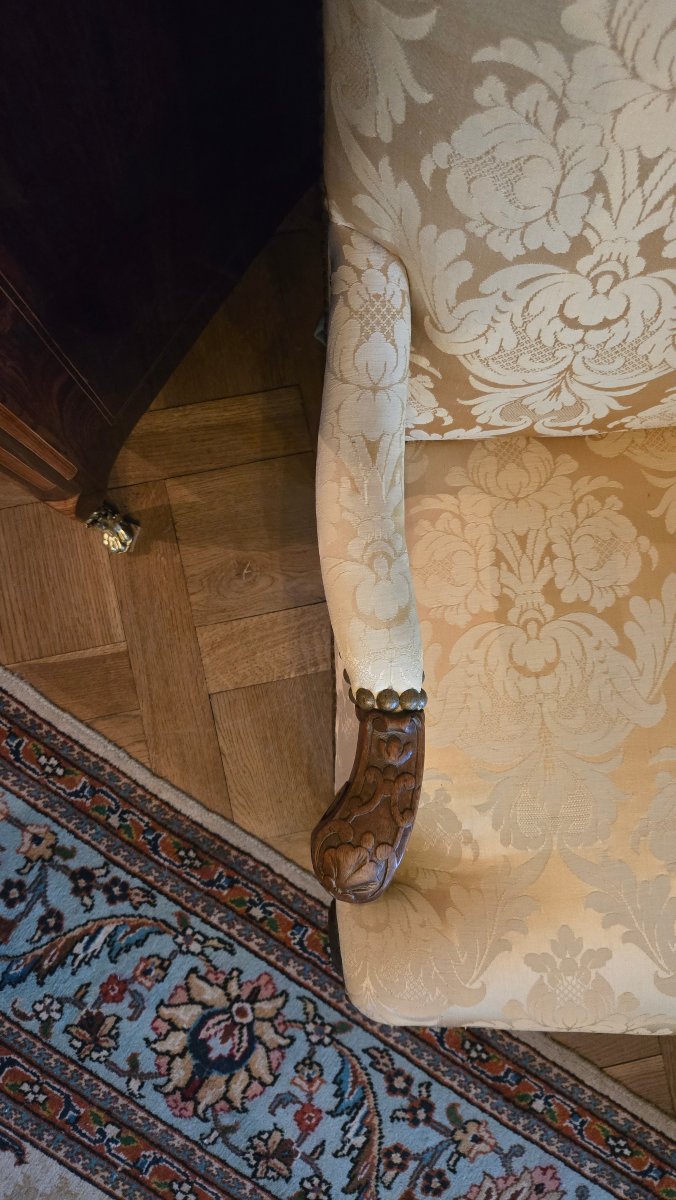
The upholstered armrests are supported by gracefully curved, set-back arm supports, richly decorated with carved foliage and scrollwork. This arrangement reflects an important development in French chairmaking during the first decades of the 18th century.
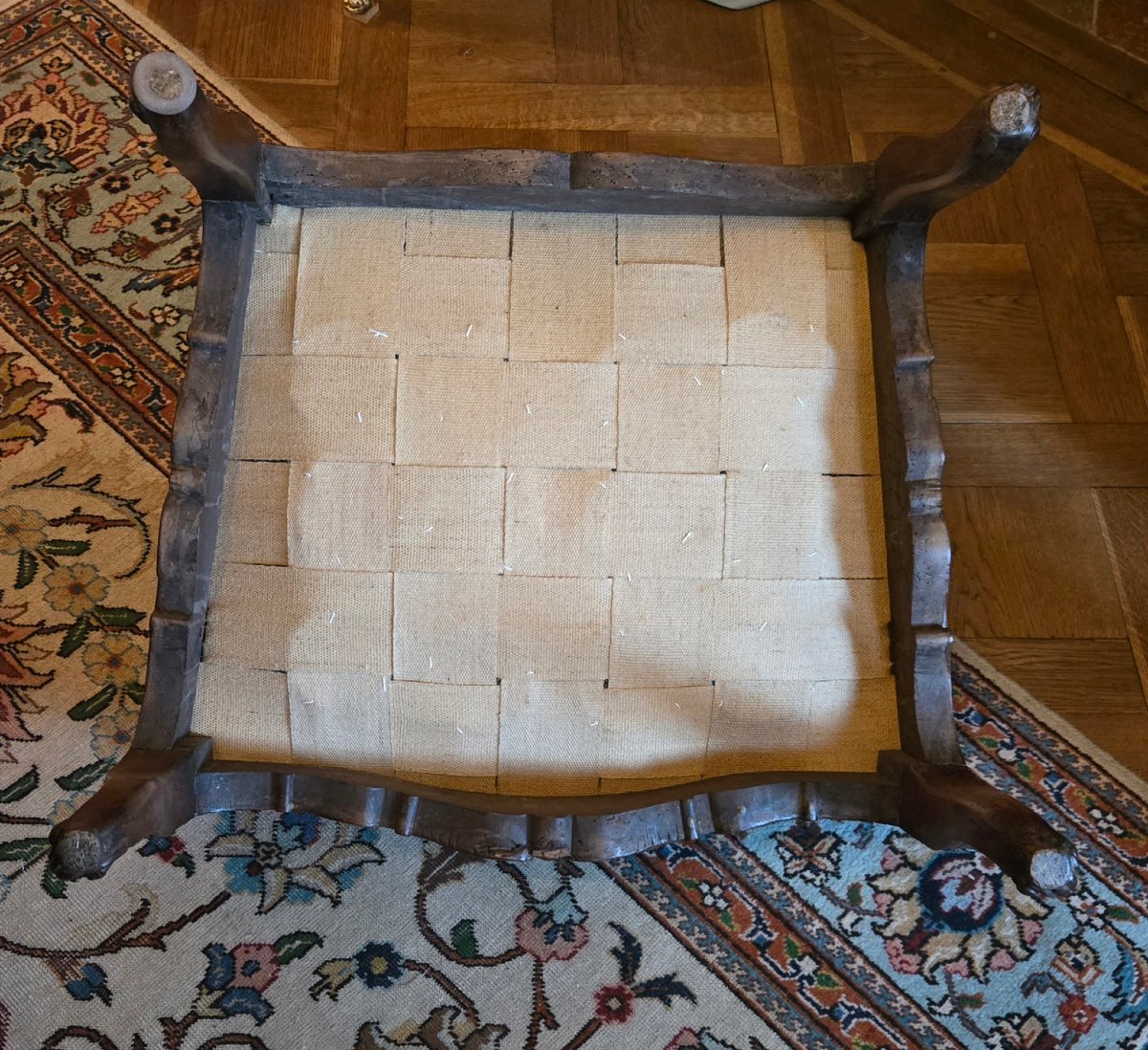
The frame was constructed using reclaimed antique walnut, employing traditional cabinetmaking and chairmaking techniques, including mortise-and-tenon joints secured with wooden pegs.
Particular attention was given to reproducing the appearance of an authentic 18th-century chair, from the carved ornamentation and hand-tool marks to the aged surfaces and natural patina.
Close examination of the frame reveals old woodworm galleries exposed by subsequent carving and shaping, demonstrating that already-aged timber was deliberately reused during its manufacture.
This armchair is therefore a finely executed antique reproduction, made around 1900 in the tradition of French Régence seating furniture from the first third of the 18th century.
The upholstery was renewed approximately ten years ago using a high-quality golden-yellow and ivory damask, woven with large floral and foliate motifs. The interplay of matte and satin finishes enhances the decorative pattern.
The upholstery is finished with decorative, patinated brass-tone upholstery nails. The reverse of the backrest is covered in a coordinating small-check fabric.
The damask shows minor signs of wear, particularly on the armrests and certain areas of the backrest.
The walnut retains an attractive aged brown patina, emphasizing the depth and detail of the carving.
French-style craftsmanship, late 19th or early 20th century, circa 1900.
Comparative Bibliography
Guillaume Janneau, Le Mobilier français – Les Sièges, Éditions Jacques Fréal, pp. 54–63, particularly the illustrations of French armchairs and carved chair legs dating from approximately 1725–1735.
Pierre Kjellberg, Le Meuble français et européen, du Moyen Âge à nos jours, Éditions de l'Amateur, pp. 125–129, discussing the evolution of Régence seating furniture, recessed arm supports, and carved ornamentation.
These references document the original 18th-century designs that inspired this armchair.
Dimensions
Overall height: 38 in. (96.5 cm)
Seat height: 16.9 in. (43 cm)
Width: 28.3 in. (72 cm)
Depth: 29.5 in. (75 cm)
900 €
Period: 19th century
Style: Louis 14th, Regency
Condition: Good condition
Material: Wallnut
Reference (ID): 1848337
Availability: In stock
Print