

Auguste-nicolas Cain (1821–1894) – Pair Of Pheasants, Antique Bronze Match Holder, Circa 1860
Artist: Cain
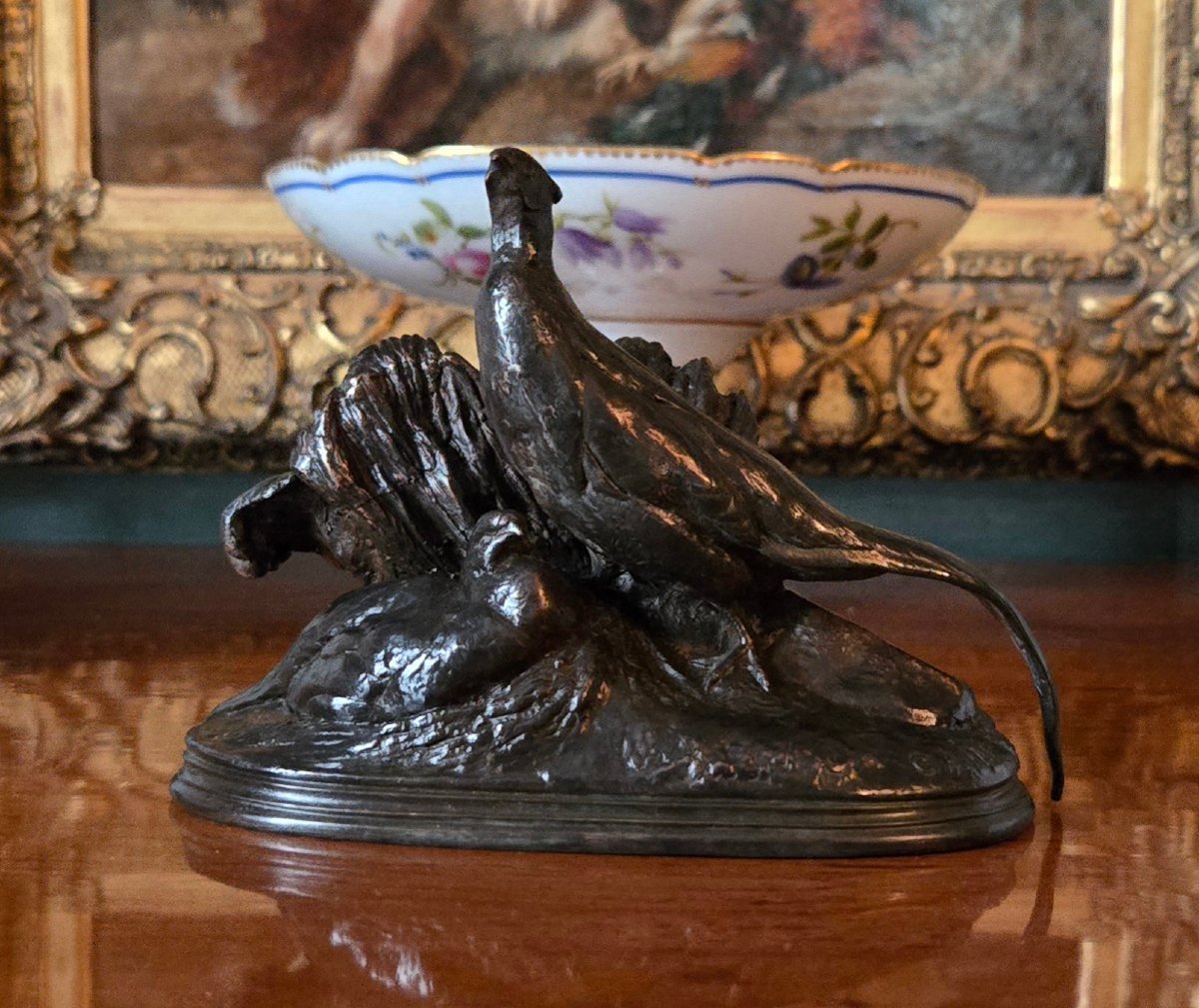
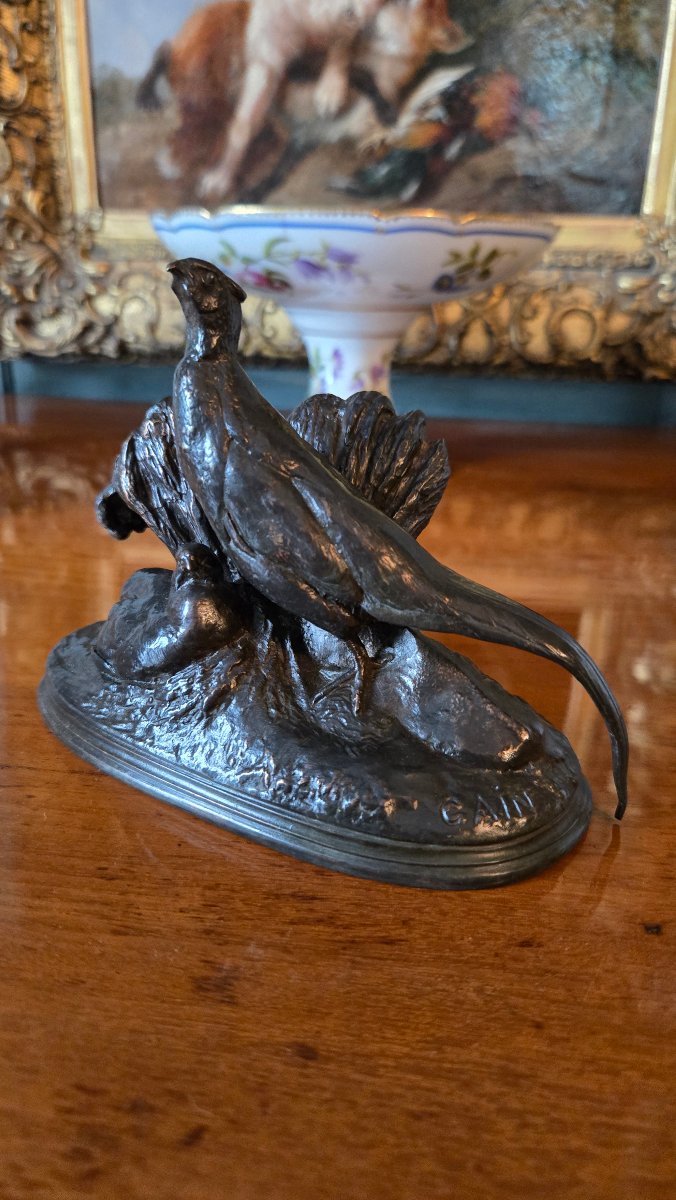
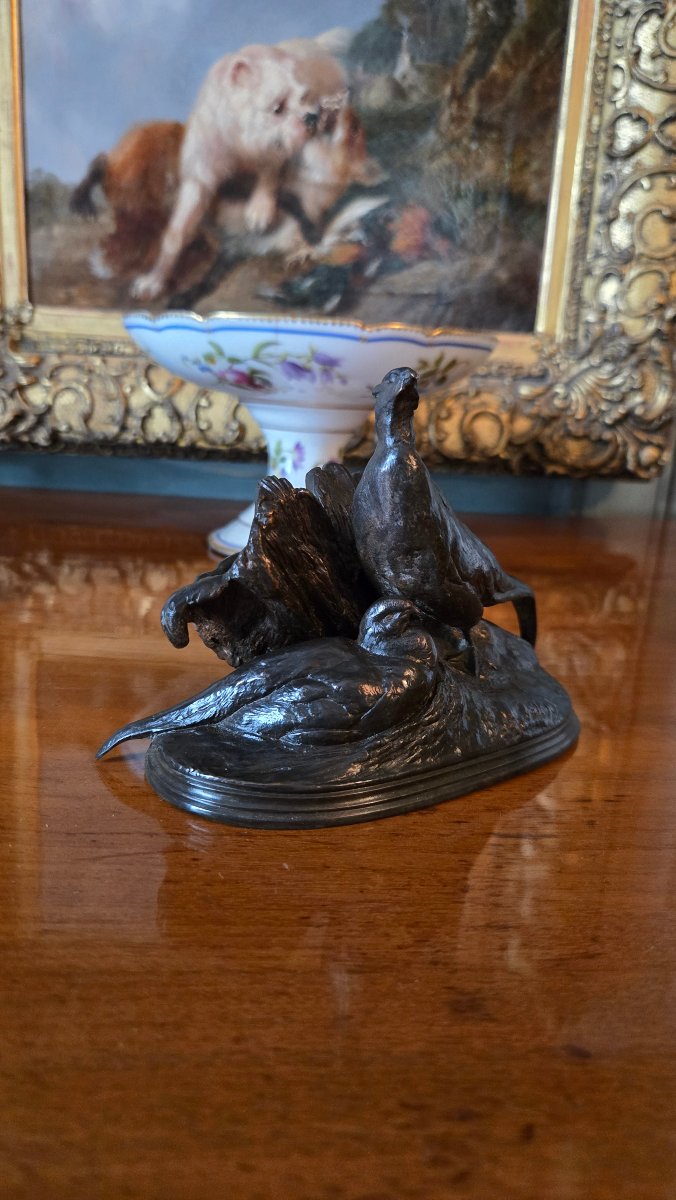
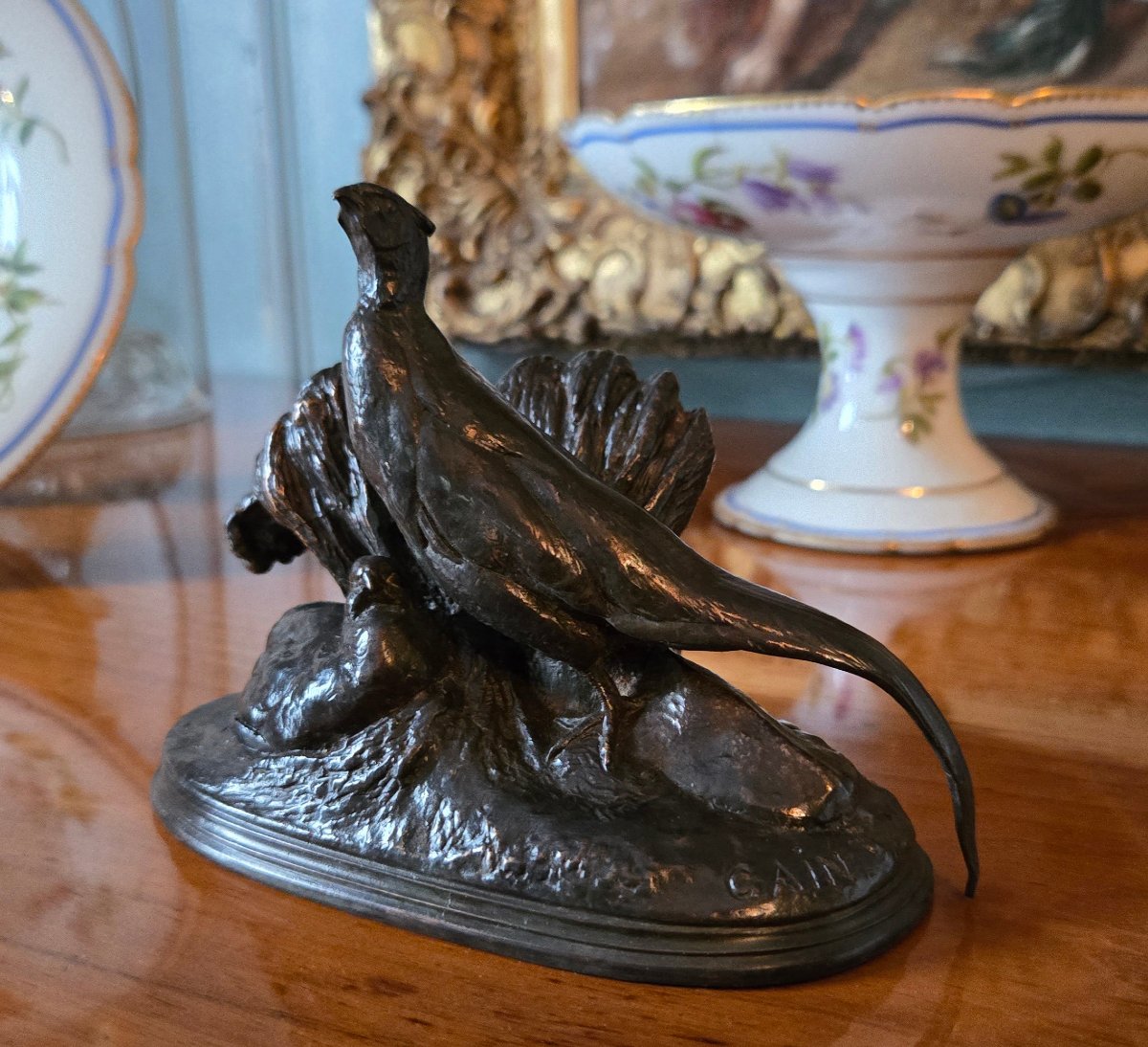
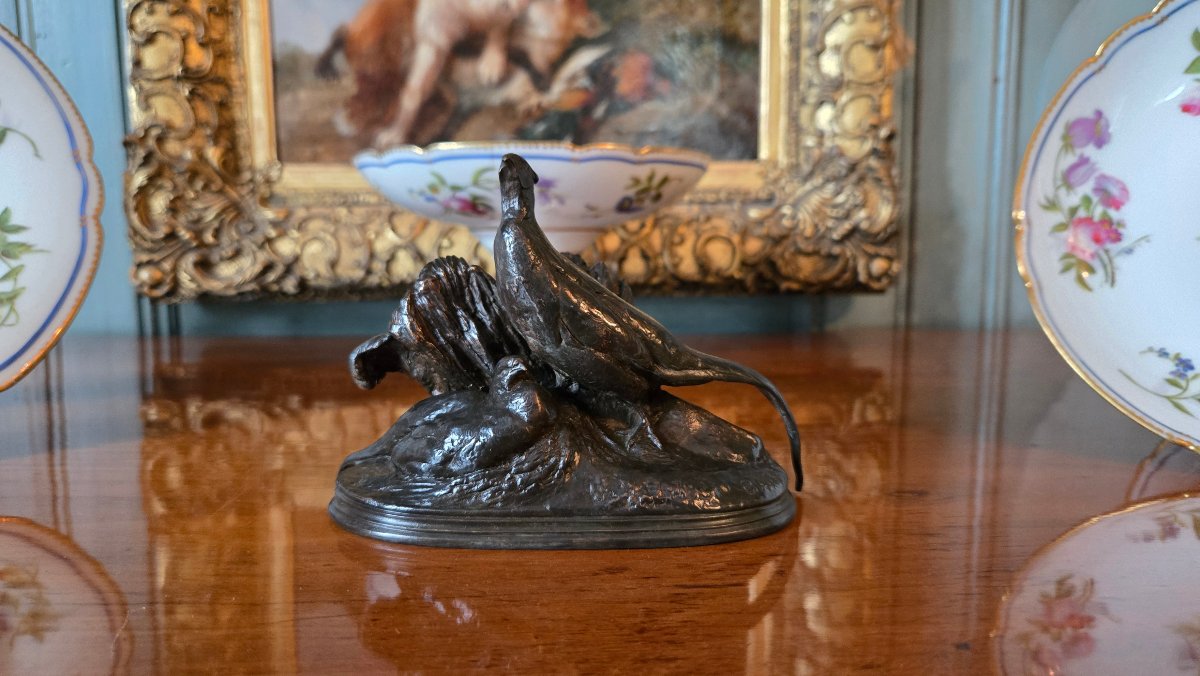
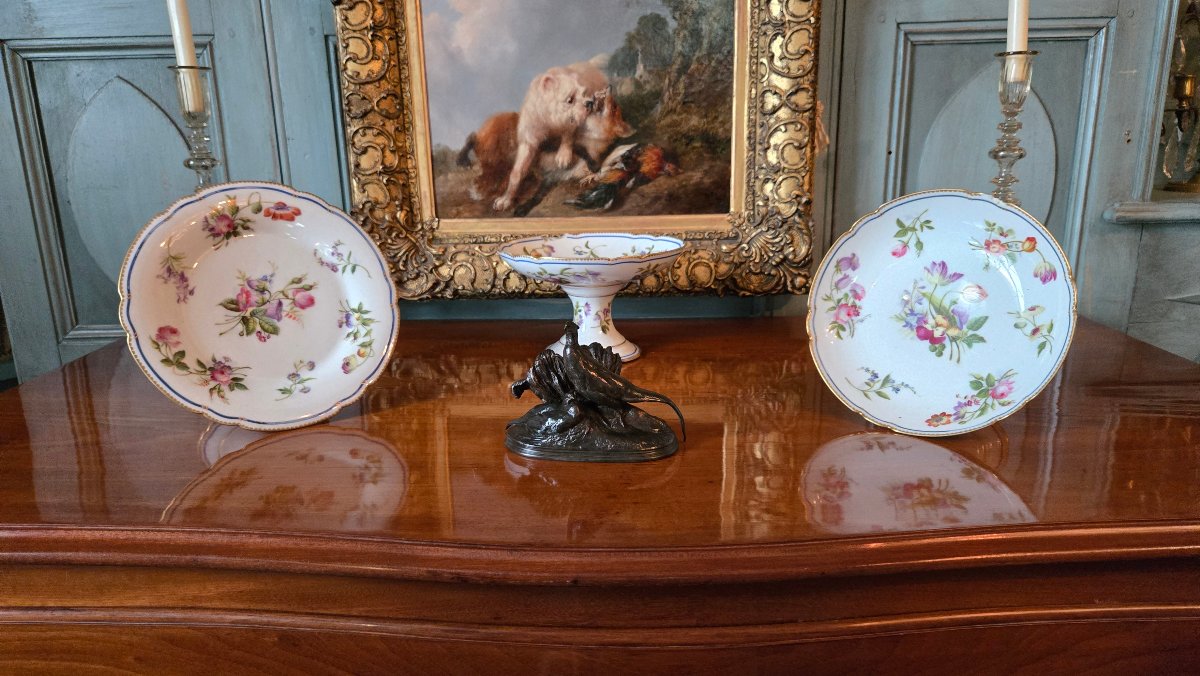
A charming 19th-century French animalier bronze sculpture by Auguste-Nicolas Cain (1821–1894), depicting a pair of pheasants beside a tree stump, beautifully cast in bronze with a richly nuanced brown patina.
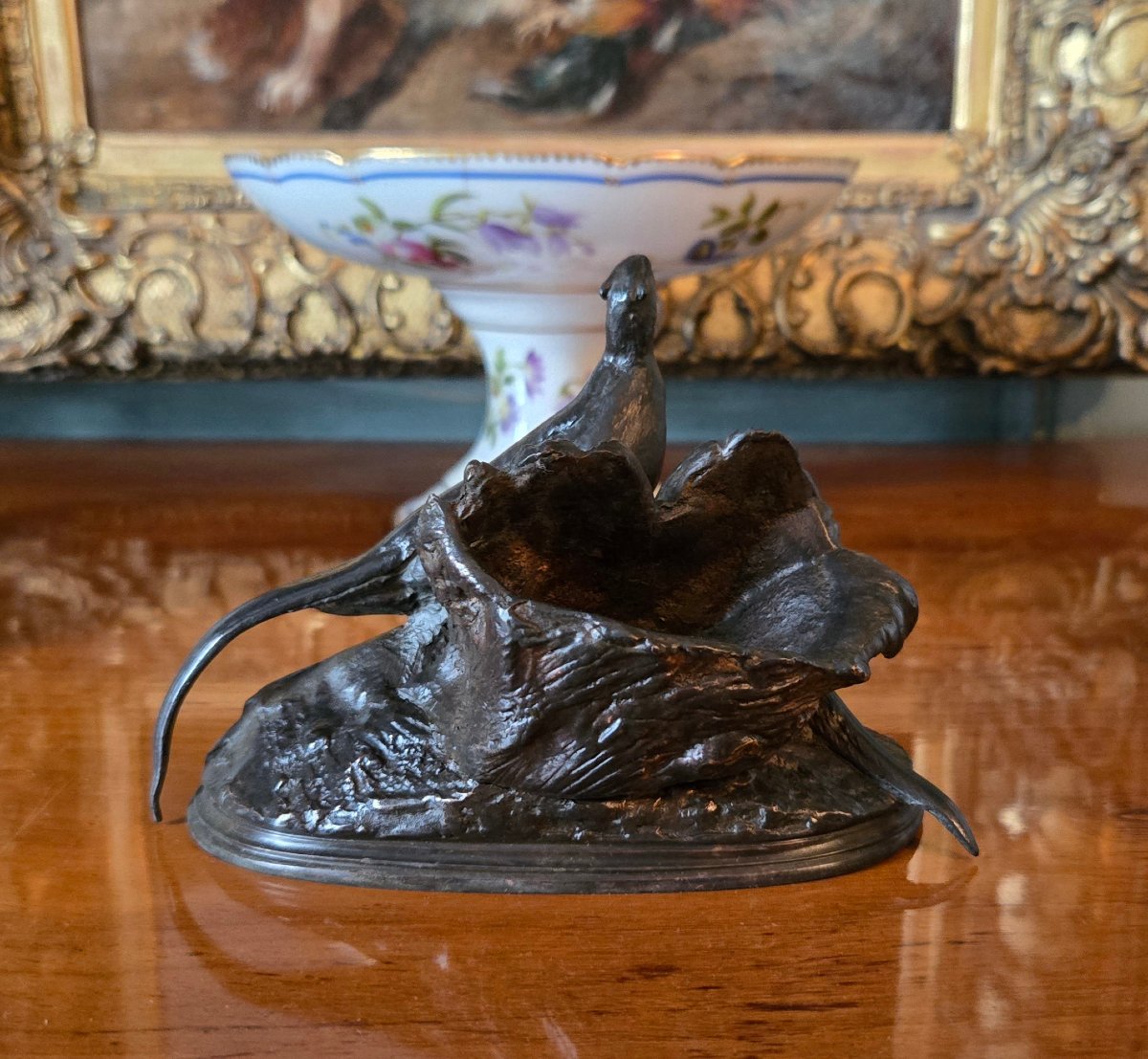
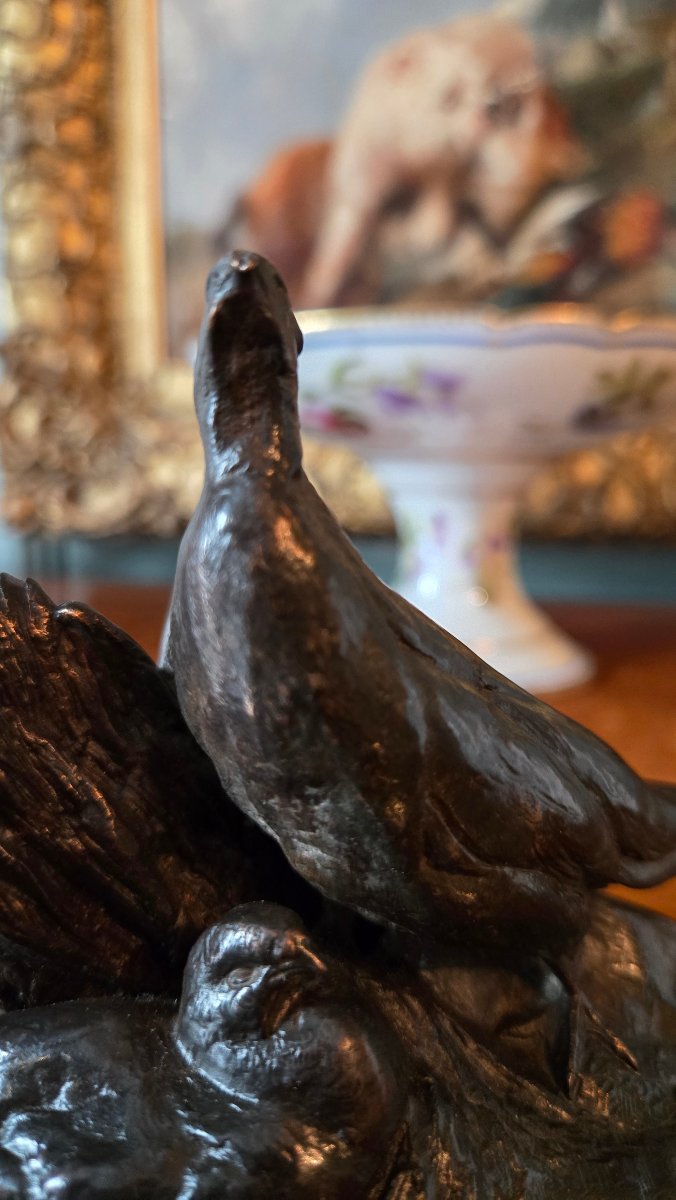
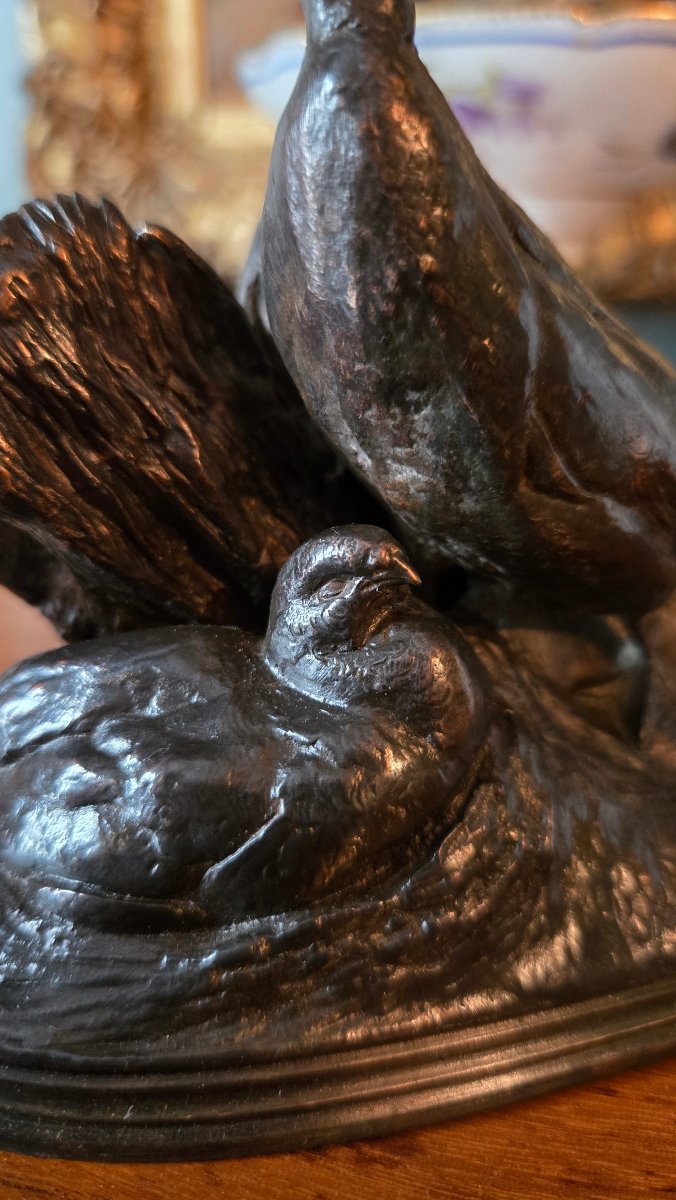
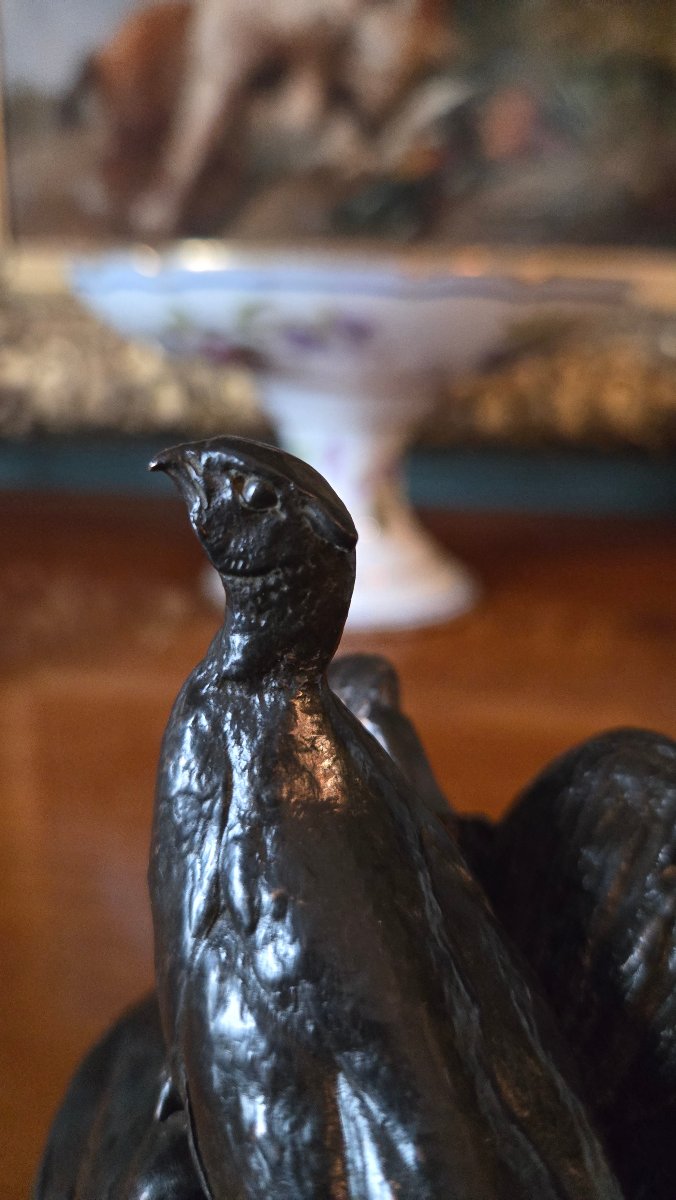
The male pheasant stands gracefully upright, his head raised in an alert posture, while his long, elegantly curved tail enhances the movement of the composition. At his feet, the female rests peacefully against the tree stump, creating a delightful contrast between the two birds.
The sculptor's careful observation of nature is evident in the delicate modeling of the plumage, the lifelike attitudes of the birds, and the deeply textured surface of the tree stump.
The hollowed upper section of the stump was originally designed to serve as a match holder, combining fine animalier sculpture with the practical elegance of 19th-century decorative arts.
The composition rests on a naturalistic oval base with a molded border. The beautifully preserved dark brown patina displays subtle warmer highlights that emphasize the sculptural details.
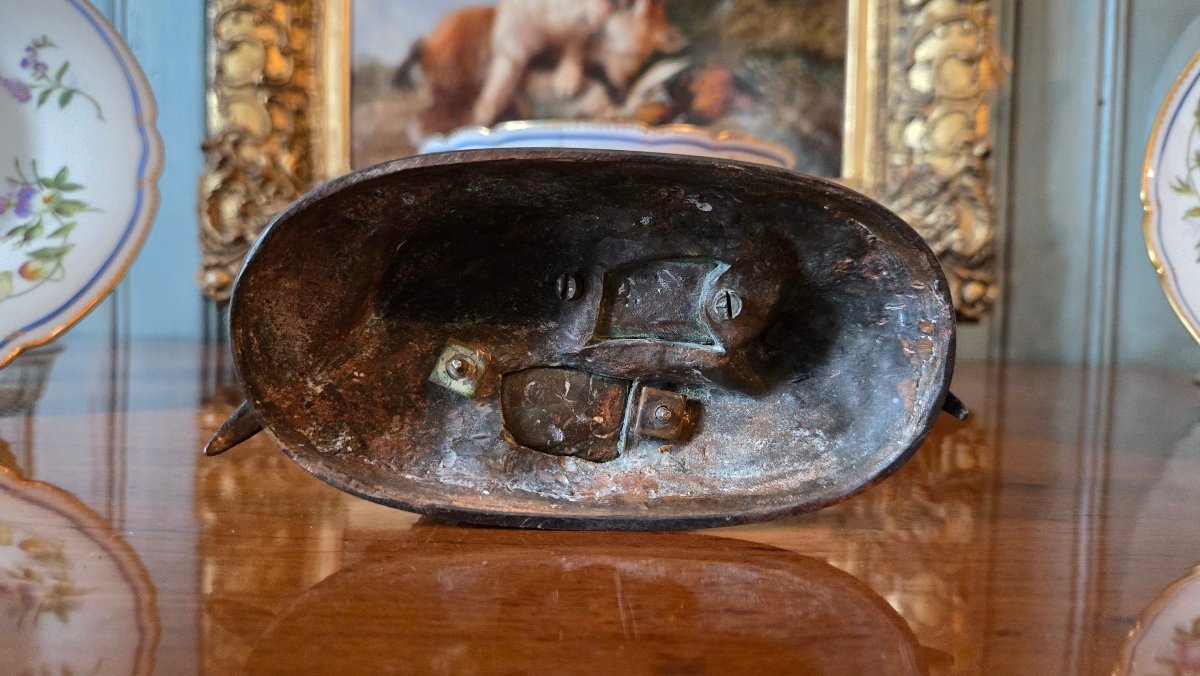
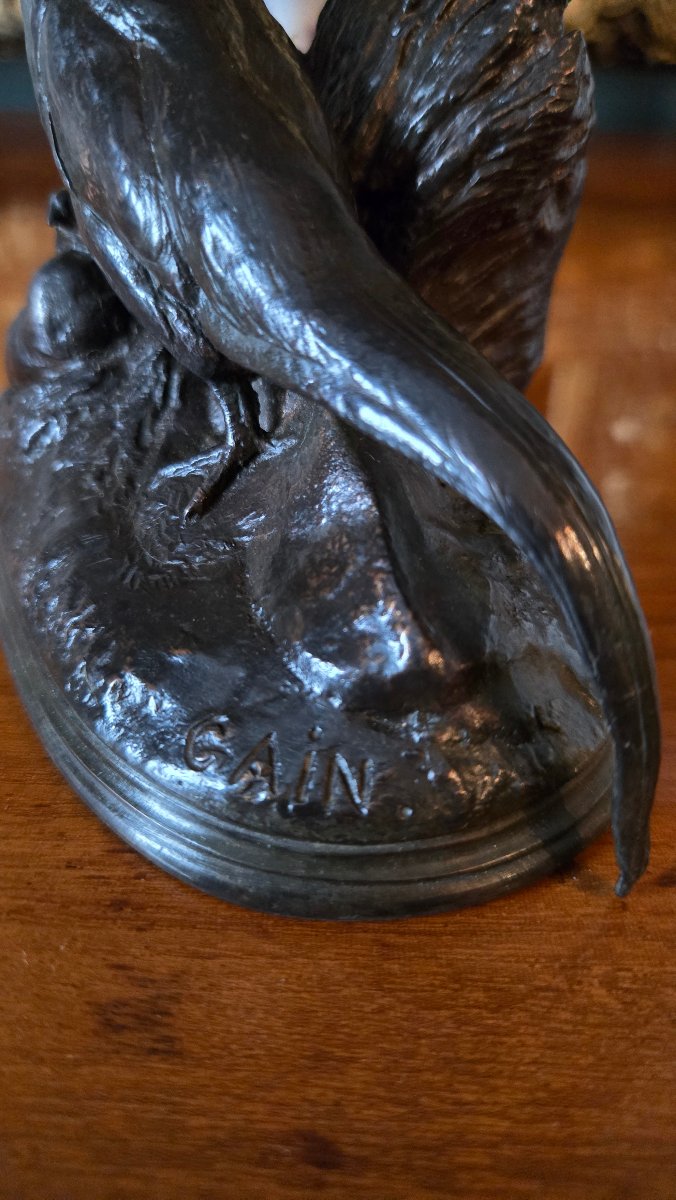
The group consists of several separately cast bronze elements, assembled and secured beneath the base with their original fittings. Signed "Cain" on the base. No foundry mark is present.
A documented model dating to circa 1860
An example of this same composition is illustrated in the Web Gallery of Art under the title Pheasants, dated circa 1860.
The documented example, from a private collection, measures 11 × 17 cm and is described as a sand-cast bronze. Its hollow tree stump is specifically identified as a match holder.
Our example corresponds to this documented model and is an antique 19th-century casting.
Auguste-Nicolas Cain (1821–1894)
Auguste-Nicolas Cain was one of the leading French animalier sculptors of the 19th century.
Born in Paris, he studied under Alexandre Guionnet and the celebrated sculptor François Rude. He later became closely associated with Pierre-Jules Mène, whose daughter he married in 1852.
This relationship played an important role in his career, allowing him to develop the production and commercial distribution of his bronze sculptures. Following Mène's death in 1879, Cain took over his father-in-law's foundry and continued producing bronze editions.
Cain made his debut at the Paris Salon in 1846 with a wax sculpture entitled Warblers Defending Their Nest Against a Dormouse.
His early work focused particularly on birds, game animals, and small naturalistic compositions, often combining lively observation with remarkable attention to detail.
He received his first Salon medal in 1851, followed by further distinctions during the 1860s, including a medal at the Paris Universal Exposition of 1867.
He was appointed Chevalier of the Legion of Honor in 1869 and promoted to Officer in 1882.
As his reputation grew, Cain received prestigious public commissions, creating monumental animal sculptures for the Tuileries Gardens, the Louvre, and the Château de Chantilly.
His work remains highly regarded for its naturalistic accuracy, expressive compositions, and refined sculptural modeling.
Reference: Web Gallery of Art, Auguste-Nicolas Cain, Pheasants, circa 1860, sand-cast bronze, 11 × 17 cm, private collection.
Period: 19th century, model circa 1860.
Material: Bronze with nuanced brown patina.
Signature: Cain, on the base.
Condition: Original assembly fittings preserved. No foundry mark observed.
Dimensions:
Height: 11 cm (4.33 in)
Width: 15.5 cm (6.10 in)
Depth: 8.5 cm (3.35 in)
680 €
Period: 19th century
Style: Napoleon 3rd
Condition: Good condition
Material: Bronze
Reference (ID): 1843670
Availability: In stock
Print